
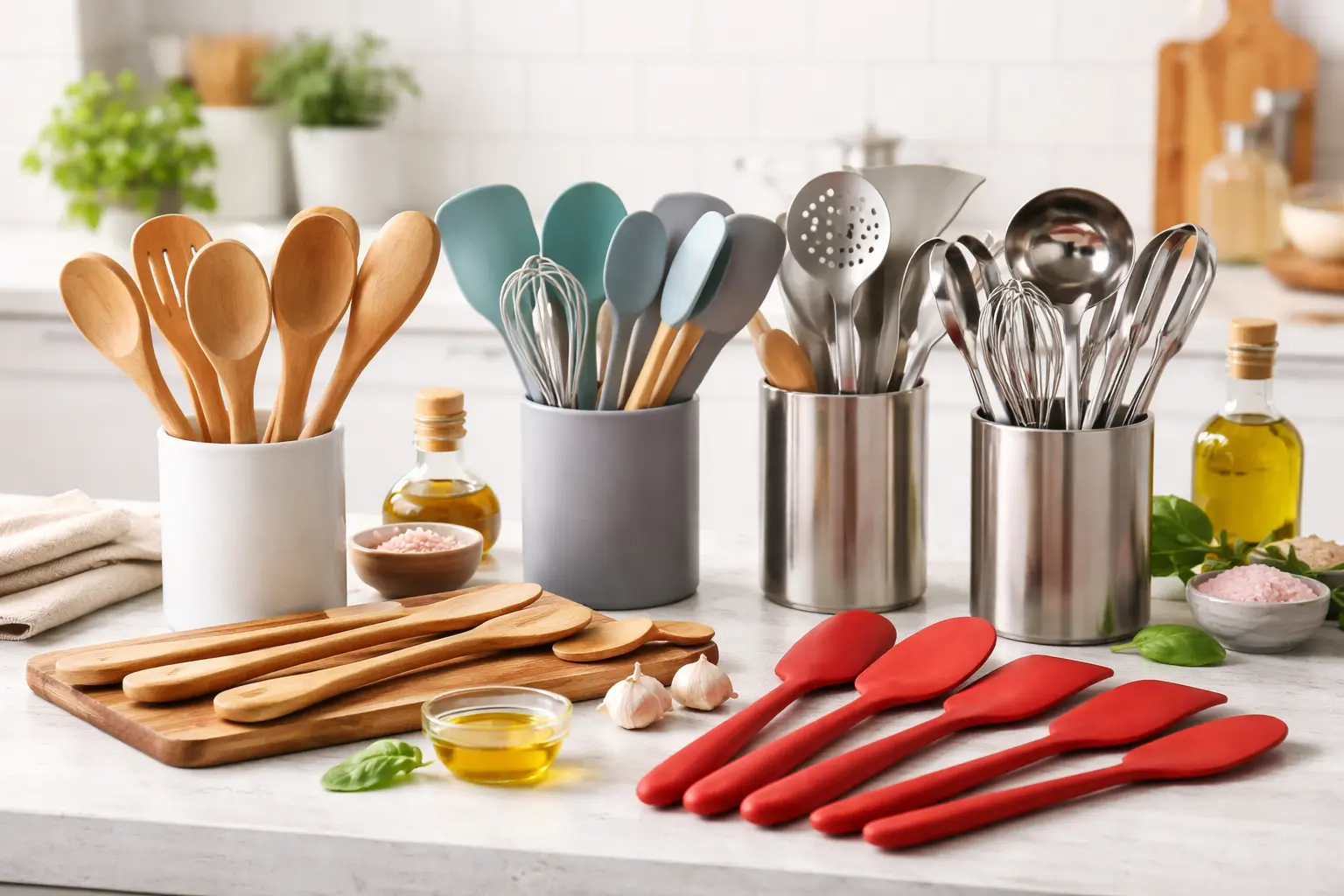
Most people focus on what they cook, but very few stop to think about what they cook with. Non-toxic cooking utensils are tools made from materials that stay chemically stable under heat, meaning no PFAS coatings, no BPA plastics, and no synthetic finishes quietly breaking down into your food.
I put this guide together for you, someone who cares about what ends up on the family plate and wants straight, clear answers without the marketing noise.
You’ll find out what makes a utensil genuinely safe, which materials to trust, and which specific picks are worth your money. By the end, you won’t just know what to buy, you’ll know exactly why it matters every single day.
|
Note: Prices, ratings, and product details can change over time because of retailer updates, discounts, stock changes, and new customer reviews. Always check the latest product page before buying. |
What Makes Cooking Utensils Non-Toxic?
Non-toxic cooking utensils are made from stable, food-safe materials that can handle normal cooking without releasing unwanted chemicals. The safest options are typically uncoated stainless steel, food-grade BPA-free silicone, and untreated wood or bamboo.
Labels can help, but they are not guarantees. FDA-compliant usually means the material is suitable for its intended food-contact use in the U.S. LFGB is a German food-contact testing standard often used for silicone products.
BPA-free means the product is made without bisphenol A, while PFAS-free usually means no intentionally added PFAS chemicals. Even with these labels, check the brand’s material details, heat limit, and care instructions.
As a rule, choose recognizable materials, check heat limits, avoid unclear coatings, and replace utensils that crack, peel, melt, or become difficult to clean.
11 Best Non-Toxic Cooking Utensils Available Right Now
Whether you cook daily or just on weekends, your kitchen tools matter more than you think. From budget-friendly bamboo to premium stainless steel, these 11 picks are chosen to match your lifestyle, cooking habits, and safety needs, so you can cook with confidence every single time.
1. OXO Good Grips Stainless Steel Utensil Set (Best Overall)
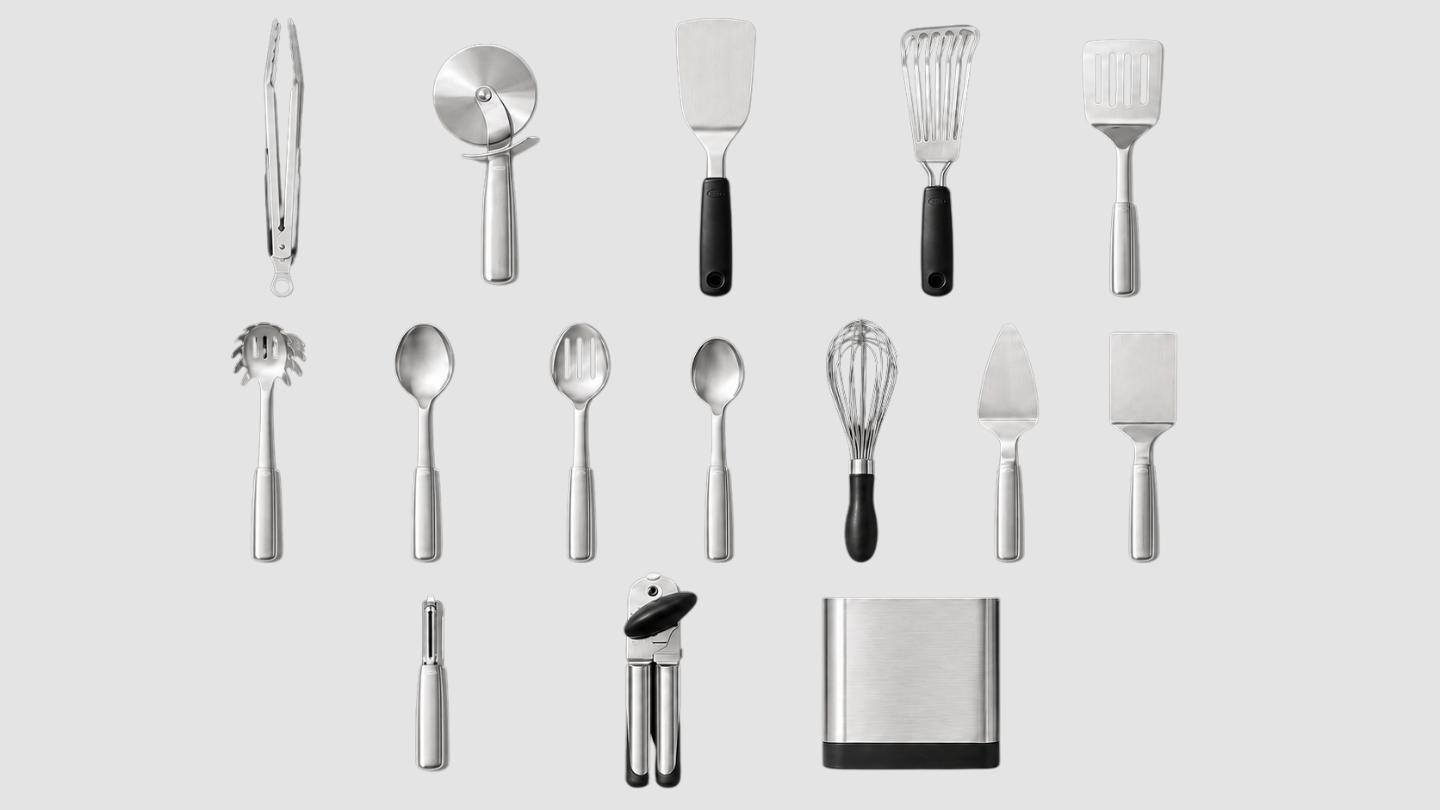
OXO’s stainless steel set earns top ratings for its sturdy build, ergonomic non-slip grip, and dishwasher-safe design. It includes 5–8 essential tools like a spatula, ladle, and slotted spoon, all made without any chemical coatings.
Lightweight yet solid, it works well with durable cookware materials such as stainless steel, cast iron, and carbon steel.
Perfect for beginners and seasoned cooks alike who need reliable, high-frequency daily use without wear or degradation.
- Cost: $50–$70
- Material: 18/8 stainless steel, rust and heat-resistant up to 400°F
- Customer Rating: 4.7/5
2. GIR Premium Silicone Utensil Set (Best Silicone)
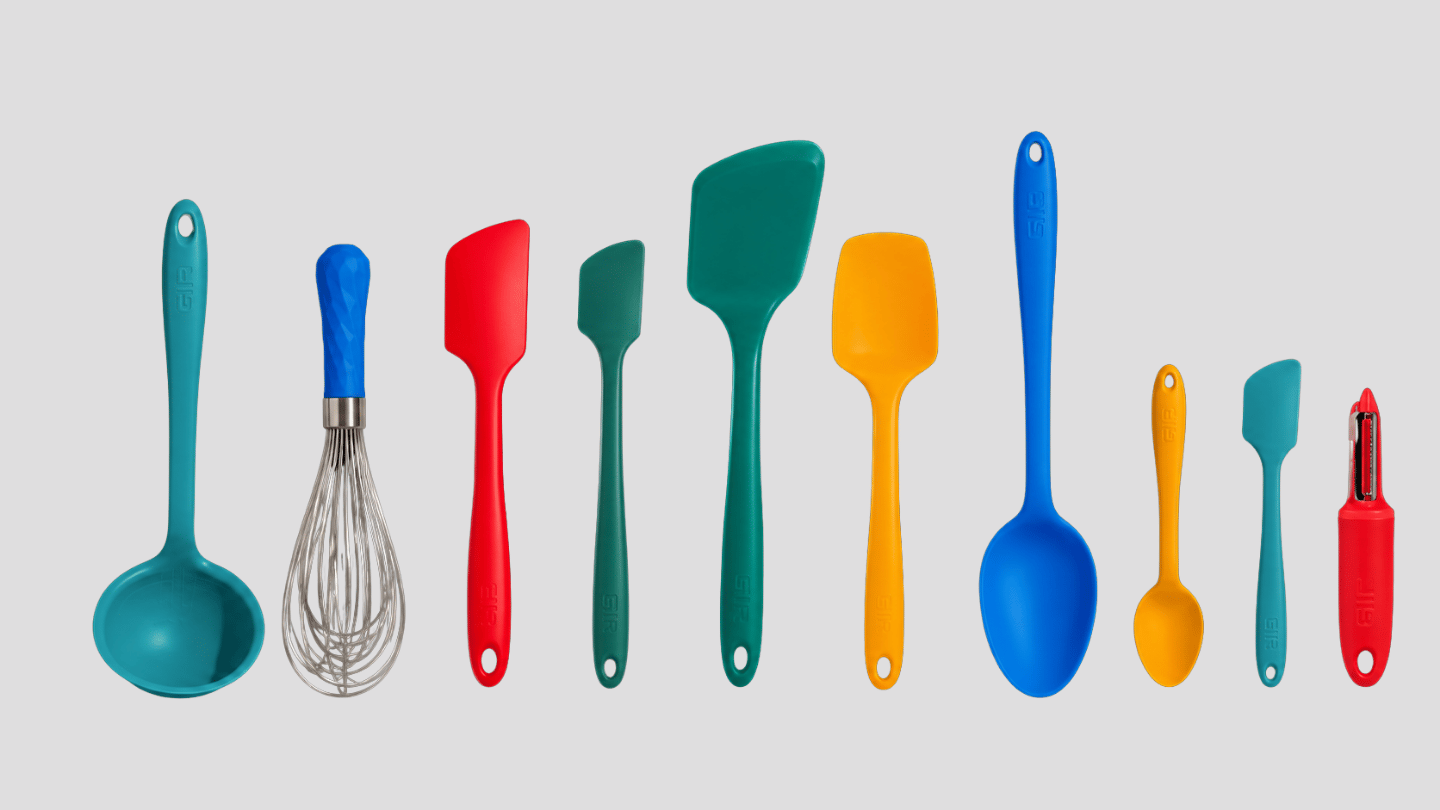
GIR’s food-grade silicone set is built for non-stick and coated pans, resisting staining, odors, and scratching effortlessly. A stainless steel core gives each tool a firm yet flexible feel, while the seamless one-piece construction leaves no grooves for bacteria to hide.
It handles high-heat cooking safely without releasing harmful chemicals. A perfect choice for health-conscious cooks who want easy cleaning, long-term durability, and genuine kitchen safety.
- Cost: $40–$70
- Material: 100% food-grade silicone, BPA-free and seamless
- Customer Rating: 4.6/5
3. Bambu Organic Bamboo Utensil Set (Best Eco Option)
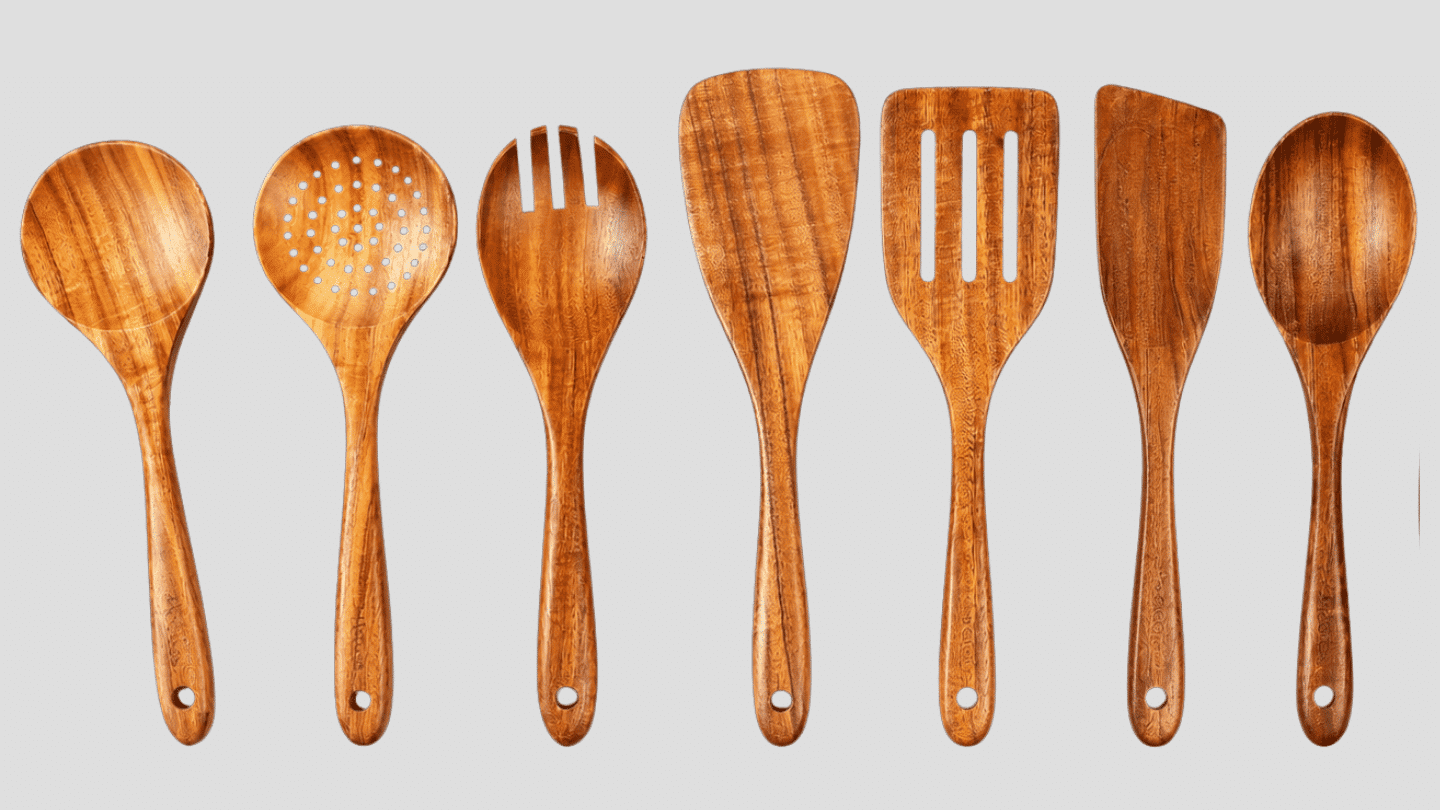
Bambu’s organically grown bamboo set is ideal for eco-conscious kitchens, eliminating plastic entirely. Free from chemical treatments and synthetic finishes, each tool is lightweight, naturally antimicrobial, and gentle on non-stick and ceramic cookware.
Bamboo grows quickly and can be a lower-waste option when it is responsibly sourced and finished without harsh coatings. Smooth-finished and comfortable to hold, this set delivers everyday cooking safety without compromising on performance or environmental responsibility.
- Cost: $20–$35
- Material: Organic bamboo, biodegradable and sustainably sourced
- Customer Rating: 4.5/5
4. Zulay Kitchen Wooden Spoon Set (Best Wood)
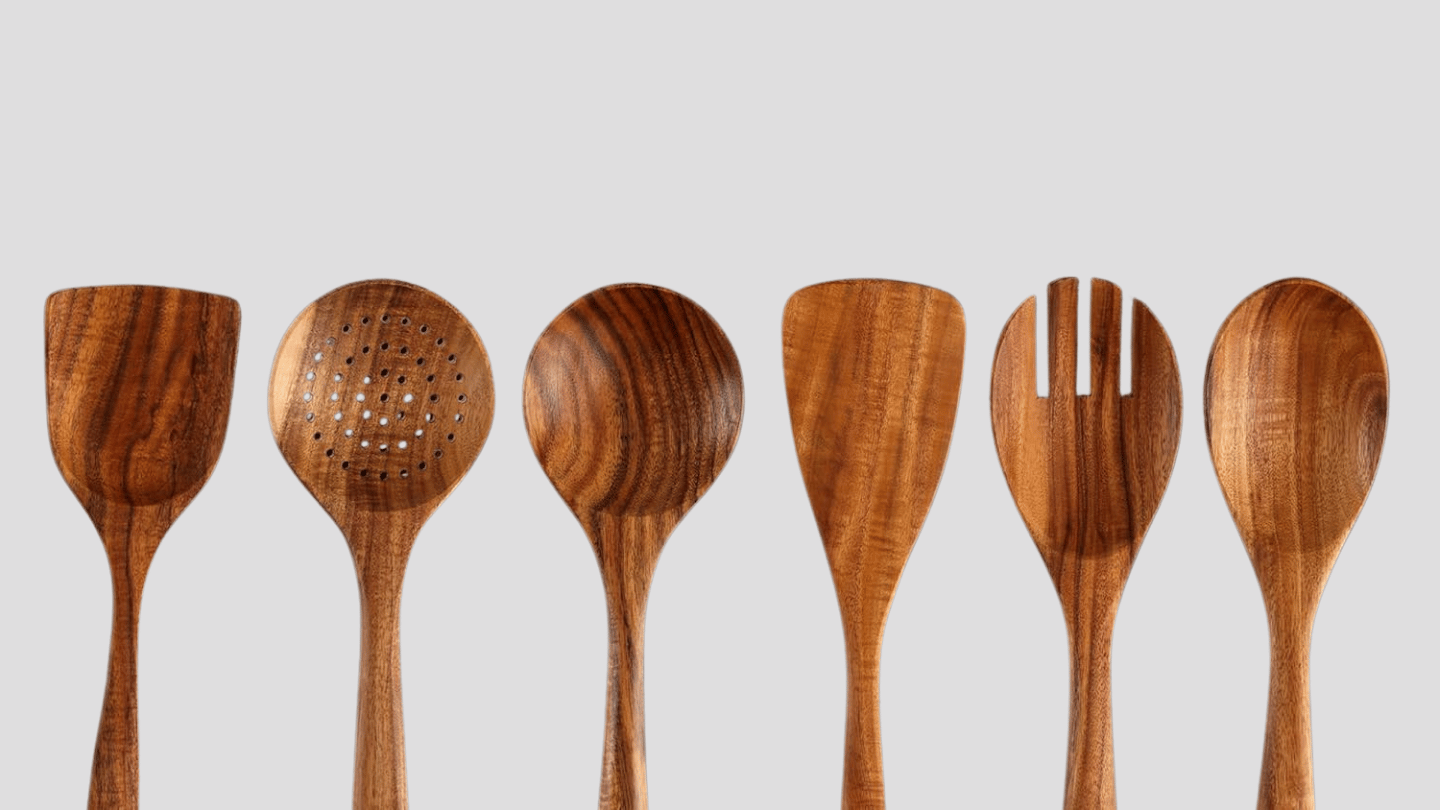
Zulay’s solid hardwood spoon set is completely free from coatings, dyes, and synthetic finishes that could leach into food.
Gentle on non-stick, stainless steel, and cast iron cookware, they stay smooth through regular washing without warping or degrading. If you cook with cast iron often, it also helps to season cast iron properly so the pan surface stays protected.
Thick, well-shaped handles provide a firm, comfortable grip during stirring and mixing. A budget-friendly, dependable choice for home cooks who trust traditional, naturally safe materials.
- Expected Cost: $15–$35
- Material: Solid untreated hardwood, coating-free and naturally safe
- Customer Rating: 4.5/5
5. StarPack Premium Silicone Spatula Set (Best for Non-Stick)
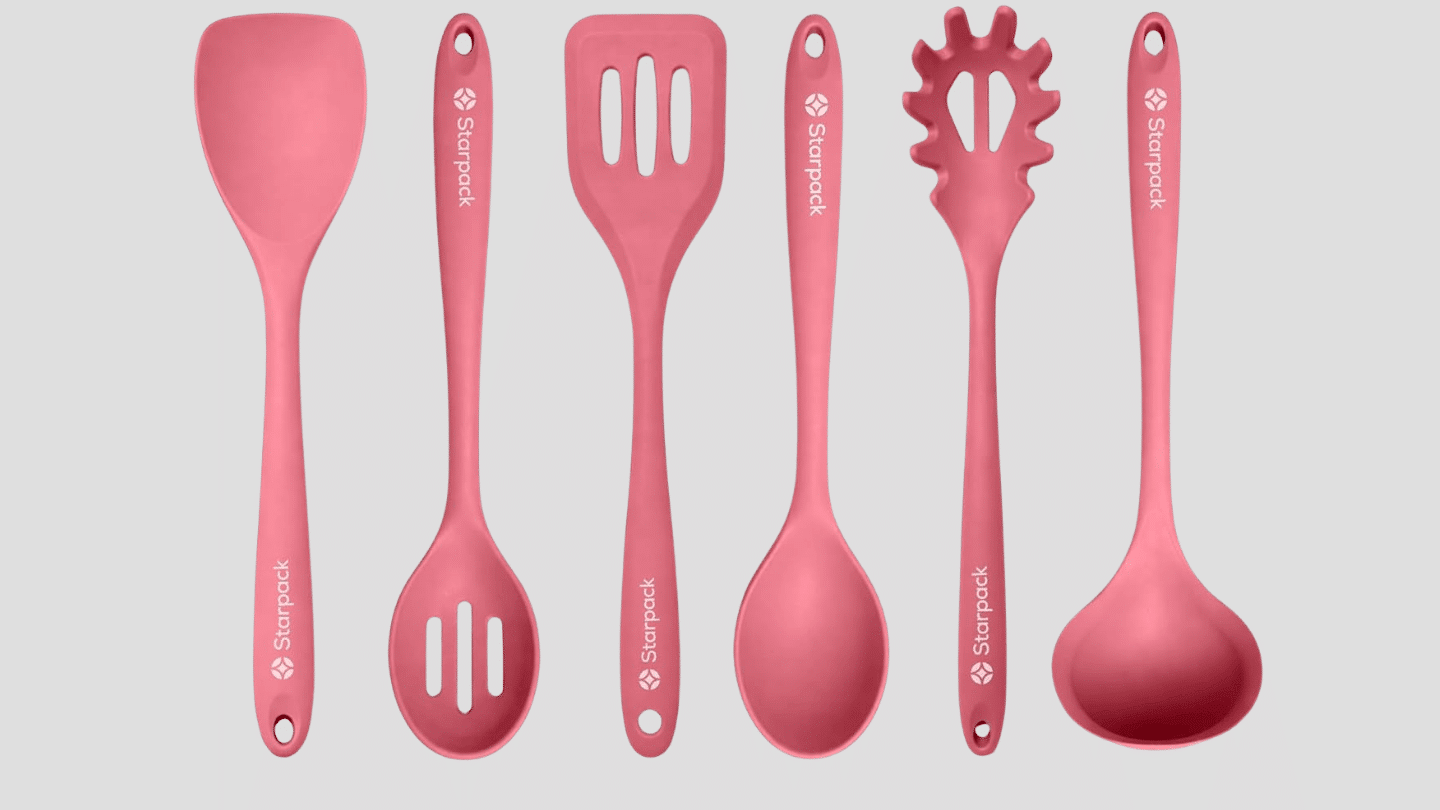
StarPack’s silicone spatula set is purpose-built for non-stick cookware. Each spatula is crafted from BPA-free, food-grade silicone that flexes easily to follow the curves of pans without scratching surfaces.
The flexible design makes flipping, scraping, and folding effortless. Heat-resistant and easy to clean, these spatulas hold up well through daily use. A reliable, safe pick for anyone who regularly cooks with non-stick or ceramic-coated pans.
- Cost: $15–$30
- Material: BPA-free food-grade silicone, flexible and non-scratch
- Customer Rating: 4.6/5
6. Home Hero Stainless Steel Utensil Set (Best Full Set)
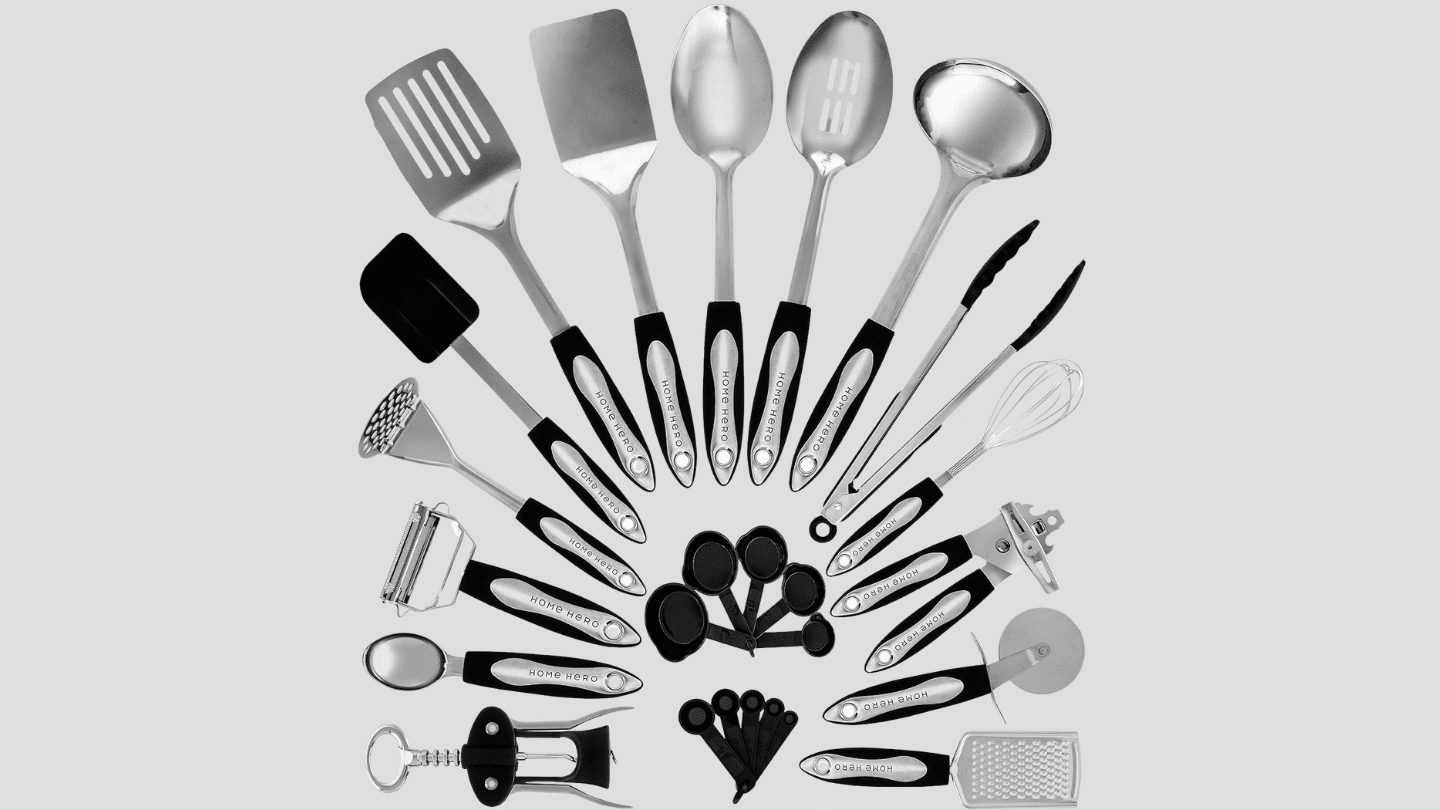
Home Hero delivers a complete kitchen toolkit in one package. This stainless steel set includes everything from ladles and spatulas to tongs and whisks, making it ideal for cooks who want a full setup without buying individually.
Built from durable, rust-resistant stainless steel with no toxic coatings, it handles most cooking tasks with ease. To keep similar kitchen surfaces in good shape, use gentle habits like the ones recommended for cleaning stainless steel pans. A great value pick for anyone furnishing a new kitchen or replacing an entire set of utensils at once.
- Cost: $25–$45
- Material: Rust-resistant stainless steel, coating-free and dishwasher-safe
- Customer Rating: 4.5/5
7. Umite Chef Silicone Cooking Utensils Set (Best Budget)
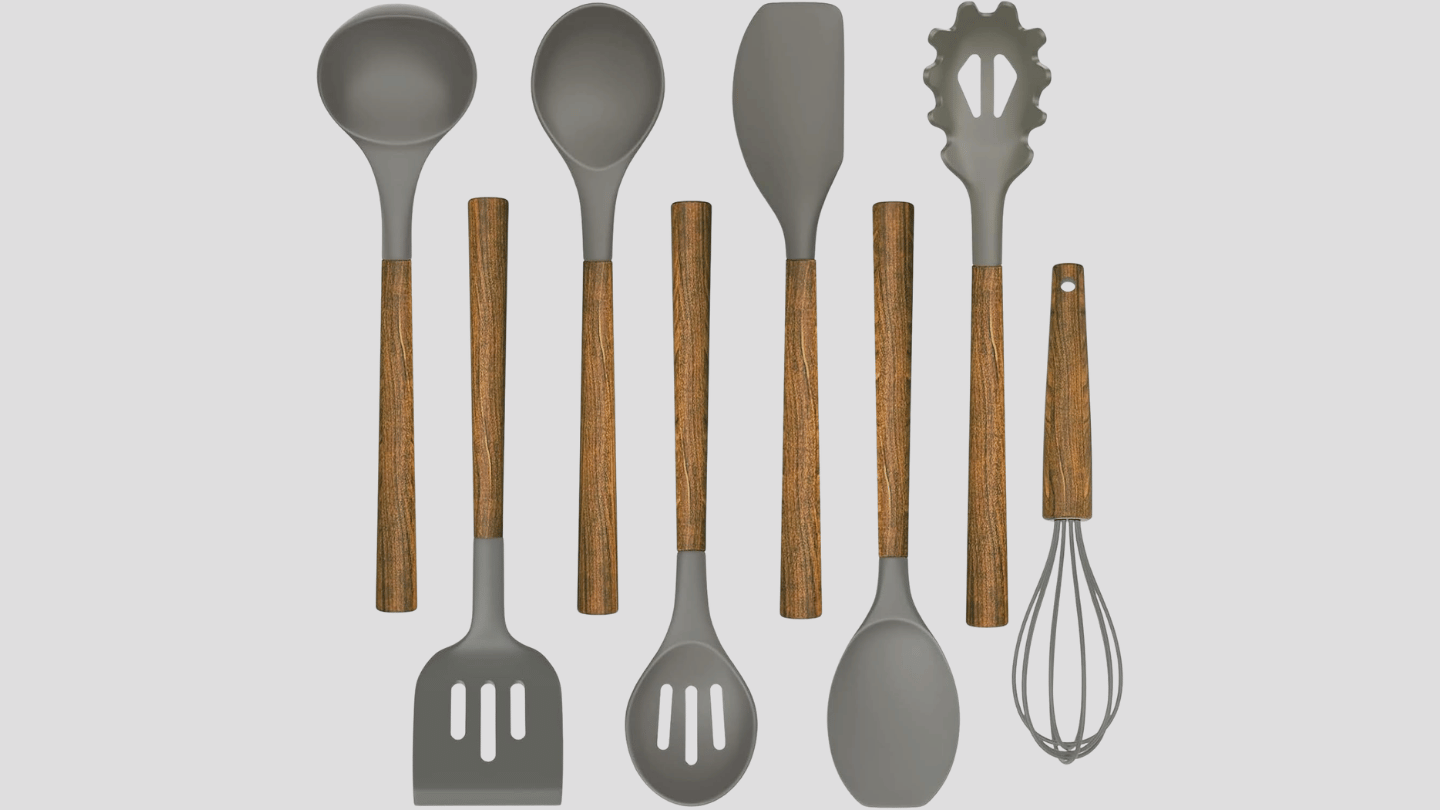
Umite Chef proves that safe, non-toxic kitchen tools don’t have to break the bank. This budget-friendly silicone set is heat-resistant up to 480°F and made from BPA-free materials that won’t leach chemicals during cooking.
The set covers all essential tools at a fraction of the cost of premium brands. Reviewers praise its solid performance and durability for the price, making it a smart entry-level choice for safe everyday cooking.
- Cost: $15–$25
- Material: BPA-free silicone, heat-resistant up to 480°F
- Customer Rating: 4.4/5)
8. Riveira Bamboo Cooking Utensils (Best Value Bamboo)
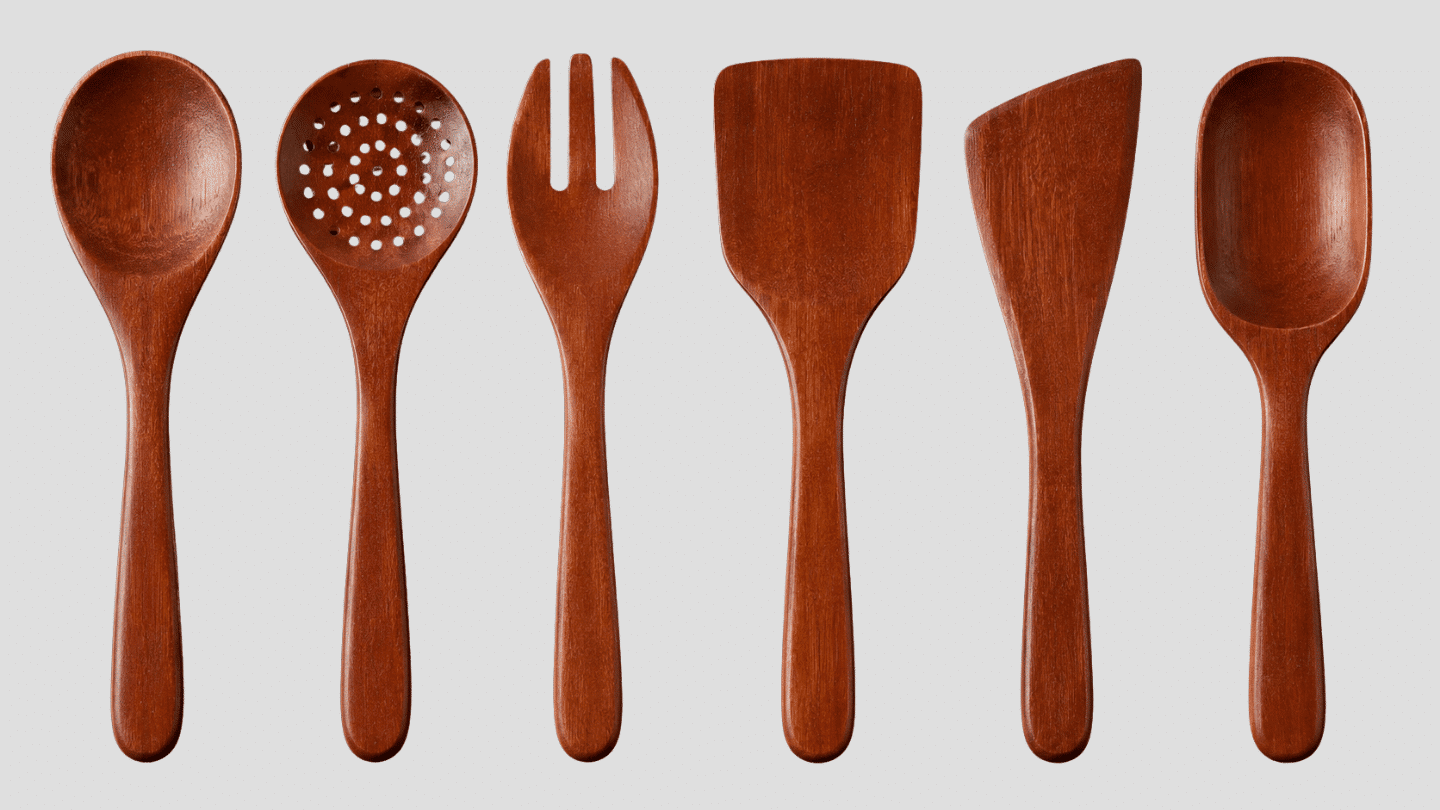
Riveira’s bamboo utensil set offers excellent value without cutting corners on quality or safety. Each piece features a smooth, splinter-free finish that feels comfortable in hand and is gentle on all cookware surfaces.
Free from chemical treatments and synthetic coatings, these tools are naturally safe for food contact. Lightweight and easy to use, they’re a practical everyday option for cooks who want an affordable, eco-friendly alternative to plastic utensils.
- Cost: $18–$30
- Material: Natural bamboo, smooth-finished and chemical-free
- Customer Rating: 4.4/5
9. All-Clad Stainless Steel Kitchen Tools (Best Premium)
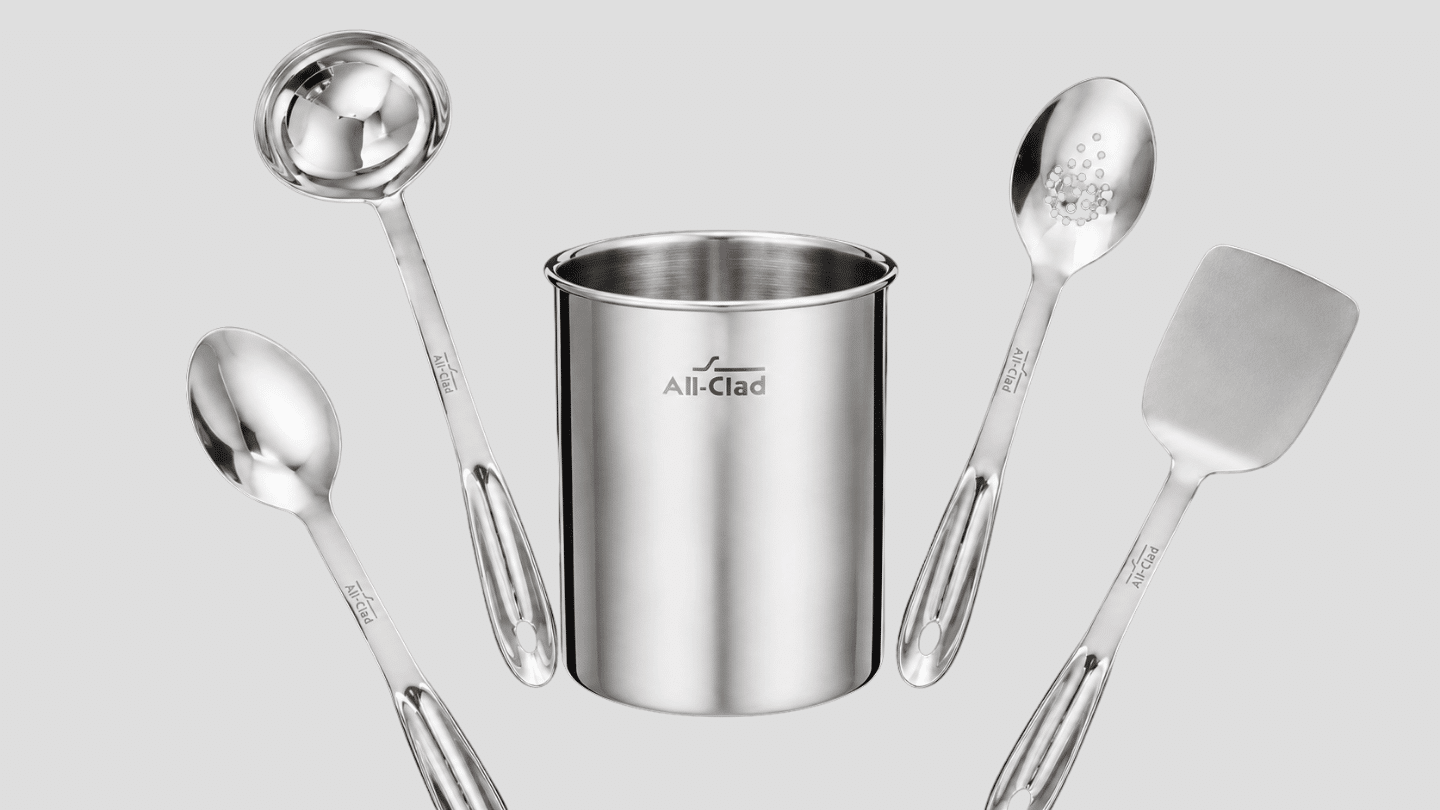
All-Clad is a name synonymous with premium kitchen quality, and their stainless steel utensil line is no exception. Built for serious home cooks and professionals, these tools feature a high-grade polished finish, exceptional weight balance, and long-lasting durability. No coatings, no compromise, just pure stainless steel designed to perform for decades.
Reviewers consistently highlight their superior craftsmanship and comfort. An investment piece for those who want the very best in non-toxic kitchen tools.
- Cost: $60–$120
- Material: High-grade polished stainless steel, professional quality
- Customer Rating: 4.8/5
10. Di Oro Seamless Silicone Spatulas (Best One-Piece Design)
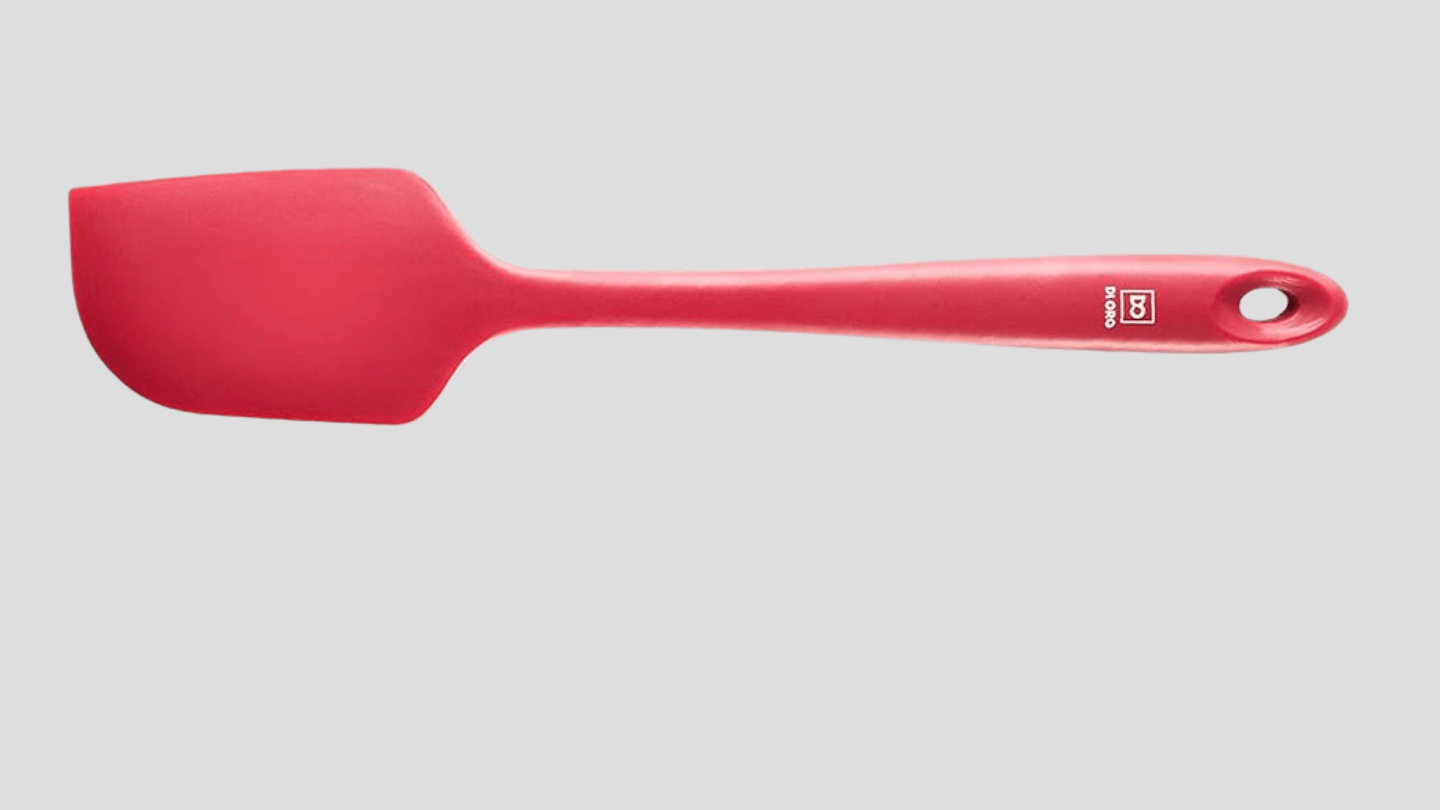
Di Oro’s seamless silicone spatulas eliminate the weak joint between handle and head, a common failure point in standard spatulas. The one-piece construction means no trapped food, no bacteria buildup, and no snapping under pressure.
Made from pro-grade BPA-free silicone, they’re heat-resistant and incredibly easy to clean. Reviewers love the hygienic design and solid feel. A top recommendation for anyone who values both safety and smart, practical kitchen engineering.
- Cost: $12–$25
- Material: Pro-grade seamless BPA-free silicone joint-free construction
- Customer Rating: 4.7/5
11. Neet Organic Wooden Kitchen Utensils (Best Natural Wood)
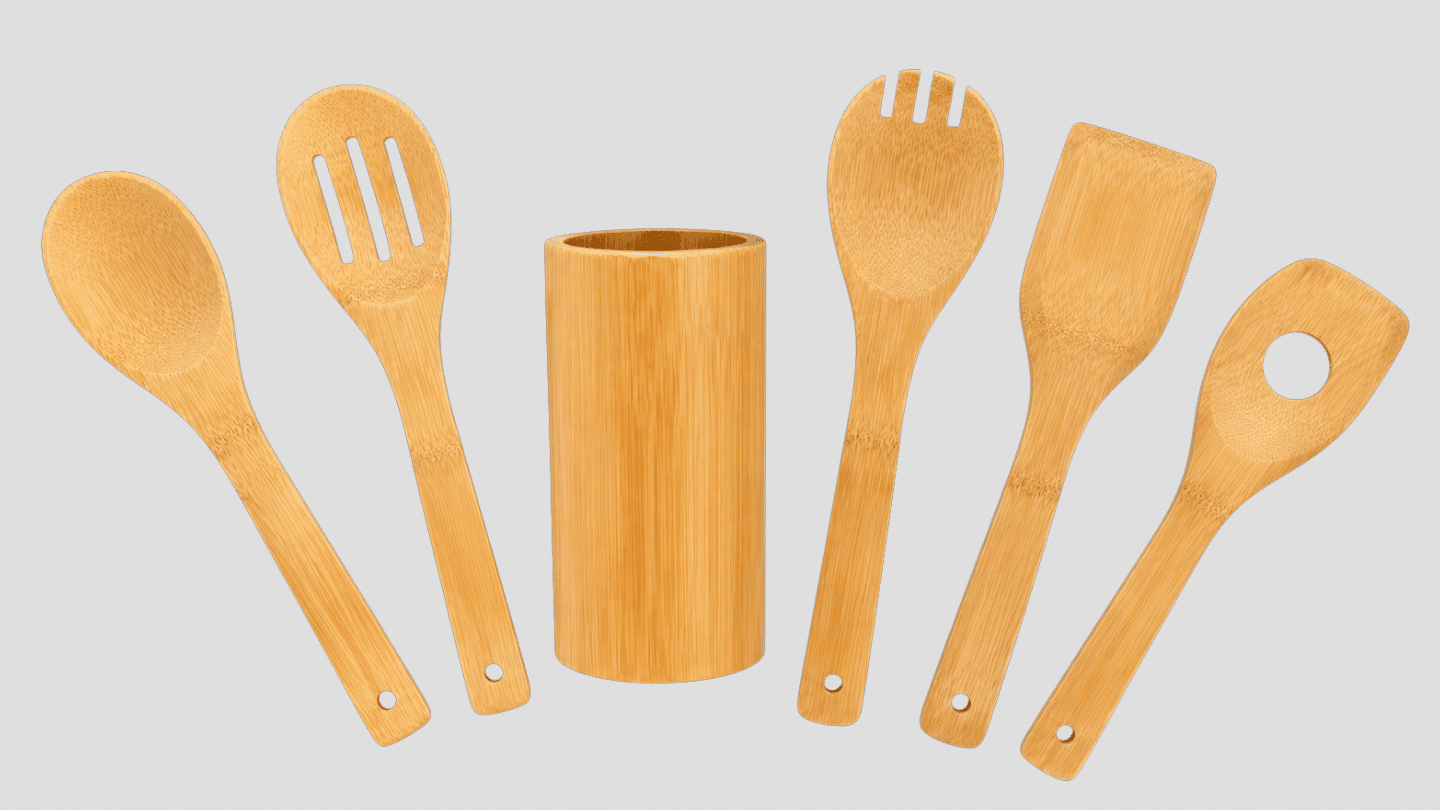
Neet’s organic wooden utensil set keeps things refreshingly simple and safe. Made from untreated, natural wood with no dyes, varnishes, or chemical finishes, these tools are as close to nature as kitchen utensils get.
The straightforward build makes them easy to clean and maintain with minimal effort. Lightweight and smooth, they work well for everyday stirring, serving, and scooping. A great choice for those who prefer pure, minimalist kitchen tools free from any synthetic materials.
- Cost: $15–$28
- Material: Untreated natural wood, dye-free and finish-free
- Customer Rating: 4.4/5
| Quick note on prices and ratings: The costs and customer ratings listed below are general reference points and may change over time based on retailer pricing, discounts, stock, product updates, and new customer reviews. Always check the latest price, rating, warranty details, and material claims on the seller’s page before buying. |
Growing Demand for Safer Kitchen Tools
More shoppers are paying attention to what their cookware and utensils are made from, especially when tools touch hot food. Concerns around PFAS, BPA, black plastic utensils, and mystery coatings have pushed many buyers toward stainless steel, wood, bamboo, and food-grade silicone.
| Trend | What’s Happening | Why It Matters |
|---|---|---|
| PFAS awareness | PFAS are widely discussed because they have been used in some food-contact materials for non-stick and grease-resistant performance | Buyers are looking more closely at PFAS-free cookware and utensil claims |
| BPA-free buying | BPA has been used in some food-contact plastics and resins | BPA-free labels help shoppers avoid one common concern in plastic-adjacent tools |
| Silicone scrutiny | Food-grade silicone remains popular, but buyers now check heat limits, odor, fillers, and certification claims | Better-quality silicone is safer and more durable than cheap, poorly labeled tools |
| Wood and bamboo demand | Natural-looking kitchen tools are popular because they avoid plastic and coatings | These materials are useful, but they still need proper cleaning and drying |
| Certification checks | Labels like FDA-compliant, LFGB-tested, BPA-free, and PFAS-free are appearing more often | Certifications can guide buyers, but claims should still be checked |
| Less trust in vague “non-toxic” claims | “Non-toxic” is often used in marketing without enough detail | Shoppers should look for material names, test claims, and heat limits instead of relying on broad wording |
The safest approach is not to buy every product with a clean-looking label. It is to check what the utensil is made from, how hot it can safely get, whether it has coatings, and whether the brand clearly explains its food-contact testing.
How to Care for Non-Toxic Kitchen Utensils
You’ve made a smart choice switching to non-toxic utensils; now make them last. A simple care routine protects your investment, keeps your tools hygienic, and ensures they stay genuinely safe for your family every day.
- Clean by Material: Hand wash stainless steel and wood; silicone is dishwasher-safe, but hand washing extends lifespan
- Avoid Harsh Chemicals: Bleach and abrasive cleaners break down silicone, bamboo, and wood surfaces over time
- Store Upright and Dry: Keep utensils in a breathable holder; never store wood or bamboo in damp spaces
- Know When to Replace: Discard utensils showing cracks, rust, tears, deep stains, or persistent odors after washing.
A little care goes a long way. Treat your non-toxic utensils well, and they’ll reward you with years of safe, reliable cooking, exactly what your kitchen and family deserve.
Frequently Asked Questions
Are black plastic cooking utensils safe?
Black plastic utensils are worth replacing if they are old, scratched, melted, or from an unknown brand. Some black plastics may be made with recycled materials, which can make their exact makeup harder to confirm.
Heat, scratches, and repeated use can also make low-quality plastic break down faster. For regular cooking, stainless steel, wood, bamboo, or food-grade silicone are safer everyday choices. If you cook often, stainless steel, wood, bamboo, or food-grade silicone are better everyday choices.
Can stainless steel utensils scratch non-stick pans?
Yes, stainless steel utensils can scratch traditional non-stick, ceramic-coated, or other coated pans. They are better for stainless steel cookware, cast iron, carbon steel, and other tough surfaces. For non-stick pans, use food-grade silicone, wood, or bamboo tools instead.
Is silicone safer than plastic for cooking utensils?
Food-grade silicone is usually a better choice than regular plastic for cooking because it handles heat better and does not soften as easily during normal use. Still, quality matters. Choose BPA-free silicone, check the heat rating, avoid strong chemical smells, and replace silicone tools if they turn sticky, cracked, or damaged.
Are wooden utensils really hygienic?
Wooden utensils can be hygienic when cleaned and dried properly. Wash them by hand with mild soap, rinse well, and let them dry fully before storing. Do not soak them, put them in the dishwasher, or leave them damp. Cracked or deeply stained wooden tools should be replaced because food can get trapped in the damaged surface.
What should I avoid when buying non-toxic cooking utensils?
Avoid utensils with vague material descriptions, painted surfaces, peeling coatings, strong chemical smells, unknown plastic blends, or no heat-safety information. Also be careful with very cheap silicone sets that do not mention food-grade material, BPA-free status, or temperature limits. Clear labeling is usually a better sign than broad “eco” or “non-toxic” claims.
How often should cooking utensils be replaced?
There is no fixed timeline because it depends on material and use. Replace silicone if it tears, smells odd, feels sticky, or melts. Replace wood and bamboo if they crack, splinter, or hold odors. Replace stainless steel if it rusts, bends badly, or has loose handles. Damage matters more than age.
The Bottom Line on Non-Toxic Kitchen Tools
Safe cooking starts long before the food hits the pan. I’ve walked you through the materials that matter, the products worth buying, and the care habits that keep your tools performing safely for years.
Switching to non-toxic cooking utensils is not about being perfect; it is about making one informed swap at a time.
You now know what to look for on labels, which certifications to trust, and when it’s time to replace a worn-out tool. Small changes in your kitchen add up to real differences for your family’s health.
If you are not ready to replace everything at once, start with the utensil you use most. I would swap scratched plastic first, then move toward stainless steel, food-grade silicone, wood, or bamboo based on your cookware.
Got a favorite safe utensil? Drop it in the comments, I’d love to hear what is working in your kitchen.