
You‘ve seen “bean to bar” stamped on chocolate wrappers at the specialty grocery, on artisan brand websites, even in coffee shops next to the single-origin display. The phrase sounds important. But unless someone explains what it involves, it reads like another bit of food marketing engineered to justify a $9 bar.
Here‘s what‘s underneath the label – and why a real bean-to-bar chocolate tastes almost nothing like what‘s been dominating supermarket shelves for the last fifty years.
What “Bean to Bar” Actually Describes
A bean-to-bar maker controls every step from raw cacao bean to finished chocolate. Sounds obvious. It‘s not how most chocolate is made.
Most “chocolate” comes from a handful of industrial producers – Barry Callebaut, Cargill, Olam – who buy commodity cacao, blend beans from dozens of farms, and ship couverture (pre-processed chocolate) to brands that remelt it, add sugar and flavors, and stamp their name on the package.
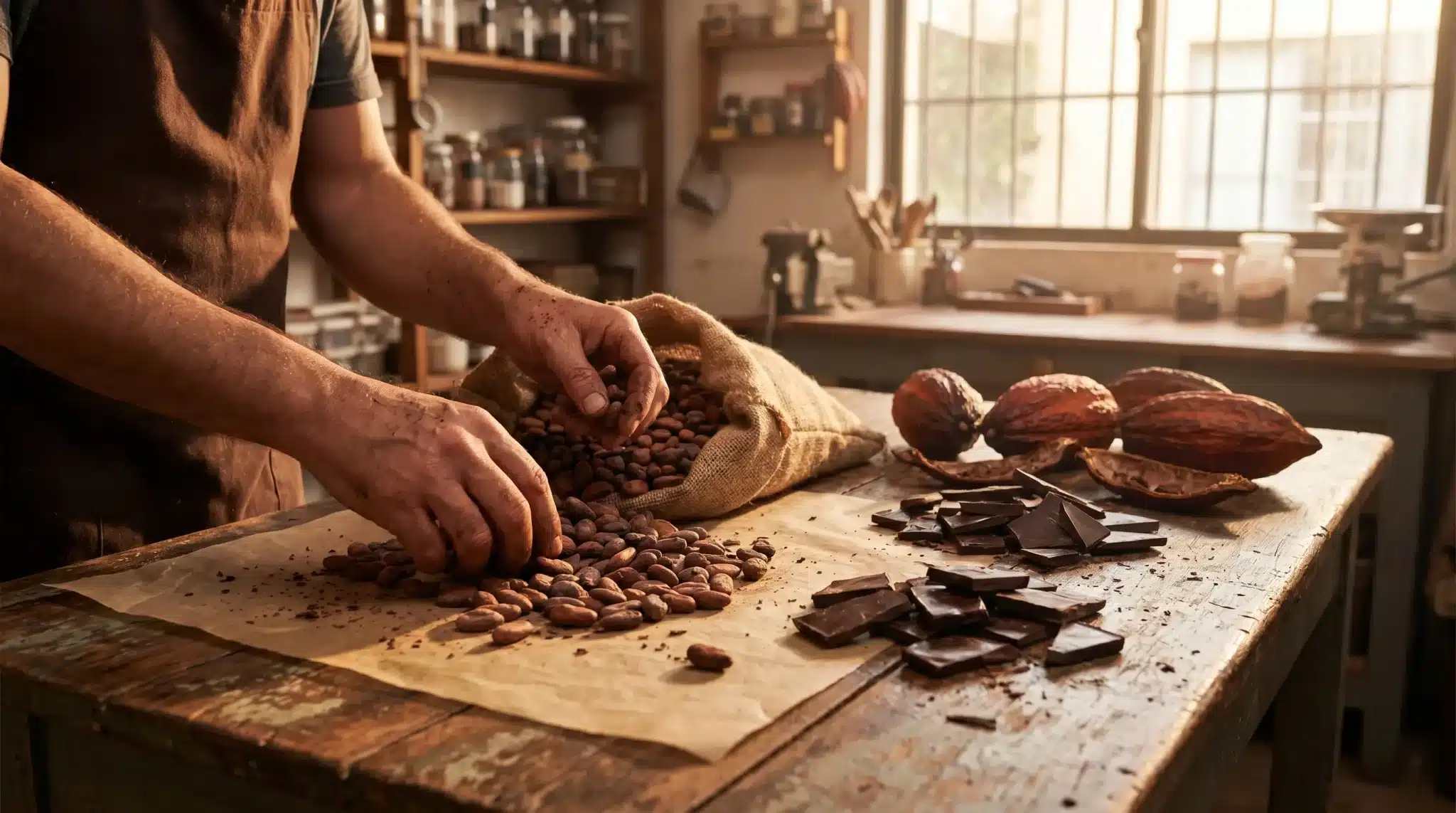
A bean-to-bar maker buys their own cacao – direct from farmers, single-origin from one cooperative or estate – then handles fermentation oversight, roasting, winnowing, grinding, conching, tempering, and molding in-house. Every one of those steps changes the final flavor.
Why It Tastes So Different
Industrial chocolate aims for consistency. The same bar should taste identical in 2018, 2024, and 2030. To pull that off, producers blend beans aggressively and roast hot enough to flatten differences. The result is reliable and kind of dull.
Bean-to-bar makers do the opposite. They want origin to come through. Madagascan beans taste like red fruit and citrus. Venezuelan Chuao reads as nutty and floral. Vietnamese cacao – the current darling of the craft scene – has dark berry and pepper notes.
Lower roast temperatures preserve volatile compounds. Conching times of 72+ hours (versus the industrial 6-12) develop a smoother texture. Smaller batches mean a bad fermentation gets caught before it ruins the whole run.
The first time I tried a side-by-side – a craft 70% from a single Peruvian cooperative against a Lindt 70% – it almost felt like a trick. The craft bar arrived in waves: dried cherry, earth, then a long espresso finish. The supermarket version tasted like one note held flat.
Quick tip: “Made with single-origin Ecuadorian cacao” is a marketing softener – it can still be industrial couverture. Look for “bean to bar” plus a specific farm or cooperative name. The combination is what matters.
Where the Movement Spread
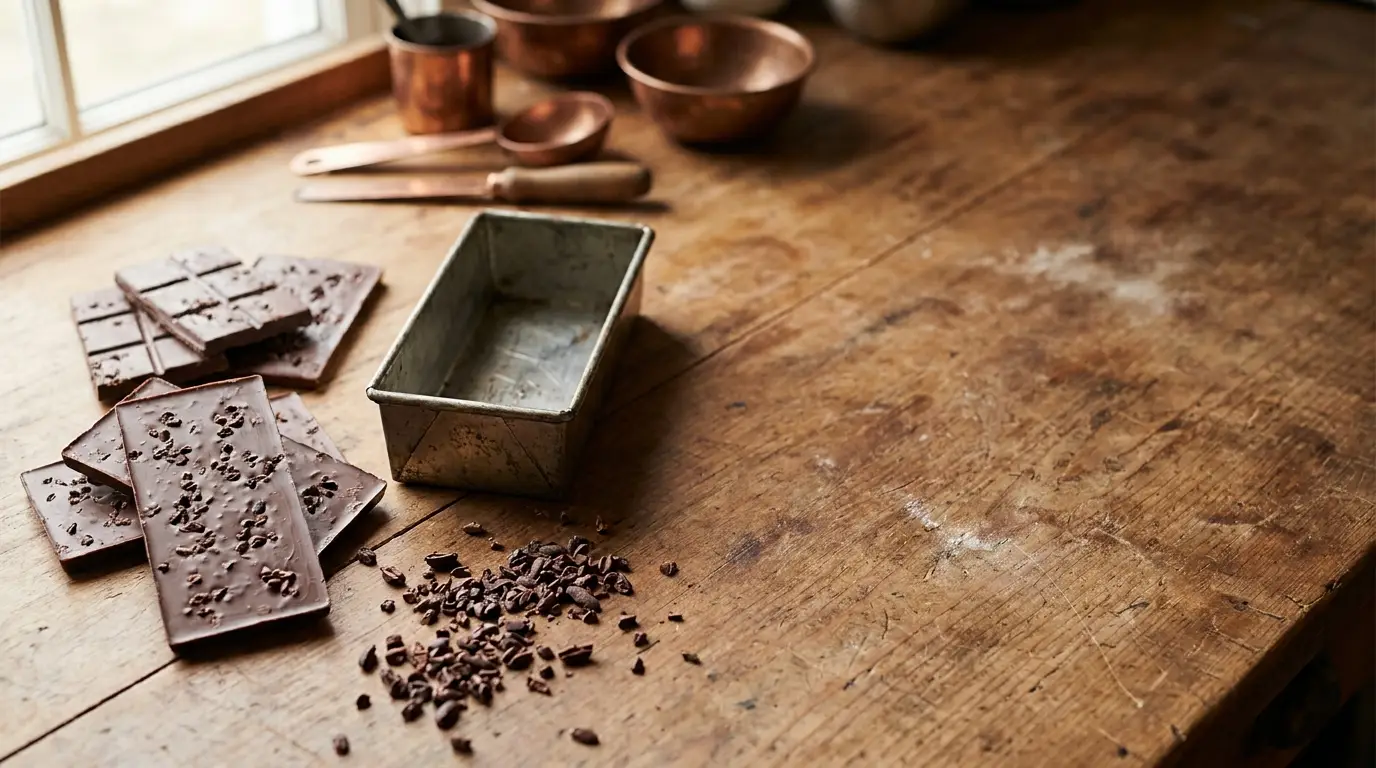
The bean-to-bar approach took off with a handful of obsessives in the early 2000s – Mast Brothers, Dandelion, Askinosie. Now there are hundreds of small craft chocolate makers across the US alone, plus established names in Europe, and a growing wave from producing countries like Colombia and Ghana.
That craft mindset has spread sideways into adjacent categories. THC-infused chocolate edibles from quality producers now use the same logic – sourcing real chocolate instead of waxy industrial coating, keeping batches small, and treating the chocolate as the actual product rather than a delivery vehicle. The infused space used to be dominated by sugar-bomb bars where the chocolate was an afterthought. Newer producers approach it the way a craft chocolate maker would.
It‘s a useful test for whether any chocolate-based product takes itself seriously: ask what the chocolate base is. If they don‘t know or won‘t say, it came from a vat.
The Slow Food Connection
Bean to bar is essentially the slow food argument applied to chocolate. The principles line up: know where the raw material comes from, pay farmers a fair price (most bean-to-bar makers pay 2-3x commodity rates), make less but make it well, let regional differences show, reject the flattening effect of mass production.
If you‘ve cared about single-origin coffee or hand-processed tea, you already understand the mindset. Cacao just took longer to get its movement going – the equipment is more specialized, the supply chain more opaque, and flavor education further behind.
Warning: “Single origin” alone isn‘t the same as bean to bar. Plenty of brands buy single-origin couverture from industrial processors and use the phrase anyway. The supply chain is what matters, not the marketing line.
How to Start Tasting the Difference
Buy two bars at similar cacao percentages – one supermarket, one bean-to-bar from your local specialty store (Dick Taylor, Fruition, Raaka, Castronovo, whoever‘s in stock). Try them at room temperature, never cold from the fridge.
Let a small piece sit on your tongue without chewing. Notice the order flavors arrive in. Notice what happens after you swallow.
Most people get it within two bars. Some don‘t, and that‘s fine – not every distinction is worth caring about. But if you‘ve ever wondered why someone would pay $9 for chocolate, this is your answer.
The Bottom Line
Bean to bar isn‘t a luxury label. It‘s a production model that prioritizes flavor and farmers over scale and shelf-stability. The bars cost more because the cacao costs more, the process takes longer, and the batches are smaller. What you get back is chocolate that tastes like the place it came from – which is the whole point of caring about food in the first place.