
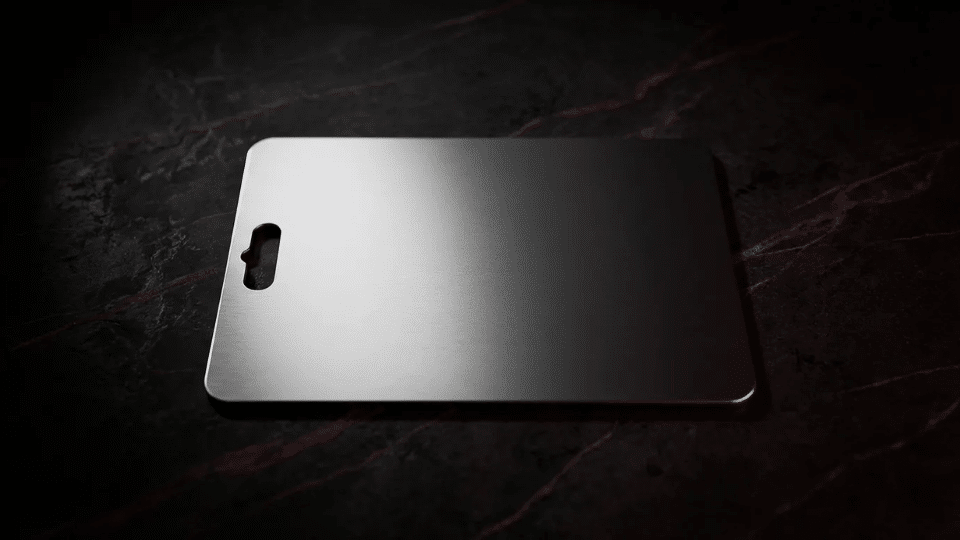
If you’ve been eyeing a stainless steel cutting board and wondering whether it’s actually worth the switch, you’re not alone.
Most people arrive here after one too many battles with a smelly wooden board or a plastic one that’s seen better days.
The answer is more nuanced than most buying guides let on, the real stainless steel cutting board pros and cons, how it stacks up against wood and plastic, what the hygiene claims get right and wrong, and the one cutting board use mistake that catches most people out.
By the end, you’ll know whether stainless steel actually belongs in your kitchen.
The Honest Answer First
Stainless steel cutting boards are genuinely useful, but they work best as a secondary board, not your everyday workhorse.
If you’re prepping raw meat, fish, or anything you’d rather not touch your wooden board, stainless steel earns its place. It’s easy to sanitize, it won’t hold onto smells, and it handles heavy-duty cleaning without complaint.
That said, your knives will feel the difference. For daily chopping, vegetables, bread, and fruit, a wooden or plastic board still serves you better.
Think of stainless steel as a practical addition to your kitchen, not a replacement for what’s already working.
Why People Are Considering Stainless Steel

Most people don’t wake up one day and decide to switch cutting boards. It usually starts with a frustration, a plastic board that’s gone grey and scratched, a wooden one that smells faintly of last Tuesday’s salmon, no matter how well you wash it.
Bacterial concerns also play a role. Once you start reading about how plastic grooves and wood grain can harbor residue that regular washing doesn’t always reach, stainless steel starts looking appealing.
It’s also the material used in professional kitchens, and that carries weight. People assume that if it works there, it’ll work at home. Sometimes that’s true. Sometimes it’s more complicated than that.
Pros of Stainless Steel Cutting Boards
Stainless steel offers real advantages in the kitchen; here’s where it genuinely delivers over plastic and wood.
- It lasts practically forever: Unlike plastic that warps and wood that cracks without regular oiling, stainless steel holds its condition with almost no upkeep. A mid-range board costs $30–$60 and realistically lasts a decade or more with basic care.
- Cleaning is genuinely easy: Dishwasher safe, tolerant of stronger cleaning solutions, and unfazed by hard scrubbing. There’s no swelling, no surface damage, and no smell lingering after a wash. For anyone regularly handling raw meat or fish, reliability matters.
- It doesn’t hold smells or stains: Garlic, raw fish, onion, none of it absorbs into the surface. Once it’s washed, it’s clean in a way that plastic and wood often simply aren’t. If you’ve ever tasted last week’s onion in your fruit, you know exactly why this counts.
- No microplastic shedding: Every time you cut on a plastic board, tiny microplastic particles end up in your food. Research has increasingly flagged this as a genuine concern. Stainless steel sheds nothing, and for anyone thinking carefully about what ends up on their plate, that’s a real advantage worth considering.
Cons You Should Know
Stainless steel isn’t without its drawbacks, and a few of them are significant enough to affect how you use it daily.
- It dulls your knives faster: The hardness of the surface is unforgiving on blade edges. Use it daily, and you’ll notice the difference in sharpness within weeks. If your knives cost anywhere between $50–$150, that’s where you’ll feel both in performance and in the cost of more frequent sharpening.
- The noise and feel wear on you: Knife on metal is loud in a way that becomes genuinely grating during longer cooking sessions. The hard surface is also tiring on your wrists and hands, something you won’t notice prepping a quick weeknight meal but will absolutely feel working through a larger spread. Wood absorbs impact in a way stainless steel simply doesn’t.
- It slides around: Most stainless steel boards are smooth on the bottom, which means they shift mid-chop without something to hold them in place. A damp towel or rubber mat underneath solves it, but boards with built-in grip feet are worth prioritizing. A moving board mid-cut is a safety issue, not just an inconvenience.
Quick Comparison: Stainless Steel vs Wood vs Plastic
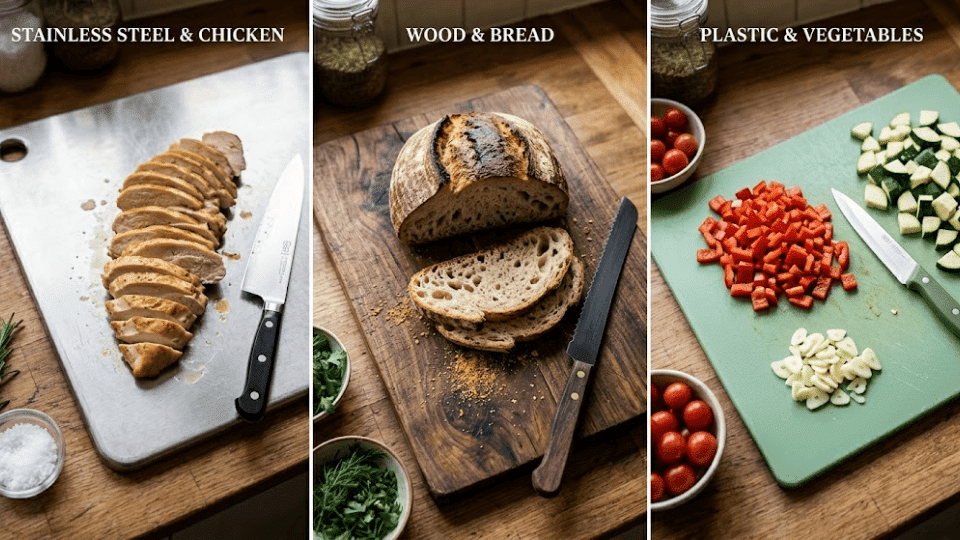
Choosing between these three comes down to how you cook, what you’re cutting, and how much maintenance you’re willing to do.
| Feature | Stainless Steel | Wood | Plastic |
|---|---|---|---|
| Hygiene | Non-porous, easy to sanitize | Porous, needs regular care | Porous once scratched |
| Knife Friendliness | Poor, dull blades fast | Good, gentle on edges | Moderate |
| Durability | Excellent, lasts decades | Good with oiling and care | Low, needs replacing often |
| Odor/Stain Resistance | Excellent | Moderate | Poor over time |
| Microplastic Risk | None | None | Yes |
| Dishwasher Safe | Yes | No | Usually yes |
| Typical Cost | $30–$60 | $25–$80 | $10–$30 |
| Best For | Meat, fish, heavy-duty prep | Vegetables, bread, daily use | Budget option, light use |
The honest takeaway: no single board wins across every category. Most well-equipped kitchens use two, one for meat, one for everything else. The material matters less than having a clear system.
Common Myths vs Facts About Stainless Steel Cutting Boards
Stainless steel has built a reputation that isn’t entirely earned. A few persistent myths tend to push people toward it for the wrong reasons. Here’s what actually holds up.
| Myth | Fact |
|---|---|
| Stainless steel is bacteria-proof | No surface is bacteria-proof. While non-porous surfaces are easier to clean, bacteria can survive if not properly washed. |
| It’s the safest board for food prep | Safety depends on cleaning habits, not material. Well-maintained wood or plastic boards are as safe as stainless steel if used properly. |
| Professional kitchens use it, so it must be the best | Commercial kitchens emphasize durability and quick sanitization, unlike home kitchens. What works in a restaurant doesn’t always suit daily cooking. |
| It keeps knives sharper because it’s smooth | The opposite is true. Hardness dulls blades, not texture. Stainless steel is one of the worst for knife longevity. |
The material isn’t the problem; the assumptions around it are. Understanding what stainless steel actually does, and doesn’t do, puts you in a much better position to use it well.
The Biggest Mistake People Make
Most people focus on picking the right board when the real issue is how they use it.
- Using one board for everything: Switching between meat, vegetables, and bread on the same surface is where cross-contamination actually happens, regardless of material
- Assuming the board does the hygiene work: No board cleans itself; proper washing after every use, especially after raw meat or fish, is non-negotiable
- Switching materials without changing habits: Buying stainless steel doesn’t make prep safer if the routine stays the same
- Skipping the damp towel or grip mat: A sliding board is a safety hazard; a simple fix that most people ignore until something goes wrong
- Neglecting knife impact: Using stainless steel daily without adjusting sharpening habits leads to gradual blade damage that adds up in cost and performance
I’ve seen people switch boards but keep the same habits, and nothing really changes. The board you use matters less than how consistently and correctly you use it.
What Actually Matters More Than the Board Itself
No material wins across every situation, and the cutting board is no exception. The better approach is to build a kitchen with tools that cover a range of jobs, rather than chasing one perfect option.
Match ease of cleaning to how often you use something; a tool that’s hard to clean gets cleaned poorly, and that’s worse than owning a less premium material that’s actually maintained.
Prioritize non-porous surfaces for anything that comes into contact with raw protein, and keep your habits sharp.
Separate boards, immediate cleaning after raw food contact, and washing hands between tasks do more for kitchen safety than any material upgrade ever will.
To Chop It All
Stainless steel cutting boards have a genuine place in a well-equipped kitchen, but as a secondary board, not your everyday go-to.
The pros and cons of stainless steel cutting boards tell a clear story: excellent durability, easy sanitization, and no microplastic risk on one side; knife dulling, noise, and sliding on the other.
Wood and plastic each still hold their own, depending on what you’re cooking and how. What matters most isn’t the material you choose, it’s the habits you build around using the cutting board that actually keep your kitchen safe and efficient.
I’d love to hear which board works best in your kitchen. Drop a comment below and let me know.