

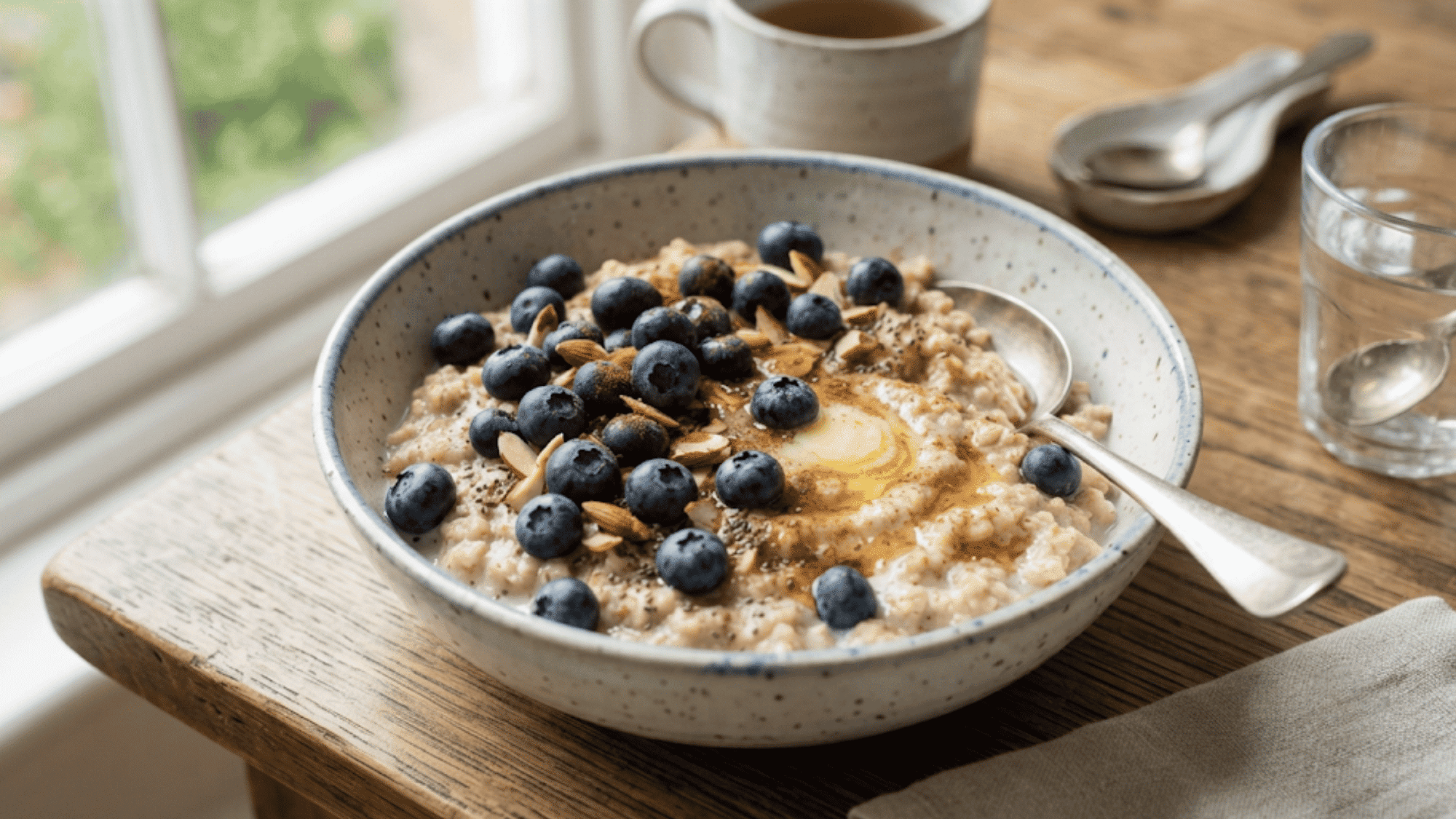
Starting your morning with a warm bowl of oatmeal is a simple way to enjoy a filling and nutritious breakfast.
Making oatmeal is easy once you know the right ingredient ratios, cooking methods, and a few tips for achieving your preferred texture.
From creamy stovetop oats to quick microwave versions and convenient overnight oats, each method fits different schedules and preferences.
With a few basic ingredients and simple techniques, preparing a satisfying bowl of oatmeal can easily become part of your daily breakfast routine.
Jump to Recipe
Why Is Oatmeal a Popular Breakfast Choice?
Oatmeal is a popular breakfast choice because it is nutritious, filling, affordable, and easy to prepare.
It is made from whole oats, which provide complex carbohydrates, fiber, essential nutrients, and minerals that help keep you energized throughout the morning.
Oatmeal is especially valued for its soluble fiber, which supports heart health and promotes a longer-lasting feeling of fullness.
It is also highly versatile, allowing you to customize it with fruits, nuts, seeds, spices, or sweeteners to match your taste.
Research by the U.S. National Library of Medicine shows that people who regularly eat oatmeal tend to have better overall diet quality, consume more important nutrients, and have lower body weight and body mass index (BMI) than those who do not.
Ingredients You’ll Need
- ½ cup or 50 g rolled oats (or use quick oats for faster cooking or steel-cut oats for a chewier texture)
- ½ cup or 120 g milk
- ½ cup or 120 g water (or milk)
- ⅛ tsp salt
- 2 tsp sugar (or to taste)
- Optional toppings: Fresh fruit, nuts, seeds, nut butter, cinnamon, honey, or maple syrup for extra flavor and nutrition.
How to Make Your Morning Oatmeal?
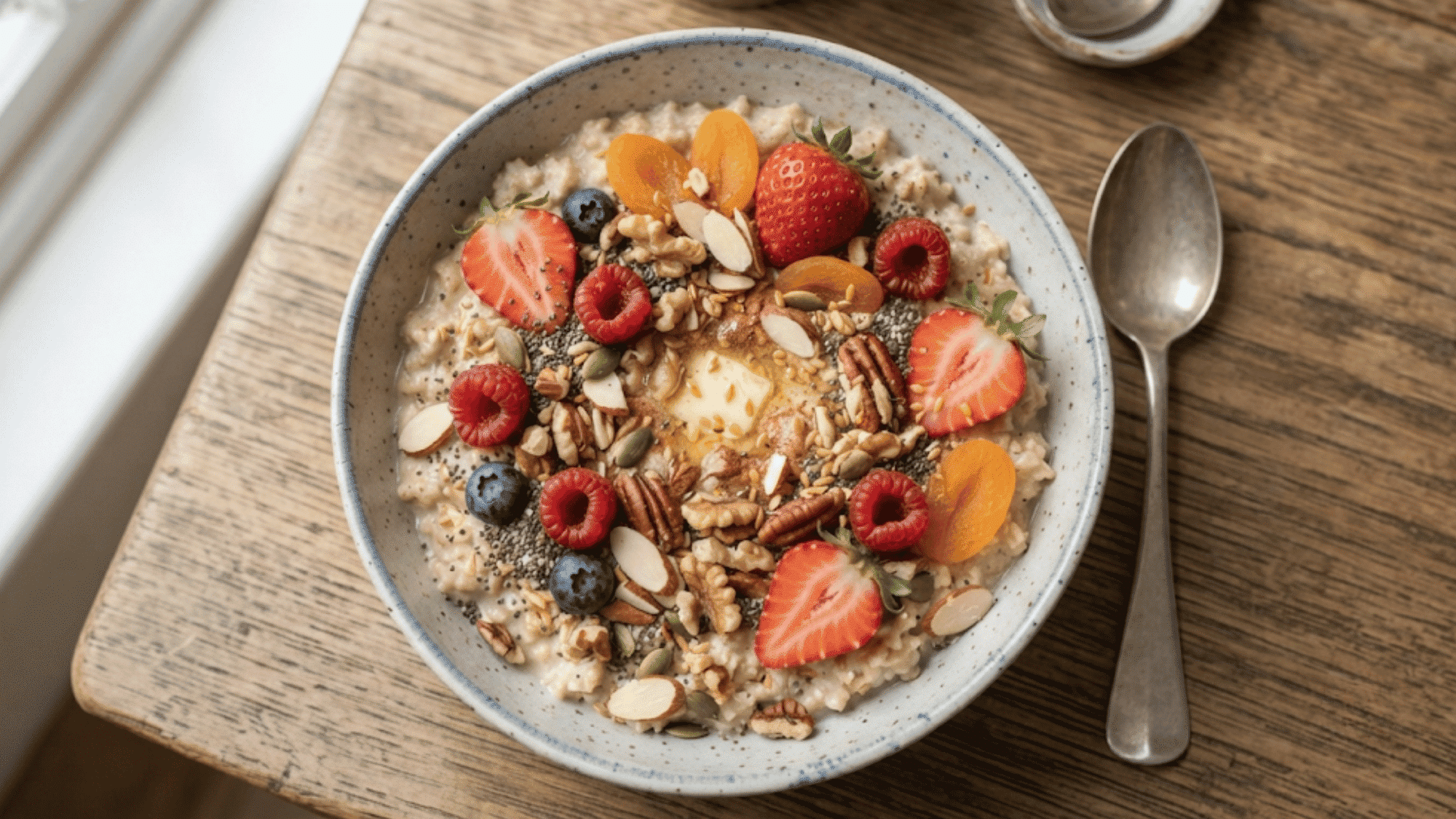
Before turning on the heat, double-check that the ingredients are evenly combined. Mixing everything well at this stage helps the oatmeal cook evenly and develop a smooth, creamy texture.
Step 1: Combine the Ingredients
Transfer the prepared ingredients to a small saucepan and stir until everything is evenly mixed.
Make sure the oats are fully coated with the liquid before placing the pan over the heat. This helps the oatmeal cook evenly and creates a smooth, creamy texture from the start.
Step 2: Bring to a Gentle Simmer
Place the saucepan over medium heat and slowly bring the mixture to a gentle simmer. Stir occasionally as it heats to prevent the oats from sticking to the bottom of the pan.
Avoid letting the oatmeal reach a rapid boil, as this can cause the liquid to overflow and affect the final texture.
Step 3: Cook Until Creamy
Reduce the heat to low and cook the oatmeal for 5–10 minutes, stirring every minute or two. Continue cooking until the oats become soft and the mixture reaches your preferred consistency.
For thicker oatmeal, cook a little longer. If it becomes too thick, simply stir in a splash of milk or water.
Step 4: Add Toppings and Serve
Spoon the warm oatmeal into a serving bowl and finish it with your favorite toppings.
Fresh berries, sliced bananas, chopped nuts, seeds, nut butter, cinnamon, honey, or maple syrup all make excellent additions.
Serve immediately while the oatmeal is warm and creamy for the best flavor and texture.
Note: For rolled oats, a 1:2 ratio of oats to liquid is a good starting point for creamy oatmeal. Add a little more liquid for a thinner consistency or reduce it slightly if you prefer a thicker, heartier bowl.
Tips for Making the Perfect Bowl of Oatmeal
Small adjustments during cooking can make your oatmeal smoother, more flavorful, and more enjoyable to eat.
- Follow the correct oat-to-liquid ratio for a creamy consistency.
- Cook oatmeal over low to medium heat for even cooking.
- Add a pinch of salt to enhance the overall flavor.
- Stir occasionally to prevent sticking without making it gummy.
- Choose the type of oats based on your preferred texture.
- Add sweeteners after cooking for better flavor control.
Oatmeal Flavor Ideas to Customize Your Bowl
Oatmeal is easy to personalize with different toppings and mix-ins to match your taste and nutrition needs.
| Flavor Category | Popular Flavor Ideas |
|---|---|
| Fruit-Based Oatmeal Flavors | Banana with cinnamon, apple with nutmeg, mixed berries, peaches, strawberries |
| Nut and Seed Toppings | Almonds, walnuts, pecans, chia seeds, flaxseeds, pumpkin seeds, peanut butter, almond butter |
| Dessert-Inspired Oatmeal Flavors | Chocolate peanut butter, vanilla almond, coconut maple, apple pie, banana bread |
| High-Protein Oatmeal Additions | Greek yogurt, protein powder, cottage cheese, eggs, peanut butter |
| Spice and Flavor Enhancers | Cinnamon, vanilla extract, nutmeg, cardamom, pumpkin pie spice, pinch of salt |
| Seasonal Oatmeal Ideas | Pumpkin spice, apple cinnamon, cranberry pecan, peach oatmeal, mixed berry oatmeal |
Still doubtful? Check out the recipe again!
Conclusion
Oatmeal is a simple, versatile breakfast that bends to whatever a given morning calls for.
Once you know the ratios and the three basic cooking methods, this oatmeal recipe becomes something you can make from memory, whether that’s a rushed weekday bowl or a jar prepped the night before.
Classic toppings, fruity combinations, or a savory twist with egg and cheese all work from the same base.
What does your go-to bowl look like these days? Drop your favorite combination in the comments; I’m always looking for a new one to try.
Frequently Asked Questions
Is Oatmeal Gluten-Free?
Oats are naturally gluten-free, but they may be contaminated during processing. Choose certified gluten-free oats if you have celiac disease or gluten sensitivity.
Can You Eat Oatmeal Every Day?
Yes. Oatmeal can be enjoyed daily as part of a balanced diet. Vary your toppings and include protein and healthy fats for a more complete breakfast.
Can You Make Oatmeal without Cooking It?
Yes. Overnight oats are made by soaking oats in milk or yogurt in the refrigerator for several hours, creating a soft, ready-to-eat breakfast without cooking.
Why Does Oatmeal Become Thick After Sitting?
Oats continue absorbing liquid as they cool, making oatmeal thicker over time. Stir in a little milk or water before serving or reheating to loosen the texture.
Is Oatmeal Good for Weight Loss?
Oatmeal can support weight management because its fiber helps promote fullness. Choose minimally processed oats and limit added sugars for a more balanced meal.






One Response