


Pulled pork is a favorite dish, whether stacked on a sandwich, paired with coleslaw, or wrapped in a taco. Juicy, flavorful, and versatile, it’s ideal for casual weeknights or large family gatherings.
Have you considered what goes into that pulled pork? Knowing its nutritional content can influence how you enjoy it, as pulled pork offers more than just flavor.
Here, I’ll break down the key nutrients in pulled pork: the protein, calories, carbs, fats, and even the important vitamins and minerals. I’ll also touch on how different cooking methods or added sauces can change its nutrition. Ready to find out more? Let’s get started!
Pulled Pork Nutrition: What’s Really in Your Favorite Dish?
Pulled pork is not just delicious but also packs a solid nutritional punch. This makes it a great addition to a low-carb or high-protein meal plan.
It also provides essential micronutrients, such as iron, calcium, and potassium, which support your overall health and well-being.
| Nutrient | Amount per 100g | Notes |
|---|---|---|
| Calories | 250-300 kcal | Varies based on preparation and added ingredients |
| Protein | 20-30g | High-quality protein for muscle and immune support |
| Carbs | 3-5g | Low-carb, great for low-carb diets |
| Fat | 10-20g | Source of healthy fats, but moderate consumption is key |
| Sodium | 479.7mg | High sodium content in some preparations, especially with sauce |
How Much Protein is Packed in Pulled Pork?
- Protein Content in Pulled Pork: Pulled pork is a great source of protein, providing 20-30 grams per 100 grams of meat. The exact amount varies based on the cut of pork and how it’s prepared. This makes it a solid choice for those looking to boost their protein intake.
- Comparison with Other Protein Sources: When compared to other protein-rich foods, skinless chicken breast provides 31 grams of protein per 100 grams, while lean beef offers 22-26 grams per 100 grams. While pulled pork contains slightly less protein than chicken, it still contributes significantly to meeting your daily protein needs.
- Pulled Pork in a Balanced Diet: Pulled pork can be a valuable part of a balanced diet, especially when paired with nutrient-dense vegetables and whole grains. Its high protein content supports muscle repair, boosts immune function, and contributes to overall health, making it both a filling and nutritious option.
Skinless Chicken Breasts vs. Pulled Pork vs. Lean Beef
This comparison table highlights the key nutritional differences between pulled pork and skinless chicken breast.
| Protein Source | Protein per 100g | Calories per 100g | Fat per 100g | Carbs per 100g | Sodium per 100g |
|---|---|---|---|---|---|
| Pulled Pork | 20-30g | 250-300 kcal | 10-20g | 3-5g | 479.7mg |
| Skinless Chicken Breast | 31g | 165 kcal | 3.6g | 0g | 60mg |
| Lean Beef | 22-26g | 242 kcal | 10-15g | 0g | 55mg |
It shows how pulled pork is higher in calories, fat, and sodium, while chicken breast offers more protein and is lower in fat and calories. Both are great protein sources, but vary depending on your dietary goals, such as calorie control or fat intake.
Counting Calories: How Pulled Pork Fits Into Your Meal Plan
When adding pulled pork to your meal plan, it’s essential to be mindful of its calorie content, especially if you’re working towards specific weight-loss goals. A typical 100-gram serving of pulled pork contains about 250-300 calories, depending on the cut and preparation method.
To fit pulled pork into your meal plan without overloading on calories, consider these tips:
- Choose Lean Cuts: Opt for leaner cuts of pork, such as tenderloin or loin, which have fewer calories and less fat than fattier cuts like shoulder or butt.
- Mind Your Portion Sizes: Stick to 3-4 oz of pulled pork per serving to control calorie intake. This helps prevent overeating and keeps your calories in check.
- Use Lighter Sauces: Barbecue sauces and other condiments can quickly add up in calories. Look for low-sugar, low-calorie sauces or even make your own at home.
- Pair with Vegetables: Balance your pulled pork with non-starchy vegetables like broccoli, spinach, or cauliflower. These add fiber and essential nutrients without extra calories.
By being mindful of portion sizes, choosing lean cuts, and pairing pulled pork with healthy sides, you can enjoy this flavorful dish while staying on track with your calorie goals.
Why is Pulled Pork So Popular?
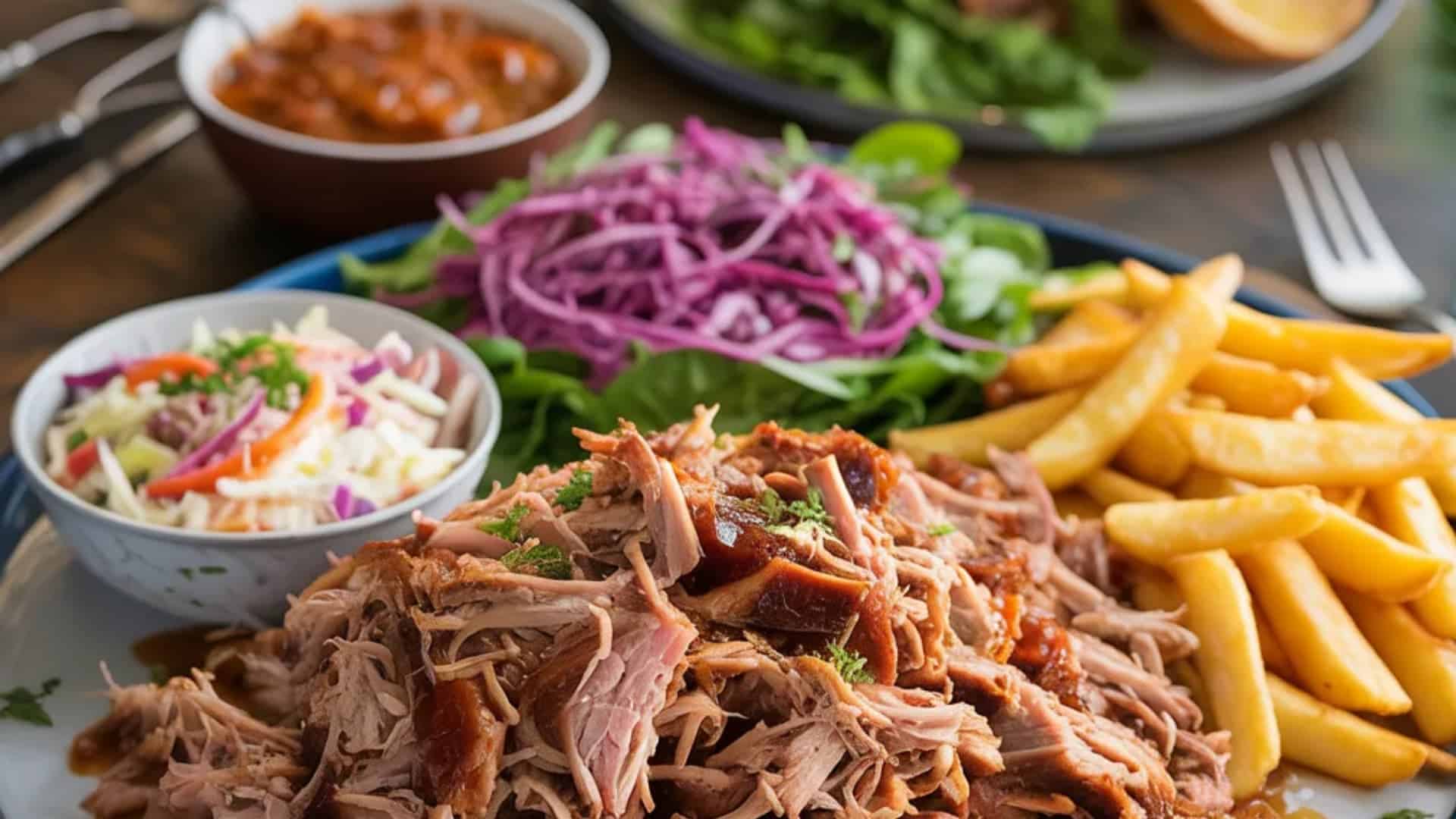
- Unbeatable Flavor: Slow-cooked to perfection, pulled pork soaks up smoky flavors and becomes tender enough to shred with a fork. Its deep, rich taste makes it a favorite for many.
- Incredibly Versatile: Pulled pork can be enjoyed in sandwiches, tacos, salads, or even on its own with a side of slaw. It pairs well with a variety of sauces, from tangy barbecue to spicy options, making it easy to customize to your liking.
- Great for Feeding a Crowd: Pulled pork is often made in large batches, making it a perfect choice for gatherings like barbecues, parties, or family meals. It’s easy to prepare, especially with a slow cooker or smoker, and can be made in advance for convenience.
- Flavor, Versatility, and Ease: These three reasons flavor, versatility, and ease are what make pulled pork a go-to meal that keeps people coming back for more. Whether you’re cooking for one or a crowd, it’s always a winner!
Pulled Pork and Health: Is It Good for You?

- Protein Benefits: Pulled pork is a great source of protein, helping with muscle repair, immune function, and overall health.
- Vitamins & Minerals: It contains iron, calcium, and potassium, which support strong bones, healthy muscles, and fluid balance.
- Health Risks: Pulled pork can be high in sodium and saturated fat, especially when paired with high-sugar or salty sauces. Too much sodium can lead to high blood pressure, while excess fat contributes to heart disease.
- Portion Control: Enjoy in moderation to manage sodium and fat intake.
- Healthy Pairings: For a balanced meal, pair pulled pork with vegetables or whole grains, and opt for lean cuts and low-sugar sauces.
How to Cook Pulled Pork: Slow Cooker vs. Smoker
When it comes to cooking pulled pork, two popular methods stand out: the slow cooker and the smoker. Each method has its own set of advantages, making it suitable for different situations and preferences.
| Method | Pros | Cons | Tips |
|---|---|---|---|
| Slow Cooker | – Convenient – Tender results – Time-saving |
– Less smoky flavor – Slightly different texture |
– Brown pork before cooking – Add liquid (broth or cider) for tenderness |
| Smoker | – Authentic smoky flavor – Crispy bark – Deep, rich flavor infusion |
– Time-consuming (12-18 hours) – Requires monitoring |
– Keep smoker temperature at 225-250°F – Use wood chips like hickory or applewood for flavor |
Both methods create delicious pulled pork, but it all depends on the time, effort, and flavor profile you’re looking for!
Wrapping Up
Pulled pork is a fantastic source of protein, offering about 20-30 grams per 100 grams of meat, making it comparable to other popular protein options like chicken and beef. It’s a nutritious choice that supports muscle repair, immune function, and overall health.
To make the most of pulled pork, pair it with nutrient-dense vegetables or whole grains to balance your meal. Using lighter sauces or opting for leaner cuts of pork can help keep the calorie count in check.
Ultimately, pulled pork can be a delicious and filling part of a healthy diet when consumed mindfully. By making informed choices and balancing your meals, you can enjoy this tasty dish while maintaining a well-rounded, nutritious diet.