
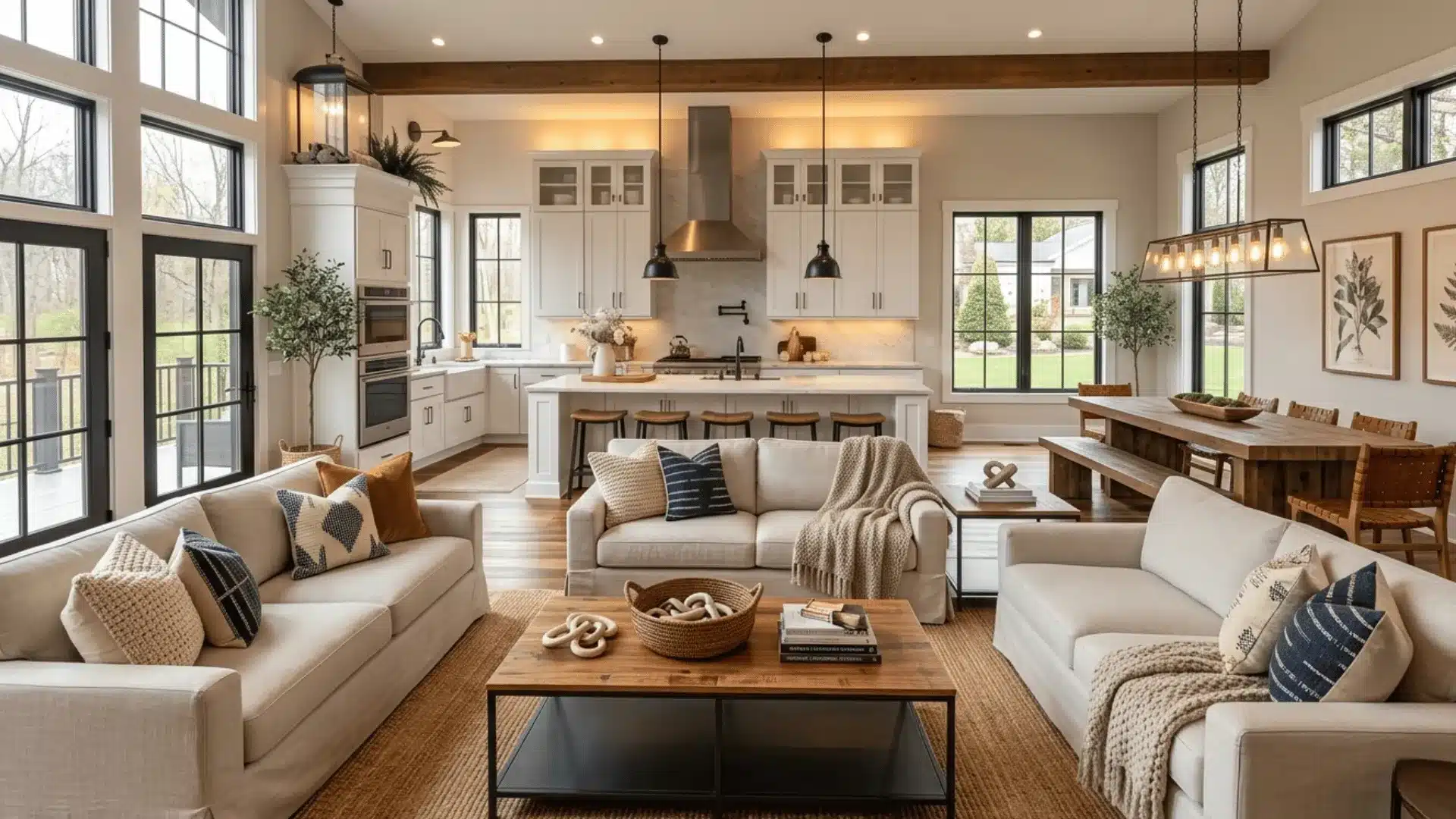
Do you ever feel like you’re tucked away in a cramped kitchen while the rest of the house enjoys the fun? It’s frustrating to feel isolated by walls that chop up your home and block natural light.
I know that struggle well, which is why I love helping people design an open concept kitchen living room that actually works. You deserve a home that breathes and flows with your daily life.
I’ll share practical, pro-tested layouts and clever design tricks to help you define your zones without losing that airy feel. By the end, you’ll have a clear plan to create a space that’s perfect for both quiet mornings and big gatherings.
Benefits of an Open Concept Kitchen Living Room
Opening up your kitchen and living room doesn’t just change how your home looks; it changes how your home works.
- Makes small homes feel larger: Removing barriers between rooms creates an uninterrupted sightline that instantly makes any space feel more spacious and less cramped.
- Brings in more natural light: With fewer walls blocking windows, daylight flows freely throughout the space, making both areas feel brighter throughout the day.
- Makes it easier to talk with family or guests while cooking: You stay part of the conversation rather than being isolated in a separate kitchen, making everyday moments feel more connected.
- Allows flexible furniture layouts: Without fixed walls dictating the arrangement, you have far more freedom to position furniture in ways that suit your lifestyle and changing needs.
- Great for entertaining: Guests can move naturally between cooking and relaxing areas, making hosting feel effortless rather than awkward or divided.
These benefits aren’t just design theory; they’re real improvements that my clients feel the moment they start living in their newly opened space, and that difference is exactly why this layout continues to grow in popularity.
Open Concept Kitchen Living Room: Layout & Space Division Ideas
An open space doesn’t mean adding walls; it means using smart design choices that guide the eye and naturally define each zone. These layout ideas will help you create clear, comfortable areas without losing that open, connected feeling.
1. Use a Large Kitchen Island as a Natural Divider
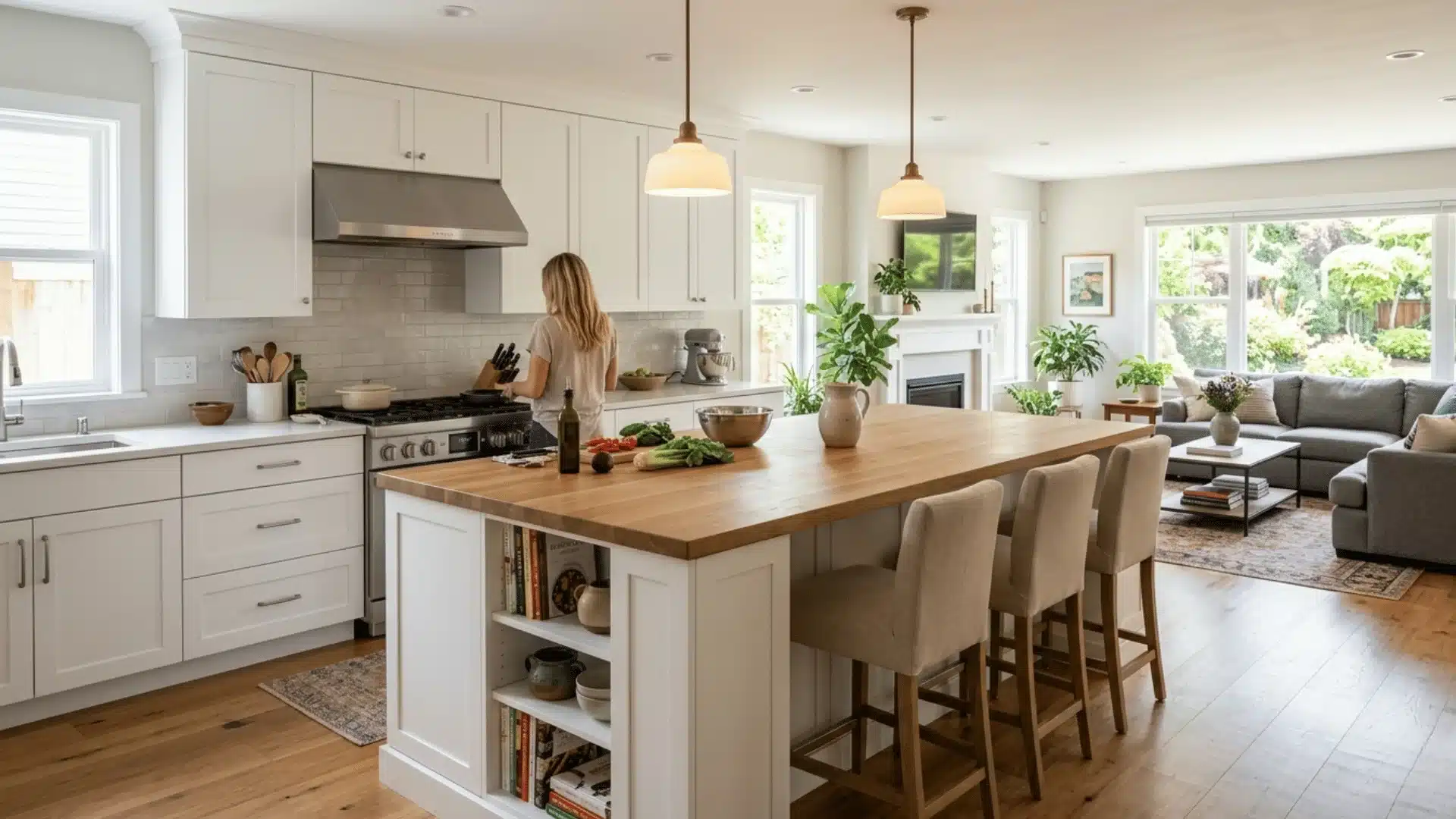
A large kitchen island is one of the smartest ways to separate your kitchen from the living room. It creates a clear cooking zone without closing off the space.
You can add bar stools on the living room side to make it social and functional at the same time. It works beautifully in medium to large open layouts where you want structure without walls getting in the way.
2. Add a Peninsula Layout for Small Spaces
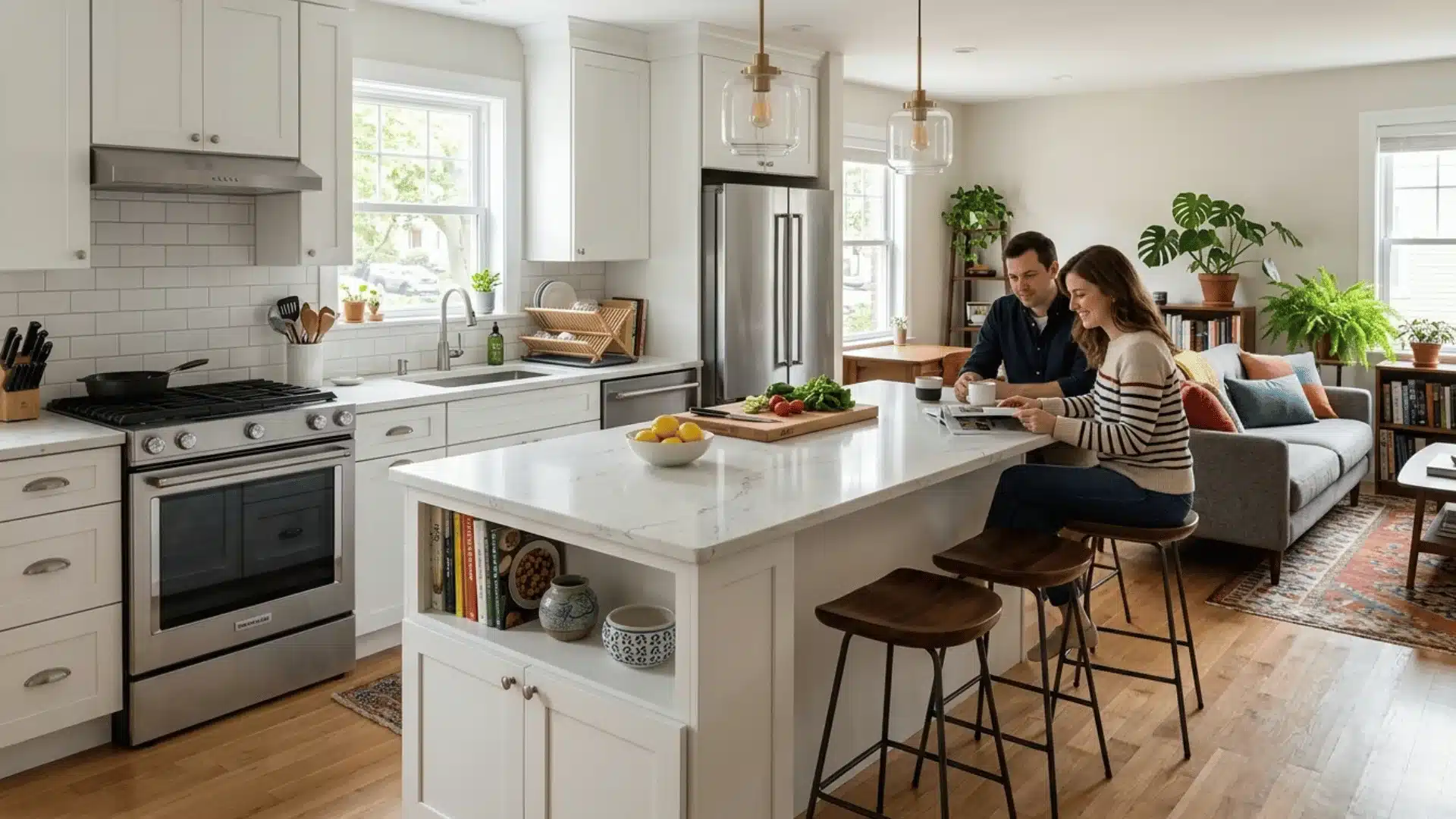
A peninsula is a great solution when a full island simply won’t fit. It extends directly from your existing kitchen counter and creates a soft, natural boundary between cooking and living areas.
The best part is that it adds extra counter space and storage without taking up too much room. If you’re working with a smaller home or apartment, this layout does a lot of heavy lifting for you.
3. Create a Clear Kitchen Work Zone
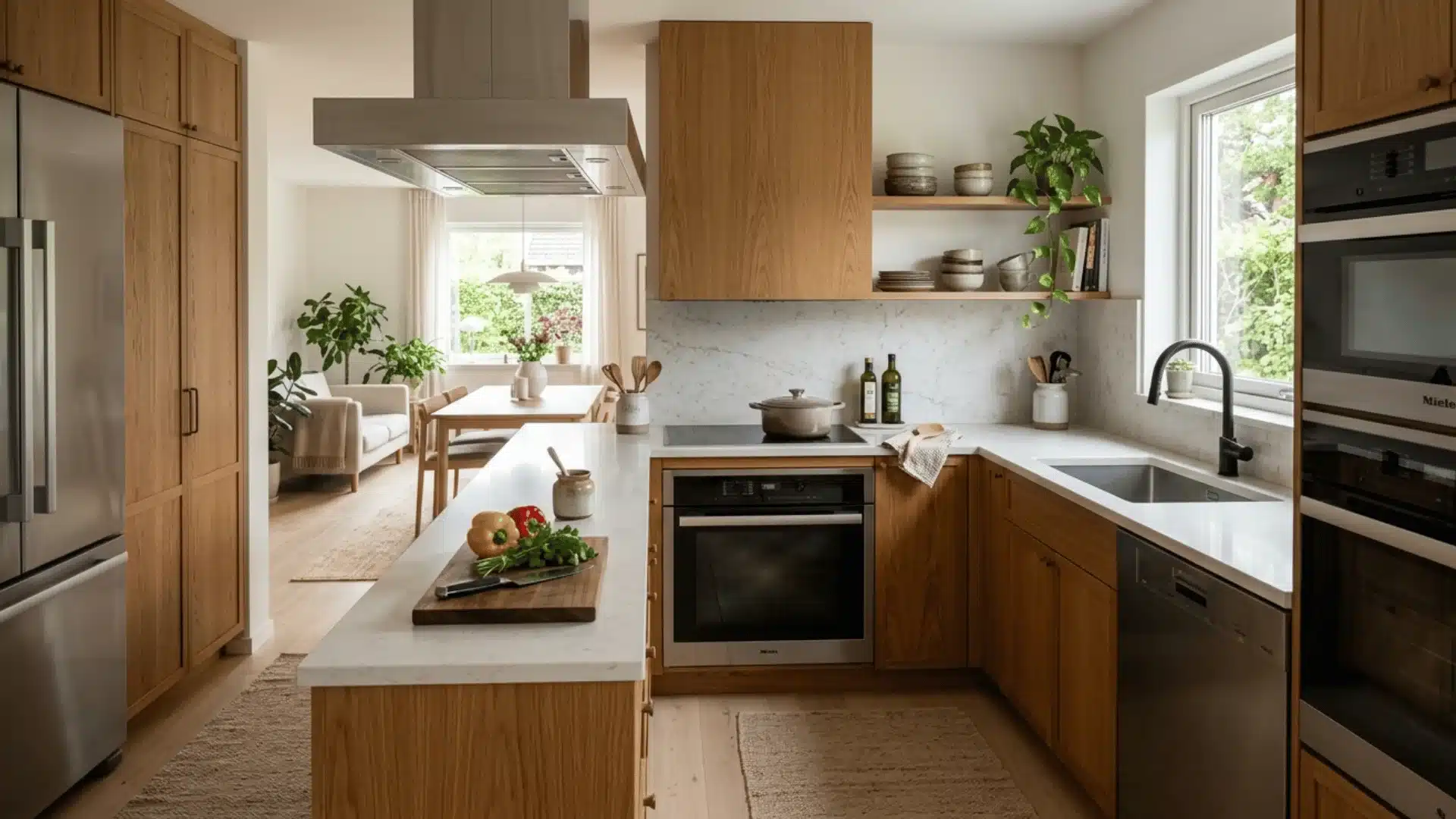
Keeping your appliances, counters, and cabinets grouped closely together helps your kitchen feel organized and intentional inside an open layout. When everything has a clear place, the kitchen doesn’t visually spill into the living area.
This zoning approach also makes cooking more efficient because you’re not moving across the entire space to grab tools or ingredients. A tidy, well-defined work zone makes the whole room feel calmer.
4. Use Multi-Level Shelving for Vertical Storage
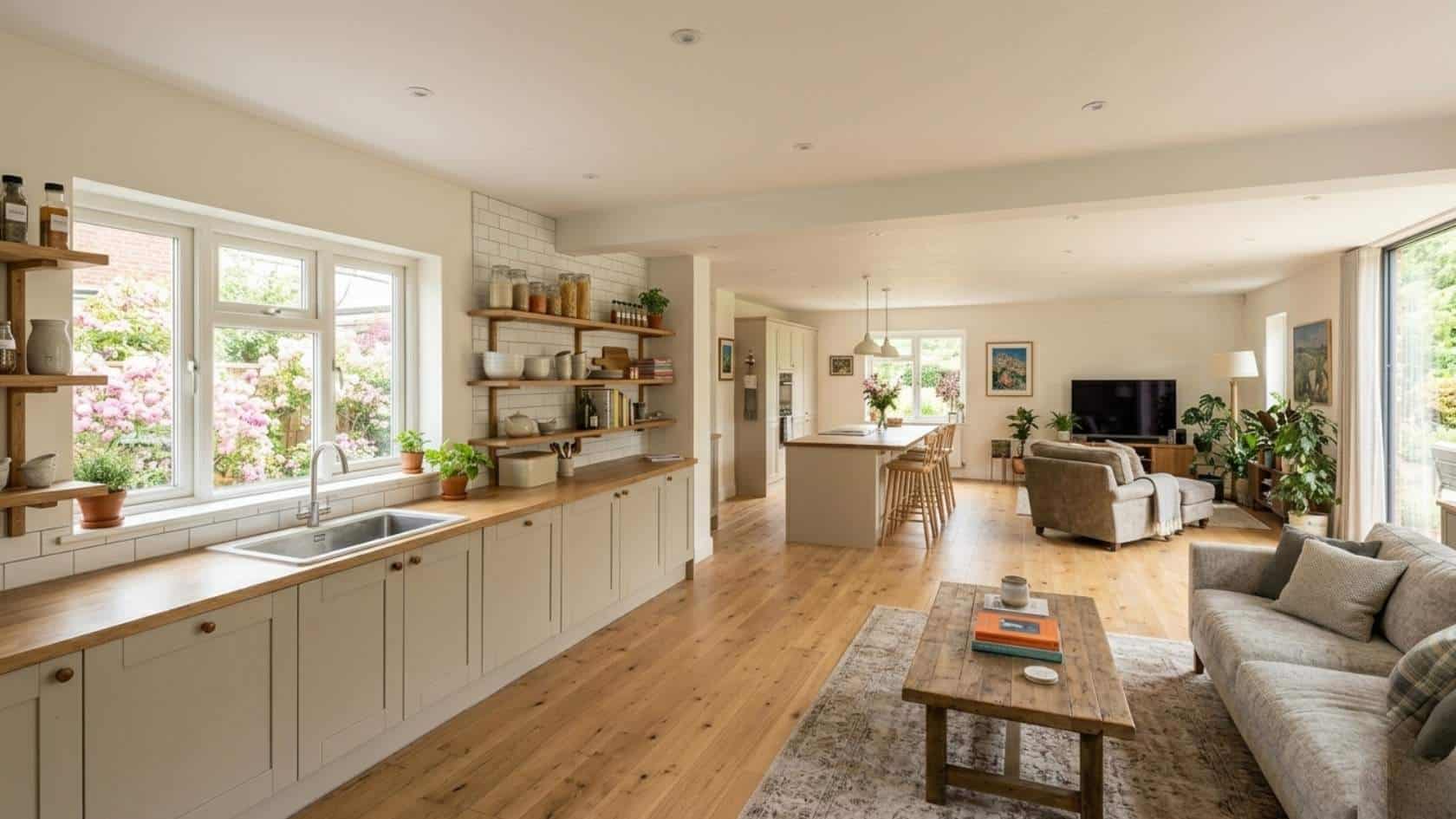
When floor space is limited, going vertical is the smartest move you can make. Installing multi-level open shelving along your walls creates practical storage without making the room feel closed in.
It keeps the space light and airy while giving you easy access to everyday kitchen essentials. As a bonus, open shelves let you display stylish kitchenware or decorative pieces that add personality to the room.
5. Use an Area Rug to Define the Living Room
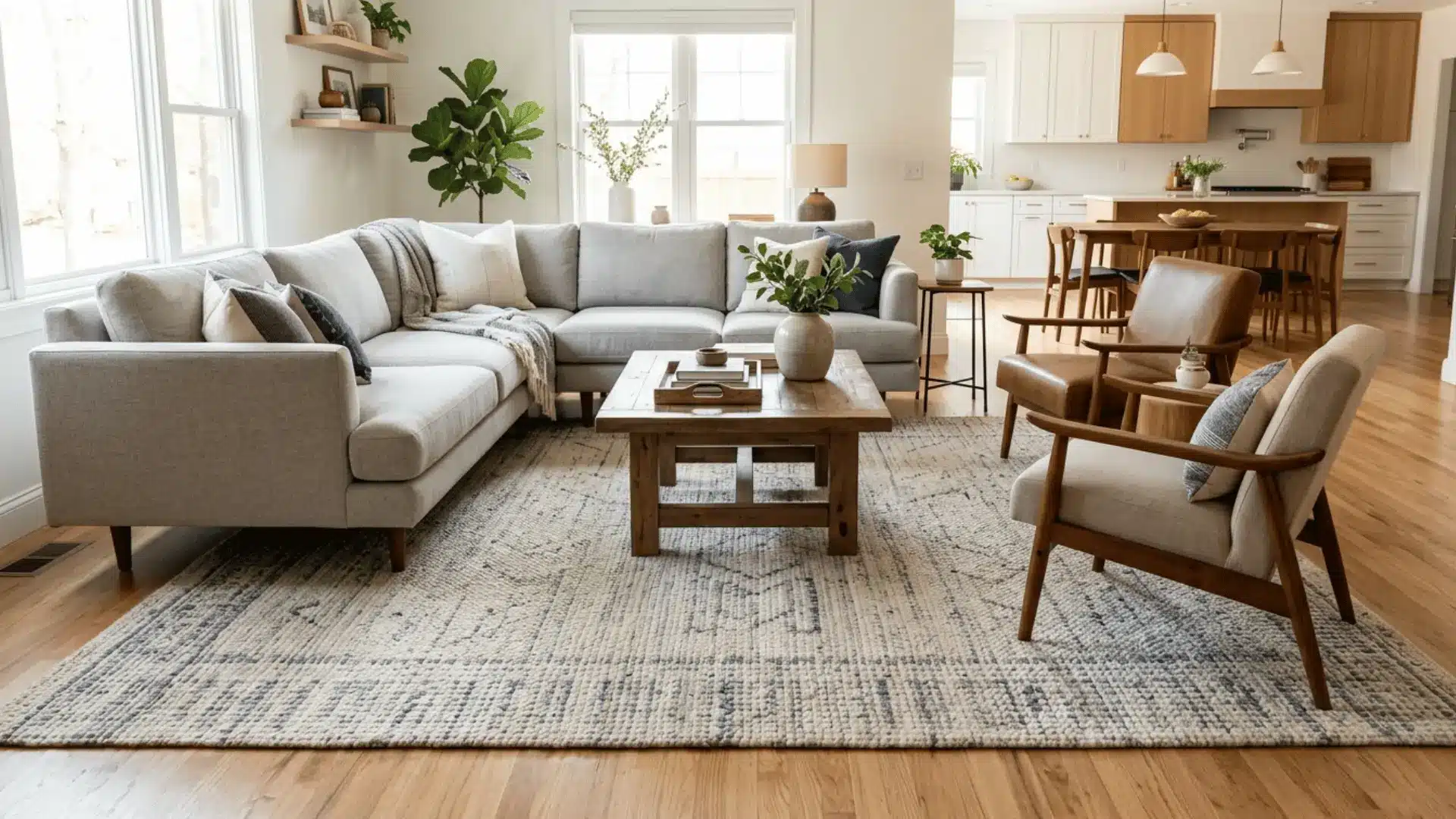
A large area rug is one of the easiest and most affordable ways to mark where the living room begins. It visually anchors the seating area and gives it its own identity without using a single wall.
Choose a rug that’s big enough to sit under the front legs of all your furniture. When the rug is the right size, the whole living zone feels intentional, grounded, and separate from the kitchen floor.
6. Place a Dining Table Between the Kitchen and Living Room
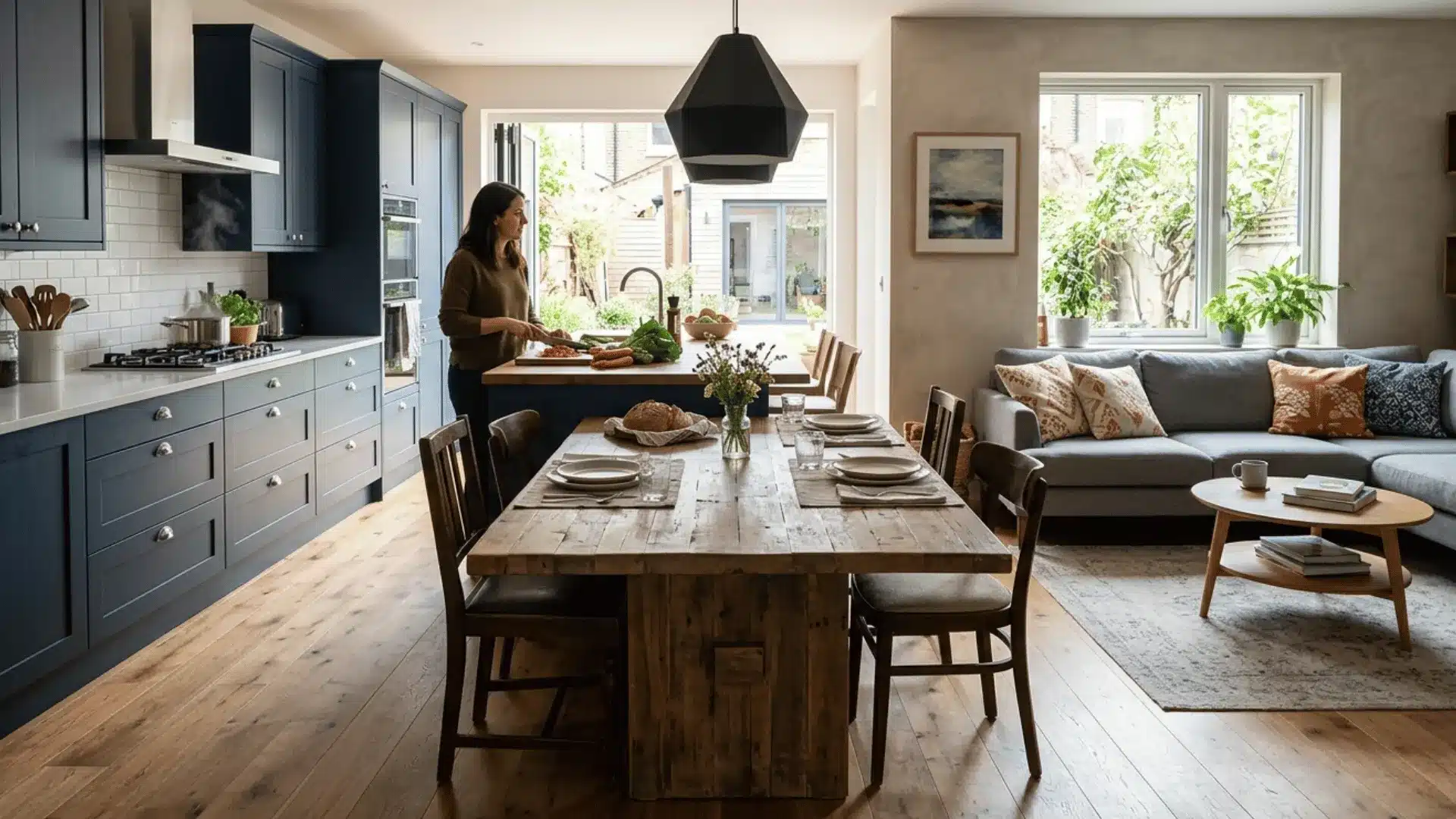
A dining table placed between the kitchen and living area acts as a natural transition zone. It connects both spaces while giving each one a clear purpose.
This setup works especially well in open layouts because the table fills what might otherwise feel like an awkward empty gap. It also makes everyday life more practical; food goes from the stove to the table without any wasted steps or extra effort.
7. Install a Half Wall Divider
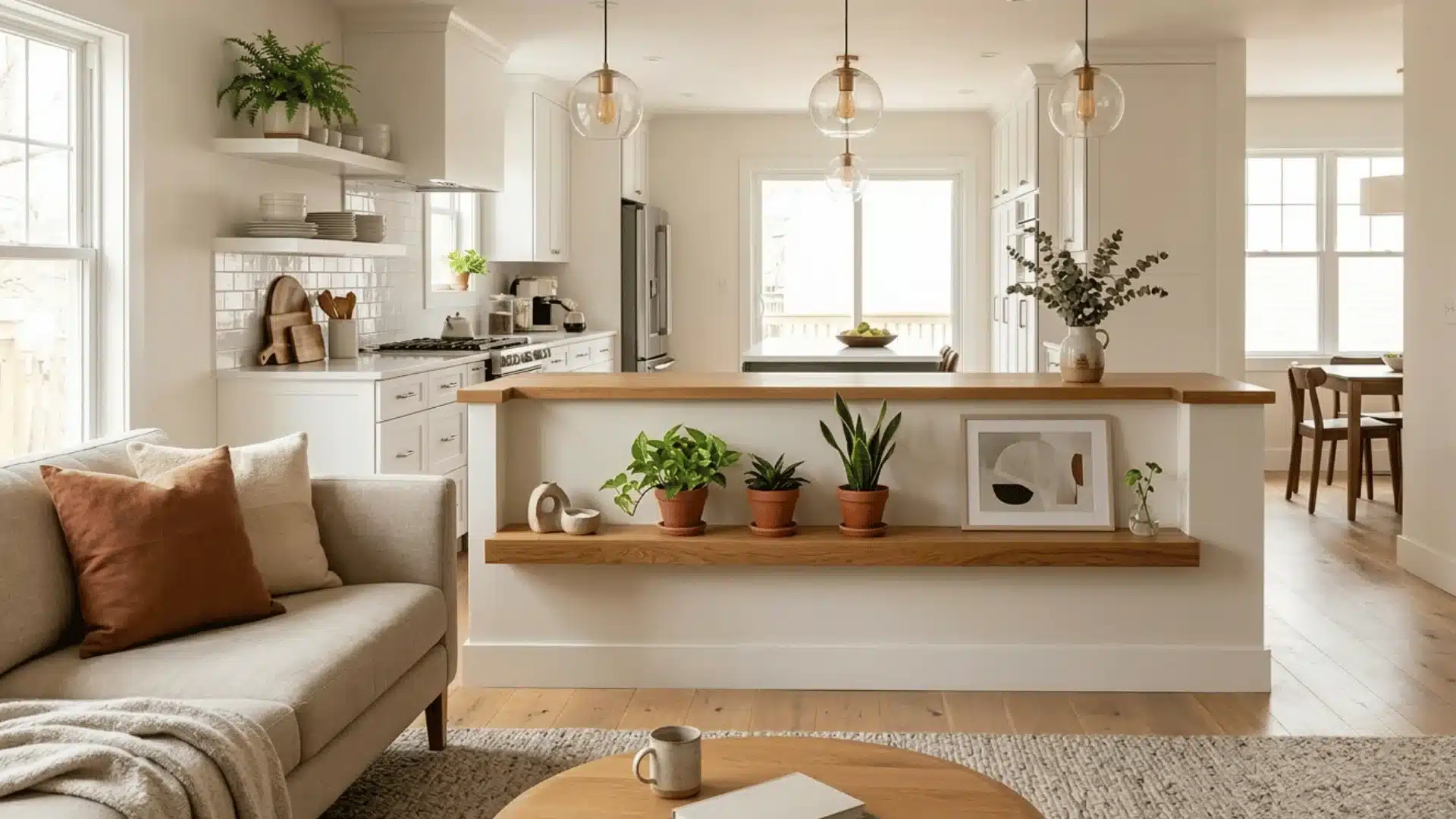
A half wall gives you the best of both worlds. It keeps the open feeling alive while creating a gentle visual boundary between the kitchen and living room.
You can top it with a wood shelf, plant display, or even pendant lights to make it feel finished and stylish. It’s a practical option for anyone who wants just a little more definition in their open layout without committing to a full wall.
8. Use Ceiling Beams to Separate Zones
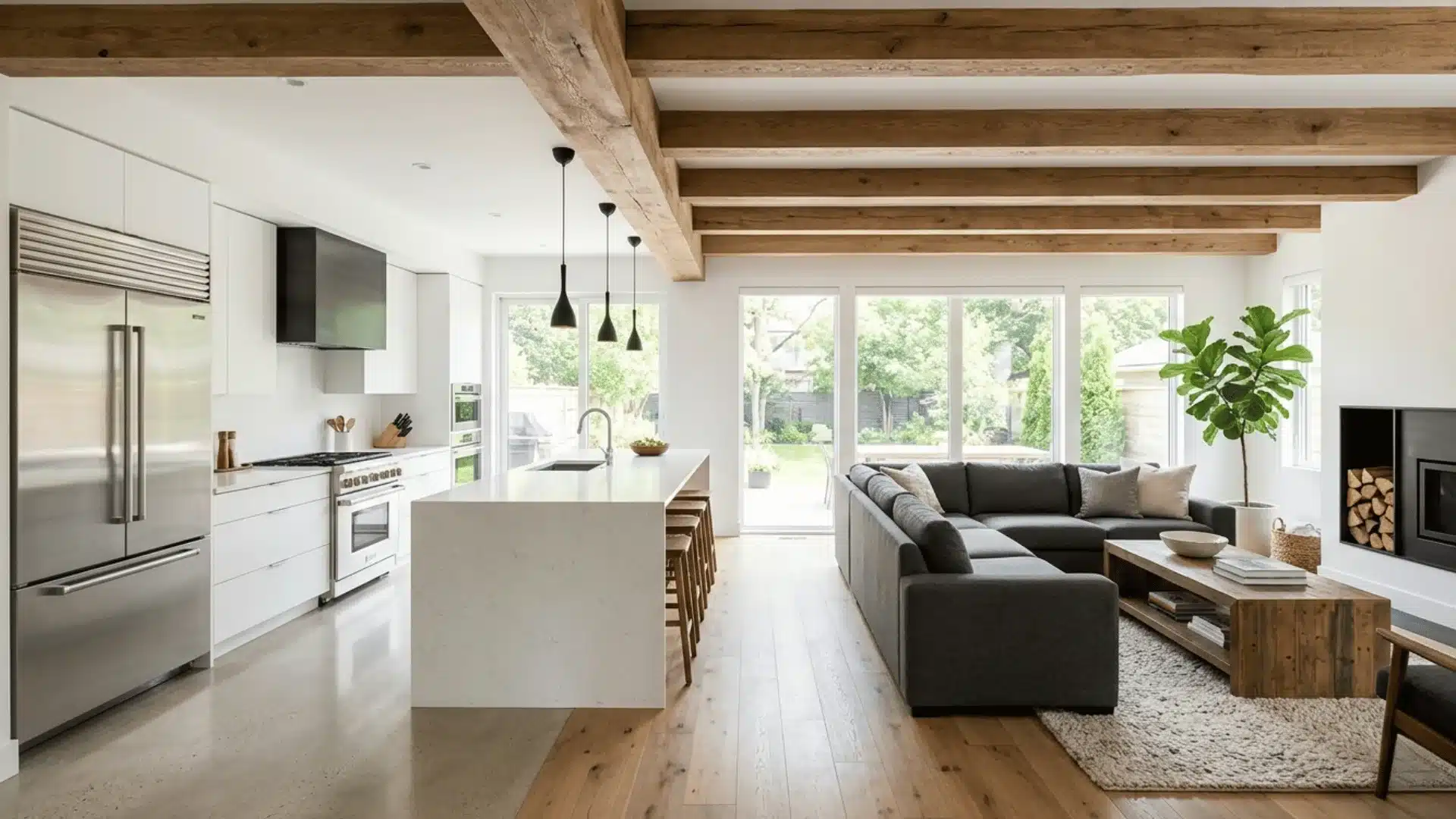
Exposed ceiling beams are a subtle but effective way to divide zones in an open concept space. When beams run above the kitchen or living area, they signal a shift from one space to another without blocking light or sightlines.
They also add warmth and character to the room. Whether you use real wood or faux beams, this idea works well in both modern and traditional style homes across different budgets.
Furniture Layout Ideas
Choosing the right furniture and placing it thoughtfully is what truly brings an open concept space to life: these six layout ideas will show you how to create a living area that feels comfortable, flexible, and perfectly connected to your kitchen.
9. Try an L-Shaped Sofa Layout
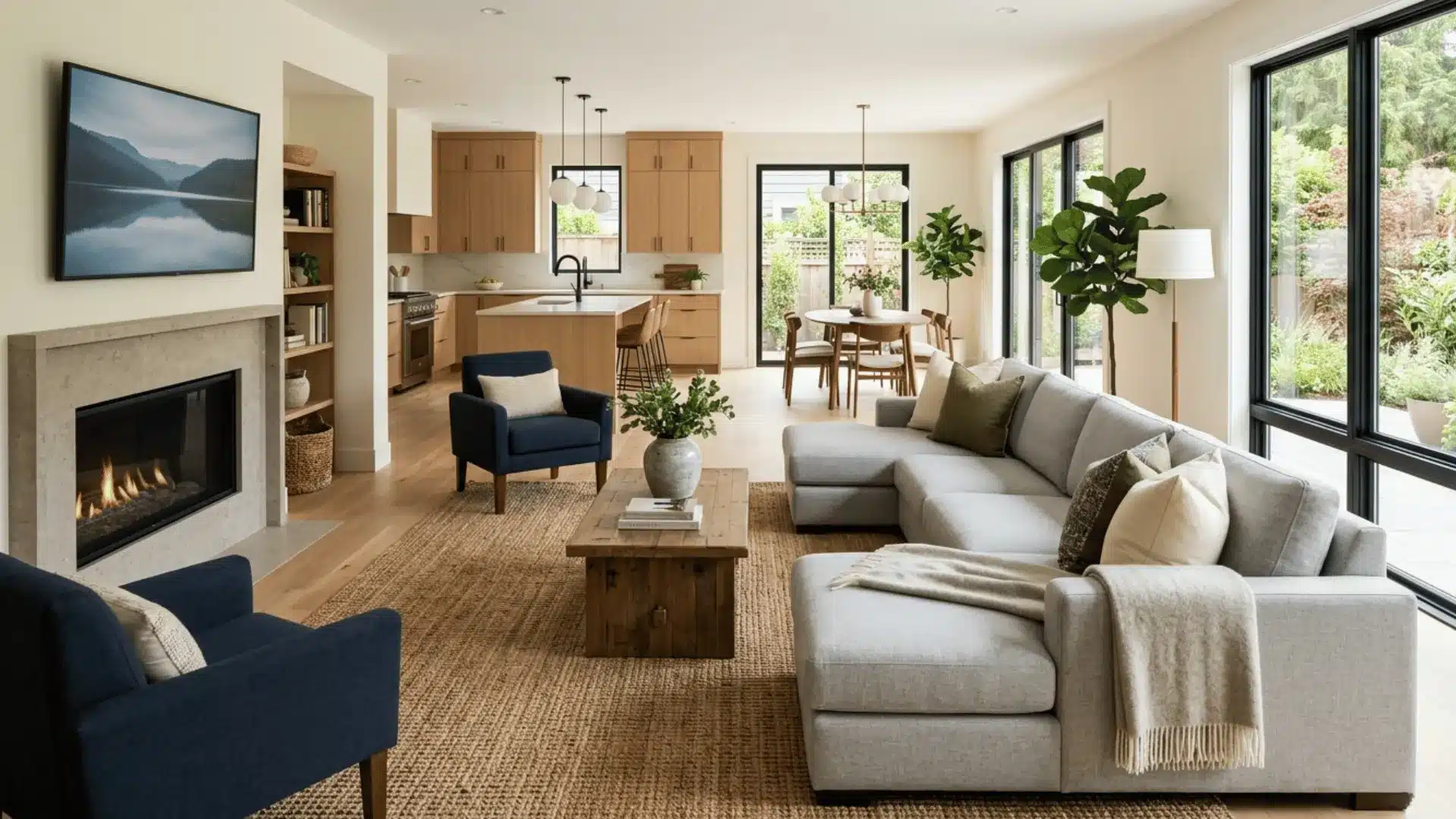
An L-shaped sofa is one of the best furniture choices for an open concept space. It naturally frames the living area and creates a cozy, enclosed feeling without using walls. Position the longer side parallel to the kitchen to keep sightlines open.
This layout works especially well in larger, open spaces where you need a sofa that fills the room without making it feel crowded or disconnected from the rest of the space.
10. Place a Console Table Behind the Sofa
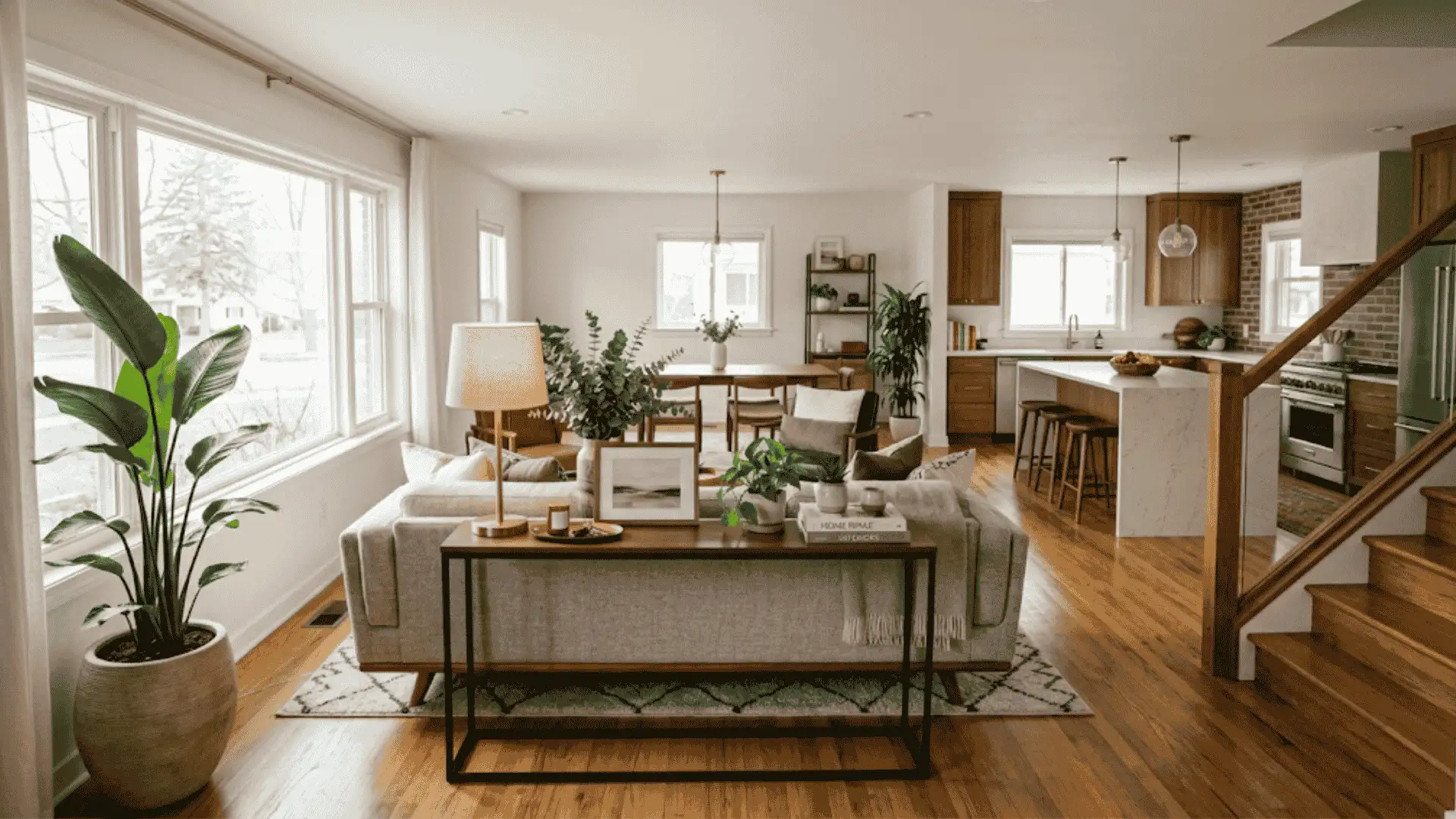
A slim console table placed directly behind the sofa creates a clean visual line that separates the living area from the rest of the open space. It’s a simple trick that makes a big difference.
Use it to display lamps, plants, or small decor pieces that add personality without clutter. It also gives you a practical surface for everyday items while keeping the layout feeling neat and well thought out.
11. Use Swivel Chairs for Flexible Seating
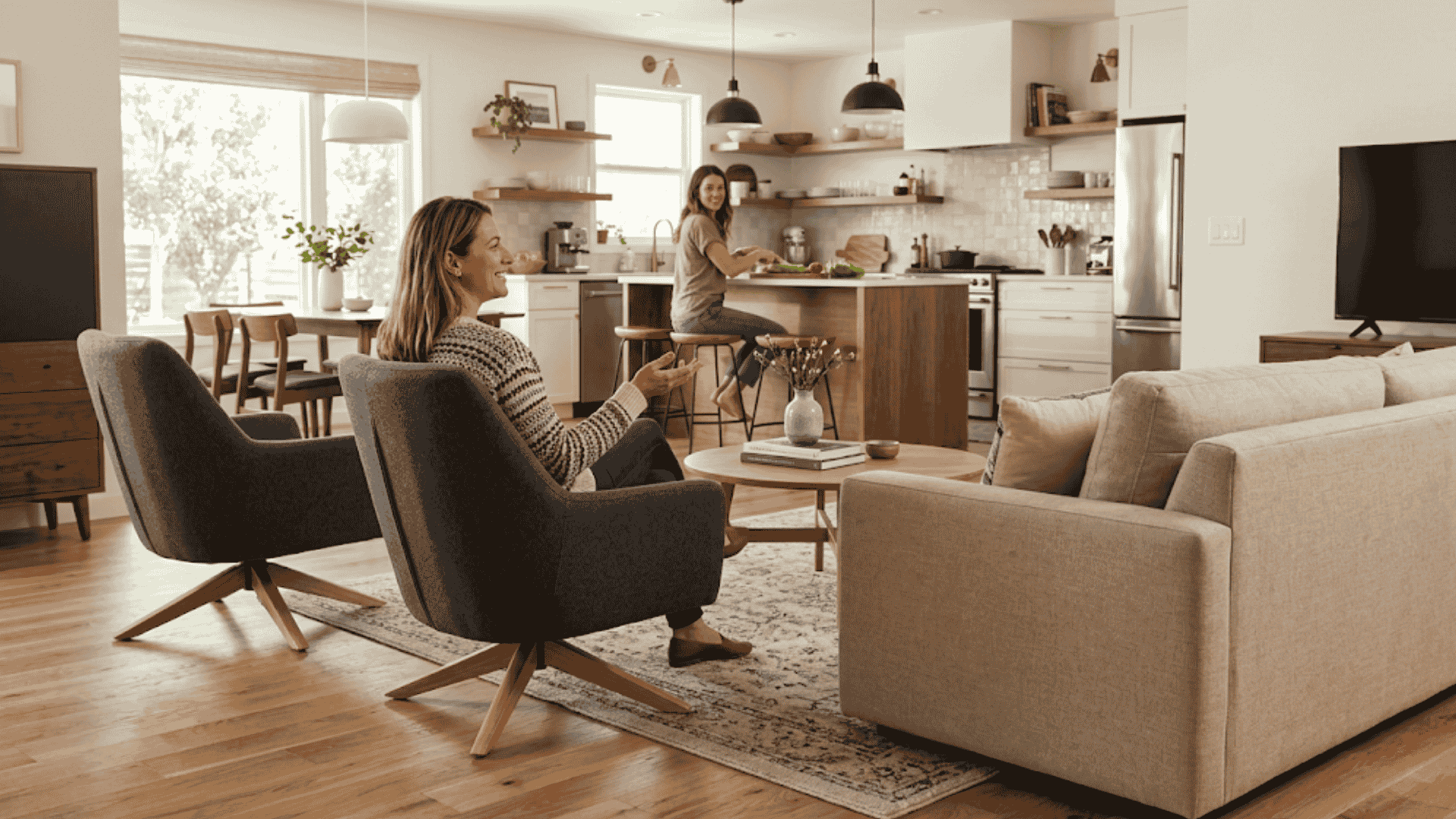
Swivel chairs are among the most practical furniture choices for open-concept living. They let people turn toward the kitchen during conversations or face the living area when relaxing without moving the entire chair.
This flexibility makes the space feel more social and connected throughout the day. Pair them with your sofa to create a seating arrangement that works for both casual evenings and lively gatherings with family or guests.
12. Choose Low-Back Furniture
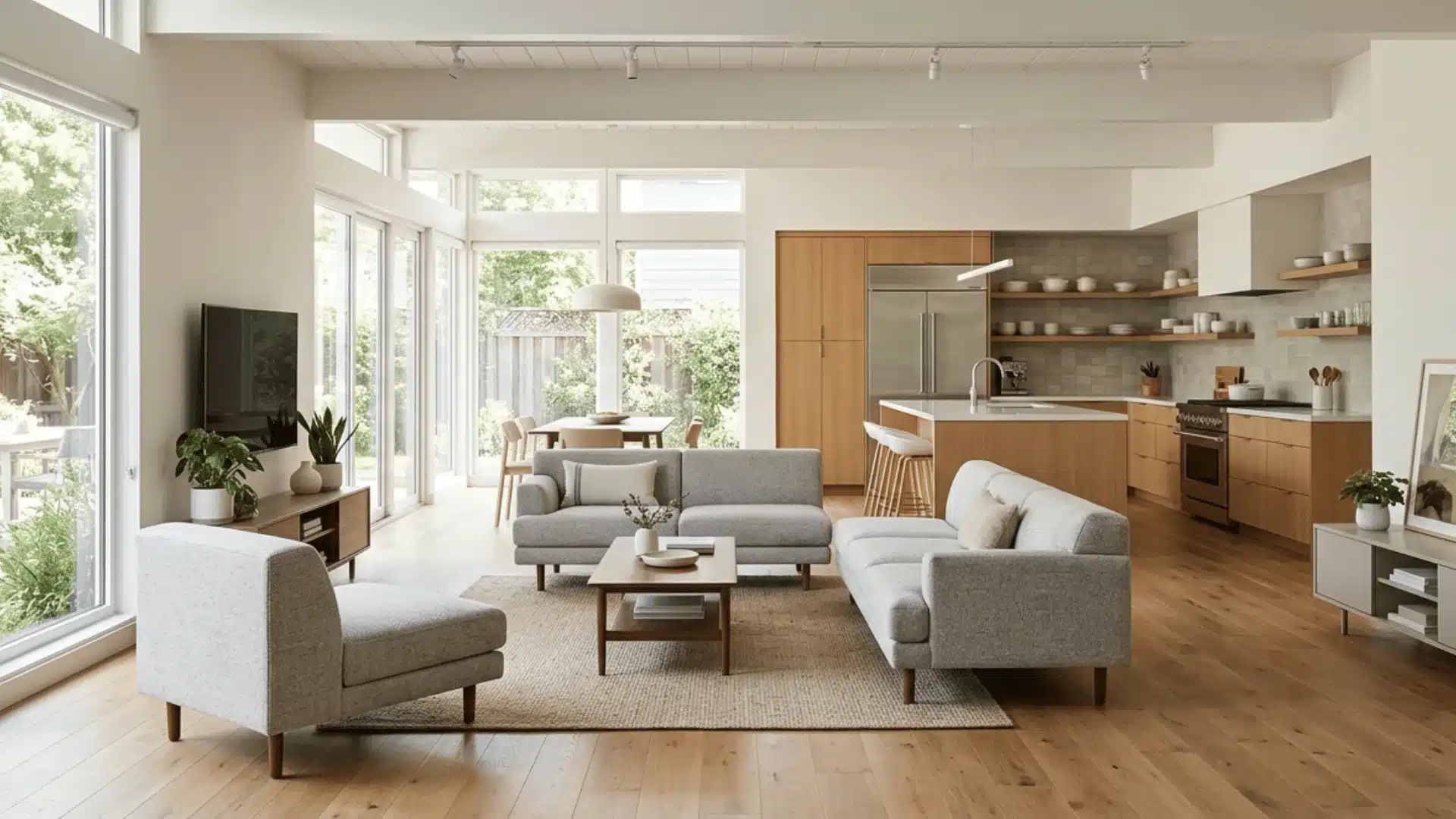
Low-back sofas and chairs keep your sightlines clear across the entire open layout. When furniture sits low, the space feels bigger, airier, and more connected from one zone to the next.
It also means the kitchen stays visible from the living area, which is exactly what open concept living is all about. If you want your space to feel consistently open and light, choosing low-profile furniture is one of the smartest decisions you can make.
13. Add Built-In Shelving Along One Wall
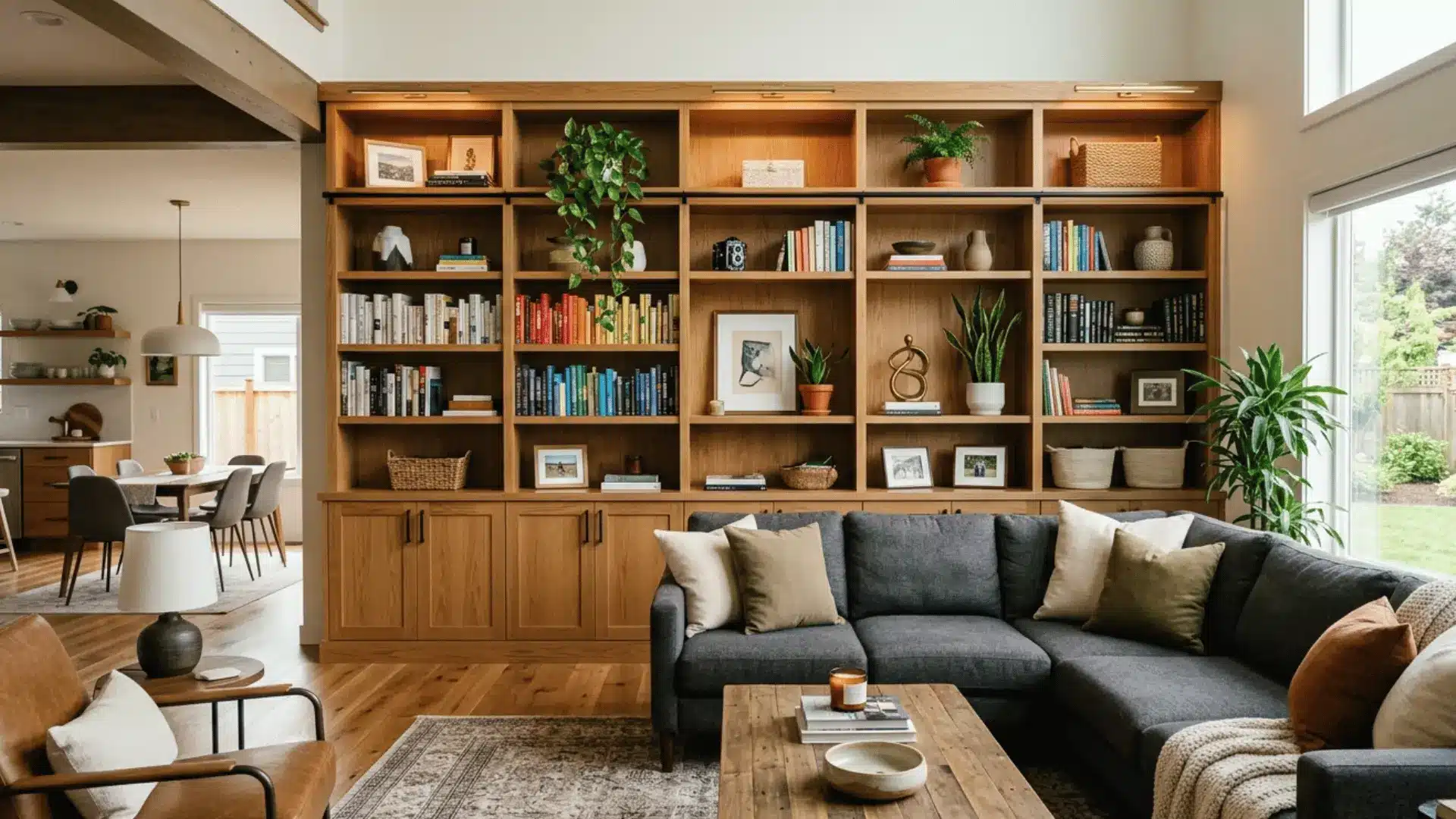
Built-in shelves do two important things in an open concept space: they add much-needed storage, and they give the living area a strong visual anchor. Without walls dividing the room, the living zone can feel undefined.
A full wall of built-in shelving fixes that immediately. Use it to display books, plants, and meaningful decor pieces that add warmth and personality while keeping everyday clutter completely out of sight.
14. Use a Floating TV Wall
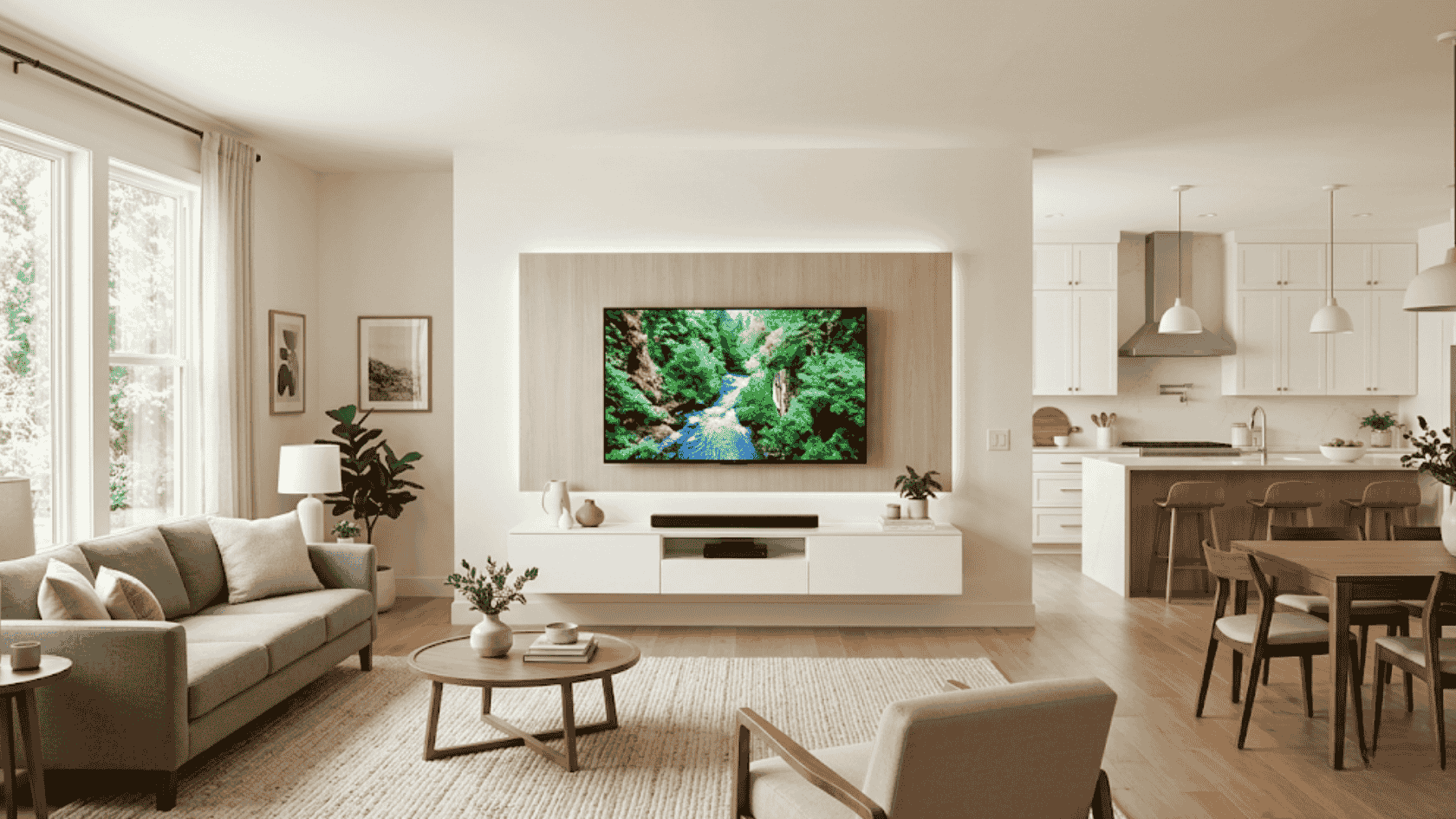
A floating media wall provides a clear focal point in the living area without physically blocking the connection to the kitchen. Mount the TV on a clean, simple panel or feature wall that draws the eye without overwhelming the space.
Keep the design minimal so it blends naturally with the rest of the open layout. This approach works well in both modern and transitional style homes where a clean, uncluttered look is the main goal.
Lighting Ideas for Open Concept Spaces
Lighting is one of the most powerful tools you have in an open concept space. Used correctly, it defines zones, sets the mood, and ties the entire layout together beautifully. These lighting ideas will help you get every corner of your space working just right:
15. Hang Pendant Lights Above the Island
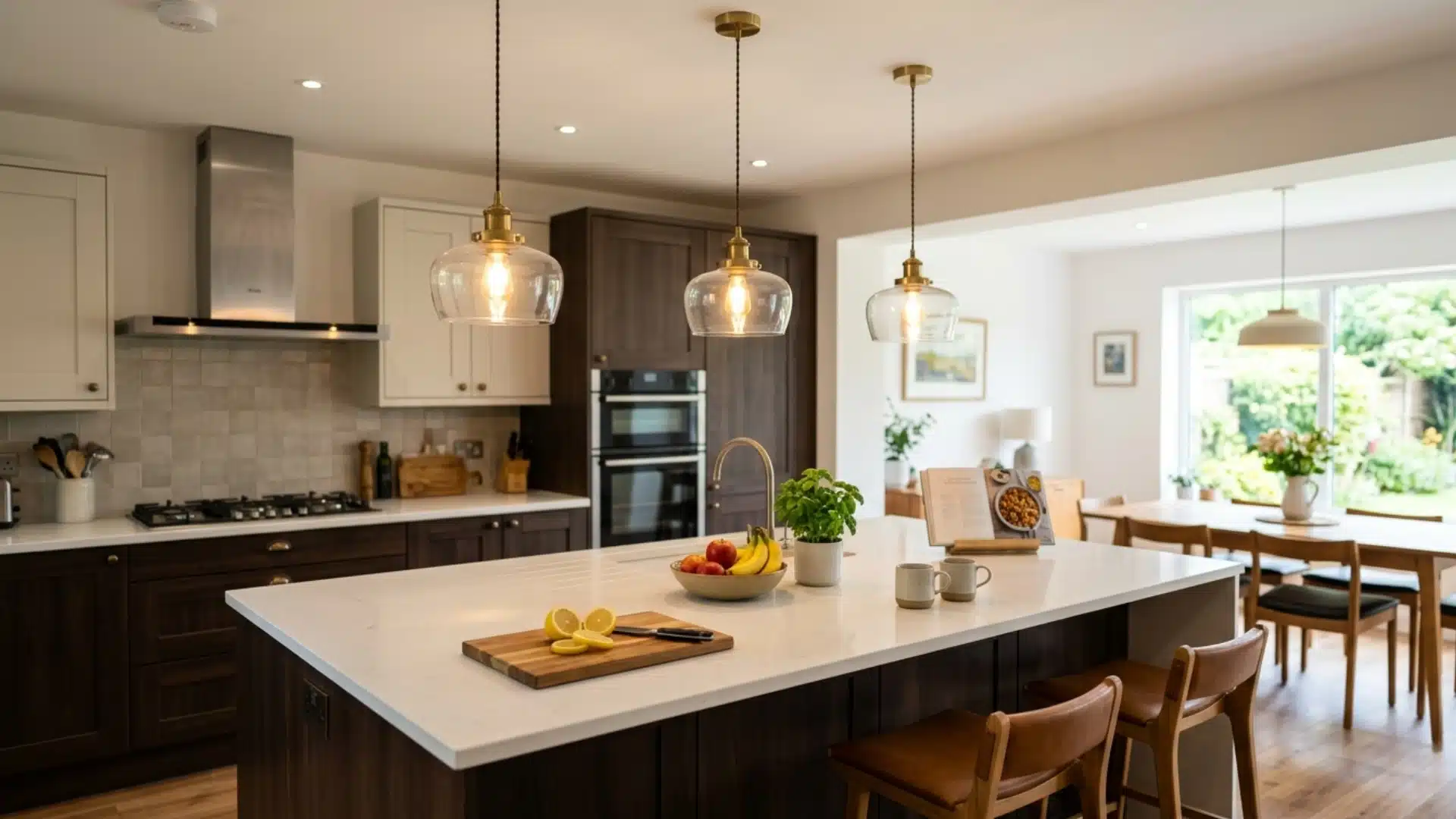
Pendant lights above the kitchen island do two jobs at once: they provide focused task lighting right where you need it most, and they visually mark the kitchen zone within the open layout.
Choose a style that matches your overall decor so the pendants feel intentional rather than added on. Hang them at the right height, roughly 30 to 36 inches above the counter, for the best balance of function and visual appeal.
16. Install Recessed Lighting Across the Entire Ceiling
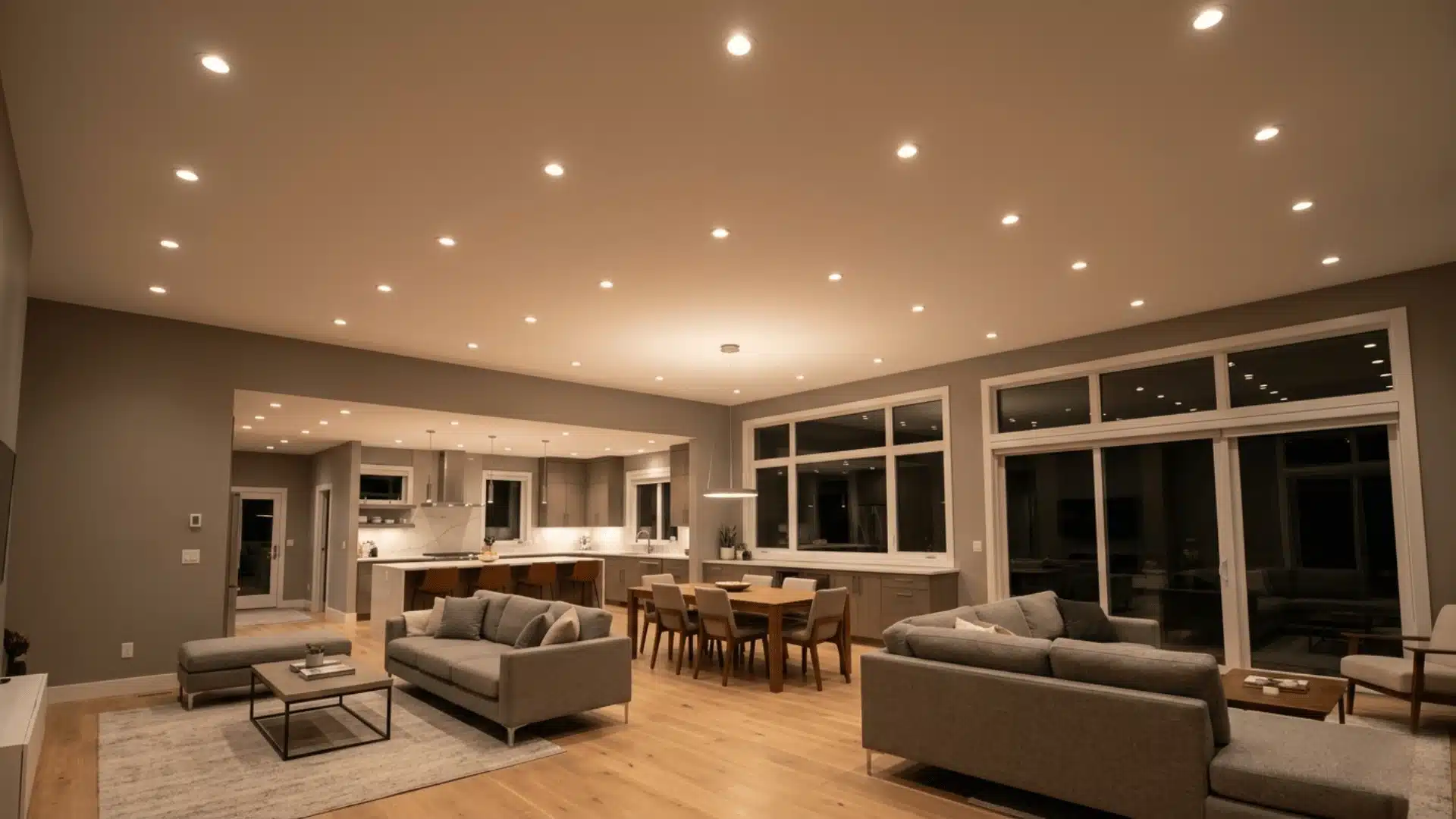
Recessed lighting spread evenly across the ceiling is one of the best ways to keep an open concept space feeling balanced and well-lit. It removes harsh shadows and prevents one zone from feeling brighter or more important than another.
Think of it as your base lighting layer that everything else builds on. Once recessed lights are in place, adding focused or decorative lighting in specific zones becomes much easier and more effective overall.
17. Use a Statement Light in the Living Area
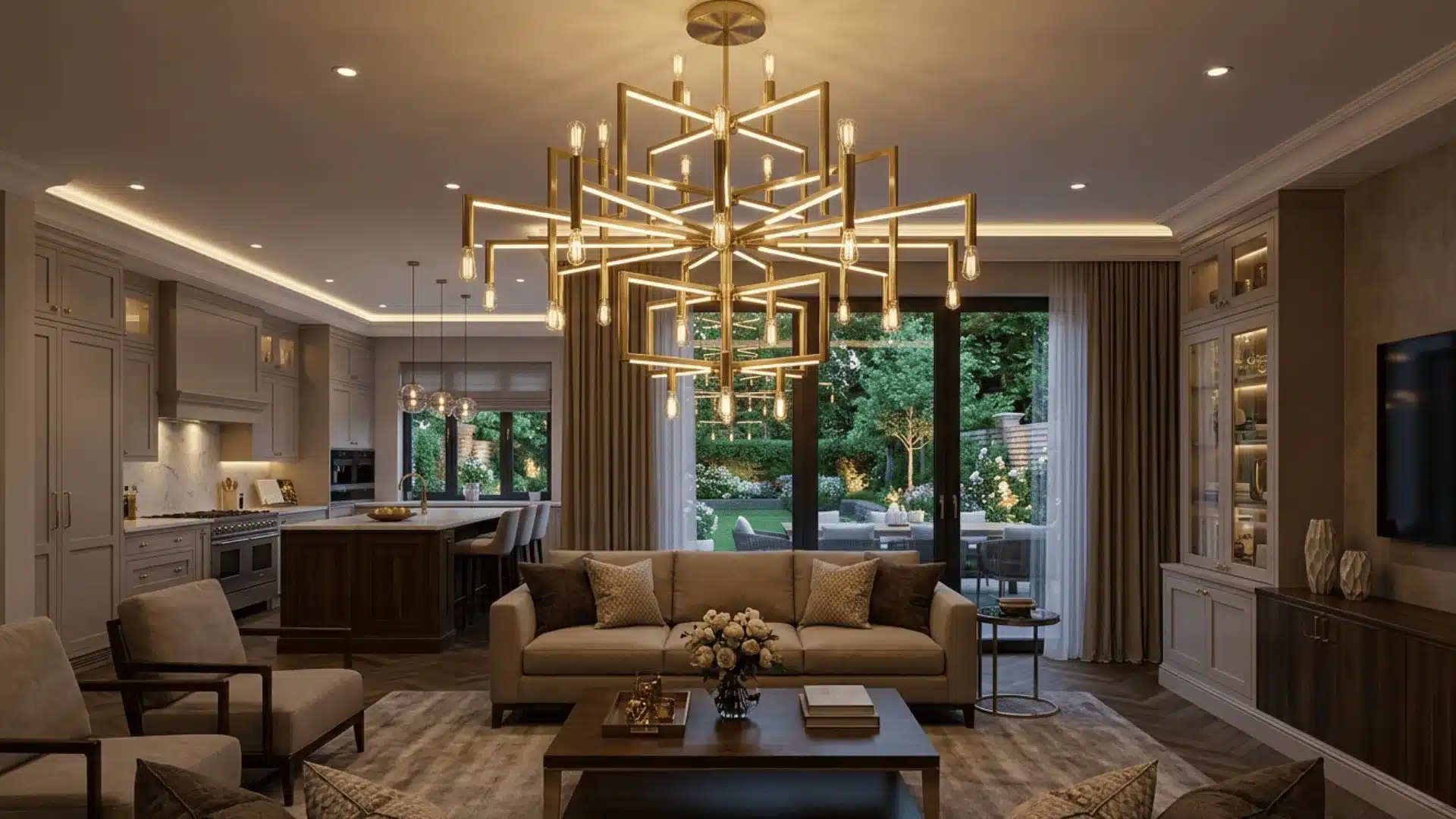
A bold, eye-catching light fixture in the living area gives that zone its own identity within the open layout. It signals clearly that this is a separate space meant for relaxing, even without a wall to mark the boundary. A statement chandelier, oversized pendant, or sculptural ceiling light works well here.
Choose something that complements the kitchen lighting style so both zones feel connected rather than pulling the room in two different directions.
18. Add Under-Cabinet Kitchen Lighting
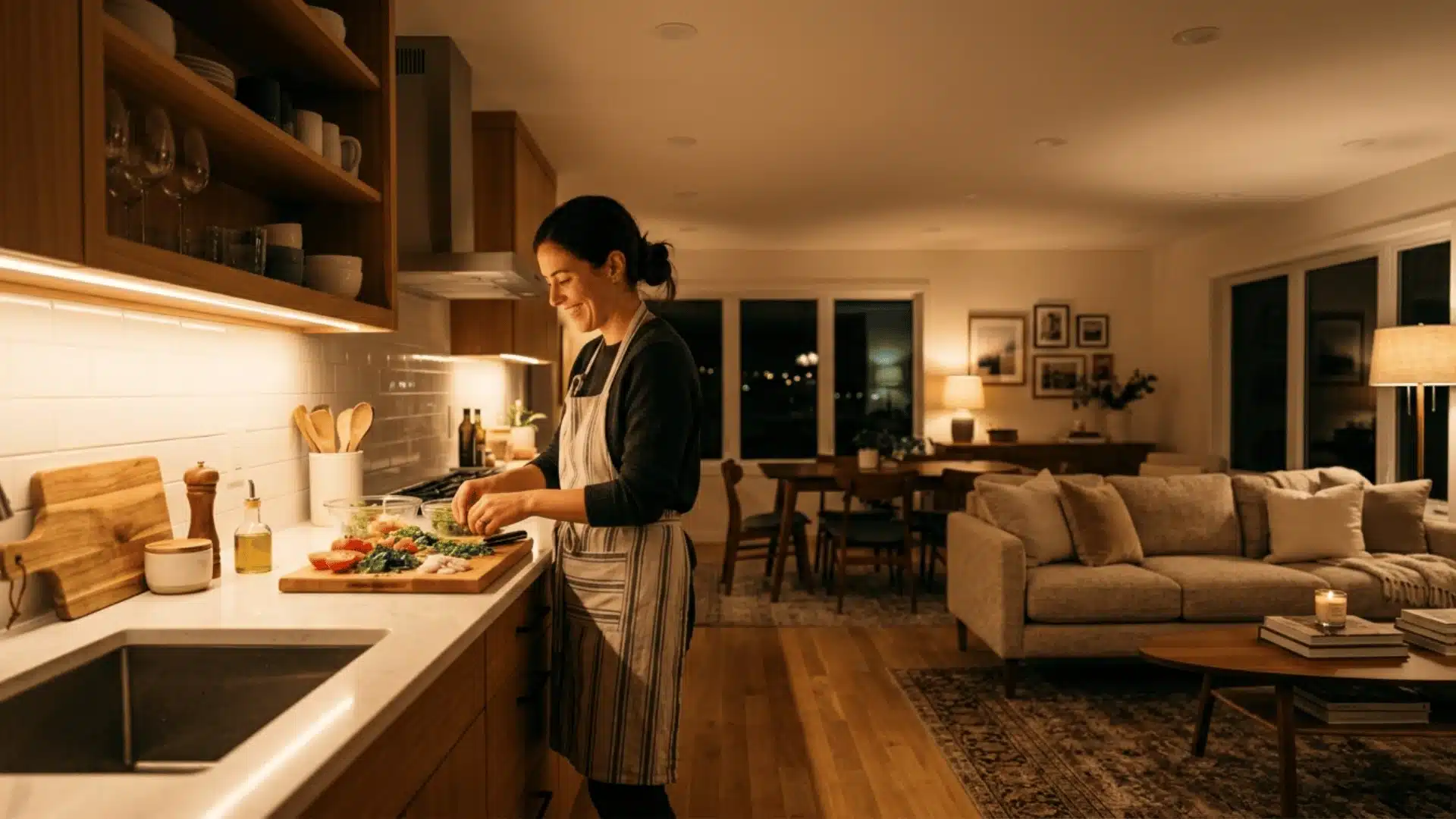
Under-cabinet lighting is one of those small additions that makes a surprisingly big difference. It lights up your countertops directly, making food prep safer and easier while adding a warm, layered glow to the kitchen at night.
In an open concept space, this soft light also helps the kitchen feel cozy after dark without flooding the entire room with bright overhead light. LED strip lights are an affordable and easy option for most standard kitchen cabinets.
19. Layer Lighting With Floor and Table Lamps
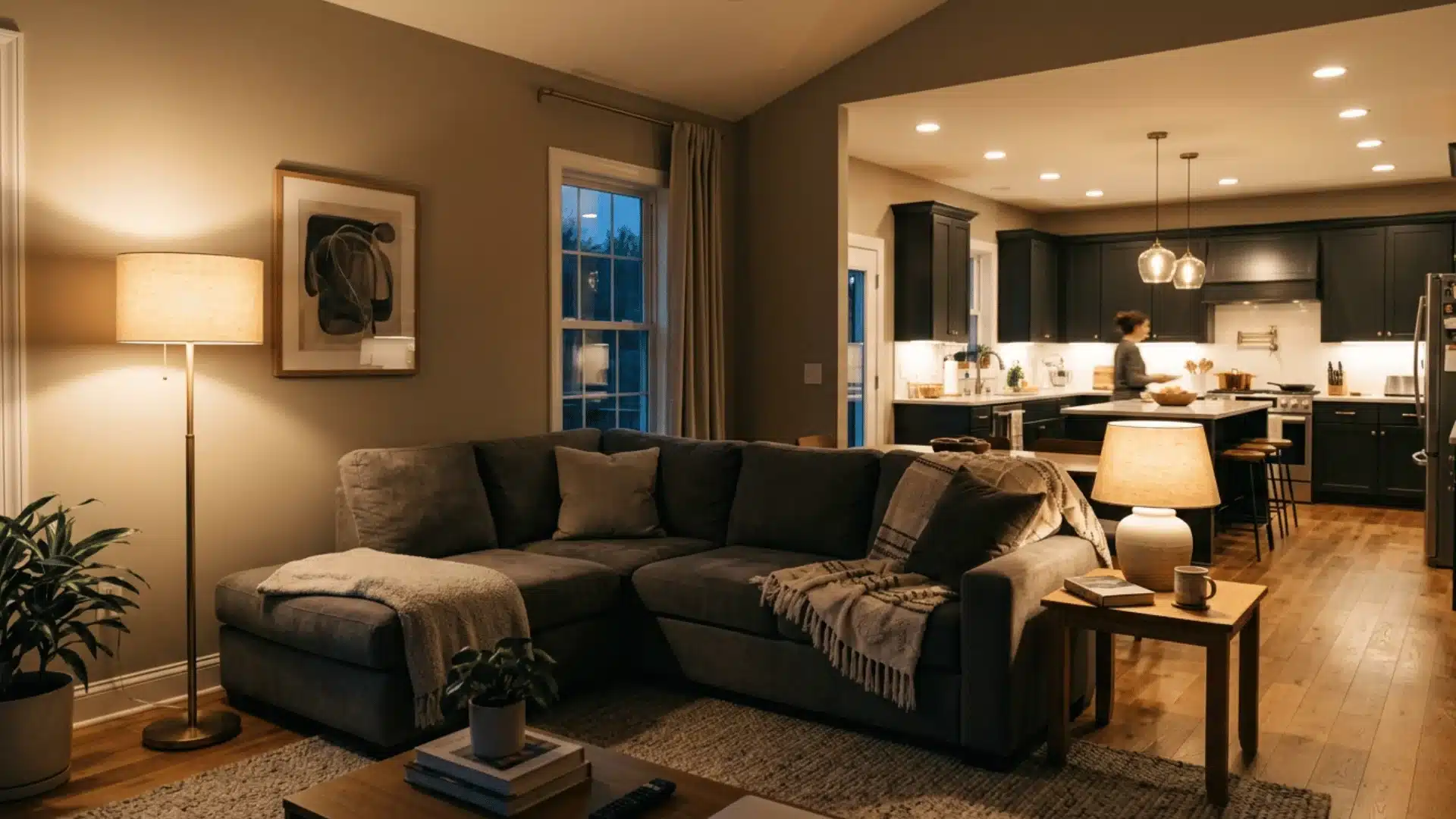
Floor lamps and table lamps bring warmth and softness to the living area that overhead lighting simply cannot replicate. In an open-concept space, layering light sources helps the living zone feel cozy and distinct from the brighter, more functional kitchen area.
Place a floor lamp beside the sofa and a table lamp on a side table to create a relaxed atmosphere for evenings. Good lamp placement makes the entire open space feel more comfortable and lived-in.
Color & Style Ideas
Color and style choices are what give an open-concept space its personality and sense of harmony; these ideas will help you create a look that feels cohesive, intentional, and beautiful across both your kitchen and living room.
20. Use One Consistent Color Palette
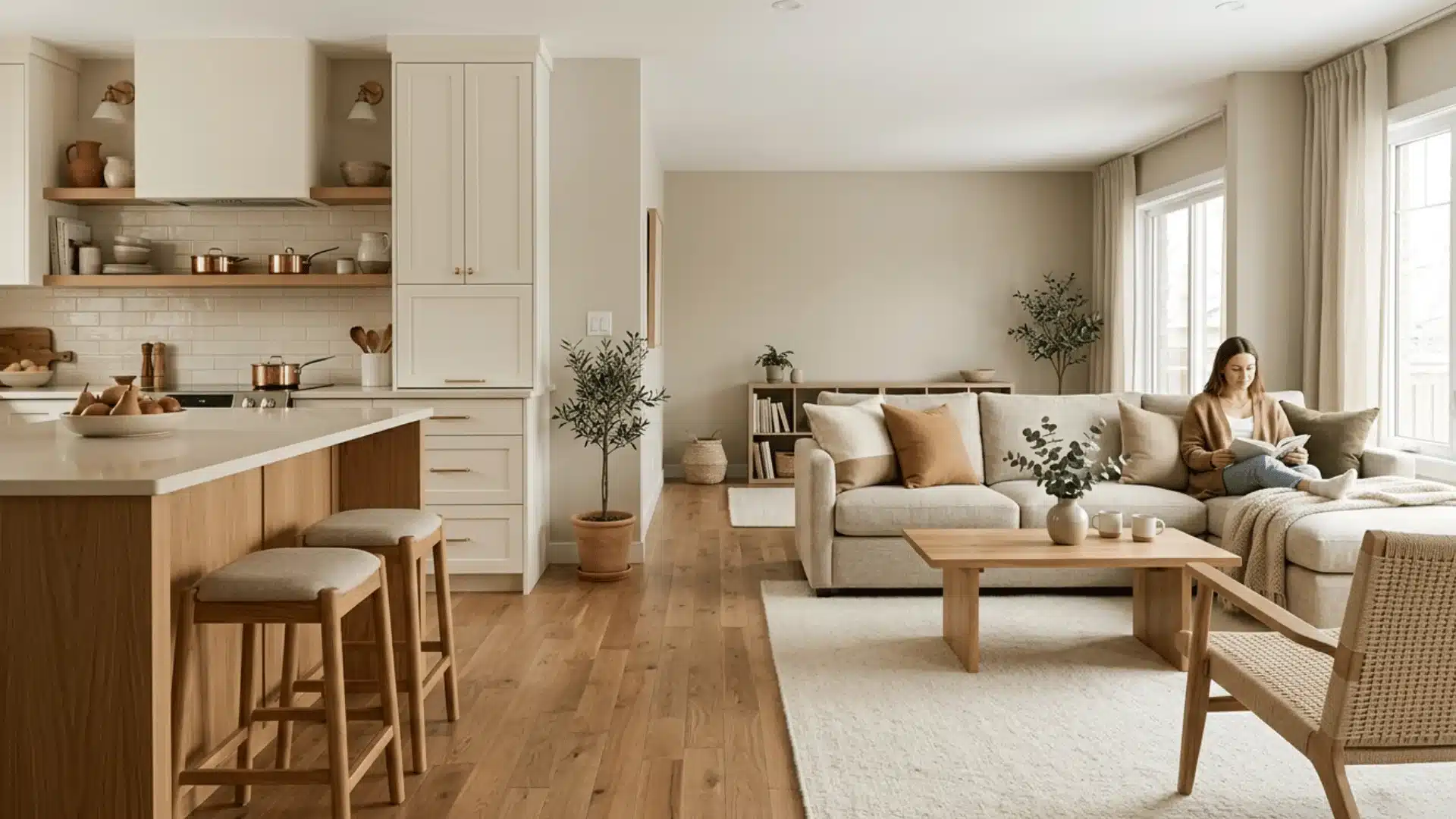
Sticking to one color palette across both zones is the simplest way to make an open concept space feel pulled together. You don’t need everything to match exactly, just keep the tones in the same family.
Warm neutrals, cool grays, or earthy shades all work well. When the colors flow naturally from the kitchen into the living room, the whole space feels calm, connected, and deliberately designed rather than accidental.
21. Add Contrast With Two-Tone Kitchen Cabinets
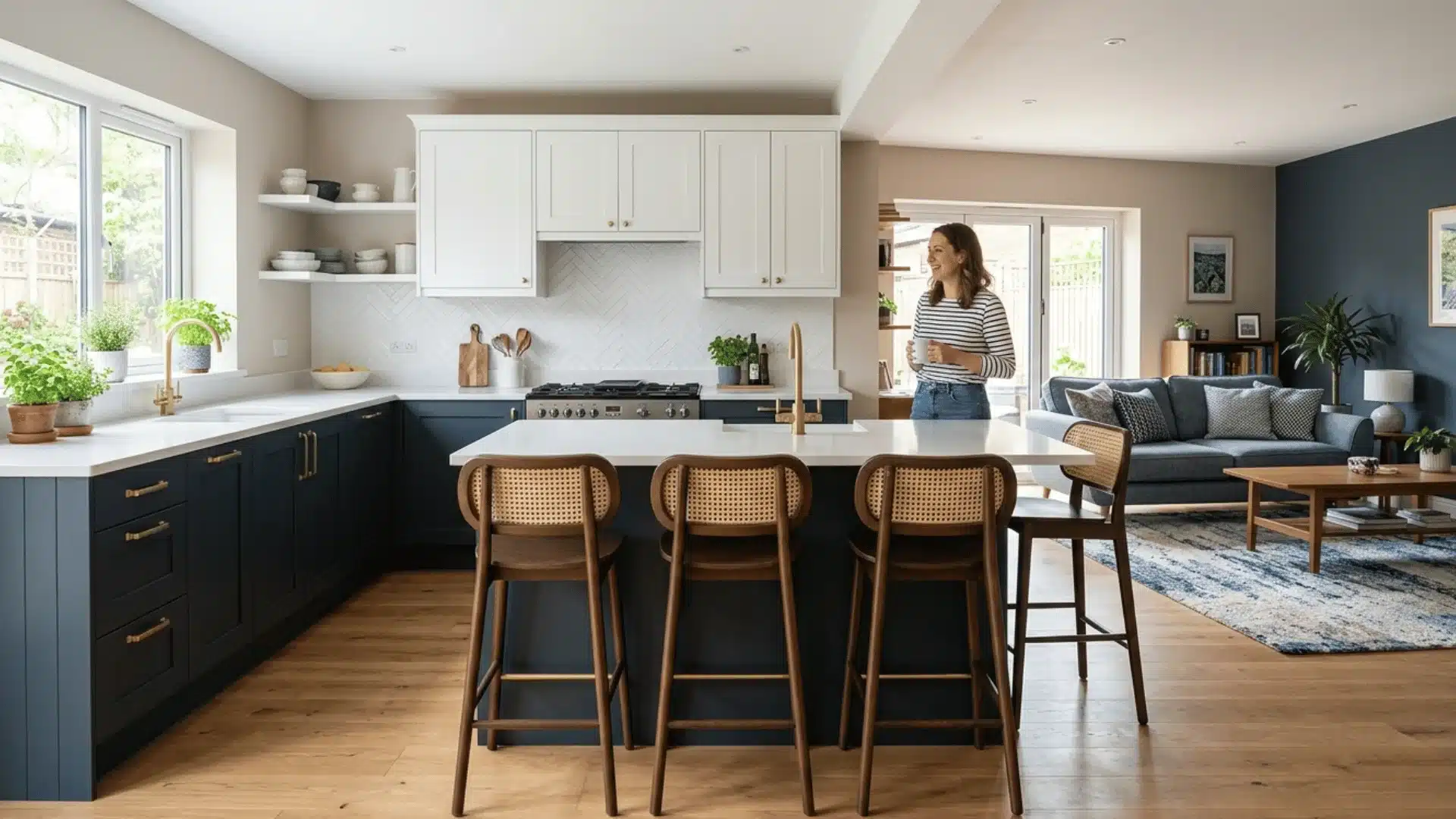
Two-tone cabinets add visual interest to the kitchen without making it feel disconnected from the living room. A common approach is pairing white upper cabinets with darker lower ones. Choose one tone that matches or complements your living room’s main color so the contrast feels intentional.
This small design choice adds depth and character to the kitchen while keeping the overall open layout feeling balanced and thoughtfully put together.
22. Repeat Wood Tones Across the Space
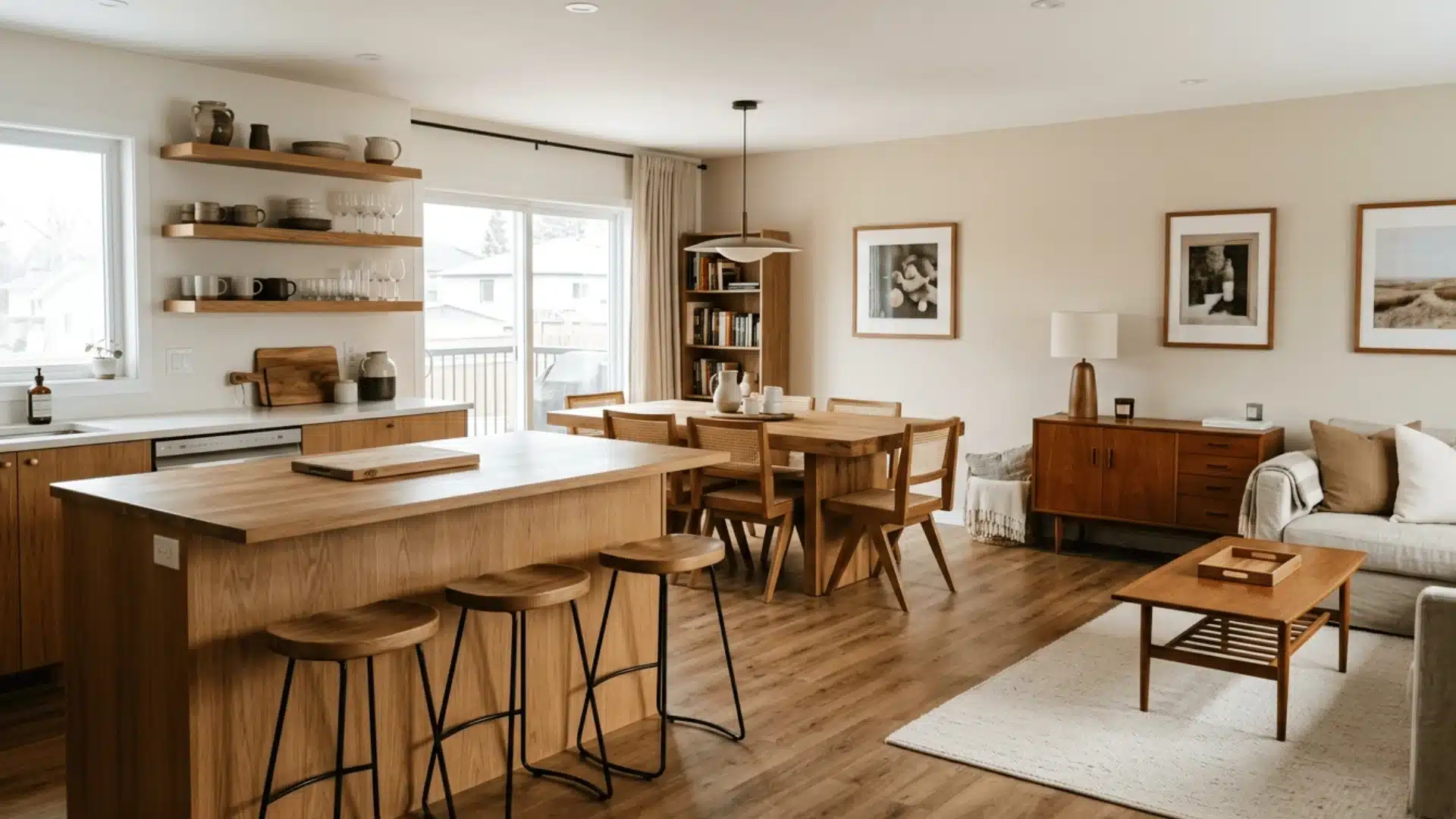
Repeating the same wood finish in both zones is one of the easiest ways to create visual unity in an open layout. Use matching wood tones on the kitchen island, dining table, shelving, and living room furniture.
Even small touches like wooden frames or trays help tie the space together. When the same warm tone appears throughout, the eye moves smoothly across the room, and everything feels like it belongs together naturally.
23. Balance Hard Surfaces With Soft Textures
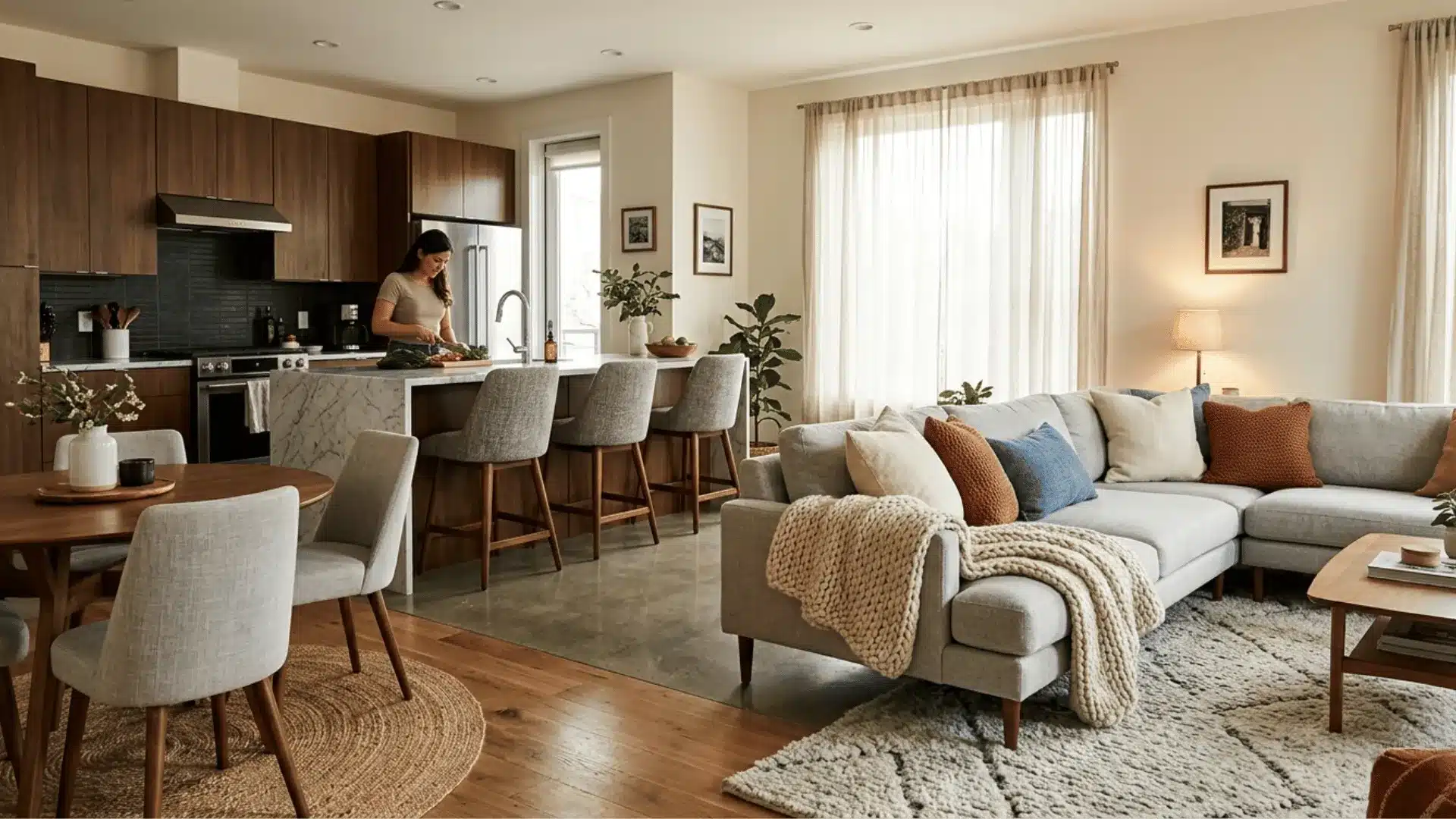
Kitchens are full of hard surfaces, stone counters, tile floors, and flat cabinet doors. Without something soft to balance them, an open concept space can feel cold and unwelcoming.
Add cushions, throws, fabric chairs, and area rugs in the living area to bring warmth and comfort into the room. Soft textures absorb sound, too, which is a bonus in open layouts where noise travels freely from the kitchen across the entire space.
24. Bring Plants Into Both Areas
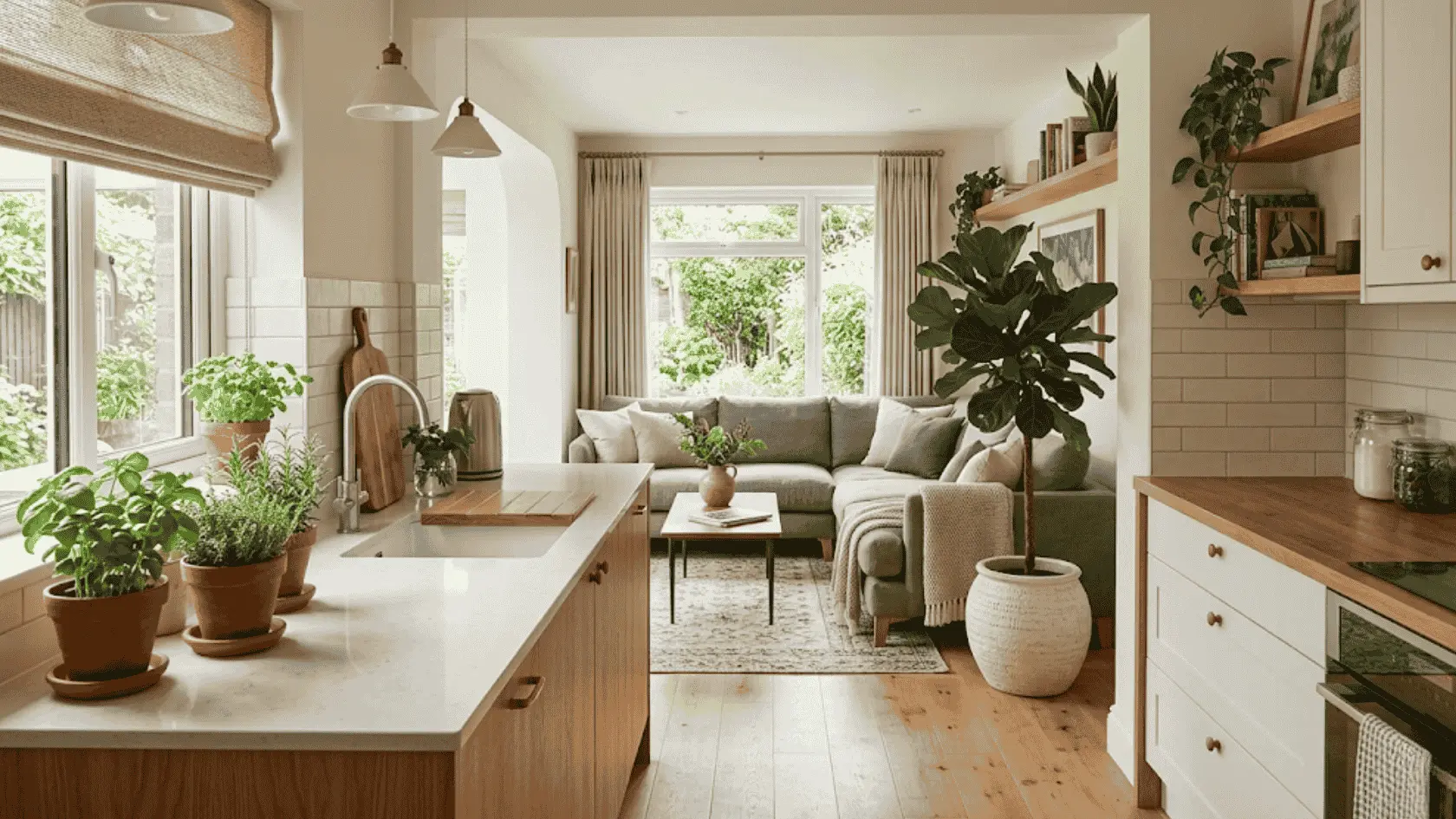
Plants are one of the most affordable ways to visually connect the kitchen and living room in an open layout. Place herbs or small potted plants on the kitchen counter and larger floor plants near the sofa.
Using greenery in both zones creates a natural thread that ties the two areas together. Plants also improve air quality and bring a sense of calm and life to spaces that might otherwise feel too hard or too polished.
Storage & Function Ideas
A beautiful open concept space only works well when it’s also practical and organized: these storage ideas will help you keep clutter under control while making every corner of your kitchen and living room work harder for you.
25. Add Storage Inside the Kitchen Island
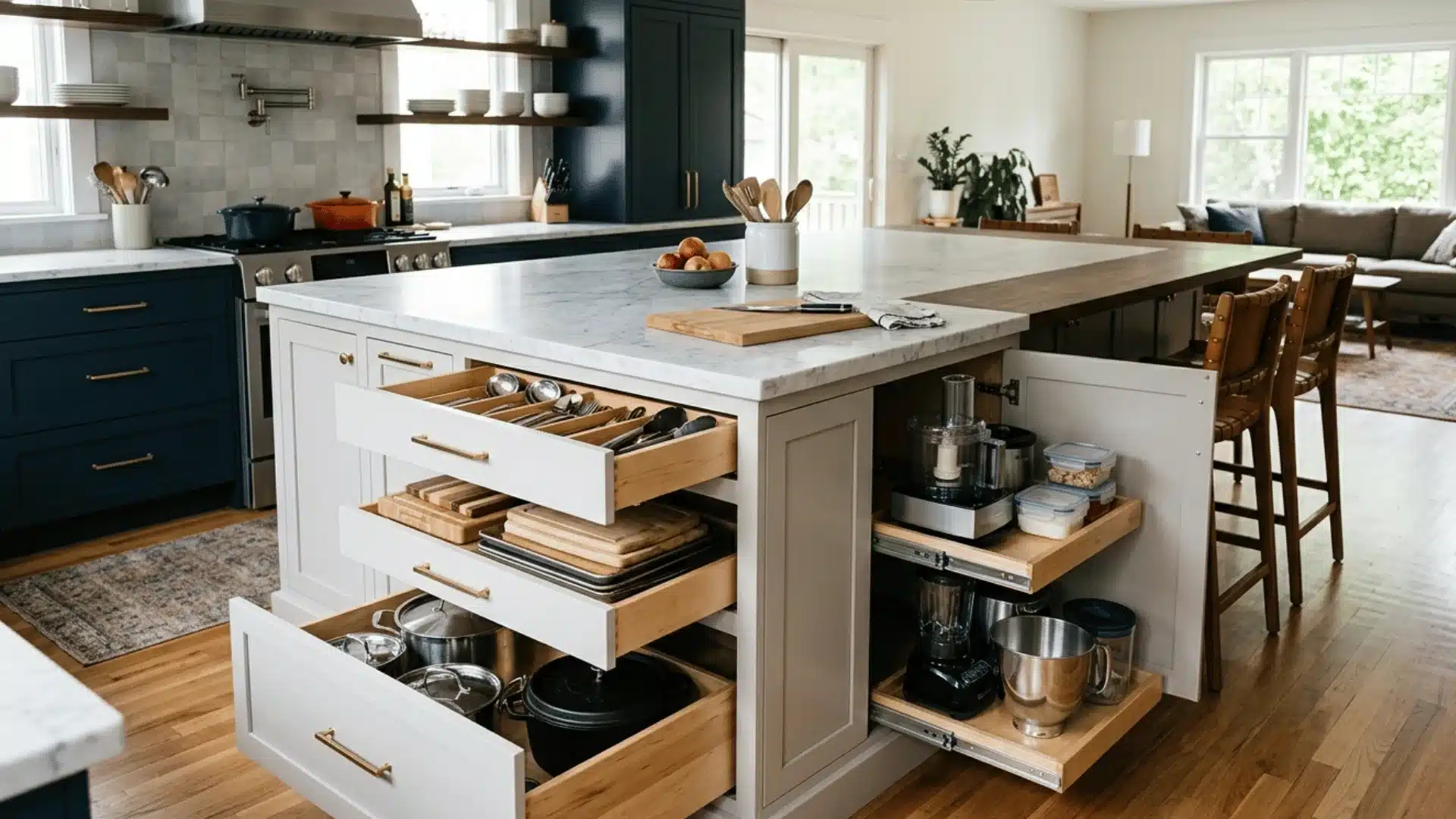
A kitchen island with built-in storage is one of the smartest investments you can make in an open concept space. Hidden drawers, deep cabinets, and pull-out shelves keep everyday clutter completely out of sight.
When the island stays clean and organized, the whole open layout looks tidier and more intentional. Use the storage for cookware, small appliances, or anything you want close to the kitchen but don’t want sitting on display.
26. Install Open Shelving That Faces the Living Room
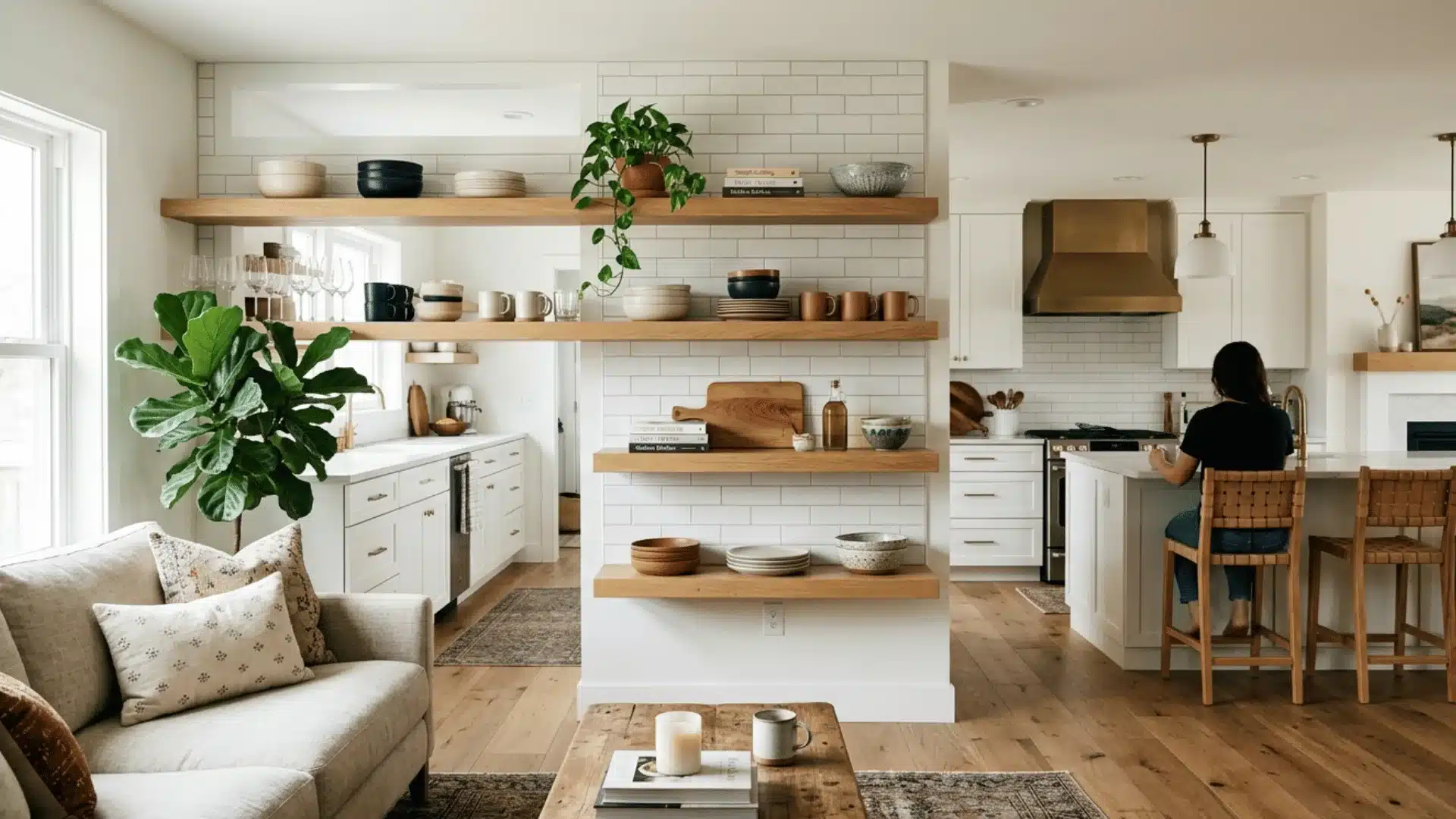
Open shelves facing the living room make the kitchen feel lighter and more connected to the rest of the space. Instead of a solid wall of upper cabinets, floating shelves let light pass through and keep the layout feeling open.
Style them with a mix of everyday dishes, plants, and small decor pieces. Keep them organized because in an open concept space, everything on those shelves is always visible from the living area.
27. Use Floor-to-Ceiling Cabinets
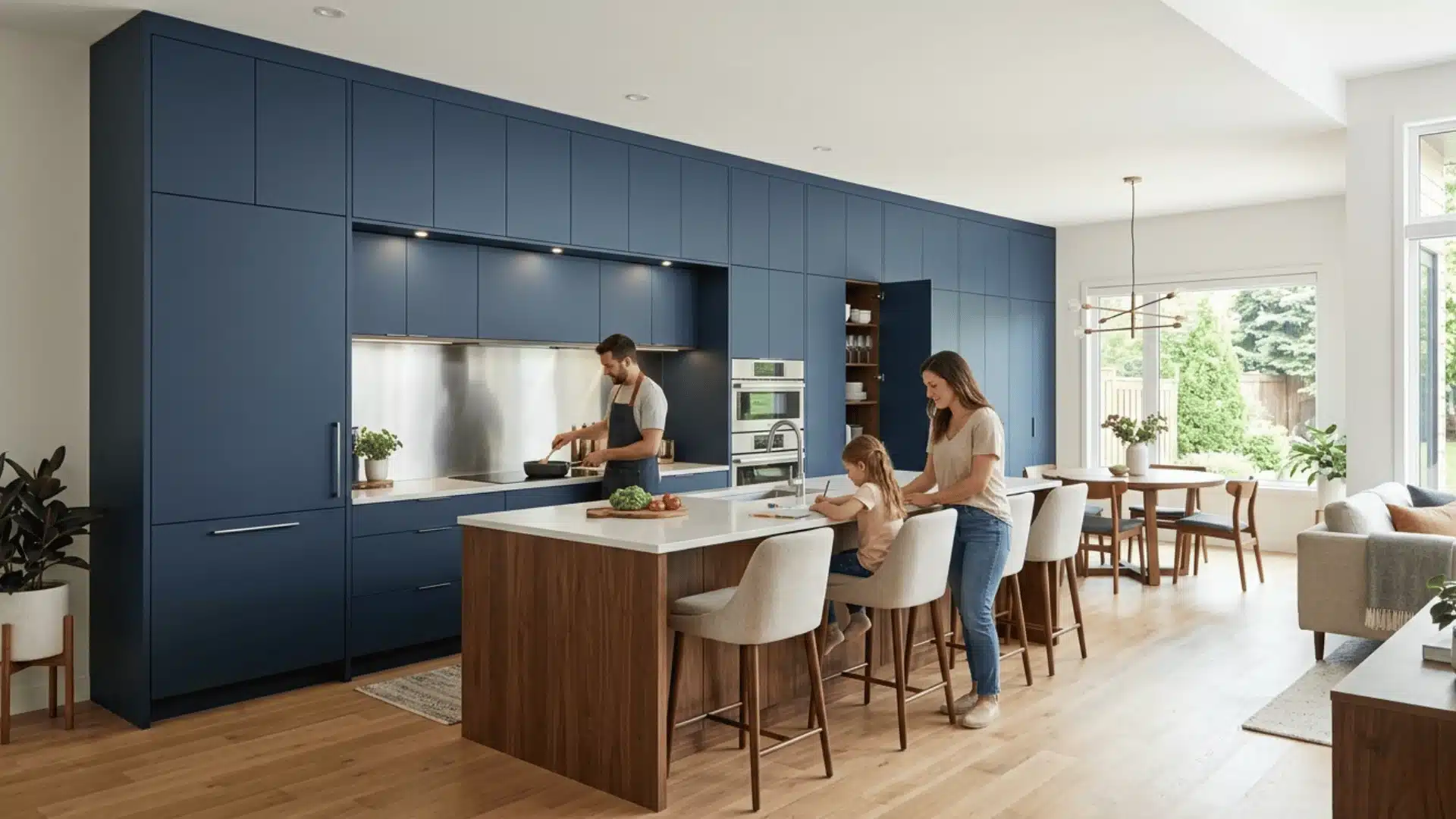
Floor-to-ceiling cabinets are one of the best ways to maximize storage in an open concept home without spreading clutter across the room. Going vertical keeps everything contained in one area, so the rest of the space stays clean and open.
Use the upper sections for items you don’t reach for daily, and keep everyday essentials at eye level. Tall cabinets also add a strong architectural element, making the kitchen feel finished and well-designed.
28. Create a Coffee or Beverage Station
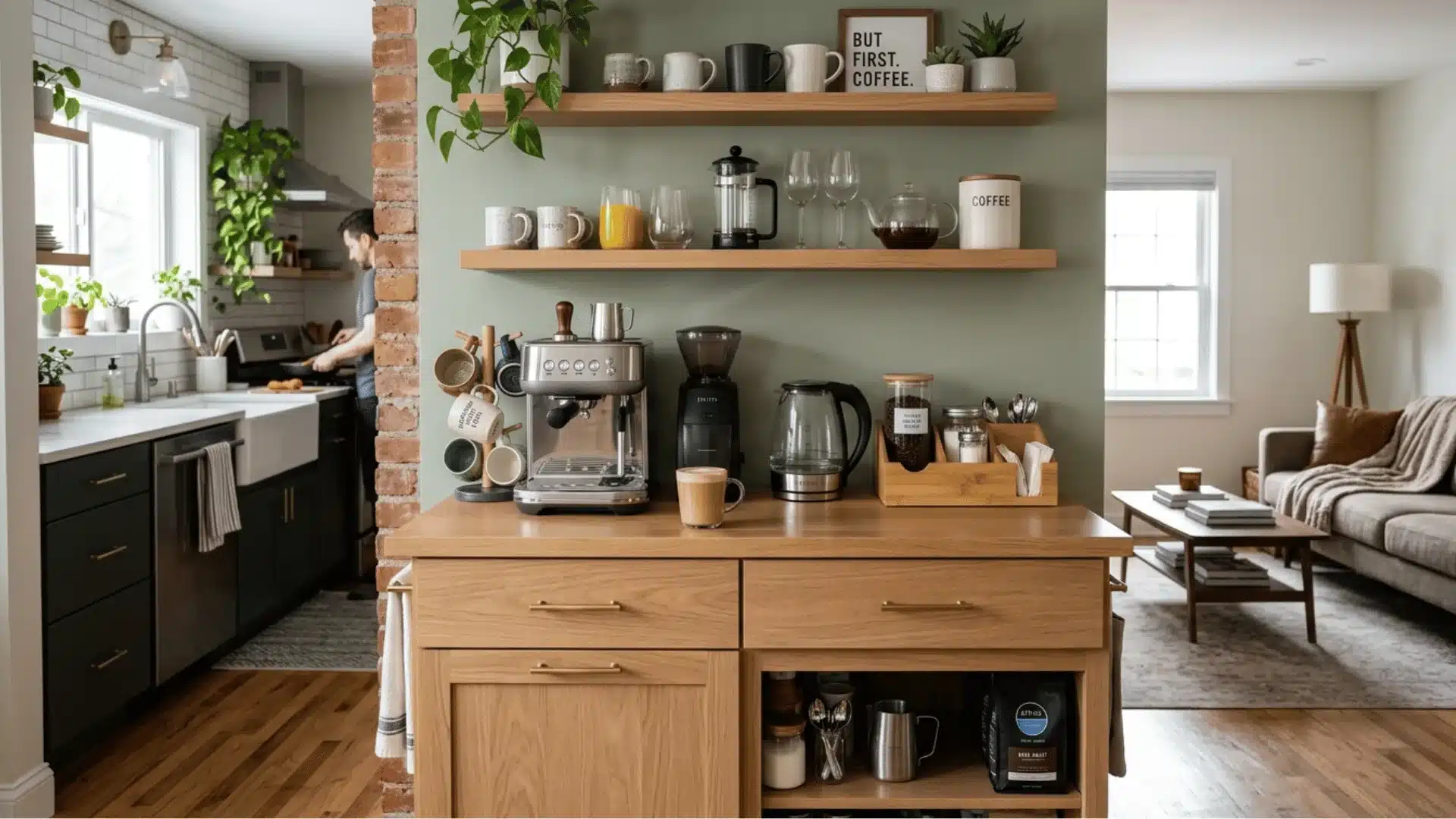
A dedicated coffee or beverage station placed between the kitchen and living area serves both zones perfectly. It keeps your coffee maker, mugs, and supplies organized in one spot, reducing traffic in the main cooking area. It also acts as a subtle transition point between the two spaces.
A small counter, a bar cart, or even a section of open shelving is all you need to create a station that’s both practical and visually appealing.
29. Choose Multi-Purpose Furniture
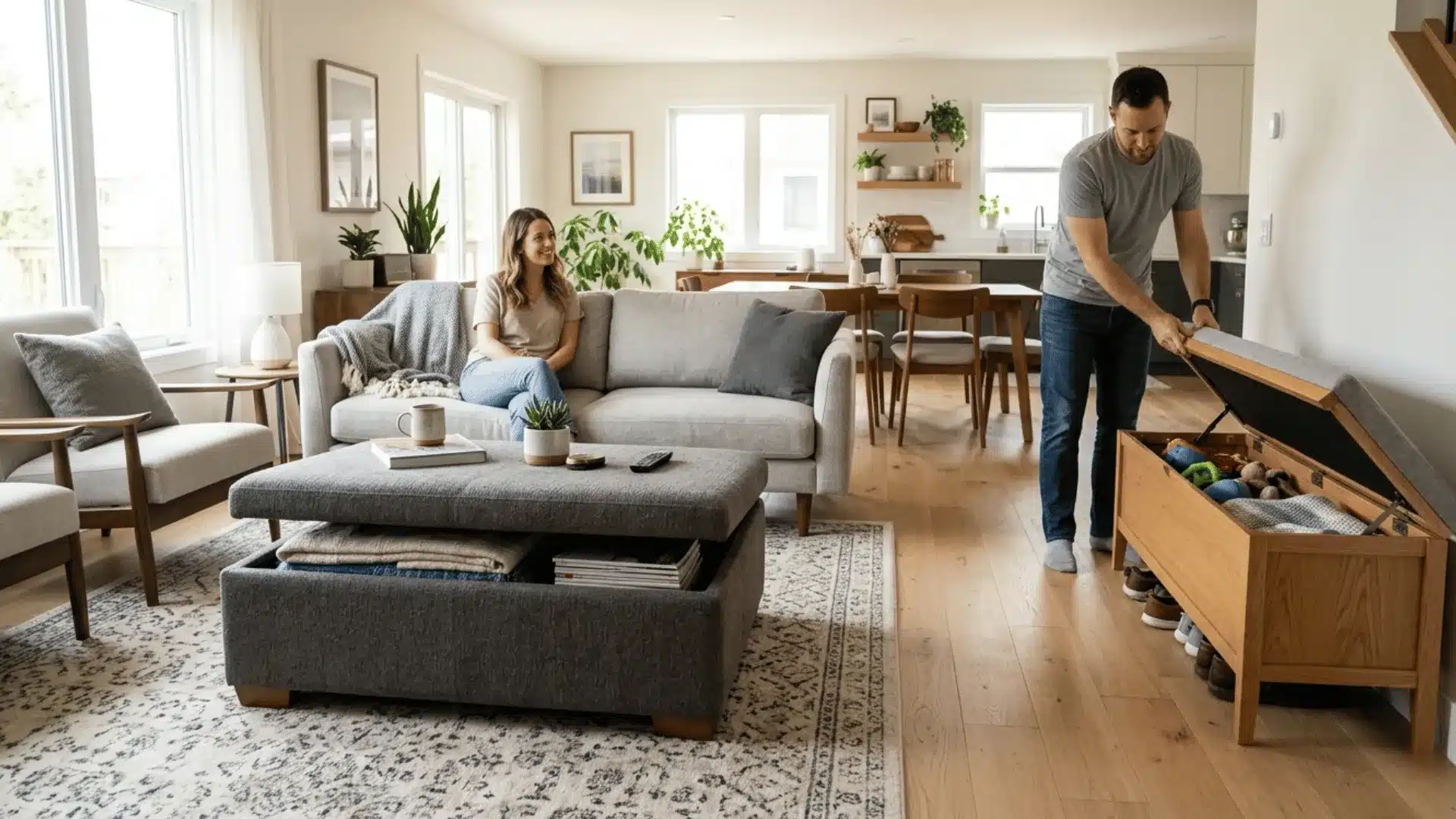
Multi-purpose furniture is essential in any open-concept home with limited storage space. A storage ottoman in the living area can hold blankets, magazines, or kids’ toys while also serving as extra seating or a coffee table.
Benches with hidden compartments work well near the dining area, too. When furniture does more than one job, you naturally reduce clutter without extra cabinets or shelving units taking up valuable floor space in the open layout.
Design Features That Elevate the Space
Sometimes it’s the larger design features that make the biggest impact in an open-concept home: these final touches will help you add character, warmth, and a real sense of style that make your space truly feel complete.
30. Add a Fireplace Visible From Both Areas
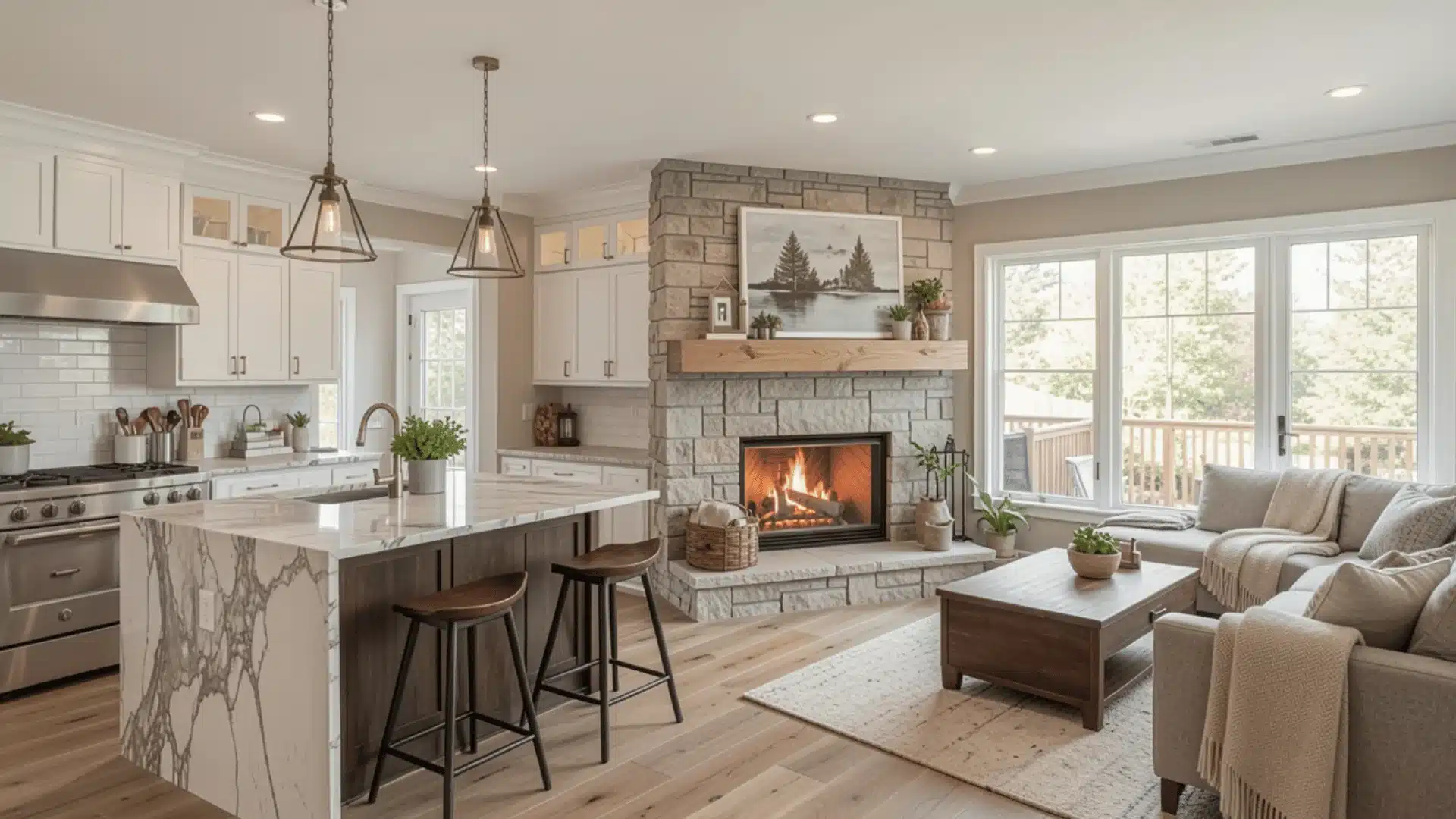
A fireplace that can be seen from both the kitchen and living room becomes the natural heart of the entire open space. It draws the eye, adds warmth, and gives the layout a clear focal point that both zones share.
Whether you choose a traditional built-in or a modern two-sided design, the fireplace creates a cozy atmosphere that makes the whole open concept feel intentional, inviting, and genuinely comfortable to spend time in daily.
31. Install Sliding Glass Doors for Natural Light
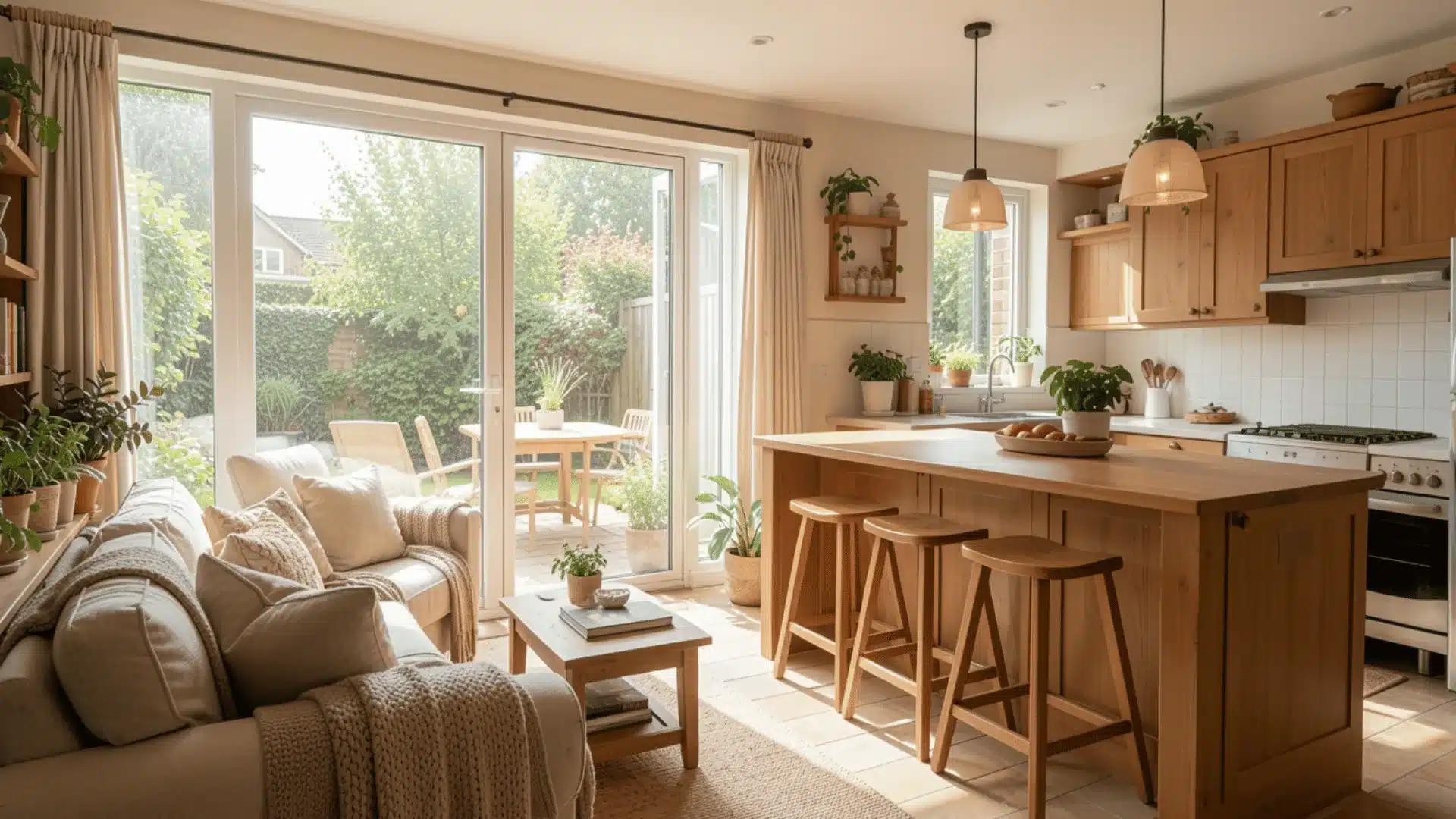
Sliding glass doors are among the most effective ways to make an open-concept space feel even bigger and brighter. They flood both the kitchen and the living area with natural light throughout the day, reducing the need for artificial lighting and making colors look more vibrant.
When the doors open fully, the indoor and outdoor spaces connect seamlessly. It’s a feature that immediately makes any open layout feel more generous, airy, and welcoming overall.
32. Use Two-Tone Flooring to Define Zones
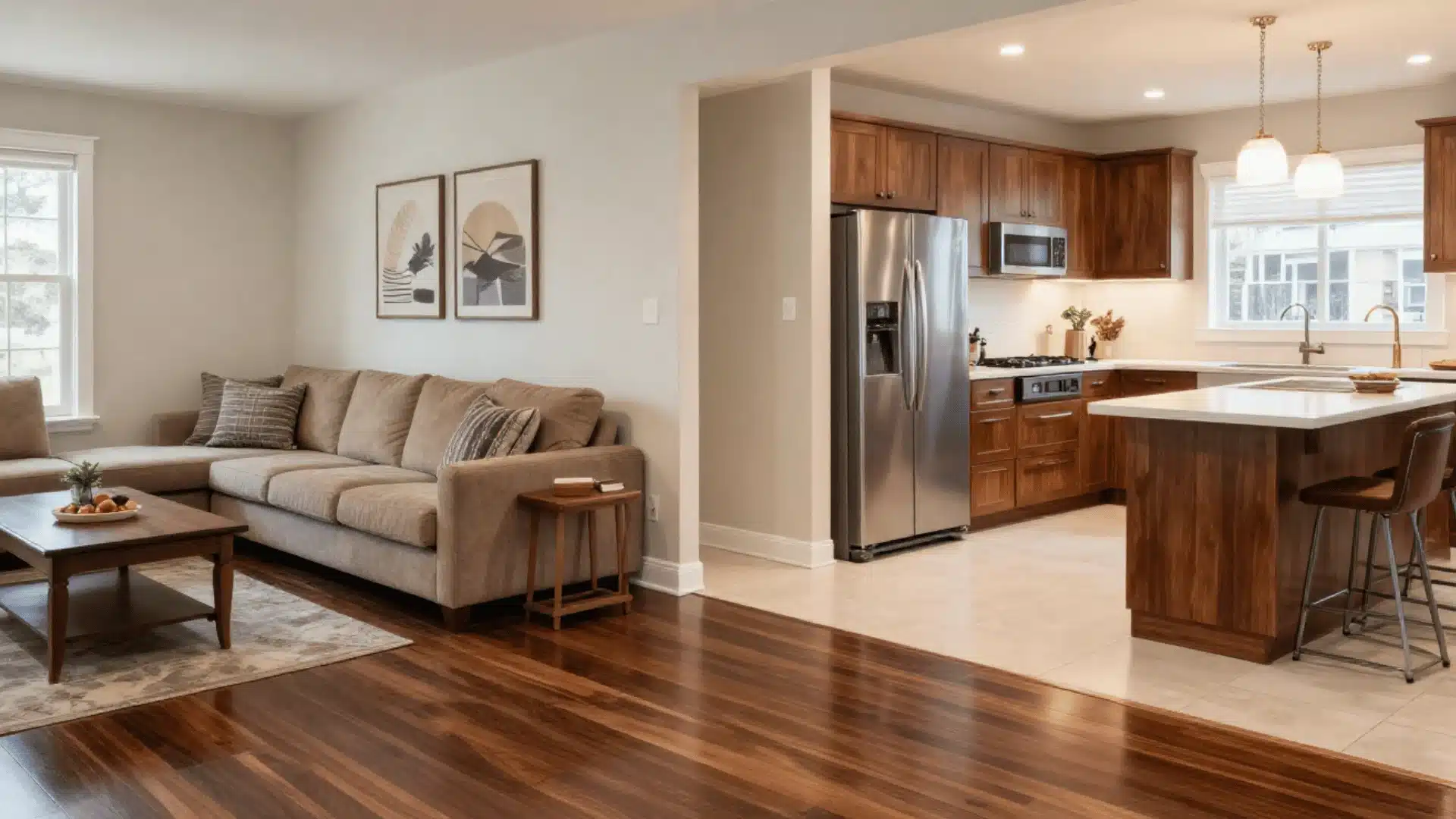
Using two different flooring materials is a clever way to separate the kitchen and living areas without adding any walls. Try hardwood or carpet in the living zone and tile or a contrasting wood finish in the kitchen.
The shift in flooring signals a change in space naturally and helps each area feel distinct. It’s a practical choice too, since kitchen flooring needs to handle spills and heavy foot traffic better than living room flooring does.
33. Create a Feature Wall in the Living Room
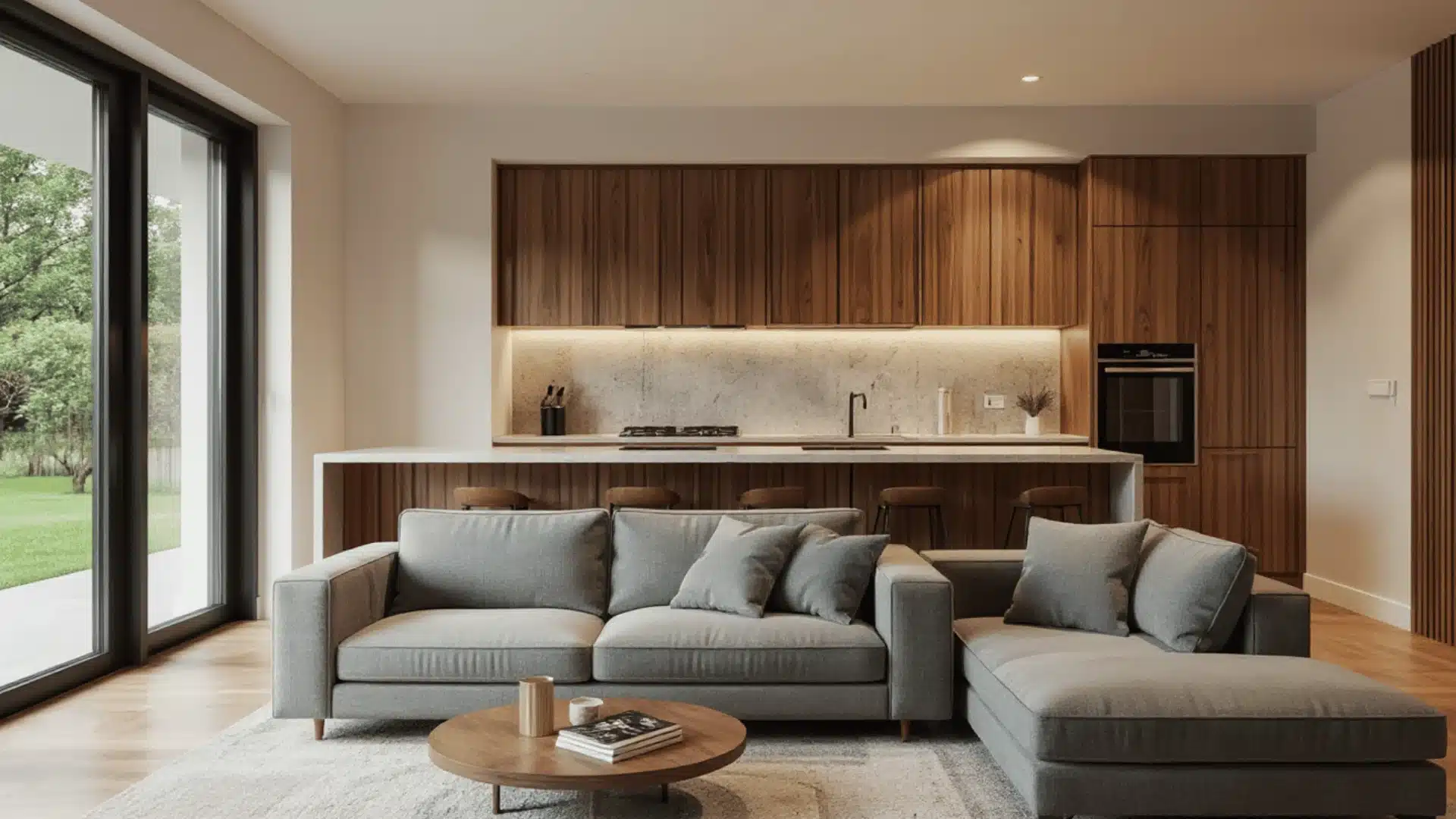
A feature wall gives the living area its own strong identity within the open layout. Choose a bold paint color, textured wall paneling, or a stone finish to create a backdrop that stands out without competing with the kitchen.
It doesn’t need to cover the entire wall; even a partial treatment makes a significant impact. A well-designed feature wall adds depth, personality, and a finished look that pulls the entire open concept space together beautifully.
34. Incorporate a Sliding Barn Door Between the Two Spaces
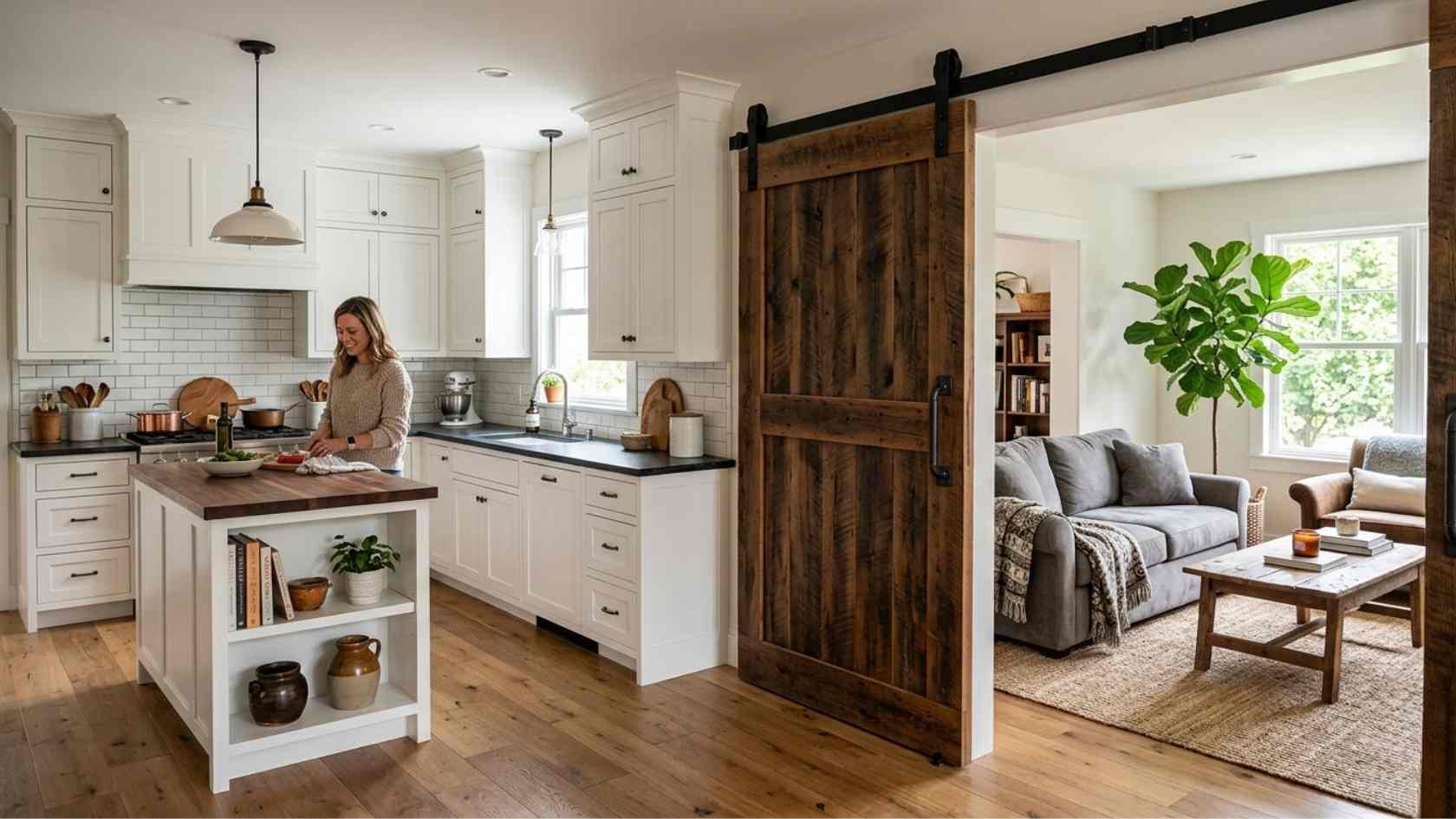
A sliding barn door is a practical and stylish way to add flexibility to your open-plan layout. When you need to separate the kitchen from the living area, whether to contain cooking smells, noise, or mess, simply slide it shut.
When you want the spaces to flow freely, slide it back open. It brings a warm, rustic character to the home while solving a very real everyday problem.
35. Create a Built-In Bar Area for Entertaining
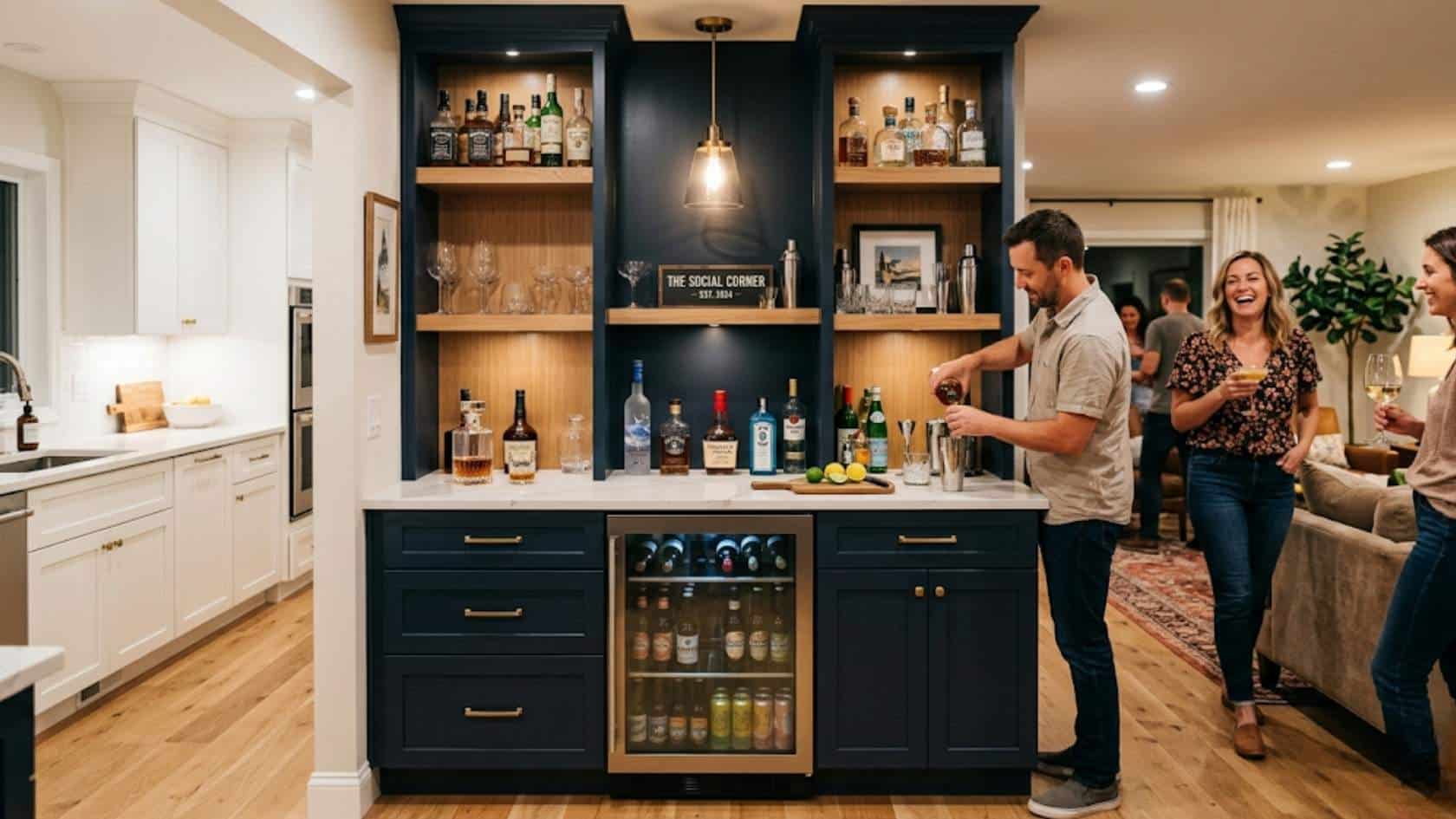
A built-in bar station is one of the best upgrades you can add to a combined kitchen and living space. Tuck it into a corner with shelves for glassware and bottles, plus a compact fridge, and you instantly have a dedicated entertaining spot.
It keeps hosting organized and effortless, so everything you need is within easy reach. Whether it’s a dinner party or a casual evening, this addition makes the space feel complete
Common Open Concept Layout Mistakes to Avoid
Even the best open-concept spaces can fall flat when a few key details are overlooked. Knowing these common mistakes before you start will save you time, money, and a lot of unnecessary frustration down the line.
- Using too many colors: Mixing too many different colors across both zones makes the space feel chaotic and visually overwhelming rather than open and connected.
- Blocking walkways with furniture: Placing furniture without considering traffic flow creates awkward paths that make the entire open layout feel cramped and difficult to navigate.
- Poor lighting planning: Relying on a single overhead light for the entire space leaves some areas too dark and makes the layout feel unbalanced and poorly thought out.
- Lack of storage: Without enough hidden storage, clutter builds up quickly, and an open concept space has nowhere to hide it from view across the entire room.
- No visual separation between zones: Without rugs, lighting, or furniture placement defining each area, the kitchen and living room blur together into one confusing, undefined space.
Avoiding these five mistakes is just as important as choosing the right furniture or color palette: get these basics right from the beginning, and your open concept space will feel as good to live in as it looks.
Summing Up
Upgrading your home starts with rethinking how your rooms interact. We have explored how a thoughtful open concept kitchen living room can turn a cramped house into a vibrant, connected hub for family life.
By using smart dividers like islands, layering your lighting, and sticking to a cohesive color palette, you create a space that is both functional and beautiful. These strategies ensure your home feels organized rather than chaotic.
Now that you have these practical tips, you can confidently start planning your own renovation or furniture refresh.
I’d love to know which of these layout ideas you plan to try first! Share your thoughts in the comments or check out my other home design guides.