

Have you ever craved French onion soup but wanted a big bowl of pasta instead? I feel the same way, especially on nights when I only want to wash one pot.
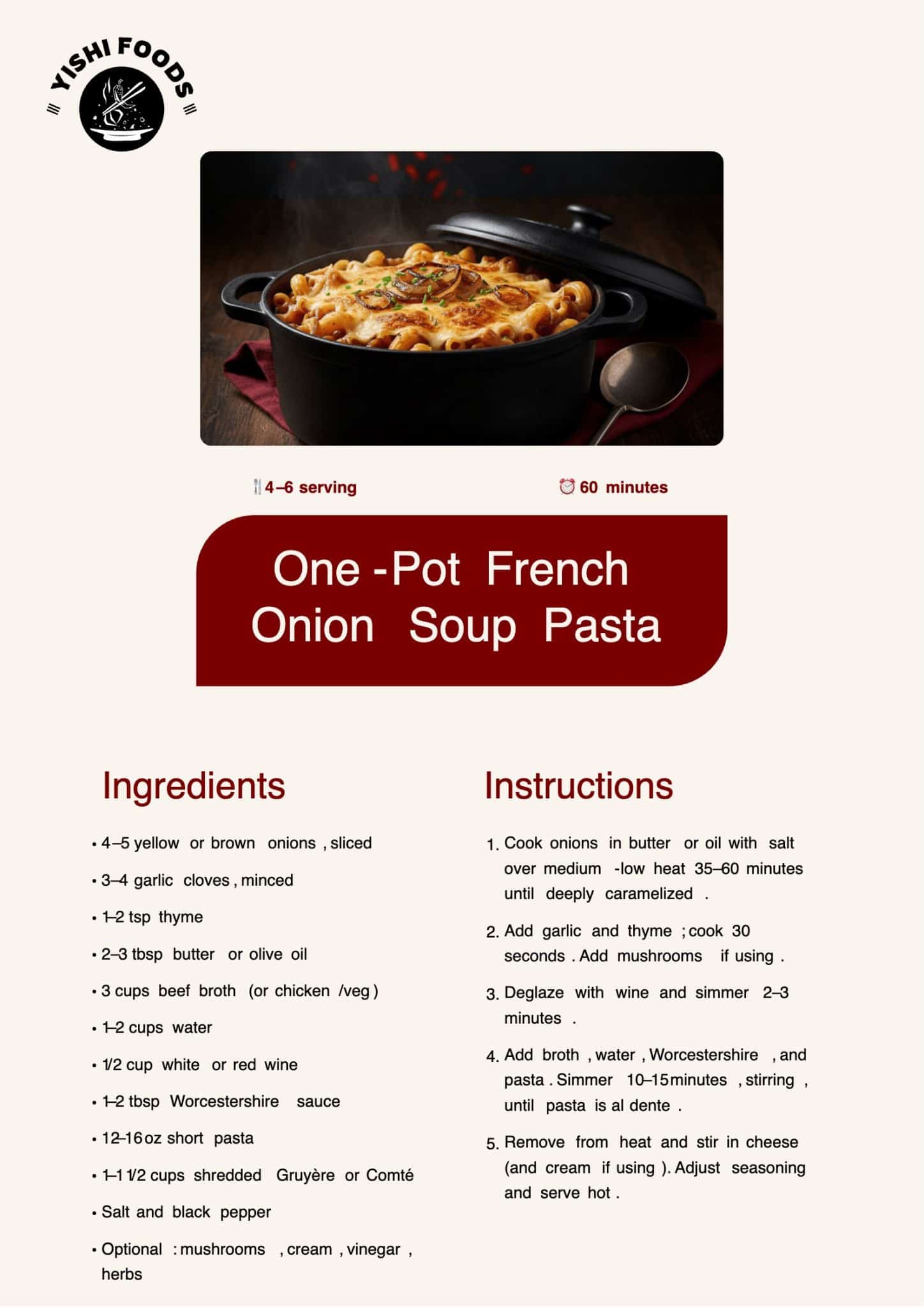
This French onion soup pasta gives you all the slow-cooked onion, beefy broth, and melty cheese flavor in a cozy, one-pot dinner.
You’ll cook the pasta right in the sauce, so it soaks up every bit of flavor. I’ll walk you through the base recipe first, then show you easy ways to tweak it.
Why Caramelized Onions Matter in French Onion Soup Pasta?
Caramelized onions are what separate this pasta from any other cheesy noodle dish. They bring a deep, sweet richness that you simply can’t get from raw or lightly sautéed onions.
When onions are cooked properly, their natural sugars transform into something complex and almost meaty in flavor, that’s the soul of French onion soup, and it’s exactly what makes this pasta version so satisfying.
Skip or rush the caramelization, and you’ll end up with a flat, forgettable meal. Get it right, and every bite is packed with layers of savory-sweet goodness that no amount of cheese or broth can replicate on its own.
Ingredients You’ll Need
This one-pot pasta combines French onion soup flavors with comfort food ease. Most ingredients are pantry staples you likely already have at home.
| Category | Ingredients |
|---|---|
| Base & Aromatics | Yellow or brown onions, garlic, thyme, butter, and/or olive oil |
| Liquid & Flavor Boosters | Beef broth (or vegetable/chicken), water, white or red wine, Worcestershire sauce, sherry or wine vinegar |
| Pasta & Cheese | Short pasta (orecchiette, rigatoni, penne, shells), Gruyère or Comté, Parmesan or Pecorino, optional cream |
| Optional Add-Ins | Cremini mushrooms, cayenne or chili flakes, fresh chives or parsley, protein (chicken, steak, sausage) |
Adjust quantities based on how many servings you need. The recipe scales easily for larger or smaller groups.
French Onion Soup Pasta Basic: One-Pot Method
This simple technique builds layers of rich flavor in a single pot. You’ll caramelize onions, cook pasta directly in broth, and finish with melted cheese for comfort food perfection.
1. Slice and Start the Onions
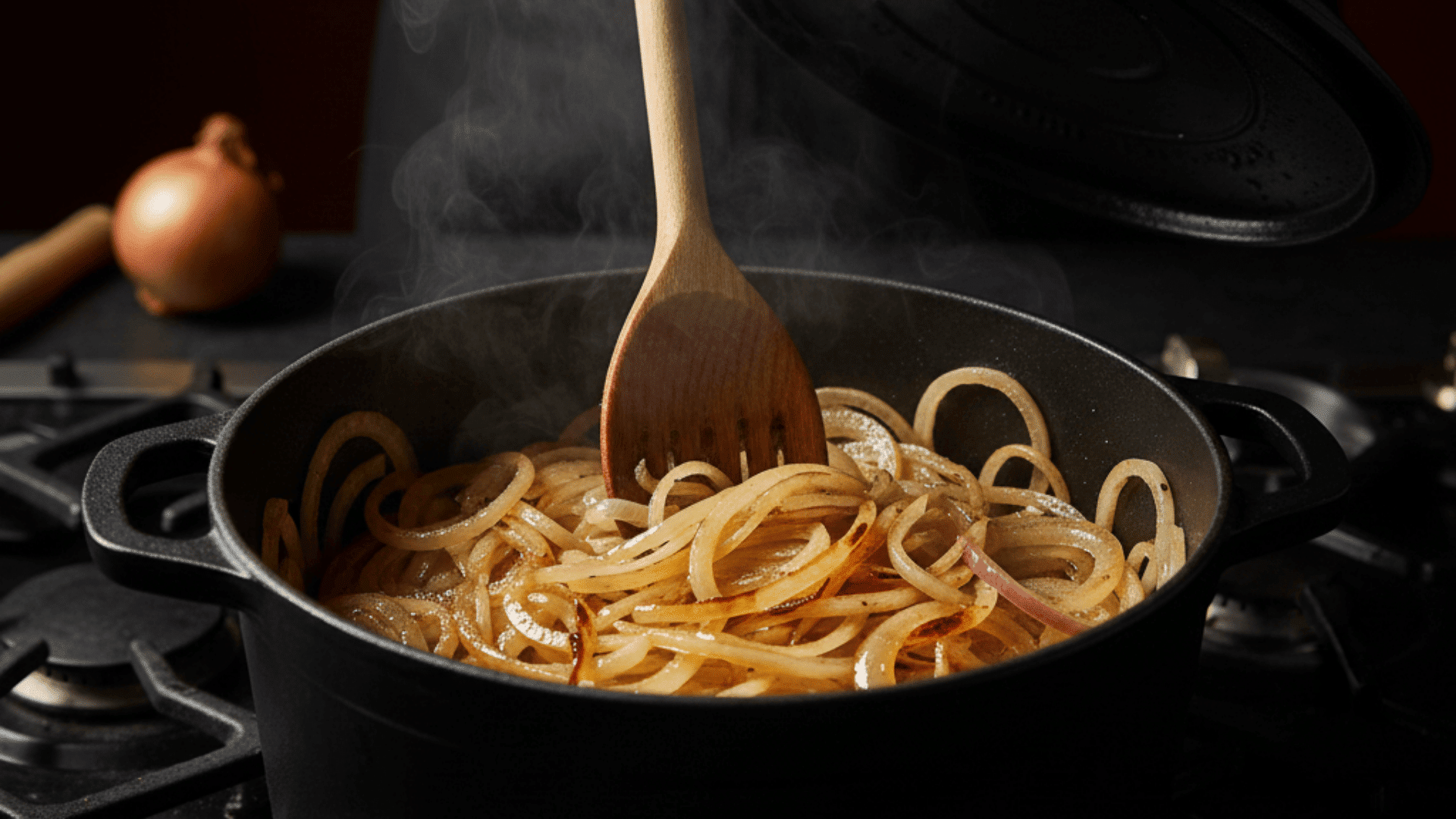
Slice your onions into ¼-inch thick pieces, not too thin, or they’ll turn mushy. Heat a large Dutch oven or deep skillet over medium heat and add 2-3 tablespoons of butter, olive oil, or both. Once the butter melts and foams, add your sliced onions with a generous pinch of salt (about ½ teaspoon).
- Stir well to coat onions in fat.
- Cover for 5 minutes to create steam.
- Remove the lid and let the moisture evaporate.
2. Caramelize Low and Slow (35–60 minutes)
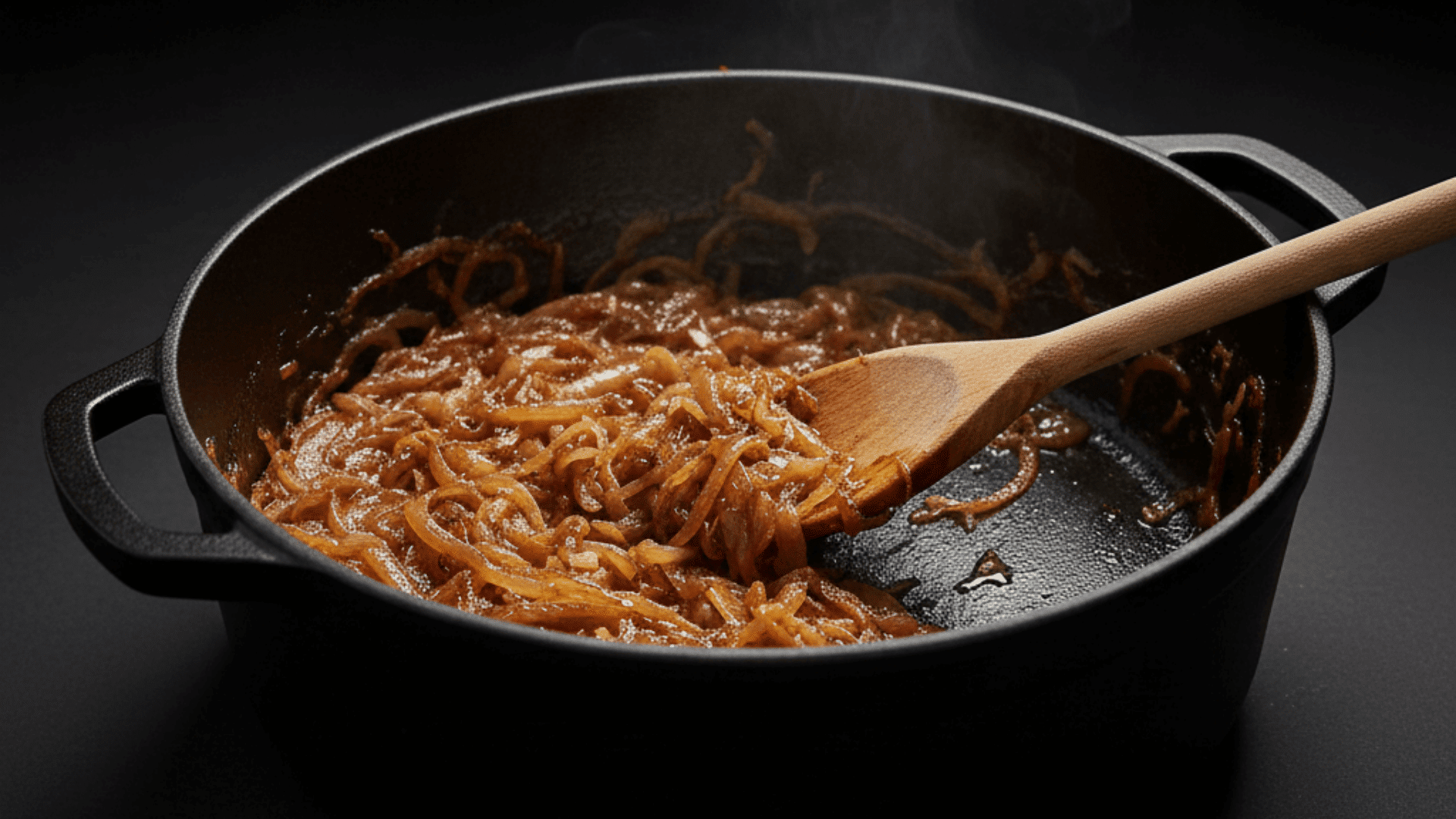
This is the most important step, so don’t rush it. Reduce the heat to medium-low and let the onions cook slowly, stirring every 5-7 minutes at first, then more frequently as they brown. You’re aiming for a deep golden-brown color with darker caramelized bits throughout.
- Add 2-3 tablespoons of water, broth, or wine if the pan gets too dry.
- Scrape up brown bits with a wooden spoon; they’re packed with flavor.
- Total time: 35-60 minutes, depending on your stove and pan size.
3. Build Flavor
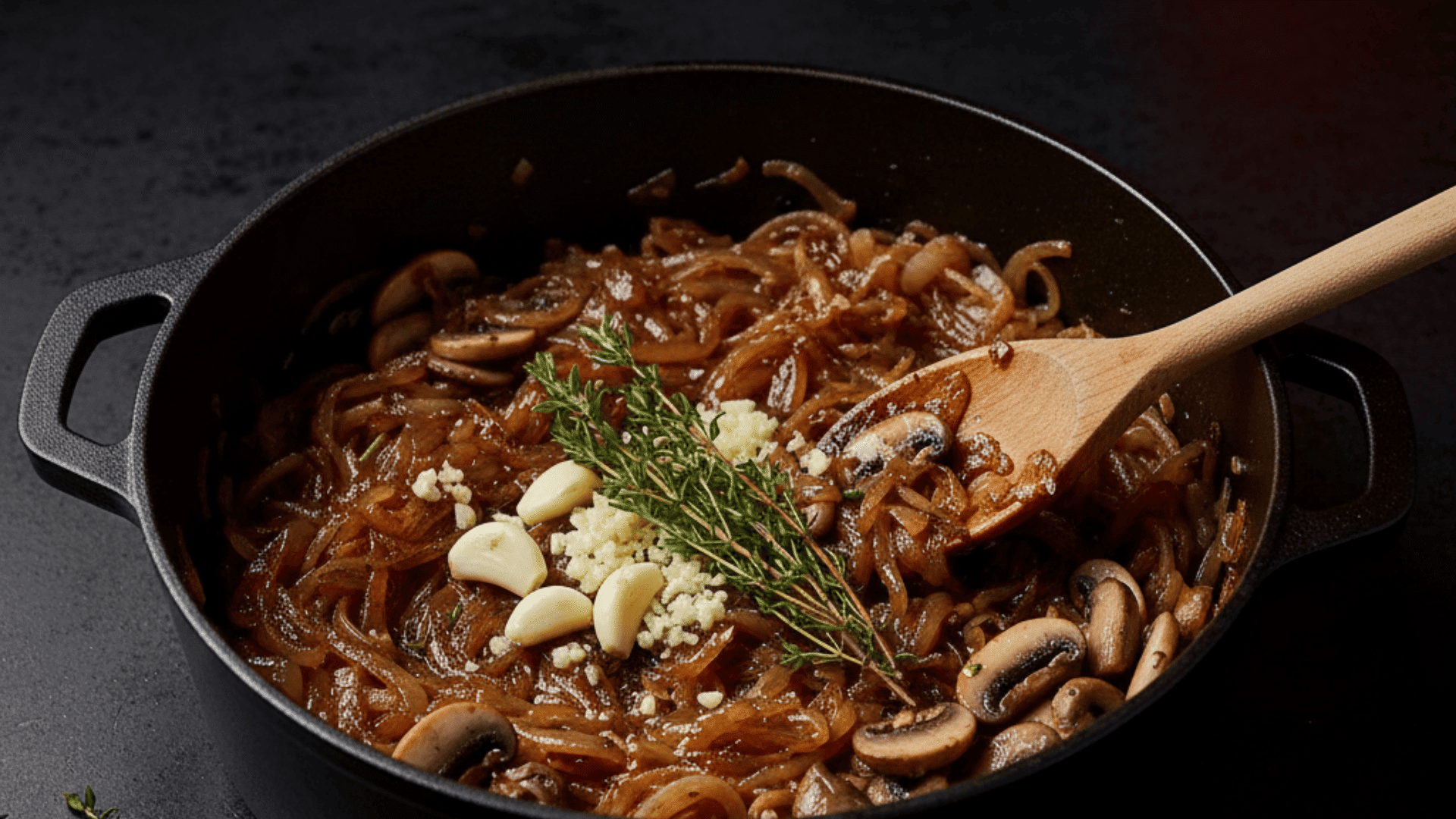
Once onions are beautifully caramelized and deeply golden, layer in more aromatics. Add 3-4 minced garlic cloves and 1-2 teaspoons of fresh thyme (or 1 teaspoon dried). Stir constantly for 30 seconds to 1 minute until the garlic becomes fragrant but hasn’t burned.
- If using mushrooms, add 8 ounces of sliced cremini now.
- Cook mushrooms 5-7 minutes until softened, and moisture is released.
- Mushrooms add extra umami and a meatier texture.
4. Deglaze and Thicken
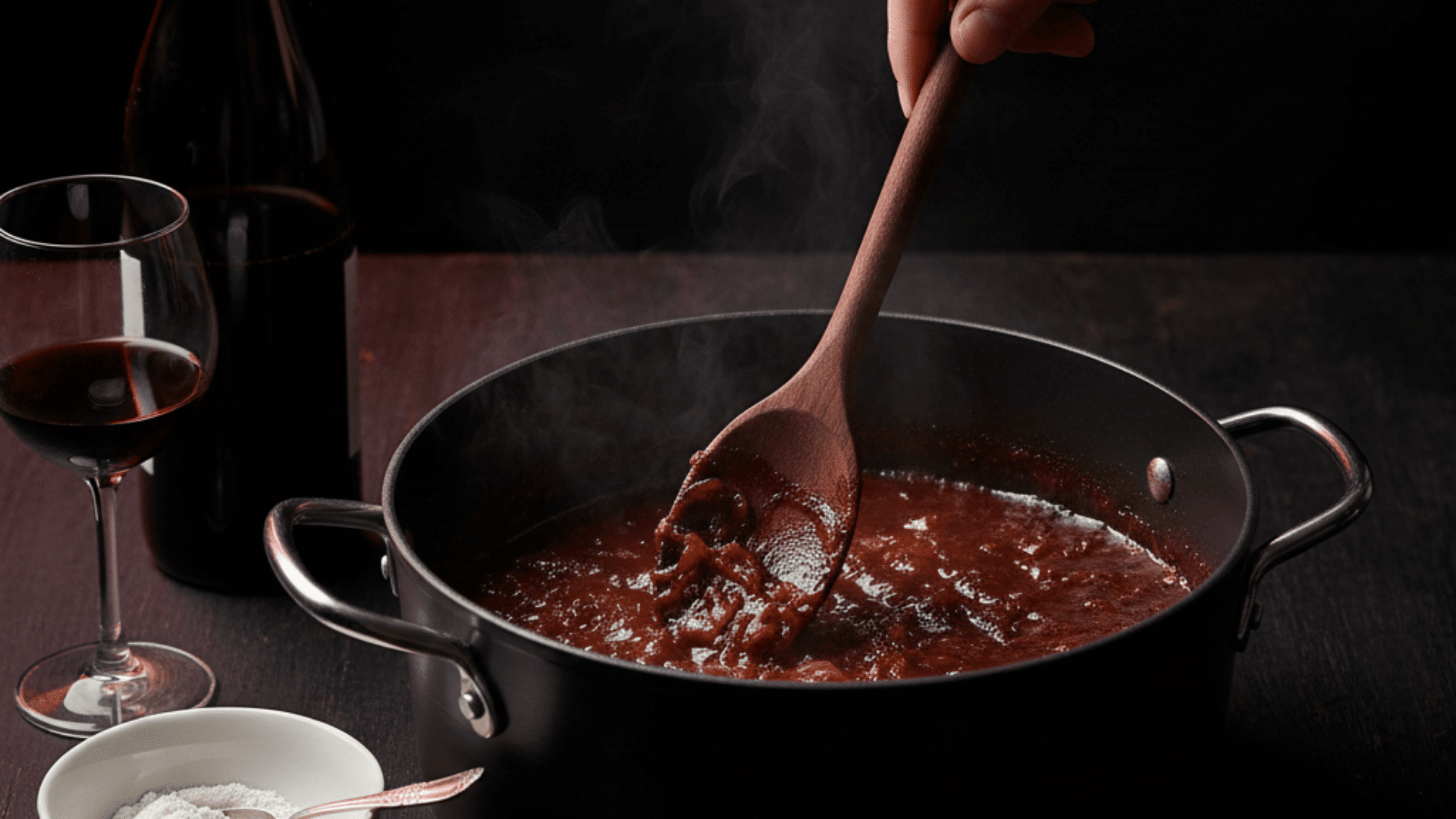
Pour in ½ cup of white or red wine (or mix with port or madeira for extra sweetness). Use your wooden spoon to scrape up all those gorgeous brown bits stuck to the pot bottom. Let the wine simmer 2-3 minutes until reduced by half and the sharp alcohol smell mellows out.
- Optional: Sprinkle 1-2 tablespoons of flour for a thicker sauce.
- Stir flour into the paste and cook 1-2 minutes if using.
- Skip flour for a broodier dish or to keep it gluten-free.
5. Add Broth, Water, and Pasta
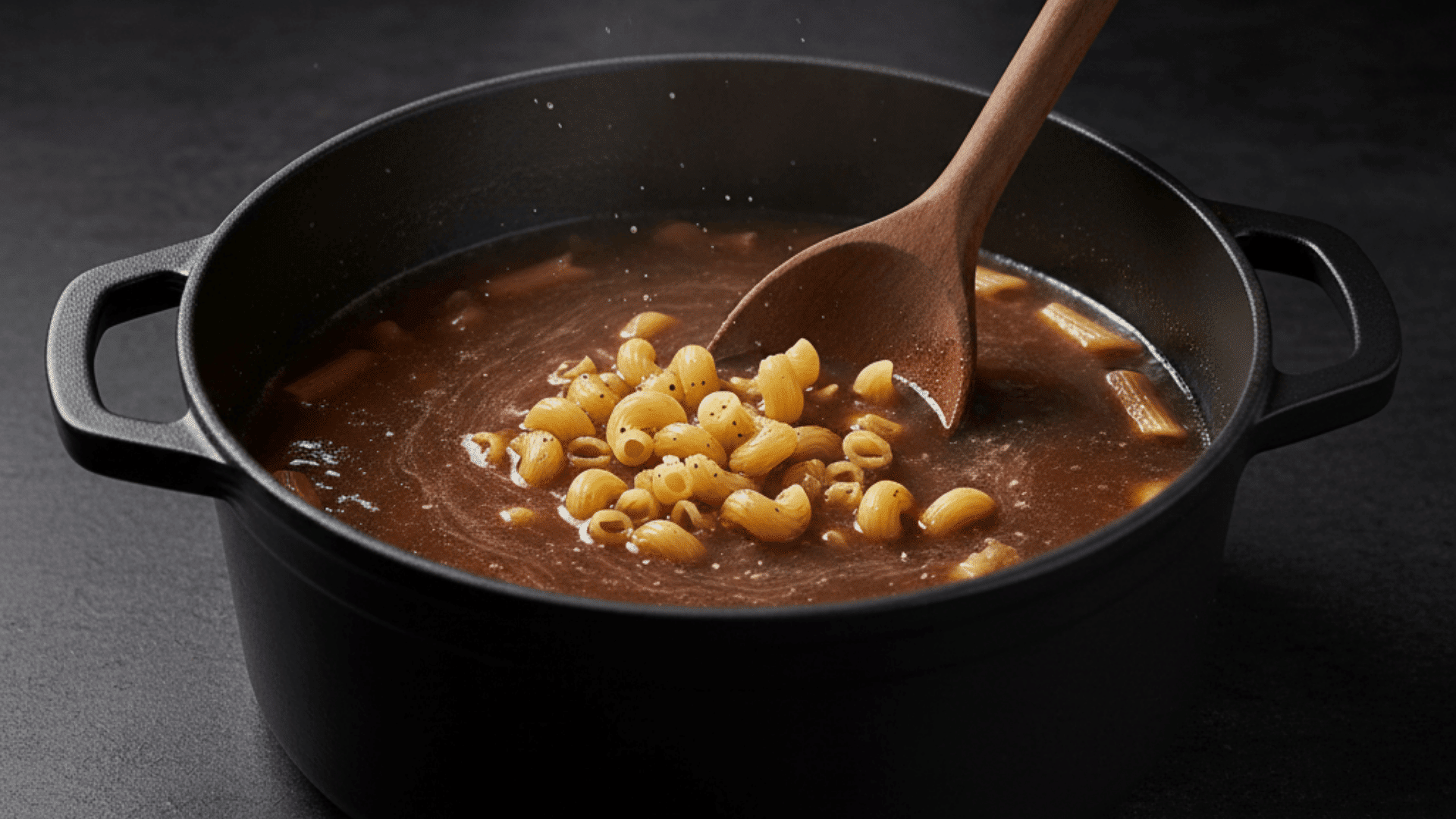
Build the cooking liquid that will transform into your sauce. Pour in 3 cups of beef broth (or chicken/vegetable broth), 1-2 cups of water, and 1-2 tablespoons of Worcestershire sauce. Stir everything together, bring to a gentle simmer, and season with ½ teaspoon salt and black pepper.
- Add 12-16 ounces of dry short pasta once simmering.
- Stir well to prevent clumping and bring to a gentle boil.
6. Simmer the Pasta Until Just Cooked
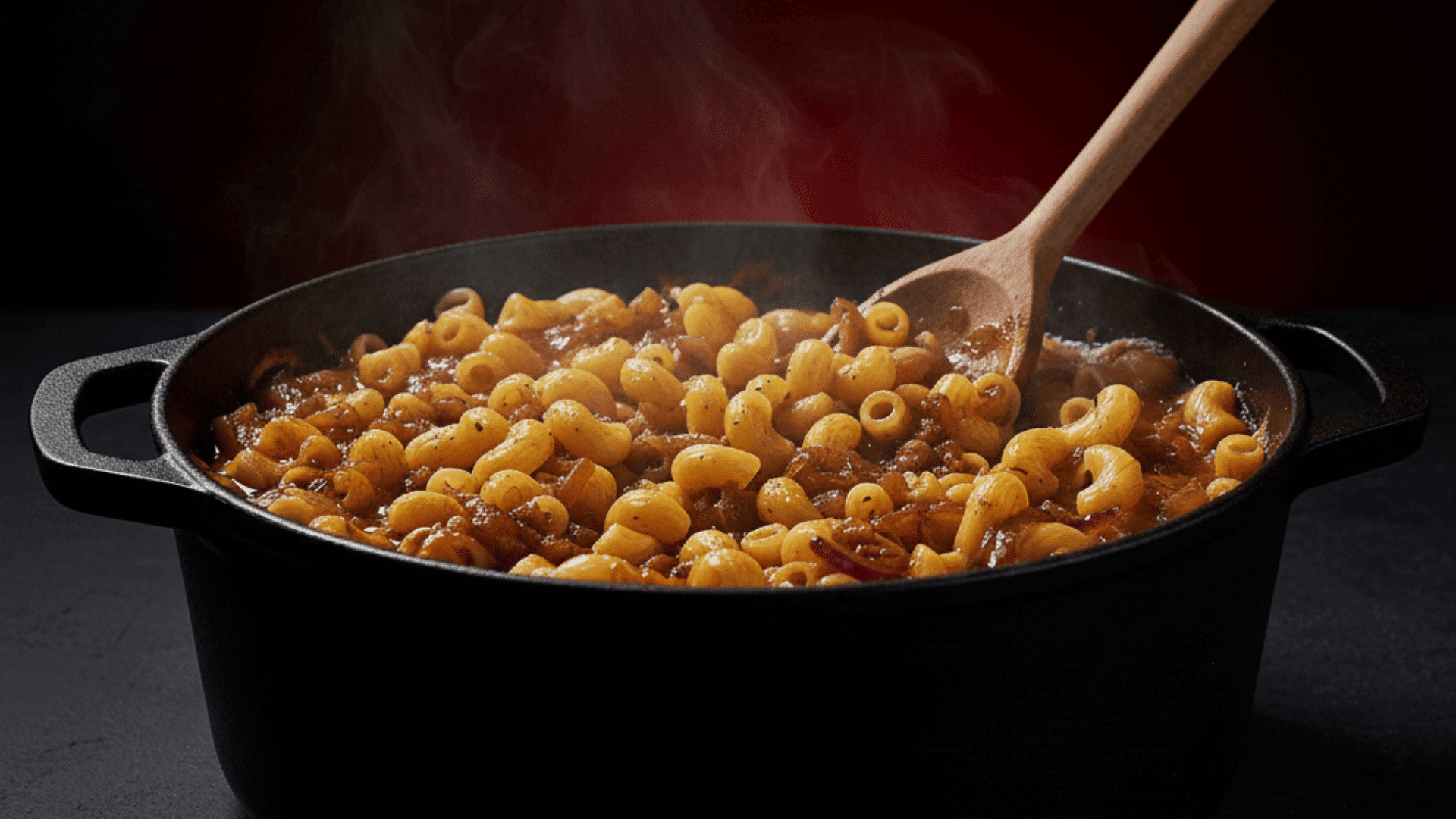
Reduce the heat to medium-low and partially cover the pot. Stir pasta every 3-4 minutes to prevent sticking and help release starch into the liquid.
Start checking pasta a few minutes before the package directions suggest; you’re looking for an al dente texture, cooked through but with a slight bite.
- Add water or broth in ¼ cup increments if the pot looks dry.
- Keep the sauce level consistent, not too dry.
- Total cooking time: 10-15 minutes, depending on pasta shape.
7. Finish with cheese (and cream, if using)
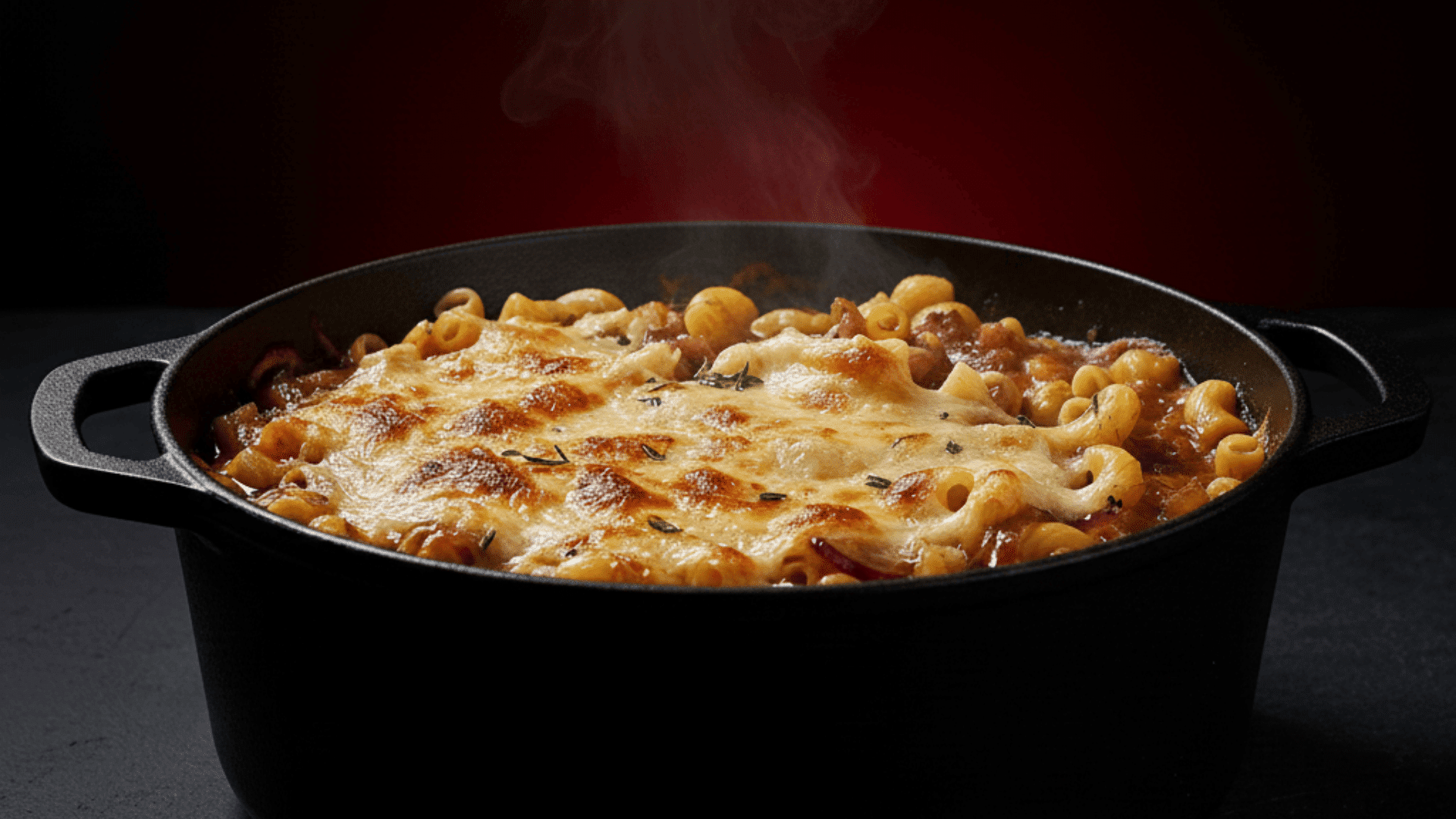
Once pasta reaches perfect al dente texture and liquid has reduced to a thick, glossy sauce, turn off the heat completely. Stir in 1-1½ cups of shredded Gruyère or Comté and let it melt slowly, stirring gently until smooth and silky. If making a creamier version, add ¼ to ½ cup of heavy cream or half-and-half with the cheese.
- Add 1-2 teaspoons sherry vinegar or red wine vinegar for brightness.
- Taste and adjust seasoning with more salt, pepper, or vinegar.
8. Serve and Garnish
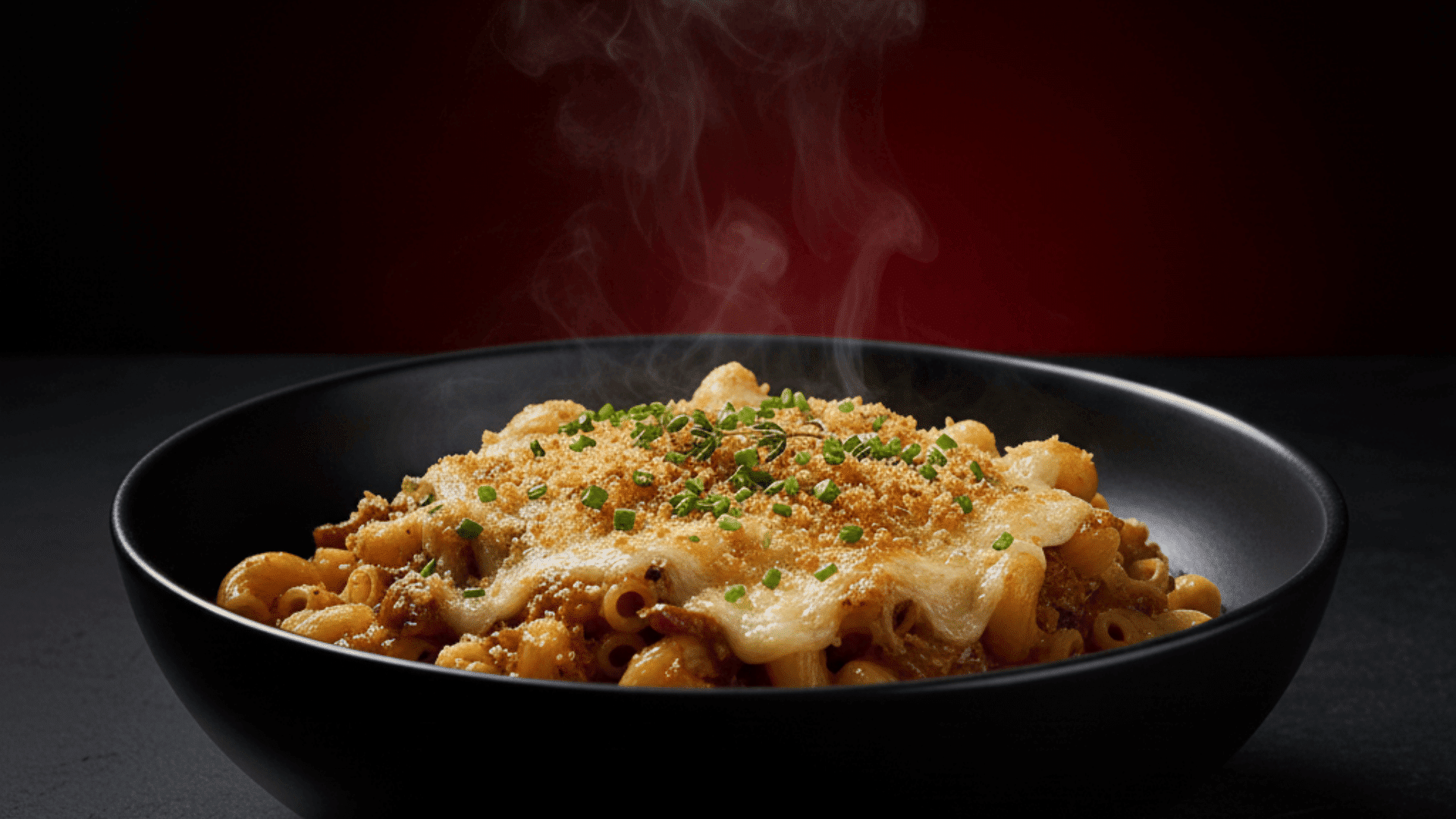
Ladle pasta into bowls while still piping hot and top each serving with extra shredded Gruyère or Parmesan, fresh chives or thyme, and toasted breadcrumbs or crispy fried onions. The contrast between creamy pasta and crunchy topping makes every bite more satisfying.
- Serve immediately while hot.
- The contrast between creamy pasta and crunchy topping is key.
Ingredient Notes & Smart Substitutions
Small choices in ingredients can make a noticeable difference in texture and flavor. These quick swaps help you shop smarter and adapt based on what’s available.
- Onions: Yellow or brown onions caramelize best with balanced sweetness and depth. Sweet onions (Vidalia, Walla Walla) taste milder. Slice ¼-inch thick; thinner turns mushy. Use 2-3 large onions per 12-16 ounces of pasta.
- Broth: Beef broth gives the richest, most authentic flavor. Chicken broth is lighter; vegetable broth works for vegetarian versions. Boost lighter broths with mushrooms, Worcestershire, soy sauce, or miso. Low-sodium broth gives better seasoning control.
- Wine: White wine adds bright acidity; red wine brings deeper flavor. Port, Madeira, or sherry adds sweetness and complexity. Non-alcoholic? Use equal parts broth plus 1-2 teaspoons vinegar and a pinch of sugar.
- Pasta: Short shapes like orecchiette, rigatoni, penne, or shells work best, they catch sauce and hold up to stirring. Whole-wheat, chickpea, or gluten-free pasta may need 5-10 extra minutes and more liquid.
- Cheese: Gruyère or Comté are classic, nutty, sweet, and melt beautifully. Parmesan or Pecorino tastes sharper and saltier. Mix both for complexity. Stir into the pot for a creamy sauce or broil on top for a golden crust.
These simple adjustments let you customize the pasta without losing the rich, savory comfort that makes French onion flavors so satisfying.
Variations: Make This French Onion Soup Pasta Your Way
Once you’ve mastered the basic recipe, these variations let you customize the dish to match your preferences or dietary needs.
| Variation | What to Do |
|---|---|
| Creamy French Onion Pasta | Stir in ½-1 cup heavy cream and extra Gruyère after cooking. For a bubbly top, transfer to oven-safe bowls, add more cheese, and broil 3-5 minutes. |
| Mushroom French Onion Pasta | Add 8-12 ounces sliced cremini mushrooms after caramelizing onions. Cook 5-7 minutes until browned. Adds earthy flavor and meaty texture. |
| Baked / Gratin-Style | Transfer cooked pasta to a baking dish. Top with Gruyère and toasted breadcrumbs. Bake at 375°F for 15-20 minutes or broil until golden and bubbling. |
| Protein Add-Ins | Fold in cooked chicken, sliced steak, Italian sausage, bacon, or venison at the end before adding cheese. Keeps protein tender and prevents drying out. |
| Vegetarian | Use vegetable broth and add mushrooms for an umami boost. Everything else stays the same. |
| Vegan | Swap to plant butter, vegan cheese, and vegetable broth. Use coconut cream instead of dairy cream if desired. |
| Gluten-Free | Use gluten-free pasta (may need 5-10 extra minutes and more liquid). Skip flour or rely on pasta starch to thicken naturally. |
Start with the basic version, then experiment with these variations until you find your favorite way to make this comforting dish.
What to Serve with French Onion Pasta
French onion pasta is rich and filling, so it pairs best with lighter, fresher sides that balance the creamy, savory flavors. Here are easy matches:
- Simple green salad with lemon vinaigrette
- Roasted vegetables (Brussels sprouts, asparagus, broccoli)
- Garlic bread or crusty baguette
- Grilled or roasted chicken
- Pan-seared steak
- Pork chops
- Arugula or spinach salad
Serve it as a main dish for a comforting dinner, or offer smaller portions as a rich side alongside grilled meats.
Topping Ideas for Extra Texture
The contrast between creamy pasta and crunchy toppings makes every bite more interesting. Here are quick finishing touches:
- Toasted breadcrumbs or croutons (homemade or store-bought)
- Crispy fried onions
- Crumbled bacon bits
- Fresh chives, parsley, or thyme
- Grated lemon zest for brightness
- Extra shredded Gruyère or Parmesan
Don’t skip the toppings, they’re what take this pasta from good to restaurant-quality.
Final Thoughts
French onion soup pasta comes down to two things: taking time with the onions and keeping everything in one pot. Once you master the base recipe, feel free to keep it simple or add mushrooms, extra cream, or your favorite protein.
This makes a perfect meal for busy weeknights when you still want something warm and satisfying. Try the recipe as written first, then note any changes you make for next time.
Looking for more quick dinner ideas? Check out other one-pot pasta recipes, comforting soups, and easy weeknight meals that come together fast without sacrificing flavor or quality.