
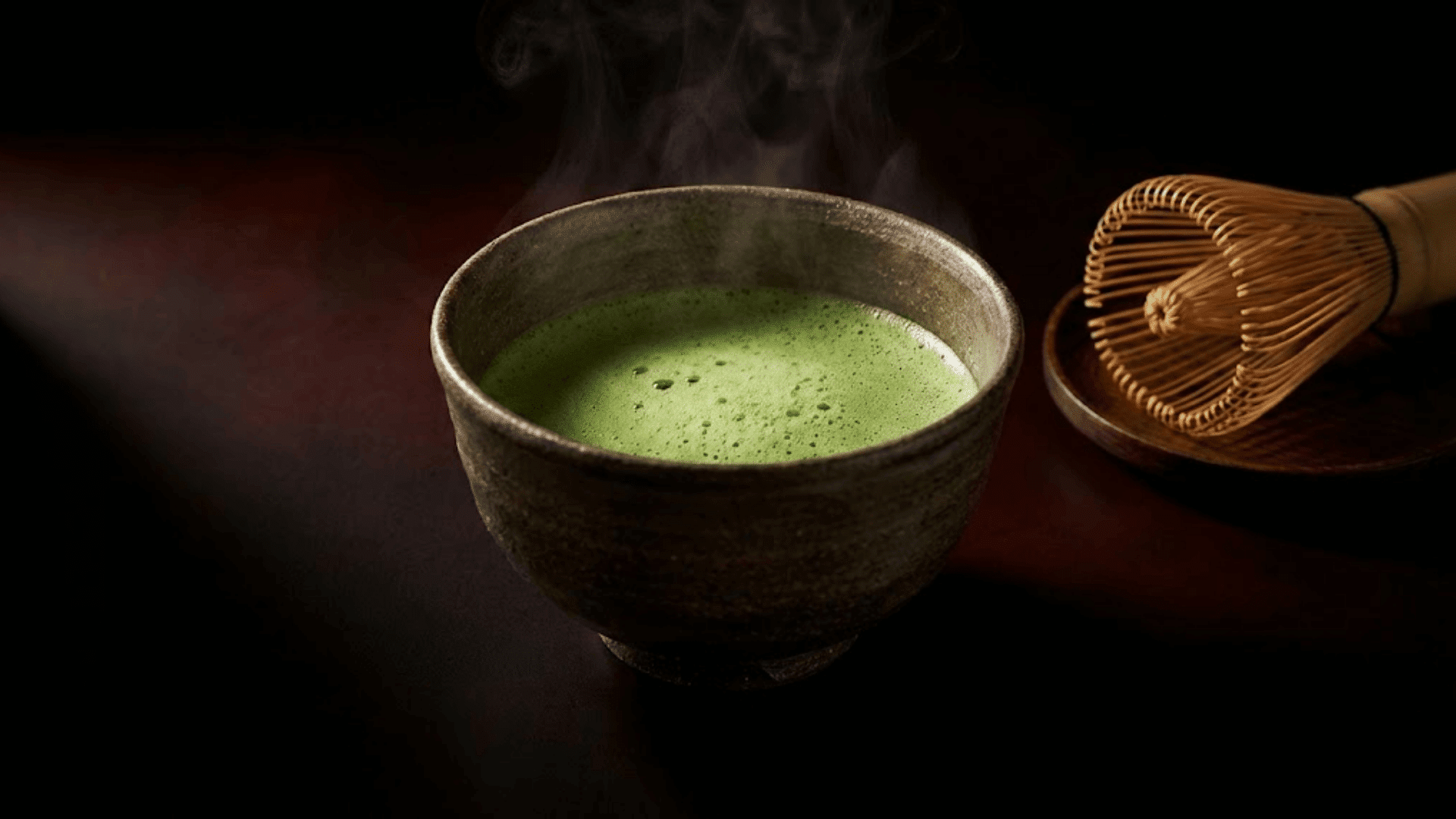
I used to think all caffeine was created equal, until I swapped my usual coffee for a bowl of whisked matcha and felt something completely different.
Instead of that familiar jolt followed by a mid-morning crash, I experienced this steady, focused energy that carried me through lunch without a single anxious heartbeat.
Turns out, matcha isn’t just Instagram-pretty; there’s real science behind why it feels gentler on your system.
The combination of naturally occurring compounds creates what devotees call “calm alertness,” that sweet spot where you’re awake and motivated but not buzzing out of your skin.
If you’ve been curious about making the switch or just want to understand what’s actually happening in your favorite green latte, let me break down the chemistry, the comparisons, and the experience of drinking matcha versus coffee.
What is Matcha?
Matcha traces back to 12th-century Japan, where Zen monks found that whisking this vibrant powder into hot water created a meditative ritual and sustained focus for long hours of practice.
Unlike regular green tea, where you steep and discard the leaves, matcha is made from shade-grown tea plants that are stone-ground into an impossibly fine powder.
When you whisk it into water or milk, you’re consuming the entire leaf, which is exactly why matcha contains more caffeine than brewed green tea.
You’re not just sipping an infusion; you’re drinking the whole plant, unlocking every bit of caffeine, antioxidants, and that signature earthy sweetness in one emerald cup.
How Much Caffeine is in Matcha: The Numbers Explained
Matcha’s caffeine content varies significantly based on quality grade, serving size, and preparation method.
While a typical serving contains less caffeine than coffee, matcha’s unique combination with L-theanine provides sustained energy without the jitters.
| Category | Details | Caffeine Content | Notes |
|---|---|---|---|
| Ceremonial Grade | 1 tsp (2g) serving | 36–60 mg | Highest quality; younger leaves; smooth flavor |
| Premium Grade | 1 tsp (2g) serving | 50–76 mg | Mid-range quality; balanced profile |
| Culinary Grade | 1 tsp (2g) serving | 60–90 mg | Older leaves; stronger, more bitter; ideal for lattes |
| Café Latte (typical) | 1–2 tsp (2–4g) with milk | 70–140 mg | Often uses culinary-grade |
| Per-Gram Range | Raw powder | 18–45 mg/g | Variability due to leaf age and processing |
| Hot Water Preparation | 175–185°F | Higher extraction | Hotter water extracts more caffeine |
| Milk Lattes | With steamed milk | Same total mg | Dilutes concentration per ounce, doesn’t reduce total |
| Brewed Coffee (comparison) | 8-oz cup | 95–200 mg | Standard reference |
| Steeped Green Tea (comparison) | 8-oz cup | 25–50 mg | Matcha contains 2–3x more |
Note: Caffeine ranges from 18–45 mg per gram, depending on leaf age and grade. Unlike steeped tea, where leaves are discarded, matcha delivers 100% of the leaf’s caffeine since you consume the entire ground powder.
Matcha vs. Coffee: A Side-by-Side Comparison
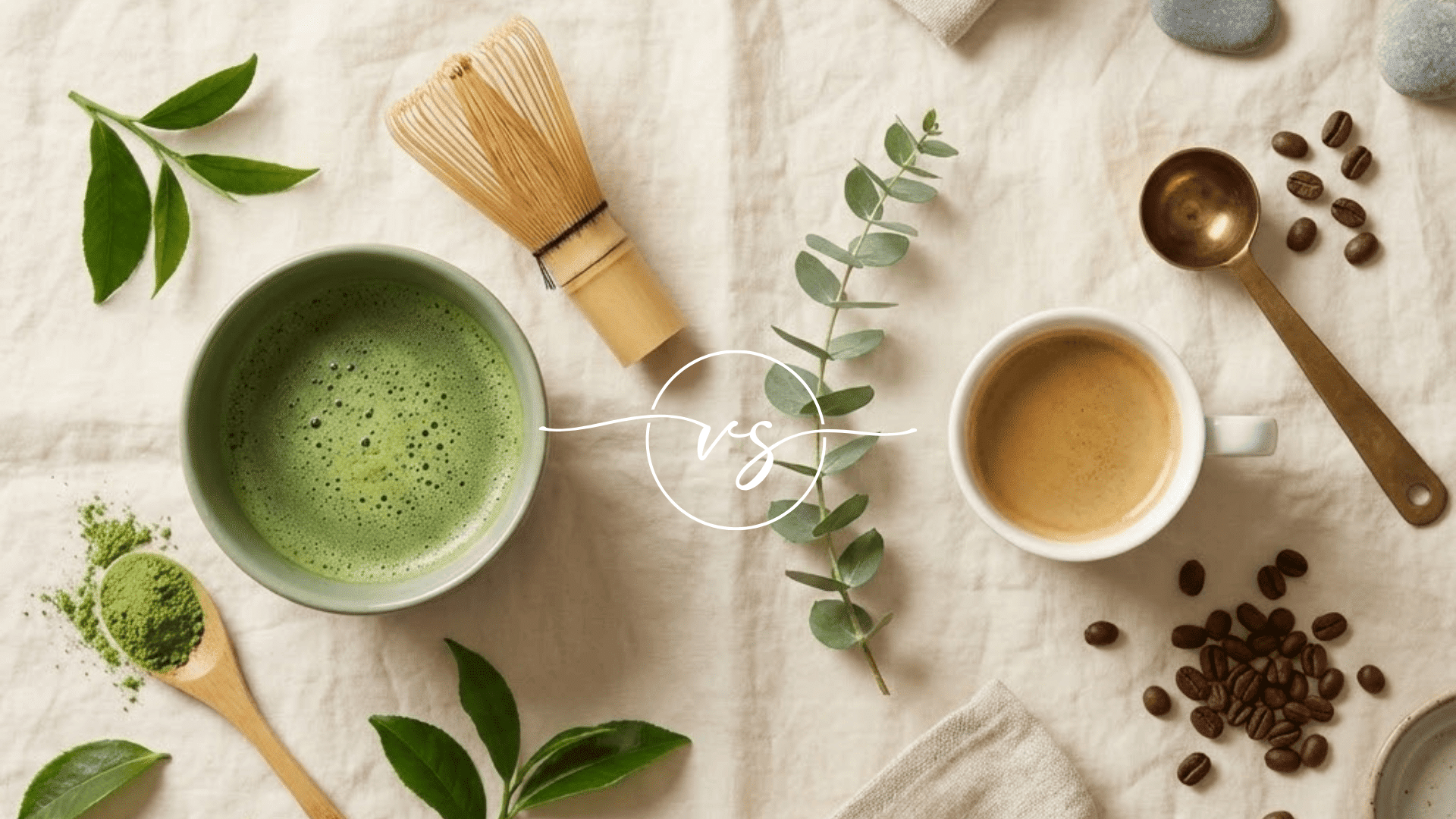
While both matcha and coffee deliver caffeine, they offer distinctly different experiences. Matcha provides sustained, calm energy thanks to L-theanine, while coffee delivers a faster spike that can lead to jitters and crashes.
Caffeine Content: The Numbers
Matcha’s caffeine content depends heavily on serving size, while coffee varies by brewing method.
An 8-oz matcha tea (1 tsp powder) contains 36–90 mg caffeine, significantly less than coffee’s 95–200 mg. However, matcha lattes using 2+ teaspoons can rival or exceed coffee’s caffeine levels.
| Beverage | Serving Size | Caffeine Content | Notes |
|---|---|---|---|
| Matcha Tea (1 tsp) | 8-oz | 36–90 mg | Traditional preparation: 2g powder |
| Matcha Latte (2 tsp) | 12-oz | 72–180 mg | Common café serving: 4g powder |
| Matcha Latte (1 tbsp) | 16-oz | 108–270 mg | Extra-strong; 6g powder |
| Brewed Coffee | 8-oz | 95–200 mg | Drip or pour-over |
| Espresso Shot | 1-oz | 63–75 mg | Single shot |
| Double Espresso | 2-oz | 126–150 mg | Typical latte base |
The Experience: Energy Quality and Mental Effects
L-theanine, an amino acid abundant in matcha, fundamentally changes how your body processes caffeine. It promotes alpha brain wave activity, creating calm focus rather than jittery alertness.
Coffee lacks L-theanine, causing faster absorption and sharper energy spikes followed by crashes.
| Factor | Matcha | Coffee |
|---|---|---|
| Energy Onset | Gradual (15–30 min) | Rapid (5–15 min) |
| Duration | 4–6 hours sustained | 2–4 hours with peak/crash |
| Jitteriness | Minimal to none (L-theanine buffers) | Common at moderate-high doses |
| Mental State | Calm alertness, focused clarity | Sharp alertness, potential anxiety |
| Crash Effect | Gentle fade, no crash | Often pronounced energy drop |
| Stress Response | L-theanine reduces cortisol | Can trigger stress hormones |
| Best For | Extended focus work, studying, meditation | Quick energy boost, morning wake-up |
Why Matcha Feels Different: Caffeine + L-Theanine Synergy
L-theanine, an amino acid unique to tea plants, fundamentally alters how your brain responds to caffeine. It crosses the blood-brain barrier and promotes alpha wave activity; the same relaxed-yet-alert state associated with meditation.
When combined with caffeine, L-theanine slows caffeine absorption, preventing the sharp spike and subsequent crash typical of coffee.
Research published in the Journal of Nutrition shows this pairing enhances cognitive performance, sustained attention, and accuracy on demanding tasks while reducing jitters and anxiety.
Matcha contains roughly 19–44 mg of L-theanine per gram, creating an ideal 1:2 ratio with caffeine that produces calm, focused energy lasting 4–6 hours rather than coffee’s 2–3 hour rollercoaster.
How to Measure & Control Caffeine in Your Matcha Cup?
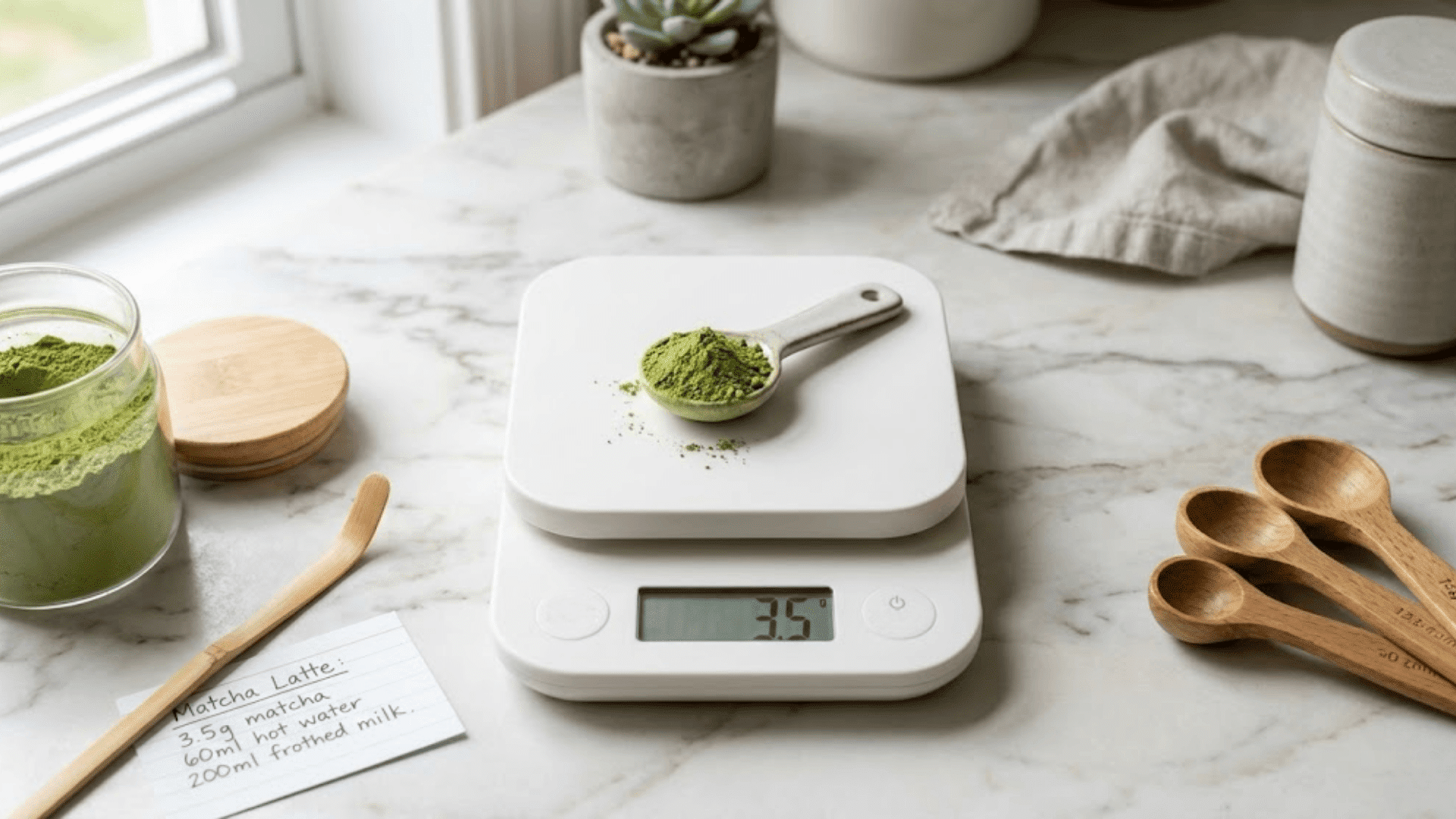
Controlling matcha’s caffeine is simpler than you think; the amount of powder you use is the primary factor.
Unlike steeped tea, where brewing time matters, matcha delivers all its caffeine instantly since you consume the entire leaf.
How to Measure Your Matcha Dose?
The key to controlling caffeine intake is measuring your powder accurately.
Since matcha is consumed whole rather than steeped, the powder amount directly determines your caffeine dose; there’s no brewing time or temperature to adjust.
- Step 1: A standard teaspoon holds approximately 2g of matcha; a kitchen scale ensures precision for consistent caffeine intake.
- Step 2: Begin with 1 tsp (2g) for traditional tea, which provides 36–90 mg caffeine depending on grade.
- Step 3: Whisking time or water temperature doesn’t significantly alter caffeine extraction; only powder quantity matters.
- Step 4: Use ½ tsp (1g) for 18–45 mg, 2 tsp (4g) for 72–180 mg, or 1 tbsp (6g) for 108–270 mg.
- Step 5: Note how different doses affect your energy and adjust accordingly; most people find 1–2 tsp ideal.
Matcha Preparations and Caffeine Content
Straight matcha tea and lattes deliver vastly different caffeine levels based on powder quantity.
Traditional ceremonial matcha uses 1–2g powder with water, while café lattes often contain 2–4g for a stronger flavor that cuts through milk.
| Preparation | Powder Amount | Caffeine Range | Recipe |
|---|---|---|---|
| Light Usucha (thin tea) | ½–1 tsp (1–2g) | 18–90 mg | 1 tsp powder + 2 oz hot water, whisked |
| Standard Usucha | 1–2 tsp (2–4g) | 36–180 mg | 2 tsp powder + 3 oz hot water, whisked |
| Thick Koicha | 2–3 tsp (4–6g) | 72–270 mg | 3 tsp powder + 1.5 oz hot water, kneaded |
| Iced Matcha Latte | 1–2 tsp (2–4g) | 36–180 mg | 2 tsp powder + 8 oz milk over ice |
| Hot Matcha Latte | 2 tsp (4g) | 72–180 mg | 2 tsp powder + 2 oz water + 8 oz steamed milk |
| Matcha Smoothie | 1 tsp (2g) | 36–90 mg | 1 tsp powder blended with fruit and milk |
Matcha Tea Caffeine: Who Should Be Cautious (and Why)?
Certain groups should monitor matcha intake carefully.
- Pregnant and breastfeeding individuals are generally advised to limit caffeine to 200 mg daily, equivalent to 2–3 servings of matcha, though consulting an obstetrician is recommended.
- Children’s smaller body weights make them more sensitive to caffeine’s effects; pediatricians typically suggest avoiding or minimizing caffeinated beverages.
- People with caffeine sensitivity, anxiety disorders, or sleep issues may experience heightened reactions even at low doses. Additionally, matcha can interact with blood thinners, stimulant medications, and certain supplements.
If you’re on prescription medications or have underlying health conditions, discuss matcha consumption with your healthcare provider before making it a regular habit.
Matcha Caffeine Content: Health Benefits & Tradeoffs
Matcha offers impressive health benefits beyond caffeine, primarily from its high concentration of catechins, particularly EGCG (epigallocatechin gallate), a powerful antioxidant.
However, moderation remains essential, as excessive consumption can lead to adverse effects.
Key Health Benefits:
- Antioxidant Powerhouse: Matcha contains up to 137 times more EGCG than regular green tea, helping neutralize free radicals and reduce oxidative stress.
- Metabolic Support:Studies suggest green tea catechins may modestly increase fat oxidation and energy expenditure, though effects vary individually.
- Cardiovascular Health: Regular consumption may help lower LDL cholesterol and improve arterial function, potentially reducing heart disease risk.
- Blood Pressure Benefits: Some research indicates moderate green tea intake can support healthy blood pressure levels, though high caffeine doses may temporarily raise it.
- Cognitive Protection: The combination of L-theanine, caffeine, and antioxidants may support brain health and reduce the risk of age-related cognitive decline.
Important Considerations: Individual responses vary based on genetics, diet, and lifestyle. Excessive consumption (3–4+ servings daily) can cause caffeine-related side effects, liver strain, or iron absorption issues.
The Takeaway
So, how much caffeine does matcha really have? Enough to keep you gently energized without the rollercoaster.
If you’re reaching for it as a coffee alternative or simply adding another ritual to your mornings, matcha offers something beautifully different: presence without the pressure, alertness without the edge.
Maybe you’ll love the ceremony of whisking it by hand, or perhaps you’ll just toss it into your smoothie. Either way, you’re in for a softer kind of awake.
Have you tried matcha yet? I’d love to hear how it makes you feel; drop a comment below and let’s chat about your experience with this emerald magic.