
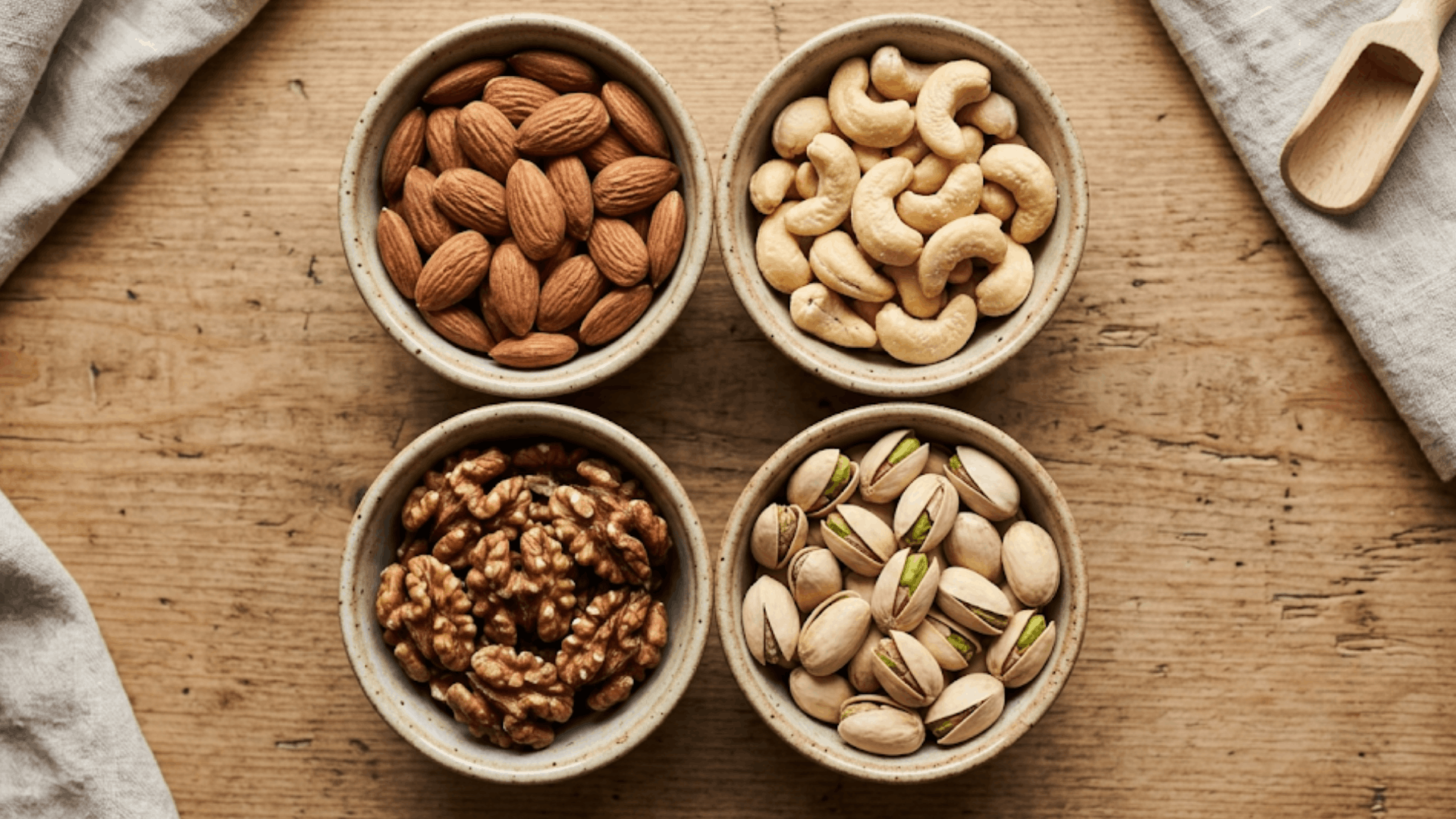
I used to think choosing low-calorie nuts for weight loss was all about picking the one with the fewest calories.
Some nuts keep me feeling full for hours, while others are so easy to snack on that the bag seems empty before I notice.
That’s because protein, fiber, healthy fats, and portion size can make just as much difference as the calorie count.
In this guide, I’ll compare the best low-calorie nuts, explain what sets them apart, and share practical tips to help you choose the ones that fit your eating habits and nutrition goals.
Are Nuts Good for Weight Loss?
Yes, nuts can support weight loss when eaten in appropriate portions as part of a balanced diet. Their combination of protein, fiber, and healthy fats helps increase fullness, which may reduce overeating between meals.
Although nuts are higher in calories than many snack foods, research suggests they do not necessarily lead to weight gain when they replace less nutritious snacks and fit within your daily calorie needs.
Protein and fiber slow digestion, helping you stay satisfied for longer, while healthy unsaturated fats support overall health. Nuts also require more chewing, which may improve feelings of fullness during meals.
For weight management, stick to about 1 ounce (28 grams), or a small handful, per serving. Choosing plain, unsalted nuts without added sugar or coatings is the healthiest option
Best Low-Calorie Nuts for Weight Loss
Not all nuts support weight-loss goals in the same way. While calories matter, protein, fiber, healthy fats, and portion control play an equally important role
1. Pistachios
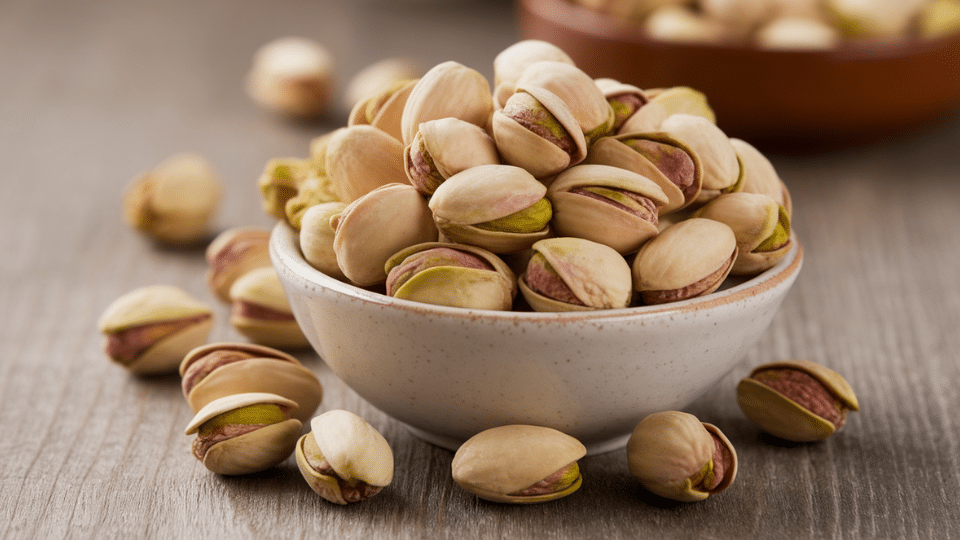
Pistachios are among the best low calorie nuts for weight loss because they provide a satisfying mix of protein, fiber, and healthy fats.
Eating in-shell pistachios naturally slows snacking since each nut needs to be shelled before eating. This can make it easier to pay attention to portion sizes and avoid eating too many in one sitting.
| Nutrition (Per 1 oz / 28g) | Amount |
|---|---|
| Calories | 159 |
| Protein | 6g |
| Fiber | 3g |
| Healthy Fat | 13g |
2. Almonds
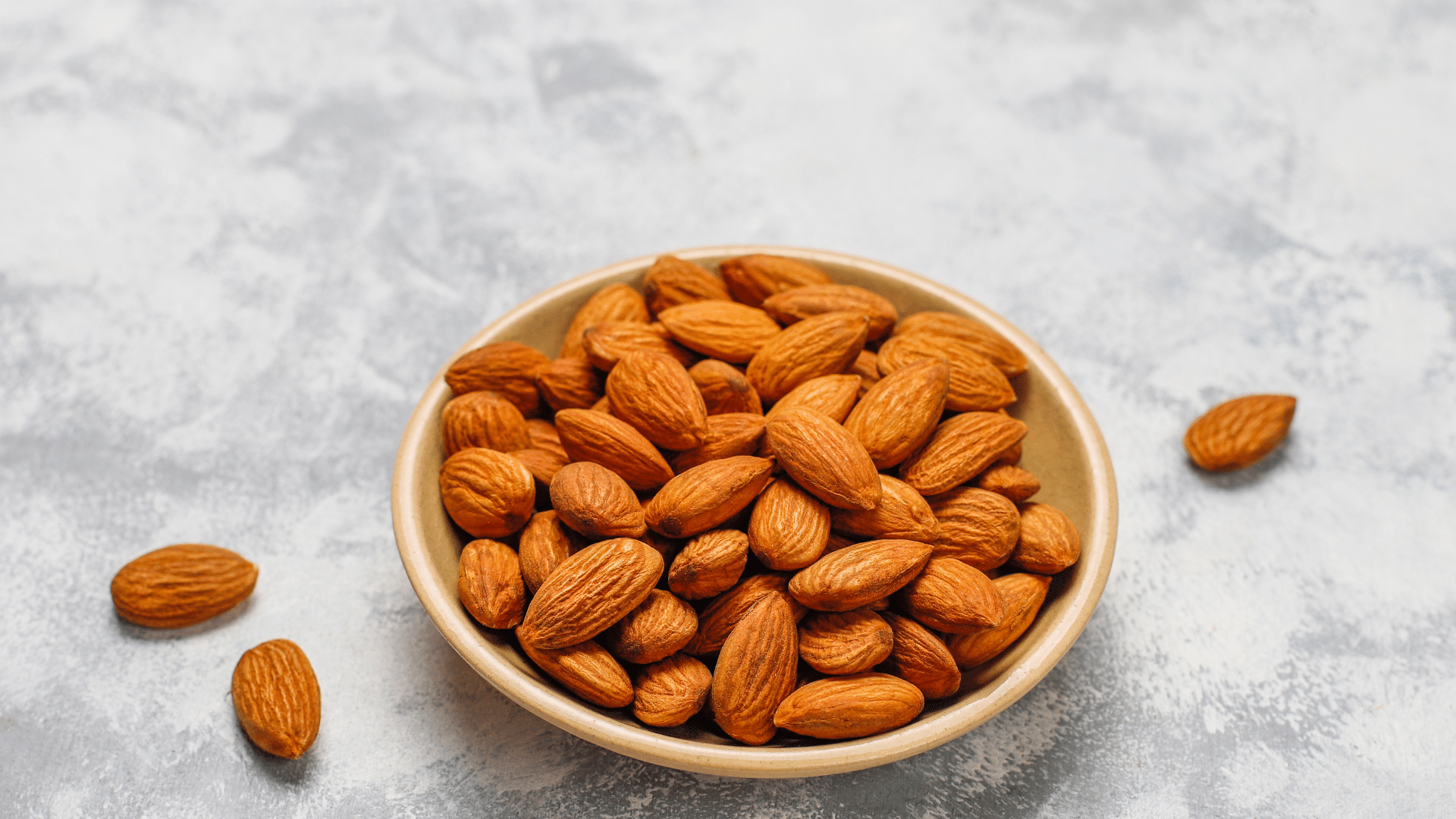
Almonds are a nutrient-dense snack that combines protein, fiber, healthy fats, vitamin E, and magnesium.
Their crunchy texture takes longer to chew than softer nuts, making them a filling option that fits well into a balanced eating plan when enjoyed in recommended portions.
Almonds also show up often in a low-carb Mediterranean-style eating pattern, where they’re valued for the same fiber and healthy fat combination.
| Nutrient (Per 1 oz / 28g) | Amount |
|---|---|
| Calories | 164 |
| Protein | 6g |
| Fiber | 3.5g |
| Healthy Fat | 14g |
3. Peanuts
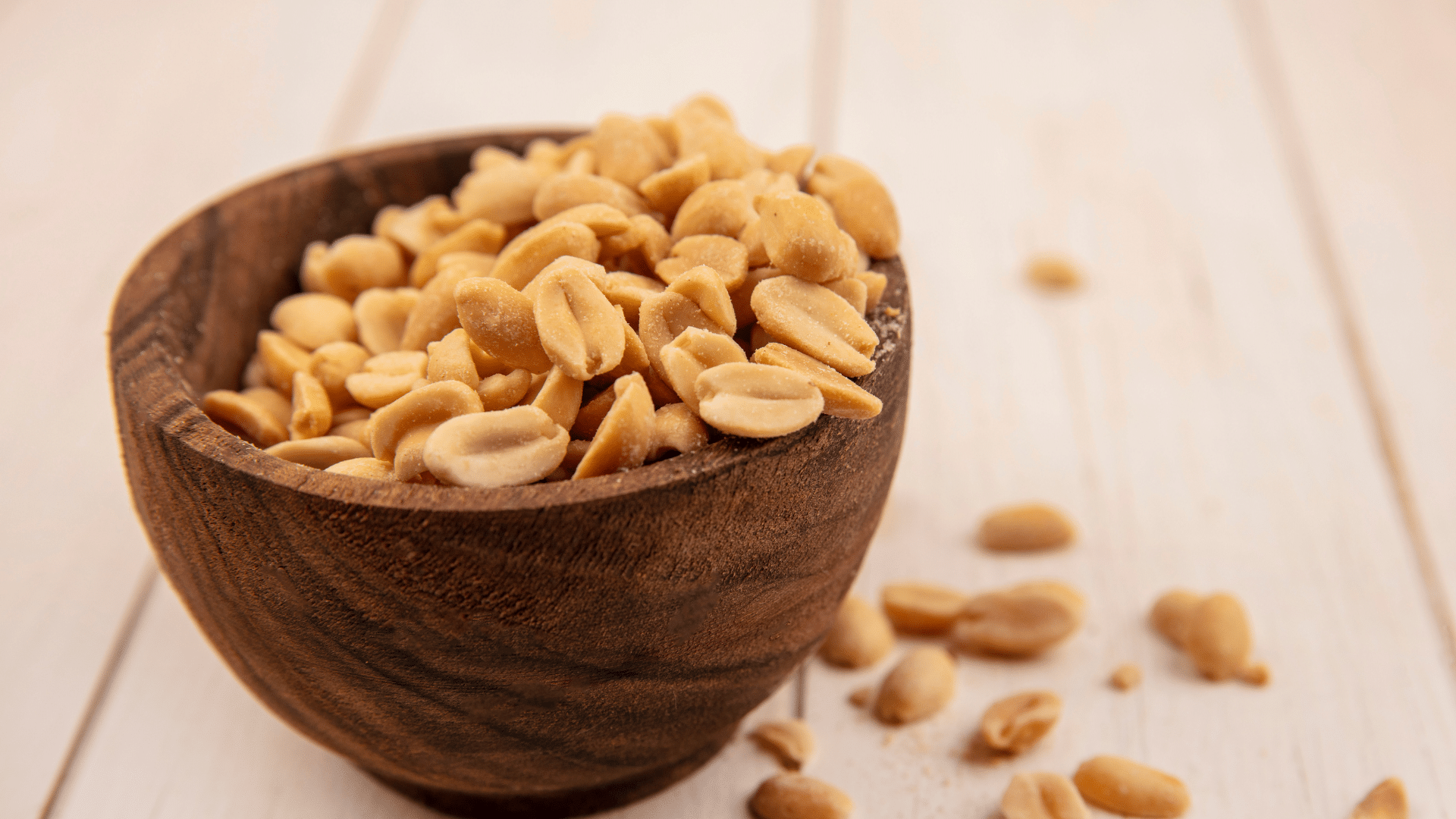
Although peanuts are technically legumes, they are commonly grouped with nuts because of their similar nutritional profile.
They provide more protein than most tree nuts, making them a filling snack that fits well into a balanced eating plan. Plain or dry-roasted peanuts are a better option than honey-roasted or heavily flavored varieties.
| Nutrient (Per 1 oz / 28g) | Amount |
|---|---|
| Calories | 166 |
| Protein | 7g |
| Fiber | 2.5g |
| Healthy Fat | 14g |
4. Cashews
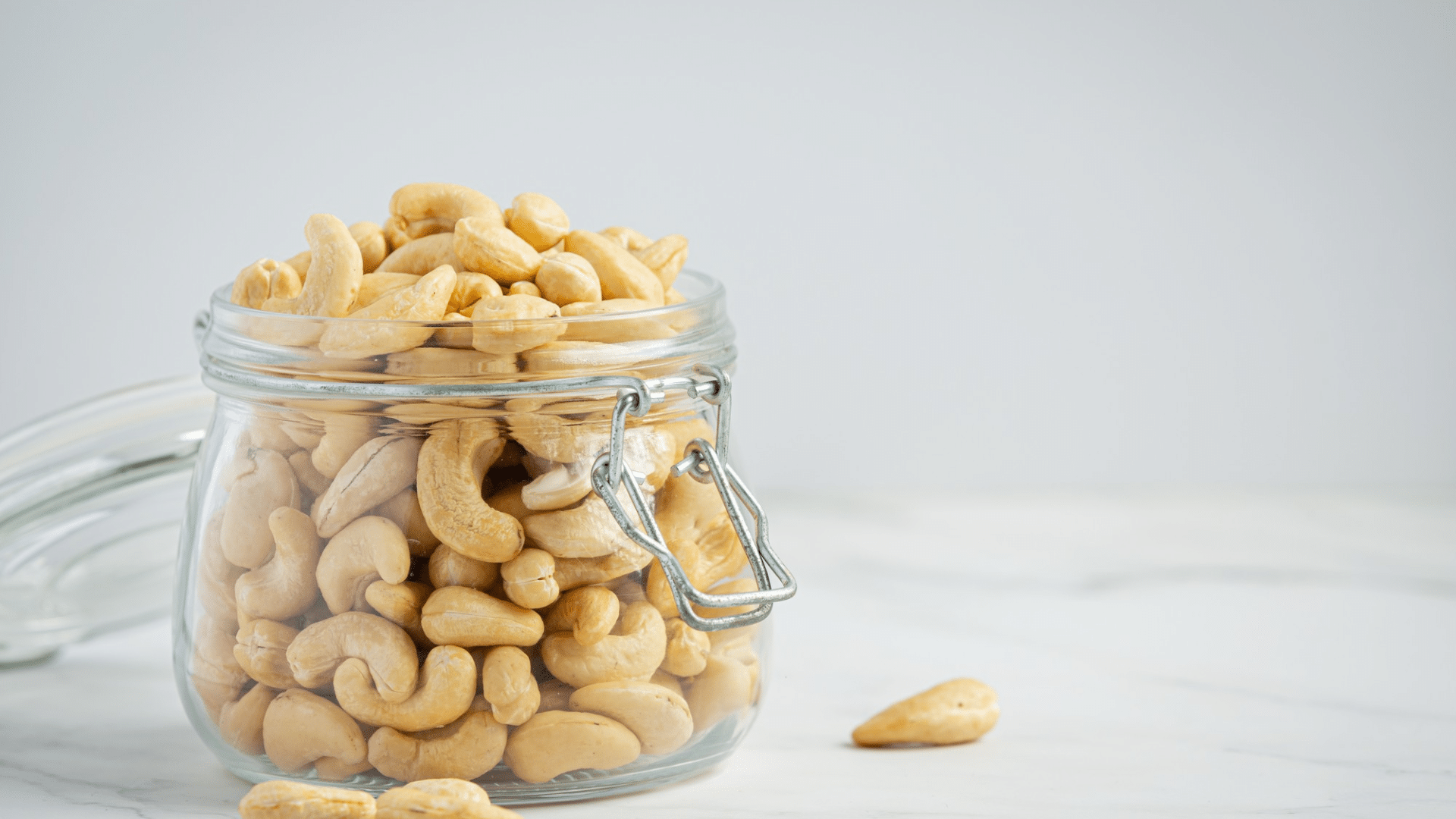
Cashews are one of the lower-calorie tree nuts and provide a creamy texture along with essential minerals such as magnesium, copper, and zinc.
Their mild flavor makes them versatile for both snacks and recipes. Since they are easy to eat quickly, measuring a serving can help with portion control.
| Nutrient (Per 1 oz / 28g) | Amount |
|---|---|
| Calories | 157 |
| Protein | 5g |
| Fiber | 1g |
| Healthy Fat | 12g |
5. Chestnuts
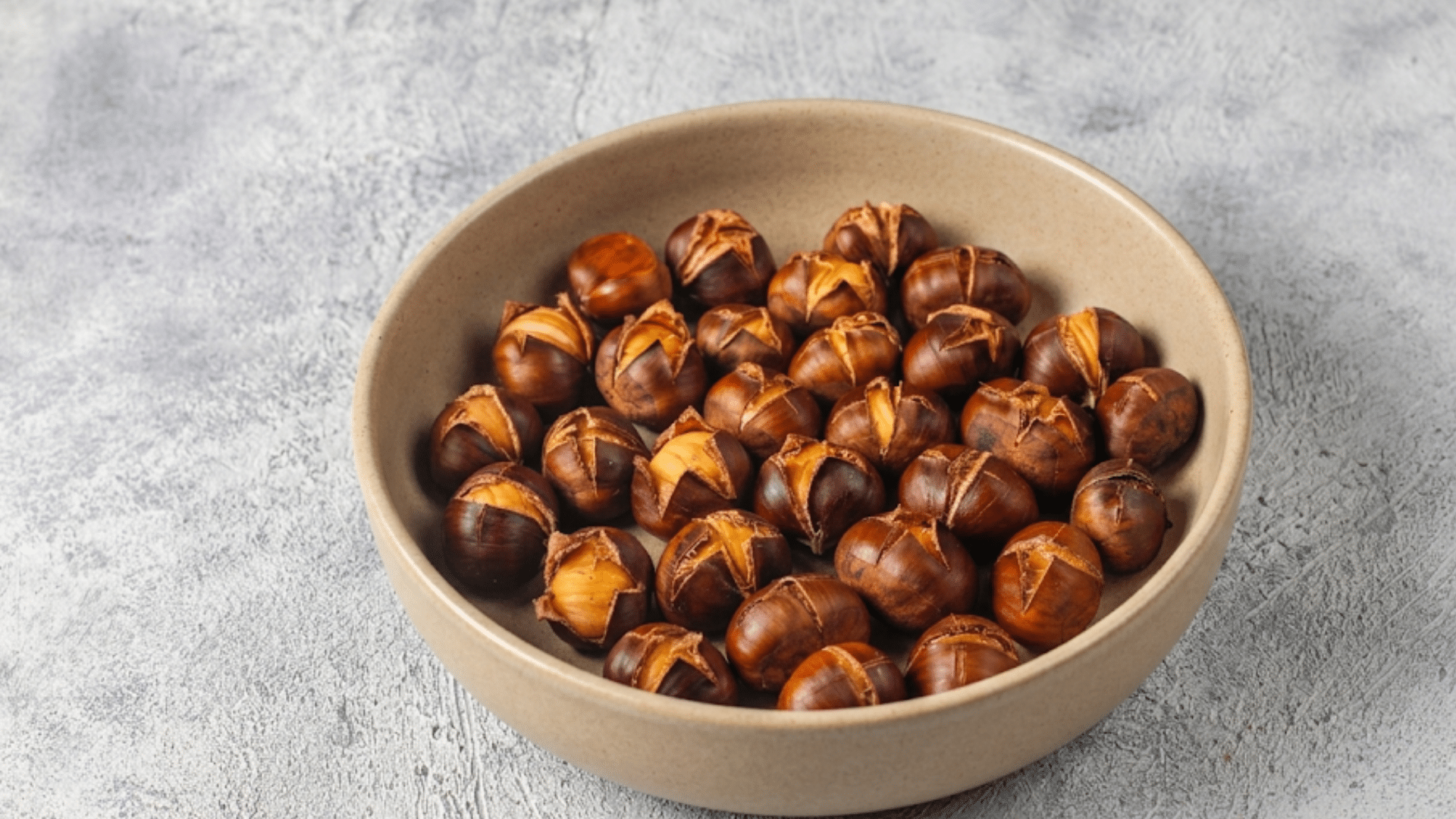
Chestnuts differ from most nuts because they are naturally lower in fat and calories while containing more carbohydrates.
They have a soft texture and slightly sweet flavor, making them a lighter snack or a tasty addition to soups, stuffing, and roasted vegetable dishes.
| Nutrient (Per 1 oz / 28g) | Amount |
|---|---|
| Calories | 60–70 |
| Protein | 1g |
| Fiber | 1g |
| Healthy Fat | Less than 1g |
6. Walnuts
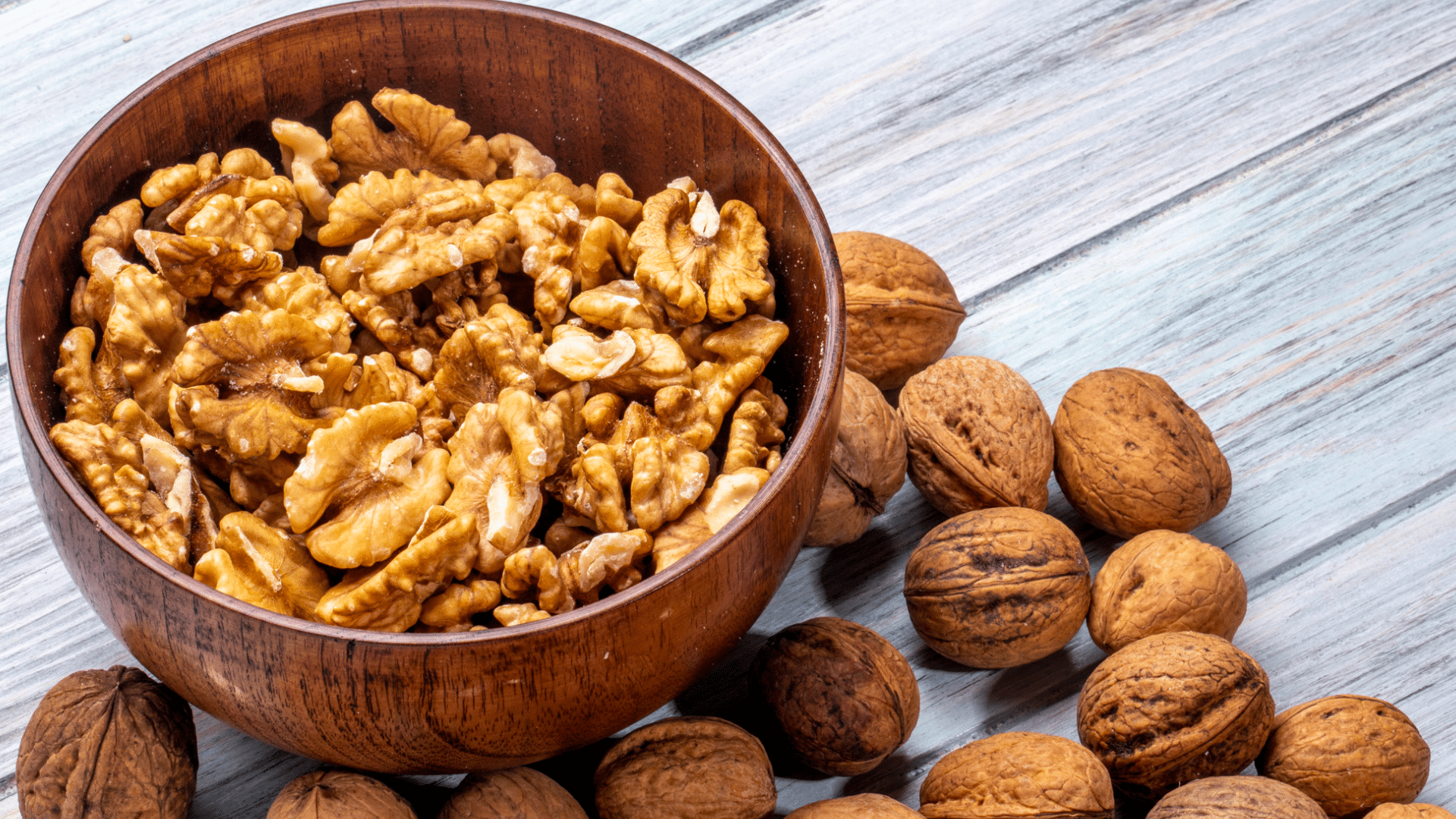
Walnuts are well known for their high content of omega-3 fatty acids, particularly alpha-linolenic acid (ALA).
Although they contain more calories than some other nuts, they also provide antioxidants, fiber, and healthy fats that make them a nutritious addition to a balanced diet.
Their slightly earthy flavor makes them an easy addition to oatmeal, salads, baked goods, and homemade trail mixes.
| Nutrient (Per 1 oz / 28g) | Amount |
|---|---|
| Calories | 185 |
| Protein | 4g |
| Fiber | 2g |
| Healthy Fat | 18g |
7. Brazil Nuts
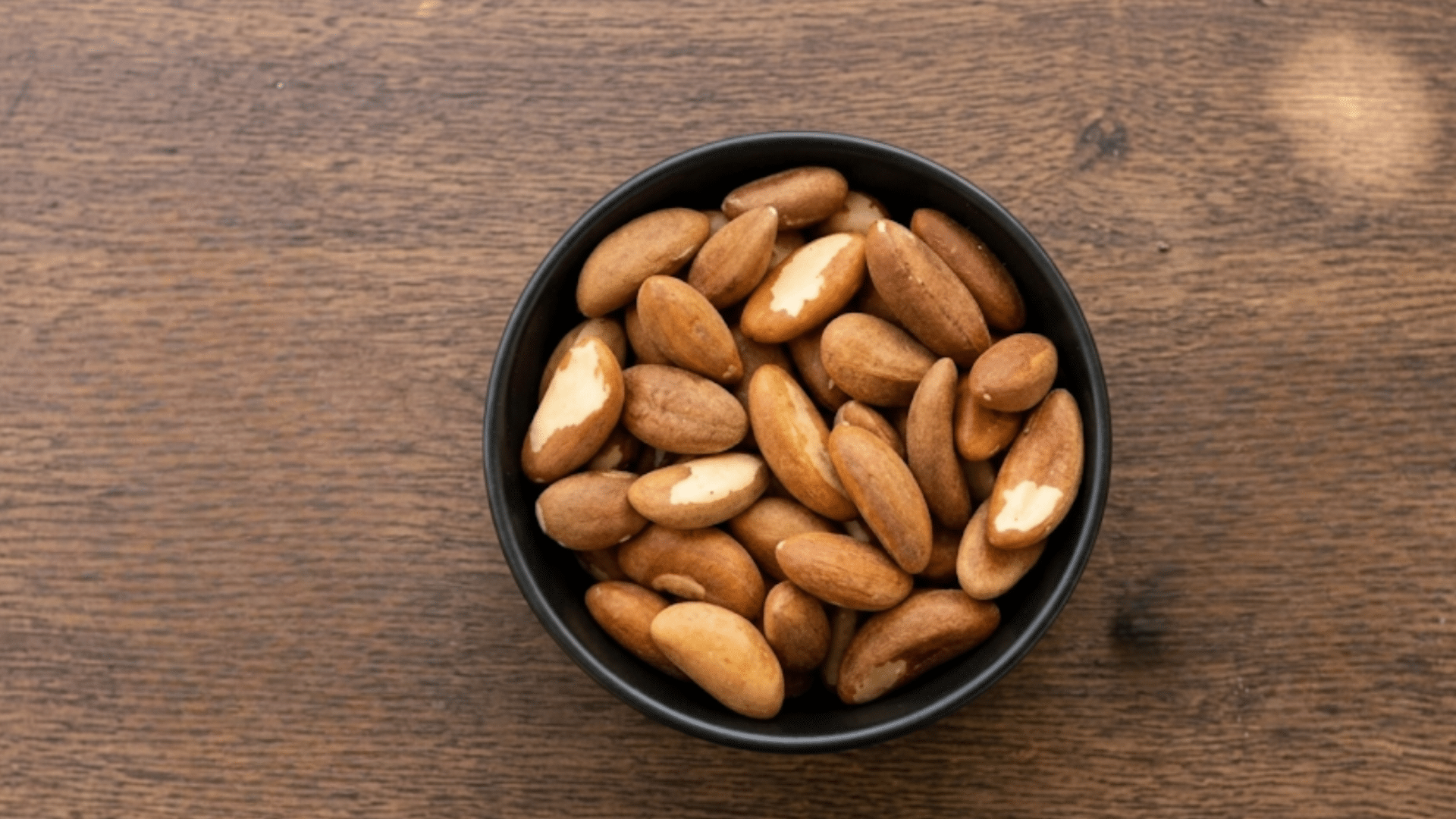
Brazil nuts are large, nutrient-dense nuts that are especially rich in selenium, an essential mineral that supports normal thyroid and immune function.
Because they contain very high amounts of selenium, only a few nuts are typically enough to meet daily needs.
Enjoying them in moderation allows you to benefit from their nutrients without exceeding the recommended daily selenium intake.
| Nutrient (Per 1 oz / 28g) | Amount |
|---|---|
| Calories | 186 |
| Protein | 4g |
| Fiber | 2g |
| Healthy Fat | 19g |
8. Pine Nuts
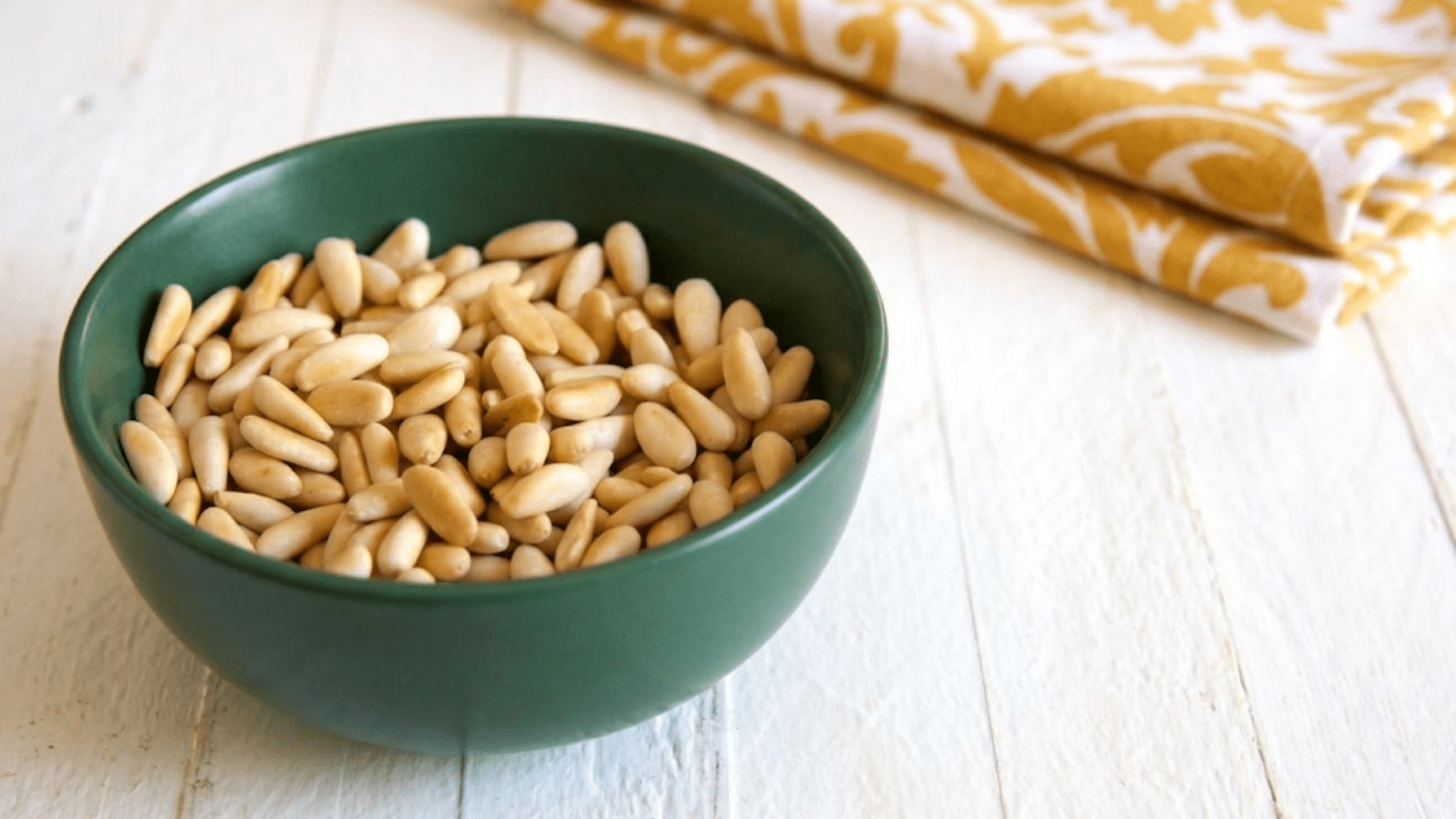
Pine nuts have a rich, buttery flavor and are commonly used in pesto, salads, and grain dishes.
Even a small serving adds healthy fats, vitamin E, magnesium, and minerals, making them an easy way to boost the nutritional value of meals.
Sunflower and pumpkin seeds are common substitutes in a nut-free pesto recipe, delivering a similar rich, herby flavor at a lower cost.
| Nutrient (Per 1 oz / 28g) | Amount |
|---|---|
| Calories | 191 |
| Protein | 4g |
| Fiber | 1g |
| Healthy Fat | 19g |
9. Pecans
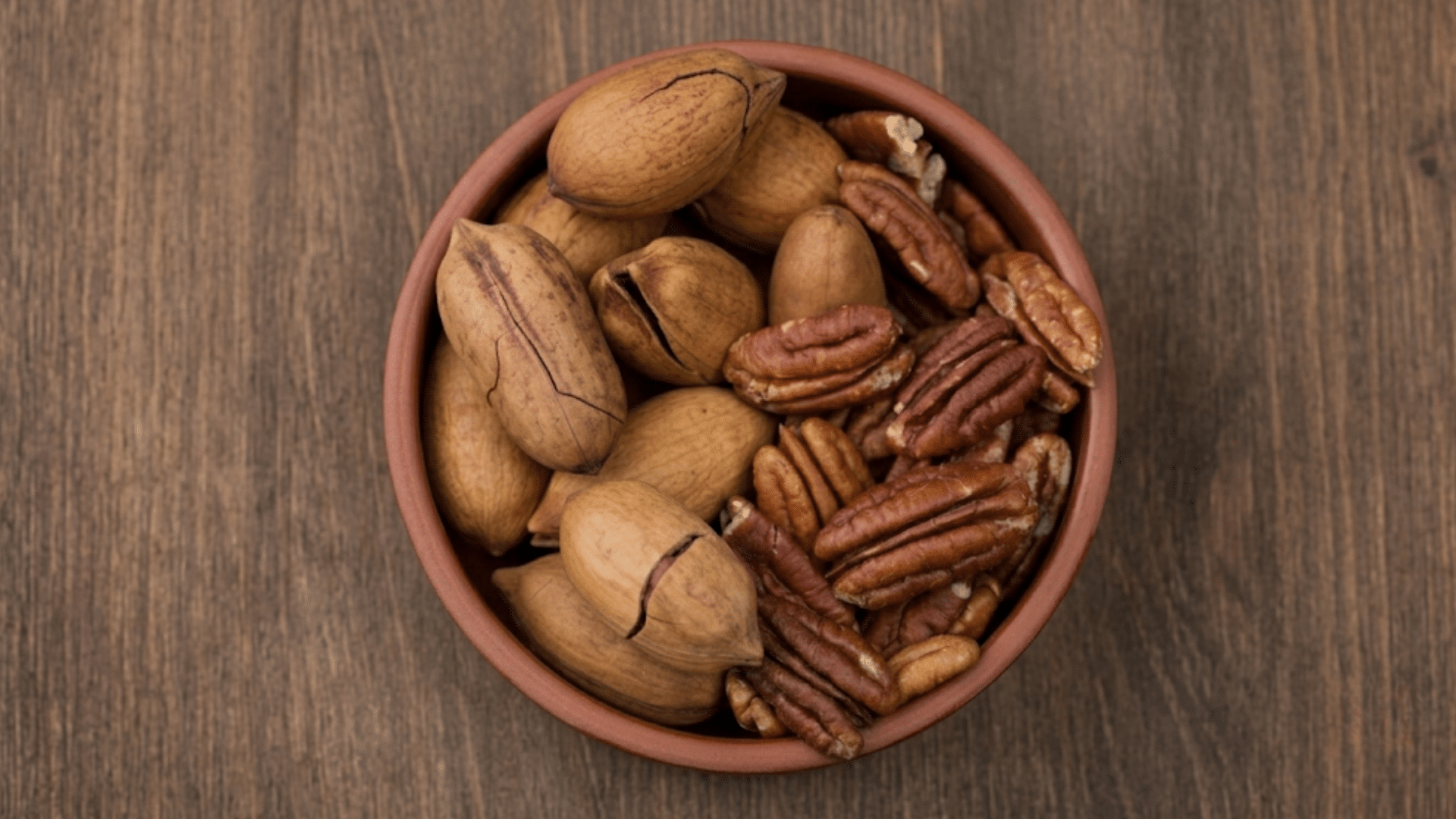
Pecans are naturally rich in healthy monounsaturated fats and antioxidants.
Their smooth texture and naturally sweet flavor make them popular in both sweet and savory recipes. Since they are calorie-dense, enjoying a measured serving helps keep portions balanced.
Chopped pecans also add crunch to salads, oatmeal, and baked dishes without requiring a large amount.
| Nutrient (Per 1 oz / 28g) | Amount |
|---|---|
| Calories | 196 |
| Protein | 3g |
| Fiber | 3g |
| Healthy Fat | 20g |
10. Macadamia Nuts
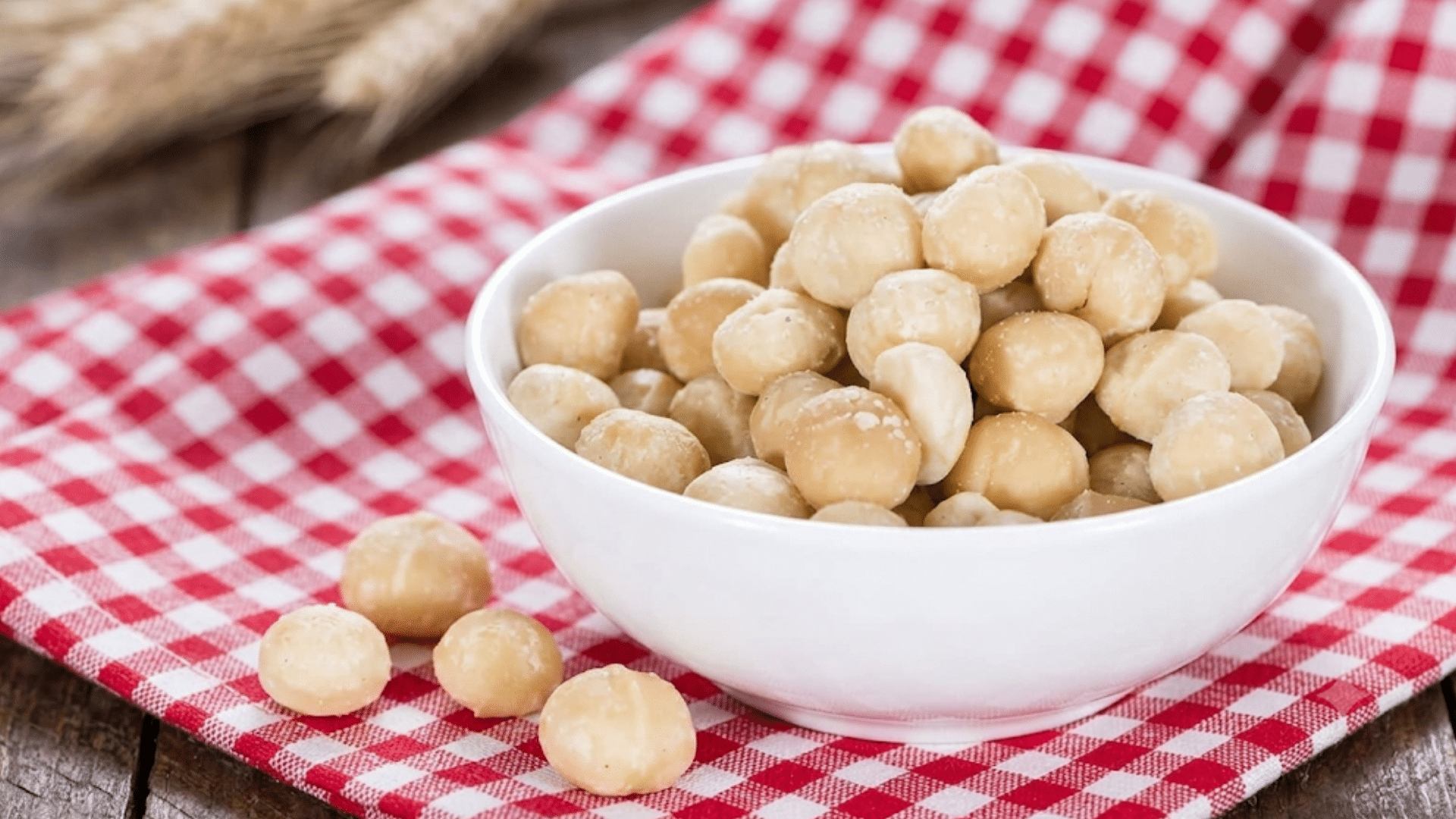
Macadamia nuts contain the highest amount of healthy fat among commonly eaten nuts, giving them a rich, buttery texture.
They are also one of the most calorie-dense options, so they are best enjoyed in moderate portions as part of an overall balanced diet.
Their creamy flavor makes them a popular ingredient in baked goods, snack mixes, and homemade nut butters.
| Nutrient (Per 1 oz / 28g) | Amount |
|---|---|
| Calories | 204 |
| Protein | 2g |
| Fiber | 2g |
| Healthy Fat | 21g |
11. Sunflower Seeds (In-Shell)
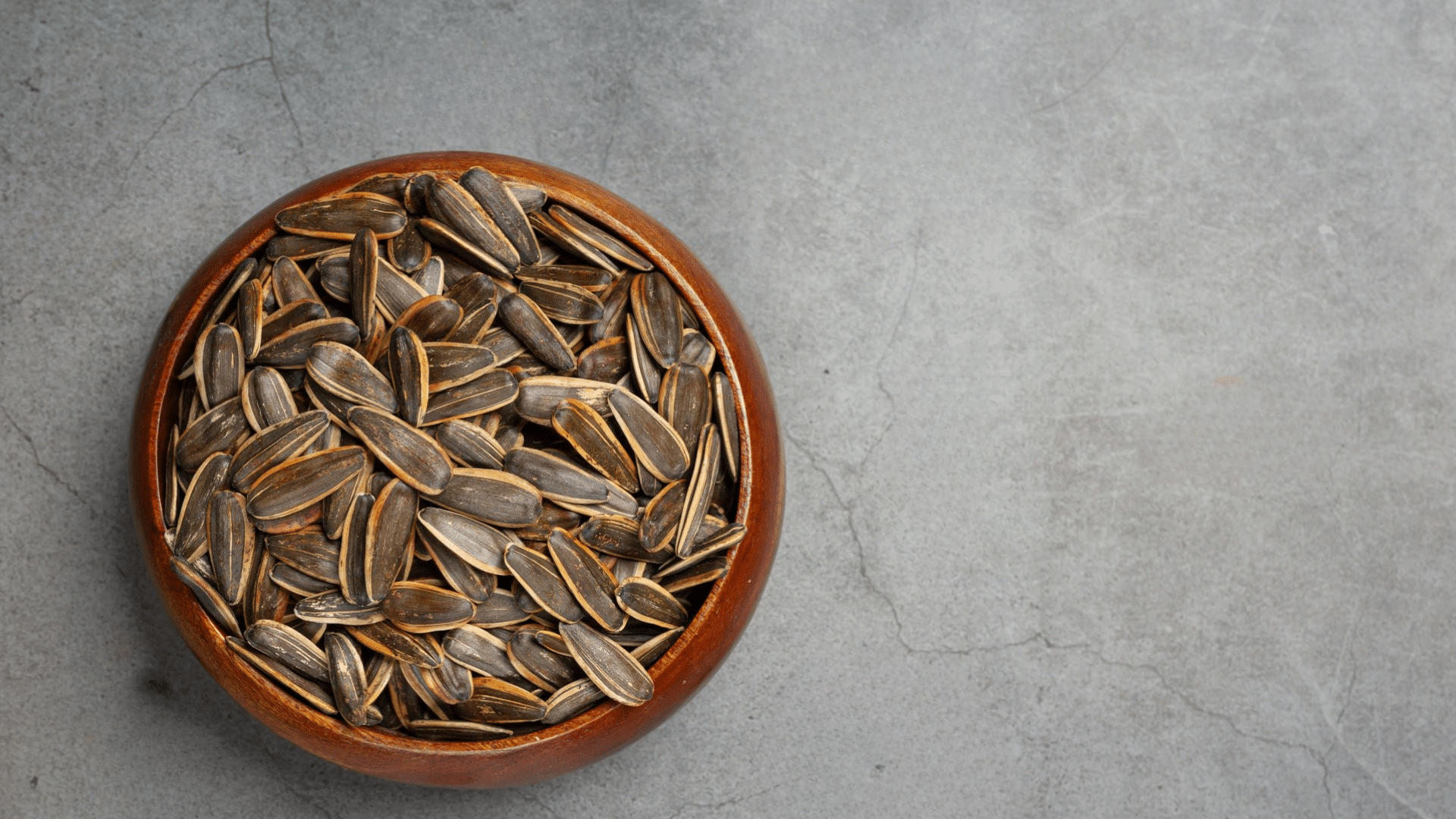
Although sunflower seeds are technically seeds rather than nuts, they are often included in nut mixes because of their similar nutrient profile.
They provide protein, fiber, healthy fats, and vitamin E, making them a satisfying snack or topping for salads, yogurt, and oatmeal.
Choosing unsalted or lightly salted varieties helps keep sodium intake lower while still providing the same nutritional benefits.
| Nutrient (Per 1 oz / 28g) | Amount |
|---|---|
| Calories | 165 |
| Protein | 6g |
| Fiber | 3g |
| Healthy Fat | 14g |
Nuts can be part of a weight-loss-friendly diet, but they are not a weight-loss food on their own. Because they are calorie-dense, portion control is important, and lasting weight loss depends on your overall diet, physical activity, and lifestyle.
Why Some Nuts May Provide Fewer Calories Than Listed?
Some whole nuts provide fewer usable calories than the number shown on the nutrition label. This happens because your body does not absorb all of the fat trapped inside the nut’s natural cell walls.
Nutrition labels estimate calories using standard formulas, but whole nuts are digested differently from many other foods.
In nuts such as almonds and walnuts, some fat remains enclosed within the plant’s fiber structure and passes through the digestive system without being fully absorbed.
This means the actual calories your body uses may be slightly lower than the listed value. However, this does not mean nuts are low in calories or can be eaten without limits.
Portion size still matters, especially since chopped nuts, nut flours, and nut butters are generally digested more completely than whole nuts.
Tips for Choosing the Healthiest Nuts
Choosing the healthiest nuts starts with looking beyond the nutrition label. Small choices about preparation, portions, and added ingredients can make a noticeable difference in the overall nutritional value.
- Choose plain (unsalted) or dry-roasted nuts
- Watch your portion size (about 1 ounce (28 grams) per serving)
- Limit sugar-coated varieties (candied, chocolate-coated, or honey-roasted)
- Buy fresh and store in airtight containers
- Choose a variety of nuts (different nuts provide a wider range of vitamins, minerals, healthy fats, and antioxidants)
- Pair nuts with protein-forward meals (add a handful to a high-protein daily meal plan)
Frequently Asked Questions
Can nuts affect blood sugar levels?
Yes, nuts may help keep blood sugar steadier because they contain fat, protein, and fiber. They digest more slowly than many carb-heavy snacks. Plain nuts are the better choice because sweet coatings can raise sugar intake.
Do nuts cause bloating?
Nuts can cause bloating for some people, especially when eaten in large amounts. Their fat and fiber take time to digest. Start with a small serving, chew well, and avoid eating too many at once.
Can nuts fit into a keto diet?
Yes, many nuts can fit into a keto diet because they are high in fat and lower in carbs. Pecans, macadamias, walnuts, and almonds are common picks. Portions still matter because calories add up fast.
Are sprouted nuts better for weight loss?
Sprouted nuts are not automatically better for weight loss. They may feel easier to digest for some people, but calorie control still matters most. Choose them only if you prefer the taste or texture.
Are nut flours good for weight loss?
Nut flours can be useful in low-carb baking, but they are still calorie-dense. Almond flour and other nut flours should be measured carefully. They are not automatically lighter than regular flour in recipes.
Final Note
Low-calorie nuts can be a nutritious addition to your diet when you look beyond the calorie count.
Protein, fiber, healthy fats, portion size, and the way nuts fit into your overall eating pattern all play a role in making them a satisfying snack.
Choosing plain varieties and sticking to recommended serving sizes can help you enjoy their nutritional benefits while supporting your health goals.
Small, consistent choices often have a greater impact than focusing on calories alone.
Which low-calorie nut is your favorite? Share your go-to choice or how you like to enjoy it in the comments.