


Ever sit with a cozy cup of Jasmine tea and suddenly wonder, “Wait… how much caffeine is in this?” Jasmine tea feels calm and gentle, so it’s easy to forget it still contains caffeine.
In this guide, I’ll walk you through Jasmine tea caffeine content in simple, clear terms.
You’ll see how much caffeine is in different types of Jasmine tea, how it compares to coffee and other everyday drinks, and what changes the amount in your cup.
I’ll also share some low-caffeine and caffeine-free Jasmine options, plus tips on the best times to drink it. By the end, you’ll know exactly what you’re sipping and what it means for your day.
What is Jasmine Tea?
Jasmine tea is a scented tea made by pairing Jasmine blossoms with tea leaves from the Camellia sinensis plant. The flowers add a light floral aroma, while the tea leaves provide the flavor and caffeine.
Because the caffeine comes from the tea leaves, not the Jasmine flowers, the amount of caffeine in Jasmine tea depends on the type of tea used as the base.
Does Jasmine Tea Have Caffeine?
Yes, most Jasmine tea contains caffeine because it is made with tea leaves from the Camellia sinensis plant. A typical cup has about 15–70 mg of caffeine per 8 ounces, depending on the type of tea used.
The only Jasmine teas without caffeine are herbal blends made from Jasmine flowers alone or decaffeinated Jasmine tea, which contains only trace amounts. If the label does not say “herbal” or “decaf,” Jasmine tea will contain some caffeine.
Jasmine Tea Caffeine Content Based on the Type
Here is a clearer look at Jasmine tea caffeine content by type, so it’s easy to compare each kind:
| Type of Jasmine Tea | Caffeine (per 8-oz cup) |
|---|---|
| Jasmine Green Tea | 20–30 mg |
| Jasmine White Tea | 15–20 mg |
| Jasmine Oolong Tea | 30–45 mg |
| Jasmine Black Tea | 40–70 mg |
| Decaf Jasmine Tea | 2–4 mg |
| Herbal Jasmine Flowers Tea | 0 mg |
Most store-bought Jasmine teas are made with green tea, so a regular cup usually has around 25 mg of caffeine, which feels gentle for many tea drinkers.
Factors that Affect Jasmine Tea Caffeine Content

Caffeine levels in Jasmine tea are not always the same. They change based on the type of tea leaves, how the tea is brewed, and even the size of the cup. Below are the main factors that control Jasmine tea caffeine content.
1. Tea Base
The base tea is the most important factor. White tea has the lowest caffeine, green tea has low to medium caffeine, oolong tea sits in the middle, and black tea has the highest. So, the kind of tea under the Jasmine scent matters a lot.
2. Steeping Time
The longer Jasmine tea sits in hot water, the more caffeine moves into the cup. A short steep makes a lighter, softer drink with less caffeine.
A longer steep creates a stronger taste and higher caffeine. Changing steeping time is an easy way to control strength.
3. Water Temperature
Hotter water pulls caffeine out of the tea leaves more quickly. When the water is just below boiling, caffeine levels rise faster.
Cooler water makes the tea gentler and reduces caffeine a bit. Using the right temperature helps balance flavor and energy in each cup.
4. Leaf Size
Whole, unbroken tea leaves release caffeine more slowly and gently. Tea bags usually contain small, broken pieces that release caffeine quickly into the water.
Because of this, bagged Jasmine tea can sometimes feel stronger than loose-leaf tea, even if the serving size looks similar.
5. Cup Size
Many people think in “cups,” but mugs can be much larger than 8 ounces.
A big mug can easily hold double the amount of tea, which also means double the caffeine. Paying attention to cup size helps keep daily caffeine intake under control.
6. Re-Steeping
Re-steeping the same Jasmine tea leaves is a simple way to enjoy more tea with less caffeine.
Most of the caffeine comes out in the first brew. Each new steeping has a softer taste and much less caffeine, which works well later in the day.
Jasmine Tea Caffeine vs Other Drinks
To understand Jasmine tea caffeine content better, it helps to see how it stands next to other popular drinks:
| Drink | Caffeine per 8 oz |
|---|---|
| Coffee | 90–120 mg |
| Black Tea | 45–70 mg |
| Jasmine Black Tea | 40–70 mg |
| Jasmine Oolong Tea | 30–45 mg |
| Jasmine Green Tea | ~25 mg |
| Soda | 30–55 mg |
| Matcha | ~70 mg |
| Herbal Jasmine Tea | 0 mg |
As you can see, Jasmine tea usually sits on the lower side of the caffeine scale, making it a gentle option for those who want some energy without the strong kick of coffee or energy-heavy drinks.
Can Jasmine Tea Keep You Awake?
Jasmine tea has less caffeine than coffee, but it still gives a light energy boost. For some people, this is perfect during the day.
However, anyone who is sensitive to caffeine might feel more awake if Jasmine tea is enjoyed too late in the evening or close to bedtime.
Best times to drink Jasmine tea:
- Morning, to start the day gently
- Early afternoon, for a soft energy lift
- Before light work or study, to stay focused
Times to avoid Jasmine tea:
- Late at night, when the body is trying to wind down
- Right before sleep, especially for light sleepers
For evening sipping, choosing herbal or decaf Jasmine tea is a kinder option and may help reduce sleep problems while still offering that lovely floral aroma.
Health Benefits of JasmineTea
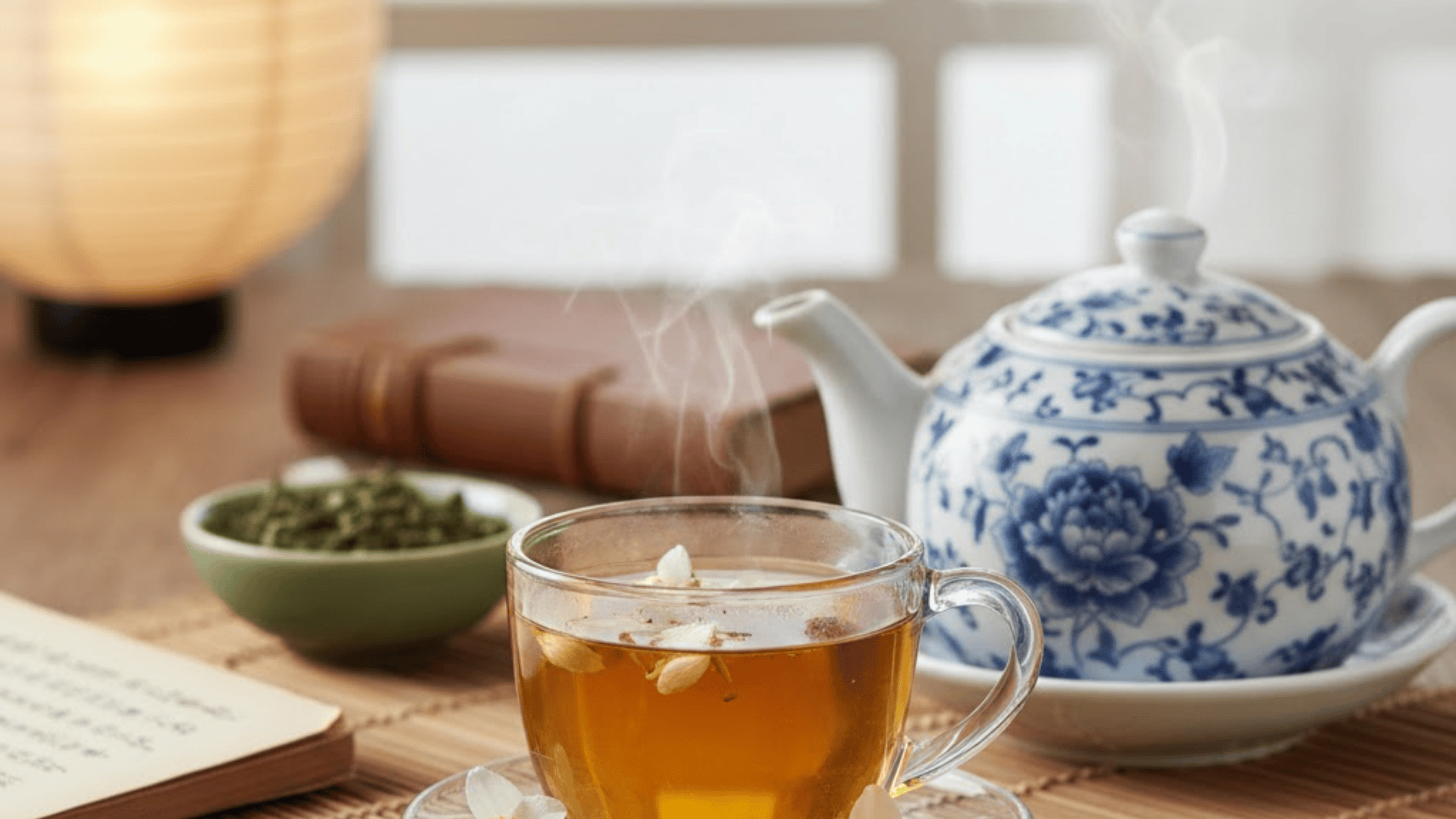
Jasmine tea is usually green tea (or sometimes white or black tea) scented with jasmine blossoms. Because of this, many of its potential health benefits come from the tea leaves themselves, while the jasmine flowers mainly add aroma that may support relaxation.
According to the U.S. National Institutes of Health (NIH), tea contains natural compounds called polyphenols that are linked to several health effects (NCCIH – Tea).
Here’s a simple table showing some key health benefits of Jasmine tea and how they may help the body:
| Health Benefit | What’s in Jasmine Tea | How It May Help (What Research Suggests) |
|---|---|---|
| May support antioxidant protection | Catechins (especially EGCG) in green-tea-based jasmine tea, plus other polyphenols and flavonoids | These compounds act as antioxidants and may help reduce oxidative stress, which is linked to everyday cell damage. |
| May support heart health | Tea polyphenols like catechins (green tea) or theaflavins/thearubigins (if black-tea-based jasmine tea) | Regular tea intake may support healthy LDL cholesterol levels, blood vessel function, and overall cardiovascular markers in some people. |
| May support metabolism and steady energy | Caffeine + L-theanine (especially in green tea), along with catechins like EGCG | Caffeine can boost alertness, while L-theanine may smooth out the “jitters.” EGCG has been studied for possible support of fat oxidation and metabolic health when paired with a healthy routine. |
| May help with calm and mood | Jasmine aroma compounds (commonly discussed: linalool, benzyl acetate) + L-theanine (if green-tea-based) | Aromatherapy suggests jasmine’s scent may feel soothing. Combined with L-theanine, many people report a calmer “focused” feeling. |
Jasmine tea can be a comforting daily drink that not only pleases the senses but may also gently support long-term health when enjoyed regularly as part of a balanced lifestyle.
Caffeine-Free and Low-Caffeine Jasmine Options
For anyone who enjoys the gentle floral taste of Jasmine but wants to avoid too much caffeine, there are a few relaxing choices that still offer the same soothing aroma.
- Herbal Jasmine Tea (0 mg): Made with Jasmine flowers only or with flowers mixed with gentle herbs such as rooibos, chamomile, or lemon balm.
This type has no caffeine at all, making it perfect for late evenings, calming bedtime routines, or anyone looking for a caffeine-free drink. - Decaf Jasmine Tea (very low caffeine): Made from tea leaves that have had most of the caffeine removed while still keeping the Jasmine aroma and flavor.
This option works well for nighttime sipping, people sensitive to caffeine, or anyone wanting a warm and soothing drink before resting.
These choices let tea lovers enjoy the comfort of Jasmine while keeping caffeine levels very low or completely caffeine-free.
Bottom Line
Now you know that Jasmine tea isn’t just a random “calm drink.” You understand how Jasmine tea caffeine content changes with the tea base, brew time, water temperature, and even cup size.
That means you can match your tea to your energy needs and your daily routine.
You also saw how Jasmine tea compares to coffee and other drinks, some simple health perks, and a few cozy low-caffeine and caffeine-free choices that still taste and smell great.
If this guide made things clearer for you, take a moment to look around and read a few more of my blogs. Your next favorite tip for tea, study time, or slow evenings might be waiting in the next.