
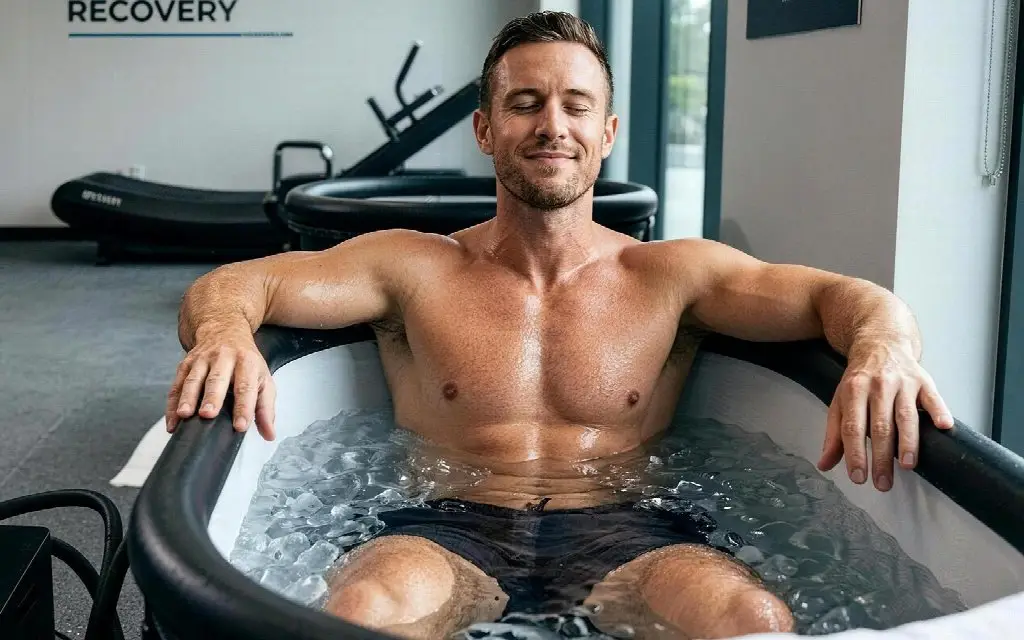
If you’ve ever tried to keep a cold plunge ready during a brutal 90°F+ summer, you already know the drill. You buy a tub, hook up whatever budget chiller came in the box, and expect a crisp 40°F dip after working out. Two hours later? You walk outside, pop the thermal lid, and find the water stuck at 58°F. So you leave the unit humming all night, praying time will fix it. Morning comes, and you’re greeted by a burning-hot compressor that barely dragged the water down two degrees.
Honestly, it isn’t your fault. It comes down to how these machines are sold versus how heat physics actually work. Almost every cheap chiller gets its specs tested inside air-conditioned factory rooms at 70°F. Sure, under those pristine conditions, even a tiny motor looks great on paper. Move that exact same rig into a muggy garage in Texas or a sun-baked patio in Arizona, and those lab ratings fall apart fast. When ambient air gets hot, keeping water freezing isn’t about running a machine longer — it takes heavy-duty thermal displacement.
Why 1HP Is the Only Baseline for Warm Weather
When outdoor temps spike, raw cooling capacity is the only spec that really matters. Small, low-power compressors just don’t have enough internal volume or refrigerant flow to dump heat against heavy outdoor air.
For anyone trying to keep a daily recovery routine going in harsh summer heat, stepping up to a high-performance 1hp cold plunge chiller gives you the 1.60 kW (5,460 BTU/h) cooling output needed to pull a 110-gallon setup down to a cold 39°F — without redlining the motor.
Having that extra horsepower transforms your daily plunge setup:
- No more waiting all day: Instead of filling your tub and waiting 8 to 12 long hours for tap water to cool, a proper 1HP setup gets you plunge-ready in just a couple of hours.
- Holds a true sub-40°F plunge: The actual metabolic benefits of cold exposure happen best under 50°F, with most experienced plungers aiming for 39°F to 42°F. While small chillers choke and plateau around 52°F in July, a 1HP motor keeps enough reserve power to lock water right at 39°F.
- Handles big tubs easily: Bigger tubs feel great, but more water means a much heavier thermal load. If you’re running a 100 or 110-gallon setup, a weak motor will run flat-out nonstop just to keep the water lukewarm.
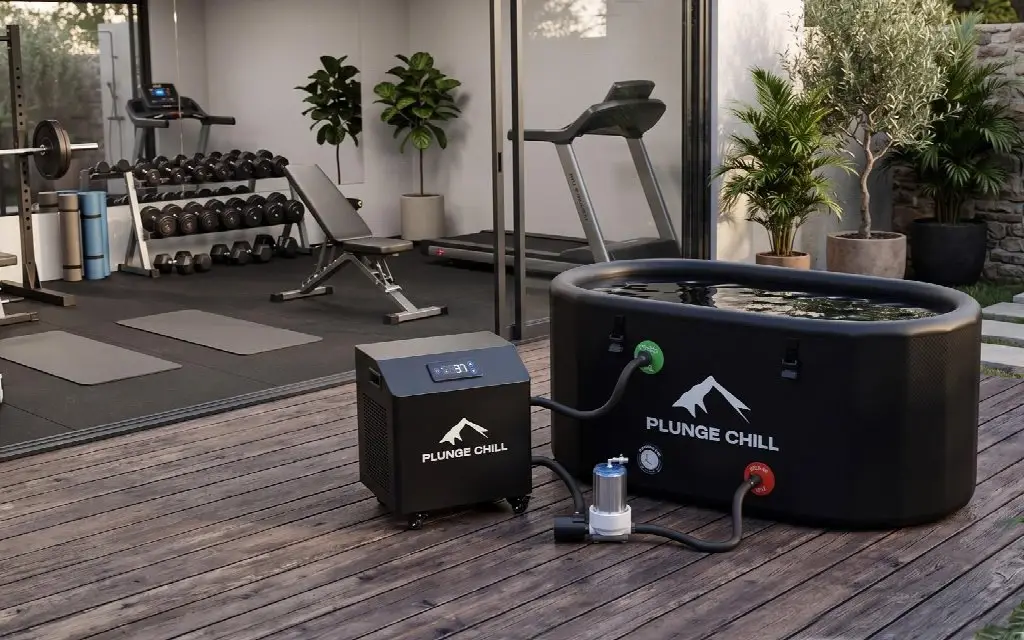
The Thermal Trap: Why Small Chillers Stagnate
To understand why budget chillers stall in July, you have to realize that chillers don’t actually “make cold.” They act like mechanical pumps — pulling heat energy out of your water and venting it into the surrounding air. When outside air is cool, that exchange is easy. But when surrounding air hits 95°F or higher, shoving more heat into already hot air gets ridiculously hard for a tiny compressor.
At the same time, heat is constantly leaking back into your tub through the sidewalls, the cover, and unshielded water lines. In peak summer heat, your tub absorbs heat almost as fast as a weak chiller can pull it out.
When a small unit hits this wall, two things happen:
- The Stagnation Ceiling: Heat leaking into the tub matches the heat the chiller is pulling out. The temp display freezes somewhere around 52°F to 56°F and simply refuses to drop further.
- Compressor Stress and Safety Shutoffs: Because the water never hits your set temp, the compressor stays locked at 100% load for hours. That spikes your electric bill and triggers built-in safety switches that kill power right when you need the tub ready.
Setup Tweaks for Peak Summer Heat
Even with a 1HP motor under the hood, a few smart setup habits will save your electricity bill:
- Insulate your tub: Running a strong chiller on an uninsulated tub is like running central AC with your windows wide open. High-density drop-stitch PVC tubs trap cold far better than thin plastic barrels. Keep that insulated cover locked down when you’re done.
- Keep the housing shaded: Direct sunlight bakes the chiller casing and forces the heat exchanger to fight radiant solar heat on top of ambient air. Tucking your machine under a shaded porch, awning, or simple shade sail makes a massive difference.
- Give it breathing space: Chillers blow out a lot of hot exhaust air that needs to clear out fast. Never cram your machine into a tight corner, flat against a garage wall, or inside a closed cabinet. Keep at least 18 inches of open space around the vents.
FAQ
Q: Can I run a 1HP chiller on a standard wall plug?
A: Yep. Dedicated residential 1HP chillers are built to run on standard 110V–120V household outlets (60Hz). They come with built-in GFCI protection, though plugging directly into a grounded wall outlet instead of using a thin extension cord is always recommended.
Q: Should I turn the machine off at night during summer?
A: If you have a well-insulated PVC tub, leaving your 1HP chiller on maintain mode is actually cheaper. A strong unit can hold your set temp with short, periodic cycles rather than running flat-out for hours to cool warm water back down from scratch the next morning.
Q: How fast does a 1HP unit drop 100 gallons?
A: Times vary based on starting tap water temp and local heat, but a 1.60 kW cooling system generally drops water at a steady rate of 8°F to 12°F per hour. You can easily reach a crisp 39°F target within a couple of hours.
Final Thoughts
Living in a warm climate shouldn’t mean settling for lukewarm cold therapy. Buying an underpowered chiller almost always ends up costing twice as much in the long run — first for the weak unit that choked during its first hot summer, and second for the upgrade you needed in the first place. Going with a real 1HP unit gives your setup the horsepower, structural durability, and rapid cooling speed to make cold plunging an effortless daily habit year-round.
If you’re evaluating your options and want to compare different setup styles, pump hookups, and tub pairings before making a move, check out our breakdown on how 1hp chiller work for an in-depth look at technical specs.