

I’ve heard this debate a hundred times: Does black tea have more caffeine than coffee? One person says tea is “stronger,” and someone else says coffee always wins.
The problem is that many comparisons don’t match real life. We don’t measure dry leaves or beans, we drink cups, mugs, and takeaway sizes, brewed in different ways.
In this blog, I’ll break down the real numbers for standard serving sizes, explain why the “by weight” argument confuses people, and clear up a few caffeine myths.
I’ll also show the rare times black tea can beat coffee, how brewing time and quantity change caffeine fast, and how to pick the best drink for your energy needs and caffeine tolerance.
Does Black Tea or Coffee Have More Caffeine?
No, coffee typically has more caffeine than black tea. An 8-ounce cup of brewed coffee contains 95-165 mg of caffeine, while the same amount of black tea has 40-70 mg.
However, brewing method and serving size can flip this result. If you steep multiple tea bags for an extended time or drink weak coffee, black tea can deliver more caffeine.
But in standard conditions, one tea bag steeped for 3 minutes versus a typical drip coffee, coffee wins every time.
Black Tea vs Coffee: Caffeine Content Comparison
Most online comparisons use per-ounce measurements, but that’s not how people actually drink coffee or tea.
| Drink | Serving Size | Caffeine Content |
|---|---|---|
| Brewed coffee | 8 oz | 95-165 mg |
| Coffee shop coffee | 12-16 oz | 140-250 mg |
| Brewed black tea | 8 oz | 40-70 mg |
| Strong black tea (2 bags) | 8 oz | 80-120 mg |
This table shows real-world servings, coffee shops serve 12-16 ounces while tea is typically 8 ounces, widening the caffeine gap.
Black Tea vs Coffee Caffeine: Separating Myths from Facts
Three persistent myths cause most of the confusion about tea and coffee caffeine content, leading people to make incorrect assumptions about their drinks:
| Myth | Truth |
|---|---|
| Black tea leaves have more caffeine than coffee beans by weight | True but irrelevant. You use 10-12 grams of coffee grounds per cup versus 2 grams of tea leaves. What ends up in your cup matters. |
| Steeping tea for 10+ minutes maximizes caffeine | Caffeine extraction peaks around 5 minutes. Beyond that, you’re extracting bitter tannins, not additional caffeine. Use multiple bags instead. |
| All coffee automatically has more caffeine than all tea | Mostly true. But weak 8-ounce drip coffee can have less caffeine than strongly brewed tea using 2-3 bags. Brewing method matters. |
Understanding these myths helps you make informed choices rather than relying on misleading comparisons about dry leaf concentration.
When Does Black Tea Have More Caffeine Than Coffee?
Black tea can exceed coffee’s caffeine content, but only under specific circumstances that require intentional brewing choices most people don’t use daily:
- Multiple tea bags in one serving: Using 2-3 tea bags in a 12-16 ounce mug delivers 100-150 mg of caffeine, rivaling weak coffee.
- Extended steep times beyond 5 minutes: Leaving your tea bag in for 7-10 minutes increases caffeine from 50 mg to 80+ mg, though bitterness rises significantly.
- Combining multiple bags with long steeps: Two bags steeped for 6-7 minutes in 12 ounces can deliver 120-140 mg, matching small coffee servings.
- Tea concentrates versus weak coffee: Commercial iced tea concentrates or chai concentrates pack 100-150 mg per serving, while diluted office coffee has considerably less.
- Restaurant iced teas: Many restaurant sweetened iced teas use 2-3 bags per 16-ounce serving, delivering 80-120 mg to maintain flavor after ice dilution.
These scenarios are genuine exceptions but represent less than 5% of daily consumption. Standard brewing—one bag, 3-minute steep, means coffee consistently wins.
How Brewing Method Affects Caffeine Levels
Three factors control how much caffeine ends up in your cup, and they matter significantly more than the specific type of tea or coffee you choose:
Steep Time and Water Temperature
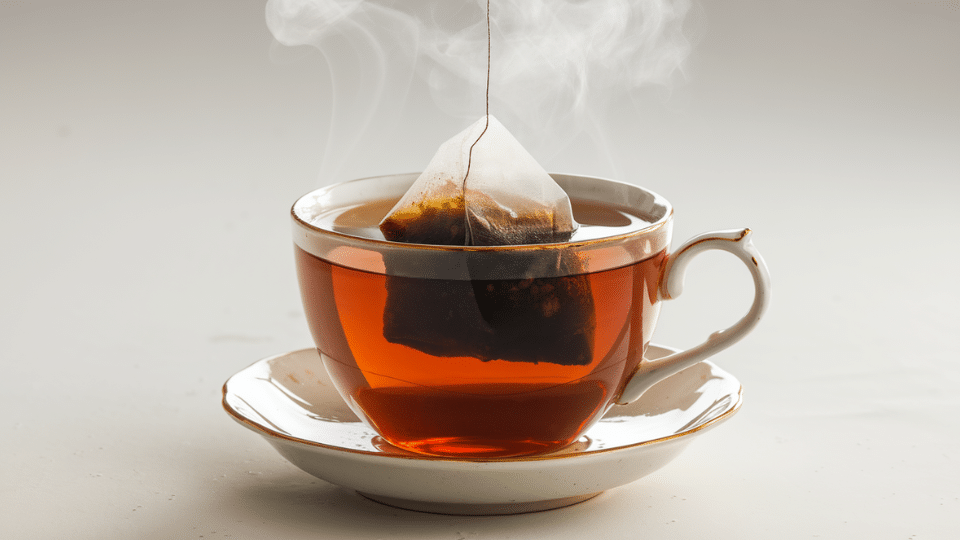
Longer brewing and hotter water extract more caffeine. For tea, the optimal range is 3-5 minutes in water at 200-212°F.
Caffeine extraction is nearly complete by 5 minutes, continuing past that adds bitterness faster than caffeine. For coffee, standard drip brewing takes 4-5 minutes and extracts about 95% of available caffeine.
Cold brew uses 12-24 hours but compensates with higher coffee-to-water ratios, resulting in similar or higher caffeine levels per serving.
Tea Leaf Quantity
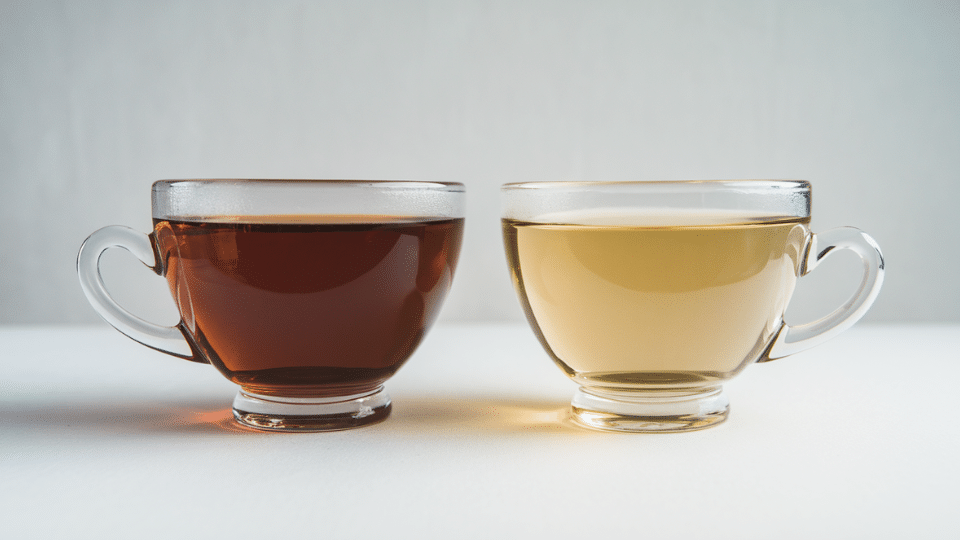
More grounds or tea leaves equals more caffeine. Standard coffee uses 2 tablespoons (10-12 grams) per 6 ounces of water.
Doubling grounds increases caffeine by 60-80% due to saturation limits. For tea, one bag contains roughly 2 grams of leaves.
Using two bags can increase caffeine from 50 mg to 85 mg in the same volume. Important note: flavor strength and caffeine content often correlate but aren’t identical, a bitter cup isn’t automatically higher in caffeine.
Does Tea or Coffee Type Change Caffeine?
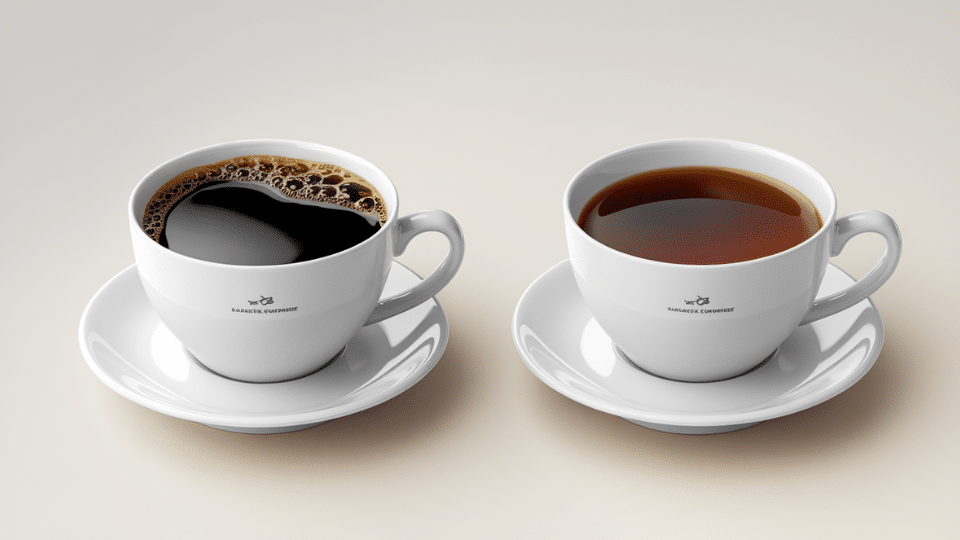
Type matters less than brewing method. Dark versus light roast coffee has virtually no caffeine difference by volume, dark roasts are less dense by weight, but you measure by the scoop.
Earl Grey and English Breakfast vary by only 5-10 mg because both use oxidized black tea as their base. Green tea has meaningfully less (25-50 mg) due to minimal oxidation.
Focus on controlling time, temperature, and quantity before worrying about variety or origin.
Black Tea or Coffee: Which Should You Drink?
Choose based on your caffeine goal and how your body responds to stimulants. Use this checklist to guide your decision:
- Need to wake up quickly in the morning → Coffee
- Want 150+ mg caffeine in one drink → Coffee (12-16 oz)
- Prefer steady energy without jitters → Black tea
- Get anxious or shaky from coffee → Black tea
- Experience coffee crashes mid-day → Black tea with L-theanine
- Caffeine sensitive but need some energy → Black tea (short steep)
- Need maximum alertness for deadline → Coffee (cold brew)
- Prefer gentler, sustained focus → Black tea
- Experience coffee-related digestive issues → Black tea
- Trying to reduce daily caffeine intake → Switch coffee to black tea
- Want a quick, intense energy boost → Coffee (espresso-based drinks)
Final Verdict
After looking at the numbers and real brewing habits, I’m clear on one thing: coffee usually gives you more caffeine than black tea in a normal cup.
But I also learned it’s not a fixed rule. If I make very weak coffee, or I brew tea with two bags and a longer steep, the caffeine can get surprisingly close, or even higher. That’s why this topic feels confusing online.
For me, the best choice depends on the moment. When I need a fast push, I go with coffee. When I want calmer, steadier focus, I reach for black tea.
Now you can adjust your drink on purpose instead of guessing. What do you drink most, tea or coffee? Share your pick (and how you brew it) in the comments!