


Tomatoes, watermelon, leafy greens, berries, green tea. Spend enough time reading about skin health online and you may eventually come across an intriguing idea: some of the things you eat could help your skin cope with the sun.
There is actually some science behind that idea.
Certain nutrients and plant compounds can influence the skin’s response to oxidative stress, including some of the stress triggered by ultraviolet radiation. Research into carotenoids, polyphenols and other dietary compounds has even created a field sometimes described as oral or systemic photoprotection. A 2024 review concluded that these approaches may complement topical photoprotection, although they are not replacements for it.
But that’s where an interesting piece of nutrition science can easily turn into an exaggerated wellness claim.
Eating tomatoes is not the same as wearing sunscreen.
So what can food actually do?
First, What Does UV Do to Skin?
When ultraviolet radiation reaches skin, the effects don’t stop at the surface.
UV exposure can contribute to the formation of reactive oxygen species, or ROS. These highly reactive molecules can interact with proteins, lipids and DNA and contribute to inflammation and cellular damage. Over time, these processes are involved in photoaging and other forms of UV-related skin damage.
Your body isn’t defenseless against this.
Skin has its own antioxidant systems designed to help control oxidative stress. What we eat can contribute nutrients and compounds involved in those defenses, which is where the connection between diet and sun-exposed skin starts becoming interesting.
But supporting the skin’s defenses is very different from creating a physical shield against incoming UV.
That distinction matters.
The Tomato Connection
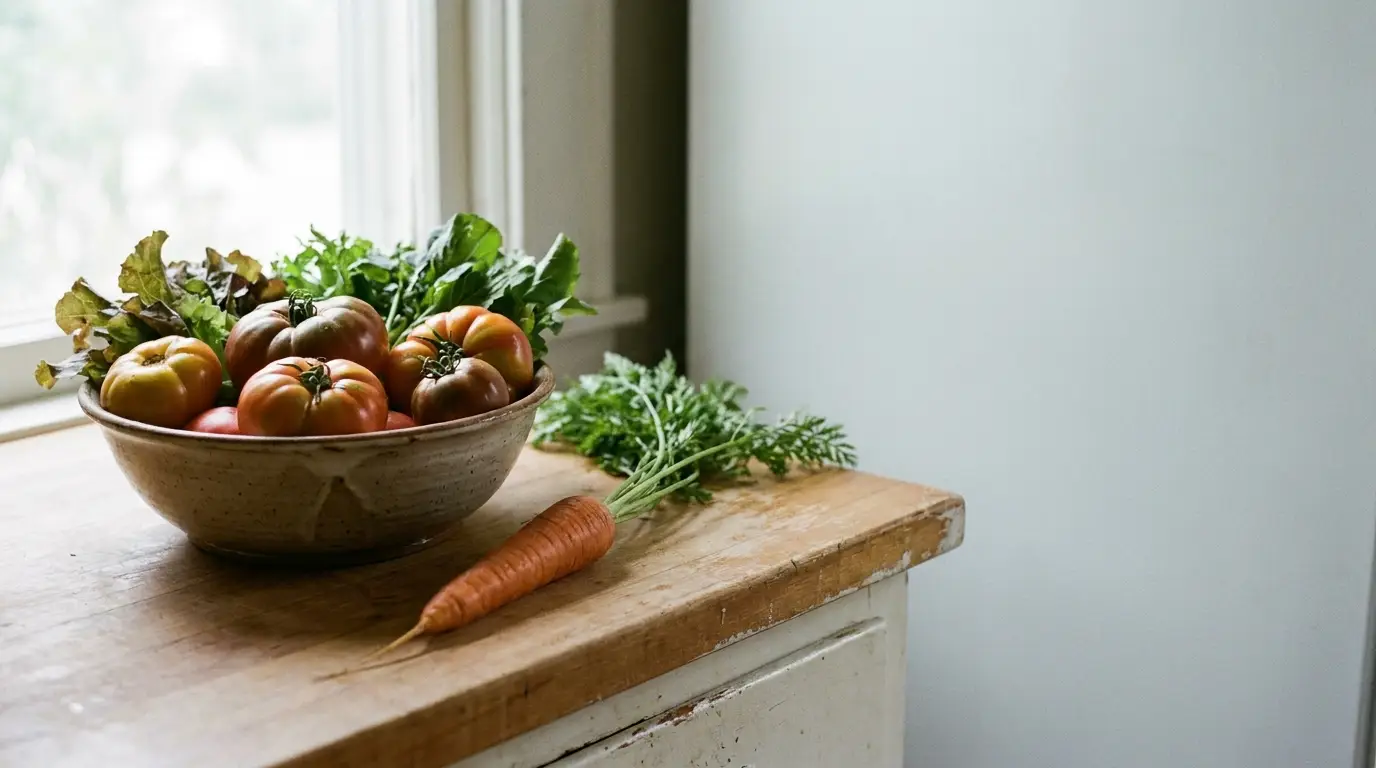
Tomatoes are probably one of the most interesting foods in this conversation because they’re rich in lycopene, the carotenoid responsible for much of their red color.
Carotenoids are pigments naturally found in many fruits and vegetables. Lycopene, beta-carotene, lutein and related compounds have antioxidant properties, and researchers have been studying whether consuming them can influence how skin responds to UV exposure.
The evidence isn’t just theoretical. Recent reviews of dietary interventions have found evidence that carotenoids can reduce UV-associated skin redness and help counter photo-oxidative stress.
That doesn’t mean eating a tomato at lunch suddenly makes you more resistant to the afternoon sun.
Dietary carotenoids need to be consumed and absorbed, circulate through the body and accumulate in tissues. Any potential effect develops over time rather than appearing immediately after a meal.
It’s less like putting up an umbrella and more like supporting one of the systems already operating inside the skin.
Beta-Carotene, Lutein and the Rest of the Colorful Crowd
Lycopene isn’t alone.
Beta-carotene is abundant in foods such as carrots, sweet potatoes and leafy greens. Lutein is found in leafy green vegetables and other foods. Other carotenoids occur throughout colorful fruits and vegetables.
A 2025 systematic review examining carotenoids and skin aging found antioxidant, anti-inflammatory and photoprotective effects across the research literature, although the studies varied considerably in their methods and outcomes.
That last part is important.
Nutrition research rarely gives us the kind of clean, universal number people would like. Different studies use different compounds, doses, food sources, supplements and treatment periods.
So “carotenoids may support the skin’s response to UV” is reasonable.
“Eat carrots instead of wearing sunscreen” absolutely isn’t.
Polyphenols Make the Story Even Bigger
Carotenoids aren’t the only compounds being investigated.
Polyphenols are a huge family of plant compounds found in foods and drinks including berries, grapes, cocoa, tea and many fruits and vegetables. They have attracted interest partly because of their antioxidant and anti-inflammatory activity.
A 2025 systematic review of oral supplements and photoprotection examined 47 human studies and found that some of the strongest evidence among the substances studied involved carotenoid-based ingredients and polyphenols. The authors also pointed out significant limitations, including small study populations and relatively short study durations.
That’s a much more interesting conclusion than either extreme.
The research isn’t saying nutrition has nothing to do with photoprotection.
It also isn’t saying we’ve discovered edible sunscreen.
Antioxidants Don’t Work Like SPF
This is probably the most important distinction in the entire conversation.
When you apply an appropriately formulated sunscreen, UV filters interact with incoming ultraviolet radiation before much of it can affect the underlying skin. Broad-spectrum sunscreens are designed to provide protection across UVA and UVB wavelengths.
Dietary antioxidants operate differently.
Their potential role is largely connected to biological processes such as oxidative stress, inflammation and the body’s response to UV-induced damage. They aren’t forming an invisible SPF layer around you.
That’s why researchers generally discuss nutritional or oral photoprotection as complementary to conventional sun protection rather than an alternative to it.
Think of the two strategies as working at different points in the story.
One aims to reduce how much damaging radiation reaches or affects the skin in the first place. The other may help support biological defenses involved in dealing with some of the consequences.
What About Supplements?
This is where the conversation gets trickier.
Once research finds an interesting relationship between a nutrient and skin health, it’s tempting to assume that concentrating that nutrient into a supplement must produce an even better result.
That’s not necessarily how nutrition works.
The 2025 systematic review of oral photoprotection found promising results for several compounds, but also emphasized that the available evidence has limitations and that more research is needed to establish optimal doses and durations.
And if you’re otherwise healthy and don’t have a nutritional deficiency, the American Academy of Dermatology recommends getting the nutrients your skin and body need through a balanced diet rather than assuming a supplement is necessary.
Food also brings combinations of nutrients, fiber and plant compounds rather than a single isolated ingredient.
So this isn’t really an argument for building a cabinet full of “sun-defense” capsules.
Where Sunscreen Still Fits
If nutrition can support some of the skin’s defenses, sunscreen tackles a different part of the problem.
Sunscreens use UV filters to reduce exposure to ultraviolet radiation. Depending on the formulation, those filters may be organic filters, mineral filters such as zinc oxide and titanium dioxide, or combinations permitted within the relevant market.
With mineral sunscreens in particular, protection isn’t simply about having zinc oxide somewhere on an ingredient list. How particles are distributed and incorporated into the finished formulation is part of the broader science behind mineral UV filter technology.
But regardless of the filter system, sunscreen remains part of a wider sun-protection strategy.
The American Academy of Dermatology currently recommends broad-spectrum, water-resistant sunscreen with SPF 30 or higher, alongside measures such as shade and protective clothing.
A bowl of tomatoes doesn’t change that recommendation.
Maybe Food and Sunscreen Never Needed to Compete
The most useful takeaway may be that we’ve been asking the wrong question.
Instead of asking whether food can replace sunscreen, it makes more sense to ask whether nutrition is another part of supporting healthy skin over time.
A varied diet rich in fruits and vegetables gives the body carotenoids, vitamins, polyphenols and other compounds involved in normal biological functions. Some of those compounds appear to influence pathways involved in the skin’s response to environmental stress.
That’s interesting enough without turning lunch into SPF.
Eat the tomatoes because they’re nutritious. Enjoy the berries. Have the green tea if you like it. Build a varied diet because your skin is part of the same body you’re feeding.
And when you need protection from meaningful UV exposure, use the products actually designed for that job.