

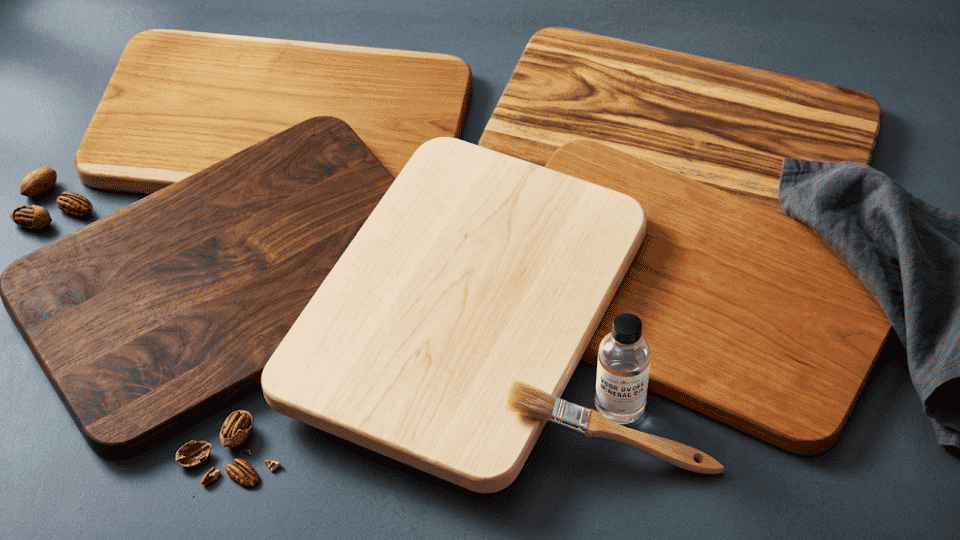
Most home cooks focus on knives, cookware, and gadgets, but the cutting board often goes unnoticed. The right wood for cutting boards impacts blade sharpness, food safety, and overall kitchen efficiency.
Choose poorly, and you’ll face warping, cracking, and bacteria buildup within months. Pick the best wood for cutting boards, and you’ll enjoy a durable, reliable kitchen companion for years.
With so many options available, selecting the best wood for cutting boards can be overwhelming. Knowing what truly works makes all the difference in performance, durability, and long-term value.
Choosing the right wood ensures your cutting board lasts with minimal effort, keeping your kitchen running smoothly every day.
What Makes the Best Wood for Cutting Boards?
The best wood for a cutting board balances hardness, safety, and easy maintenance. Dense hardwoods like maple, walnut, and teak outlast softwoods such as pine, which scar easily and harbor bacteria in deep grooves, thereby shortening the board’s lifespan.
Hardness, measured on the Janka scale, determines how well wood resists knife marks and daily wear. Safety is equally critical; non-toxic, closed-grain woods like maple prevent food particles from seeping into the surface, reducing contamination risks while staying gentler on knife edges than glass or ceramic.
Proper maintenance seals the deal. Regularly oiling your board with food-safe mineral oil prevents drying, warping, and cracking, ensuring it remains hygienic and durable for years of reliable kitchen use.
Benefits of Wooden Cutting Boards Over Plastic or Glass
Wooden cutting boards bring lasting value to any kitchen, combining practicality with timeless style:
- Knife-Friendly Surface: Wood’s natural give absorbs blade impact, preserving knife sharpness far longer than hard plastic or glass.
- Self-Healing Properties: Wood fibers naturally close around small cuts, reducing grooves where bacteria can hide.
- Timeless Aesthetic: Rich grain patterns and warm wood tones add a touch of elegance to any kitchen countertop.
- Ages Beautifully: Unlike plastic that yellows or glass that chips, a well-maintained wooden board develops a richer, more distinguished character over time.
Making the switch to wood is a choice that benefits both your tools and your kitchen’s overall look.
Top Woods Recommended for Cutting Boards
Not all woods are created equal when it comes to cutting boards. Choosing the right one can make all the difference in your kitchen experience. Here are the top woods that stand out for their quality, safety, and performance :
1. Maple: The Classic Favorite
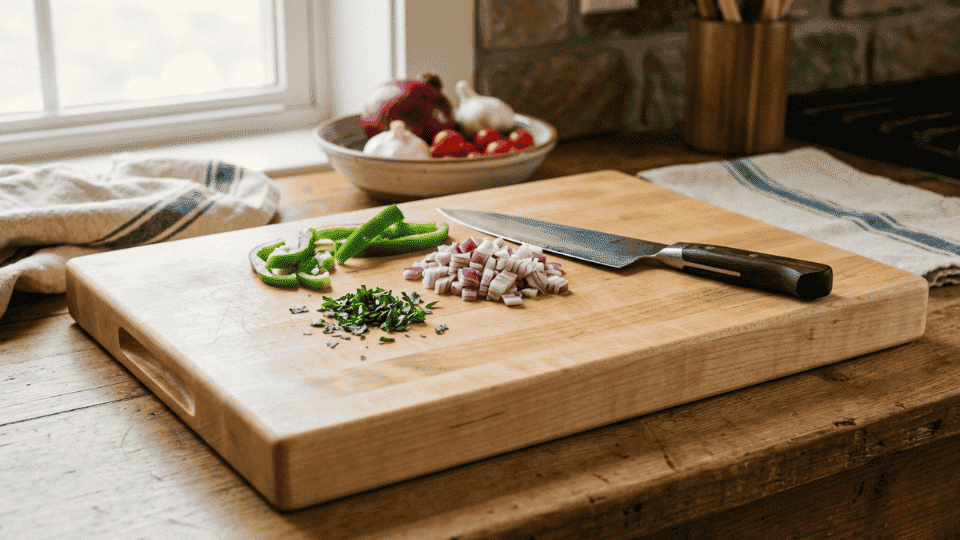
Maple is one of the most popular woods for cutting boards, and it’s easy to see why. It is tough enough to handle daily chopping without showing wear too quickly.
Its tight, closed grain keeps bacteria from soaking in, making it a safe and clean choice. Maple is also budget-friendly and easy to find in most stores.
Key Features:
- Durability: Very hard with a Janka rating of 1,450 lbf, built to last for years of daily use
- Average Cost: Budget-friendly, typically ranging from $20 to $80 depending on size
- Best For: Everyday home cooks who want a reliable, long-lasting board at a fair price
2. Walnut: A Luxurious and Durable Choice
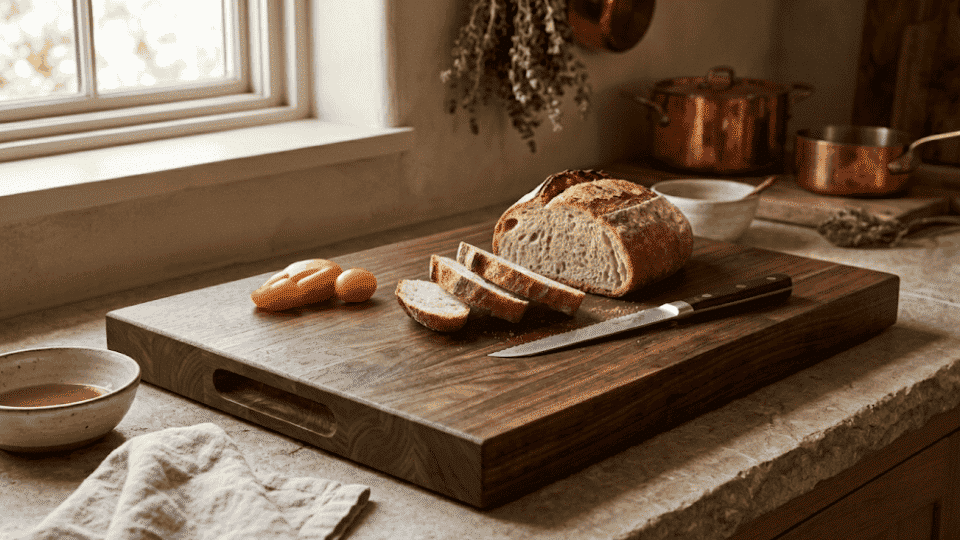
Walnut is a rich, dark wood that looks stunning in any kitchen. It is strong and durable, yet soft enough to protect your knife’s edge.
Walnut absorbs very little moisture, which helps keep bacteria away. A simple monthly oiling keeps it looking beautiful and working great for many years.
Key Features:
- Durability: Moderately hard at 1,010 lbf Janka tough enough for daily use without dulling knives
- Average Cost: Mid to high range, usually between $50 and $150 for a quality board
- Best For: Home cooks who want a premium-looking board that balances beauty and strength
3. Cherry: Beautiful and Long-Lasting
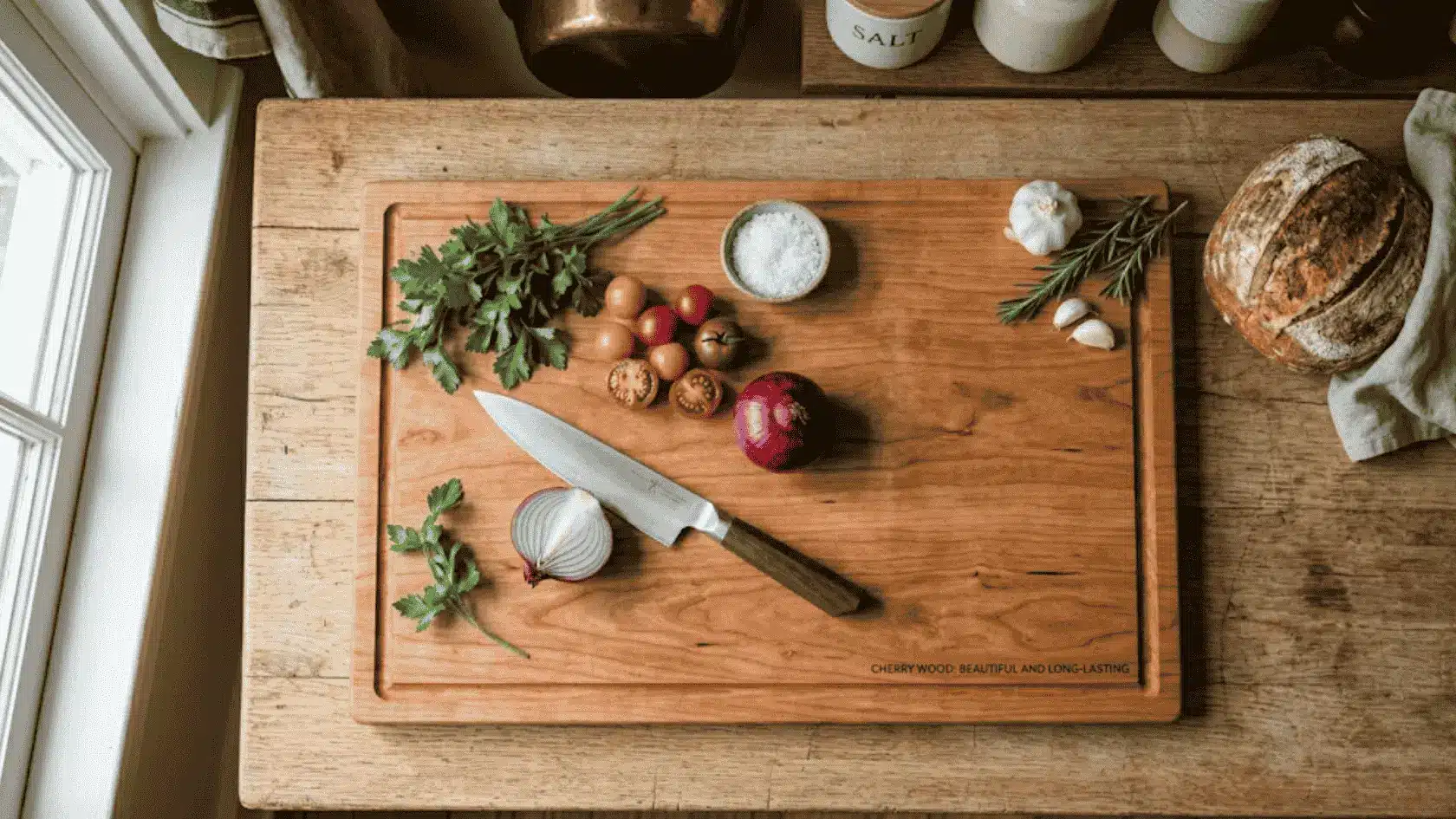
Cherry wood starts with a warm pinkish-red tone and gets even more beautiful as it ages. It is strong enough for everyday cutting tasks while staying easy on your knives.
Over time, cherry develops a rich, deep color called a patina, making each board look truly unique. It is a great mix of beauty and function.
Key Features:
- Durability: Moderately durable at 950 lbf, Janka holds up well with proper care and regular oiling
- Average Cost: Mid-range pricing, generally between $40 and $120 for a well-made board
- Best For: Cooks who value a beautiful, aging board that improves in looks over time
4. Bamboo: A Sustainable and Eco-Friendly Option
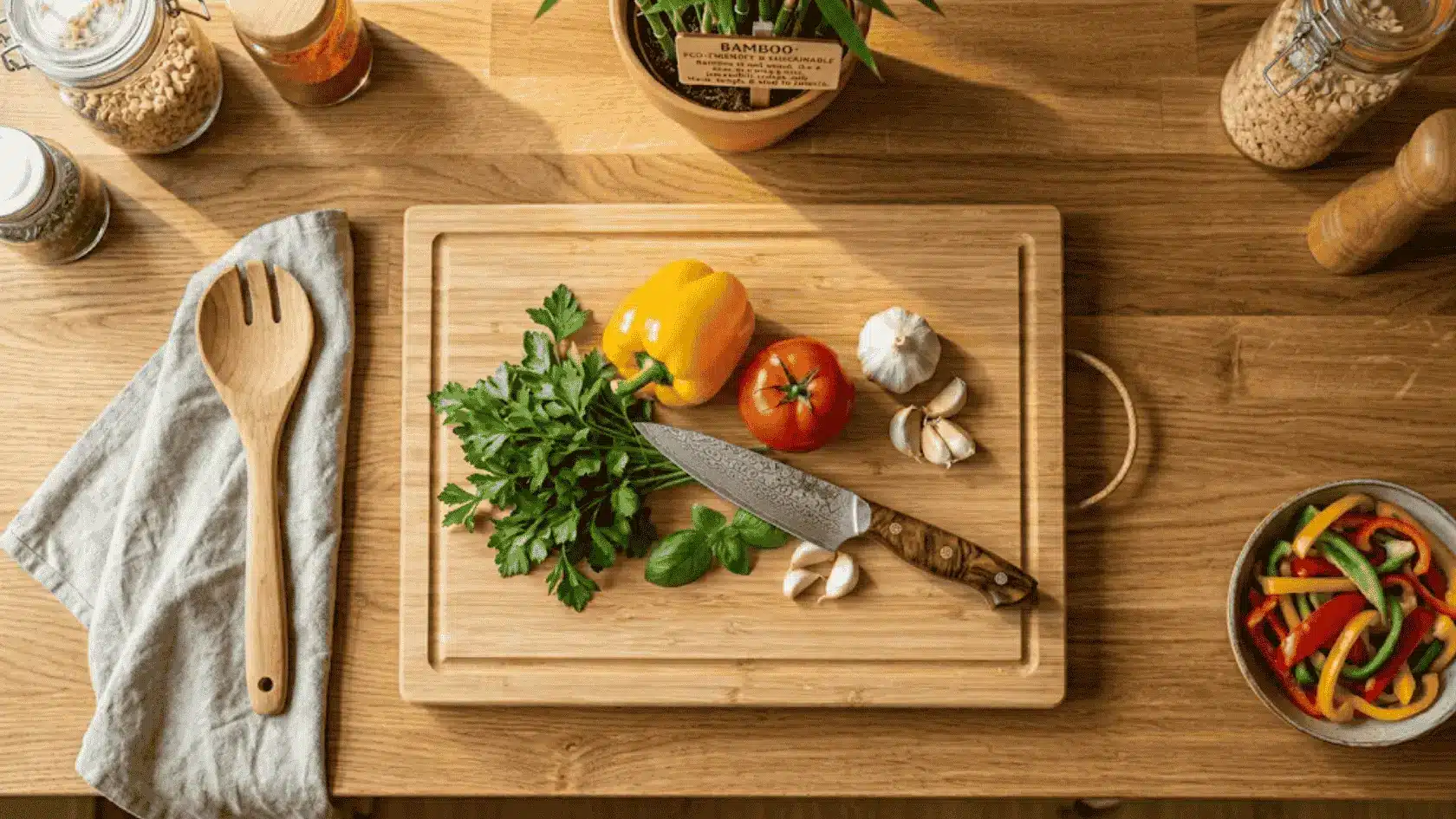
Bamboo is not actually a wood; it is a fast-growing grass that is surprisingly hard and tough. It is one of the most eco-friendly choices you can make for your kitchen.
Bamboo cutting boards are lightweight, affordable, and easy to care for. Because bamboo grows back so quickly, choosing it helps protect forests and the environment.
Key Features:
- Durability: Surprisingly hard at around 1,380 lbf Janka resists scratches well despite being lightweight
- Average Cost: One of the most affordable options, typically ranging from $15 to $50
- Best For: Budget-conscious buyers who also want an eco-friendly kitchen tool
5. Teak: The Resilient and Moisture-Resistant Option
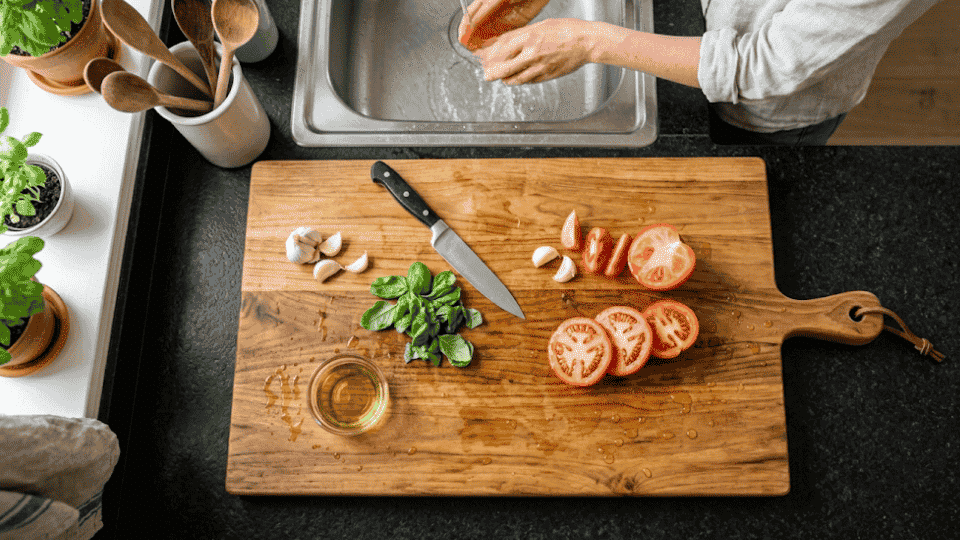
Teak is one of the best woods for resisting moisture, making it perfect for kitchen use. It contains natural oils inside the wood that help it stay strong and resist warping over time.
Teak does not need as much oiling as other woods because it naturally takes care of itself. It is a smart, low-effort choice for busy kitchens.
Key Features:
- Durability: Highly durable at 1,155 lbf Janka with natural oils that resist warping and cracking
- Average Cost: Premium pricing, usually between $60 and $200, due to its quality and sourcing
- Best For: Busy kitchens that need a low-maintenance, moisture-resistant board that lasts
6. Ash: A Strong, Flexible Hardwood
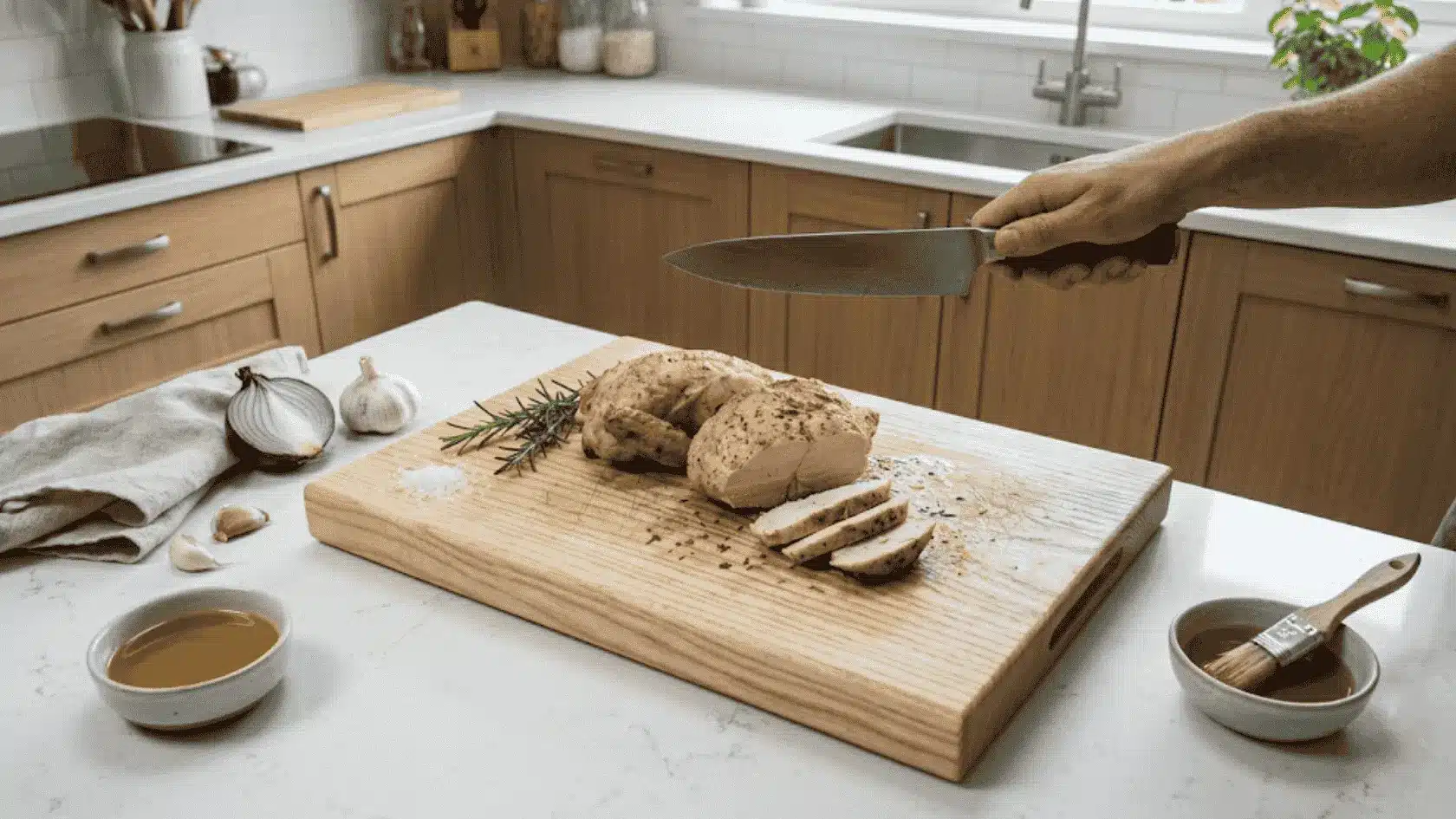
Ash is a tough wood with some natural flexibility, which helps it withstand heavy cutting without cracking. Its light color and clean look make it a great fit for modern kitchens.
The ash’s open grain makes it easy to wipe clean after use. It holds up well over time and stays gentle on your knife blades.
Key Features:
- Durability: Strong and flexible at 1,320 lbf, Janka resists cracking better than many harder woods
- Average Cost: Affordable to mid-range, typically between $25 and $75 for a standard board
- Best For: Cooks who want a tough, modern-looking board that handles heavy use without breaking
7. Oak: A Sturdy and Traditional Option
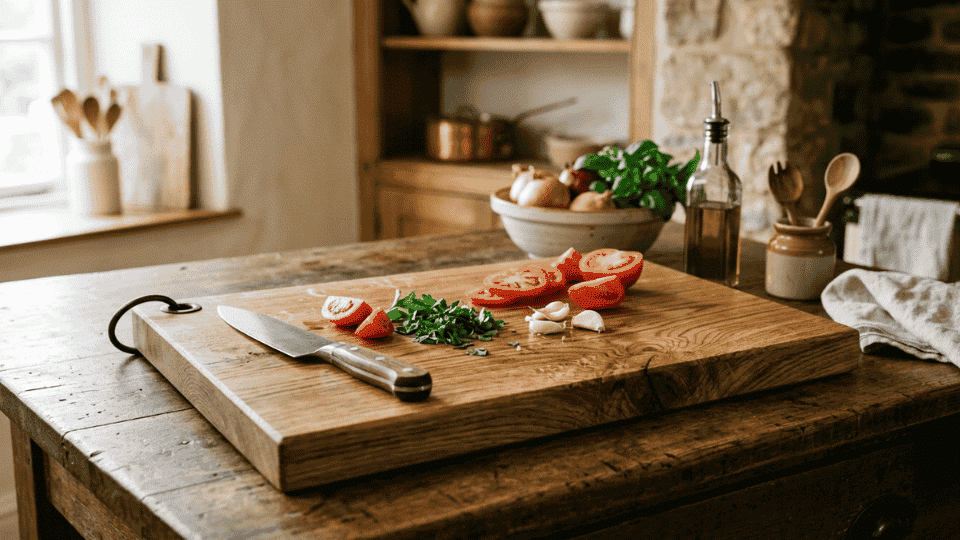
Oak is a classic hardwood that has been used in kitchens for generations. It is very tough and handles scratches well, making it a reliable everyday cutting board.
Oak has a bold, traditional grain pattern that looks great in rustic or classic kitchen styles. Because it is more porous, it needs regular oiling to stay clean and crack-free.
Key Features:
- Durability: Very hard at 1,290 lbf Janka, highly scratch-resistant, but needs regular oiling due to its porous nature
- Average Cost: Mid-range, generally priced between $30 and $100 for a solid, well-built board
- Best For: Traditional kitchen lovers who want a sturdy, timeless board with a classic grain look
8. Hickory: A Tough, High-Impact Wood
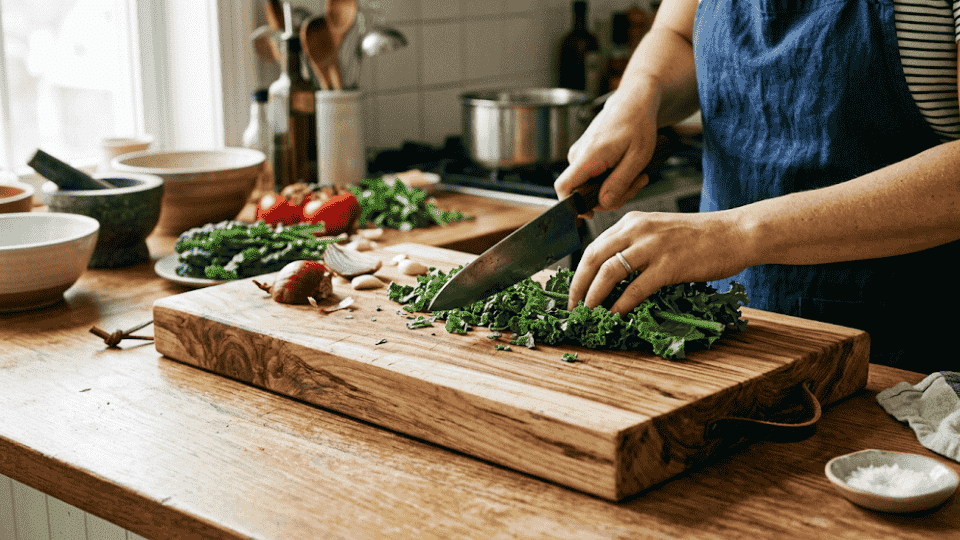
Hickory is one of the hardest woods you can find, making it perfect for cutting boards that get heavy daily use. It can handle tough chopping tasks without showing damage quickly.
Because it is so dense and hard, it does need a little extra care to prevent it from drying out or cracking over time. For serious home cooks, hickory is hard to beat.
Key Features:
- Durability: Extremely hard at 1,820 lbf Janka, one of the toughest options available for heavy-duty use
- Average Cost: Mid to high range, usually between $40 and $130, depending on board thickness and size
- Best For: Serious home cooks or professional kitchens that need a board built for heavy, daily impact
9. Beech: Affordable and High-Performing
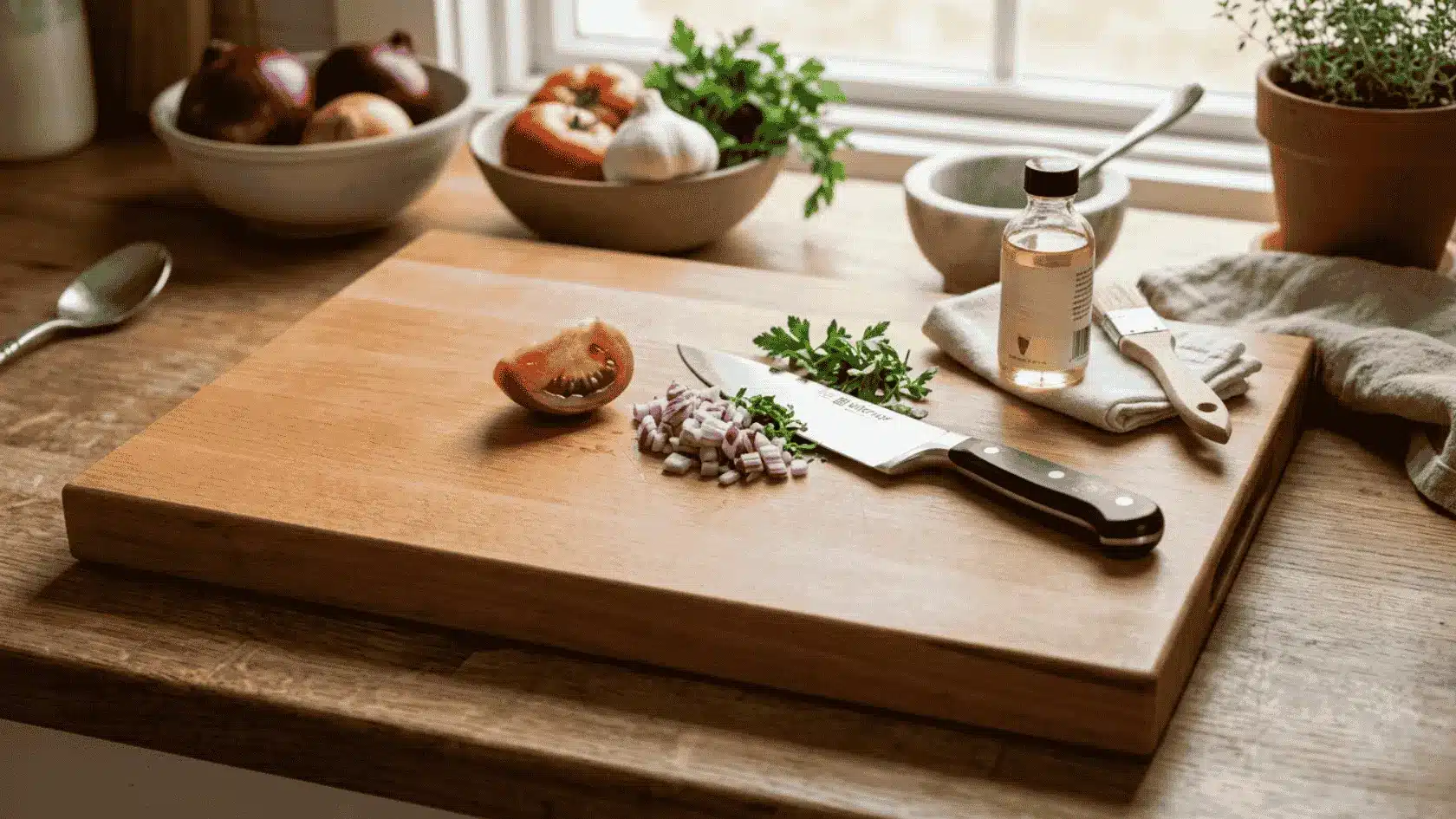
Beech is a smart choice for anyone who wants a high-quality cutting board without spending too much. It has a fine, tight grain that creates a very smooth cutting surface.
Beech is dense and strong, so it holds up well against daily knife work. It does need regular oiling to prevent drying, but with simple care, it performs like a much pricier wood.
Key Features:
- Durability: Dense and strong at 1,300 lbf, Janka performs well for daily cutting with proper maintenance
- Average Cost: One of the most cost-effective hardwoods, typically ranging from $20 to $70
- Best For: Value seekers who want hardwood performance and a smooth cutting surface without the high price tag
How to Care for Your Wood Cutting Board
Consistent care is the secret to keeping your wooden cutting board clean, safe, and long-lasting:
- Clean Gently After Every Use: Wash your board with warm, soapy water and a soft sponge, then dry it immediately upright to prevent warping.
- Sanitize Naturally: Rub the surface with coarse salt and half a lemon to deodorize and disinfect without harsh chemicals.
- Oil Regularly: Apply food-safe mineral oil once a month using a cloth, letting it soak in overnight to prevent drying and cracking.
- Avoid Water Soaking: Never submerge your board or run it through the dishwasher, as prolonged moisture causes splitting and warping.
- Keep Away From Heat: Always store your board away from stovetops, ovens, or direct sunlight to prevent the wood from drying out and cracking.
Follow these simple habits consistently, and your wooden cutting board will reward you with years of safe, beautiful, and reliable service.
Factors to Consider When Choosing Wood for Cutting Boards
Picking the right wood for your cutting board goes beyond just looks. Here are the five most important factors every buyer should keep in mind before making a decision :
- Choose Close-Grained Hardwoods: Woods like maple and walnut have tight grains that are gentle on knife edges, keeping your blades sharper for longer.
- Understand Grain Direction: End-grain boards absorb knife cuts into the wood fibers, while edge-grain boards offer a smoother, more even cutting surface.
- Balance Price With Durability: A slightly higher upfront cost for a hardwood board often saves money in the long term by reducing the need for frequent replacements.
- Check Hardness Ratings: Woods with higher Janka hardness ratings withstand heavy daily use better, making them a smarter investment for active kitchens.
- Consider Maintenance Needs: Some woods need more frequent oiling than others. Pick one that fits your lifestyle and the amount of care you are willing to give.
Keeping these five factors in mind will help you find a cutting board that fits your budget, cooking habits, and long-term kitchen needs.
Environmental Impact of Choosing Wood for Cutting Boards
The wood you choose for your cutting board can have a real impact on the environment, so it pays to choose wisely.
Sustainable woods like bamboo and teak are strong, responsible choices because they grow quickly and put less pressure on natural forests. When shopping, always look for boards that carry the FSC (Forest Stewardship Council) certification.
This label guarantees the wood was harvested using responsible, eco-friendly practices that protect wildlife and forest ecosystems.
Other helpful labels include the Rainforest Alliance seal and PEFC certification, both of which signal responsible sourcing. Avoiding wood from illegally logged or slow-growing forests helps preserve the planet for the future.
Final Words
After years of testing boards in my own kitchen, I can confidently say that choosing the best wood for cutting boards comes down to your cooking habits, budget, and how much care you are willing to put in.
From the classic durability of maple to the moisture-resistant strength of teak, every wood for cutting boards has its own strengths worth considering.
The right board will protect your knives, stay cleaner longer, and last for years with simple, consistent care. I hope everything covered here helps you feel more confident as you walk into that buying decision.
Now I would love to hear from you what wood you are thinking of for your kitchen? Drop your thoughts in the comments below.




One Response
hello world