

Ever wondered why spinach wrap calories seem to change every time you check a different brand? I’ve been there too, staring at labels that don’t match and trying to figure out what you’re actually eating.
The problem is simple, you think a spinach wrap is always a lighter, healthier choice, but the numbers tell a different story. That confusion makes it hard for you to track calories or choose better meal options.
Here, I’ll break down real calorie ranges, show how different brands compare, and explain what actually affects those numbers so you can make clearer, smarter food choices without second-guessing every wrap.
How Many Calories Are in a Spinach Wrap?
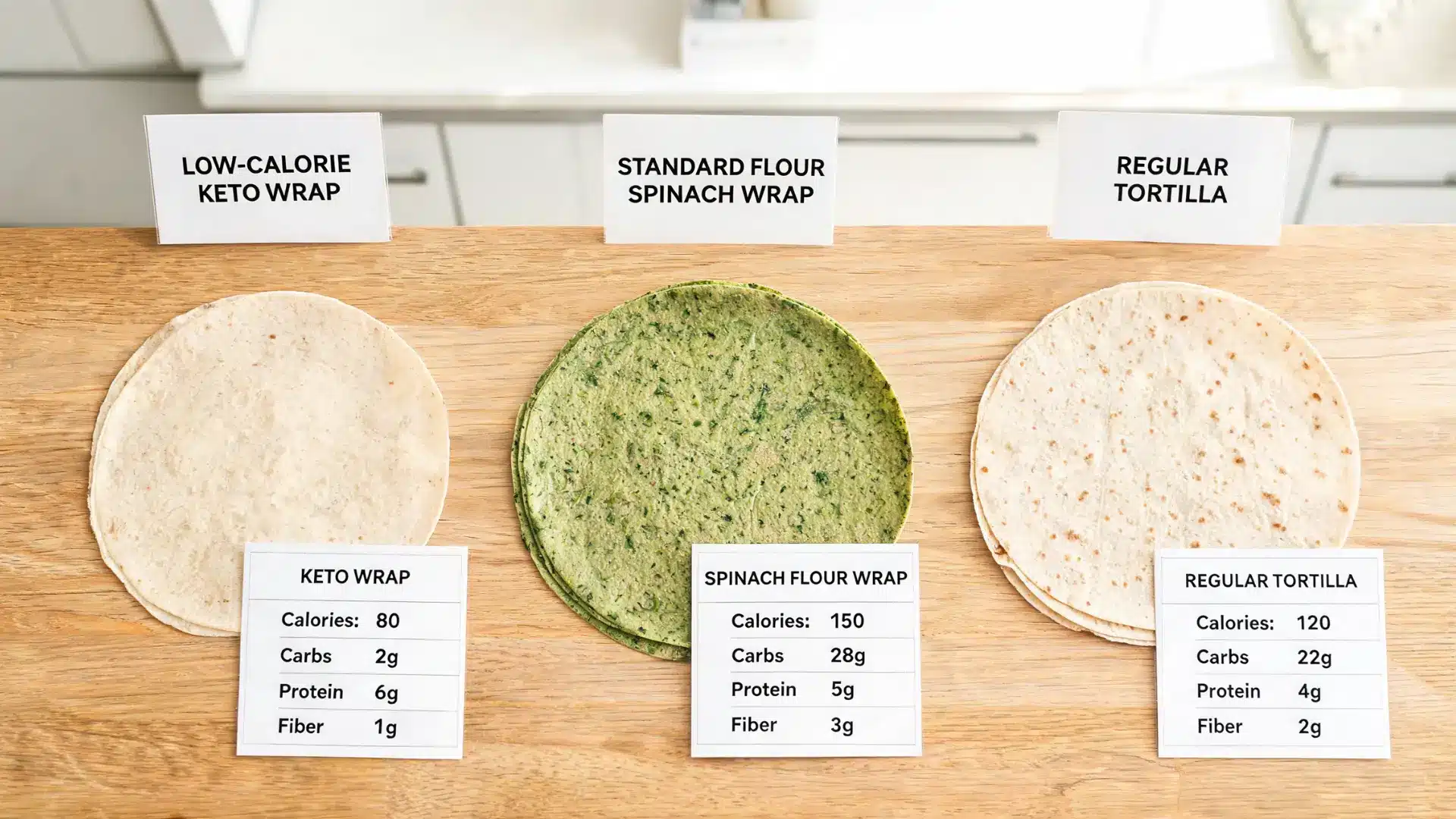
Spinach wrap calories usually range from 60 to 300, depending on the brand, size, and recipe. I know that sounds like a huge gap, and it is because not all spinach wraps are made the same.
Some are light, low-carb options designed for keto diets, while others are closer to regular flour tortillas with only a bit of spinach added for color.
You might expect a “spinach wrap” to be healthier by default, but most of the calories come from flour, oil, and added ingredients, not spinach itself.
That’s why two identical-looking wraps can have very different nutrition labels. In the sections ahead, I’ll break down exact brand comparisons so you can quickly spot the best option for your goals.
Calorie Range Explained
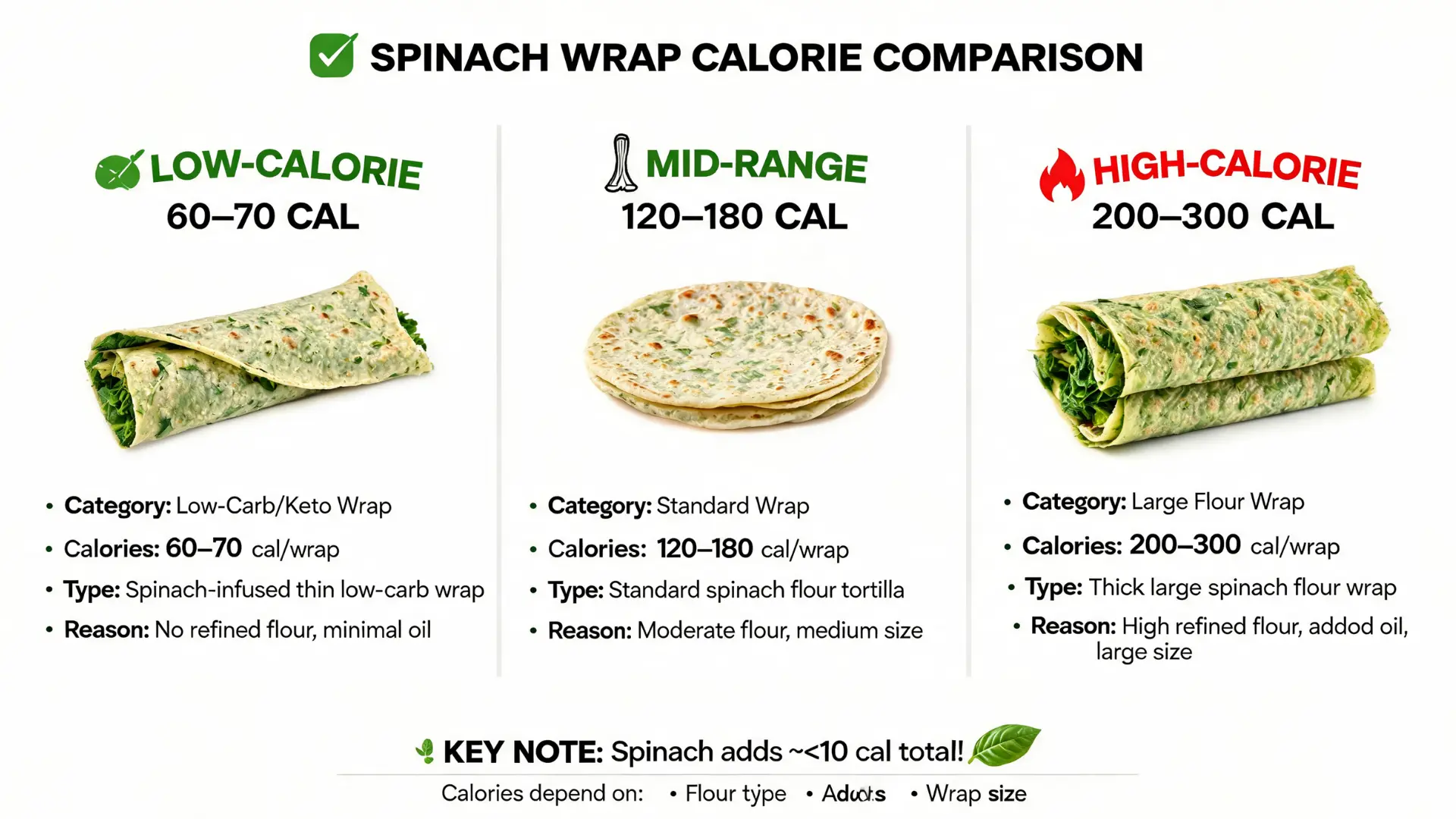
The biggest reason for confusion is the wide calorie range. Spinach wraps are not standardized, so nutrition values depend heavily on manufacturing methods, ingredients, and portion size.
| Calorie Category | Calories per Wrap | Type of Spinach Wrap | Key Reason |
|---|---|---|---|
| Low-calorie wraps | 60–70 calories | Keto/carb balance wraps | Uses modified fibers and reduced carbs |
| Mid-range wraps | 120–180 calories | Standard medium tortillas | Balanced flour and oil content |
| High-calorie wraps | 200–300 calories | Large flour-based wraps | Larger size and higher refined flour content |
Spinach itself contributes almost no calories in most products. The main factors affecting calorie count are the type of flour, added oils, and the overall size of the wrap.
Are Spinach Wraps Really Healthy? Spinach wraps are not automatically healthy just because they look green. Most still use refined flour and oils, so nutrition depends on the brand. Fiber, protein, and ingredient quality matter more than appearance, and spinach content is usually very low, so reading the label is always important.
Calories by Brand Comparison
Different brands of spinach wraps vary a lot in calories, even when the packaging looks similar. I’ve noticed that most of the difference comes down to portion size and recipe, not the spinach content itself.
Here’s a clear breakdown so you can quickly compare popular options.
1. Mission Garden Spinach Wrap
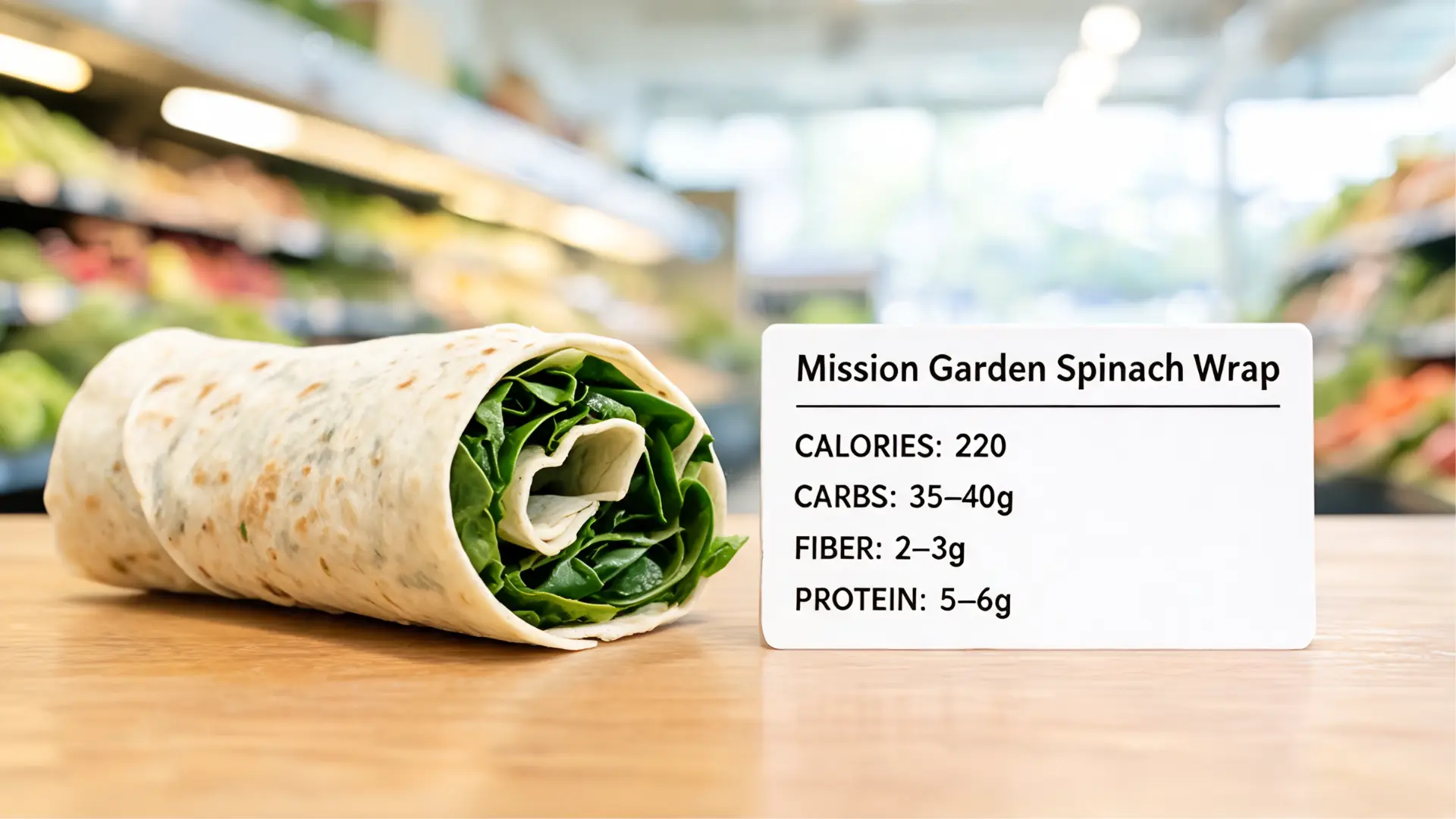
Mission Garden Spinach Wraps are widely available and usually come as large, standard tortillas found in most grocery stores. They are made mainly from refined wheat flour, with spinach added more for color than nutrition.
Because of their larger size and flour-heavy recipes, they tend to fall in the higher calorie range compared to lighter or low-carb options.
These wraps are commonly used for full meal wraps, sandwiches, or deli-style fillings, but portion awareness is important if you are tracking daily intake.
- Calories: 220 per wrap
- Carbs: 35–40g
- Fiber: 2–3g
- Protein: 5–6g
2. Mission Carb Balance Spinach Wrap
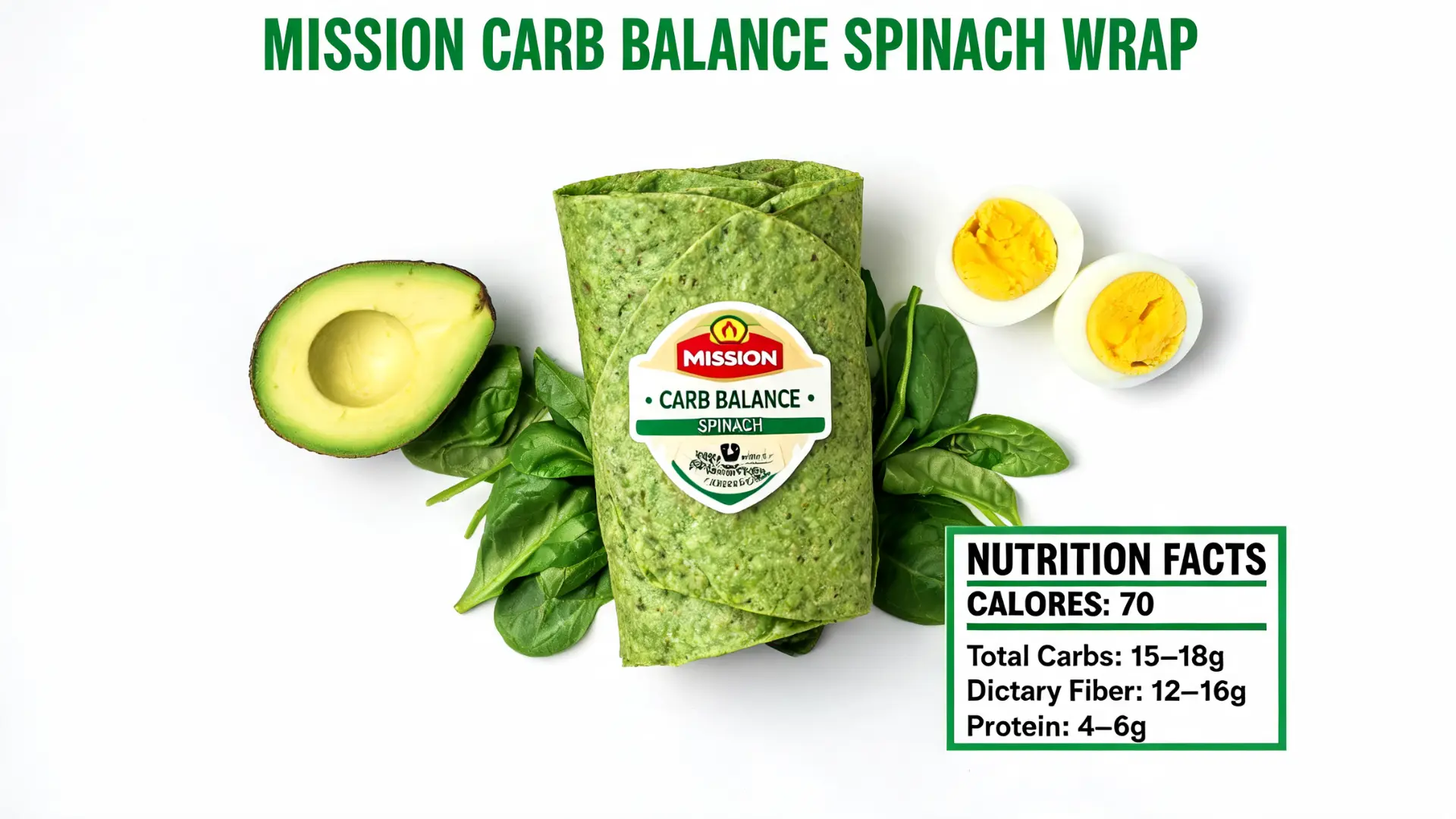
Mission Carb Balance Spinach Wraps are designed for low-carb and keto-focused diets, making them among the lowest-calorie options in this category.
They use modified fibers and reduced net carbohydrates to lower overall calorie content while still maintaining a wrap-like texture. These are popular among people managing weight or following strict carb-controlled diets.
Despite the low calorie count, they still work well for sandwiches and quick meals, though they may include processed ingredients for structure and taste.
- Calories: 70 per wrap
- Carbs: 15–18g (net carbs much lower)
- Fiber: 12–16g
- Protein: 4–6g
3. Toufayan Spinach Wrap
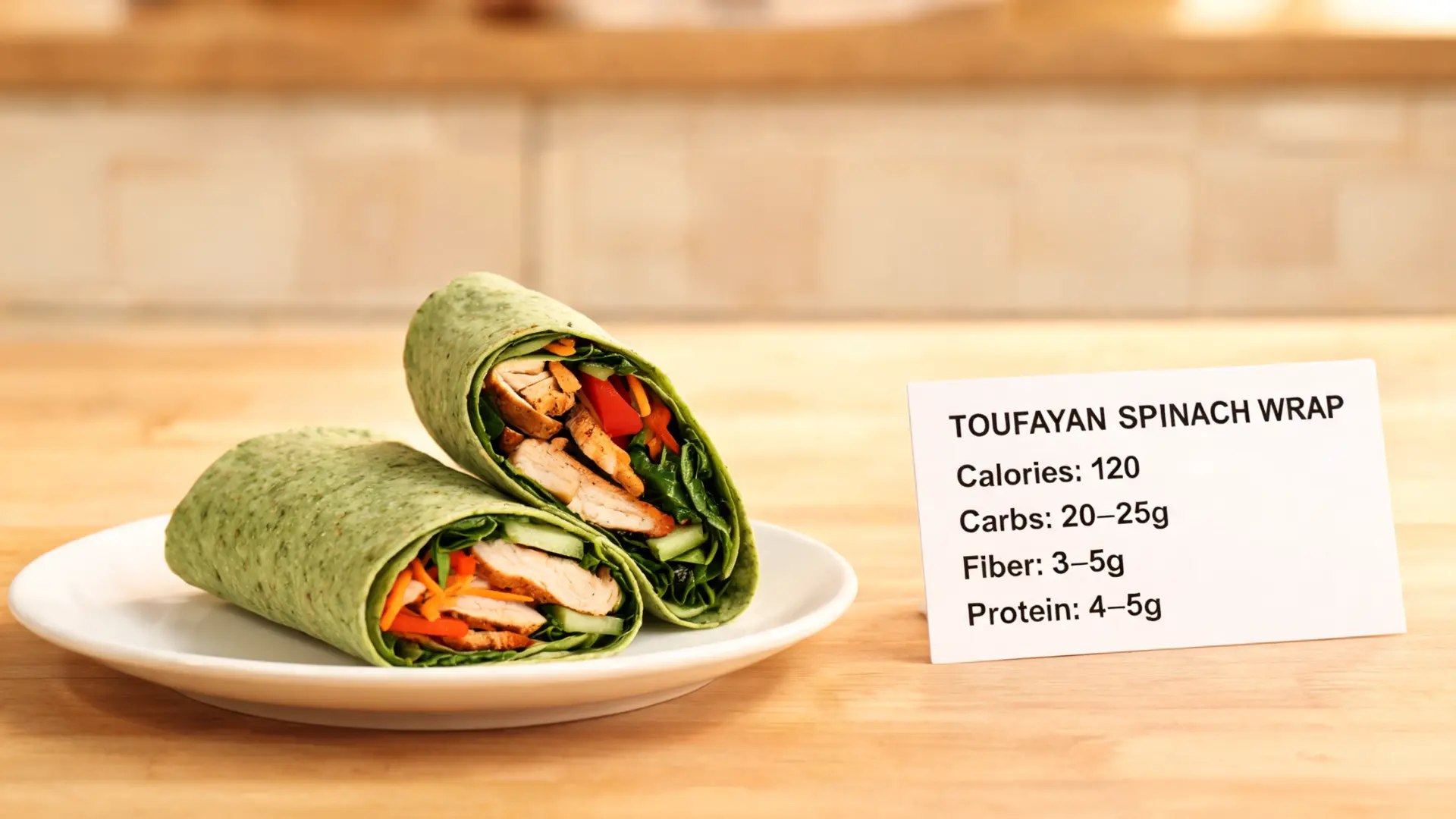
Toufayan Spinach Wraps fall into the mid-calorie range and are often chosen as a balanced everyday option. They are made with enriched flour and a light amount of spinach used mainly for appearance rather than nutrition.
Their moderate size helps keep calories controlled while still offering enough flexibility for different fillings like vegetables, chicken, or cheese.
These wraps are suitable for people who want something between keto-style low-carb wraps and traditional high-calorie tortillas.
- Calories: 120 per wrap
- Carbs: 20–25g
- Fiber: 3–5g
- Protein: 4–5g
4. Aladdin 10-Inch Spinach Wrap
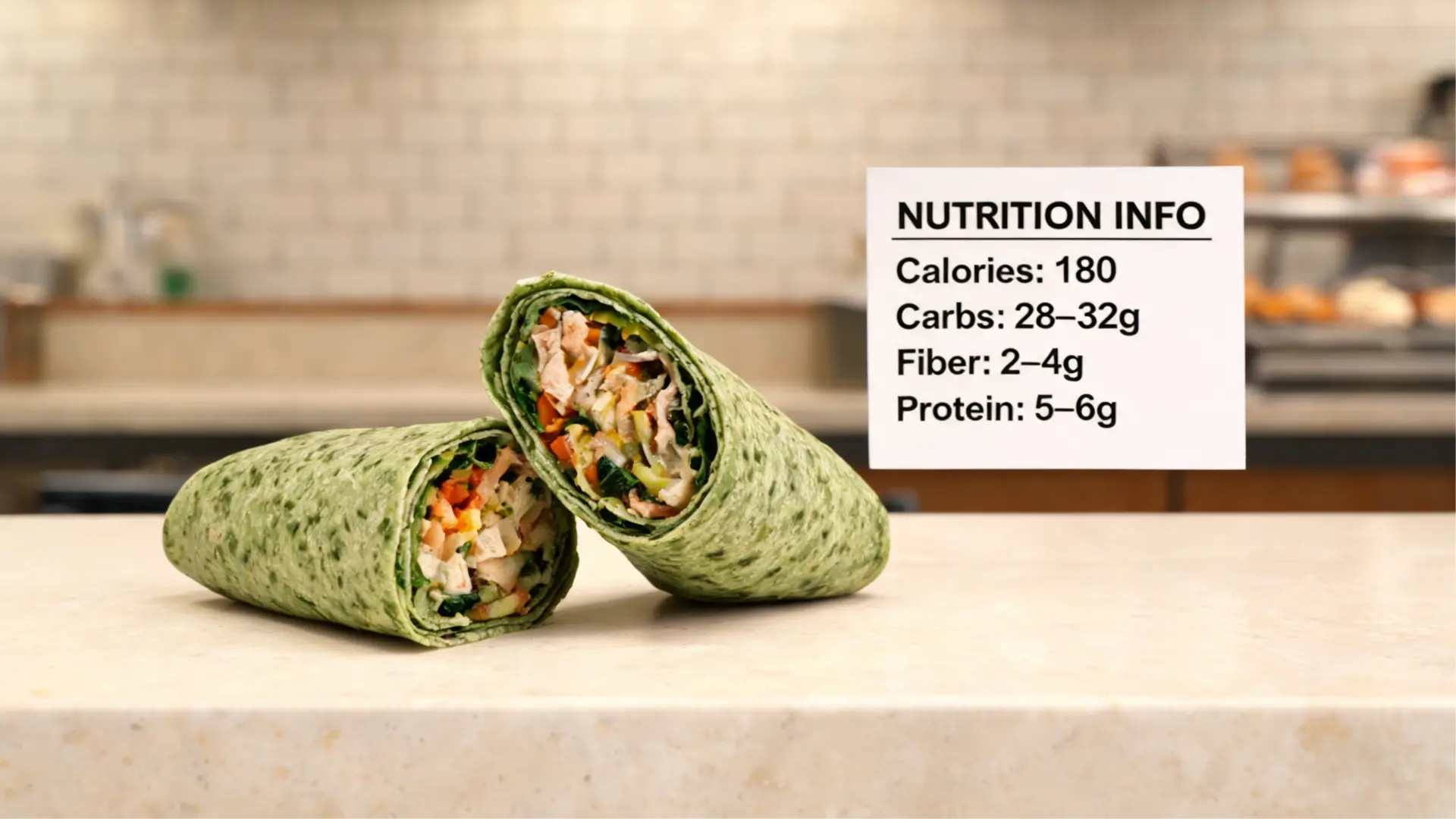
Aladdin 10-Inch Spinach Wraps are closer to traditional tortilla-style wraps and are often used in deli meals and homemade sandwiches. Their calorie content is influenced by their larger size and standard flour-based formulation.
While not extremely high in calories, they are not considered low-calorie either, making them better suited to balanced diets than to strict calorie control.
They provide a thicker texture and are often used for more filling meal portions.
- Calories: 180 per wrap
- Carbs: 28–32g
- Fiber: 2–4g
- Protein: 5–6g
5. Store-Brand Spinach Wrap
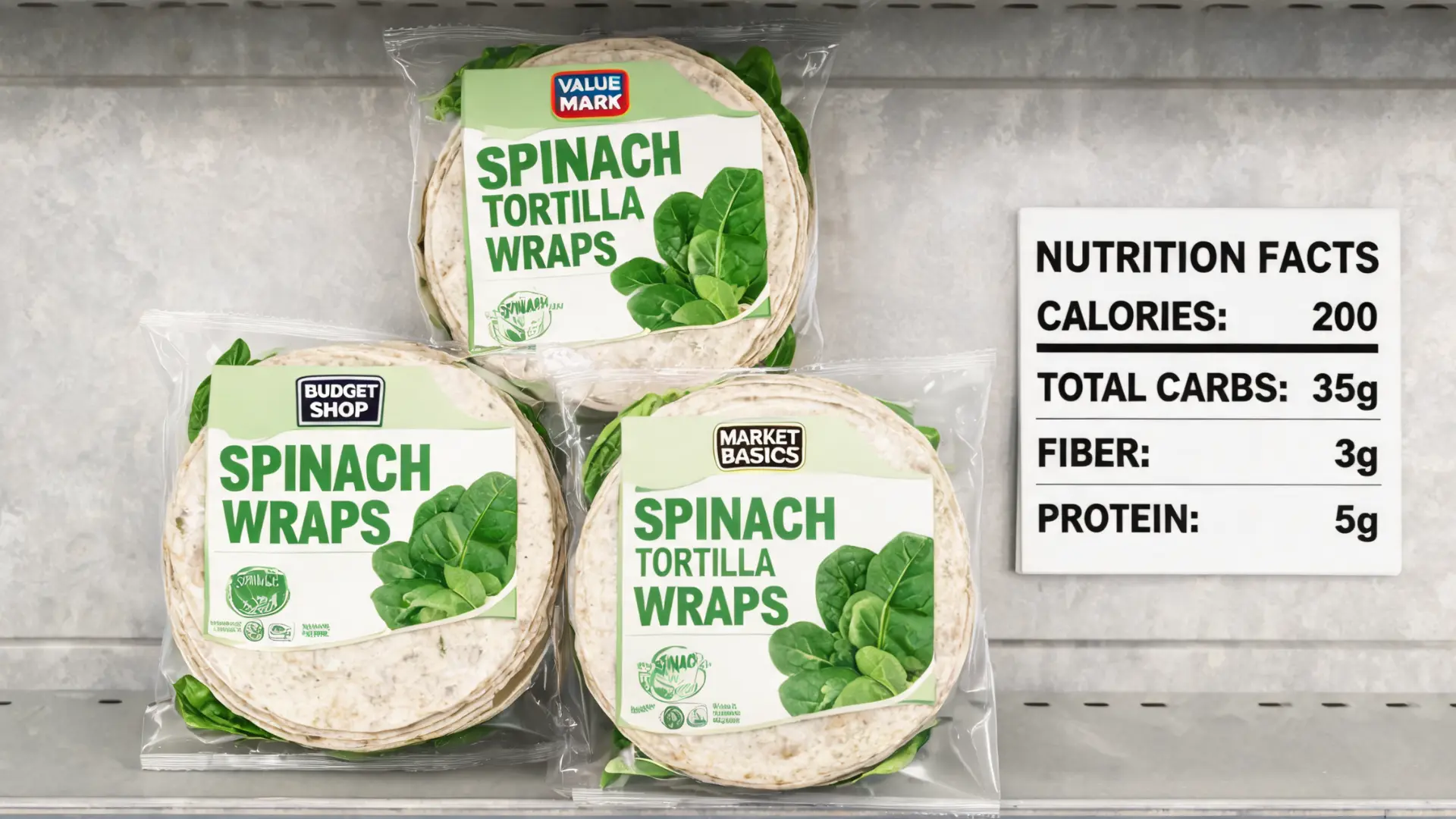
Store-brand spinach wraps vary widely because different manufacturers use different recipes, flour blends, and portion sizes.
Most fall into the mid to high calorie range, with spinach used mainly for color rather than nutritional value.
Since there is no standard formula, calorie counts can differ even between similar-looking products. This makes reading the nutrition label important, especially for those tracking calories or comparing options for diet planning.
- Calories: 180–220 per wrap
- Carbs: 30–38g
- Fiber: 2–4g
- Protein: 4–6g
Best Low-Calorie Spinach Wraps for Weight Loss
Choosing the right spinach wrap for weight loss is not just about picking the lowest calorie number.
I always look at fiber, net carbs, and how filling the wrap is because those factors decide whether you stay in a calorie deficit or end up overeating later.
1. Egg White-Based Spinach Wraps
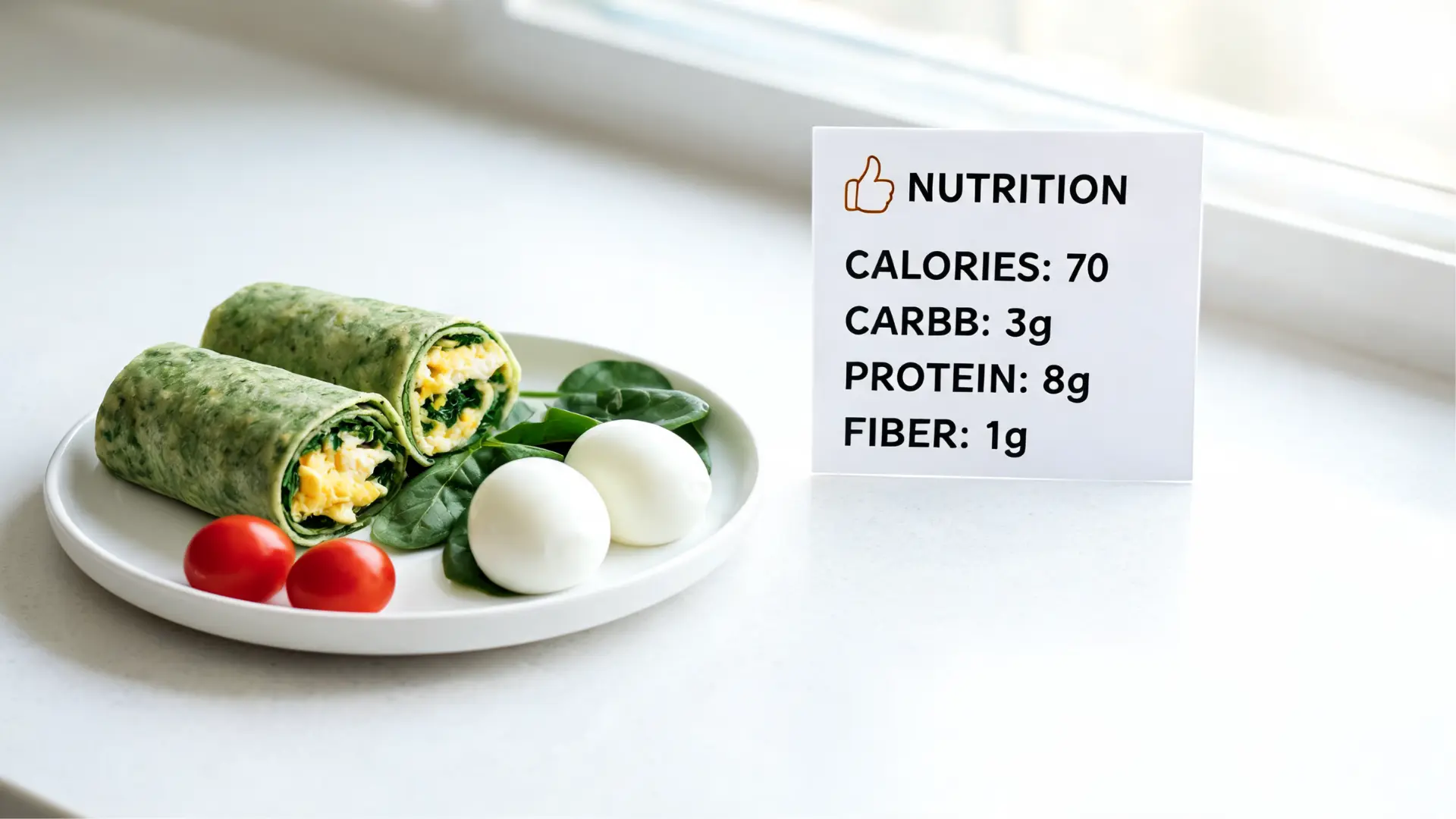
Egg white-based wraps are extremely low in calories and naturally high in protein, making them a strong choice for weight loss and muscle support.
They keep carbs low while still providing enough structure for simple wraps and breakfast meals. Their light texture helps reduce overall calorie intake without feeling overly restrictive.
- Calories: 50–80 per wrap
- Carbs: 1–5g
- Protein: 6–10g
- Fiber: 0–2g
2. Almond Flour Spinach Wraps
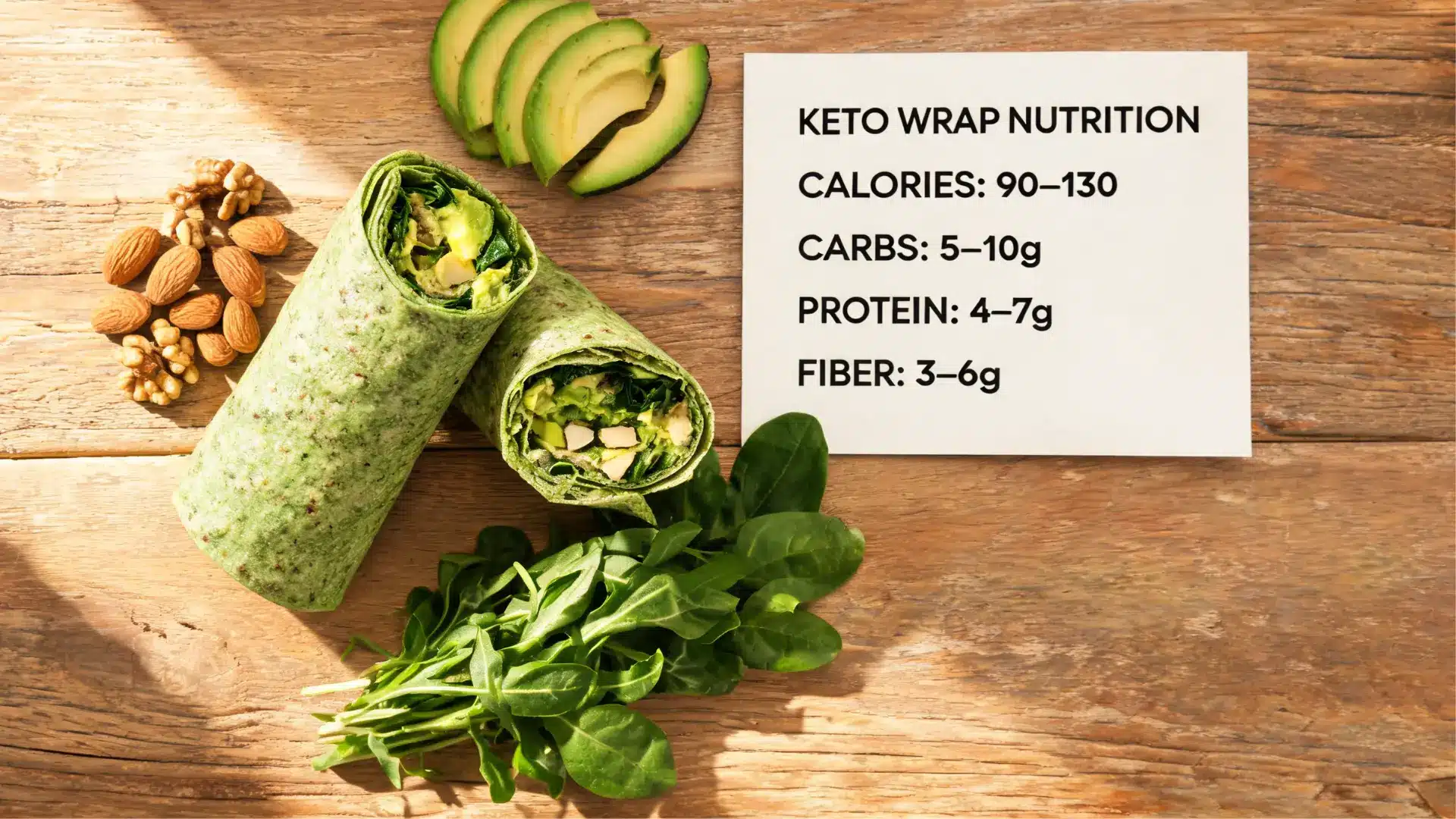
Almond flour wraps offer a balance of moderate calories and higher healthy fats, making them more filling than standard wraps.
They are commonly used in low-carb and gluten-free diets. The combination of fat and fiber helps control hunger for longer periods, which supports weight management.
- Calories: 90–130 per wrap
- Carbs: 5–10g
- Protein: 4–7g
- Fiber: 3–6g
3. Lettuce-Based Spinach Wrap Alternatives
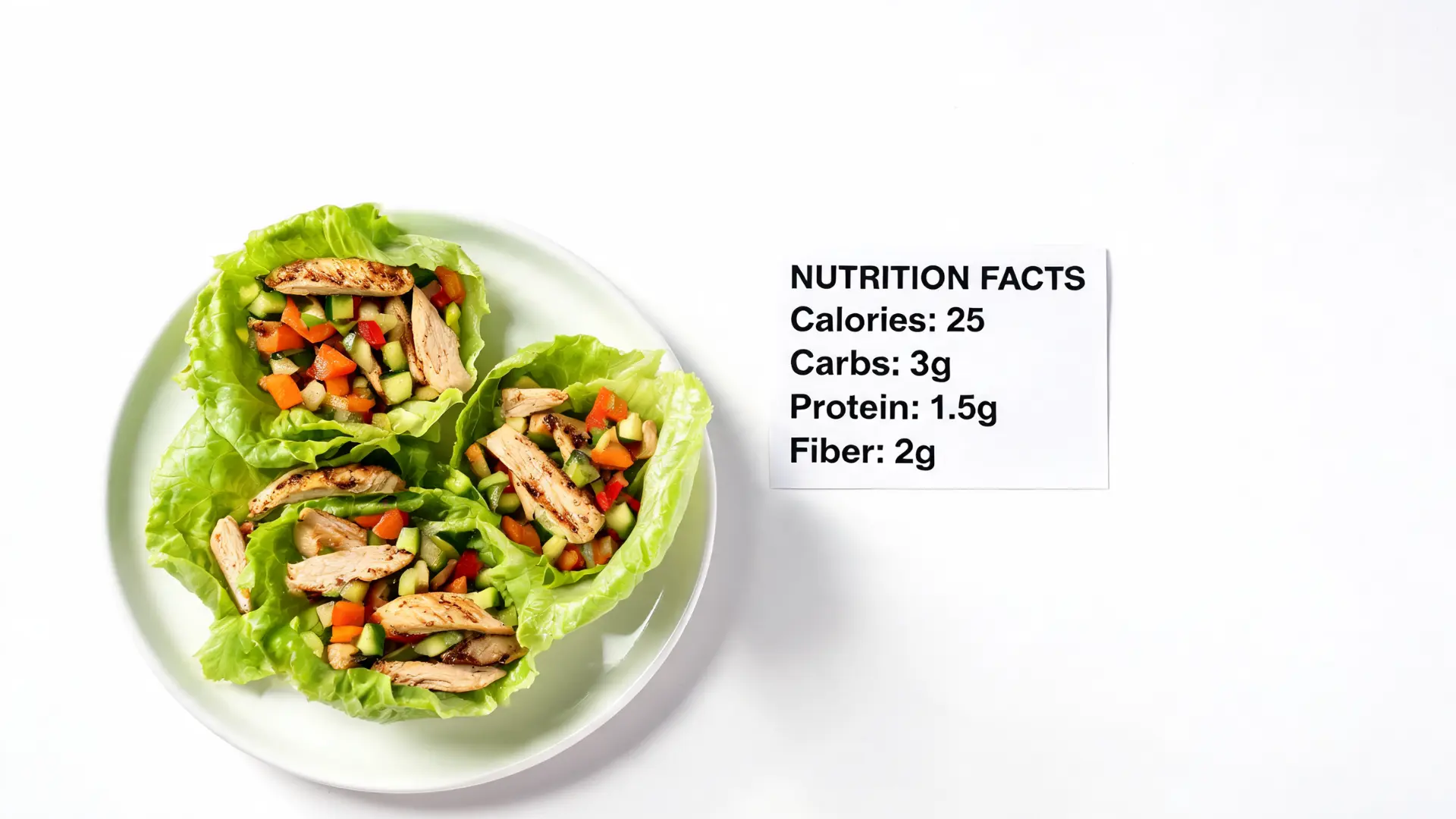
Lettuce wraps are not traditional wraps but are widely used as a calorie-cutting substitute.
They are extremely low in calories and contain high water content, which helps increase fullness without adding an energy load. They are best suited for light meals with lean proteins.
- Calories: 10–30 per serving
- Carbs: 2–4g
- Protein: 1–2g
- Fiber: 1–3g
4. High-Fiber Vegetable Wraps
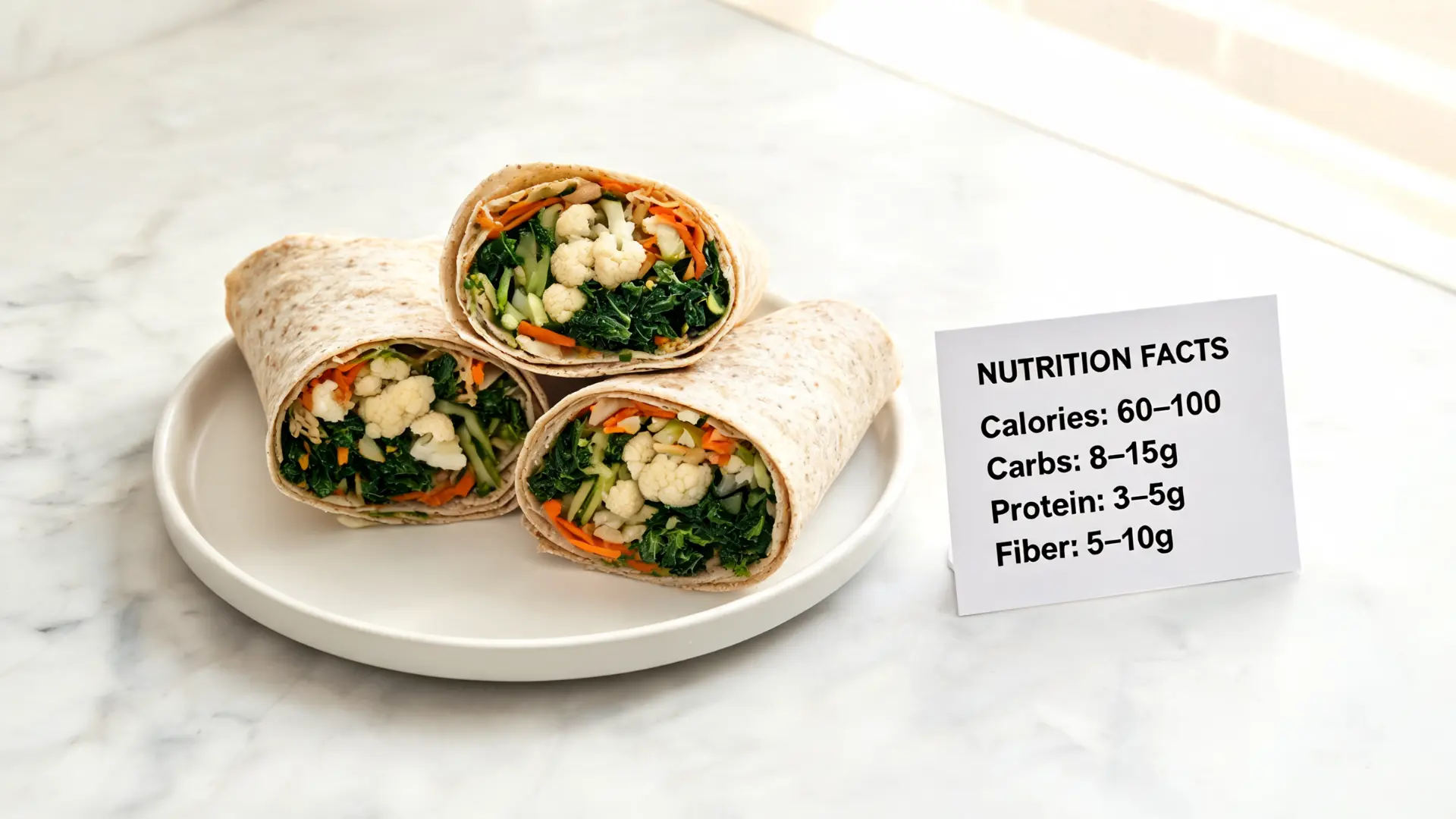
High-fiber vegetable wraps are made with ingredients such as cauliflower, kale, or mixed greens, combined with binding fibers.
They are designed to support digestion and satiety while keeping calories relatively low. These wraps are ideal for people who want more volume in their meals without increasing calorie intake.
- Calories: 60–100 per wrap
- Carbs: 8–15g
- Protein: 3–5g
- Fiber: 5–10g
What Makes Spinach Wrap Calories So Different?
Spinach wrap calories vary widely because there is no standard recipe across brands.
Some wraps are made with refined wheat flour and added oils, which increase calorie density, while others use high-fiber blends or modified starches to reduce net carbs and overall calories.
Size also plays a major role: a 10-inch wrap naturally contains more calories than a smaller tortilla, even if the ingredients are similar. In many products, spinach is used only as a powder for color, so it does not significantly affect nutrition.
I also notice that keto or carb-balance versions replace part of the flour with fiber additives, which lowers calories but changes texture.
These combined factors—ingredients, processing methods, and portion size—are why spinach wrap calories can range from as low as 60 to over 300 in different products.
NOTE: Most of the calories in spinach wrap meals come from the fillings, not the wrap itself. Cheese, sauces, and fried or grilled proteins can quickly increase total intake, turning a simple wrap into a high-calorie meal. Portion control is key to keeping it balanced and healthy.
Spinach Wraps vs Bread vs Tortillas
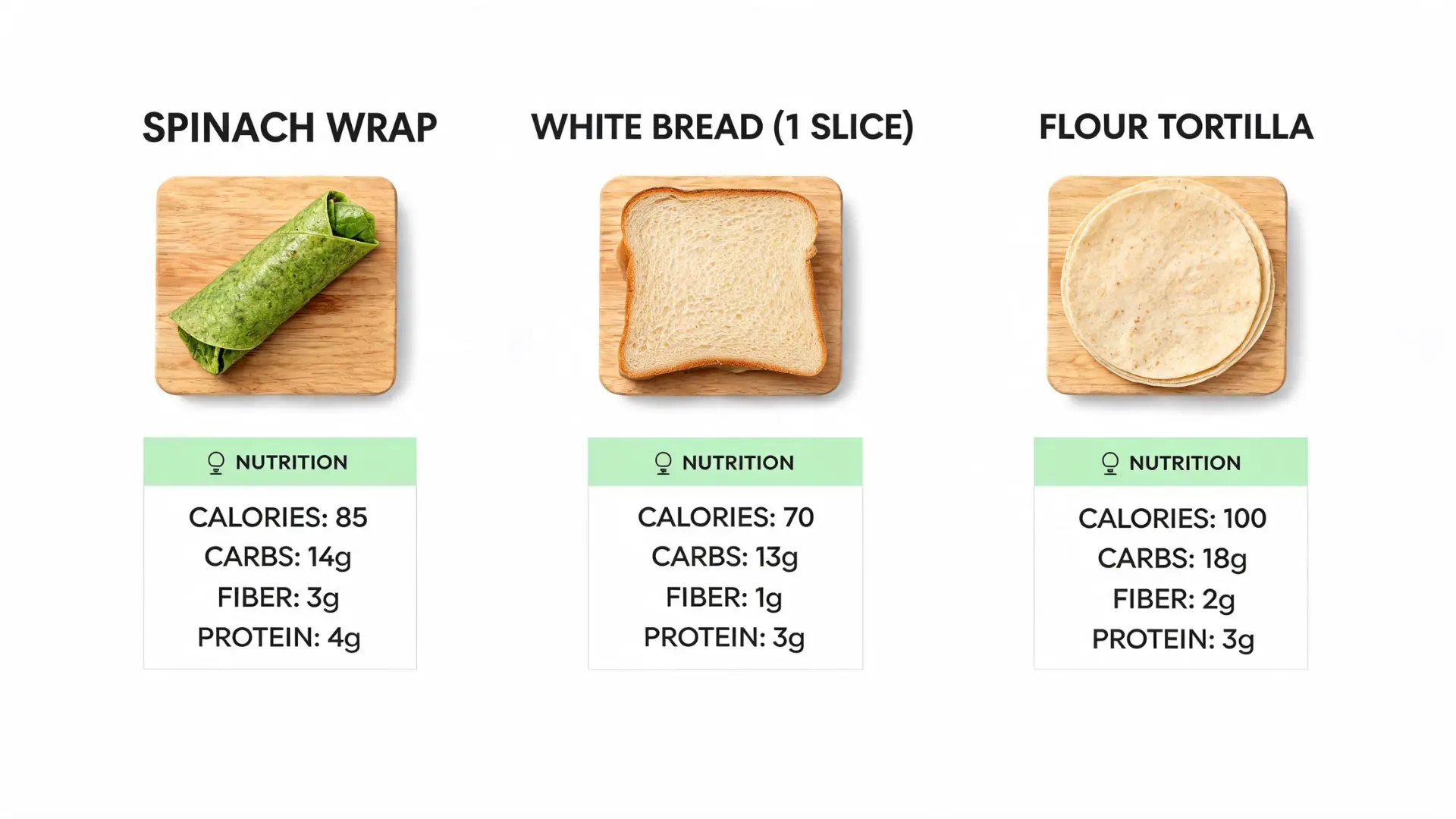
When comparing spinach wraps with bread and tortillas, many people expect wraps to be the lighter option. However, calories vary based on ingredients, size, and preparation, making a side-by-side comparison important for clear understanding before choosing any option.
|
Food Type |
Calories | Carbs | Fiber | Protein |
|---|---|---|---|---|
| Spinach Wrap | 60–220 | 12g–40g | 2g–16g | 3g–6g |
| Bread (1 slice) | 70–100 | 12g–15g | 1g–3g | 2g–4g |
| Tortilla | 150–220 | 20g–35g | 2g–5g | 3g–6g |
This comparison shows that spinach wraps are not always lower in calories than bread or tortillas. The healthier choice depends on brand, portion size, and ingredients, so checking nutrition labels is the most reliable way to make better decisions.
Frequently Asked Questions
Are spinach wraps good for daily eating?
Spinach wraps can be eaten daily if portions are controlled and ingredients are balanced. However, choosing high-fiber or whole-grain versions is better for regular use, since some wraps are highly processed and have a nutritional profile similar to refined bread.
Do spinach wraps contain real spinach?
Most spinach wraps contain very little actual spinach. The green color usually comes from spinach powder or puree used for appearance, while the main ingredients remain refined flour, water, and oils rather than leafy greens.
Can spinach wraps be eaten on a keto diet?
Yes, some spinach wraps are suitable for keto diets, especially carb balance or low-net-carb versions. These are designed to significantly reduce carbs, but regular spinach wraps are usually too high in carbs for strict keto plans.
Do spinach wraps cause weight gain?
Spinach wraps do not directly cause weight gain. Weight gain depends on total calorie intake. However, large wraps with high-calorie fillings can quickly exceed daily calorie needs if portions are not managed properly.
Are gluten-free spinach wraps healthier?
Gluten-free spinach wraps are not automatically healthier. They may help people with gluten intolerance, but they can still contain refined starches and oils, so calorie and nutrient content should still be checked carefully.
Why do spinach wraps taste different from each other?
Taste differences come from variations in flour type, oil content, seasoning, and fiber blends. Some brands also add preservatives or alternative flours, which change texture and flavor even if they look similar.
Can spinach wraps replace bread completely?
Spinach wraps can replace bread in meals, but they are not nutritionally identical. Some wraps may have more calories or carbs than bread, so they should be chosen based on dietary needs rather than assumed as a direct substitute.
Conclusion
Spinach wraps may look like a simple healthy choice, but I’ve shown you how much the numbers can actually vary. From different brands to changing portion sizes, the reality is that calories, carbs, and nutrition are never fixed.
I also explained how fillings can easily turn a light meal into something much heavier than you expect. When you understand these details, you can make smarter food choices rather than relying on packaging claims.
I want you to use this knowledge to carefully compare labels and pick the one what best fits your goals. The idea behind spinach wrap calories is not guesswork but awareness.
If this helped you, share your thoughts or explore more nutrition guides for clearer everyday eating choices.