
Making your backyard more eco-friendly means choosing materials, plants, and systems that reduce waste, conserve water, and lower your energy use without sacrificing comfort or style. It does not have to be an all-or-nothing overhaul. Even a handful of targeted upgrades can cut your utility bills, reduce your carbon footprint, and make your outdoor space more enjoyable. This guide walks through the most practical sustainable upgrades modern homeowners are making right now, from the lawn all the way to storage.
Why Sustainable Backyard Upgrades Are Worth It
The short answer: they pay you back. Energy savings, lower water bills, and increased property value are real, measurable returns. Beyond the financial side, a sustainable yard is typically lower maintenance in the long run.
Upgrading to energy-efficient systems can reduce utility costs by around 30% according to the DOE, and solar panels add an average of 4.1% to a home’s appraised value. Nearly half of American consumers say they actively change purchasing habits to reduce environmental impact, and that shift is clearly showing up in backyards across the country.
Whether you own a property in the suburbs of Phoenix or are looking at prefab garages in Poughkeepsie to add functional outdoor storage, the principles of sustainable design apply everywhere and scale to almost any budget.
Start With the Lawn: Native Plants and Smarter Landscaping
The single most impactful change most homeowners can make is rethinking the traditional lawn. A monoculture of grass requires constant watering, fertilizing, and mowing, all of which take a toll on local ecosystems and your wallet.
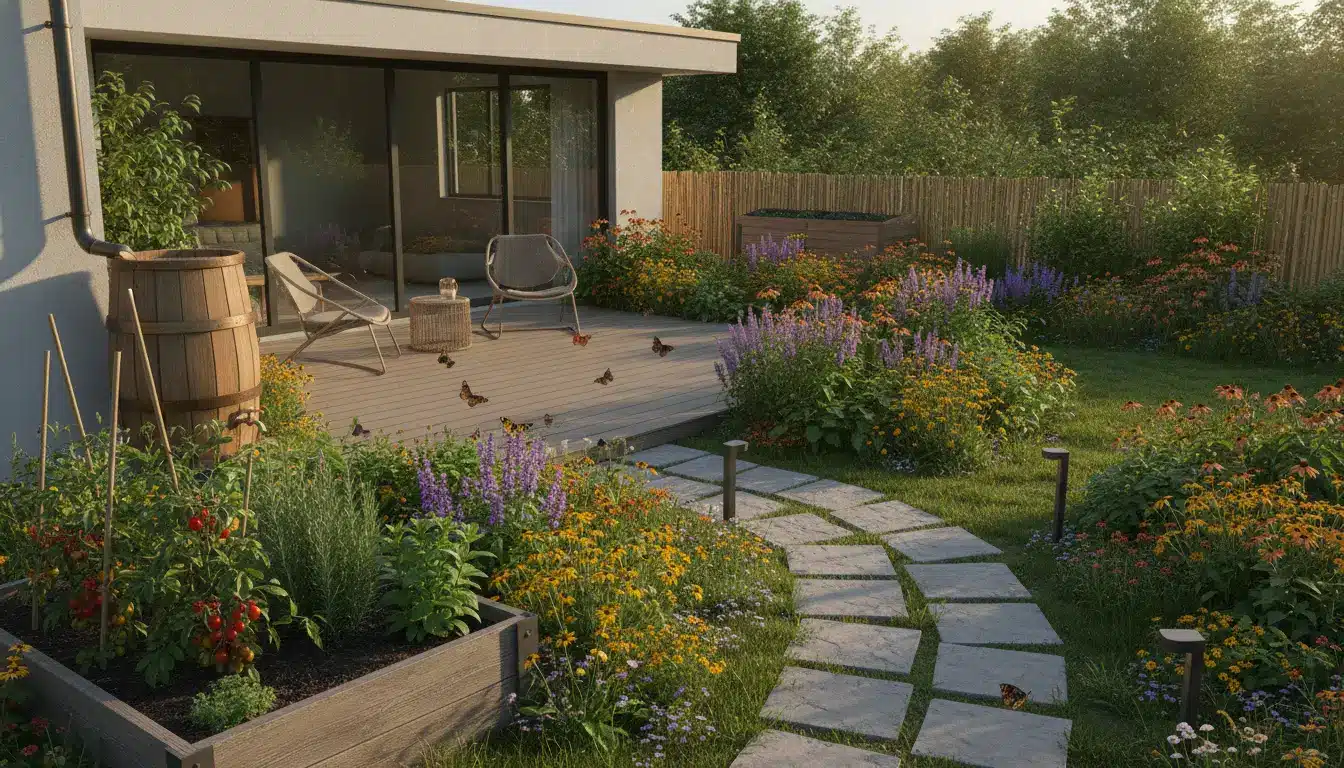
Native plants are the better alternative. They are already adapted to your local climate, so they need far less water, no soil amendments, and minimal pesticide use. They also support local pollinators, birds, and insects that are critical to a healthy yard ecosystem.
A few practical starting points:
- Replace parts of your lawn with native flowering shrubs or perennial ground cover;
- Mix in wildflowers that attract bees and butterflies without requiring much upkeep;
- Add organic mulch around beds to retain soil moisture and reduce weed growth;
- Consider xeriscaping in drier regions, which uses drought-resistant plants and hardscaping elements like gravel and permeable pavers.
The result is a yard that looks lush and intentional rather than generic, and one that mostly takes care of itself once established.
Water Conservation: Rain Barrels, Smart Irrigation, and Composting
Outdoor water use accounts for a significant portion of household consumption, and most of it is wasted through overwatering and runoff. A few targeted changes fix this quickly.
Rain Barrels
Rain barrels are one of the easiest and cheapest ways to start conserving water at home. You collect rainwater from your roof via a downspout diverter, store it in a barrel, and use it to water plants, wash outdoor furniture, or top up a decorative pond. A single rain barrel holds 50 to 100 gallons, and most homeowners can set one up in an afternoon.
Smart Irrigation Systems
A drip irrigation system delivers water directly to plant roots, which drastically reduces evaporation compared to sprinkler systems. When paired with a smart controller that adjusts watering schedules based on weather data, you can cut outdoor water use by 30 to 50 percent without any noticeable difference in how your plants look.
Composting
A backyard compost bin turns kitchen scraps and yard waste into nutrient-rich soil amendment, reducing what goes to the landfill while improving your garden at the same time. Here is how to get started:
- Choose a spot near the house with decent drainage and partial shade.
- Add a mix of green materials (vegetable scraps, grass clippings) and brown materials (dry leaves, cardboard).
- Turn the pile every few weeks to keep it aerated and speed up decomposition.
- In a few months, you will have finished compost ready to use as mulch or mixed into garden beds.
Sustainable Materials: What to Use for Decks, Fencing, and Furniture
If you are building or replacing anything structural in your backyard, the materials you choose matter a lot for long-term environmental impact.
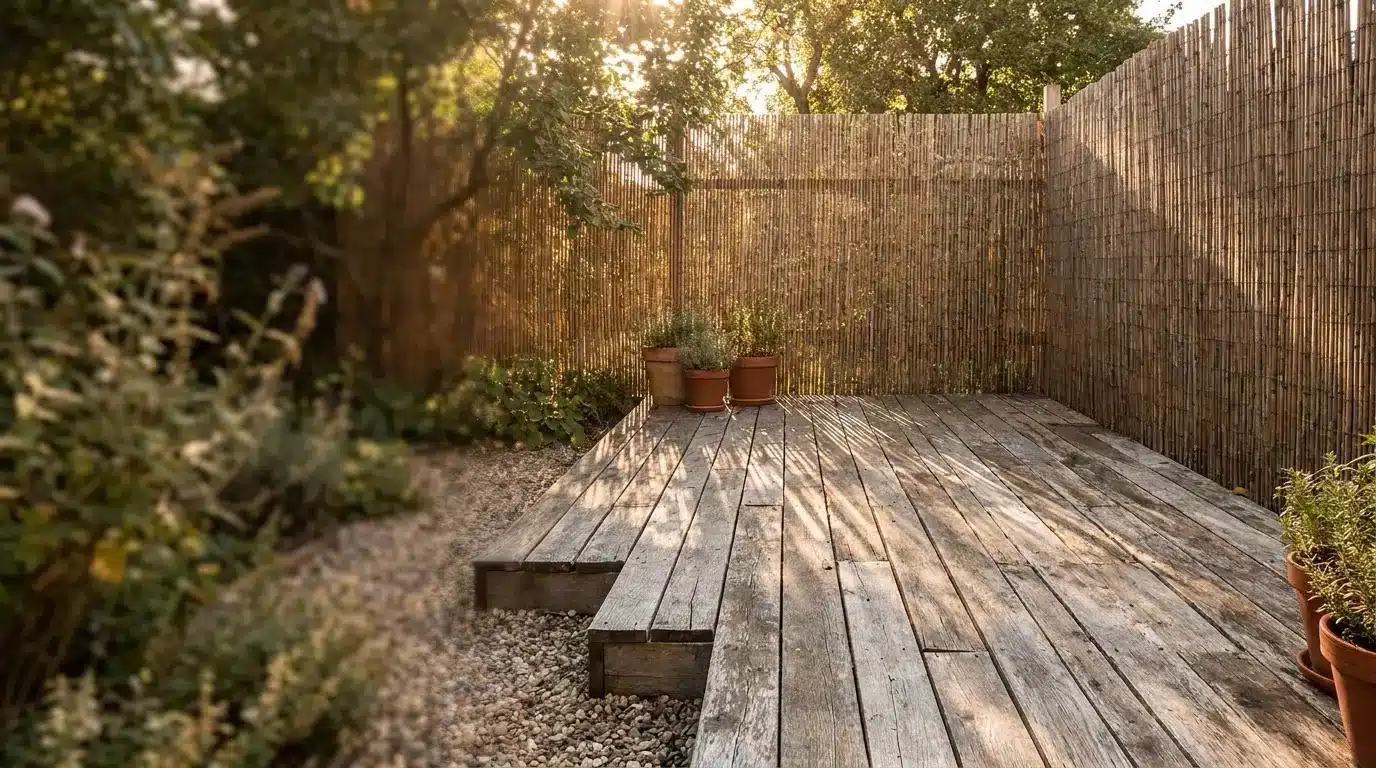
For decking, composite boards made from recycled plastic and wood fibers are a popular choice because they resist rot and insects, require no staining or sealing, and divert materials from landfills. Reclaimed wood is another excellent option, bringing character and history to a space while reducing demand for new timber. Cedar and redwood are solid natural choices too, as both are naturally rot-resistant and biodegradable.
For fencing, bamboo is one of the most renewable materials available. It grows back within a few years after harvest without replanting and offers strength comparable to hardwood. Cork and rattan work well for smaller elements like furniture and decorative features.
When it comes to outdoor furniture specifically, look for pieces made from:
- FSC-certified teak or hardwood, which is harvested from responsibly managed forests;
- Reclaimed wood or recycled plastic lumber that would otherwise end up in landfills;
- Organic fabrics like canvas or cotton for cushions and soft furnishings.
Avoid furniture made from virgin plastic or synthetic materials that degrade quickly and create more waste over a few seasons.
Solar Lighting and Energy Upgrades for the Backyard
Switching to solar-powered outdoor lighting is one of the fastest wins in sustainable backyard design. Solar lights require no wiring, cost nothing to run after installation, and have improved significantly in quality over the past few years.
Motion-sensor solar lights are especially effective: they provide security coverage at night and use minimal power since they only activate when needed. For pathway or accent lighting, stake-style solar lights are simple to install and easy to move around as your landscaping evolves.
For a larger investment, mounting solar panels on a pergola provides shade while generating electricity for outdoor amenities like water features, string lights, or an outdoor kitchen. Even on cloudy days, panels produce around 10 to 20 percent of their peak output, so the return stays consistent year-round.
Sustainable Storage: Thinking About Your Backyard Structure
A backyard structure, whether a shed, garage, or workshop, is one of the most practical additions a homeowner can make. When built or sourced sustainably, it extends the functionality of your property without adding unnecessary environmental cost.
Prefabricated structures are often the more sustainable choice compared to site-built options. They generate less on-site waste, take less time to construct, and can be designed with eco-friendly materials from the start. Turnkey storage building company Storage Sheds And Garages offers a range of prefab sheds and garages built to order, with options that integrate cleanly into residential yards without requiring extensive site prep or long construction timelines. A well-placed storage structure also frees up garage and basement space, which indirectly reduces the temptation to buy duplicate tools and equipment.
When choosing a structure, look for:
- Wood from certified sustainable sources or engineered wood products with low formaldehyde content;
- Metal roofing, which lasts decades longer than asphalt shingles and is fully recyclable at end of life;
- Designs that allow for roof-mounted solar panels or rainwater collection gutters;
- Light-colored or reflective finishes that reduce heat absorption in warmer climates.
Permeable Paving and Smarter Hardscaping
Traditional asphalt and concrete send rainwater rushing off your property, contributing to runoff, erosion, and local flooding. Permeable pavers let rainwater filter through into the ground below, recharging groundwater and reducing puddles. They come in a wide range of styles, from gravel-filled grids to interlocking stone, and make a real difference in how your yard manages stormwater even if you only replace a walkway or patio section rather than a full driveway.
Grow Your Own: Vegetable Gardens and Pollinator Patches
Growing even a small amount of your own food cuts grocery trips, reduces packaging waste, and gives you produce that has not traveled hundreds of miles. Raised beds are the easiest entry point: they drain well, warm up fast in spring, and let you fill them with quality compost-rich soil from day one. Good starter crops include tomatoes, peppers, lettuce, radishes, and most herbs. Many herbs like basil and parsley grow fine in containers on a porch.
Dedicating even a small corner to a pollinator patch, meaning a mix of native flowering plants that bloom across different seasons, supports the local bees and butterflies your garden depends on. It requires almost no maintenance once established and adds real visual appeal.
Putting It All Together
An eco-friendly backyard is not a single project with a finish line. It is a collection of better choices made over time: what you plant, what you build, how you water, and where your materials come from. Some of the most effective changes are also the smallest: switching to electric lawn tools, using organic fertilizers, adding a birdbath, or choosing biodegradable paint for outdoor furniture. Each step is small in isolation, but they add up quickly across a full growing season.
Start with native plants and a rain barrel if you want a low-cost entry point. Add solar lighting and a compost bin the following season. When the time comes for a shed or a new deck, choose materials and suppliers that match the same values you have already built into your yard. The momentum builds naturally, and so does the satisfaction of knowing your outdoor space works with the environment rather than against it.