

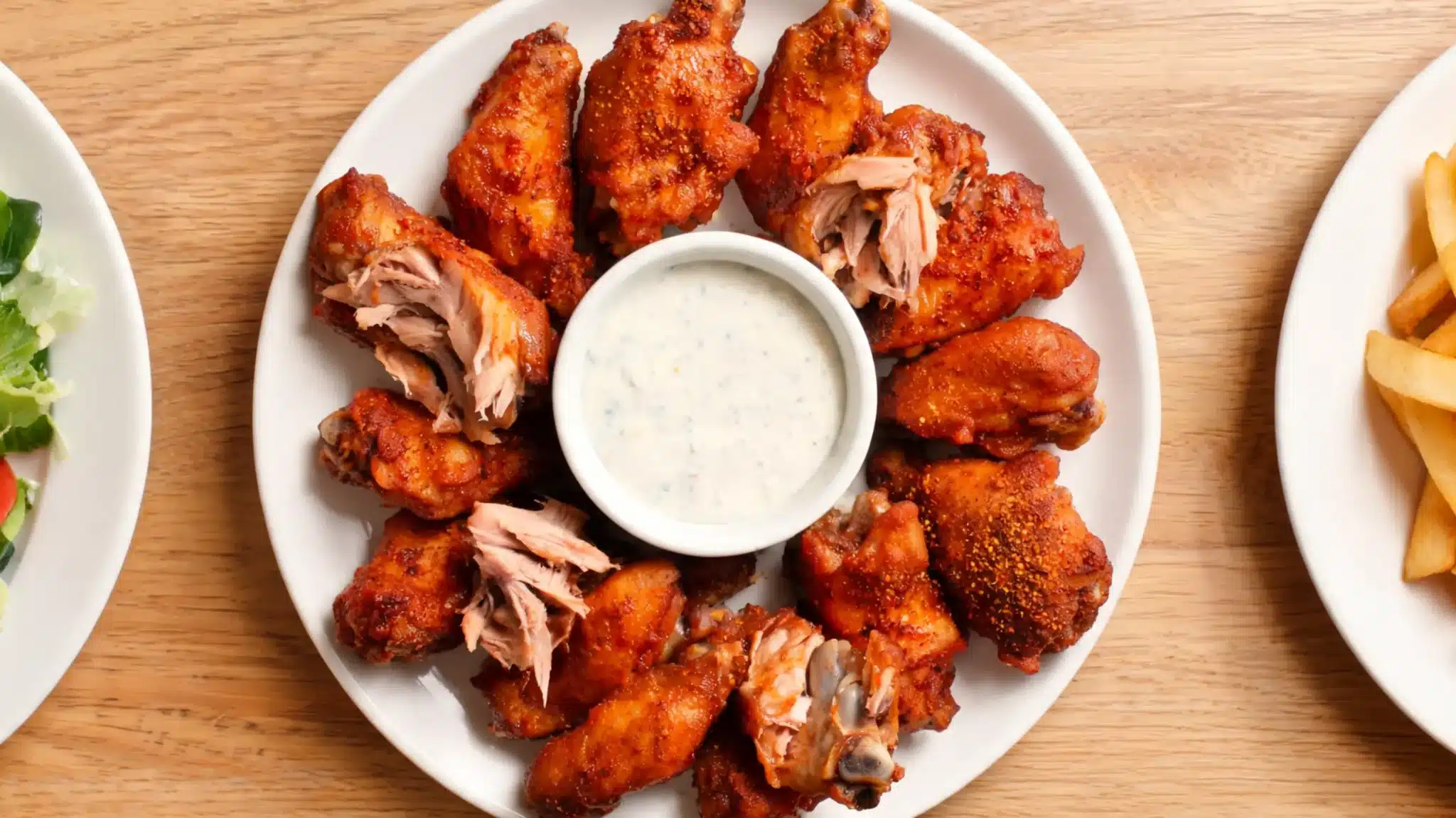
Ever looked at a plate of Buffalo Wings and wondered how quickly the calories add up before your first bite is finished? A single buffalo wing typically ranges from 70 to 100 calories, but that number varies with sauce, cooking method, and portion size.
What feels like a light snack to you can quickly turn into a full meal once you move from 6 wings to 10 or more, especially with dips like ranch or blue cheese.
This blog explains calories in buffalo wings with a focus on Buffalo Wild Wings nutrition, covering per-wing estimates, serving sizes, and differences between boneless and bone-in options.
It also breaks down how sauces and frying methods affect calorie intake, along with real-world estimates from nutrition communities.
Calories in Buffalo Wings: Full Breakdown
Buffalo wings are often treated as a simple snack, but their calorie content can vary more than expected depending on how they are cooked and served.
A single wing can feel light on the plate, yet the numbers add up quickly once portions increase and sauces come into play.
When it comes to Buffalo Wild Wings nutrition, portion size plays the biggest role in how quickly calories add up.
Understanding the calorie breakdown by portion helps set realistic expectations before ordering.
-
1 wing: 70–100 calories. A single wing may seem small, but the calories come mainly from the skin and frying oil, making it more calorie-dense than it appears.
-
6 wings (small order): 420–600 calories. This is a common appetizer size, but it can already be a light, full meal depending on the sauce choice and preparation.
-
10 wings (medium order): 700–1,000 calories. At this level, calories increase quickly due to cumulative fat absorption and the addition of seasoning or sauces.
-
15 wings (large order): 1,050–1,500+ calories. Larger servings often cross an entire meal’s calorie range, especially when paired with dips or rich sauces.
A common mistake is assuming wings are light snacks, but once portion sizes increase, the calorie load escalates much faster than expected. Keeping an eye on serving size helps avoid underestimating total intake.
Buffalo Wild Wings Nutrition Breakdown
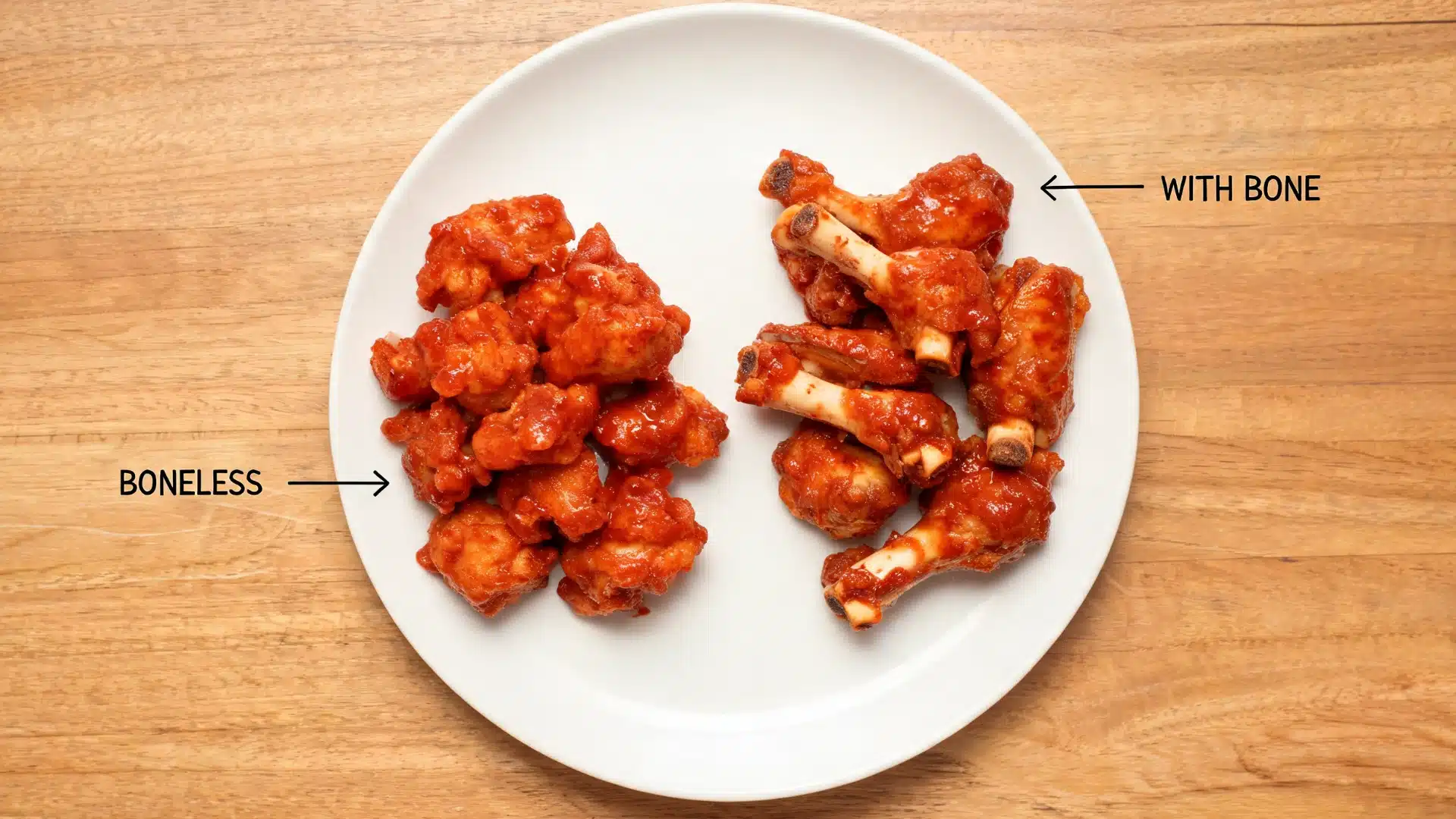
Buffalo Wild Wings menu nutrition changes based on whether you choose bone-in wings or boneless wings. The difference mainly comes from the structure and preparation method, which affect the calories and macronutrient content per serving.
Buffalo Wild Wings offers bone-in wings and boneless wings, and both differ clearly in calorie distribution and macronutrient values.
| Category | Bone-In Wings | Boneless Wings |
|---|---|---|
| Protein | 6–9 grams per wing | 18–24 grams per 6-piece serving |
| Fat | 4–7 grams per wing | 22–28 grams per 6-piece serving |
| Carbohydrates | 0–2 grams per wing | 22–30 grams per 6-piece serving |
| Sodium | 180–260 mg per wing | 900–1,300 mg per 6-piece serving |
Bone-in wings and boneless wings differ mainly in processing methods and ingredient composition, which directly affect calorie density and macronutrient balance.
Health Benefits of Buffalo Wings
Buffalo wings are often seen as a high-calorie indulgence, but they still offer several nutritional benefits when consumed in moderation and prepared with mindful choices.
While they are not a primary “health food,” their protein content and nutrient profile can still support a balanced diet when portion control is maintained.
-
High Protein Content: Buffalo wings provide a solid source of protein, which is essential for muscle repair, tissue recovery, and maintaining overall body strength. This makes them useful in both active lifestyles and fitness-focused diets when eaten in controlled portions.
-
Rich in Essential Nutrients: Chicken wings contain important vitamins such as B6 and B12, which play a role in energy production, brain function, and the support of a healthy nervous system. These nutrients help the body convert food into usable energy efficiently.
-
Supports Satiety: The combination of protein and fat in wings helps increase fullness and reduce hunger for longer periods. This can help control unnecessary snacking between meals when portions are kept moderate.
-
Energy Source: The natural fat content in wings provides a steady energy source, especially beneficial for people with higher calorie needs or physically active routines. It helps sustain energy levels over longer periods.
-
Flexible in Diet Plans: Depending on the preparation, such as grilling or dry-rub seasoning, wings can be adapted to different diet goals. They can fit into both calorie-cutting and bulking phases when portion size and sauces are managed properly.
While buffalo wings should be enjoyed in moderation, understanding their nutritional benefits allows you to include them more intelligently in your diet without completely avoiding them.
Community Estimates and Real-World Discussion
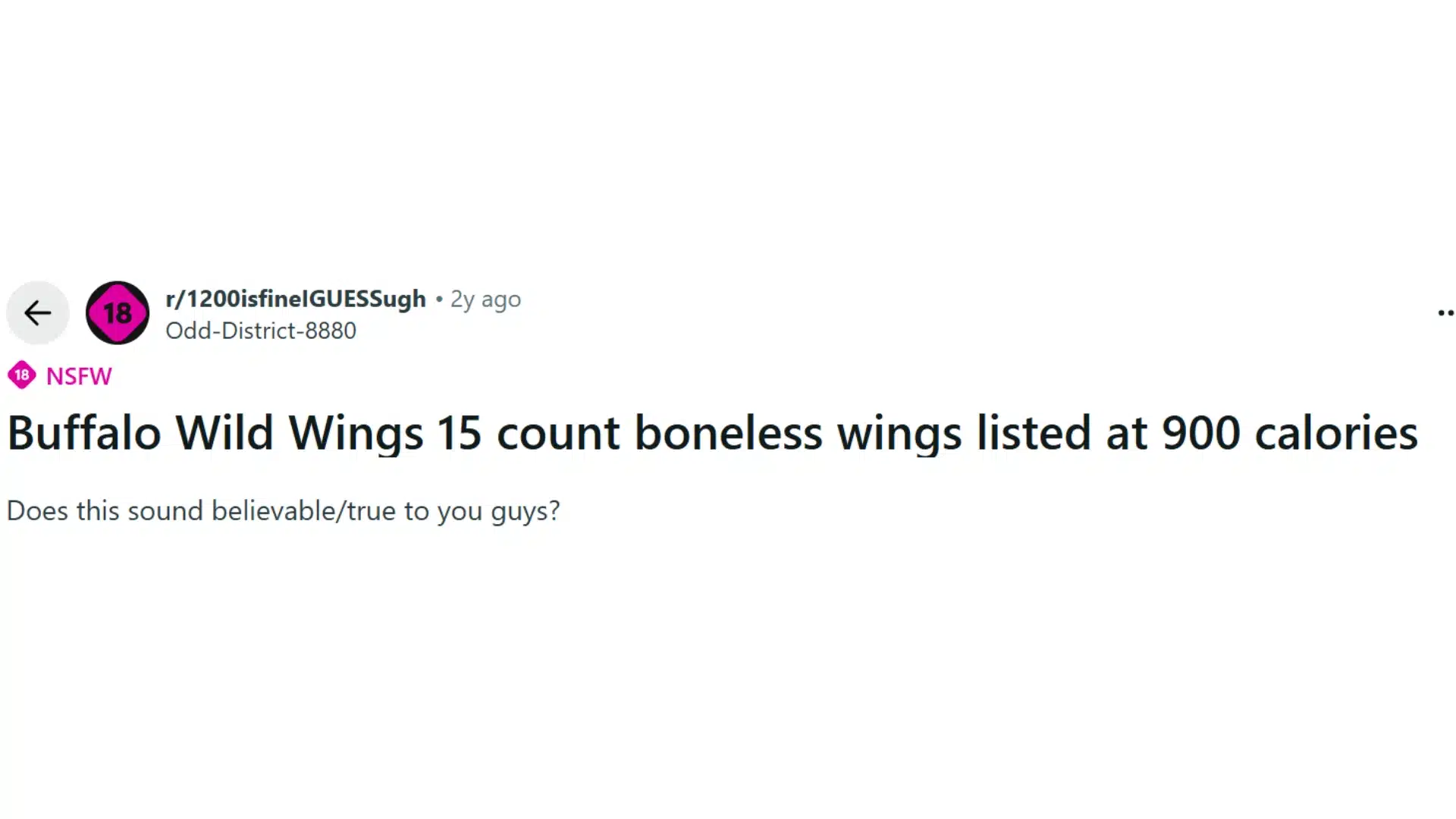
On Reddit, a user in r/1200isfineIGUESSugh questioned the calorie listing for a 15-count order of boneless wings from Buffalo Wild Wings, as it seemed higher than expected relative to common tracking estimates.
The discussion touched on how Buffalo Wild Wings’ nutrition varies with breading, sauce, and portion size, which can make calorie totals appear inconsistent when viewed in standard tracking apps.
A few users also pointed out that boneless wings tend to carry more calories due to breading and added carbs, while sauces further increase the total.
From my perspective, the main issue is not the accuracy of Buffalo Wild Wings nutrition data but how quickly perception breaks down when you try to estimate wings visually or rely on generic “per wing” numbers.
Once I factor in breading, sauce coverage, and real portion sizes, the calorie range actually becomes more predictable than it first appears, especially for tracking purposes.
Cooking Method Impact on Calories
The cooking method is one of the biggest reasons Buffalo Wild Wings’ nutrition changes so much between orders.
Even when the same number of wings is served, the preparation style directly influences oil absorption, fat content, and overall calorie density.
This is why two similar-looking orders can feel completely different in terms of heaviness and total intake.
Fried Wings (Standard)
Fried wings are the most common preparation and also the highest in calories. Deep frying causes the wings to absorb oil, increasing fat content and quickly raising total calories.
The crispy texture comes from this process, but it also makes larger servings significantly more calorie-dense than they appear visually.
Grilled or Naked Wings
Grilled or naked wings are a lower-calorie option because they avoid deep frying and reduce added oil. This results in lower fat content while still retaining the chicken’s protein.
They feel lighter overall and are better suited to calorie-controlled eating or fitness-focused meal planning.
When you understand these differences, it becomes easier to predict how your order will behave nutritionally, instead of relying only on portion size or appearance.
Sauce Calories at Buffalo Wild Wings
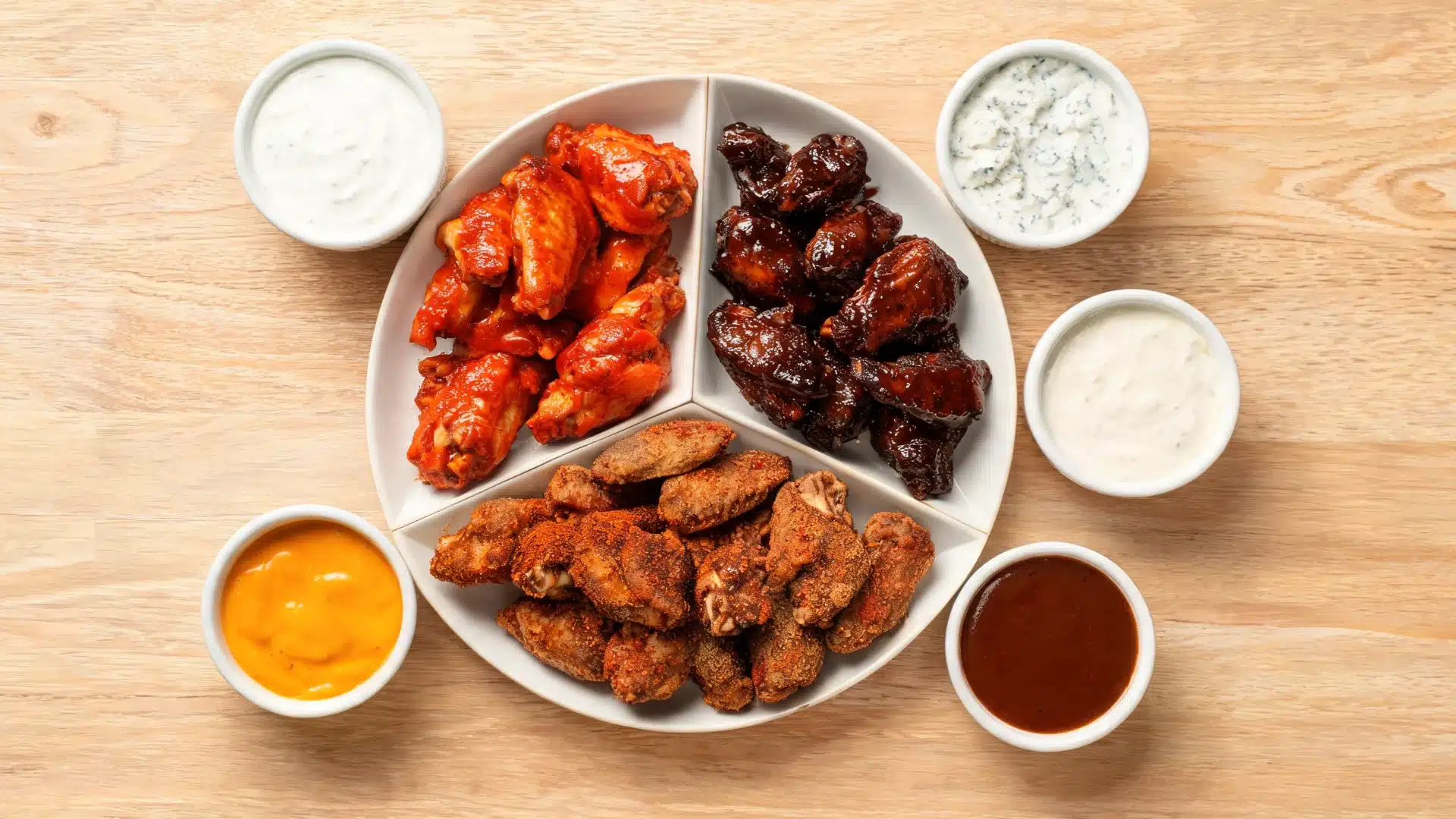
Sauces are a key hidden factor in Buffalo Wild Wings nutrition, often matching or exceeding wing calories. Even with the same portion size, different sauces and dips can significantly change total calorie intake and macronutrient balance, making tracking essential.
Buffalo Wild Wings serves a wide range of sauces and dips, each with a different nutritional impact:
Sauces Used On Wings
- Buffalo Sauce: Adds ~50–80 calories per 6 wings, mainly from butter mixed with hot sauce. It sits in the lower-calorie range compared to creamier or sweeter options, but it still becomes significant when applied to larger servings.
- Sweet and Heavy Sauces: Honey BBQ, Asian-style sauces, and similar options add sugar-based calories. These sauces tend to increase total calorie intake more sharply because they combine sugar with thicker coatings that adhere more heavily to wings.
- Dry Rubs: A lower-calorie alternative with minimal fat or sugar. Since dry rubs rely on spices instead of butter or sugary sauces, they help keep overall calorie intake lower while still adding strong flavor.
Understanding sauce choices is key because even a moderate wing order can shift from manageable to calorie-dense depending on what is used.
Dipping Sauces and Add-Ons
Dips often push a moderate meal into a high-calorie one without being obvious. Even a standard serving of wings can become much heavier once dips are added, especially with larger portions or multiple sauces.
- Ranch Dressing: Ranch dressing adds 100–150 calories per serving due to its creamy, high-fat base. It is one of the most commonly used dips, but also one of the fastest ways to increase total calorie intake without realizing it.
- Blue Cheese Dip: Blue cheese dip also ranges around 100–150 calories per serving. Its richness comes from cheese and cream, making it dense in fat and easy to underestimate when paired with wings.
- Extra Dip Servings: Extra servings can add 200–300+ calories quickly. When combined with multiple wings or shared platters, dips alone can match the calorie content of several additional wings without increasing portion size.
Dips and add-ons often become the deciding factor in whether a Buffalo Wild Wings meal stays within a moderate-calorie range or becomes high in calories.
Buffalo Wild Wings in a Diet
Buffalo Wild Wings can fit into different dietary goals, but only when portion sizes and add-ons are managed properly.
The same meal can behave very differently depending on whether the goal is fat loss or muscle gain, which makes understanding context important rather than focusing only on single calorie numbers.
This section breaks down how wings fit into cutting, bulking, and daily calorie planning so you can better judge real intake.
-
Cutting Phase (Fat Loss): Wings can still fit into a calorie deficit if portion-controlled. Keeping it around 4–6 wings with light sauce helps manage calories, while avoiding ranch or blue cheese dips reduces unnecessary fat intake. Grilled or dry-rub options work better here for lower overall calories.
-
Bulking Phase: A higher-calorie intake allows greater flexibility, so larger servings, such as 10–15 wings, are commonly included. In this phase, wings serve well as a high-protein, high-fat meal that supports calorie-surplus goals.
-
Daily Calorie Context: A 6-wing serving with dip can account for nearly 30–50% of a 1500–2000-calorie diet. This makes portion awareness important, especially if other meals in the day are also calorie-dense.
Understanding how wings fit into different diet phases helps put Buffalo Wild Wings nutrition into real-world perspective rather than just isolated calorie numbers.
Frequently Asked Questions
Are Buffalo Wild Wings calories the same across all locations?
No, calories can vary slightly between locations due to cooking practices, portion differences, and sauce application. Most chains follow standard nutrition ranges, but actual servings may vary based on preparation and serving-size consistency.
Which matters more for calories: wings or sauces?
Sauces often have a bigger impact than the wings themselves. While wings provide the base calories, sauces and dips can significantly increase total intake by adding fats or sugars on top of the cooking method.
Why do boneless wings have more calories than expected?
Boneless wings are typically breaded and fried, which adds carbohydrates and fat. Even though they look smaller, the breading increases calorie density, especially when combined with sauces and multiple servings.
Can buffalo wings be tracked accurately in calorie apps?
They can be tracked, but accuracy depends on assumptions. Apps often use averages, whereas actual intake varies with wing size, sauce quantity, and dips, which can lead to noticeable differences in total calories.
Final Note
So yeah, if you’ve made it this far, the main thing to remember is that buffalo wings aren’t as “simple snack” as they look on the plate. Once you actually break down calories in buffalo wings, it’s pretty clear how quickly things stack up with portion size, sauces, and dips.
And when you look at Buffalo Wild Wings nutrition, it’s really just about how those small choices change the whole meal more than people expect. Honestly, just keep it in mind next time you’re ordering nothing to stress over, just something to be aware of so you don’t get surprised later.
If this helped you figure things out a bit, you can always come back and check other breakdowns or even drop what you usually order so we can compare it next time.