
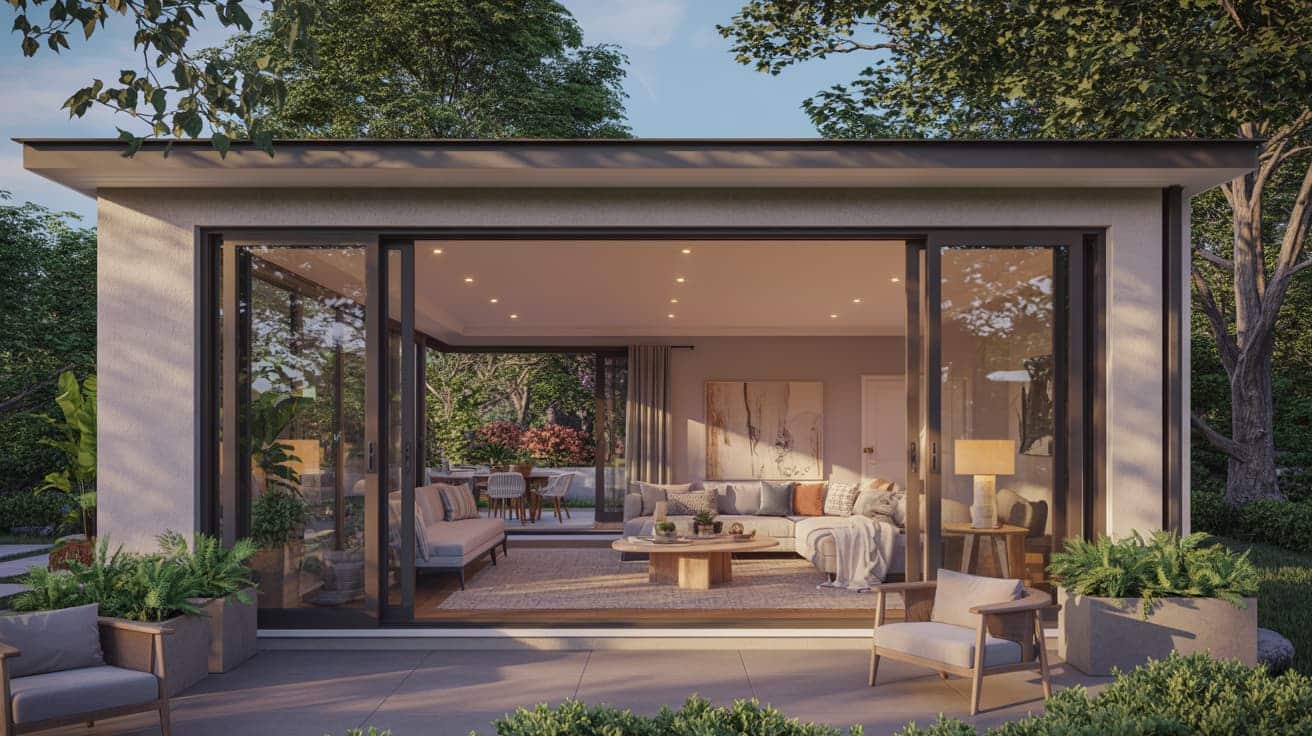
Staring at the backyard andthinking there has to be more I can do with this space is exactly where every good addition project starts. A back house room addition is one of the most practical ways to gain square footage without moving or tearing the house apart
As daily needs grow and space gets tight, the back of the house is almost always the best place to expand. Whether it’s adding a cozy family room or a quiet home office, expanding the back of the house offers endless possibilities.
I’ve seen homeowners add everything from quiet home offices to full guest suites, and the right approach makes all the difference. A back house addition can change your home and better suit your growing needs.
Back House Room Addition: What It Means and Why It Works
A back house addition is a new room or an extension of living space built onto the rear of an existing home. Unlike a full renovation that reworks what’s already there, a rear addition grows the home’s footprint outward into the backyard, leaving the street-facing side completely untouched.
It’s a practical fit for growing families, remote workers who need a dedicated workspace, and multigenerational households where shared living and personal privacy need to coexist.
The reasons homeowners choose it over moving are straightforward: it uses land already owned, costs less than buying a bigger home, adds measurable resale value, and creates a space that reflects how the household actually lives, not a generic floor plan.
Back House Room Addition Ideas for Every Type of Home
The back of the house can do a lot more than hold a patio. Here are the room addition ideas worth considering for every type of household and budget.
1. Family Room Extension
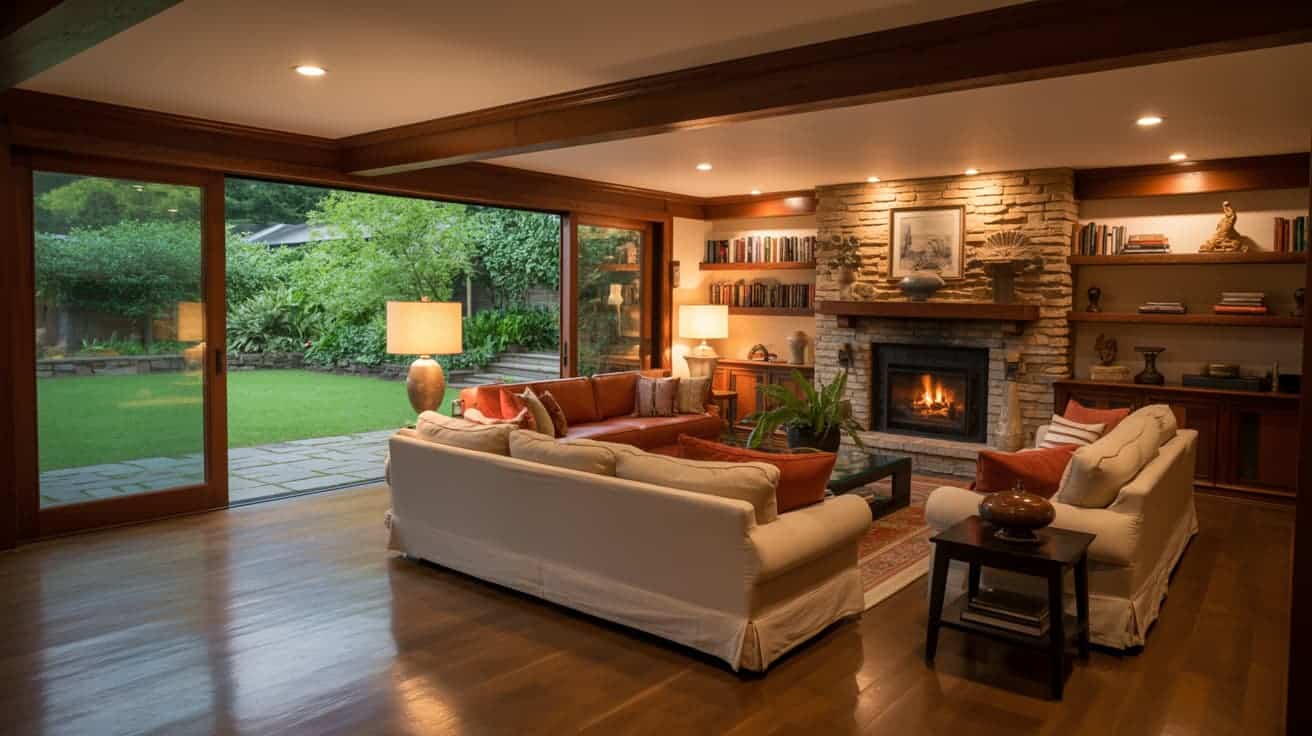
A rear family room gives everyone room to gather without squeezing onto one couch. Large rear-facing windows and sliding backyard doors make it feel open and connected, not like a box tacked onto the house.
It’s worth thinking about built-in shelving along one wall to keep the space functional without feeling cluttered. Add a ceiling fan, durable flooring, and direct backyard access, and this becomes the room the whole family gravitates toward every evening.
2. Expanded Kitchen with Breakfast Nook
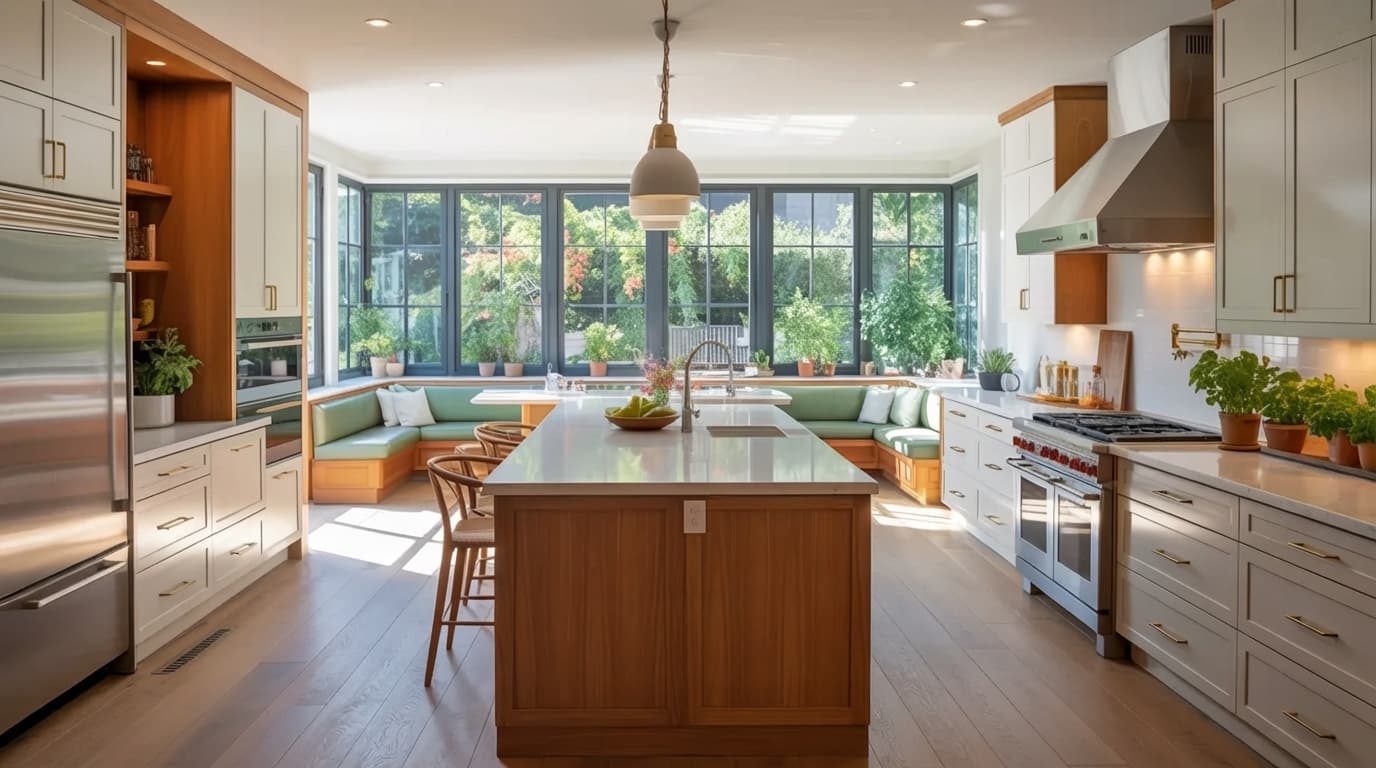
If the kitchen always feels cramped, expanding it into the backyard changes how the whole house functions. Add a corner breakfast nook with garden views, and the most-used room in the home becomes the one no one wants to leave.
The extra square footage also opens up room for a proper island, better appliance placement, and storage that actually works. For anyone who spends real time cooking, this addition pays off in daily comfort long before it shows up in resale value.
3. Kitchen with Walk-In Pantry
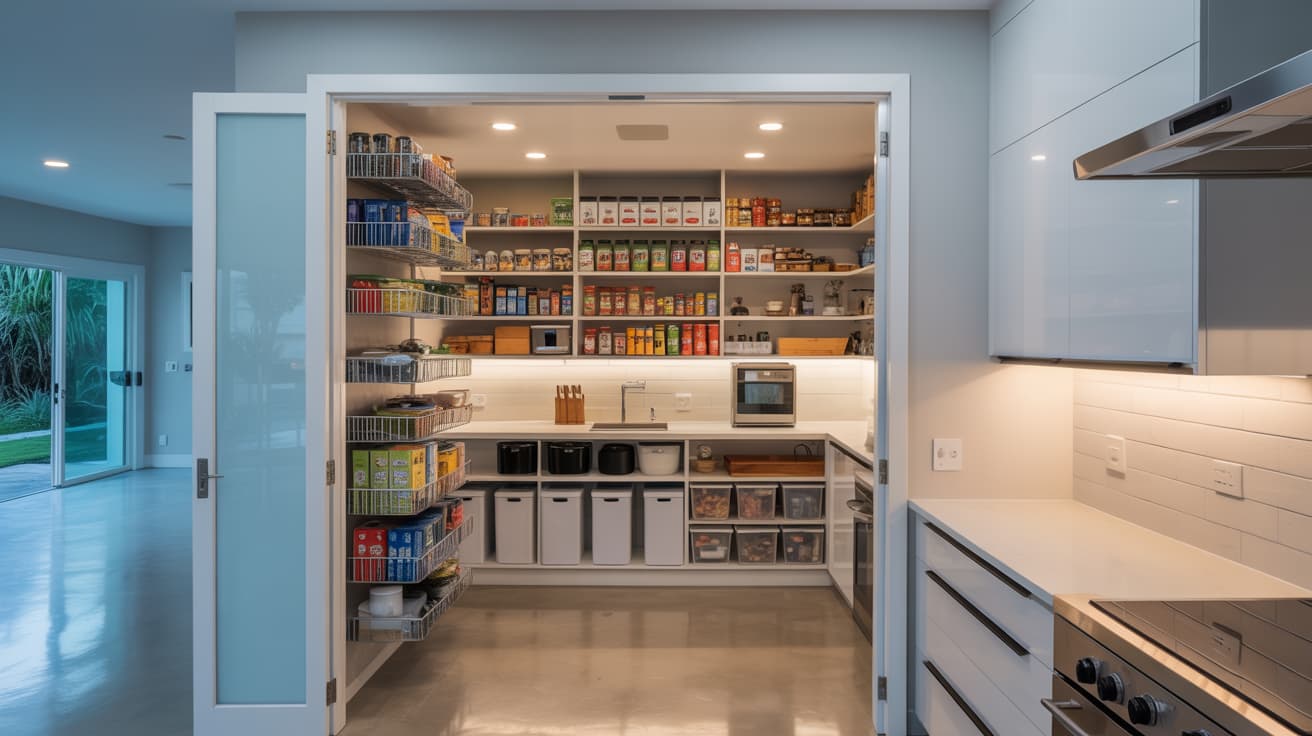
A rear kitchen expansion is the right time to finally add real pantry storage, proper shelving, a prep counter, and enough room to store everything without digging through cabinets. A walk-in pantry keeps the main kitchen cleaner and more organized by moving bulk items, small appliances, and dry goods out of sight.
Plan the shelving layout carefully from the start. Adjustable shelves, good lighting, and a simple outward-swinging door make a significant difference in daily usability.
4. Primary Bedroom Suite
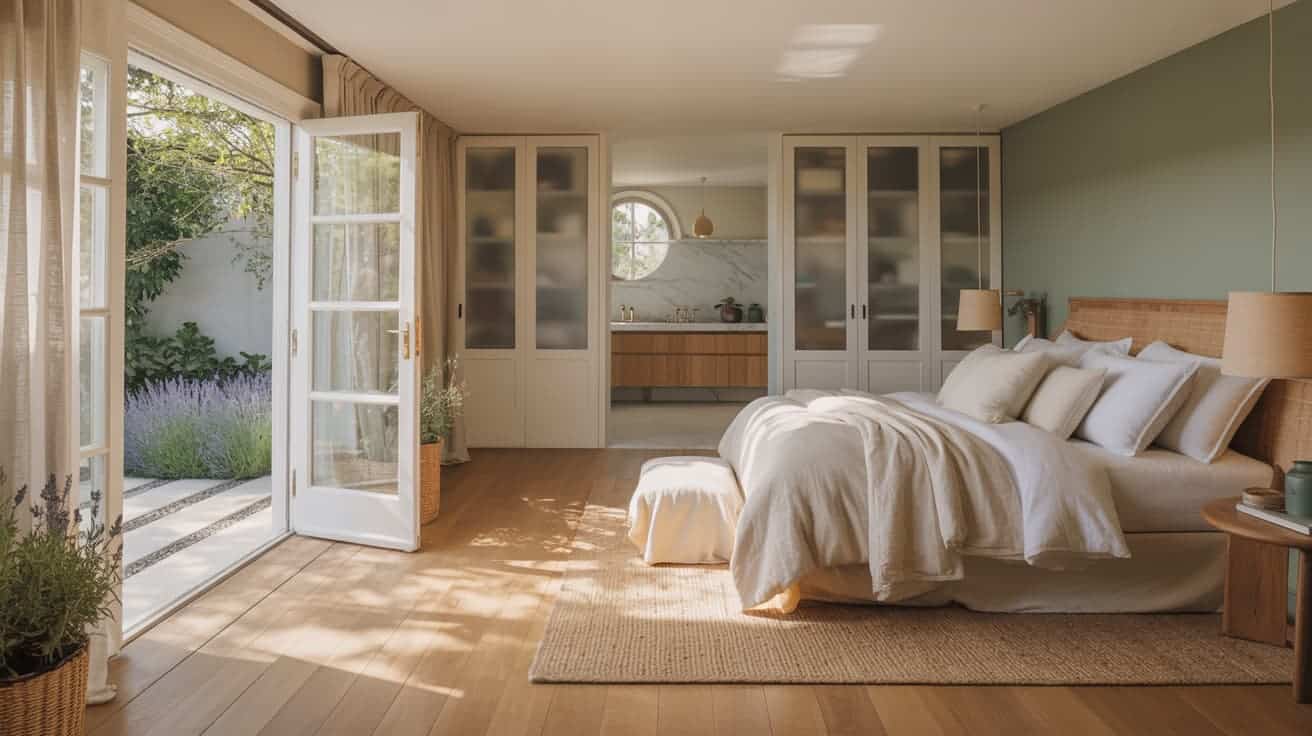
A primary suite at the back of the house gives real space for a proper retreat, generous closets, a well-appointed ensuite, and if the layout allows, a door that opens to a private garden corner. The separation from the rest of the house makes a genuine difference in how restful the space feels.
Think through the window placement carefully; morning light on the wrong wall interrupts sleep, while well-positioned glazing makes the room feel calm and naturally bright at the right times.
5. Guest Bedroom with Ensuite
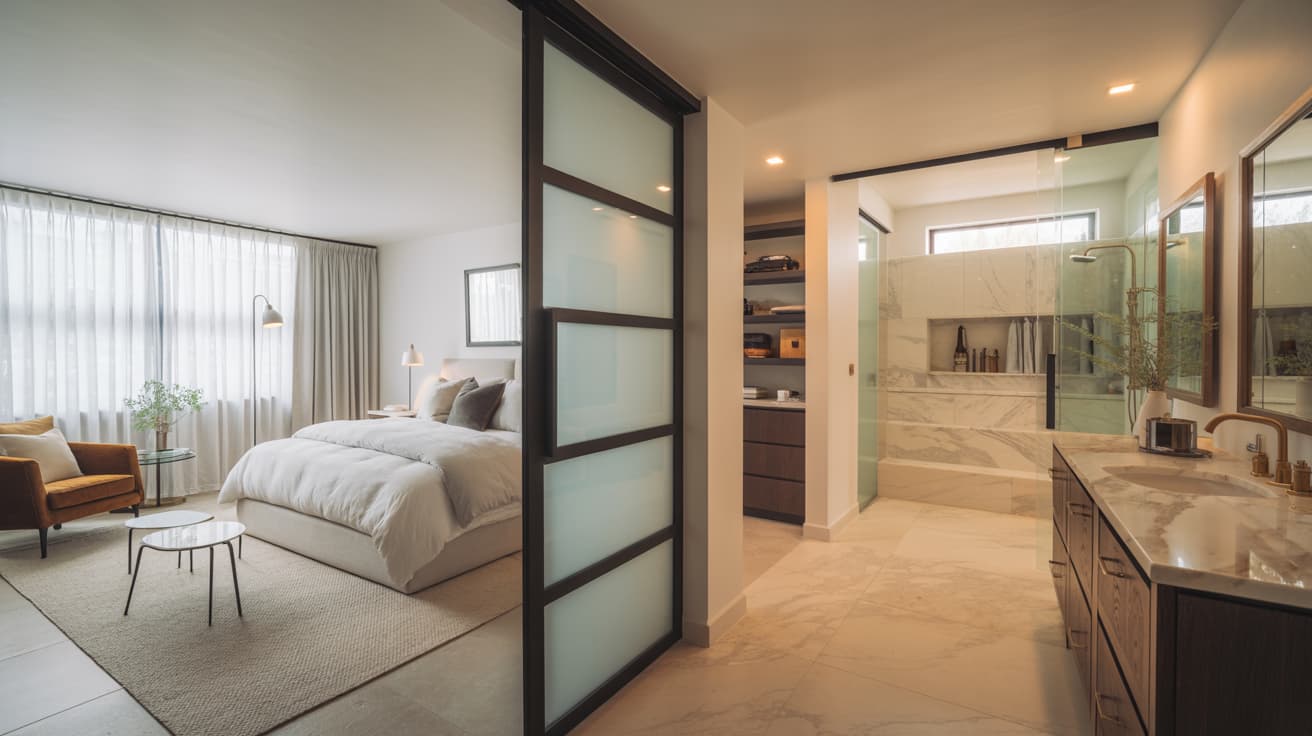
A dedicated guest suite at the rear gives visitors real privacy while the rest of the household keeps its normal rhythm. A private entrance where the layout allows, adequate closet space, and a bathroom that doesn’t require walking through the main house cover the essentials.
Small details like a dedicated reading light and decent soundproofing go a long way, and the addition holds strong long-term value, particularly if short-term rental is ever on the table.
6. Sunroom or Four-Season Room
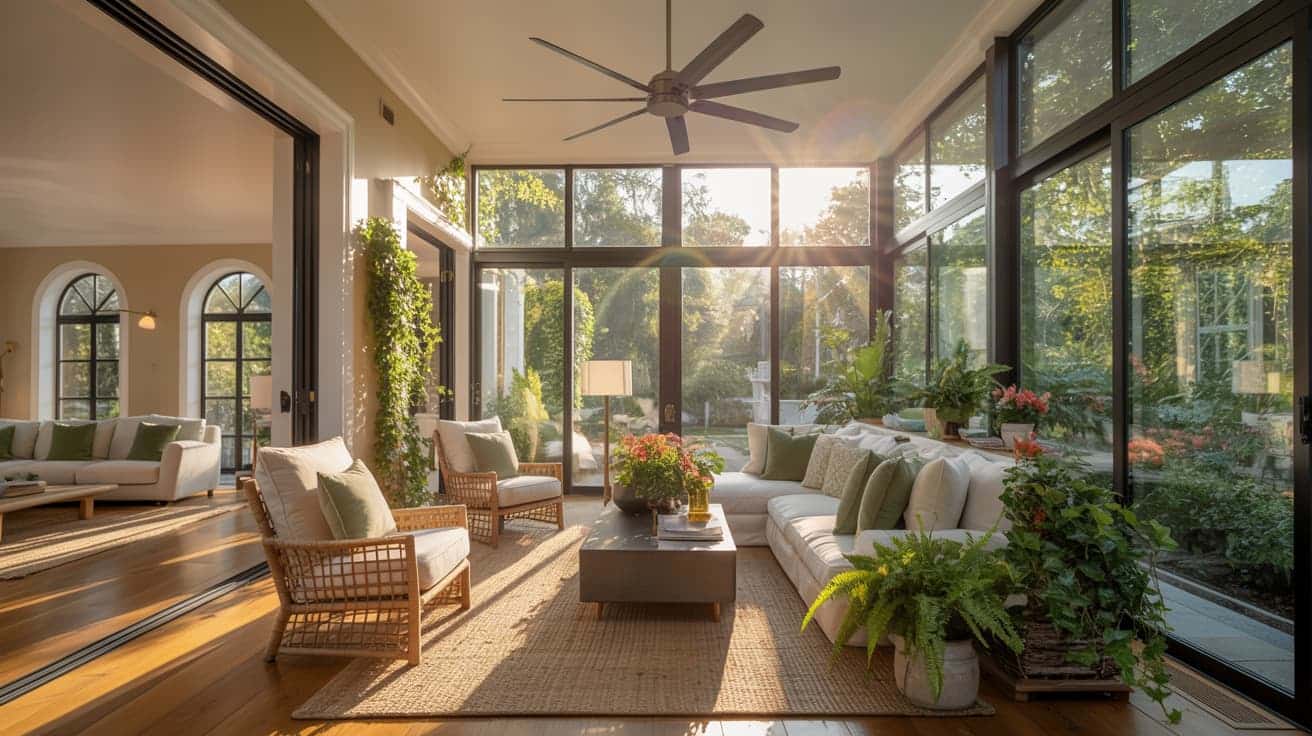
A four-season sunroom gives the feeling of being outside without the bugs, rain, or cold. Floor-to-ceiling glass, comfortable seating, and a ceiling fan make it a room worth living in from morning coffee through evening wind-down. Insulation and HVAC connections matter more than most homeowners expect.
A sunroom without proper climate control becomes unusable for half the year. Done right, it functions as an extension of the living room and one of the most naturally lit spaces in the entire home.
7. Home Office with Backyard View
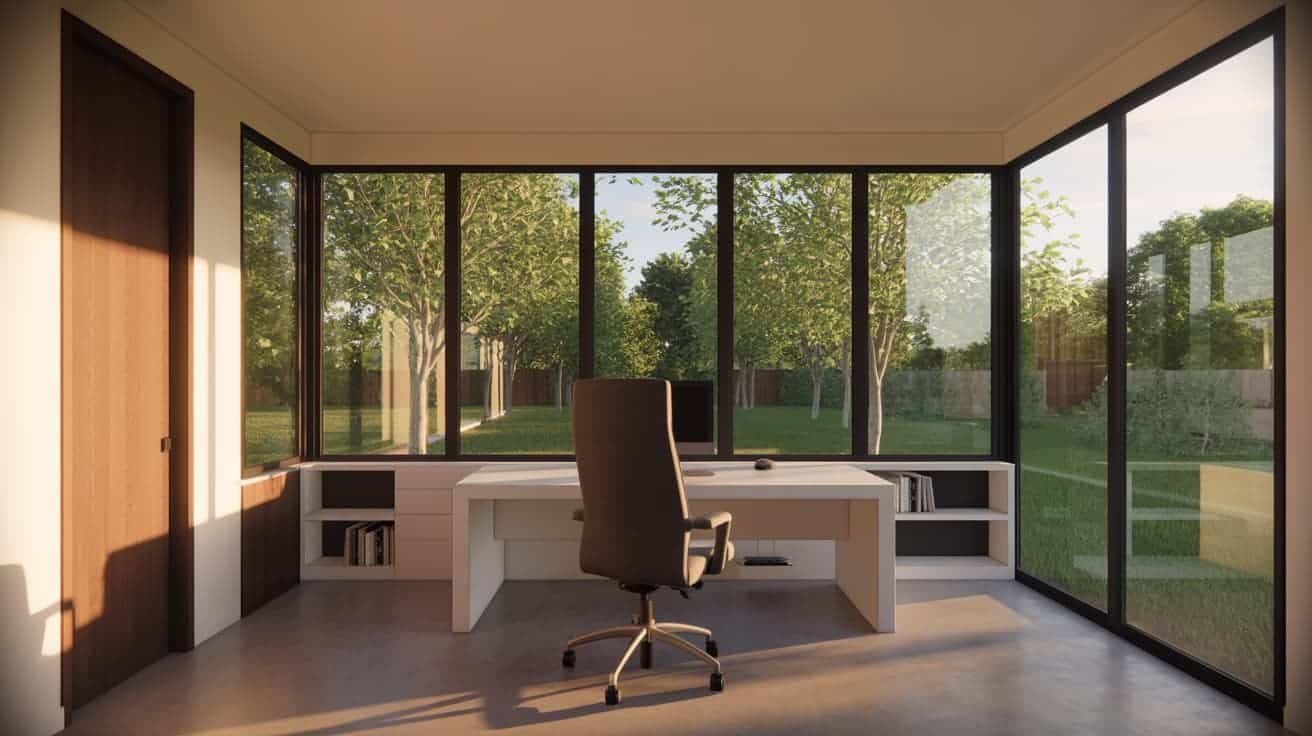
Remote work needs a proper room, not a dining table corner or a makeshift desk in the bedroom. A rear office addition provides a real workspace with natural light, a door that closes, and a view worth taking a break for.
Cable management, outlet placement, and acoustic separation are worth sorting before construction begins. A well-planned home office improves daily focus and adds genuine appeal to buyers when the home eventually sells.
8. Mudroom and Laundry Combo
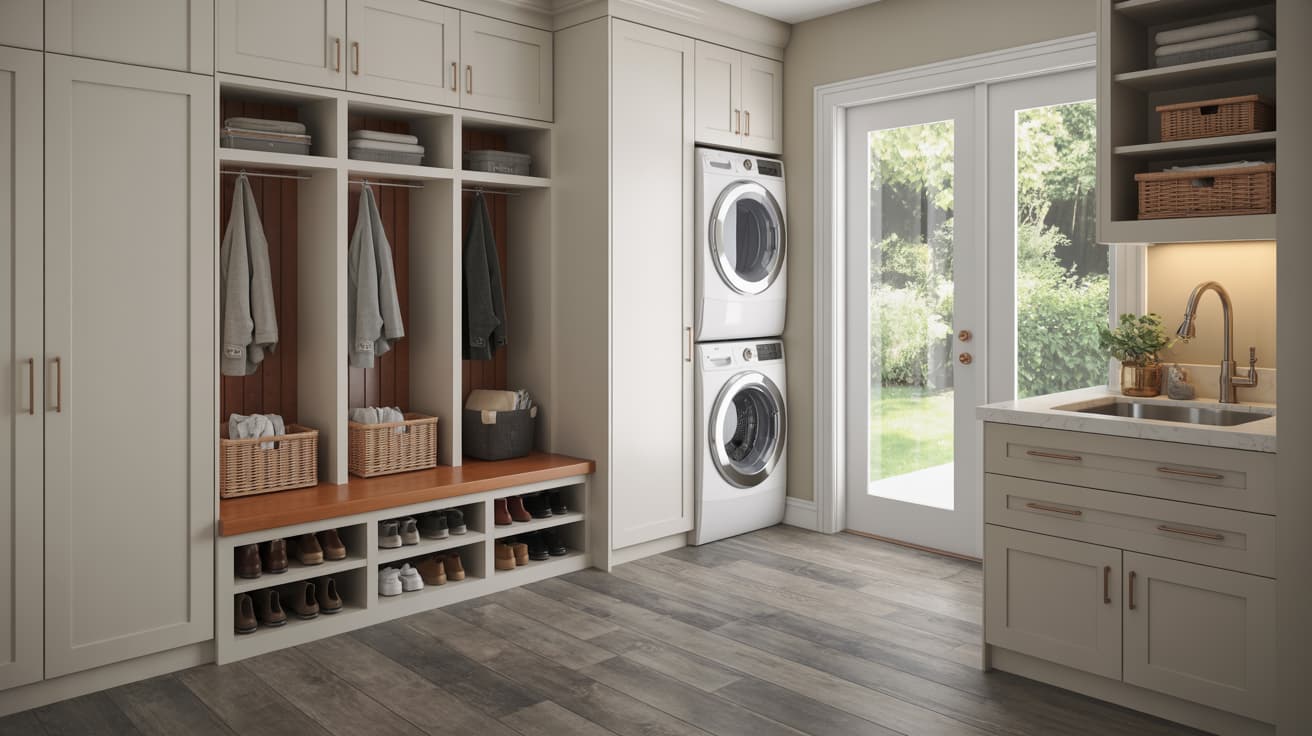
Backyard access, hooks, built-in storage, and a laundry unit in one space mean everything coming in from outside has a place to land before it reaches the rest of the house. Bench seating with storage underneath, a utility sink, and durable flooring make it genuinely functional rather than just a pass-through.
Families with kids or pets tend to notice the difference almost immediately. Mornings get calmer, and the main living areas stay cleaner.
9. Dining Room Expansion
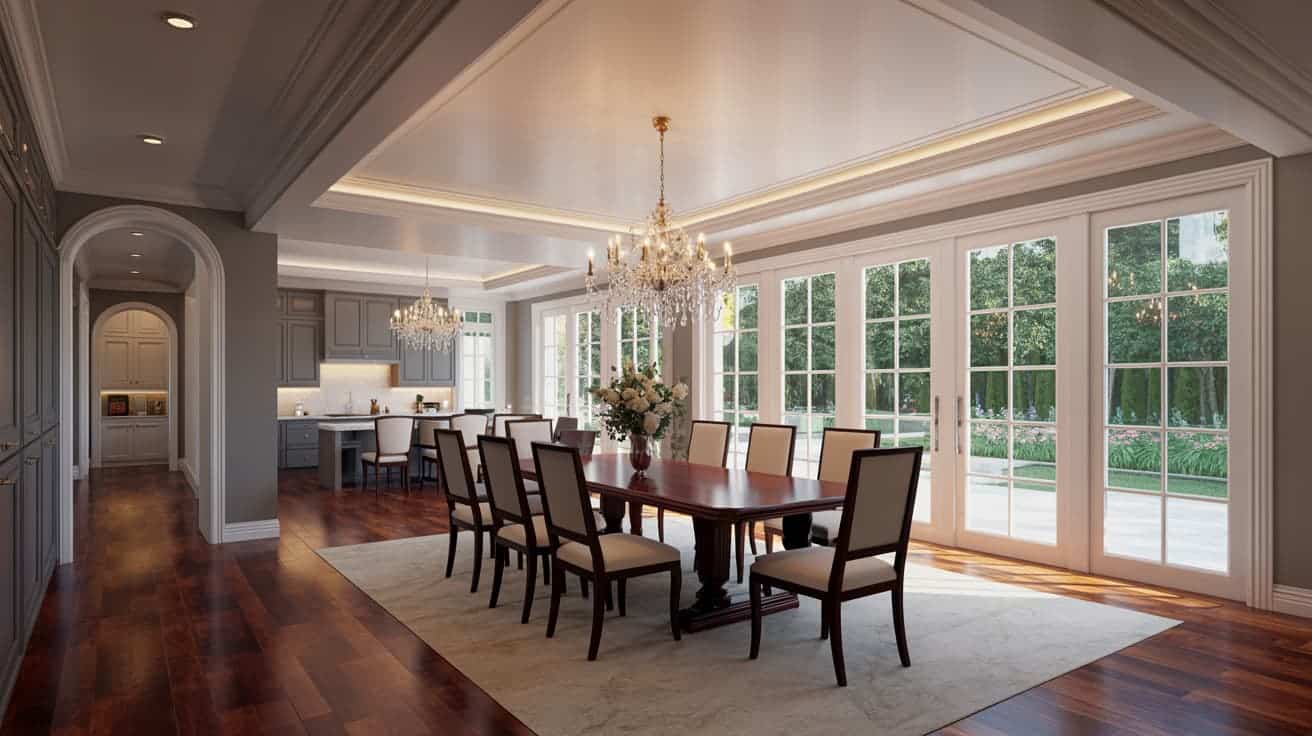
If dinner parties currently mean folding tables and borrowed chairs, a rear dining expansion solves that without touching the rest of the home’s layout. More square footage, better lighting, and direct kitchen access create a space worth lingering in.
A slightly higher ceiling makes the addition feel considered rather than tacked on, and a well-placed window or glass doors facing the backyard add atmosphere without significantly increasing the budget.
10. In-Law Suite Addition
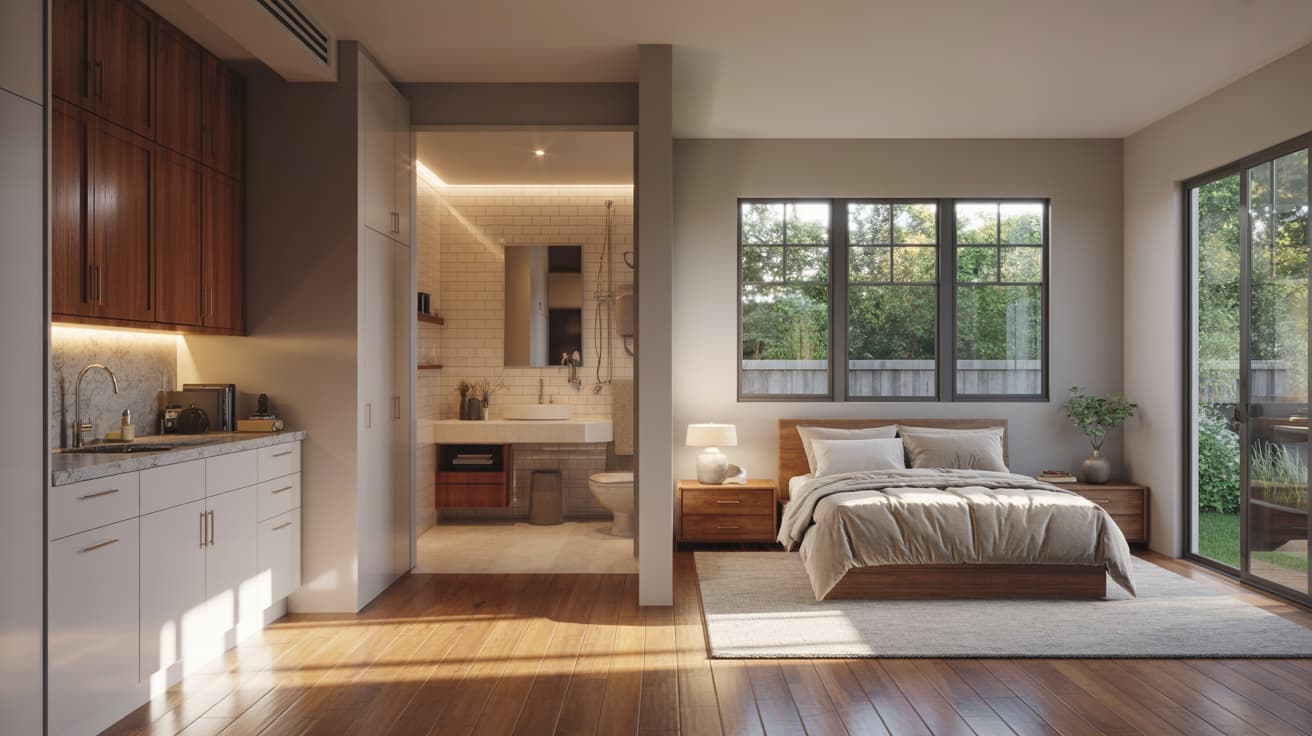
A rear in-law suite, with its own entrance, kitchenette, bedroom, and bathroom, gives everyone real privacy without the compromises of shared living. It’s consistently one of the highest-ROI additions right now, particularly as multigenerational households become more common.
The separate entrance preserves independence and prevents the two households from constantly overlapping. Soundproofing between the suite and the main home is worth budgeting for from the start.
11. Playroom or Teen Hangout Room
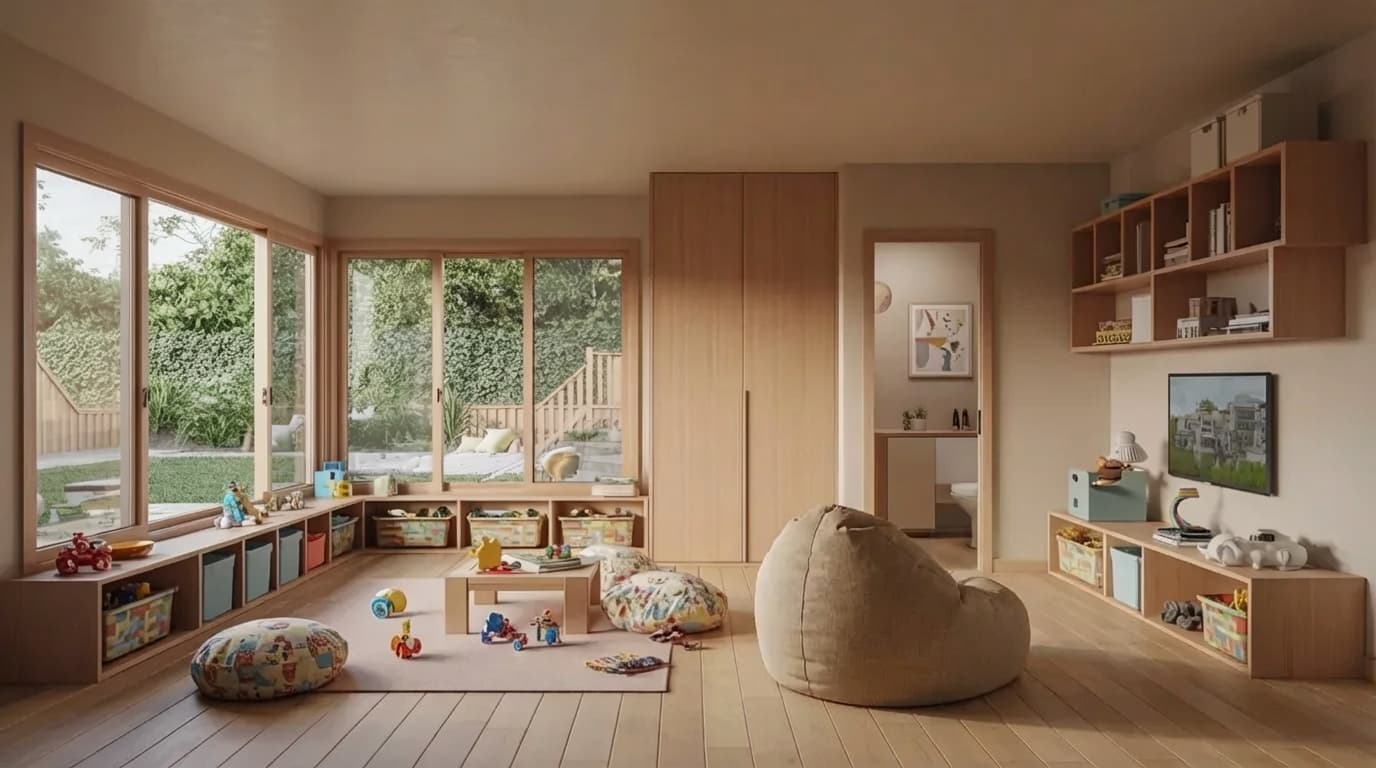
A rear playroom keeps noise and mess contained without cutting kids off from the rest of the house. Flexible built-in storage lets it shift from an early childhood playroom to a teen hangout space as they grow.
Durable flooring, easy-clean wall finishes, and good natural light keep it practical at every age.A nearby half bathroom is worth adding if the budget allows, as it keeps kids from tracking through the main house throughout the day.
12. Home Gym Space
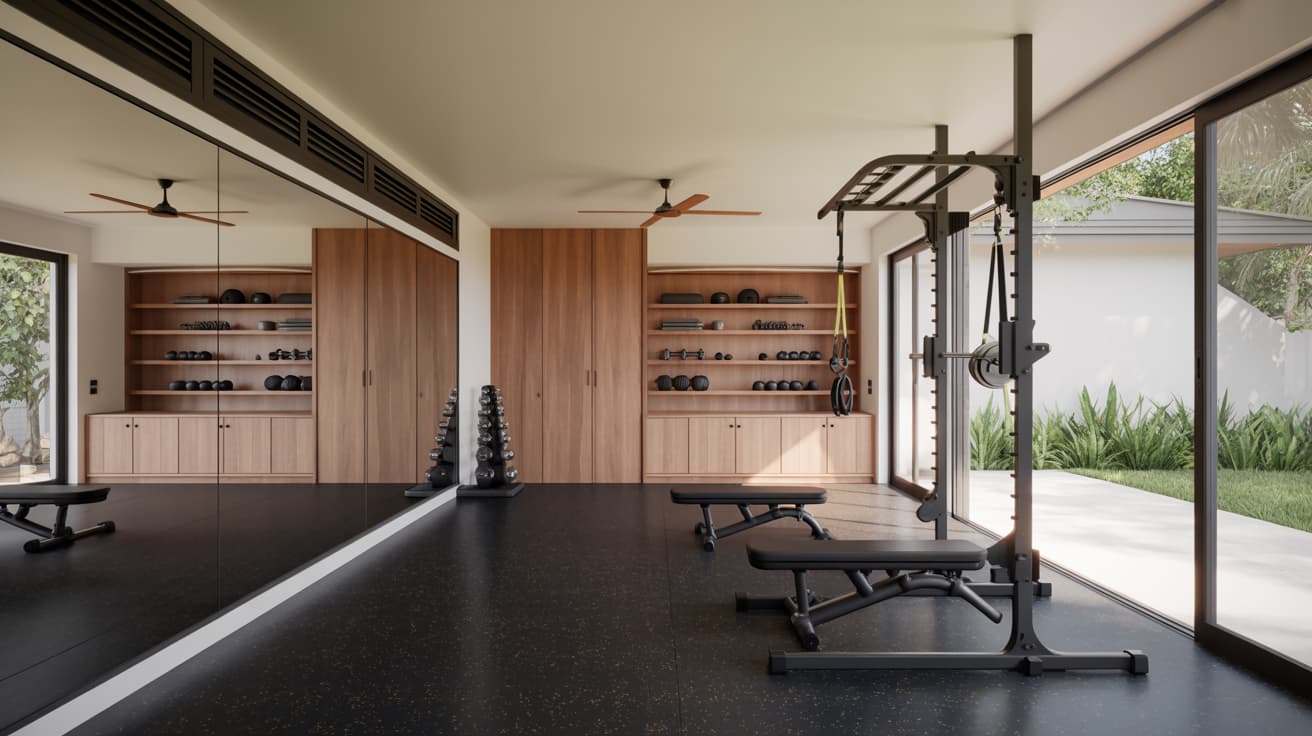
Rubber flooring, proper ventilation, mirrors, and enough ceiling clearance for the right equipment are the foundation. HVAC connection matters more than most expect; a poorly ventilated space goes unused fast.
Storage, a dedicated sound system, and enough natural light to keep it feeling energizing rather than clinical are what make it worth using daily. The canceled gym membership offsets a solid portion of the cost over time.
13. Multi-Purpose Flex Room
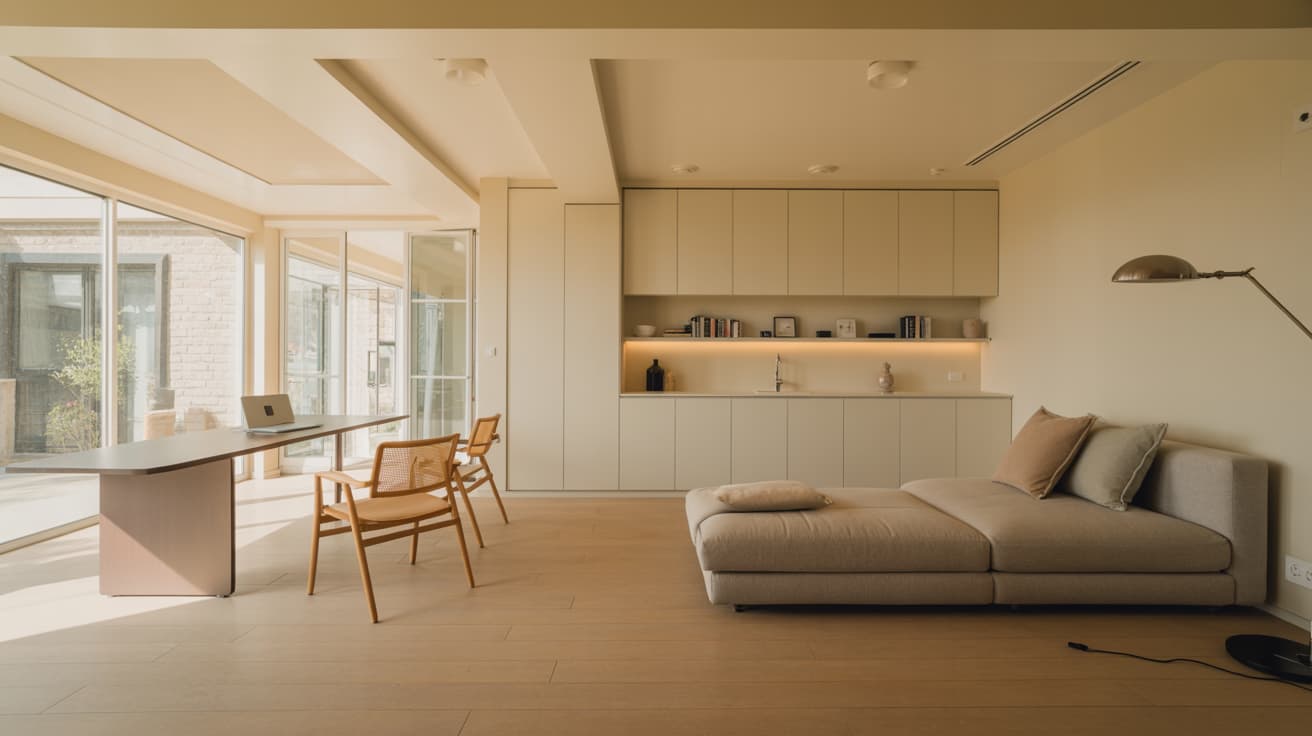
Not entirely sure what the space needs to do yet? A flex room with built-in storage, neutral finishes, and solid natural light can shift functions as life changes, school room today, creative space next year, guest room the season after.
The key is designing it without committing to one purpose too early. Keep the layout open, avoid fixed furniture, and invest in lighting that works across different uses.
14. Studio or Creative Space
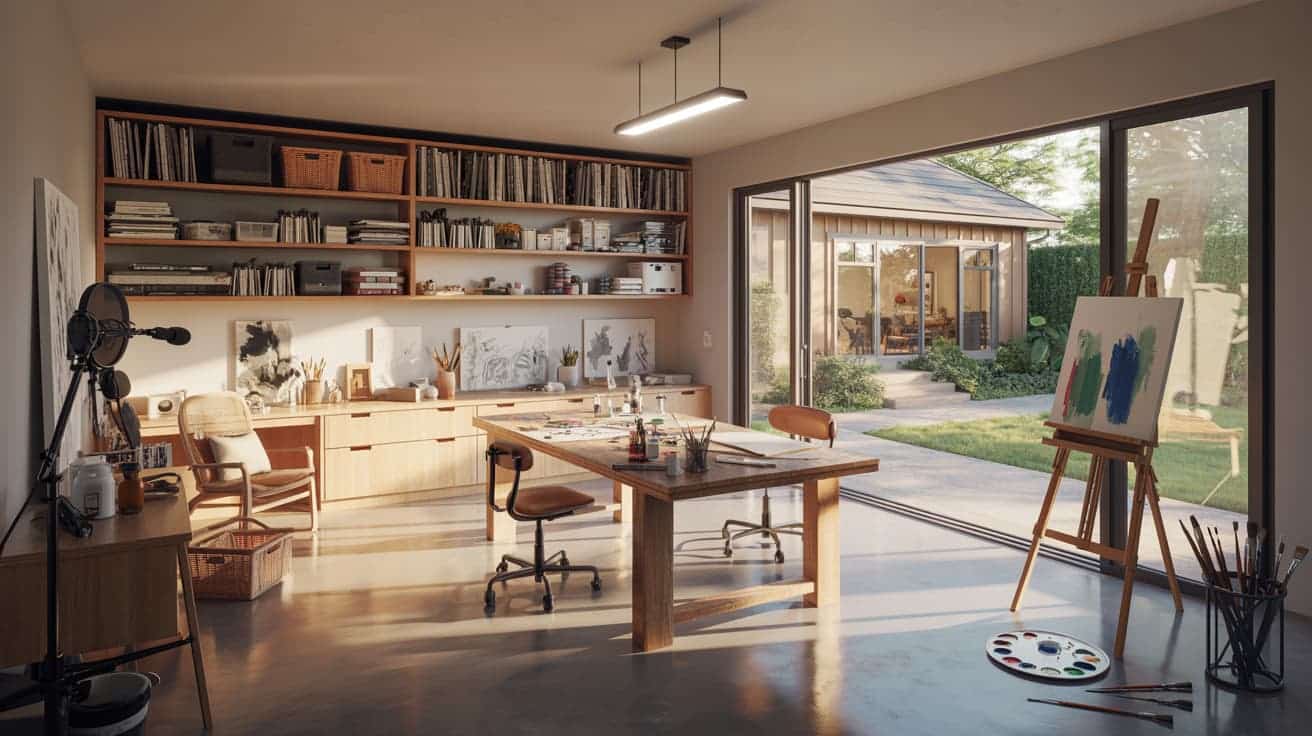
Artists, crafters, woodworkers, and podcasters all know the frustration of working in a space not built for the job. A rear studio gives room to spread out, make noise, and work without taking over the rest of the house.
Sort the practical requirements early, outlet placement, ventilation, flooring that can handle the work, and acoustic separation if sound matters. North-facing windows work best for most creative work, keeping the light consistent without the glare that other orientations bring at certain times of day.
15. Cozy Reading Room or Library Nook
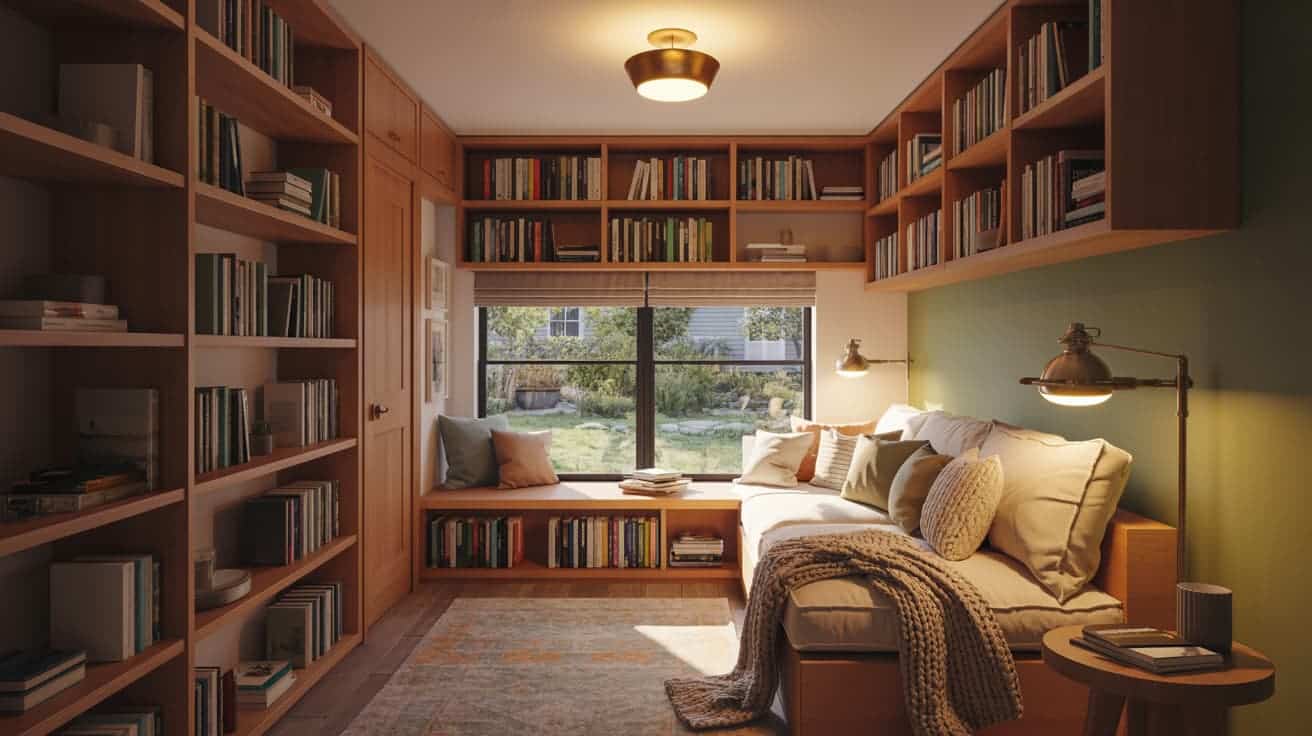
A room lined with shelves, a built-in window seat, and proper reading light doesn’t need to be large to work exactly right. Good insulation is worth prioritizing; a reading room that’s cold in winter or warm in summer simply doesn’t get used.
Warm lighting on a dimmer, floor-to-ceiling shelving, and a door that actually closes are what separate a room that gets used daily from one that doesn’t.
16. Kids’ Homework and Activity Room
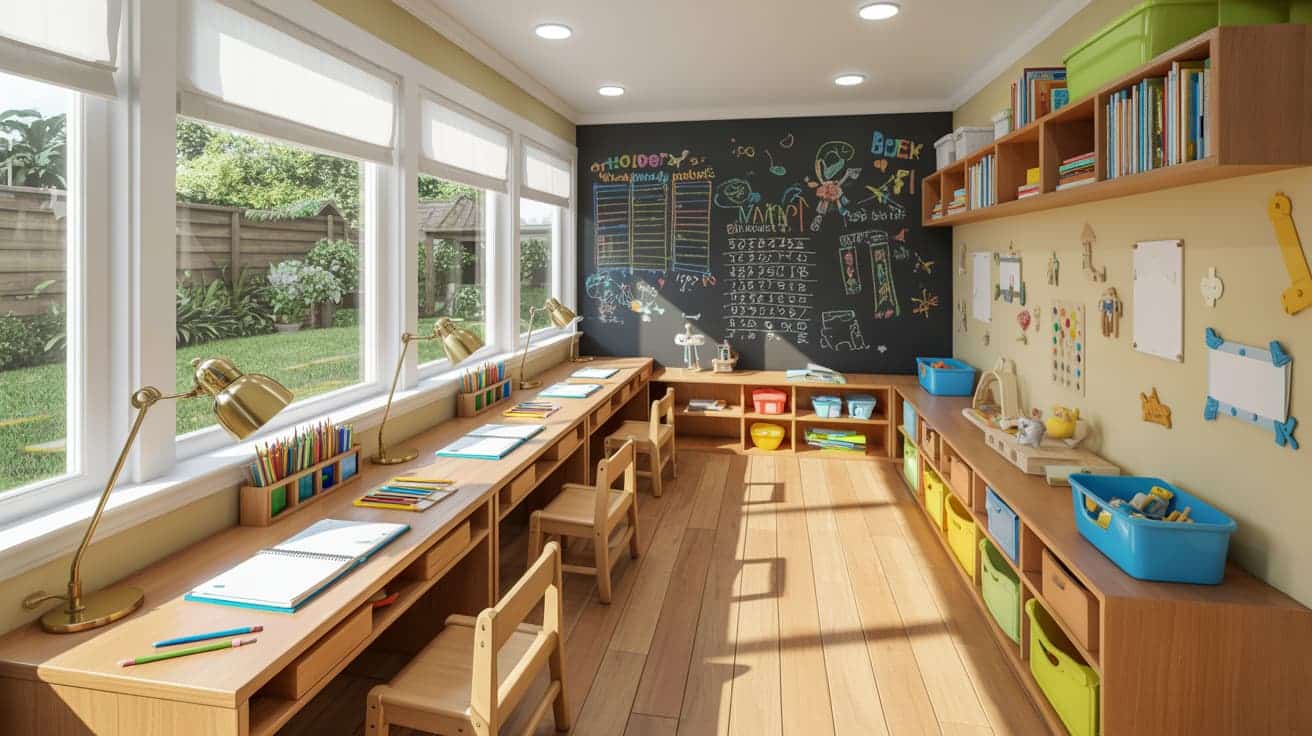
Somewhere between a playroom and a study, this is a purpose-built space where kids can handle homework, take on projects, and stay occupied without claiming the kitchen table every evening. A long desk along one wall, good task lighting, and open floor space for activities that need room to spread out cover the basics.
Accessible, well-labeled storage keeps kids from creating chaos, and a chalkboard wall adds practical functionality without significantly increasing the budget.
17. Meditation or Wellness Room
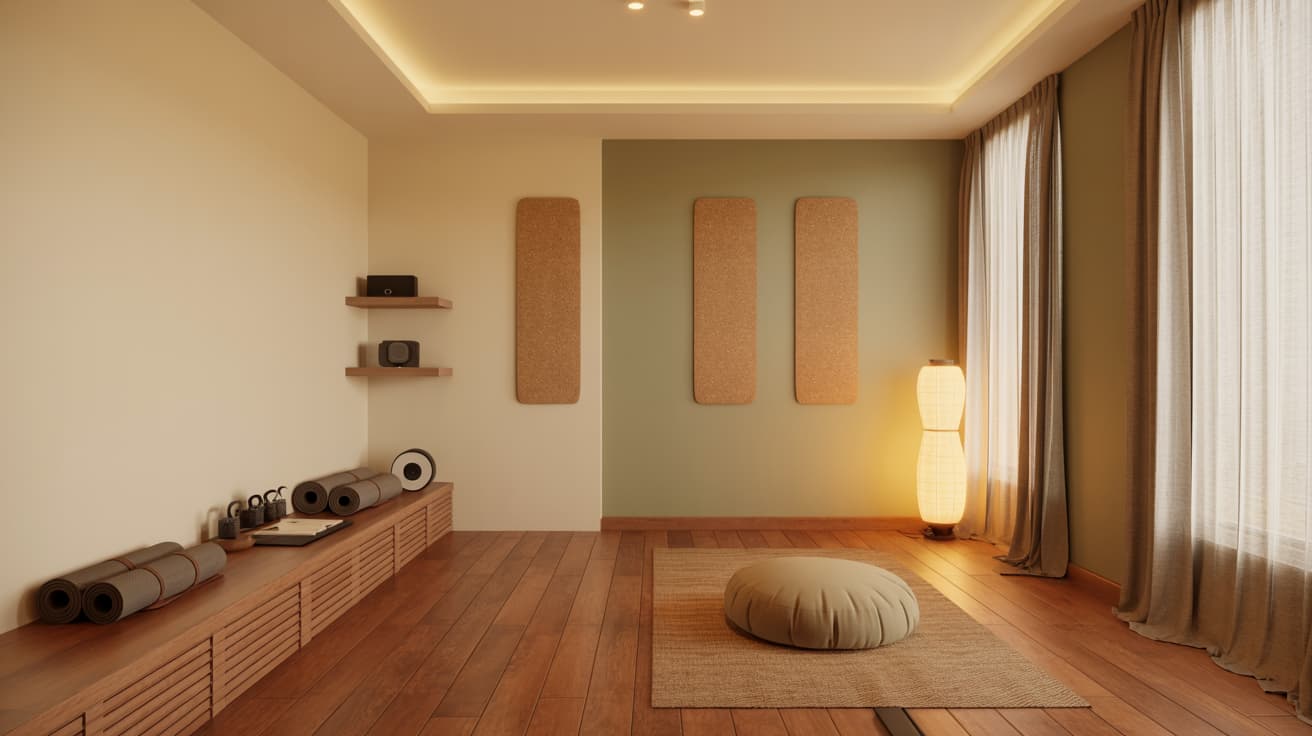
If every practical space in the home is accounted for but there’s nowhere quiet to reset, a small rear wellness room fills that gap. Natural materials, soft layered lighting, good acoustics, and enough floor space to move freely are all it needs.
Flooring that works for both seated and standing use, a dedicated outlet for sound equipment, and simple accessory storage cover the practical side. This is one addition where the quality of finishes matters more than square footage.
Any one of these additions can change how the home functions day to day; the right choice depends entirely on what the household actually needs.
Small Details That Make a Big Difference: Do’s And Dont’s
The goal is for the addition to look like it was always part of the home, not something added later. These are the decisions that make that happen.
| Do | Don’t |
|---|---|
| Match the roofline and exterior finish | Use clashing materials |
| Keep flooring consistent throughout | Leave a visible seam between spaces |
| Position windows for real natural light | Place windows to meet code minimum only |
| Use sliding or folding doors for backyard access | Block the rear wall with solid construction |
| Keep ceiling heights consistent with adjoining rooms | Drop the ceiling without a design reason |
| Build storage in from day one | Sort storage out after construction ends |
None of these decisions are expensive to get right during construction, but most of them become costly and difficult to fix once the build is done.
A Planning Guide for Your Back House Addition
A rear addition that goes smoothly is almost always one that was planned carefully upfront.
- Define the purpose before hiring anyone, vague briefs lead to spaces that work for nothing specific
- Check local zoning and setback rules before drawing a single plan
- Build in a 15 to 20 percent contingency from day one, construction surprises are not a matter of if but when
- Hire someone with rear addition experience specifically, general remodeling is not the same
- Pull permits before breaking ground, not during
- Match exterior materials to the existing home, roofline, siding, and finishes should look like they belong
- Lock in electrical, plumbing, and HVAC decisions before the walls go up
Getting these right before construction starts is what keeps the project on track.
Back House Addition vs. Other Expansion Options
Not every home needs a full rear addition, but for most households that have outgrown their space, it’s hard to beat. Here’s how it stacks up against the alternatives.
| Option | Cost Level | Disruption | Space Added | Best For |
|---|---|---|---|---|
| Back House Addition | Medium to High | Medium | High | Households needing a fully dedicated new room |
| Bump-Out Addition | Low to Medium | Low | Low to Medium | One room that needs modest extra space |
| ADU or Granny Flat | High | Medium | High | Rental income or multigenerational living |
| Interior Reconfiguration | Low | Low | None | Making better use of what’s already there |
| Moving to a Larger Home | Very High | Very High | Variable | When no lot space exists and the budget allows |
For most homeowners working with an existing backyard and a clear space need, a rear addition delivers the best balance of cost, disruption, and usable square footage.
Final thoughts
A back house room addition is one of the most personally rewarding and financially smart things you can do with the home you already love. If you’re after a sunlit reading room, a dedicated home office, or a full in-law suite for your family, the back of your house holds more potential than you’ve tapped yet.
Start with a clear purpose. Set a realistic budget with room to breathe. Hire someone with real rear addition experience. And don’t skip the permits.
I’d love to hear which idea landed for you, drop it in the comments. And if you’re still sorting through your options, check out more layout and home setup guides here to find the right fit for your space.
Frequently Asked Question
Do I need a permit for a back house room addition?
es, almost always. Most local codes require permits for structural additions. Your contractor should handle the application process before construction begins.
How long does it typically take to build?
Most additions take 6 to 16 weeks depending on size, complexity, and permit approval timelines in your area.
What is the cheapest type of back house room addition?
A basic bedroom or bump-out addition is the most affordable, typically starting at $20,000 depending on size and materials.
Will a rear addition increase my property value?
Yes. A well-built rear addition typically increases home value by 10 to 20 percent and recovers 60 to 80 percent at resale.