
Most home cooks buy a knife, use it for everything, and wonder why certain cuts never turn out quite right. The problem usually isn’t skill. It’s the knife.
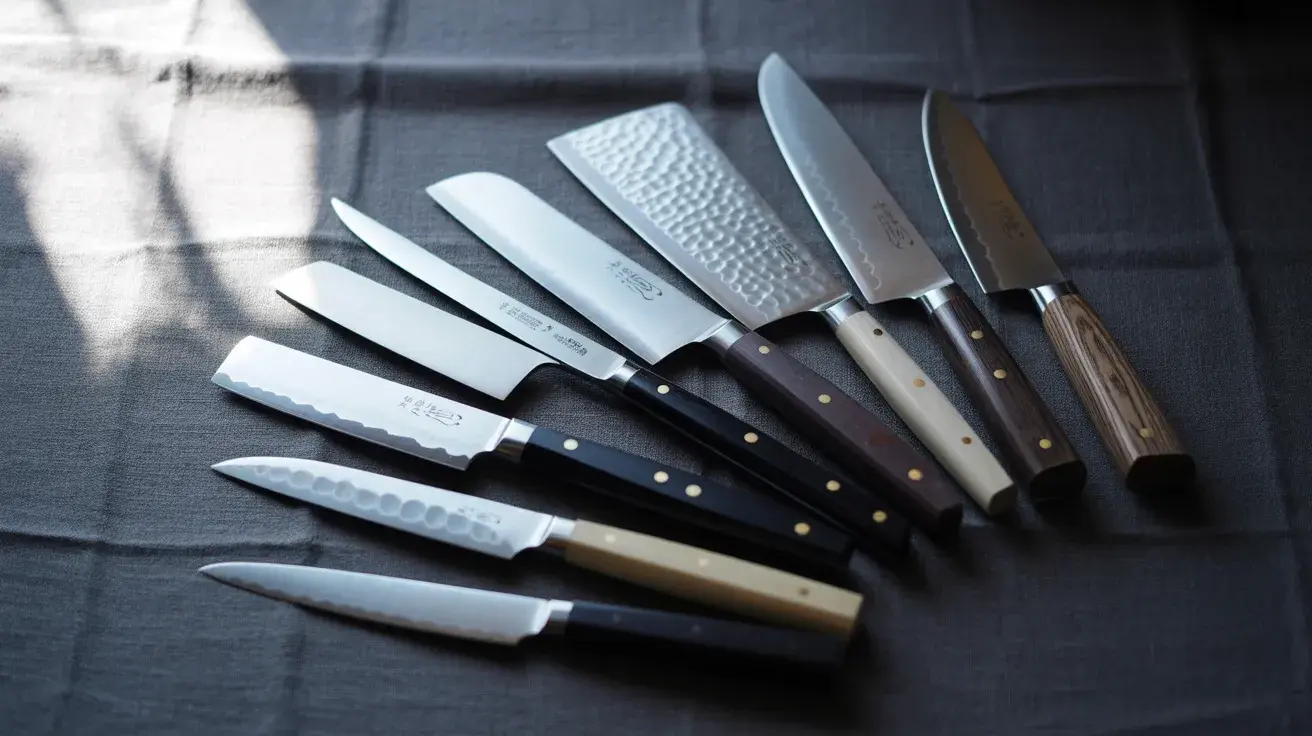
Japanese knife types are built around a simple idea: every cutting task deserves a blade designed specifically for it. Fish, vegetables, meat, bread, each one has a knife that handles it better than a general-purpose blade ever could.
I’ve tested these knives in real home kitchens, not professional ones, and the difference a purpose-built blade makes in daily cooking is hard to ignore once you’ve felt it.
In this guide, you’ll learn the main Japanese knife types, what each one does best, and how to figure out which ones actually belong in your kitchen.
Ready to stop guessing and start cutting smarter? Let’s get into it.
How Japanese Knife Design Shapes Their Use in the Kitchen
Every detail in a Japanese knife exists for a reason. The thickness of the spine, the angle of the edge, the length of the blade, none of it is accidental. Each choice directly affects how the knife moves, what it can cut cleanly, and where it performs best.
Thinner blades slice through fish and vegetables without resistance. Flat edges keep full contact with the board for cleaner vegetable cuts. Longer blades cover more surface in a single stroke, reducing drag on proteins and fish.
Once you understand why a knife is built the way it is, choosing the right one stops feeling like guesswork and starts feeling like a straightforward decision.
Japanese Knife Types, Their Uses, and Key Features
Here’s a clear breakdown of the most common Japanese knife types, along with their blade sizes, features, and how each one fits into real kitchen use.
Each knife below includes its size, core features, and the tasks it is designed to handle.
1. Gyuto (Chef’s Knife)
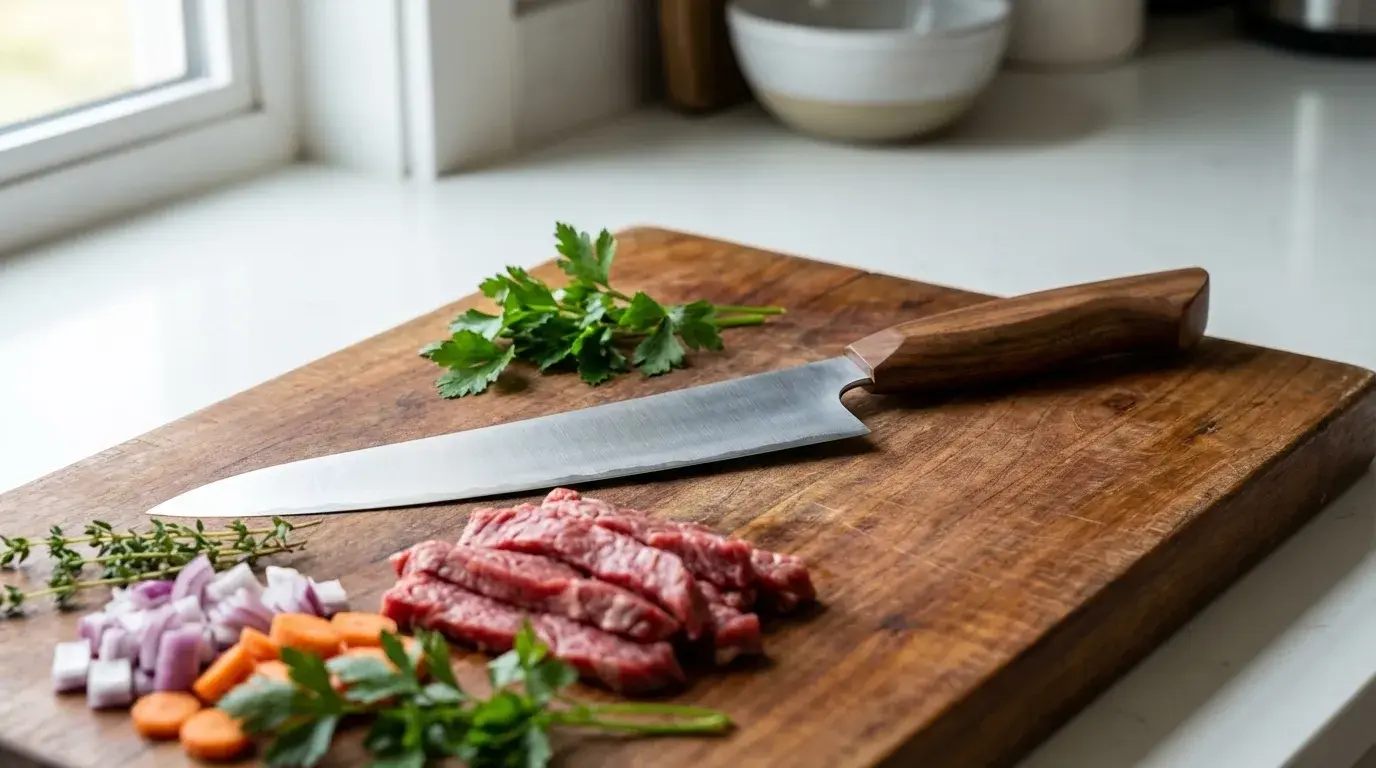
The Gyuto is a versatile Japanese chef’s knife designed to handle a wide range of kitchen tasks with ease. I keep this within reach when I’m prepping full meals because it lets me move from chopping vegetables to slicing meat without switching tools.
Its slightly curved blade supports both rocking and slicing motions, which makes it practical for everyday cooking in real home kitchens where speed and control both matter.
- Key Features: Curved blade, thin profile, double-bevel edge, typically 210–270 mm length
- Use: Cutting meat, fish, and vegetables
- Best For: Home cooks and professionals who want one reliable knife that handles meat, fish, and vegetables daily
2. Santoku (Multipurpose Knife)
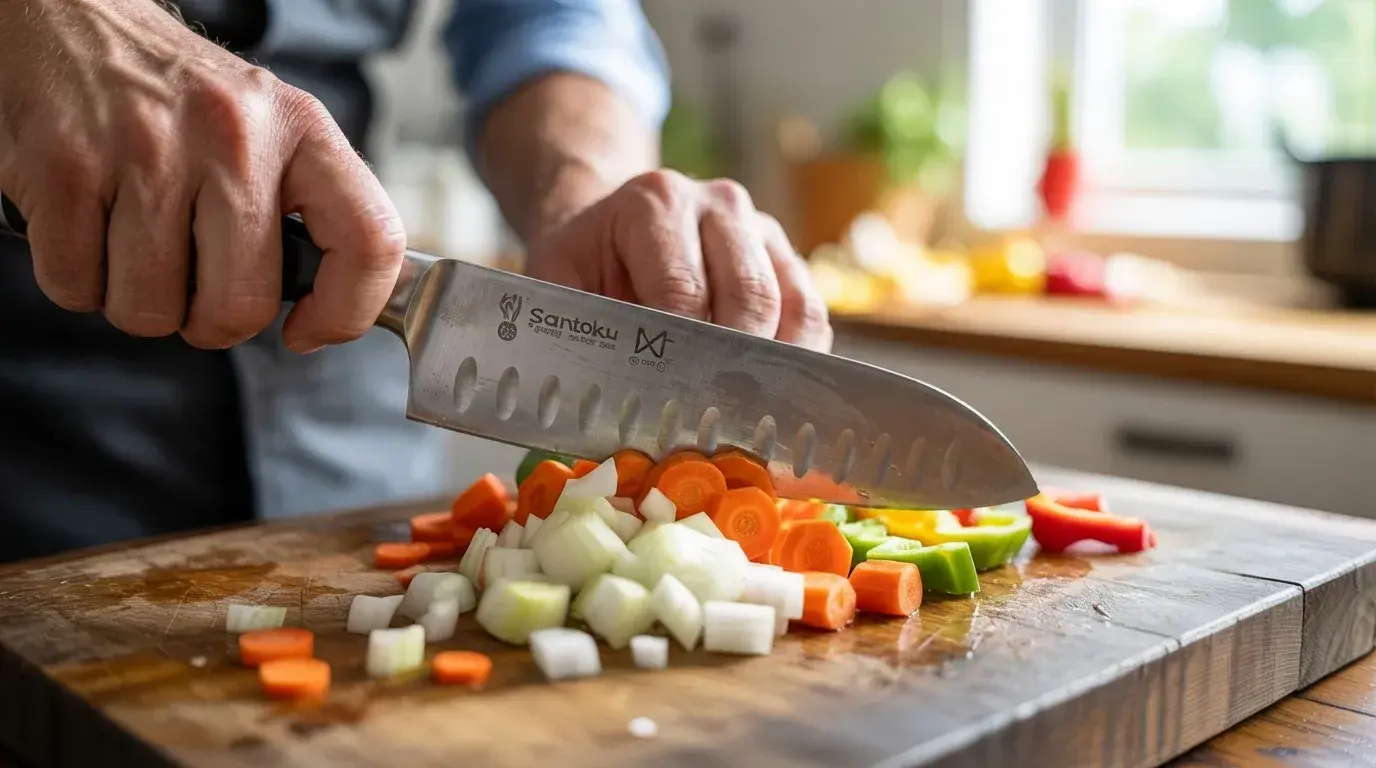
The Santoku is a compact, easy-to-handle knife built for everyday kitchen prep. I often reach for it when I want a simple, controlled cutting motion without worrying about technique.
Its flat edge supports straight up-and-down chopping, which feels natural when working through quick meals. The wider blade also helps move chopped ingredients off the board, which keeps prep smooth and less messy in smaller kitchen setups.
- Key Features: Flat edge, wide blade, minimal curve, typically 165–180 mm length
- Use: Slicing, chopping, dicing
- Best For: Home cooks who want a comfortable, low-maintenance knife for quick and consistent everyday meal prep
3. Nakiri (Vegetable Knife)
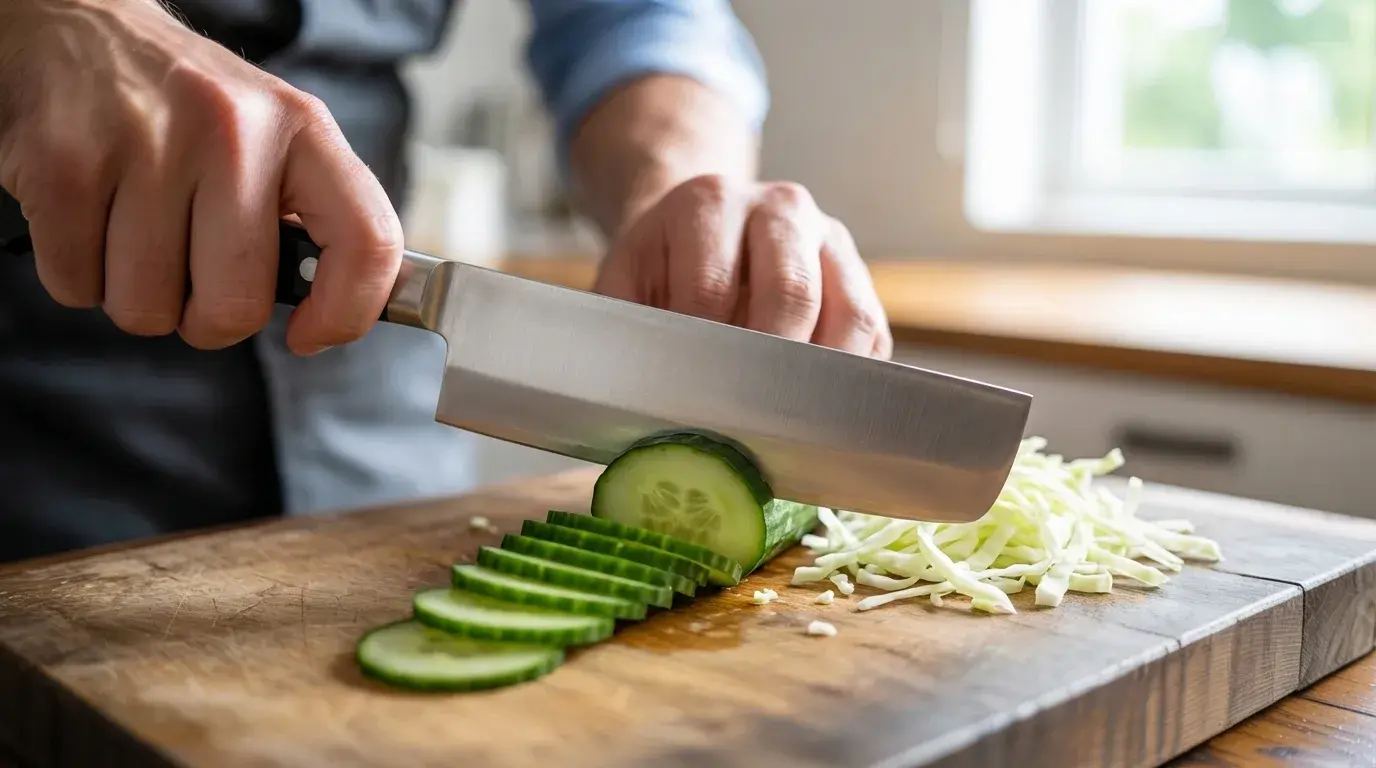
The Nakiri is designed specifically for vegetable prep, and it shows in how clean and consistent each cut feels. I prefer using it when I’m working through a large batch of vegetables because the straight edge makes full contact with the board every time. That means no rocking, no uneven slices, and less effort overall.
It’s a practical choice for home kitchens where speed and neat prep make a real difference.
- Key Features: Flat rectangular blade, double-bevel edge, typically 165–180 mm length
- Use: Chopping and slicing vegetables
- Best For: Cooks who prepare large amounts of vegetables regularly and want cleaner, faster results on the board
4. Usuba (Professional Vegetable Knife)
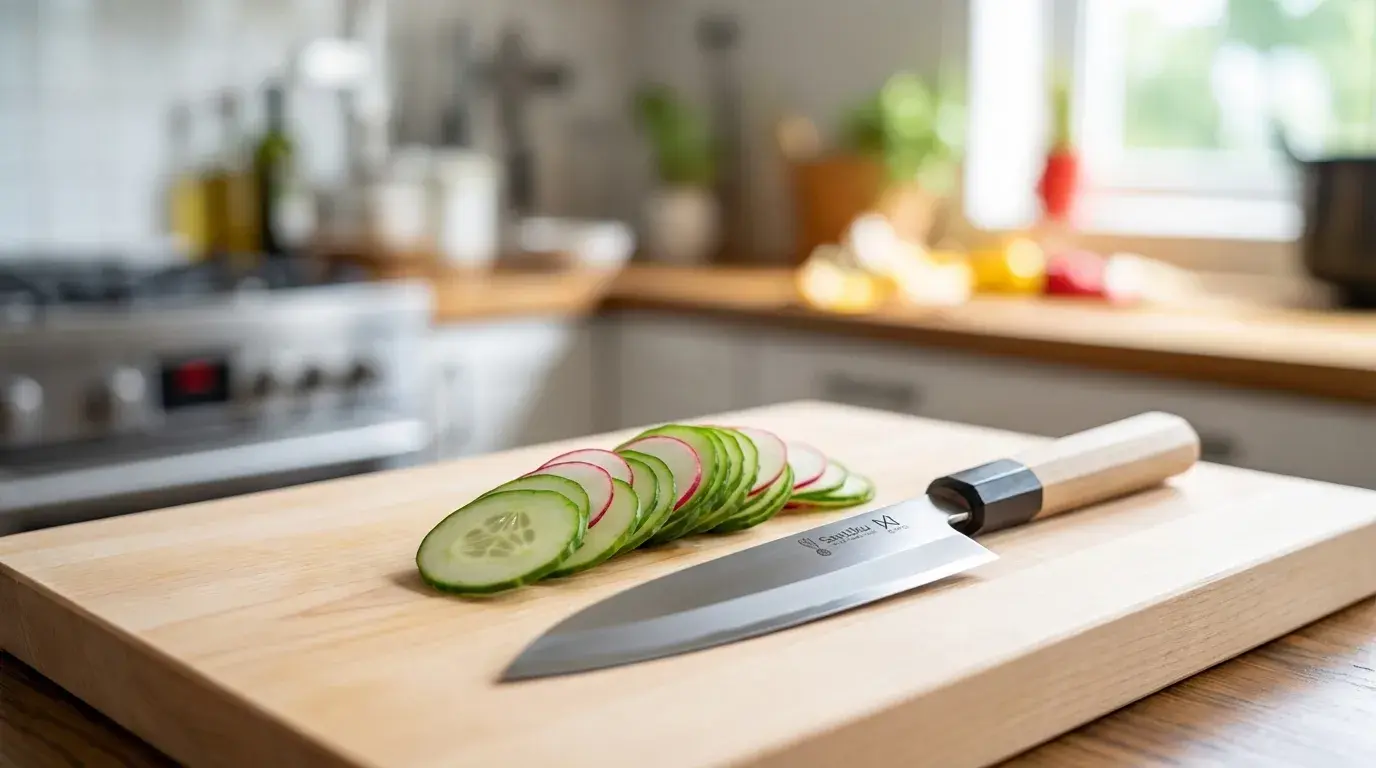
The Usuba is a traditional Japanese knife used for precise vegetable cutting in professional kitchens. It has a single-bevel edge that allows extremely thin slices, but it requires more skill to control and maintain.
It fits best in setups where precision and presentation matter more than speed.
- Key Features: Flat rectangular blade, single-bevel edge, typically 180–240 mm length
- Use: Thin slicing and detailed prep
- Best For: Experienced cooks and professional chefs who are comfortable working with single-bevel knives for precision vegetable work
5. Yanagiba (Sushi Knife)
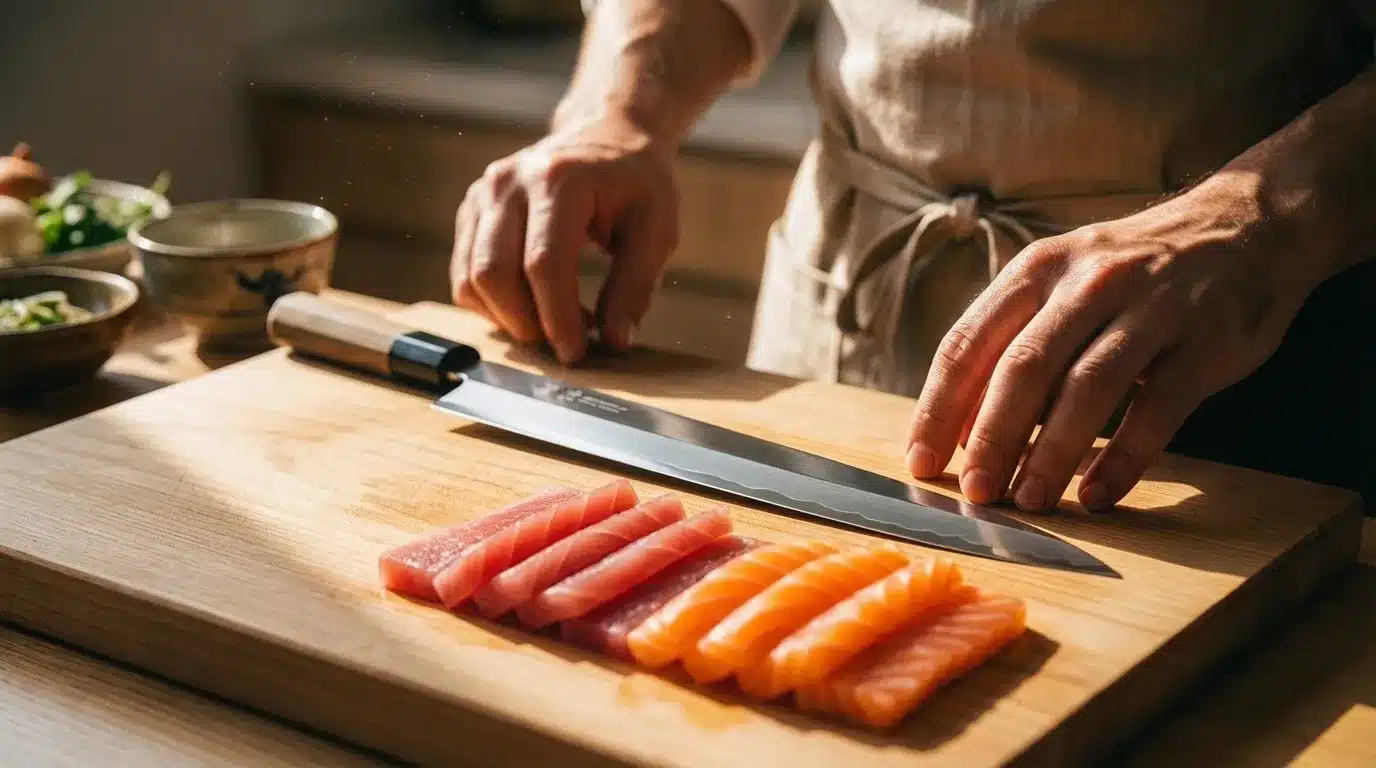
The Yanagiba is a long, narrow knife made for slicing raw fish with precision. I use it when I want clean, smooth cuts without damaging the texture of delicate ingredients. The blade is designed for a single pulling motion, which helps keep each slice even and intact.
It works best in setups where you’re preparing fish regularly and need consistent results.
- Key Features: Long, thin blade, single-bevel edge, typically 270–330 mm length
- Use: Slicing sashimi and sushi-grade fish
- Best For: Home cooks and sushi enthusiasts who prepare raw fish regularly and want clean, restaurant-quality slices
6. Sujihiki (Slicing Knife)
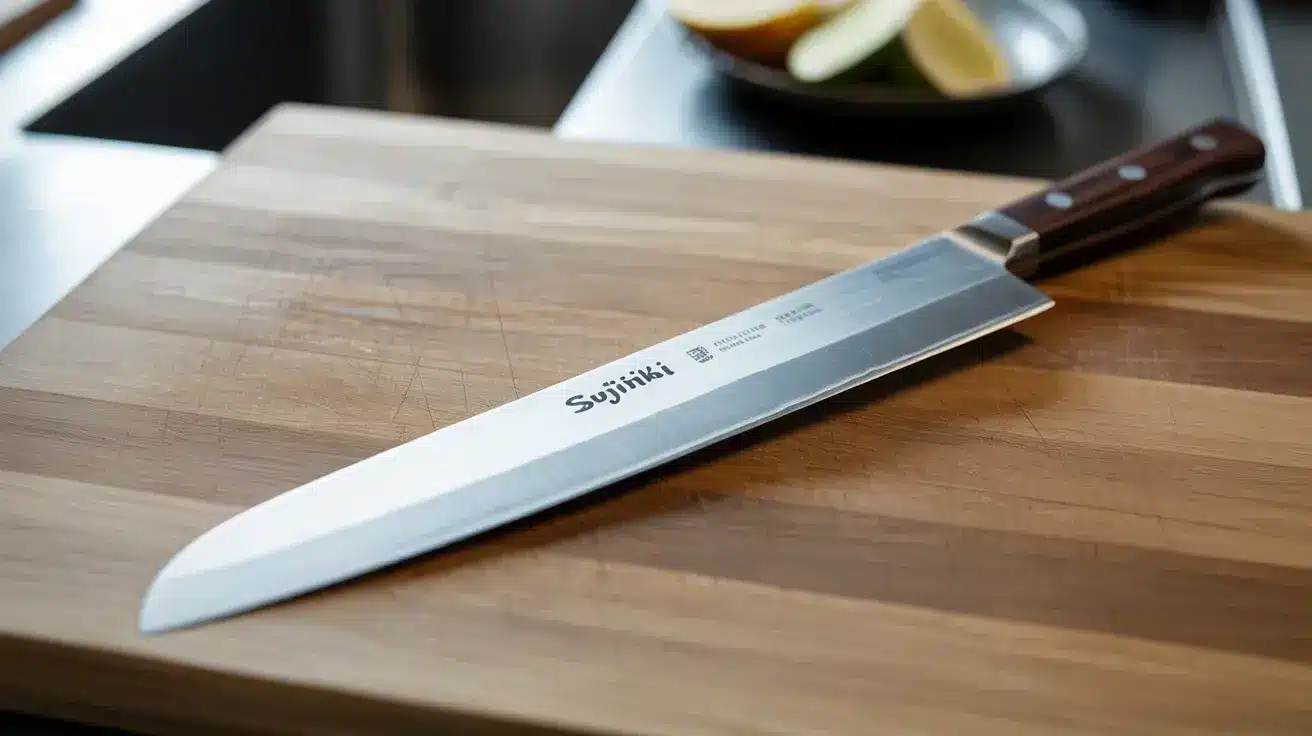
The Sujihiki is a slicing knife used for cutting meat and fish into smooth, even portions. Its long, narrow blade reduces drag, making it easier to create clean cuts without tearing the food.
I use it when presentation matters, especially while carving cooked meat. It’s a reliable option for home kitchens where you want neat portions without applying too much pressure.
- Key Features: Long, narrow blade, thin profile, double-bevel edge, typically 240–300 mm length
- Use: Slicing meat and fish into clean portions
- Best For: Cooks who carve roasts, portion smoked fish, or slice large proteins where presentation and clean cuts matter
7. Deba (Fish Knife)
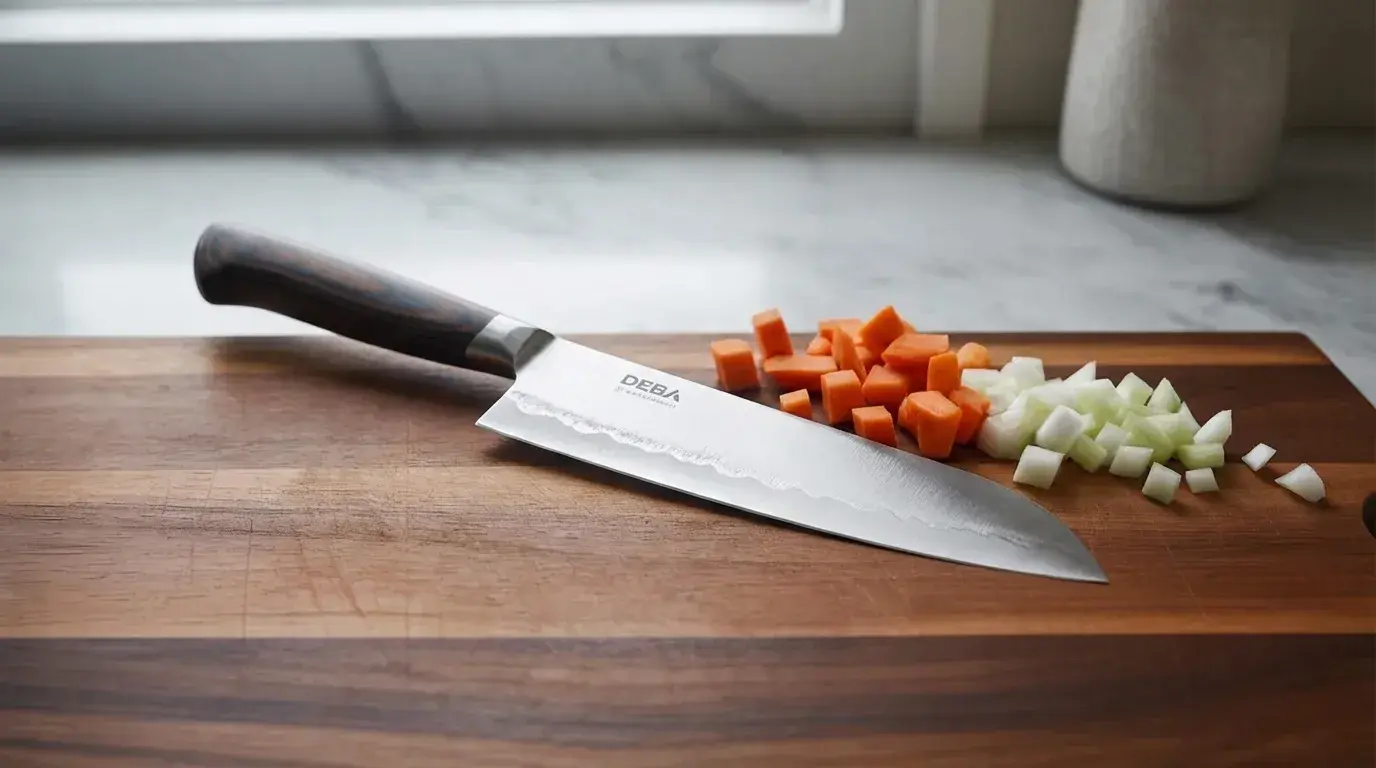
The Deba is a heavy-duty knife designed for breaking down whole fish. Its thick spine provides strength for cutting through bones, while the sharp edge allows controlled cuts when separating fillets.
I use it when I need more force without losing control. It’s best suited for kitchens where whole fish prep is part of regular cooking.
- Key Features: Thick spine, heavy blade, single-bevel edge, typically 150–210 mm length
- Use: Cutting fish heads, bones, and filleting
- Best For: Home cooks and professionals who regularly buy and break down whole fish from head to fillet
8. Petty (Utility Knife)
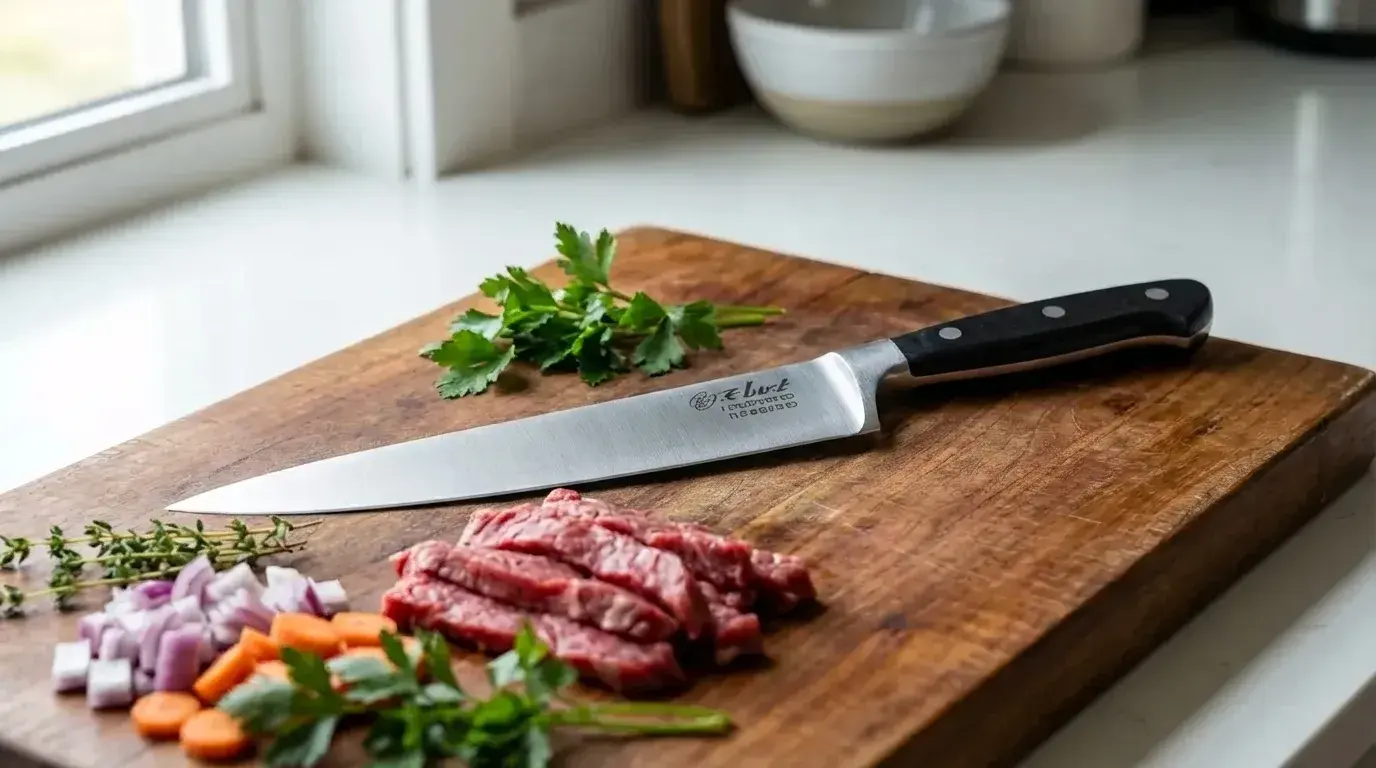
The Petty is a small, lightweight knife used for detailed kitchen tasks. It offers better control for precision work where larger knives feel too big or awkward.
I reach for it when peeling or trimming because it gives a steady grip. It’s a practical addition to any kitchen once you start doing more detailed prep regularly.
- Key Features: Narrow blade, lightweight design, fine tip, typically 120–150 mm length
- Use: Peeling, trimming, slicing small ingredients
- Best For: Any cook who needs a nimble, lightweight secondary knife for peeling, trimming, and close-detail prep work
9. Kiritsuke (Hybrid Knife)
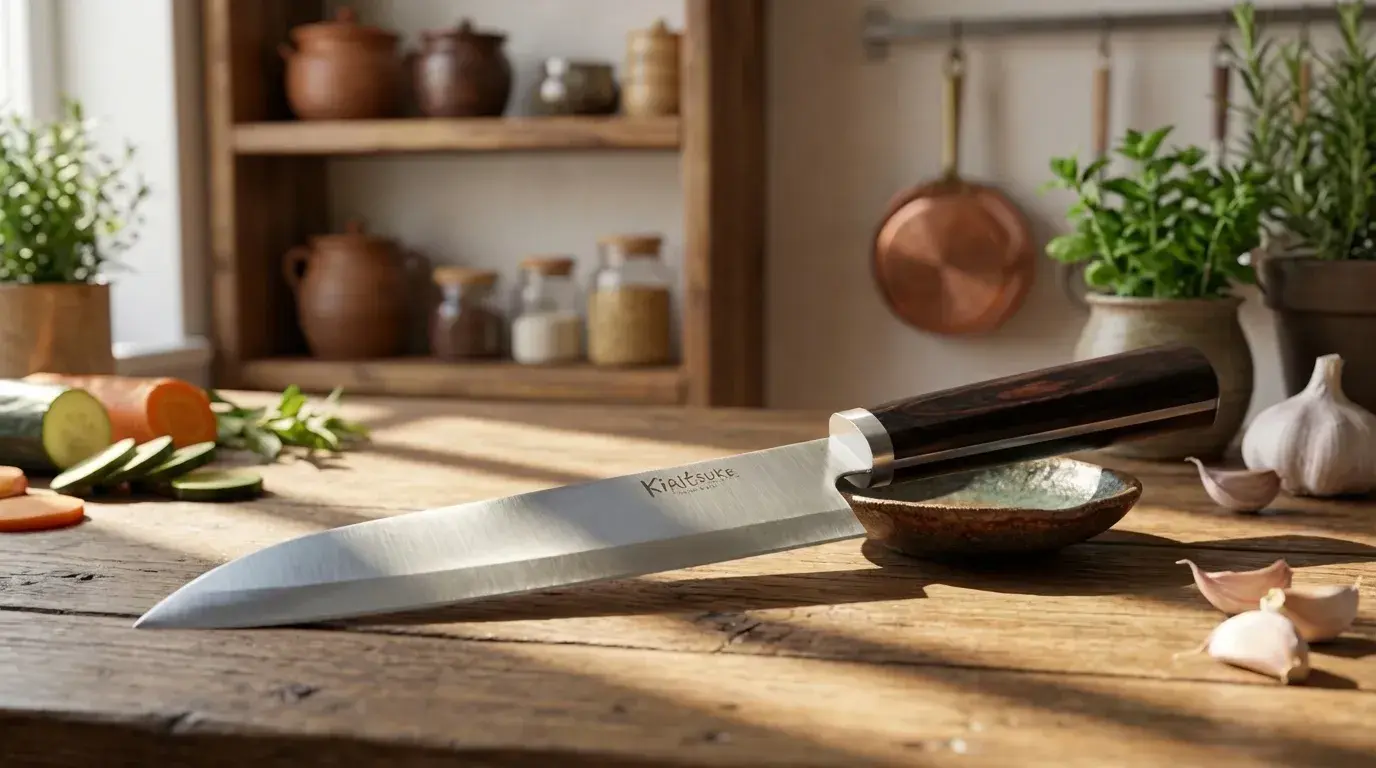
The Kiritsuke is a hybrid knife that combines slicing and chopping functions in one blade. It has a flat edge and angled tip, allowing it to handle different cutting styles with proper technique.
I use it when I want flexibility in one tool, but it does take some control. It works best in kitchens where you’re comfortable switching between cutting styles.
- Key Features: Flat edge, angled tip, long blade profile, typically 240–300 mm length
- Use: Slicing proteins and chopping vegetables
- Best For: Skilled and confident cooks who want a single high-performing knife that moves between slicing and chopping tasks
10. Bunka (Multipurpose Knife)
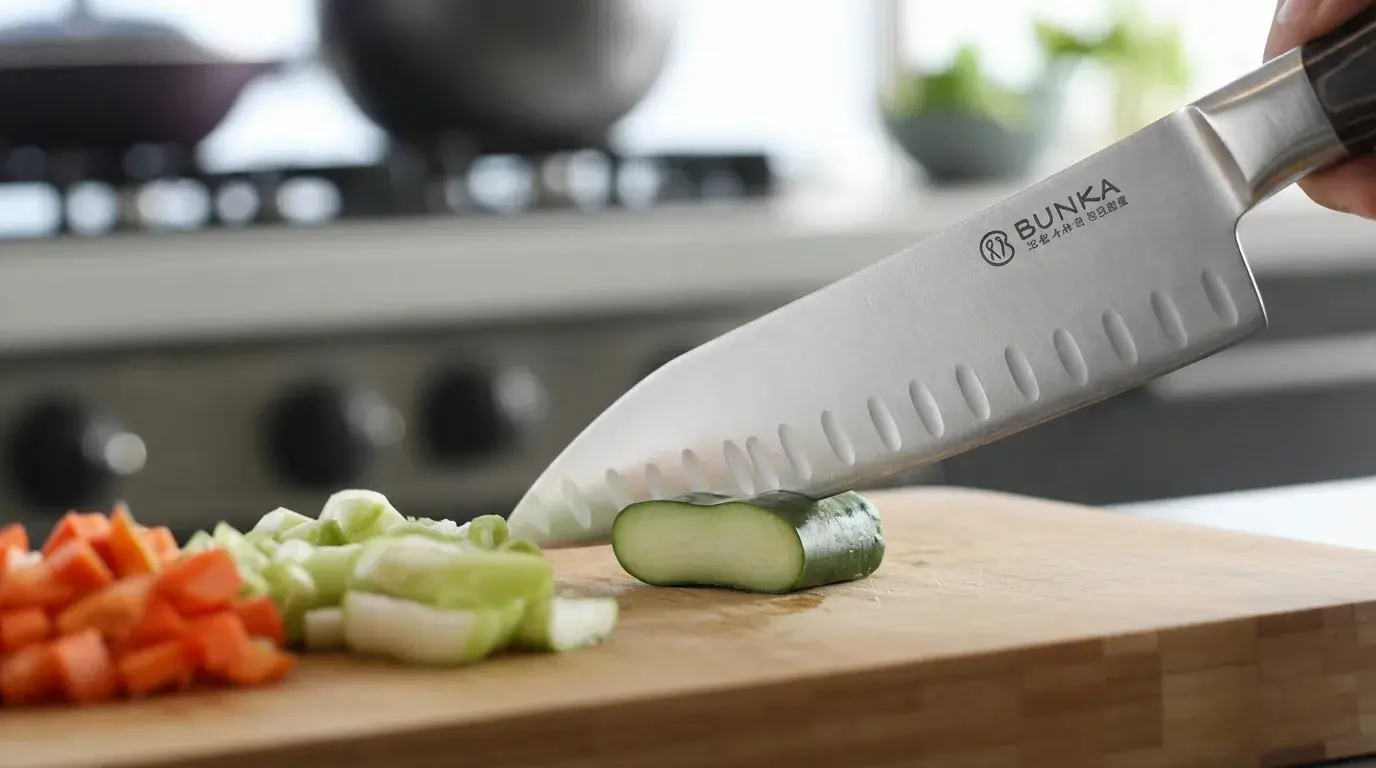
The Bunka is similar to a Santoku but includes an angled tip for better precision. I like using it when I need both general cutting and a bit of control near the tip.
It works well for trimming, scoring, and small detailed cuts. This makes it a practical option for home kitchens where one knife needs to cover multiple tasks.
- Key Features: Wide blade, angled tip, flat edge, typically 165–180 mm length
- Use: Slicing, chopping, and precision cuts
- Best For: Home cooks who want a practical everyday knife with better tip control for scoring, trimming, and detailed cuts
11. Honesuki (Boning Knife)
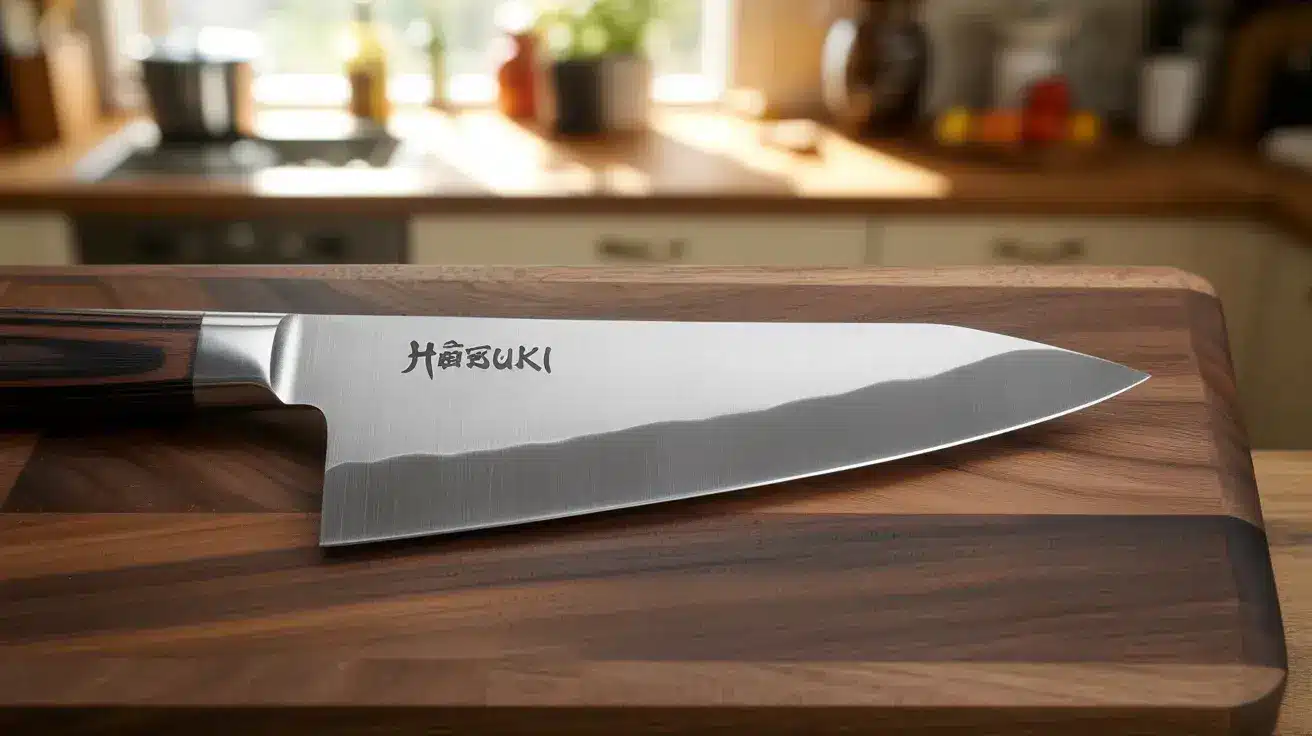
A realistic kitchen prep setup with a Honesuki knife placed on a wooden cutting board. The triangular blade is clearly visible. Include a small piece of poultry being cut or placed nearby. Natural lighting highlights blade structure. Background softly blurred, clean kitchen, minimal elements.
The Honesuki is designed for breaking down poultry with control and precision. Its stiff blade makes it easier to work around joints without slipping.
I use it when I need accurate cuts while separating meat from bone. It’s a useful tool in kitchens where you prepare fresh poultry and want better results than general knives provide.
- Key Features: Triangular shape, stiff blade, strong tip, typically 140–150 mm length
- Use: Deboning chicken and other poultry
- Best For: Home cooks and prep cooks who regularly break down whole chickens, ducks, or game birds from scratch
12. Garasuki (Butchery Knife)
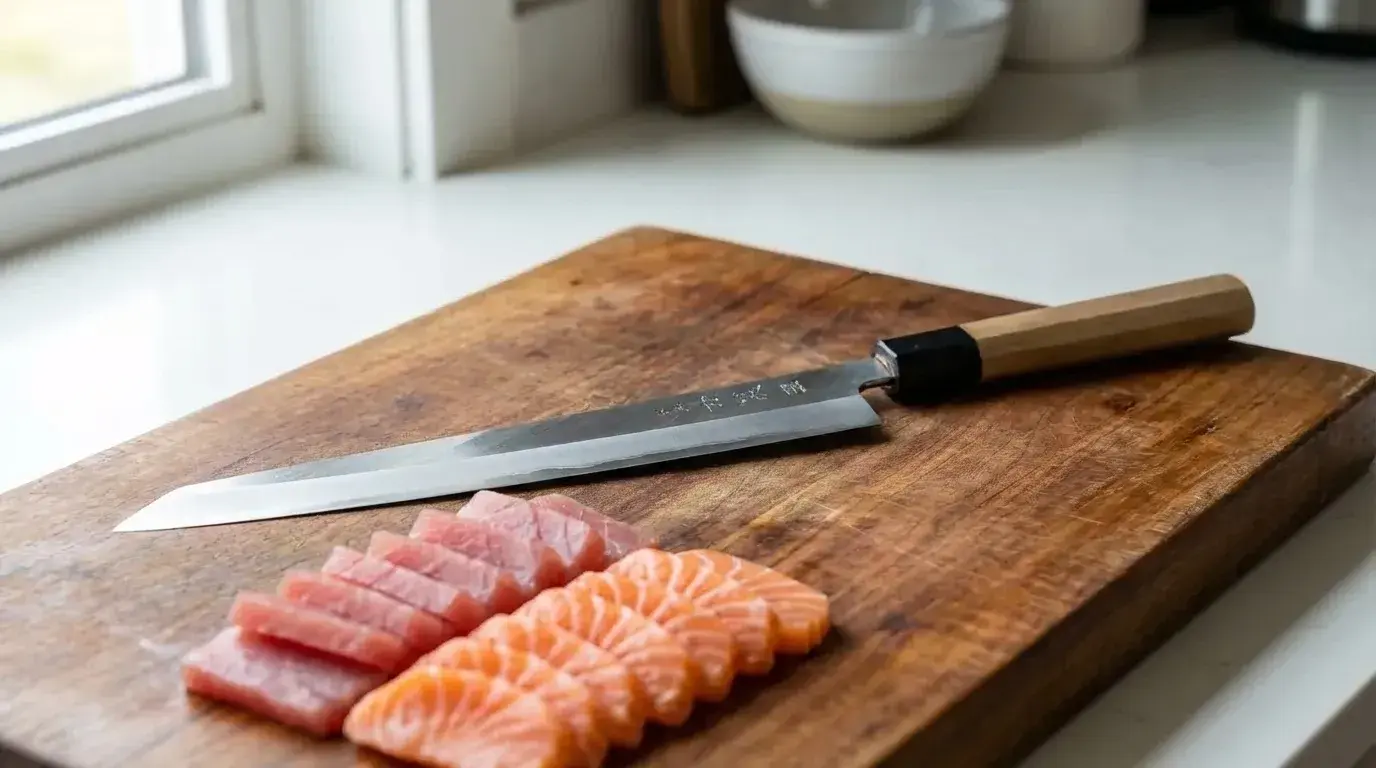
The Garasuki is a heavier version of a boning knife built for tougher meat prep tasks. It offers more weight and strength, which helps when cutting through larger joints.
I use it when I need both power and control. It works well in kitchens where you handle larger cuts of meat regularly.
- Key Features: Thick, heavy blade, strong spine, stiff structure, typically 180–210 mm length
- Use: Breaking down large poultry and meat cuts
- Best For: Professional butchers and serious home cooks who handle large whole birds or heavy primal cuts regularly
13. Takobiki (Sashimi Knife)
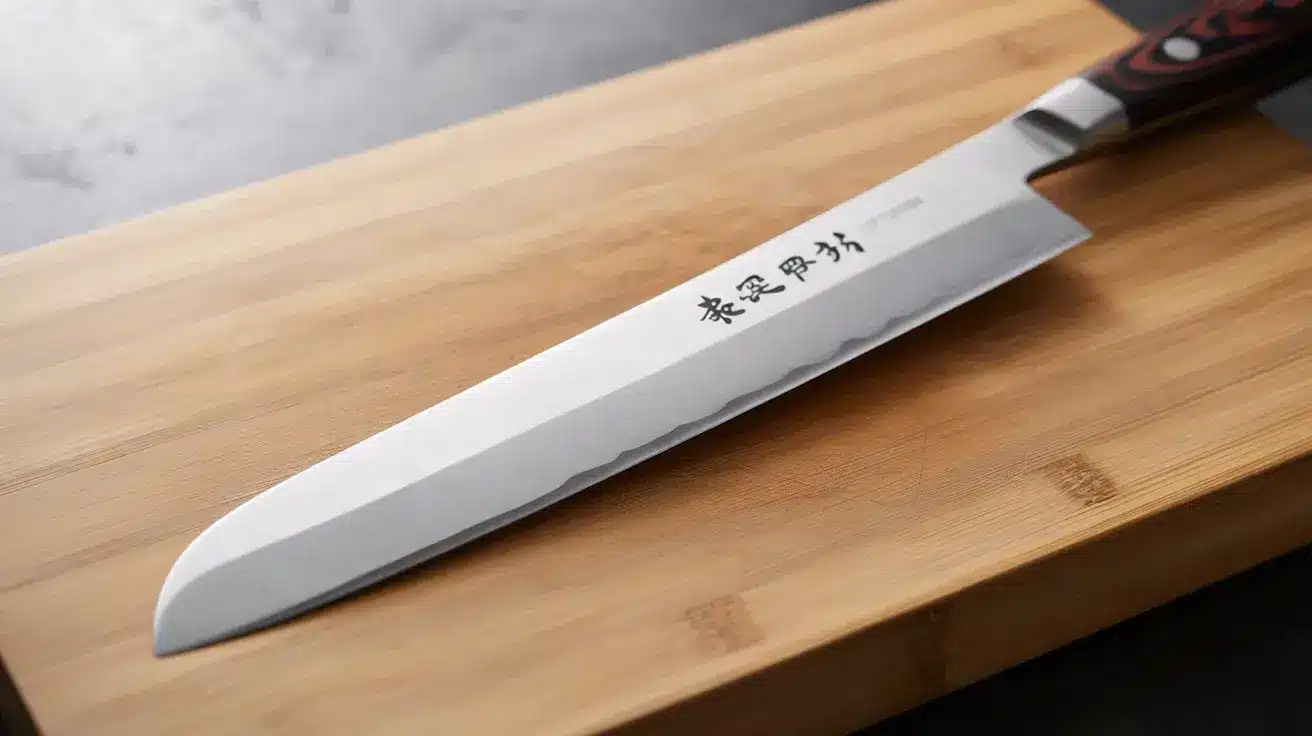
The Takobiki is a regional sushi knife known for its flat tip and long blade. I use it when I want precise, straight slices with better tip control.
It offers a slightly different feel compared to other slicing knives, especially during detailed work. It fits best in kitchens focused on consistent presentation.
- Key Features: Long blade, flat profile, squared tip, typically 240–300 mm length
- Use: Slicing fish for sashimi and sushi
- Best For: Professional sushi chefs and dedicated home cooks working within traditional Tokyo-style Japanese fish preparation
14. Pankiri (Bread Knife)
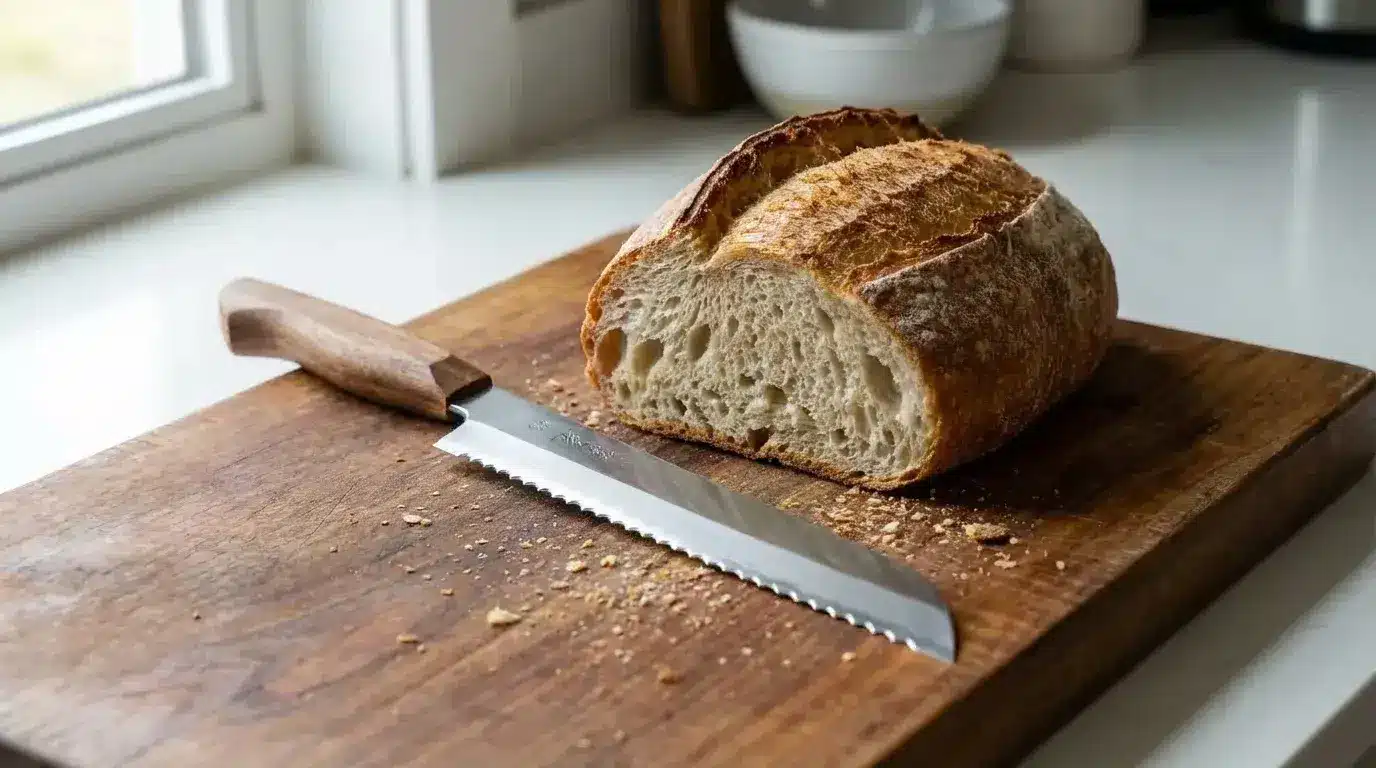
The Pankiri is a serrated knife designed for cutting bread and baked goods without crushing them. I use it when working with soft loaves because the edge grips and slices cleanly.
It’s a simple but useful tool in kitchens where baked items are part of regular meals.
- Key Features: Serrated edge, long blade, lightweight design, typically 210–270 mm length
- Use: Cutting bread, cakes, and soft baked goods
- Best For: Home bakers and everyday cooks who regularly slice fresh crusty bread, soft loaves, or layered baked goods
15. Hankotsu (Butcher Knife)
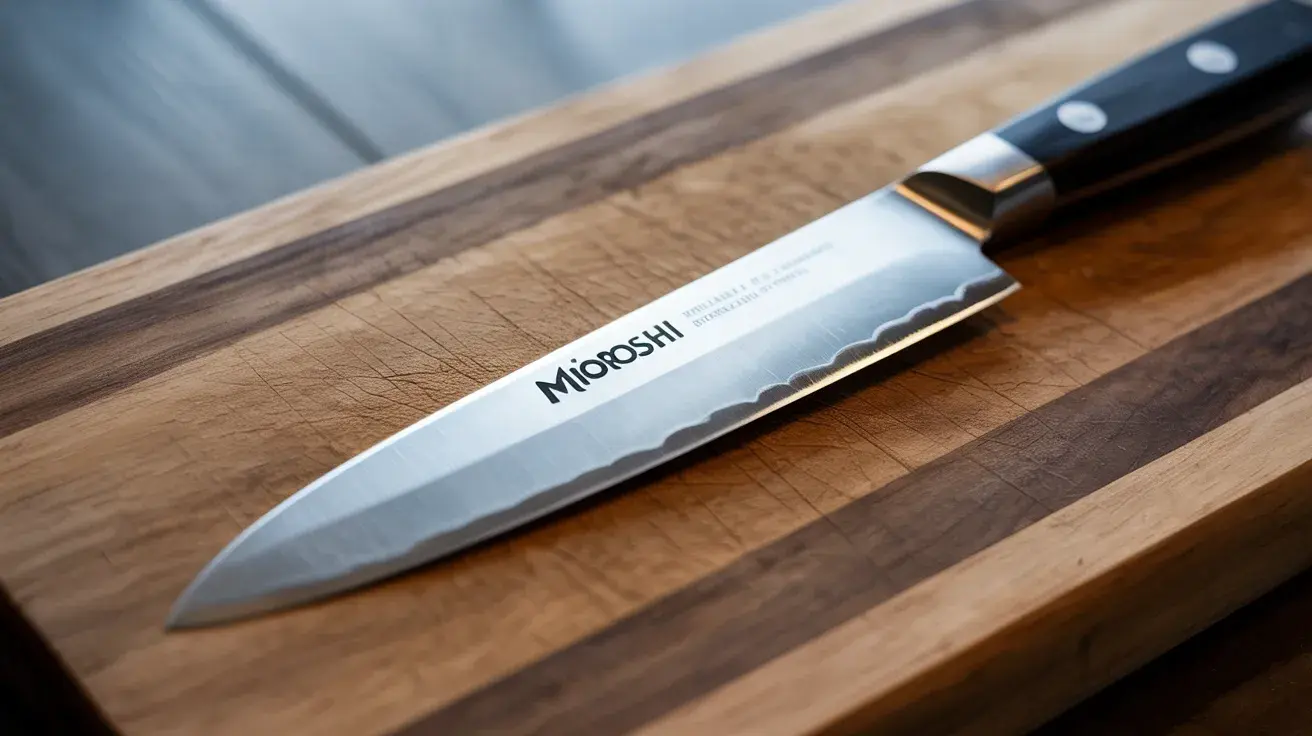
The Hankotsu is a compact knife used for working close to the bone during meat prep. Its rigid blade gives better control when separating meat from joints.
I use it when precision matters in tight areas. It’s a useful addition for kitchens where meat prep is done regularly.
- Key Features: Short, rigid blade, strong spine, narrow profile, typically around 150 mm in length
- Use: Separating meat from bone and trimming
- Best For: Butchers and home cooks who do whole animal or large primal cut prep requiring close-contact bone work
16. Mioroshi (Fish Knife)
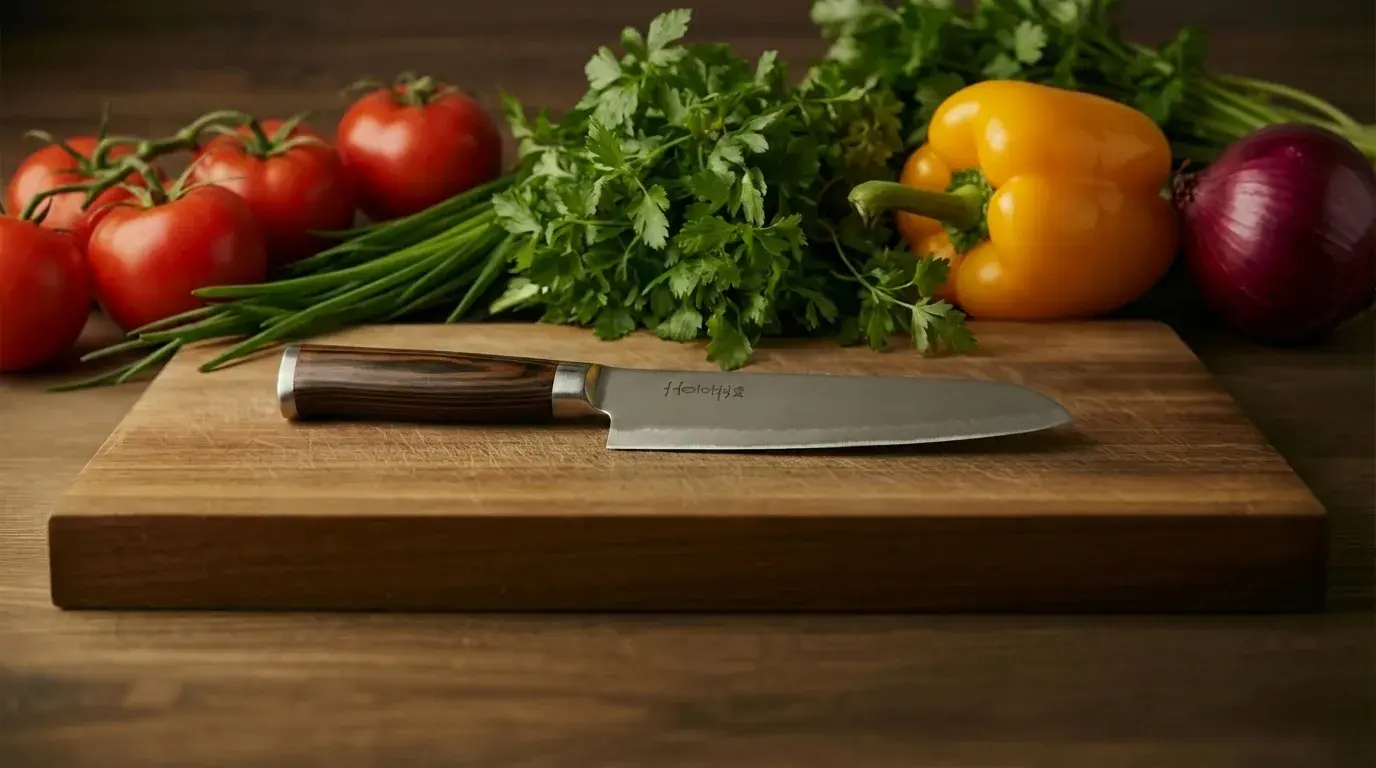
The Mioroshi is a hybrid knife designed for both filleting and slicing fish. It offers more length and flexibility than a Deba, making it easier to handle full fish prep in one tool.
I use it when I want a smoother transition from cutting to slicing. It fits well in kitchens where fish prep is frequent.
- Key Features: Longer, thinner blade than Deba, balanced profile, typically 210–270 mm length
- Use: Filleting and slicing fish
- Best For: Cooks who work with whole fish regularly and want one knife that handles both filleting and slicing efficiently
Japanese vs. Western Knives
Japanese and Western knives are built on different philosophies, and those differences show up in everything from how they cut to how you care for them.
| Feature | Japanese Knives | Western Knives |
|---|---|---|
| Sharpness | Harder steel ground to a finer angle for cleaner, more precise cuts | Softer steel with a broader edge that handles rough use better |
| Weight | Lighter with balance toward the blade for controlled cutting | Heavier with even weight distribution for comfortable all-day use |
| Cutting Motion | Precise, deliberate strokes that work best with specific techniques | Natural rocking motion that most cooks already use without thinking |
| Maintenance | Needs careful handling, proper sharpening tools, and regular attention | More forgiving and easier to maintain for everyday home use |
Many chefs use Japanese knives for precise cuts and Western knives for tougher tasks. The right choice depends on your cooking style and how much care you give your knives.
Common Mistakes When Choosing Japanese Knives
Most beginners make the same handful of mistakes when picking their first Japanese knife, and they’re all easy to avoid once you know what to look for.
- Buying too many knives at once: Starting with one or two knives you actually use beats owning ten that sit in a drawer. A Gyuto or Santoku covers most of what a home cook needs daily.
- Choosing advanced knives too early: Single-bevel knives like the Usuba or Yanagiba demand real technique. Picking them before building basic knife skills leads to frustration and a blade that underperforms in unpracticed hands.
- Ignoring maintenance: Japanese knives need proper sharpening and careful handling. Using them on hard surfaces, tossing them in a drawer, or skipping sharpening will damage the edge faster than most people expect.
Start simple, learn the basics, and add knives to your collection as your cooking actually demands them.
Final Thoughts
Understanding japanese knife types changes how you think about cooking, not just how you cut.
You don’t need a full collection to get started. One knife that fits your cooking style and the tasks you actually do daily will take you further than ten blades sitting unused in a drawer.
From my time testing these knives in real home kitchens, the biggest shift happens when you stop treating every knife as interchangeable and start matching the blade to the job. That one change makes prep faster, cleaner, and honestly a lot more satisfying.Start with one knife, learn it well, and build from there.
If you found this useful, check out our other guides on knife care, kitchen tool selection, and smart storage solutions that keep your cooking space working for you.
Frequently Asked Questions
Why do Japanese knives feel harder to use at first?
They are sharper, thinner, and more precise than most Western knives. That level of sharpness requires better hand control, adjusted cutting pressure, and a slightly different technique before the knife starts feeling natural in your hand.
Why are single-bevel knives harder to sharpen?
Single-bevel edges are ground on one side only, which requires specific sharpening tools and a practiced technique to do correctly. They are designed for precision tasks like sashimi preparation and fine vegetable work, not casual everyday kitchen use.
Why do experienced cooks own multiple similar knives?
Small differences in blade weight, length, steel type, and balance change how a knife feels during extended use. Many experienced cooks build collections based on personal preference and how a specific knife performs for a particular task they care about.
Can one knife replace all specialized Japanese knives?
A single knife like a Gyuto can handle most everyday tasks reasonably well, but it will never match the precision and performance of a blade built specifically for fish slicing, bone work, or fine vegetable cutting.