
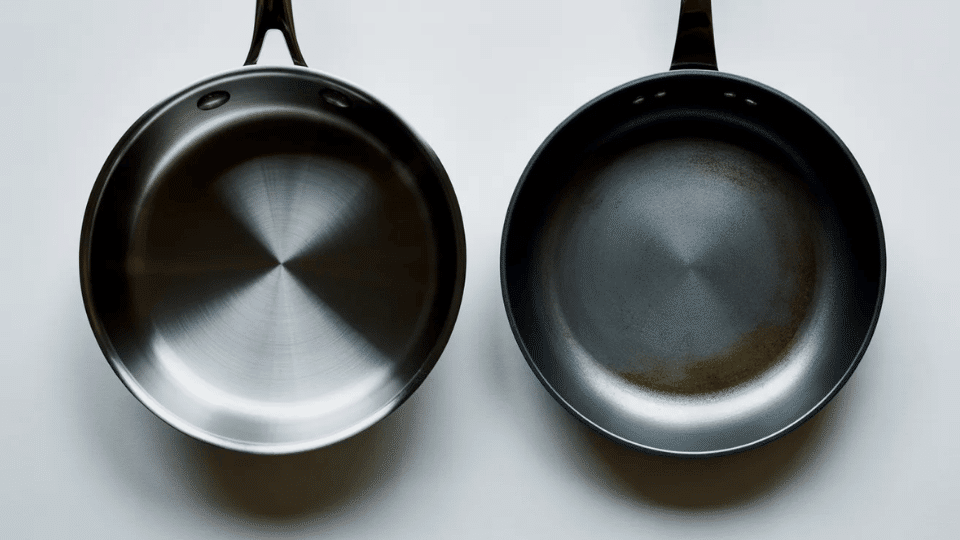
Choosing between a carbon steel and stainless steel pan sounds straightforward until you’re actually standing there trying to decide.
Both are durable, both handle high heat, and both have passionate defenders online. But they are built differently, they behave differently, and one of them will suit the way you cook far better than the other.
I’ve cooked on both long enough to know that the decision isn’t really about the pan, it’s about your habits in the kitchen.
I plan to cover the core differences in material and construction, how each pan actually performs across common cooking tasks, what seasoning really involves, and how to maintain both without overcomplicating it. By the end, you’ll know exactly which one belongs in your kitchen.
The Quick Answer
If you’ve been going back and forth between carbon steel and stainless steel, you’re not alone, this is genuinely one of the more confusing kitchen decisions.
Both pans look similar, both get hot, and both show up on every “best cookware” list. But they cook differently, they age differently, and the wrong choice can quietly make cooking feel harder than it needs to be.
In my experience, the right pan comes down to one thing: how you actually cook, not how you plan to cook. If you want low effort and consistency, stainless steel is your answer.
If you want more control and don’t mind a short learning curve, carbon steel will pay you back over time. Here’s what I’ve found after testing both in a real kitchen.
Why This Choice Feels Confusing
Most people land on this question after standing in a store aisle or scrolling through product pages for twenty minutes, still unsure. The names sound almost identical, the price ranges overlap, and every review seems to contradict the last one.
- Both look like serious cookware, and both genuinely are, which doesn’t make choosing easier
- One pan changes as you use it; the other stays exactly the same from day one
- Most comparisons list features, not what it actually feels like to cook with them daily
The real confusion isn’t about the pans. It’s that most comparisons don’t tell you which type of cook you are first.
The Core Difference: Carbon Steel vs Stainless Steel Pan
Before anything else, materials and build. This is what makes these two pans behave so differently from the start.
| Factors | Carbon Steel | Stainless Steel |
|---|---|---|
| Material | Single metal alloy (iron + carbon) | Layered construction (steel + aluminum or copper core) |
| Surface | Reactive, builds seasoning over time | Non-reactive, stays consistent |
| Weight | Lighter than cast iron, slightly lighter than stainless | Heavier due to layered build |
| Induction ready | Yes | Yes (most multi-ply pans) |
| Starting surface | Needs seasoning before first use | Ready to cook from day one |
Carbon steel is a single working material that evolves with use. Stainless steel is an engineered construction built for reliability and consistency from the first cook.
How These Pans Actually Cook
The material difference above explains what each pan is. This is where you see what that means when there’s actual heat and food involved.
Carbon Steel
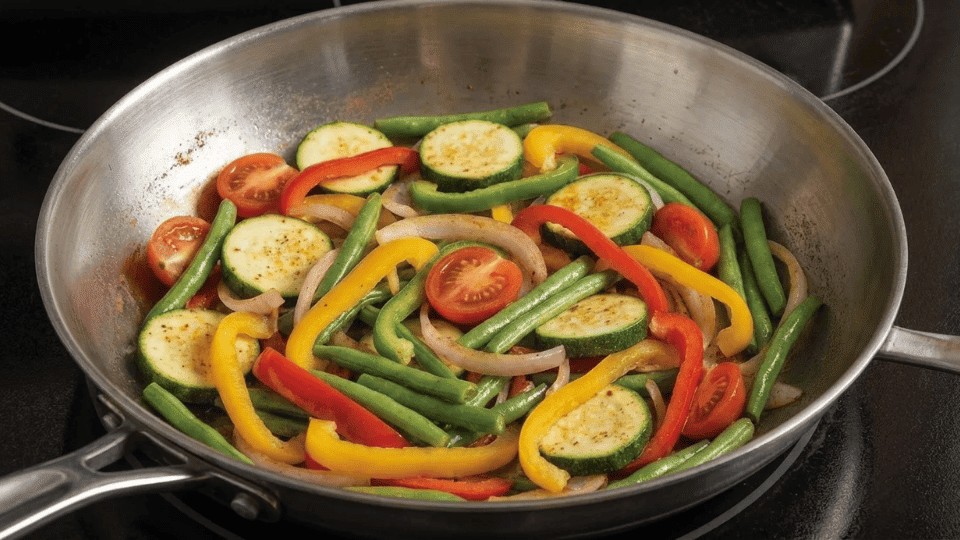
Carbon steel heats up fast and responds almost immediately to adjustments in the flame; turn it down, and the pan follows quickly.
- Heats up fast: ready to cook sooner than stainless steel
- Responds quickly to heat changes: useful when you need to drop the temperature fast
- Can develop a natural non-stick surface: with a well-built seasoning, eggs and fish release cleanly
- Best for: eggs, pancakes, sautéed vegetables, searing fish, high-heat stir-frying
- Avoid for: tomato-based sauces, wine reductions, anything acidic, it can affect flavor and strip seasoning
Stainless Steel
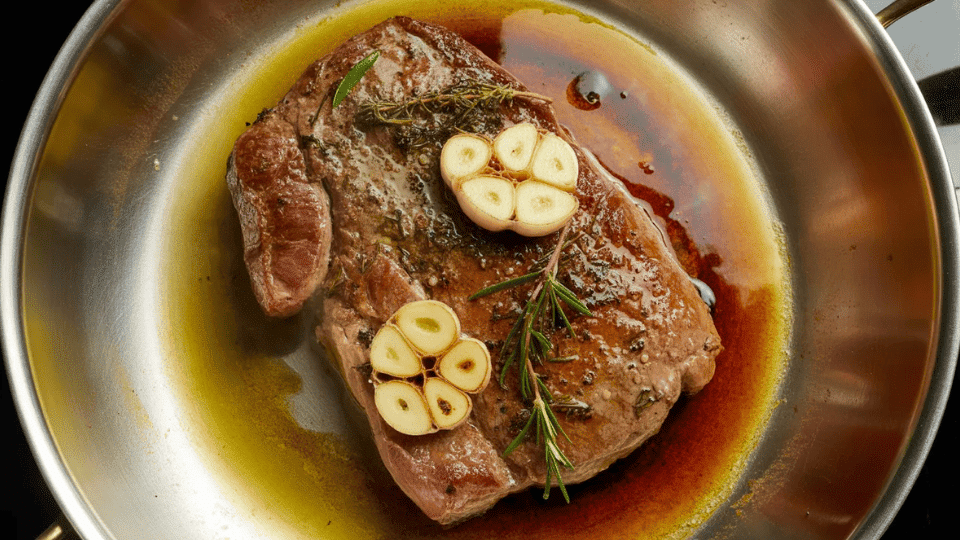
Stainless steel takes slightly longer to come up to heat, but once it’s there, it holds that heat steadily and distributes it more evenly across the surface.
- Heats more evenly: fewer hot spots, more consistent browning
- Holds heat longer: better for building fond and finishing sauces
- Slower to respond: needs a little more attention when adjusting temperature
- Best for: searing meat, deglazing, sauces, acidic dishes, one-pan meals
- Avoid for: delicate fish or eggs without careful heat management, it will stick if rushed
Seasoning Carbon Steel: What It Is and Why It Matters
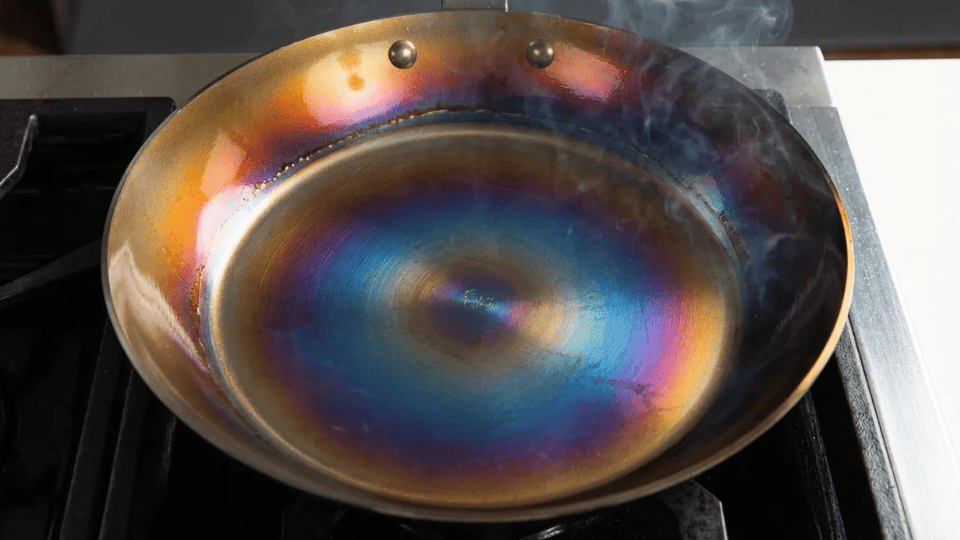
Seasoning isn’t a coating you apply once; it’s a layer that builds gradually over time as you cook. When oil is heated past its smoke point on the pan surface, it bonds to the metal and polymerizes into a thin, hard layer.
Over time, those layers stack up, creating a naturally non-stick surface. The first few uses will feel frustrating. Food may stick, the surface will look patchy, and it won’t behave like a non-stick pan yet.
That’s normal. What you’re doing in those early cooks is building the foundation. Use oil with a high smoke point, cook fatty foods like bacon or fried eggs early on, and avoid acidic ingredients until the seasoning is well established.
The more regularly you cook with it, the better it gets. A carbon steel pan used daily will outperform one used occasionally every time.
What and How Much Maintenance They Need
Carbon steel needs a little attention after each use, but it’s straightforward once it becomes a habit. Wash with hot water and a soft brush, avoid soaking, and skip the dish soap when you can.
Dry it immediately and completely, either on the hob over low heat or with a cloth. While it’s still warm, rub a very thin layer of neutral oil over the surface. If rust appears, it means moisture was left on the pan.
Scrub it off with steel wool, re-season the affected area, and carry on. It’s recoverable. Stainless steel asks very little of you. Wash it with soap and a scrubber, soak it if needed, and put it away.
You’ll likely see discoloration, heat marks, or whitish mineral deposits over time; these are cosmetic and normal. A small amount of Bar Keepers Friend or a baking soda paste brings the surface back quickly. No oiling, no special drying routine required.
Common Problems (And How to Fix Them)
Both pans come with a short learning curve. These are the issues that come up most often.
- Food sticks to stainless steel: almost always a preheating issue. Heat the dry pan first until a drop of water skitters across the surface, then add oil, then food. Rushing this step is the main reason stainless steel gets a bad reputation for sticking.
- Carbon steel isn’t non-stick yet: this just means the seasoning is still new or thin. Keep cooking with it, use oil generously in the early weeks, and avoid acidic foods until the surface has built up. It will get there.
- Pan looks stained or burnt: for stainless, deglaze with water while the pan is still warm, or use a baking soda paste on stubborn spots. For carbon steel, a light scrub and re-oil is usually enough. Neither situation is damaged, it’s just residue.
Most of these problems fix themselves with a little time and repetition. Neither pan is fragile; they just need the right approach early on.
Final Thought
At the end of the day, the carbon steel vs stainless steel pan debate doesn’t have a universal winner; it has a right answer for your kitchen specifically.
Carbon steel rewards patience and builds into something genuinely impressive over time. Stainless steel shows up consistently, handles everything you throw at it, and asks very little in return.
Both are capable, both are worth owning, and neither will let you down if you understand how to use them. What I’ve covered here, construction, heat behavior, seasoning, maintenance, and common fixes, should give you enough to make that call with confidence.
If this helped you decide, I’d love to hear which one you’re going with in the comments.