

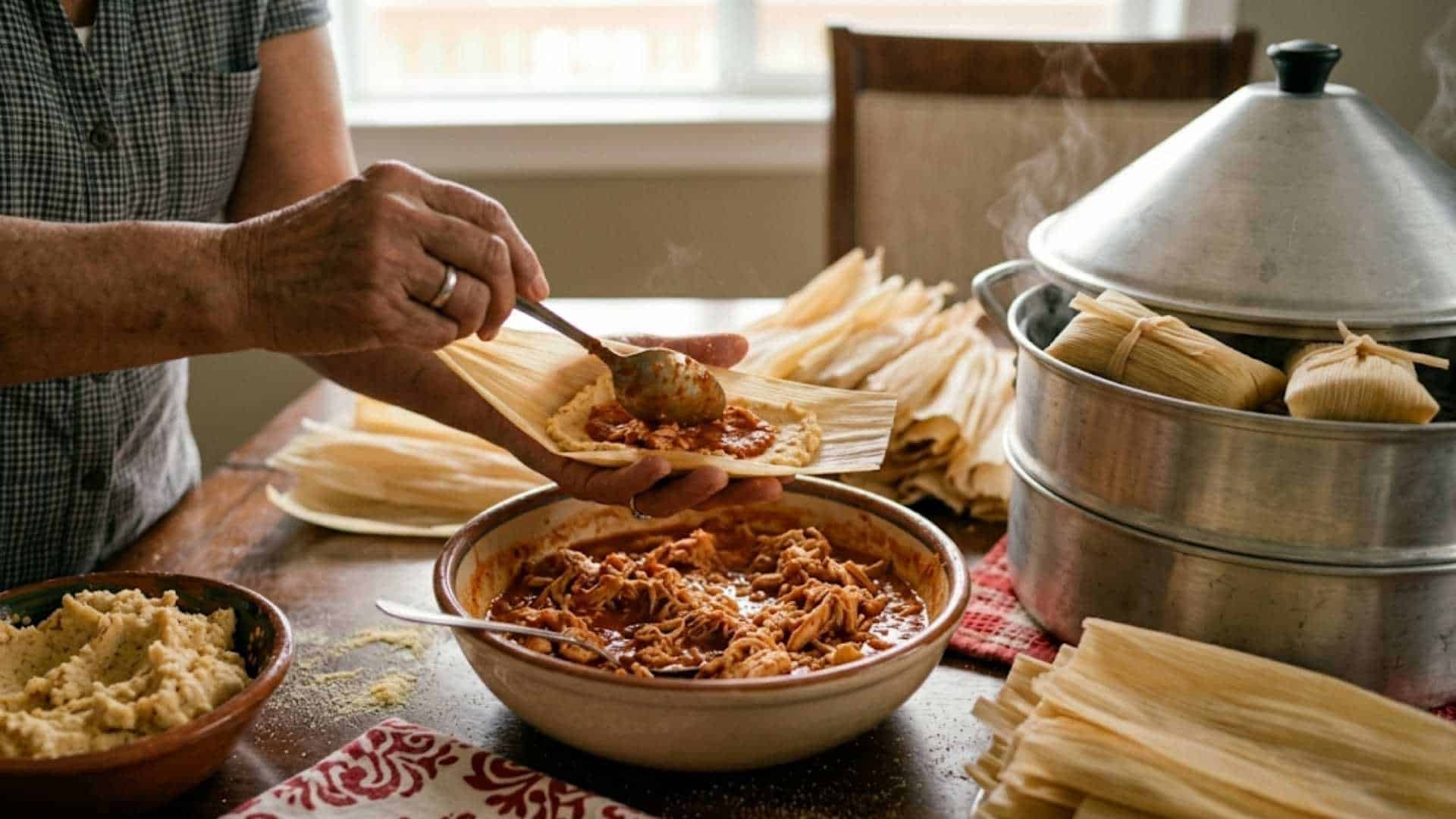
As a nutrition researcher, I have seen tamales spark the same debate again and again in my work and at my family table and the question I hear most often is: are tamales healthy.
My aunt made them every holiday, and I watched my relatives pile their plates without a second thought. But when my cousin started gaining weight, and my uncle was told to watch his carbs, tamales became the first food they questioned.
I spent weeks digging into the real numbers, calories, fat, and carbs to give my family honest answers. In this article, I will share exactly what the nutrition data says, the real benefits, and how you can enjoy tamales in a way that actually fits a healthy diet.
What’s Really Inside a Tamale: Traditional Ingredients, Types.
Tamales are a traditional dish made from masa, a soft dough made from ground corn. The dough is spread onto dried corn husks, then filled with ingredients like seasoned chicken, pork, beef, cheese, or beans.
Lard or oil is mixed into the masa to give it a smooth, moist texture. Once filled and wrapped, tamales are steamed until fully cooked.
This steaming process keeps them soft and holds everything together. There are several common types of pork tamales, chicken tamales, cheese and vegetable tamales, and sweet tamales made with fruit or sugar.
Each type uses the same basic method but differs in filling and flavor, making tamales one of the most versatile traditional foods you can find.
Tamales Nutrition Facts
Here is what one tamale actually contains understanding these numbers helps you see exactly how tamales fit into a balanced, everyday diet:
| Nutrient | Amount per Tamale |
|---|---|
| Calories | 200–300 kcal |
| Protein | 8–12g |
| Fat | 10–15g |
| Carbohydrates | 20–30g |
| Iron | Moderate |
| Magnesium | Moderate |
| B Vitamins | Present |
| Fiber | Modest |
Use these values as a practical starting point, not a rigid rule small changes in your recipe, filling choice, or portion size can shift each number noticeably.
Health Benefits of Tamales
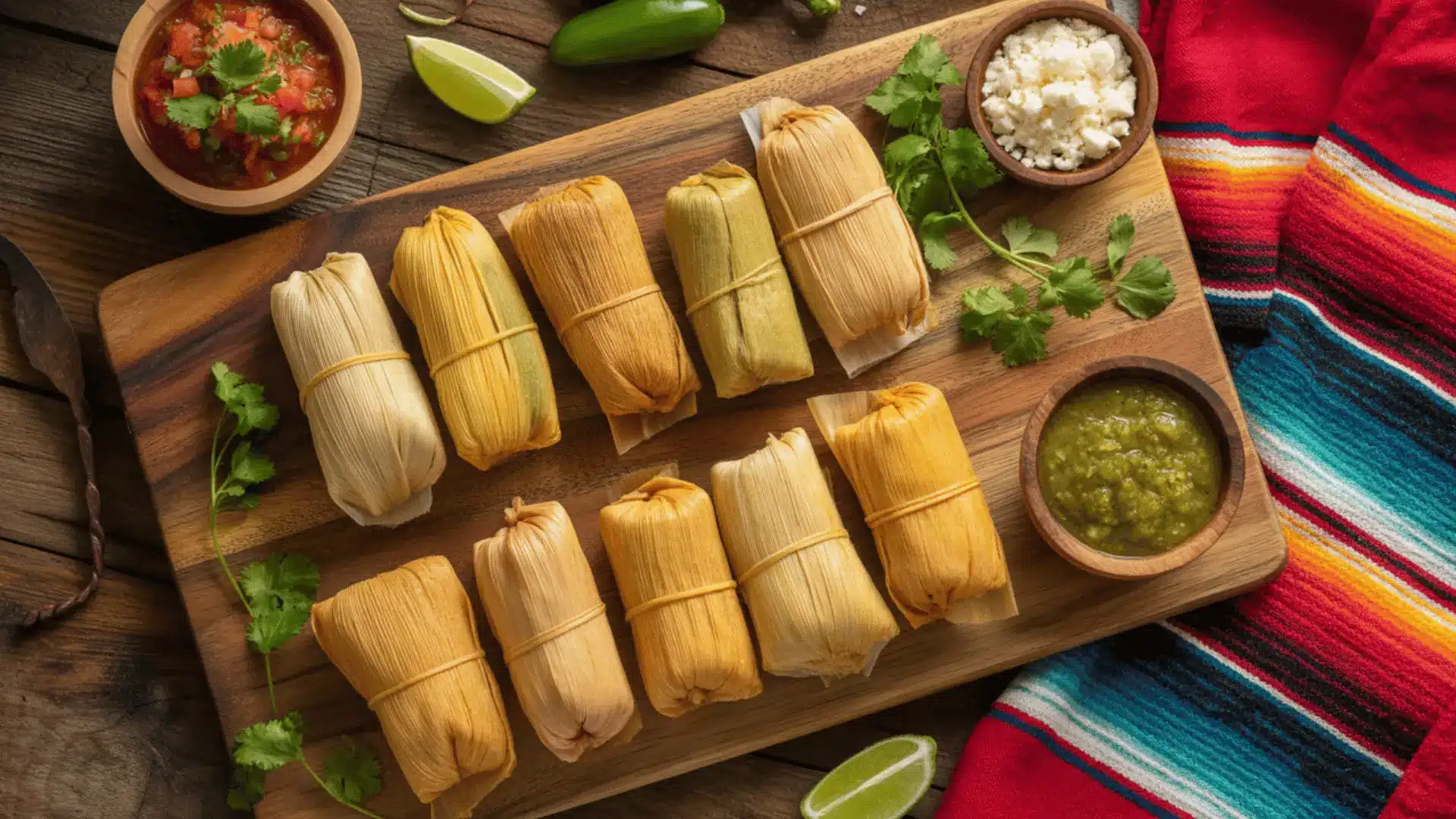
Tamales are more than just a traditional comfort food, they carry real nutritional value that often gets overlooked: here is what makes them worth keeping on your plate.
1. Energy from Carbohydrates
Corn-based masa is your body’s go-to fuel. The complex carbohydrates in masa release energy steadily, helping power your muscles and keep your brain sharp throughout the day.
Unlike refined snacks that cause energy crashes, masa offers a more sustained release, making tamales a practical choice for an active lifestyle. Pair them with fiber-rich sides to extend that energy even further.
2. Solid Protein Source
The fillings inside tamales do serious nutritional work. Chicken, pork, beans, and cheese all contribute meaningful amounts of protein roughly 8 to 12 grams per tamale which is essential for muscle repair, immune function, and satiety.
Plant-based fillings like beans and tofu are especially valuable for those seeking protein without the added saturated fat that comes with fattier meat options.
3 Naturally Gluten-Free
One of tamales’ most underrated advantages is that they are made entirely with corn masa, not wheat flour, making them naturally free of gluten. This makes tamales a genuinely safe and satisfying meal option for people managing gluten sensitivity or celiac disease.
Always check store-bought versions for additives, but traditional homemade tamales are a reliable, allergen-friendly comfort food loved across generations.
4. Nutrient-Rich Fillings
What goes inside your tamale matters just as much as the masa. Loading tamales with vegetables, black beans, or lean meats transforms them into a well-rounded meal packed with vitamins, minerals, and dietary fiber.
Ingredients like peppers, spinach, and corn boost antioxidant content, while beans add plant-based iron and folate all delivered in one compact, flavorful serving that requires no complicated preparation or extra dishes.
5. Portion-Friendly Format
Tamales come with a built-in advantage that most foods do not a natural, pre-defined serving size. Each individually wrapped tamale makes it straightforward to track your intake without measuring cups or food scales.
This built-in portion control is especially helpful at gatherings where overeating is common. Simply choosing one or two tamales alongside a fresh salad or grilled vegetables keeps your meal balanced and satisfying
When Tamales Are Not Healthy
Tamales have real benefits, but they also come with drawbacks that are easy to miss: here is what you need to watch out for before your next serving.
- High Fat from Lard: Traditional tamales are made with lard, which adds saturated fat that can raise cholesterol levels over time.
- Excess Sodium from Seasoned Fillings: Heavily seasoned meats and rich sauces used in many tamale recipes push sodium levels well above a healthy daily limit.
- Calorie Buildup from Multiple Servings: Eating two or three tamales in one sitting can quickly double or triple your calorie intake without you even noticing.
- Low Nutritional Value in Some Fillings: Tamales stuffed with fatty meats and minimal vegetables offer very little fiber, vitamins, or minerals per serving.
- Hidden Additives in Store-Bought Versions: Packaged and restaurant tamales often contain preservatives, excess oil, and added sodium that homemade versions do not.
Knowing these risks does not mean you have to avoid tamales entirely: it simply means being mindful of how they are made, what goes inside them, and how many you eat at once.
Are Tamales Healthy for Different Diets?
Whether tamales fit your diet depends entirely on your health goals and how the tamales are made. For diabetics, the corn masa raises blood sugar due to its carbohydrate content, so portion control and pairing with protein or fiber matters greatly.
For heart health, the traditional use of lard and heavily salted fillings can be a concern, making low-sodium, oil-based versions a smarter swap. For those on a gluten-free diet, tamales are a naturally safe choice since corn masa contains no wheat.
For high-protein diets, tamales can work well but only when filled with lean meats, beans, or cheese rather than fatty cuts. The tamale itself is not the problem; what goes into it and how much you eat make all the difference.
How to Make Tamales Healthier
With a few simple swaps, you can enjoy tamales without sacrificing your health goals. Here are some easy ways to make this traditional dish more nutritious:
- Lean Proteins: Opt for lean cuts of meat or plant-based fillings like beans, vegetables, or tofu to reduce saturated fat
- Reducing Sodium: Make tamales at home with less salt to keep sodium levels in check and avoid processed ingredients
- Whole Grains: Choose whole-grain masa or mix in healthy grains like quinoa to boost fiber and nutrient content
- Portion Control: Stick to mindful serving sizes and pair tamales with healthy sides like salads or grilled veggies
By making these small but impactful changes, tamales can easily fit into a balanced and health-conscious diet. These modifications allow you to savor every bite while still nourishing your body the right way.
Tamales vs Other Popular Foods
Tamales are often judged unfairly when compared to other popular foods: here is how they actually stack up against five common options across calories, protein, and fat.
| Food | Calories | Protein | Fat |
|---|---|---|---|
| Tamale | 200–300 | 8–12g | 10–15g |
| Burrito | 400–700 | 15–25g | 15–25g |
| Taco | 150–250 | 6–10g | 8–12g |
| Empanada | 250–350 | 8–12g | 12–18g |
| Sandwich | 350–550 | 12–20g | 10–20g |
Compared to most everyday foods, tamales sit in the middle range for calories and fat, making them a reasonable choice when portion size is managed and fillings are chosen wisely.
Tips for Eating Tamales in a Balanced Diet
Enjoying tamales regularly is completely possible without derailing your diet: it just takes a few simple habits to keep each meal balanced and nutritious.
- Pair with Vegetables: Serve tamales alongside a fresh salad, steamed greens, or roasted vegetables to add fiber and nutrients to your plate.
- Limit High-Fat Sauces: Heavy sour cream or oil-based sauces add unnecessary calories fast, so use them sparingly or swap for salsa instead.
- Avoid Overeating: Stick to one or two tamales per sitting since their calorie density adds up quickly when portions are not managed.
- Choose Lean Fillings: Opt for chicken, turkey, or beans over fatty pork or beef to keep protein high and saturated fat low.
- Balance Your Plate: Fill at least half your plate with vegetables or a light side dish so tamales complement your meal rather than dominate it.
These simple tips do not require giving up tamales: they just help you enjoy them in a way that supports your overall health and daily nutrition goals.
How Many Tamales Can You Eat in a Healthy Diet?
Most nutrition guidelines suggest 1 to 2 tamales per meal as a reasonable portion, especially when paired with a healthy side such as vegetables, beans, or a light salad.
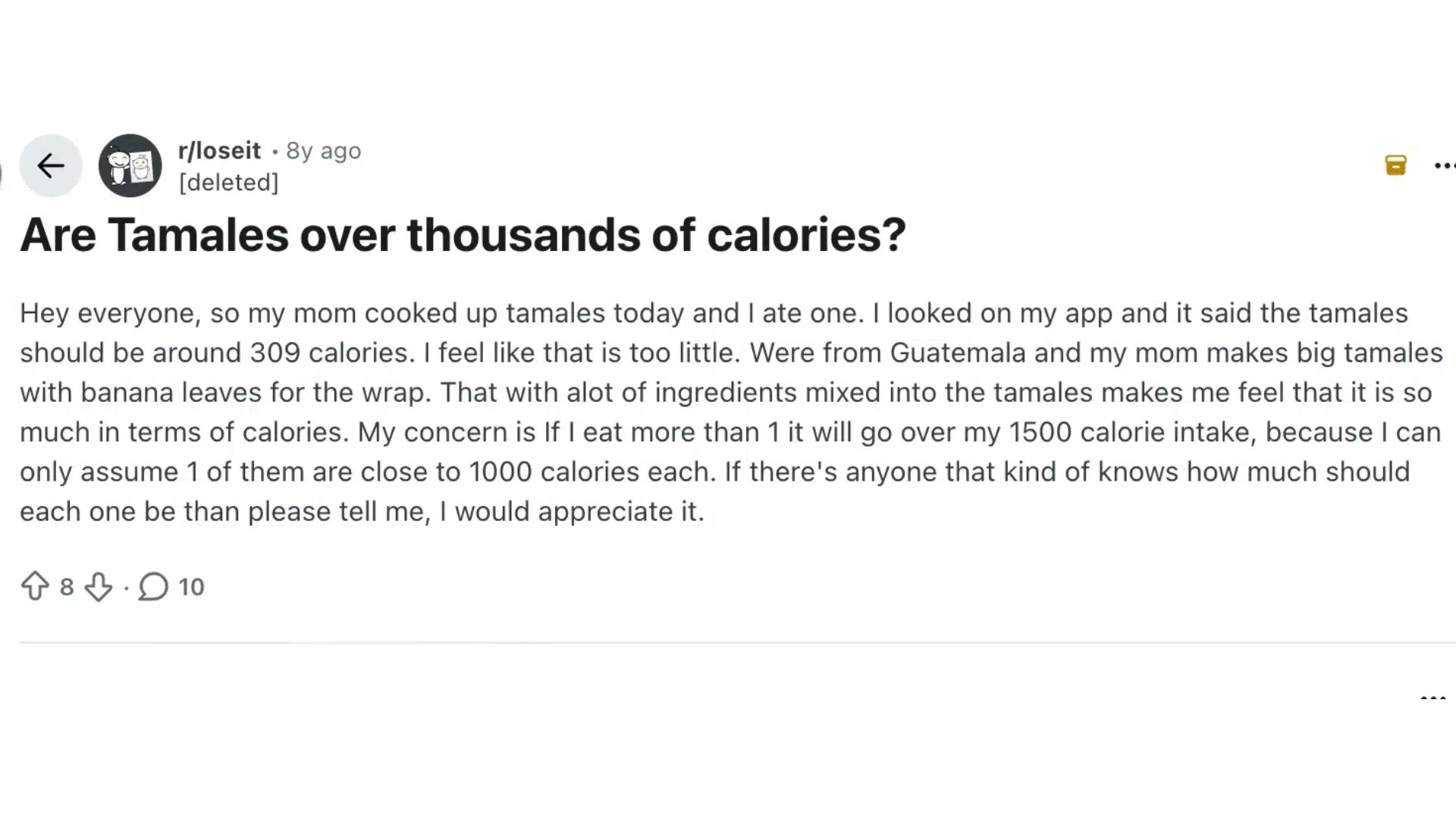
Balancing your plate matters just as much as the tamale itself. Curious what real people think about tamale portions and calories? The online community has plenty to say. One popular thread on Reddit’s r/loseit forum tackles this exact question, with everyday people sharing honest experiences about fitting tamales into a weight-loss diet.
See what others have to say about tamale calories and portions in this Reddit discussion. The general takeaway is consistent: tamales are not the enemy, but mindless eating of three or four at a time is where most people run into trouble.
Final Words
As a nutrition researcher, I answer yes: tamales can be healthy, but only when ingredients and portions are handled with care. Tamales made with lean fillings, vegetable oil, and smart portions fit well into a balanced diet.
The problem is never the tamale itself; it is the lard-heavy recipes, oversized servings, and high-sodium sauces that tip the scale.
Choose lean proteins, add vegetables, and stick to one or two per meal, and tamales become a nutritious, satisfying food rather than a guilty one.
Moderation and smart ingredient choices make all the difference. Have you eaten tamales as part of your diet? Drop your experience in the comments below I would love to hear what has worked for you.






One Response
hi