

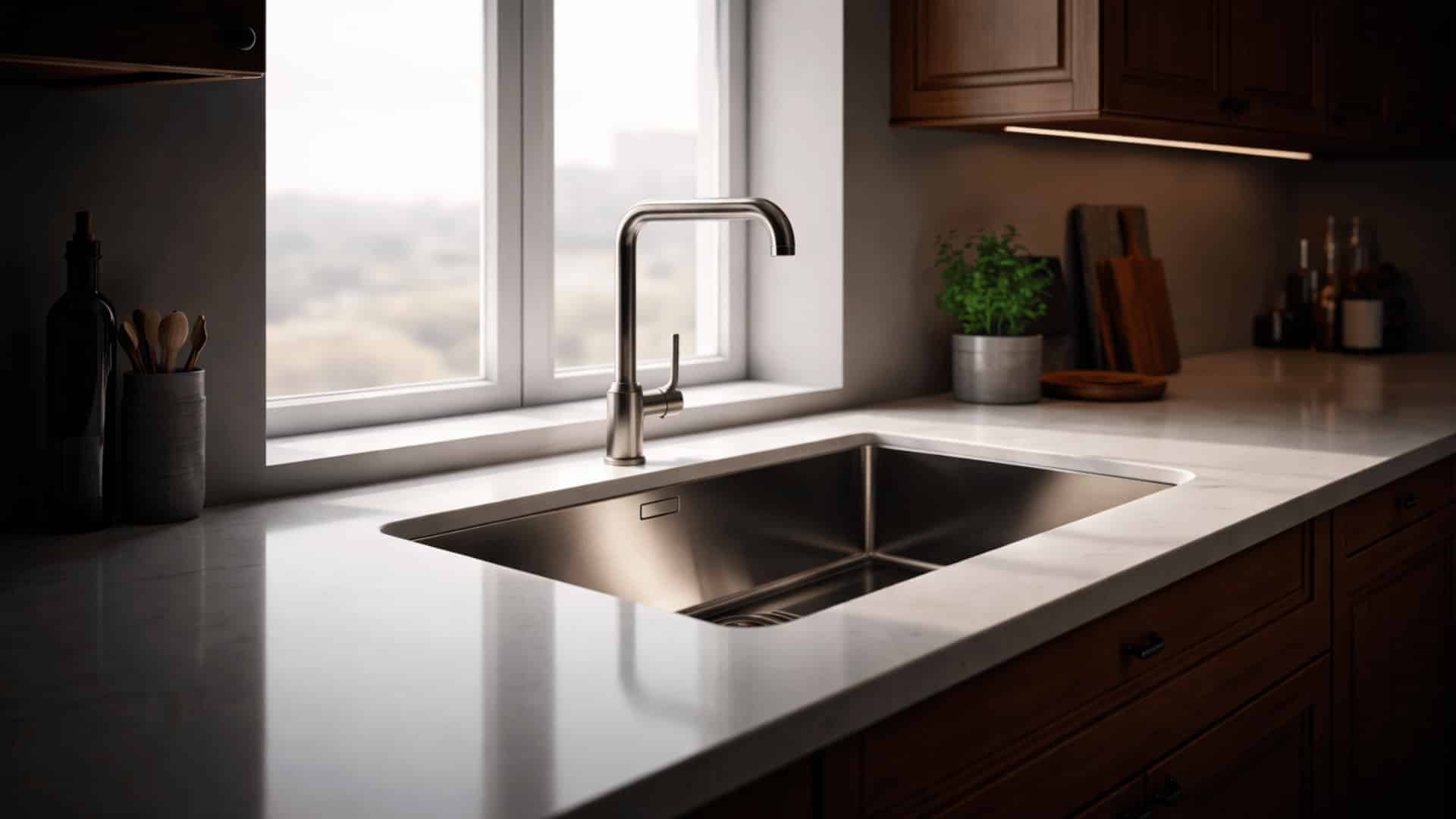
Have you ever tried to scrub a large roasting pan in a sink that’s just too small? It is a total nightmare, turning a quick cleanup into a soggy, frustrating mess.
I know how annoying it feels when your hardware works against you instead of helping you get the job done. Choosing from the many types of kitchen sinks shouldn’t feel like a guessing game based on looks alone.
You need a setup that fits your countertop material and your specific cooking habits. I have broken down the most popular styles, from farmhouse basins to sleek undermounts.
You will learn the pros, cons, and best uses for each one today.
Types of Kitchen Sinks You Should Know About
The kitchen sink is one of the most used spots in your home, even more than you may notice at first. You rely on it for washing vegetables, cleaning dishes, filling pots, and handling quick cleanups throughout the day.
I’ve seen how the right sink can make these tasks feel easier, while the wrong one can slow everything down. The size, depth, and layout all affect how comfortably you work in your kitchen.
A well-chosen sink supports your daily routine without getting in the way. It helps keep your space clean, organized, and ready for use, whether you are cooking a full meal or just rinsing a few items.
1. Drop-In (Top Mount) Sink
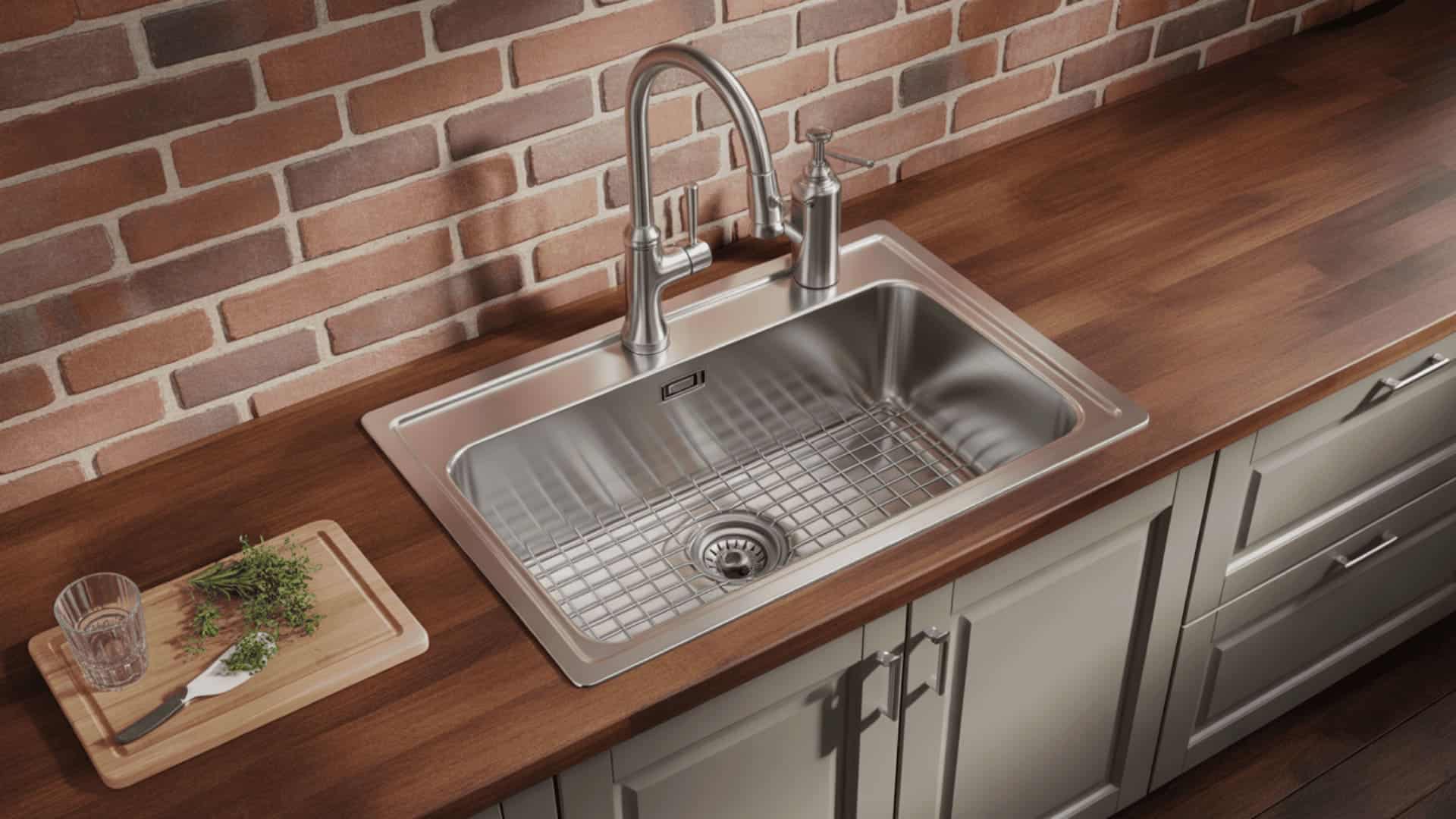
A drop-in sink rests, its rim on top of the countertop. It’s one of the simplest sinks to install and fits into almost any counter material without major modifications.
- Pros: Easy to install, works with most countertop materials, widely available at different price points.
- Cons: The raised rim collects grime and requires regular wiping to stay clean.
- Best Use Case: Rental properties, budget renovations, or kitchens where easy installation is the priority.
Most drop-in sinks come with pre-drilled faucet holes in 1-hole, 3-hole, or 4-hole configurations. Check that the hole layout matches your intended faucet before purchasing.
2. Undermount Sink
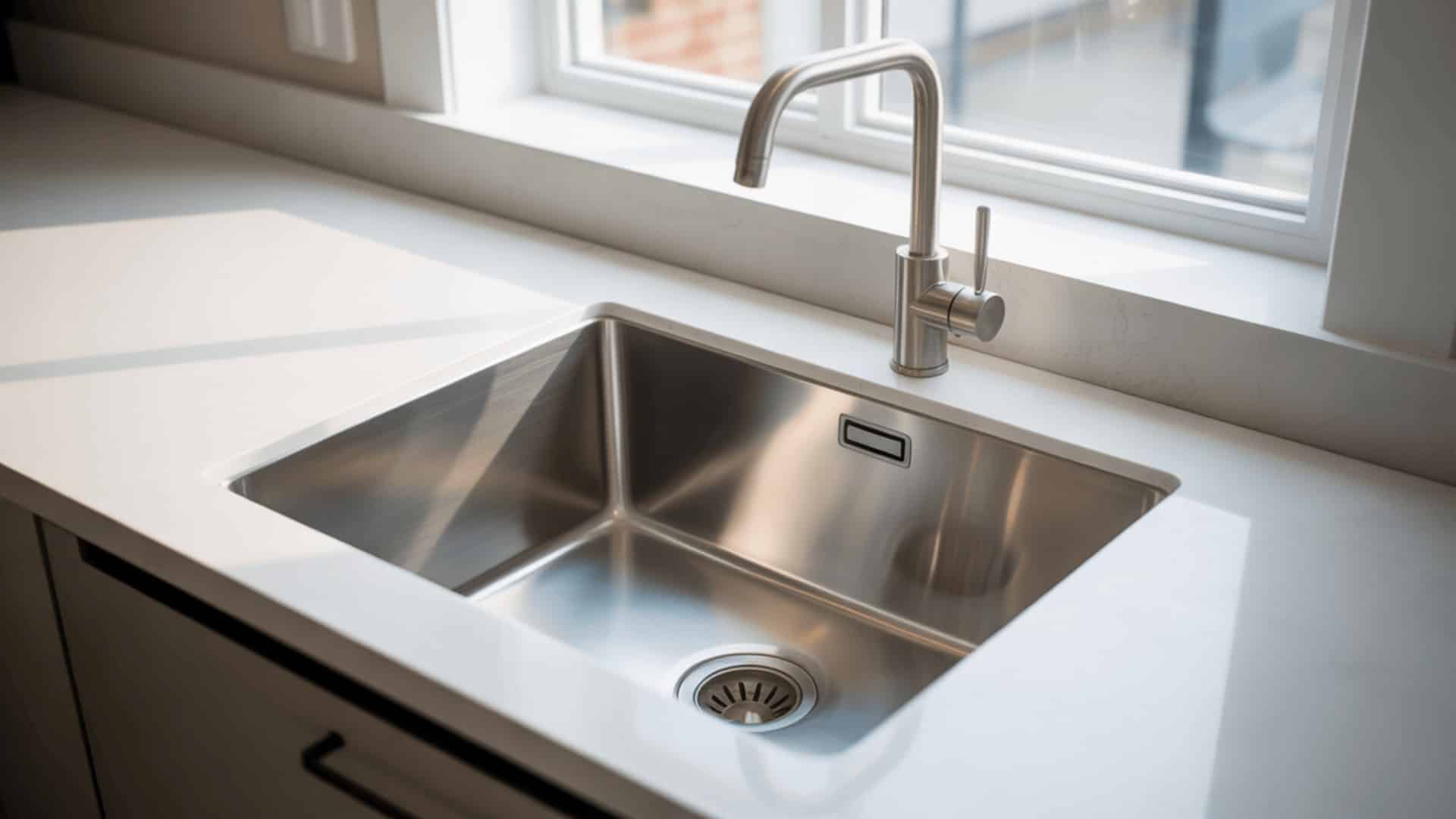
An undermount sink is fixed below the countertop, leaving the surface completely clear around the basin. It gives the kitchen a clean look and makes wiping debris directly into the sink effortless.
- Pros: Sleek appearance, easy countertop cleanup, works well with stone surfaces.
- Cons: Requires professional installation and a solid countertop material to support it properly.
- Best Use Case: Modern kitchens with quartz or granite countertops where aesthetics matter.
Because the faucet mounts directly to the countertop rather than the sink deck, you’ll need to plan faucet hole placement with your countertop fabricator before the slab is cut. This is a step many homeowners miss until it’s too late to change without added cost.
3. Farmhouse (Apron Front) Sink
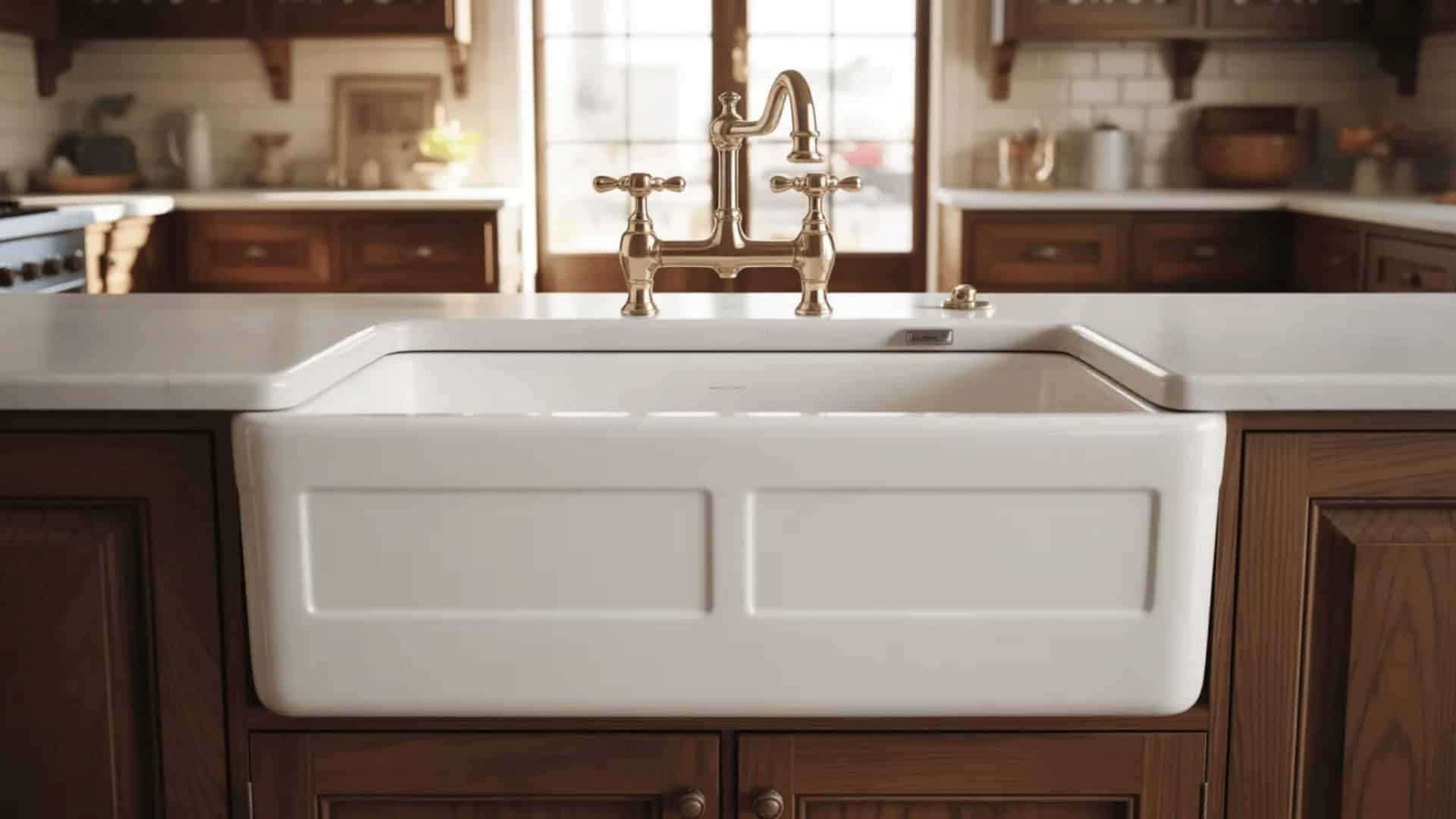
A farmhouse sink has a deep basin and a large exposed front panel that replaces part of the cabinet face. The extra depth handles large cookware easily and adds a distinctive look to the kitchen.
- Pros: Deep basin, handles oversized pots and pans, works in both traditional and modern kitchens.
- Cons: Requires cabinet modifications and tends to cost more than standard sink styles.
- Best Use Case: Kitchens that need a statement piece and handle heavy cooking regularly.
Standard farmhouse sinks require a 36-inch base cabinet at a minimum. The cabinet face needs to be partially removed or replaced to accommodate the apron front, which works best when done before countertops are installed.
Fireclay is the most popular material for this style because it resists heat and scratches well, though it adds significant weight to the installation.
4. Workstation Sink
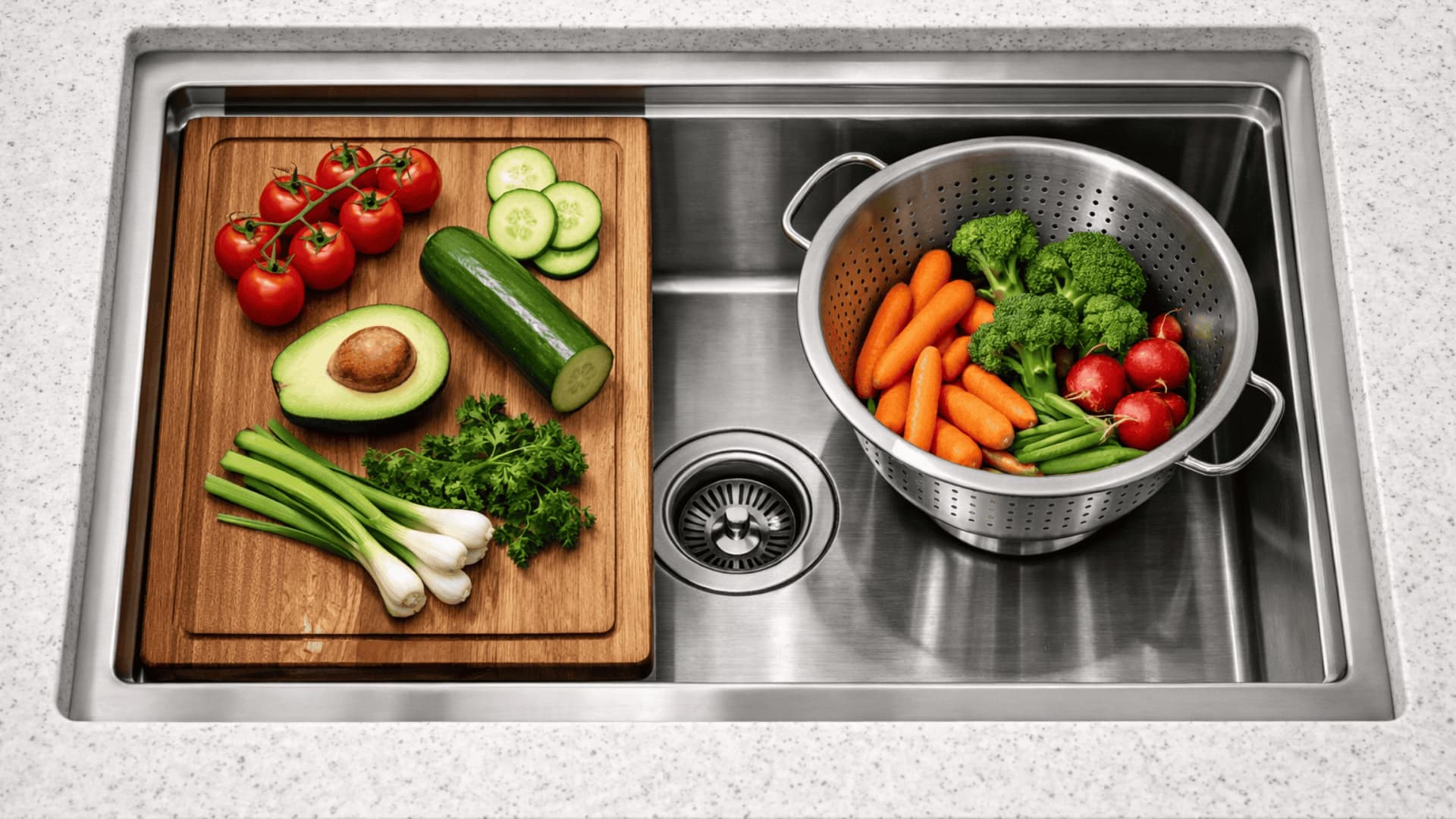
A workstation sink has raised interior ledges that hold sliding accessories like cutting boards, colanders, and drying racks. Everything stays contained within the basin, keeping the counter clear during food prep.
- Pros: Highly functional, reduces countertop clutter, and accessories are often included.
- Cons: Higher price point, and the accessories need regular cleaning to stay hygienic.
- Best Use Case: Active home cooks who prep frequently and want an organized cooking space.
When I tested a workstation sink setup during a kitchen layout review, the built-in cutting board and colander saved meaningful prep time by keeping everything within arm’s reach over the basin.
The main maintenance catch is the ledge tracks, which trap small food particles and need a dedicated scrub every few days in a busy kitchen.
5. Integrated Sink
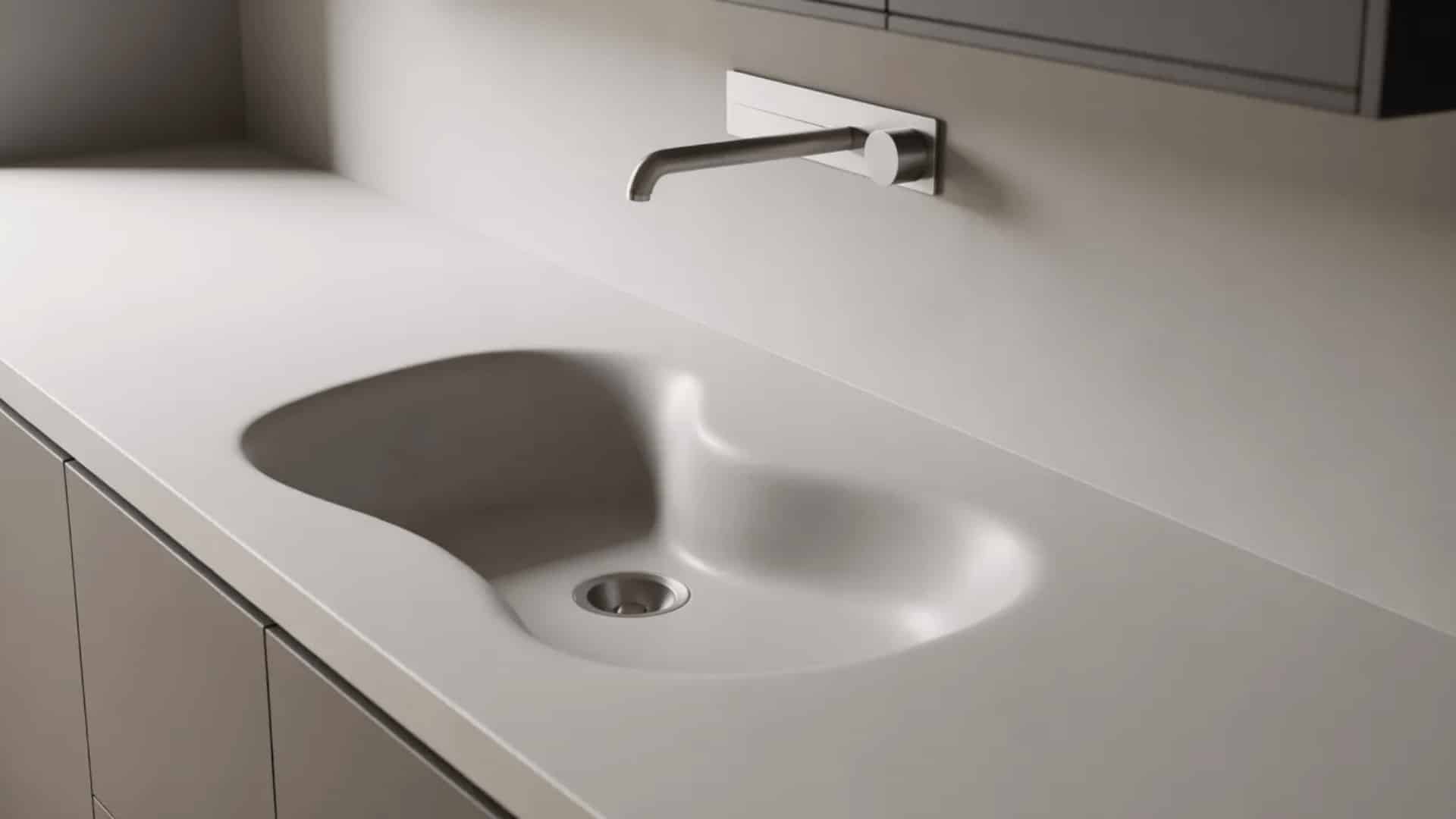
An integrated sink is made from the same material as the countertop, forming one seamless surface with no joints or edges. It’s a common choice in kitchens where a minimal, continuous look is the goal.
- Pros: No seams to collect debris, easy to wipe down, visually clean, and modern.
- Cons: Custom fabrication makes it more expensive and harder to replace independently.
- Best Use Case: High-end modern kitchens with quartz, concrete, or solid surface countertops.
6. Corner Sink
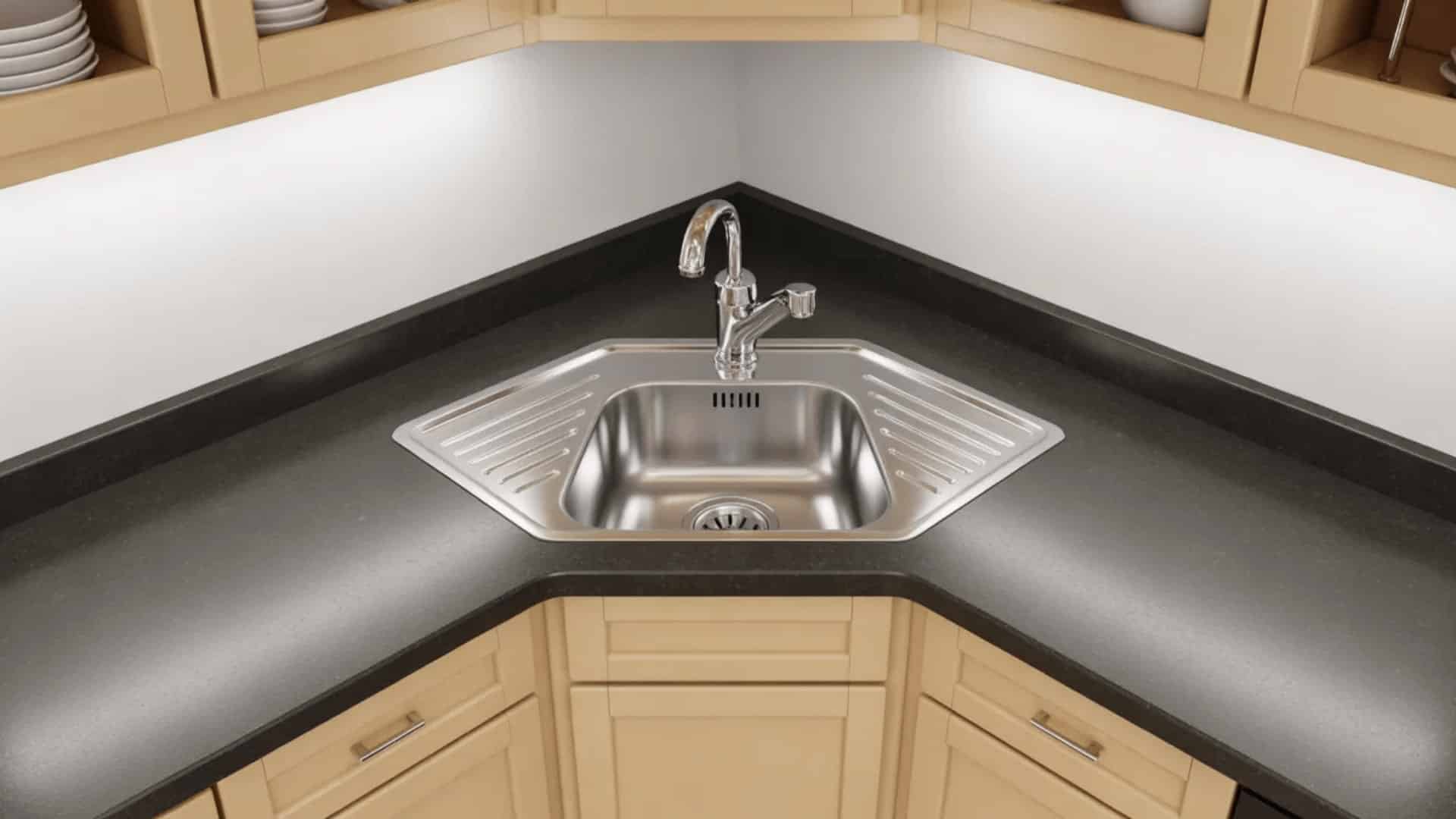
A corner sink is designed to fit directly into the kitchen corner, turning an often-unused space into a functional area. It’s a functional layout choice for compact kitchens with limited straight counter runs.
- Pros: Makes use of corner space, frees up straight countertop runs, good for small kitchens.
- Cons: Corner plumbing can be more complex, and installation costs may be higher.
- Best Use Case: Small or galley kitchens where maximizing every inch of counter space matters.
7. Bar or Prep Sink
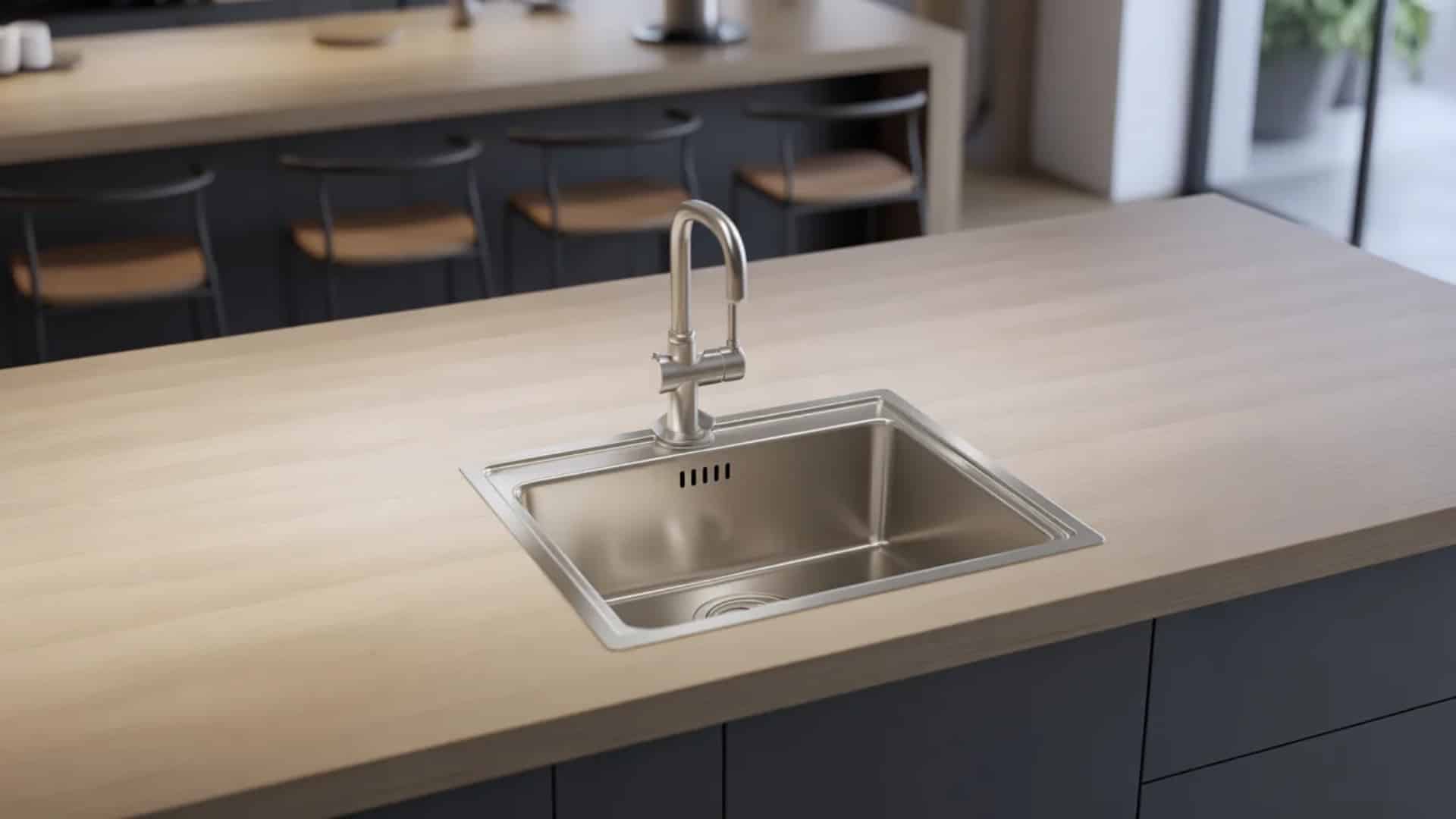
A bar or prep sink is a smaller secondary sink, often installed in a kitchen island or elsewhere in the kitchen. It handles light tasks like rinsing produce or filling glasses without interrupting the main washing area.
- Pros: Adds convenience, ideal for busy kitchens, fits easily into islands and compact spaces.
- Cons: Requires additional plumbing, which adds to installation cost and complexity.
- Best Use Case: Large kitchens or open-plan layouts where two people often work simultaneously.
8. Single Bowl Sink
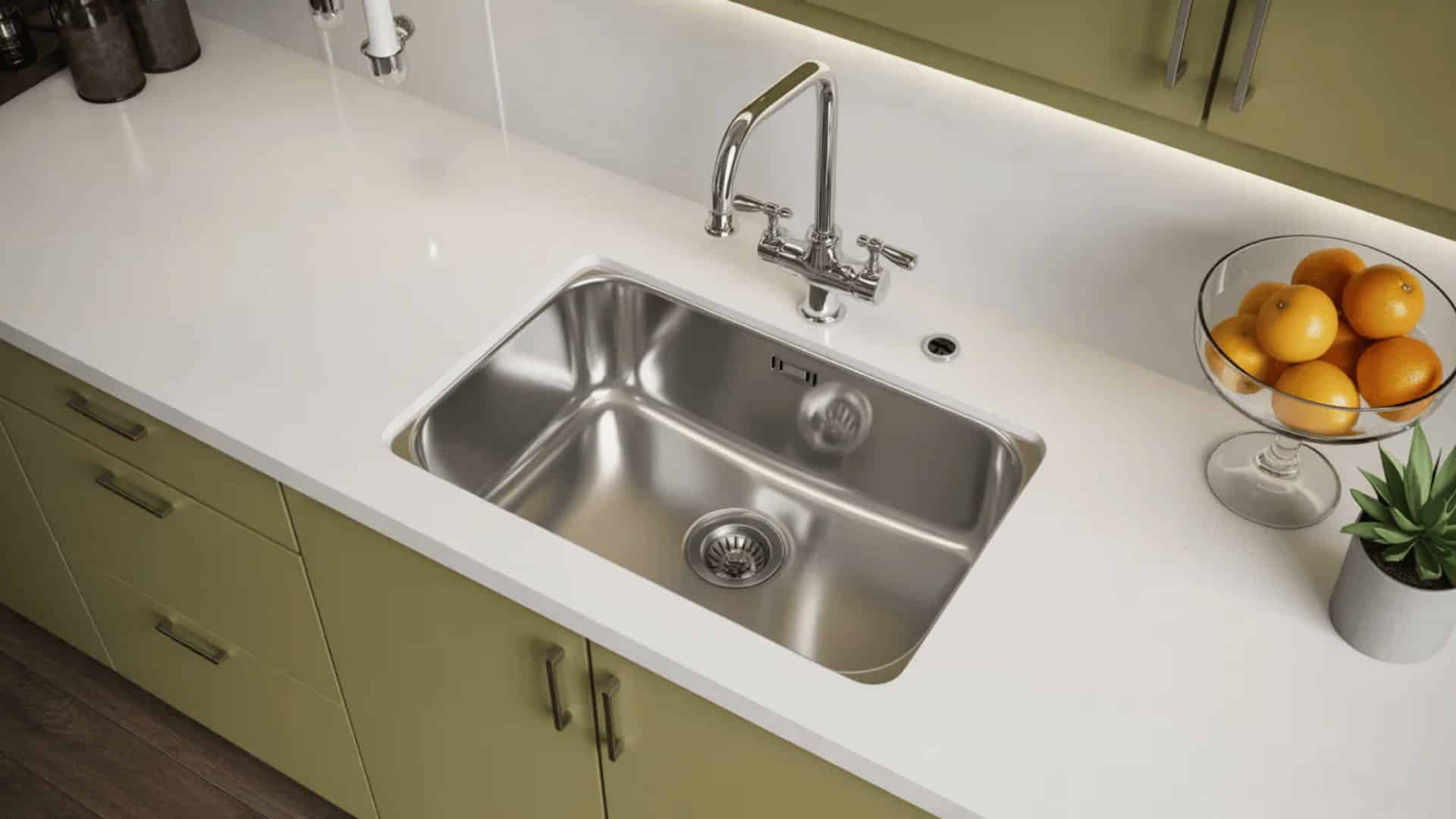
A single-bowl sink has a single large open basin with no center divider. The uninterrupted space makes it easier to wash oversized pots, roasting pans, and baking sheets that wouldn’t fit in a divided sink.
- Pros: Spacious basin, easy to clean, handles large cookware without difficulty.
- Cons: Cannot separate tasks like soaking and rinsing at the same time.
- Best Use Case: Small kitchens or households that frequently wash large pots and pans.
This is the style I most often recommend to people who batch cook or regularly roast large cuts of meat. A 30-inch single bowl handles a standard hotel pan flat, which a double bowl simply cannot.
9. Double Bowl Sink
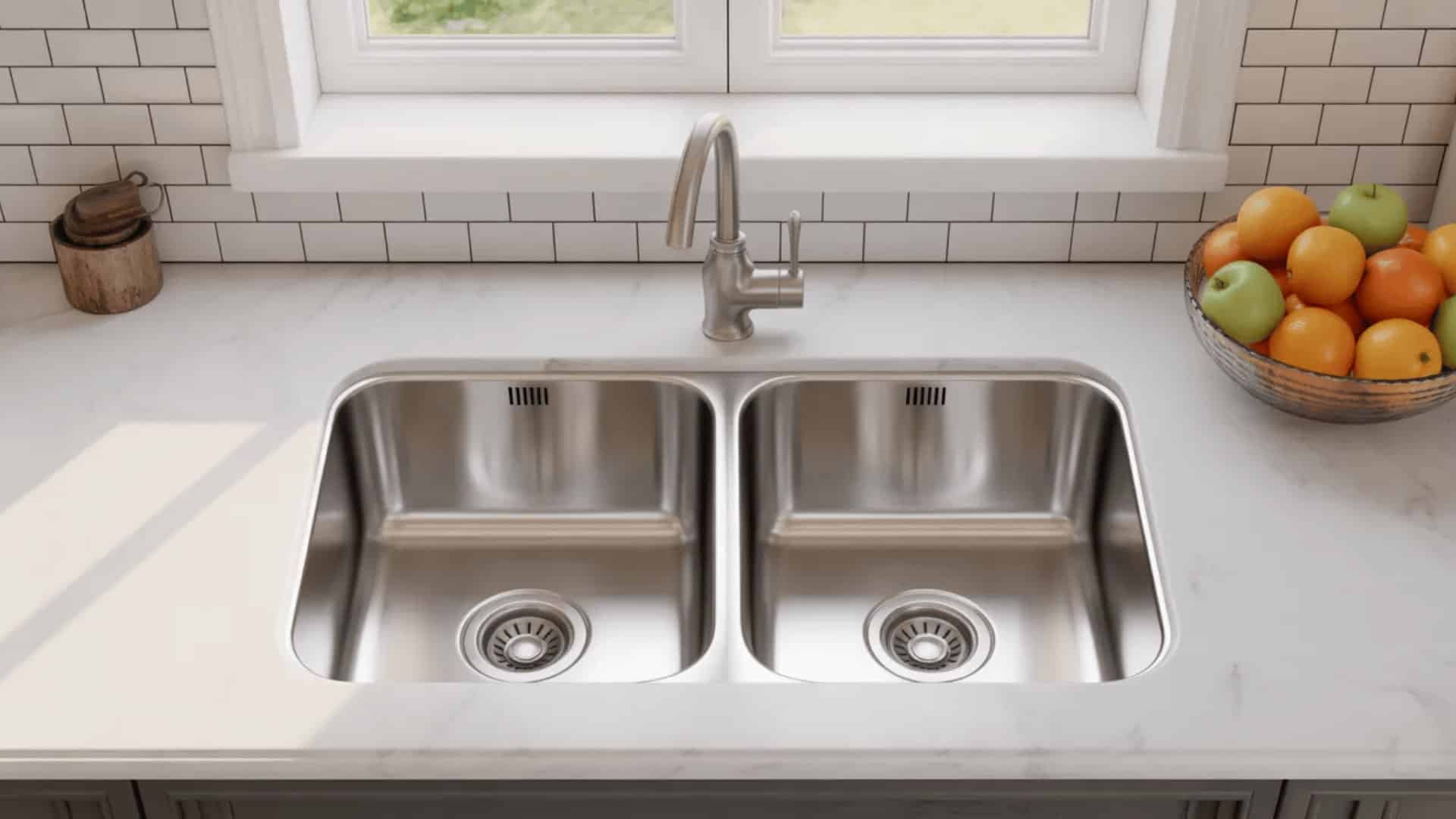
A double-bowl sink has two separate basins separated by a center wall. It allows two tasks to happen at once, soaking on one side while rinsing on the other, making it a useful everyday option.
- Pros: Supports multitasking, widely available, suits most kitchen sizes and layouts.
- Cons: Neither basin is large enough to hold a single bowl, which limits space for larger cookware.
- Best Use Case: Everyday family kitchens where multitasking during cooking and cleanup is common.
10. Low Divider Sink
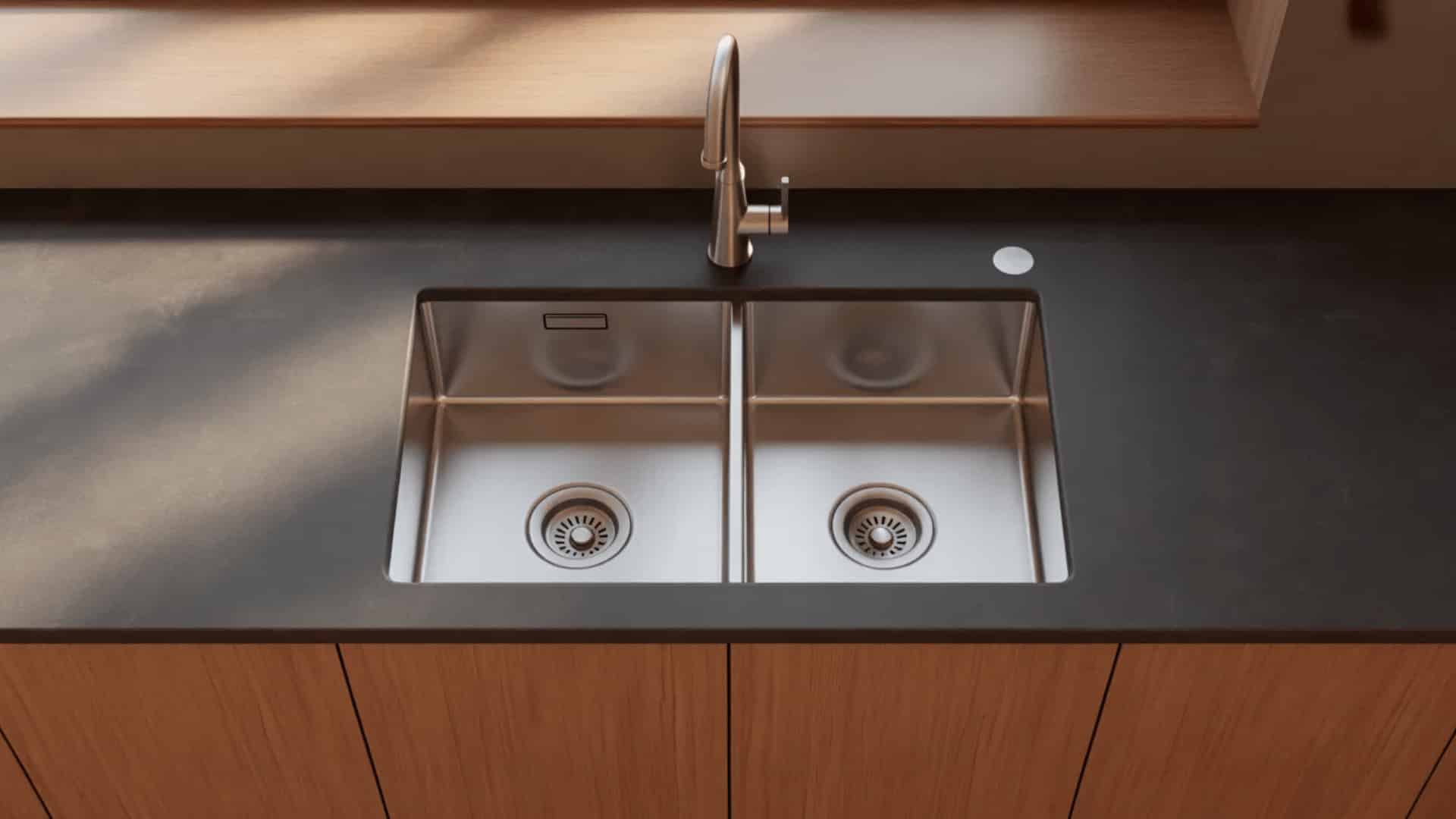
A low divider sink looks like a double-bowl sink, but the wall between the two basins is shorter than the sides of the sink. This allows larger pots and pans to rest across both sides without obstruction.
- Pros: Combines divided functionality with room for larger cookware, flexible for different tasks.
- Cons: Less separation between basins, so water and soap can cross over more easily.
- Best Use Case: Kitchens that want the versatility of a double bowl without sacrificing space for big pots.
11. Flush Mount Sink
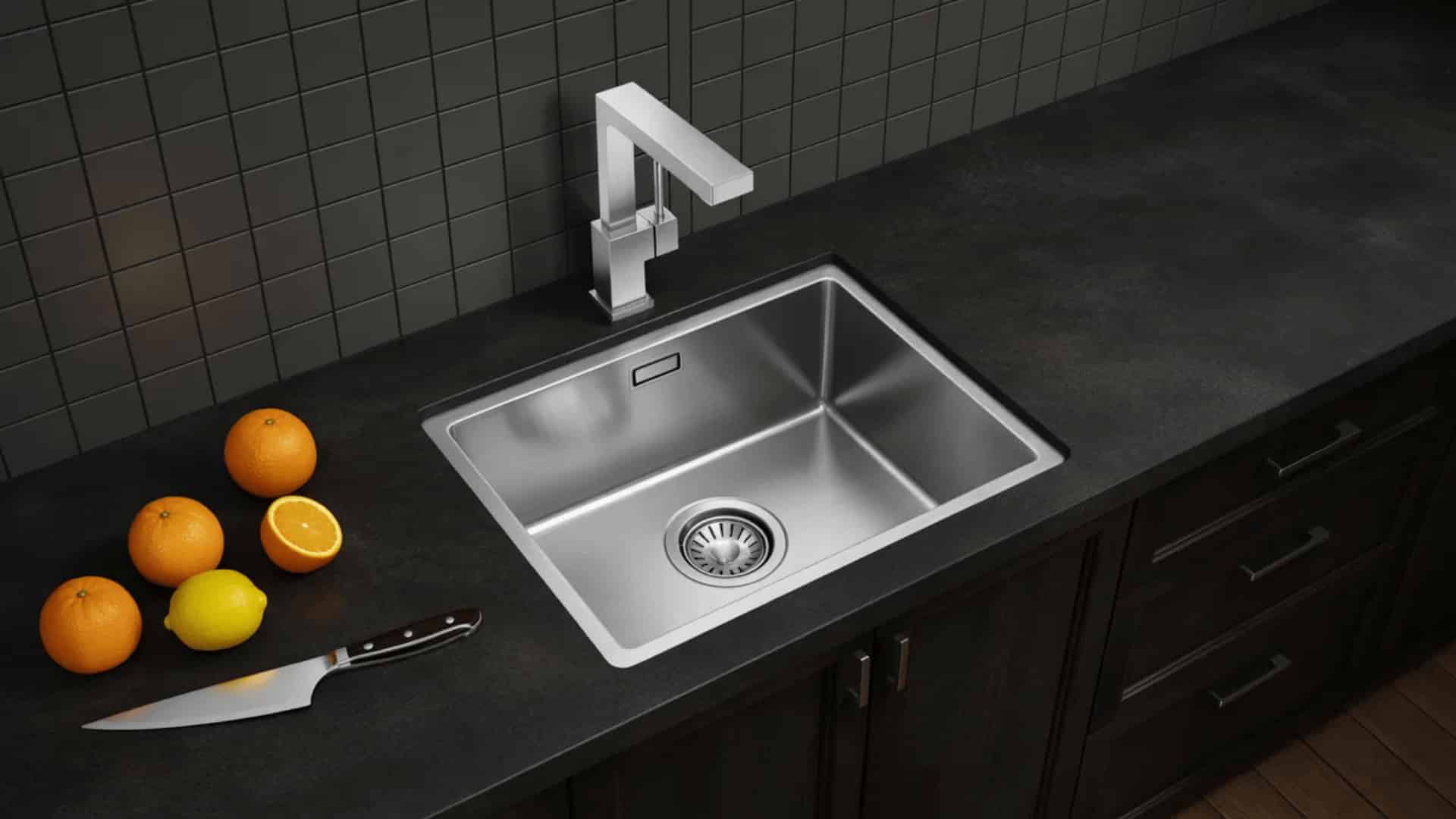
A flush-mount sink sits perfectly level with the surrounding countertop, creating a smooth, even surface with no raised edges. The seamless fit makes wiping down the counter quick and keeps the surface looking clean.
- Pros: Easy to clean, no rim to trap debris, looks sleek and intentional.
- Cons: Requires precise installation to maintain a level fit and proper water drainage.
- Best Use Case: Kitchens where hygiene and low-maintenance surfaces are a top priority.
12. Wall Mount Sink
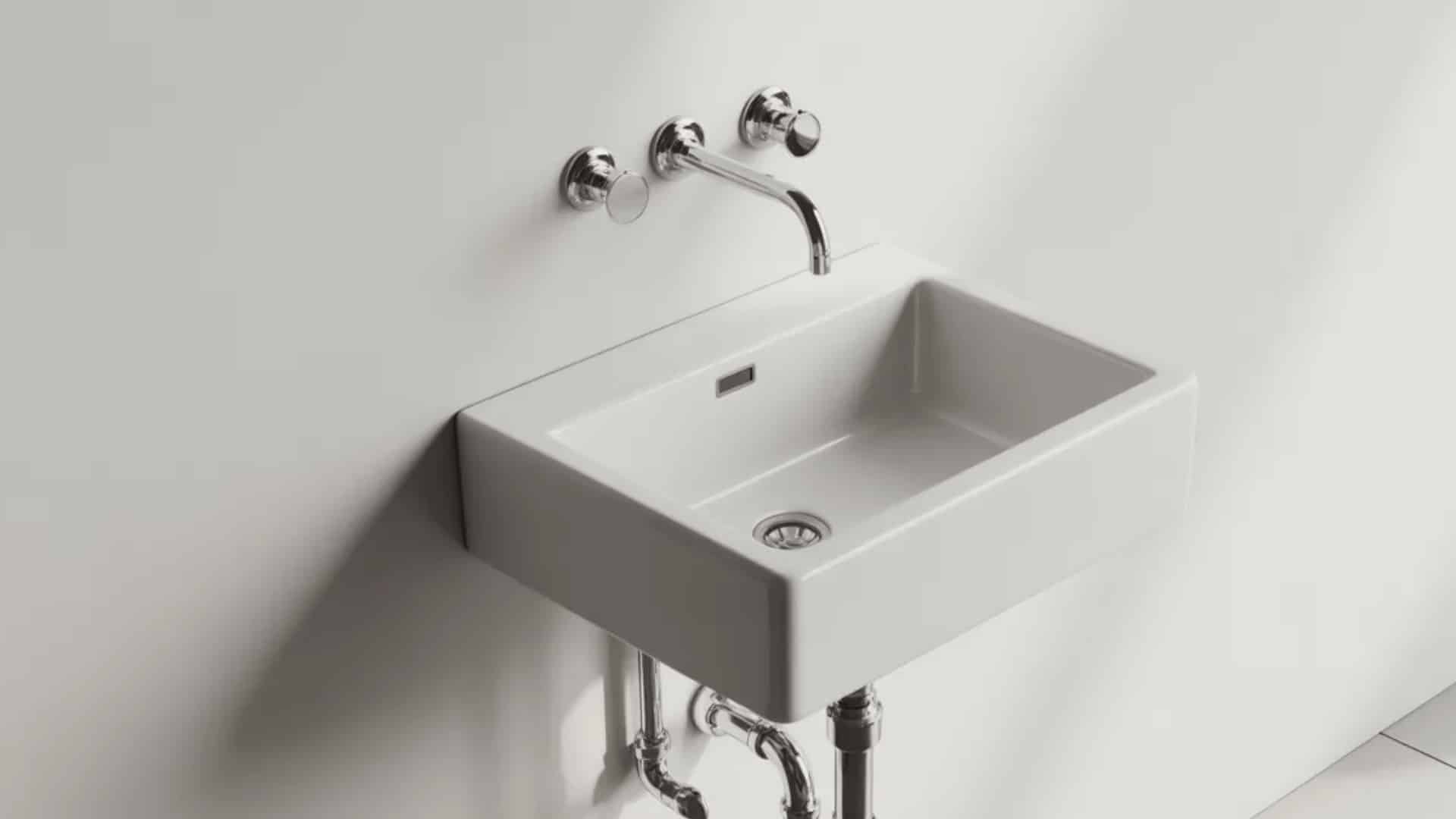
A wall-mount sink attaches directly to the wall with no cabinet or countertop underneath. It leaves the floor space below completely open, which can be useful in very compact or unconventional kitchen layouts.
- Pros: Saves floor space, is accessible underneath, and works in tight or non-standard kitchen setups.
- Cons: Requires wall reinforcement and advanced plumbing planning before installation.
- Best Use Case: Compact kitchens, studio apartments, or utility spaces with limited floor area.
13. Drainboard Sink
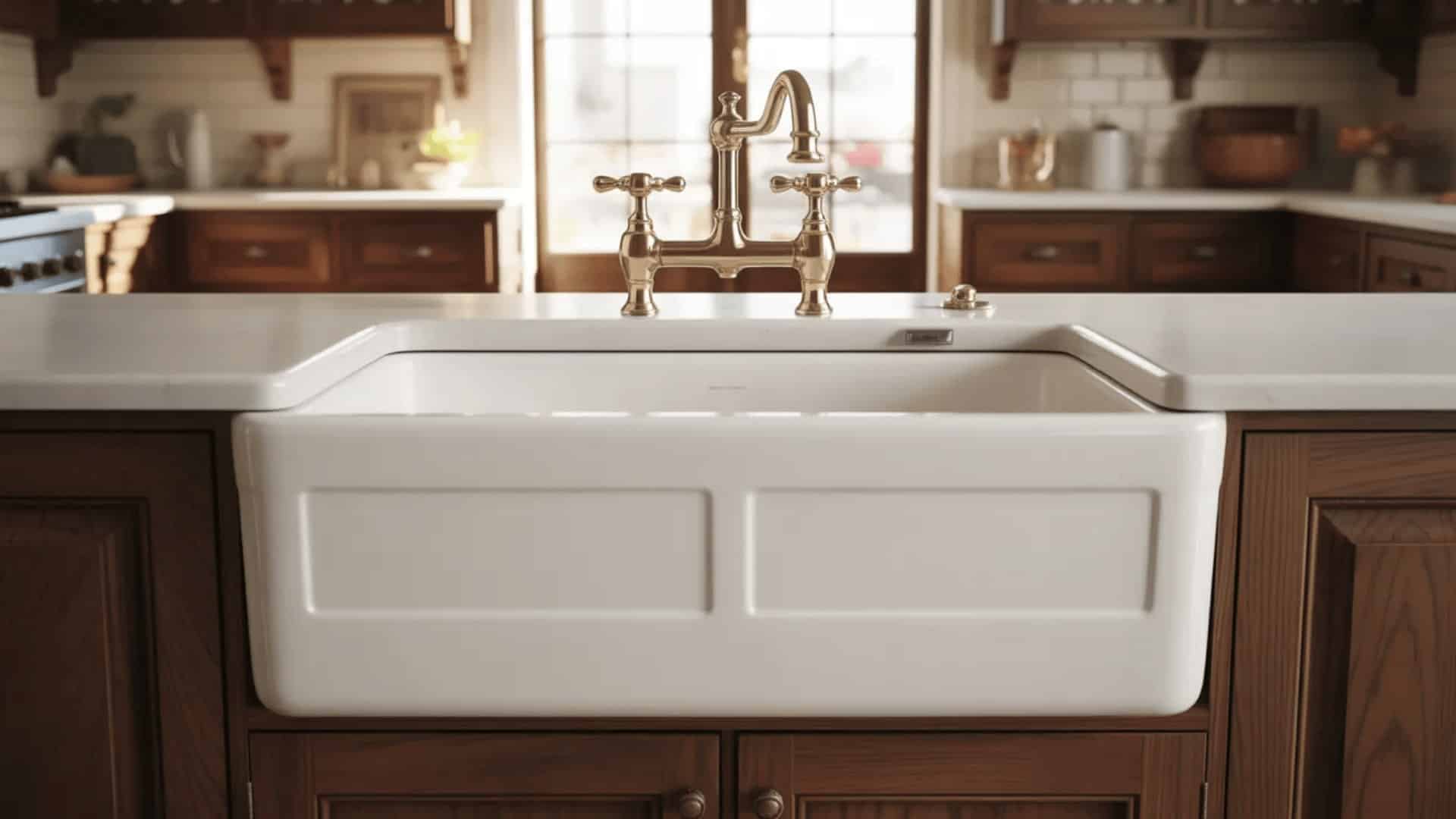
A drainboard sink includes a built-in sloped draining surface beside the main basin. Washed dishes go directly onto it to air dry, keeping the counter clear and reducing the need for a separate dish rack.
- Pros: Built-in drying area, keeps counters dry, functional for everyday dishwashing.
- Cons: Takes up more counter space than a standard sink due to the attached drainboard.
- Best Use Case: Kitchens with limited counter accessories or anyone who prefers to skip a separate dish rack.
Kitchen Sink Types Compared at a Glance
Picking between sink styles gets easier when the key differences are laid out side by side. This table covers installation, ease of cleaning, and a sensible cost range for each type.
| Sink Type | Installation Difficulty | Cleaning Convenience | Cost Range (USD) | |
|---|---|---|---|---|
| 1 | Drop-In (Top Mount) | Easy | Moderate, rim collects grime | $100 – $600 |
| 2 | Undermount | Moderate, needs professional | High, no rim, easy wipe-down | $300 – $1,500 |
| 3 | Farmhouse (Apron Front) | Hard, cabinet modification needed | Moderate, deep basin, easy to wash | $400 – $2,000 |
| 4 | Workstation | Moderate | Moderate, accessories need regular cleaning | $500 – $2,500 |
| 5 | Integrated | Hard, custom-fabricated | High, no seams or joints | $800 – $3,000+ |
| 6 | Corner | Moderate, complex plumbing | Moderate, depends on the material | $200 – $900 |
| 7 | Bar or Prep Sink | Moderate, extra plumbing needed | High, small basin, quick to clean | $100 – $700 |
| 8 | Single Bowl | Easy to Moderate | High, open basin, simple to scrub | $150 – $1,200 |
| 9 | Double Bowl | Easy to Moderate | Moderate, two basins to maintain | $200 – $1,500 |
| 10 | Low Divider | Easy to Moderate | Moderate, water can cross basins | $250 – $1,200 |
| 11 | Flush Mount | Hard, precise fitting required | High, no raised edges | $300 – $1,500 |
| 12 | Wall Mount | Hard, wall reinforcement needed | High, open underneath, easy access | $150 – $800 |
| 13 | Drainboard | Easy to Moderate | Moderate – drainboard needs wiping | $200 – $1,000 |
A few things stand out from this comparison. Drop-in sinks suit most budgets, while integrated and farmhouse styles cost more. Undermount and flush-mount styles win in cleaning convenience.
How to Choose the Right Type of Kitchen Sink
A few sensible factors can help narrow down the options before making a final decision.
Kitchen Size plays a big role in sink selection. Small kitchens work better with compact single-bowl styles, while larger kitchens can support farmhouse or workstation sinks. Island layouts can also fit a small prep sink alongside the main one.
Countertop Material determines which sink styles are even possible. Undermount sinks require solid surfaces like quartz or granite, while drop-in sinks work with almost any surface. Integrated sinks require the counter and sink to be fabricated together from the start.
Cooking Habits shape how much a sink needs to handle. Frequent cooks benefit from larger single bowls or farmhouse basins. Those who prep a lot may find a workstation sink more useful, as it keeps cutting, rinsing, and draining in one spot.
Cleaning and Maintenance: Some sinks are simply easier to maintain than others. Undermount and flush mount styles have no raised rim to trap debris. Stainless steel stays low-maintenance, while cast iron needs more care. Drainboard sinks also help keep surrounding counters dry and clear.
Summing Up
Selecting a basin that fits your lifestyle makes every meal prep and cleanup feel much smoother. You have to find out how installation styles and bowl layouts change the way you interact with your counters every single day.
I believe that understanding these types of kitchen sinks helps you avoid costly installation mistakes or buying something that is a pain to clean.
If you need a deep workstation for heavy prep or a simple drop-in for a quick refresh, you now have the tools to make the decision. A functional kitchen starts with a sink that actually supports your routine.
If a specific style caught your eye, leave a comment below or check out my other renovation tips!