
Home wellness is often discussed in terms of diet, sleep quality, and stress management. However, one overlooked factor is how daily physical environments affect the body. The bathroom is one of the most frequently used spaces in a home, and its design has a direct impact on posture, movement efficiency, and physical strain.
Even simple routines like brushing teeth or washing hands involve repeated bending, reaching, and turning. When the layout is inefficient, these movements accumulate into fatigue over time.
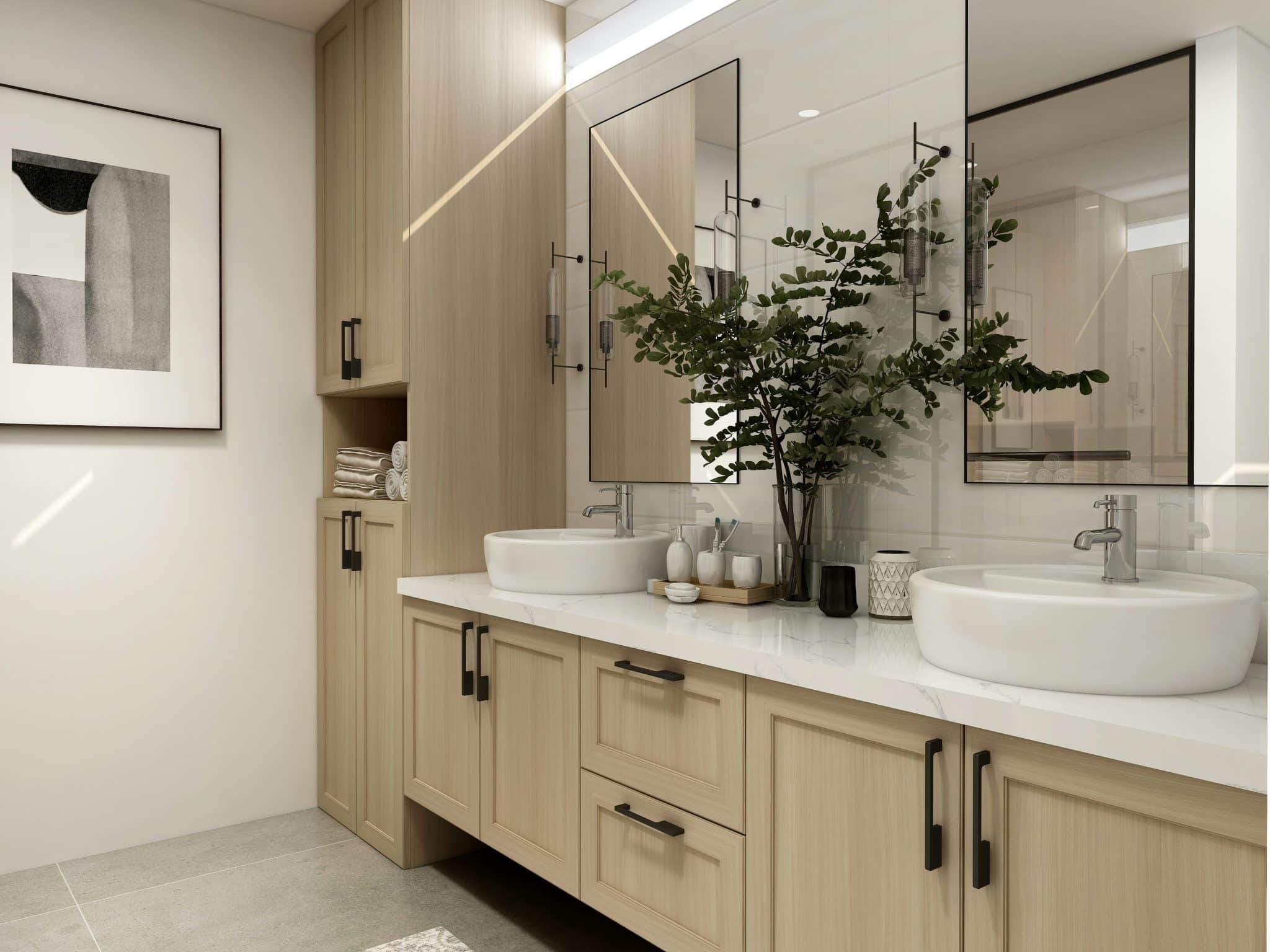
Choosing the right floating bathroom vanity or freestanding bathroom vanity early in the design process can reduce unnecessary strain and improve long-term comfort. These fixtures influence how the body interacts with space every day.
Why Small Design Choices Create Big Daily Discomfort
Bathroom discomfort rarely comes from a single major issue. It comes from repeated small inefficiencies that build up over time.
Most people do not notice these patterns at first:
*Slight bending to reach lower storage
*Turning sideways in narrow spaces
*Searching for items in cluttered drawers
*Leaning forward over deep countertops
Individually, these actions seem minor. However, when repeated multiple times per day, they create measurable physical stress.
The most common result is:
*Lower back fatigue in the morning
*Shoulder tension after routines
*Slower preparation time
*Reduced comfort in small spaces
This is similar to how poor sleep posture does not cause immediate pain but leads to long-term discomfort.
The Hidden Connection Between Bathroom Layout and Energy Levels
Physical environments directly affect perceived energy levels.
A poorly designed bathroom increases effort required for basic tasks. That extra effort drains energy before the day even begins.
Three main mechanisms explain this:
1. Repetitive movement strain
Every unnecessary bend or reach adds stress to joints and muscles.
2. Visual clutter overload
Crowded surfaces increase mental fatigue and reduce focus.
3. Time inefficiency
Slow routines increase morning pressure and reduce overall efficiency.
Over time, these factors contribute to a subtle but consistent reduction in daily comfort.
Why Traditional Bathroom Storage Fails Modern Homes
Older bathroom designs were built around maximizing storage volume, not usability.
This creates structural inefficiencies:
*Storage is often too low, requiring frequent bending
*Items are stacked without logical organization
*Deep cabinets make retrieval inconvenient
*Floor-mounted units reduce perceived space
*Narrow walkways restrict movement
These issues become more noticeable in smaller bathrooms, where every centimeter matters.
The result is a space that technically functions but feels physically demanding to use.
How Smarter Vanity Design Changes Daily Routines
Modern bathroom design prioritizes ergonomics over volume.
The goal is to reduce unnecessary movement and improve accessibility.
A properly designed vanity changes daily routines by:
*Keeping essential items within natural reach
*Reducing bending and crouching frequency
*Creating clearer organization systems
*Improving walking clearance in tight spaces
*Supporting faster morning preparation
This is where fixture selection becomes critical.
A floating bathroom vanity improves spatial openness by lifting storage off the floor, which enhances both visual clarity and cleaning efficiency.
A freestanding bathroom vanity provides grounded stability and higher storage capacity, making it suitable for households that need more structured storage systems.
Why Bathroom Vanity Selection Matters More Than Decor
Many homeowners focus on tiles, mirrors, or paint color first. However, the vanity has a stronger impact on daily function than any decorative element.
A well-designed vanity should:
*Match ergonomic reach zones
*Reduce repetitive bending
*Organize items by frequency of use
*Maintain clear surface space
*Fit proportionally within the room
Poor selection leads to long-term inefficiency, even if the bathroom looks visually appealing.
Floating vs Freestanding Design Comparison
Each vanity type supports different needs, and choosing incorrectly often leads to discomfort.
Floating Bathroom Vanity Advantages
*Creates visible floor space
*Makes small bathrooms feel larger
*Easier to clean underneath
*Supports modern minimalist layouts
*Reduces visual heaviness
Freestanding Bathroom Vanity Advantages
*Offers stronger storage capacity
*Provides stable full-contact structure
*Works well in traditional layouts
*Easier to install without wall reinforcement
*Suitable for shared family bathrooms
Neither option is universally better. The correct choice depends on space size, usage frequency, and storage needs.
When Each Design Works Best
Floating vanities are ideal for:
*Small apartments
*Narrow bathrooms
*Minimalist interiors
*Renovations focused on visual openness
Freestanding vanities are ideal for:
*Family bathrooms
*High-storage requirements
*Traditional home layouts
*Long-term stability needs
Case Study: Small Bathroom, Big Comfort Improvement
A homeowner in a compact city apartment reported daily discomfort during morning routines. The bathroom was functional but inefficient.
Main issues:
*Low cabinet storage requiring frequent bending
*Overcrowded countertop surfaces
*Limited movement space near sink area
*Poor organization of daily-use items
The design did not support natural movement patterns.
Solution implemented:
The old unit was replaced with a properly sized vanity system designed for ergonomic use and better spatial flow.
Results after upgrade:
*Bending frequency significantly reduced
*Faster and more organized morning routine
*Improved accessibility of daily items
*Noticeably better spatial perception
No structural remodeling was required. The improvement came entirely from layout optimization and fixture selection.
This demonstrates that comfort improvements often come from design decisions rather than space expansion.
Pro Tips From a Bathroom Industry Expert
After more than 10 years of working with residential bathroom design, several principles consistently improve comfort outcomes.
1. Prioritize reach efficiency over storage size
Large storage is ineffective if it requires excessive bending.
2. Use drawer systems instead of deep cabinets
Drawers reduce search time and improve organization clarity.
3. Maintain open floor visibility
Visible floor space improves perceived room size and movement comfort.
4. Avoid placing daily items in low-access zones
Frequently used items should always be placed at waist or chest level.
5. Match vanity height to user posture
Standard ergonomic height typically ranges between 34–36 inches for most adults.
These small adjustments often create measurable improvements in daily comfort.
Why Product Selection Impacts Long-Term Comfort
Many bathroom problems are not caused by lack of space, but by poor product selection.
Homeowners often choose based on appearance rather than function. This leads to mismatched sizing, inefficient storage, and long-term discomfort.
Platforms like Giving Tree Home help reduce this problem by offering structured product categories designed for real bathroom layouts. This simplifies decision-making and reduces the risk of selecting fixtures that do not match the space.
Better selection leads directly to better daily usability.
Conclusion
Bathroom design is often treated as a visual upgrade decision, but its impact extends far beyond aesthetics. It influences how the body moves, how energy is used, and how comfortable daily routines feel.
Repeated small inefficiencies in layout and storage create long-term physical strain. Improving these systems does not require full renovation. It requires better design choices.
Selecting the right floating bathroom vanity or freestanding bathroom vanity can significantly improve comfort by reducing unnecessary movement and improving spatial organization.
When bathroom layouts support natural movement patterns, daily routines become smoother, faster, and physically easier to maintain over time.