
Green tea was the gateway. Matcha exploded after that. Oolong, pu-erh, bubble tea, taro milk, turmeric lattes – one by one they’ve moved from regional tradition to the café menu down the street. Plenty more sits behind them though. The Asian drink tradition runs deeper than the versions already translated for Western shelves, and a fresh set of beverages is quietly working into wider attention now. Some are seriously worth a look.
Running through what’s picking up, with actual background rather than the marketing version.
Butterfly Pea Flower Tea
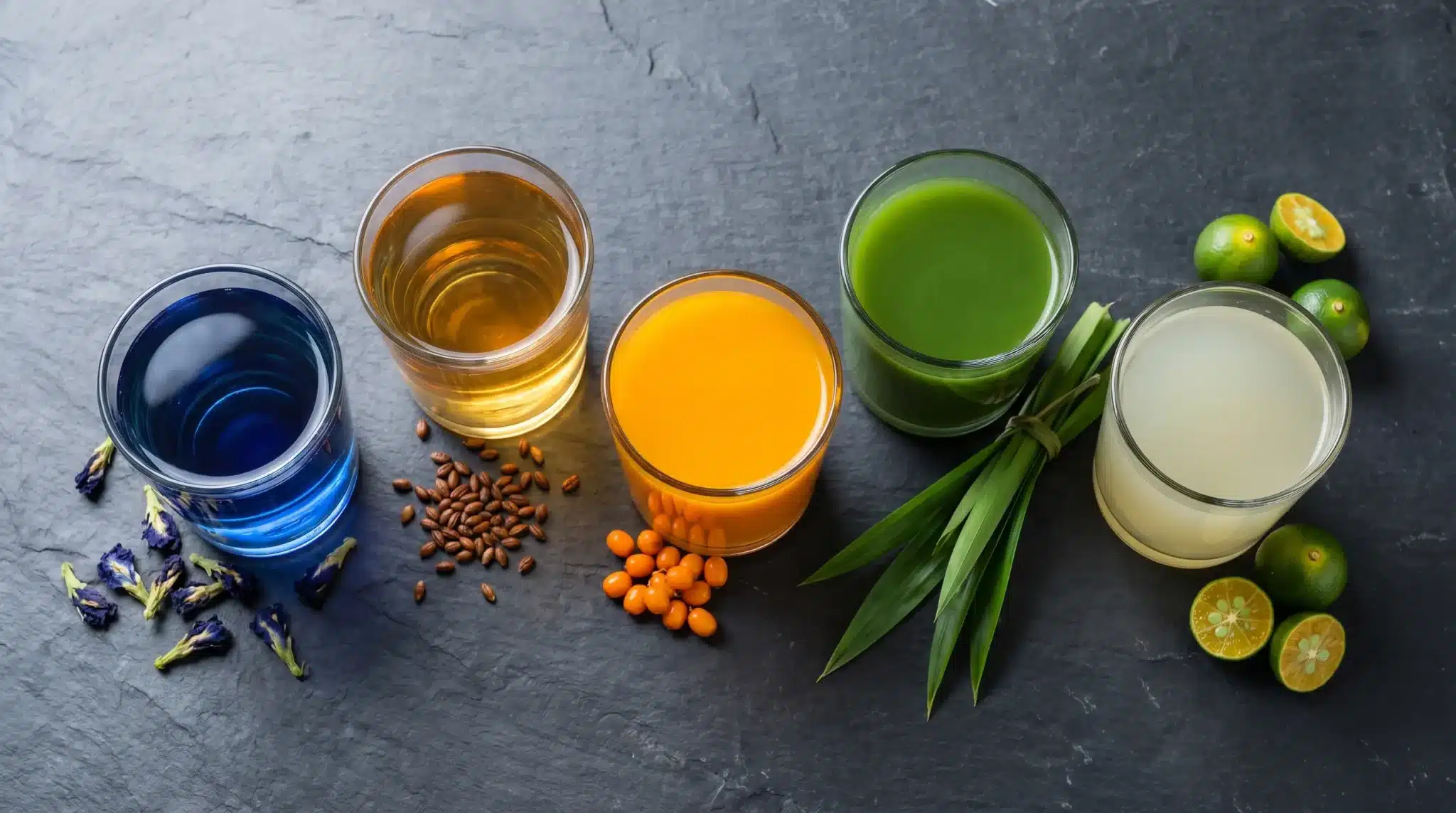
A Southeast Asian native, butterfly pea flower (Clitoria ternatea) brews into that bright blue tea that flips purple the moment you squeeze lemon into it. pH reaction, nothing artificial, and more or less the single reason this drink had its Instagram moment a few years back.
Past the colour trick, it has real traditional use across Thailand, Malaysia, and Vietnam. Mildly earthy, a bit floral, usually served iced or mixed into cocktails. Traditional use ties it to memory and relaxation, though the research backing those claims is still fairly limited.
These days it turns up in specialty tea shops, trendy cafés, and more frequently as a natural food dye in rice dishes and ice cream.
Barley Tea (Mugicha / Boricha)
Roasted barley tea is a household staple in Japan (mugicha), Korea (boricha), and parts of China. Caffeine-free, mildly nutty, served cold through the summer and hot through the winter. Through the warm months, you’ll find a jug of it sitting in most Japanese home fridges.
Western adoption has been slower but steadier, and the selling points hold up: no caffeine, genuinely hydrating rather than diuretic, naturally mild so it doesn’t need sweetening, and cheap compared to specialty teas. Doesn’t trend on TikTok, quietly earns fans once people try it.
Anyone who’s given up on herbal teas because they all taste of hay — barley is the accessible alternative most people never actually got around to trying.
Kratom Shots
Kratom (Mitragyna speciosa) is a tropical tree native to Thailand, Indonesia, Malaysia, and parts of the Philippines, and this is where the list gets interesting. Centuries of regional use here – leaves chewed fresh by farmers for stamina, dried leaves brewed as an evening tea.
Until fairly recently, the Western kratom market was all raw powder. Bitter, messy, honestly unpleasant. The shift to liquid formats has changed the category completely. Brands like Black Sheep Kratom now produce potent, flavored kratom shots – Orange Creamsicle, Tiger’s Blood – containing 350mg of premium kratom extract from Indonesia’s West Kalimantan region.
Formulation includes black pepper extract for better bioavailability, with stevia and monk fruit doing the work of covering the bitter base. End result is a 30ml bottle that goes down without a fight, carrying standardised alkaloid content so effects aren’t a guessing game.
Quick context worth having: kratom sits legal at the federal level in the US, with state-level bans in Arkansas, Wisconsin, and Louisiana. Effects sit on a dose curve — lower amounts tend toward energy and focus, higher ones tilt into calm. Not a party drink. A functional beverage category with genuine traditional roots.
Sea Buckthorn Juice
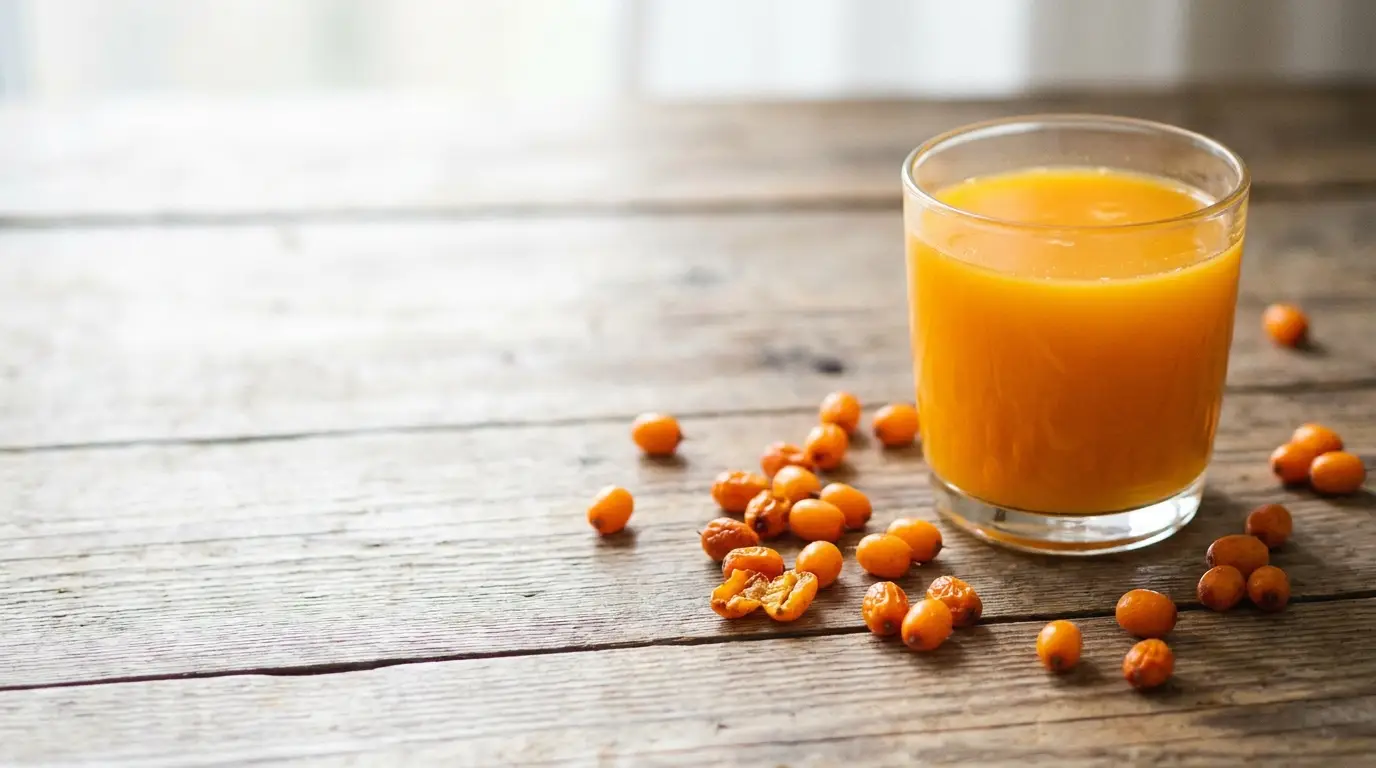
Native to Central Asia and now grown heavily in China, sea buckthorn is one of the most vitamin-C-dense plants on the planet – roughly ten times higher than oranges by weight. The juice is intensely tart, vaguely tropical, and nothing like what people expect on first sip.
Centuries of use across Mongolia, Tibet, and Russia, mostly in the immune support category. Rising Western interest tracks two things: an unusually high omega-7 fatty acid content (something you don’t find in many plant sources), and the way the juice performs in cocktails and mocktails when you want proper tartness rather than a sugar bomb.
Most people prefer it diluted or blended. Straight, be warned – it hits hard and your eyes will let you know.
Sugarcane Juice With Calamansi
Classic Southeast Asian street-vendor drink. Fresh-pressed sugarcane blended with calamansi – a small, sharp citrus fruit from the Philippines. The calamansi cuts through the sugarcane’s heavy sweetness and leaves you with something that tastes like the most perfectly balanced natural soda you’ve ever had.
Crossover to the West is still limited, largely because fresh sugarcane juice oxidises within hours and doesn’t bottle cleanly. Filipino restaurants are where you’ll find it, along with some specialty juice bars and occasionally bottled versions with preservatives. The bottled ones aren’t as good – fair warning – but they get you the general idea.
Pandan Drinks
Pandan (Pandanus amaryllifolius) is the long green leaf behind that distinctive aroma in Southeast Asian desserts — anyone who’s eaten them knows it instantly. Sweet, a bit floral, vanilla-ish in character. Sometimes called “Asian vanilla” in the West.
Iced pandan tea, pandan milk tea, pandan coconut coolers – all standard across Thailand, Malaysia, Indonesia, and Vietnam. Western uptake has lagged mostly because describing the flavour on paper just doesn’t land. Once people actually taste it, most get it immediately.
Specialty Asian grocers carry pandan extract. Worth picking up if you bake or want to experiment with drinks at home.
Why This Second Wave Matters
The first wave – green tea, matcha, oolong – crossed over because it was relatively easy to translate into existing Western habits. You drink them hot, they pair with meals, the cultural framing was familiar enough.
This second wave works differently. These drinks need more context. The colour chemistry of butterfly pea. The dose logic of kratom. The aggressive tartness of sea buckthorn. The unfamiliar sweetness of pandan. They reward people willing to engage rather than expecting the drink to match what they already like.
Probably why they’re landing now rather than earlier. Western food and drink culture has shifted toward specificity and curiosity – more willingness to try unfamiliar ingredients, more interest in functional effects, more appreciation for regional traditions rather than generic “Asian fusion.”
The Bottom Line
Green tea kicked off the conversation, not closed it. The next wave of Asian botanical beverages is already moving into specialty shops, restaurants, and online retailers – each carrying its own history, flavour logic, and reason for existing. Some will fully cross into the mainstream over the next decade. Others will stay in specialty territory. Either way, anyone curious about non-Western drink traditions now has more options to work with than at any point before.