
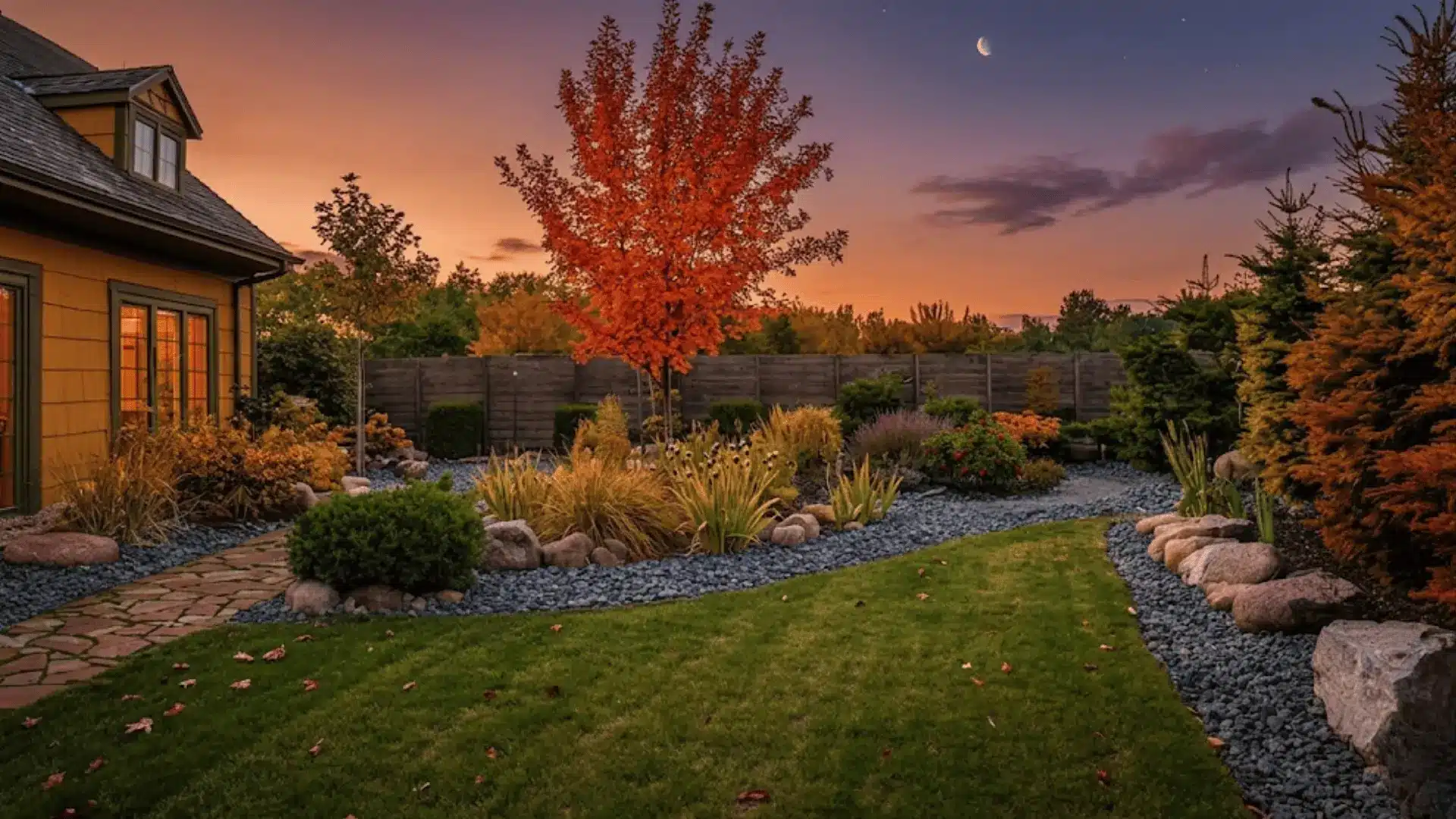
I used to walk past my front yard without noticing it, just like many people do. It felt plain and unfinished, but I kept putting off fixing it.
Then one day, I decided to change that with cheap, simple front yard landscaping ideas that anyone can try. You do not need a big budget or special skills to make your space look better.
In this blog, I will share easy ways you can improve your yard step by step. You will learn simple changes that save money, take little time, and still make a real difference.
By the end, you will feel ready to start and finally enjoy coming home each day with confidence, too.
Front Yard Landscaping Tips Before You Start
Before you grab a shovel or head to the store, a few simple rules will save you time, money, and stress. Keep these five tips in mind before you make a single move:
- Start with just one area of your yard instead of trying to fix everything at once.
- Look around your home first and use materials or plants you already have.
- Choose low-maintenance plants that grow well with little watering or care.
- Leave enough open space so your yard feels clean and easy on the eyes.
- Focus on a neat, simple layout rather than filling every spot with something new.
These tips may sound small, but they make a big difference in the long run. Follow them from the start, and you’ll avoid the most common mistakes homeowners make.
Cheap Simple Front Yard Landscaping Ideas
You don’t need a big budget or a professional crew to make your front yard look great. Here are easy ideas to get you started right away:
1. Refresh Soil with Mulch
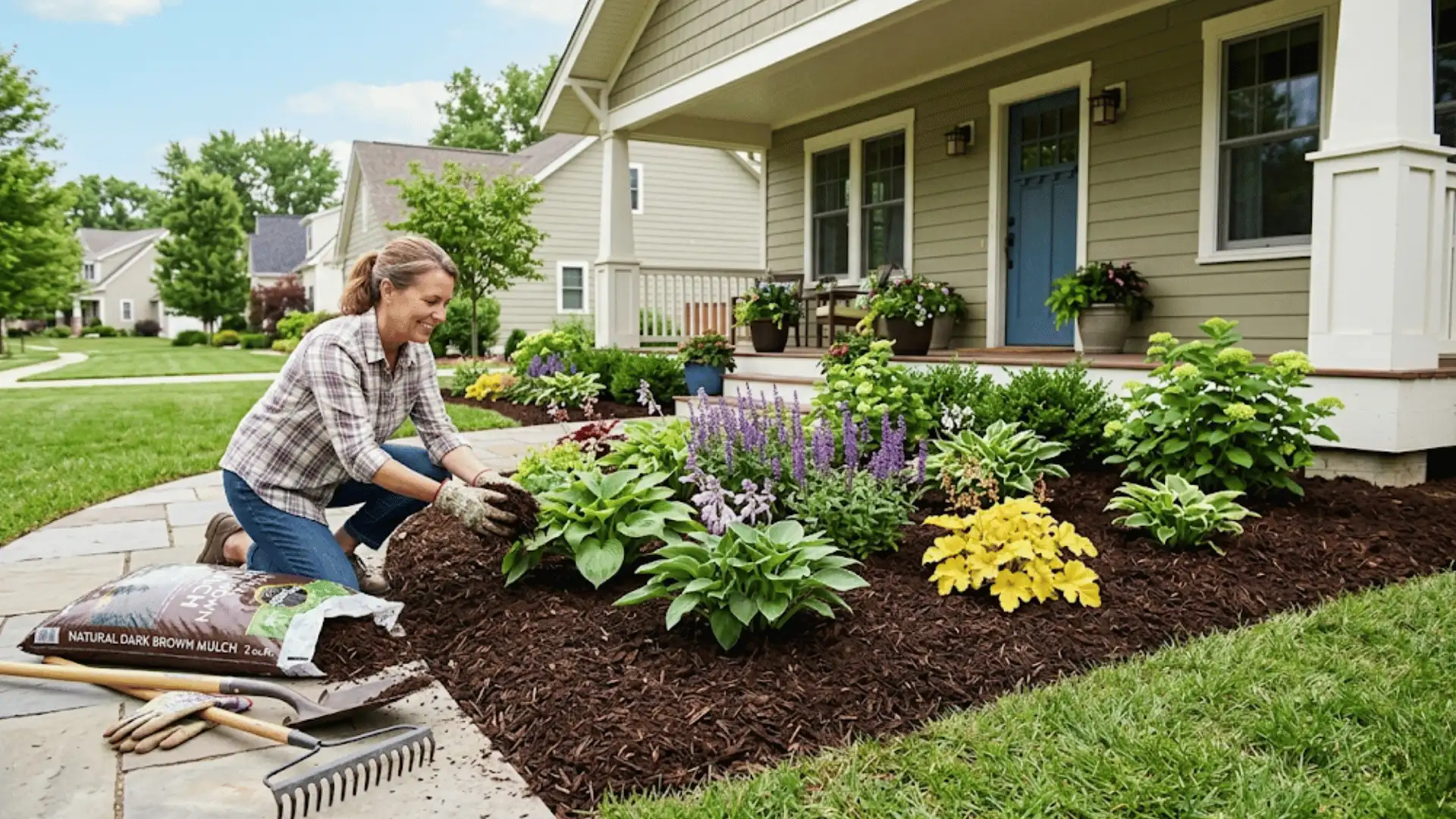
One of the easiest and cheapest ways to improve your front yard is to add fresh mulch. It gives your garden beds an instant clean look that stands out right away. Mulch also holds moisture in the soil, so your plants stay healthy even on hot days.
On top of that, it blocks weeds from growing, so you spend less time pulling and more time relaxing. A few bags from your local store can completely transform your yard in under an hour.
2. Add a Straight Stone Walkway
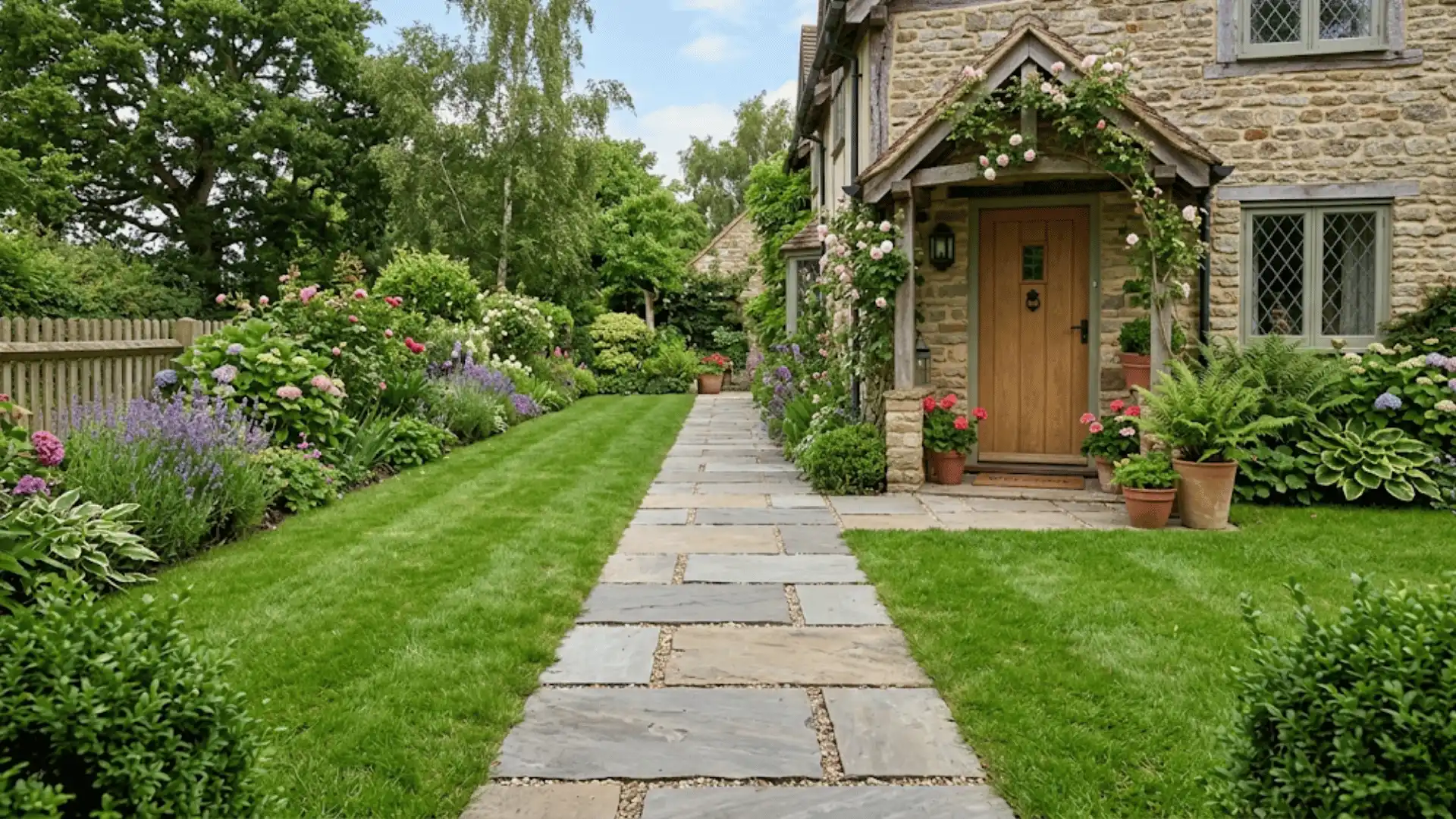
A simple stone walkway does more than just look good; it guides visitors straight to your door and gives your yard a clear, organized feel. You don’t need special skills to set one up.
Just lay flat stones or pavers in a straight line, and you’re done. It’s a true DIY project that works whether your yard is big, small, narrow, or wide. Clean, simple, and always a smart choice.
3. Use Solar Path Lights
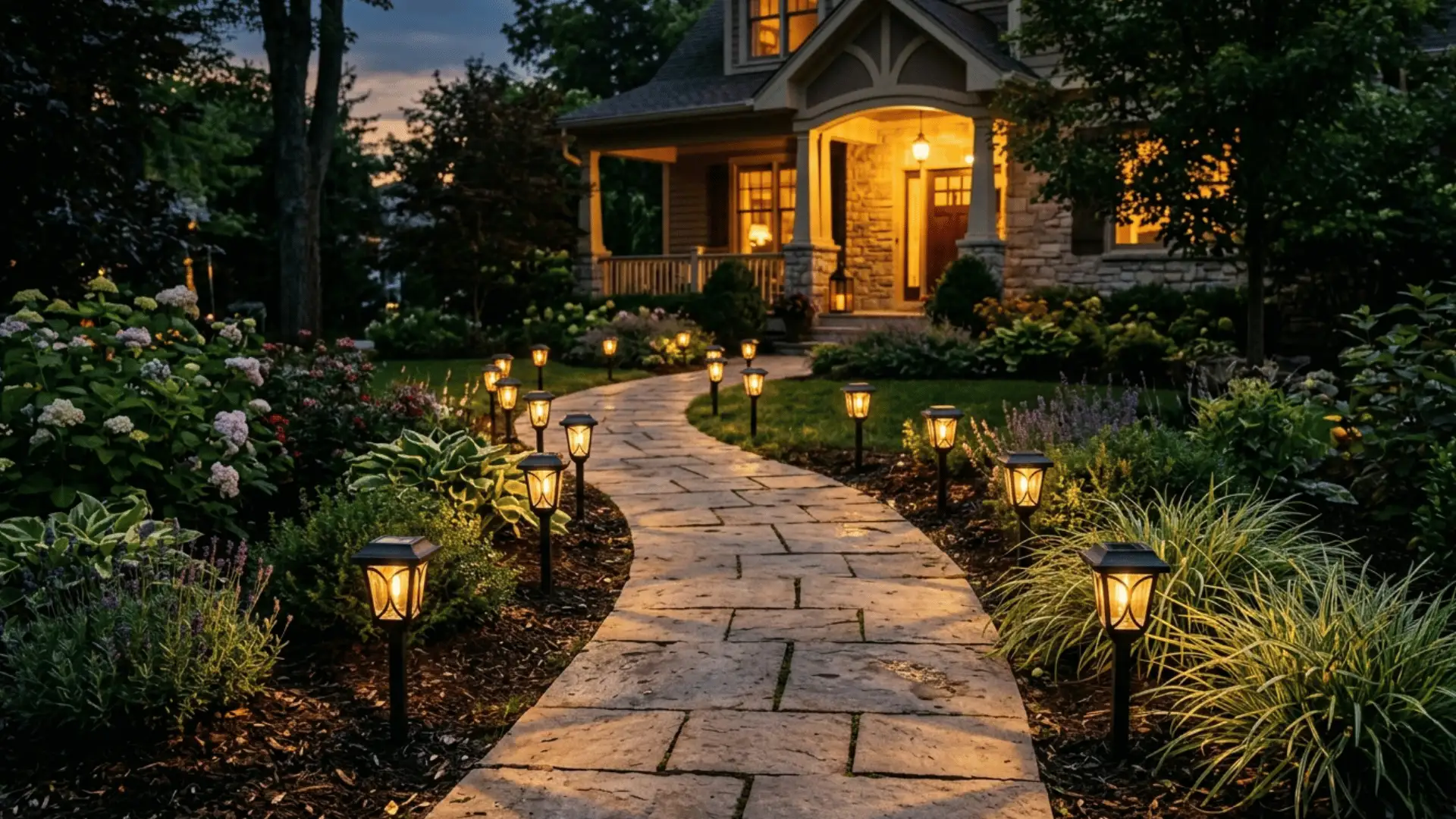
Solar path lights do more than just line a walkway; they change the entire feel of your front yard after dark.
Push them into the ground along garden borders, near your mailbox, or around a tree base to create warm, layered lighting across your whole yard.
No wiring, no electrician, no added electricity cost. They charge themselves during the day and switch on automatically at night.
Move them around any time the mood strikes. It’s the easiest way to make your yard feel welcoming long after the sun goes down.
4. Plant One Small Tree as a Focal Point
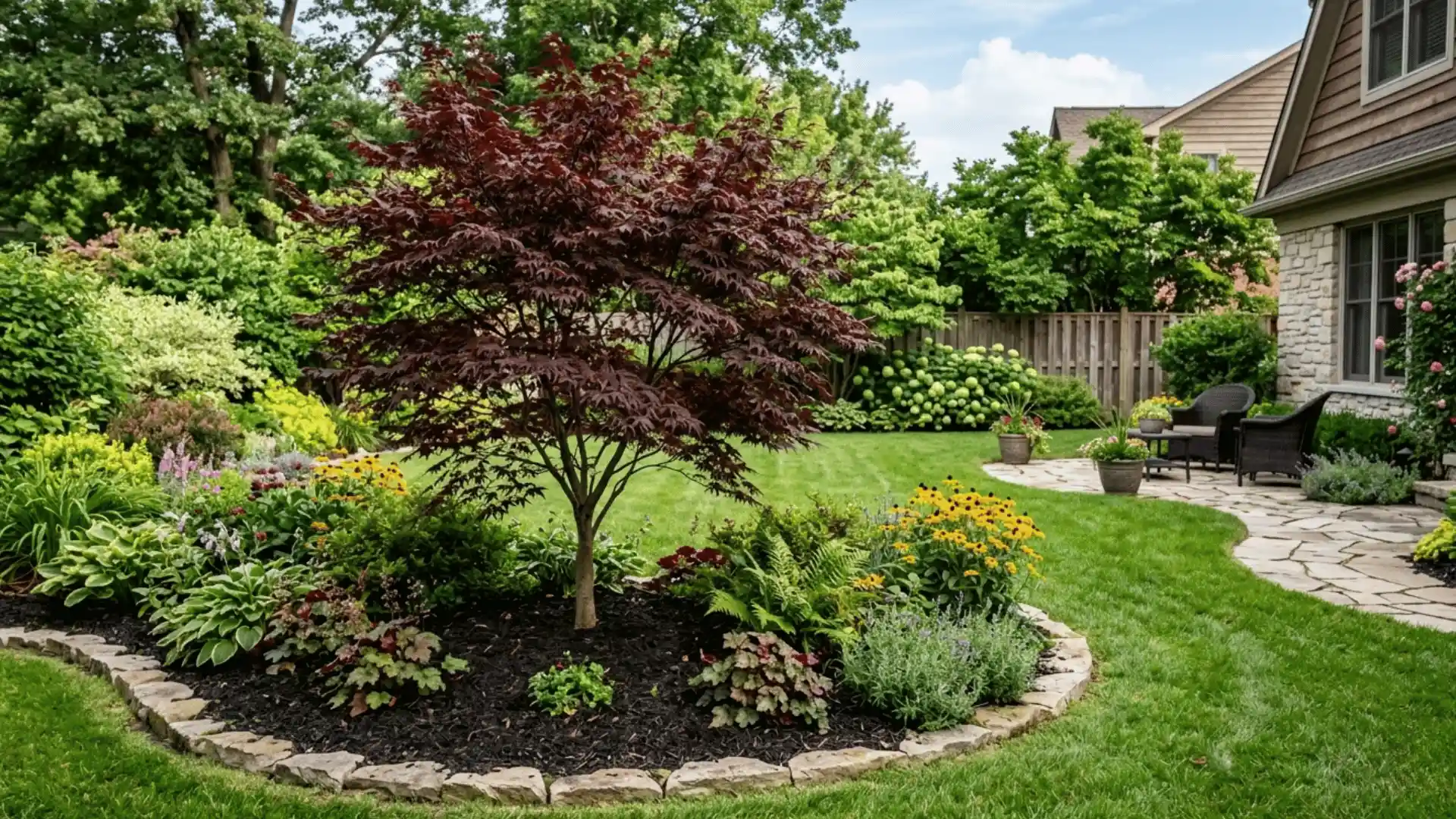
Sometimes all your yard needs is one strong focal point to pull everything together. A small tree does exactly that. It adds height, texture, and visual interest without taking over your space.
Choose a low-maintenance variety, such as a dwarf cherry, crape myrtle, or Japanese maple. Once it’s planted, it does the work for you. Low effort, big impact. This is one change that keeps giving year after year.
5. Set Up Matching Pots at the Entrance
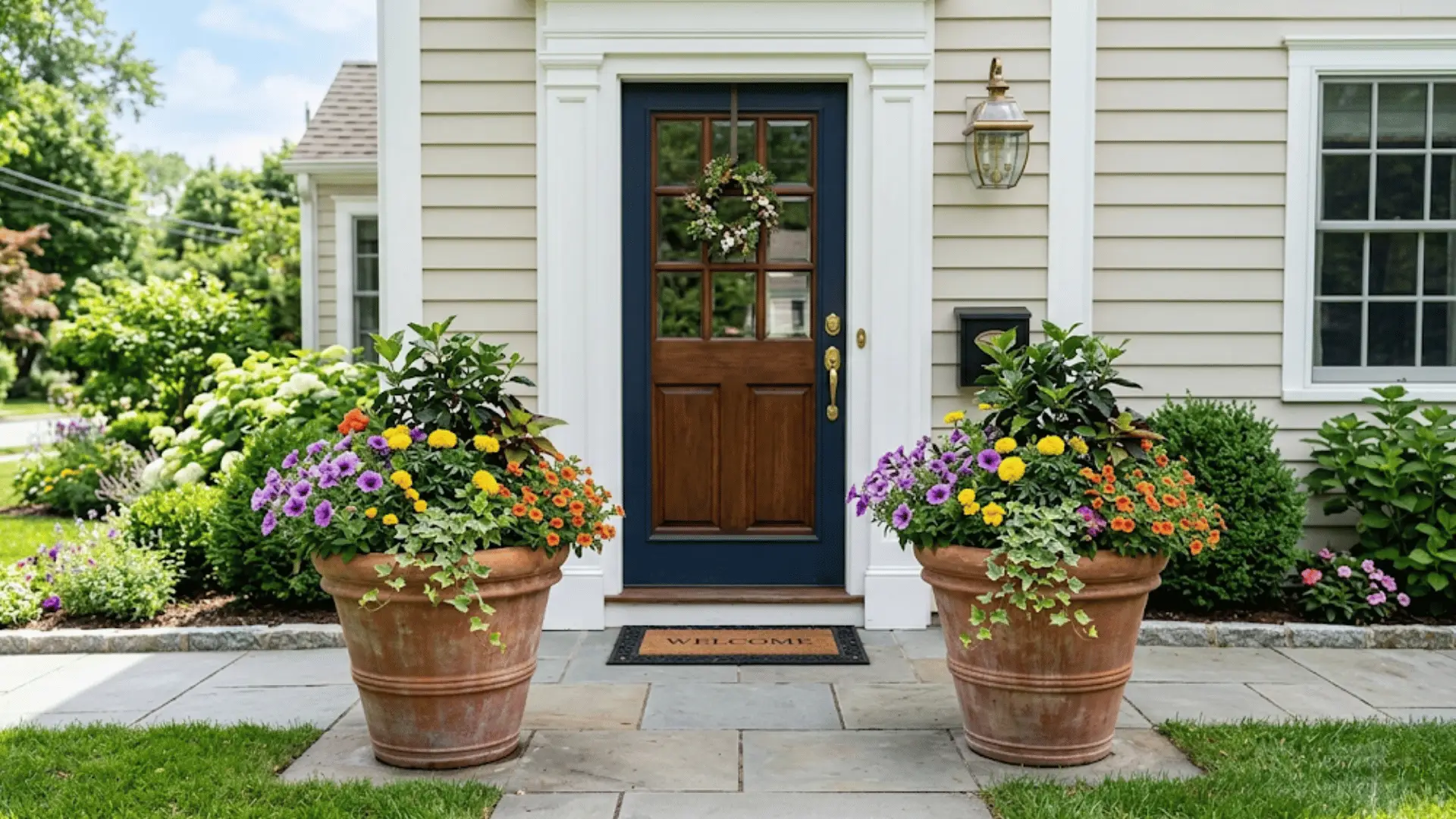
Placing two matching pots on either side of your front door instantly creates a balanced, polished look. It’s one of the easiest ways to boost curb appeal without spending much. Fill them with colorful flowers, small shrubs, or even simple greenery.
The best part? You can swap out the plants with every season to keep things fresh. No digging, no mess, just a simple touch that makes your entrance feel warm and welcoming.
6. Grow Low-Maintenance Perennials
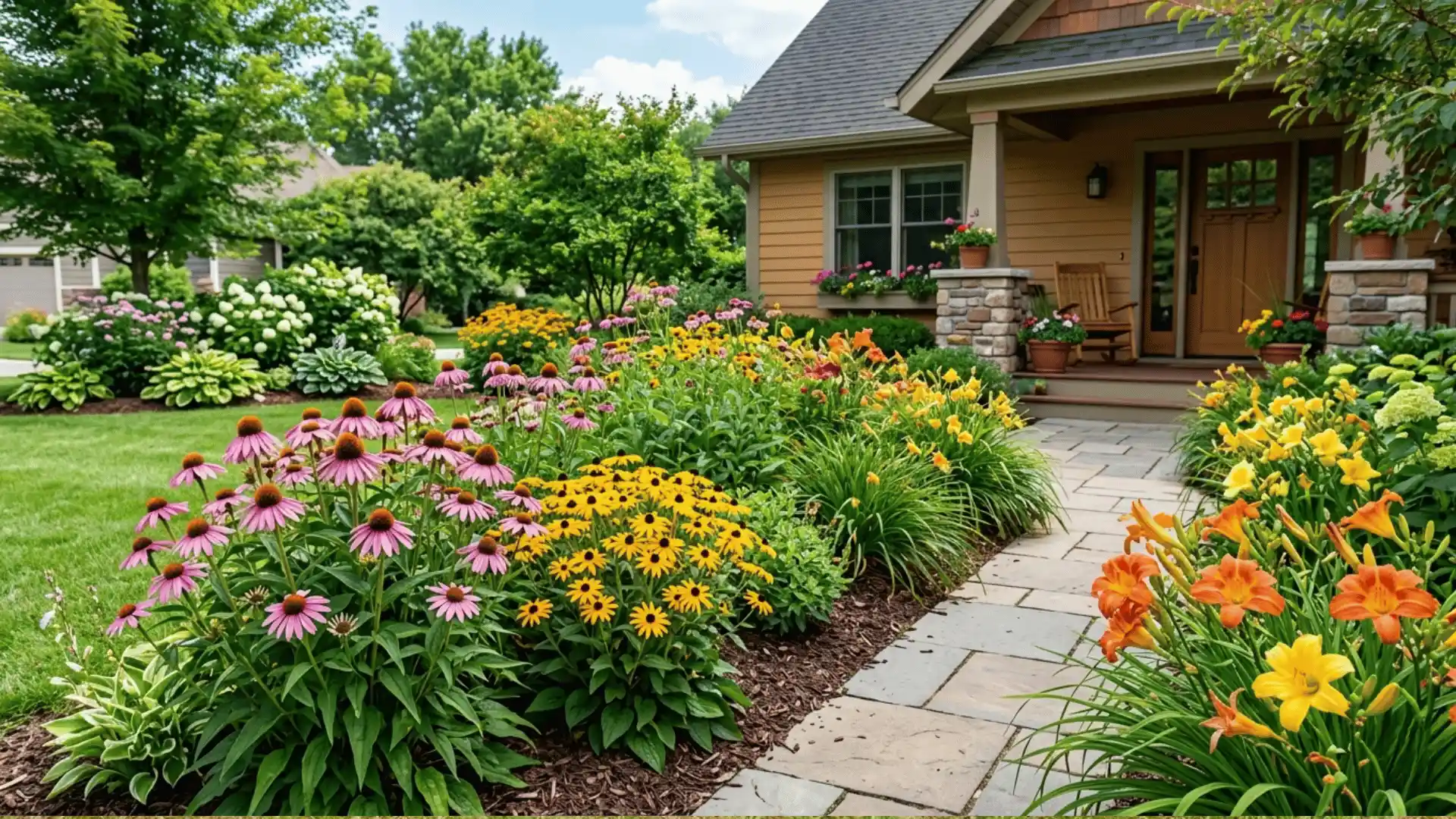
Unlike annual flowers that you replant every single season, perennials come back on their own year after year from the same roots.
That means you invest once and keep enjoying the results without repeated trips to the store. Options like coneflowers, black-eyed Susans, and daylilies are tough, long-lived, and handle heat or dry spells without fuss.
They’re the smart backbone of any budget front yard; reliable color and fullness that returns every spring with zero replanting effort on your part.
7. Build a Simple Raised Bed
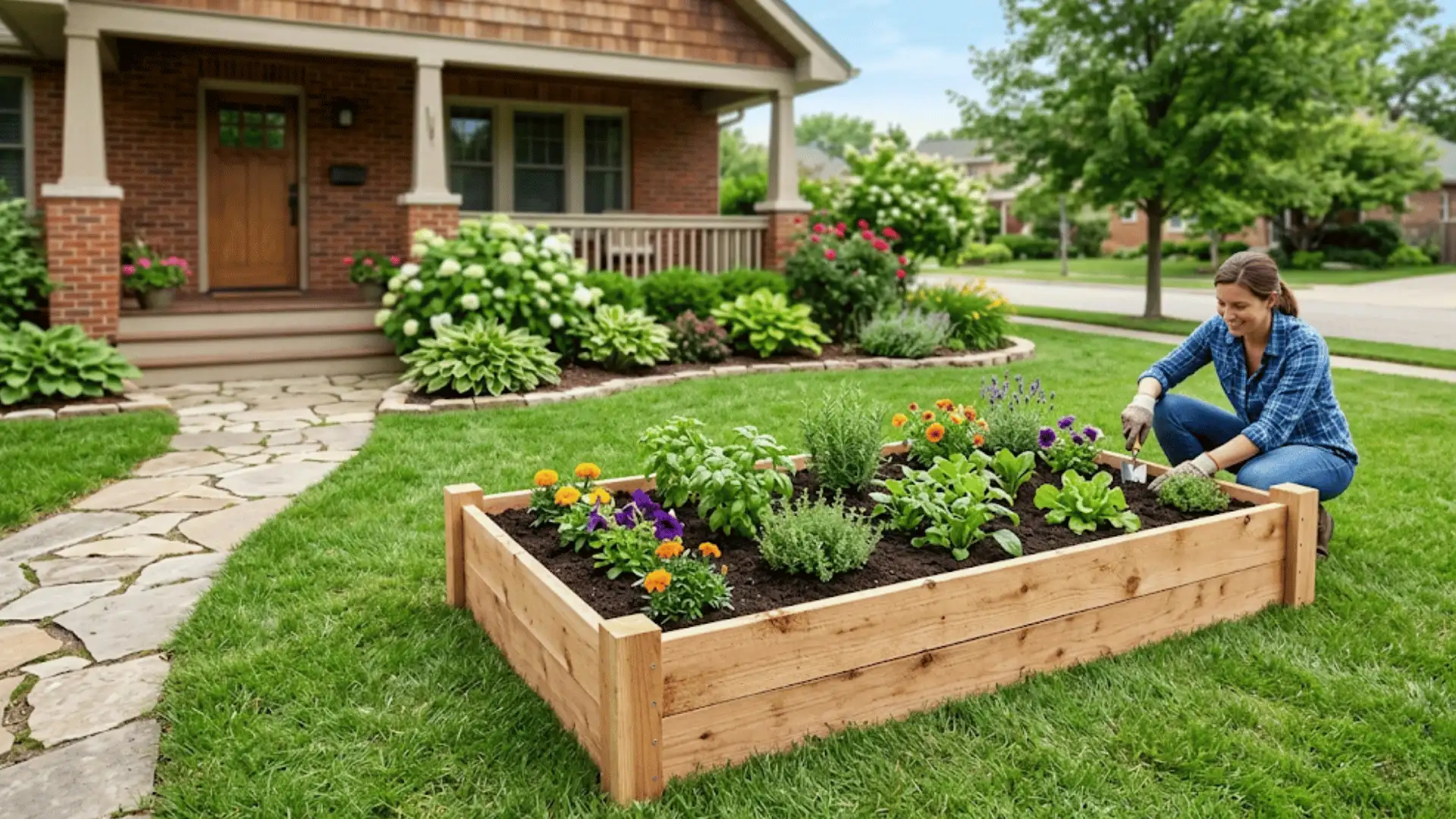
A raised bed is a clean and organized way to grow flowers, herbs, or small plants right in your front yard. You can build one cheaply using leftover wood, cinder blocks, or even stacked stones.
It keeps everything in one neat space and makes your yard look intentional and tidy. Raised beds are also easier on your back because you don’t have to bend all the way to the ground.
A great weekend project with lasting results. Use free cinder blocks, leftover wood, or stones you already have
8. Create a Gravel Sitting Spot
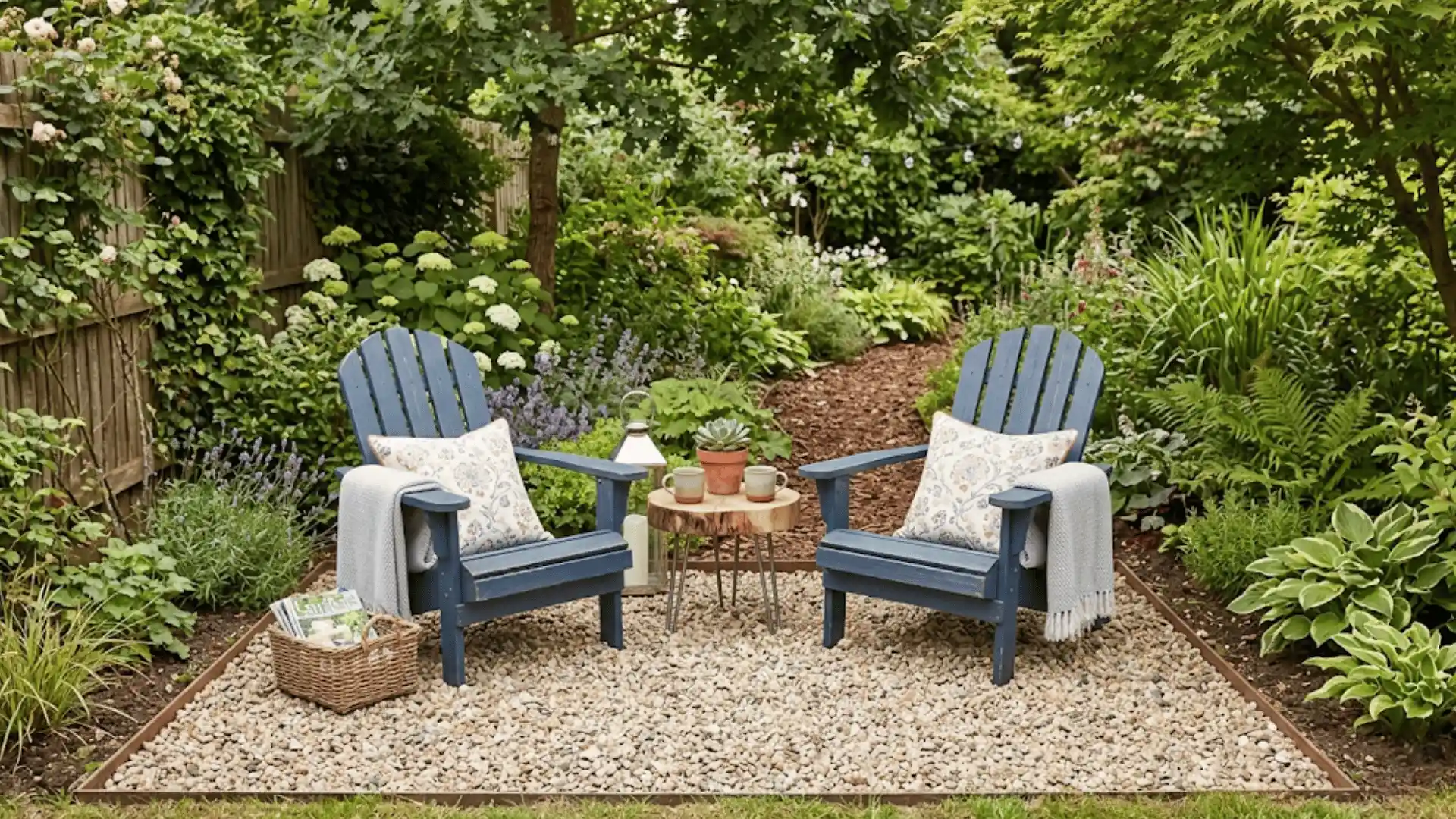
Turn a small corner of your front yard into a proper place to sit and unwind without spending much at all. Clear a flat area, lay down a weed barrier, and fill it with decorative gravel.
Then add a chair or a small bench, and you have a real outdoor sitting spot for a fraction of what a paved patio would cost.
Gravel drains well, handles all weather, and needs almost no upkeep. It’s the most affordable way to add a functional, inviting seating area to your front yard. Source gravel cheaply from local landscaping suppliers or buy in bulk.
9. Plant Ground Cover Instead of Grass
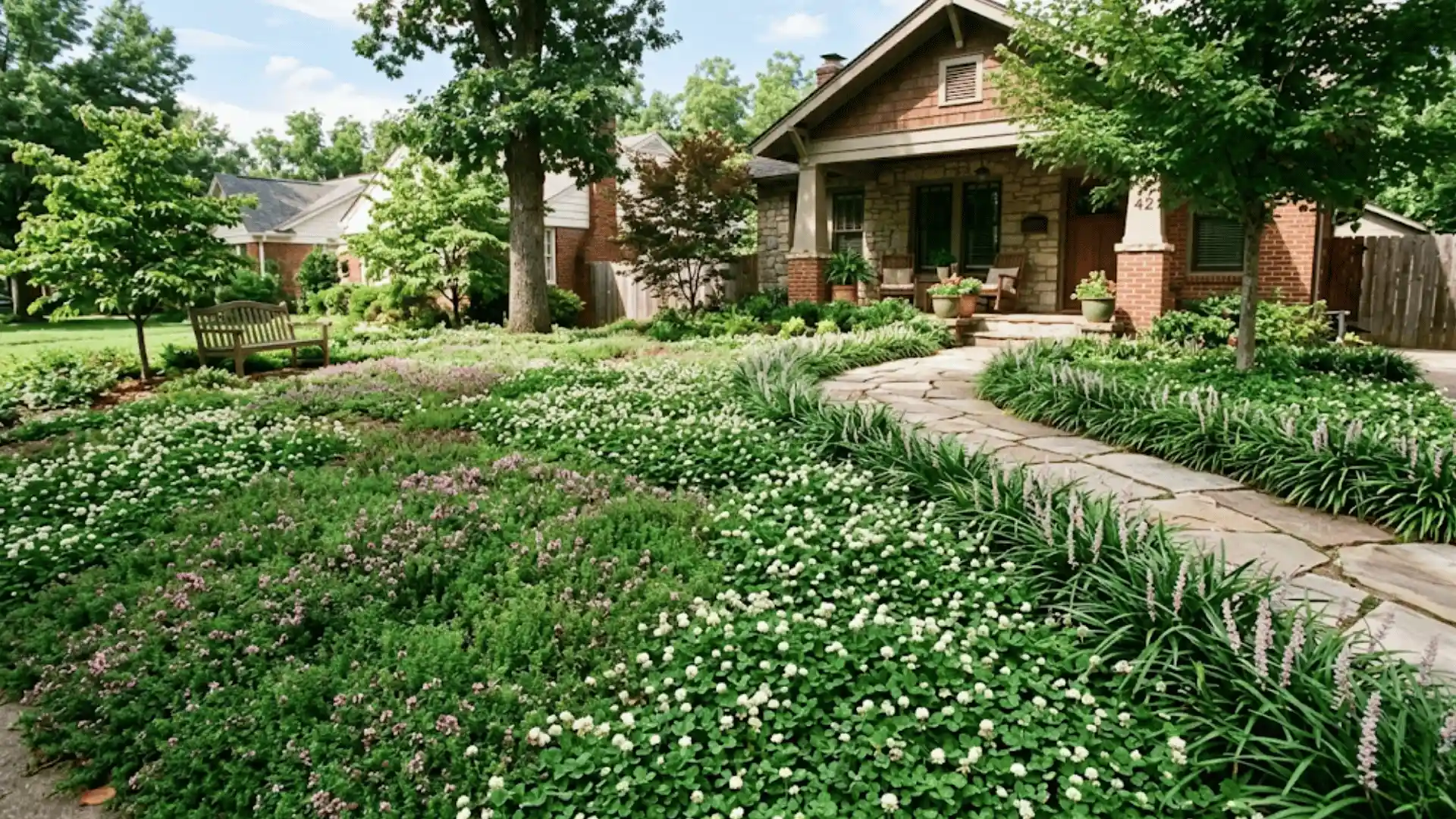
If your lawn is hard to maintain or your yard has dry, patchy spots, ground cover plants are a smart swap. Options like creeping thyme, clover, or liriope spread on their own and need little to no mowing.
They stay green, look neat, and handle tough conditions much better than regular grass. This is especially helpful in shaded or dry areas where grass struggles to grow. Less work, less water, and a yard that still looks full and green.
10. Decorate Around Your Mailbox
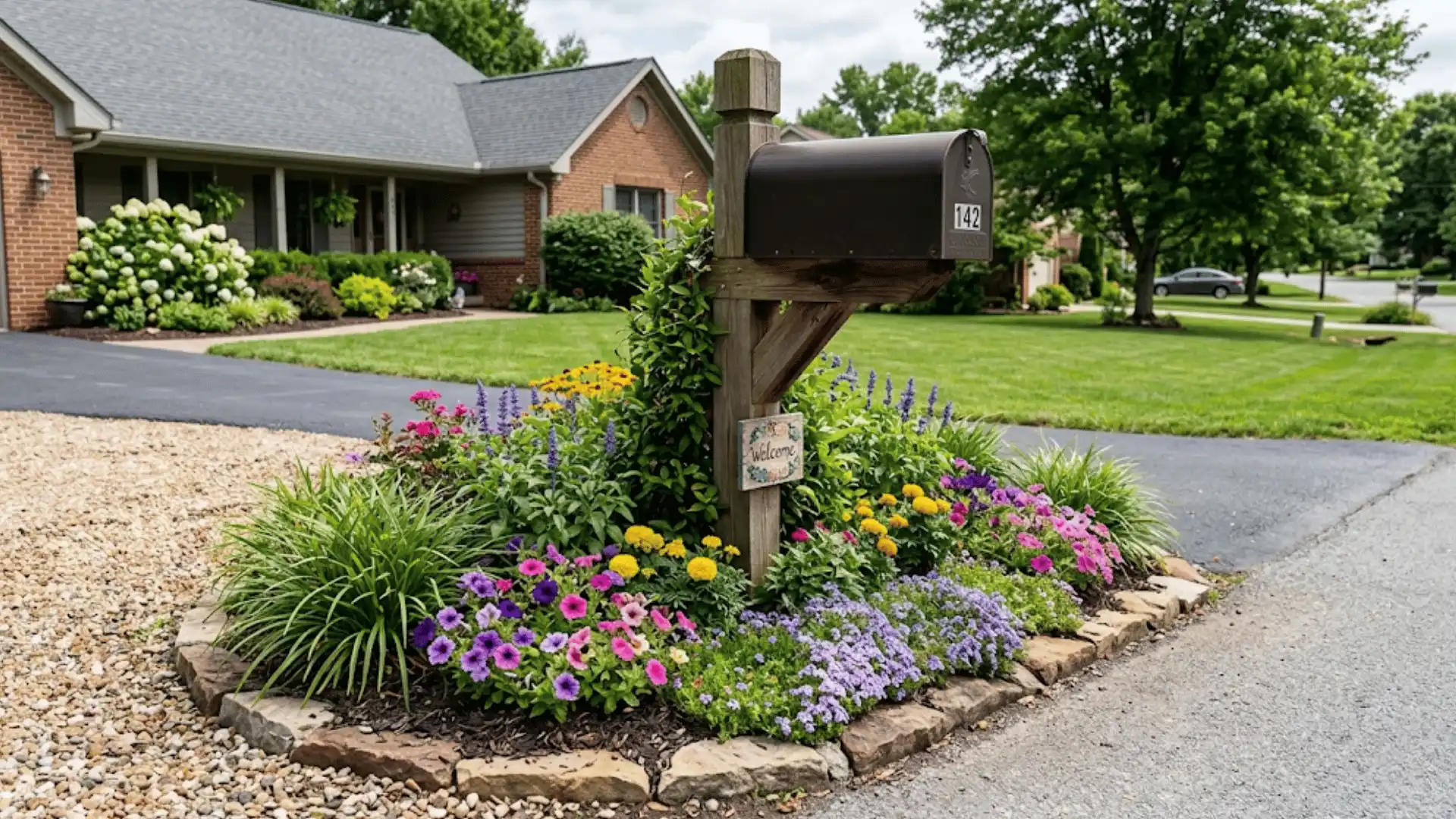
Your mailbox is one of the first things people notice when they pass your home. A few simple plants or a small flower bed around its base can completely change how your yard looks from the street. Use low-growing flowers, ornamental grasses, or ground cover to frame it neatly.
It’s a small change with a surprisingly strong impact and takes less than an afternoon to set up. Easy to plant, easy to maintain, and always eye-catching.
11. Use Recycled Containers as Planters
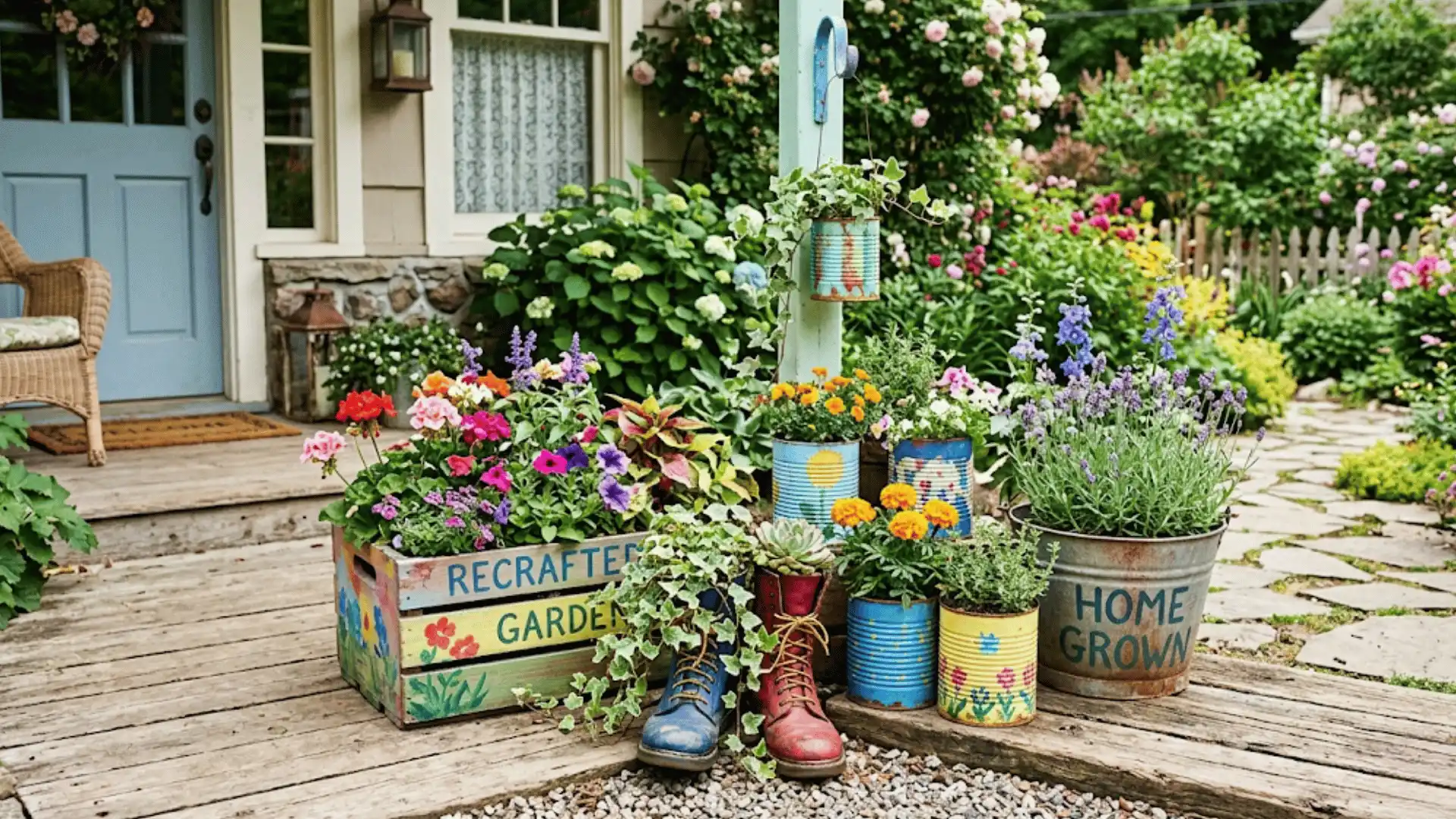
Old buckets, wooden crates, tin cans, or worn-out boots can all make charming, creative planters for your front yard. This is one of the most budget-friendly ideas on the list because you’re using what you already have.
Paint them, group them, and fill them with colorful plants. The result is a fun, personalized DIY look that feels unique to your home. It’s proof that great curb appeal doesn’t always require a trip to the store.
12. Add a Neat Garden Edging Border
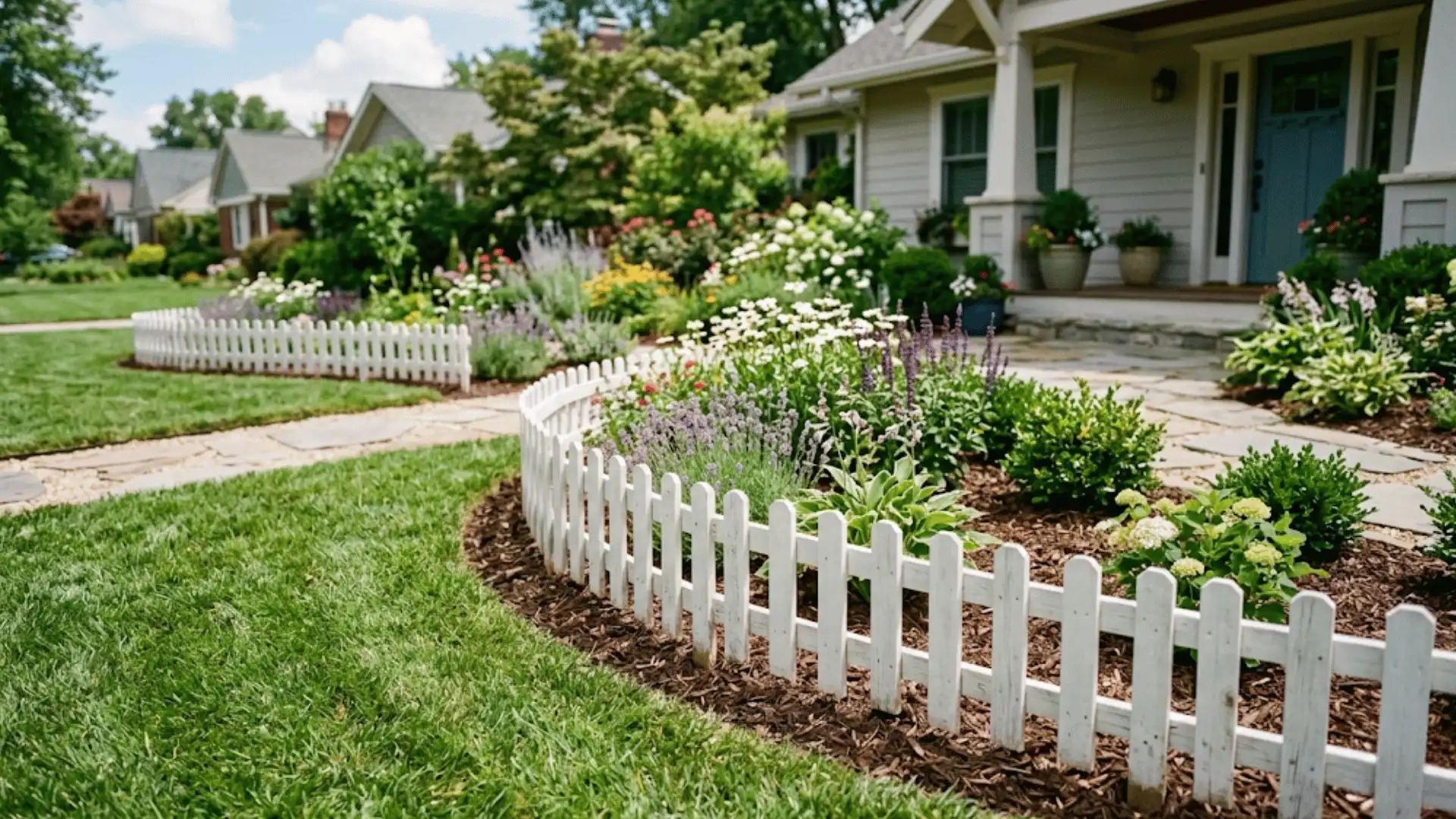
A short border fence, even just a few inches tall, can completely define your yard’s layout and make everything inside it look more intentional. Use inexpensive materials like wire edging, wood stakes, or basic picket pieces.
It separates your lawn from your garden beds, keeps mulch in place, and gives your yard a structured, tidy appearance. You don’t need a tall fence to make an impact. Even a small border adds a great sense of order.
13. Plant Shrubs for Structure
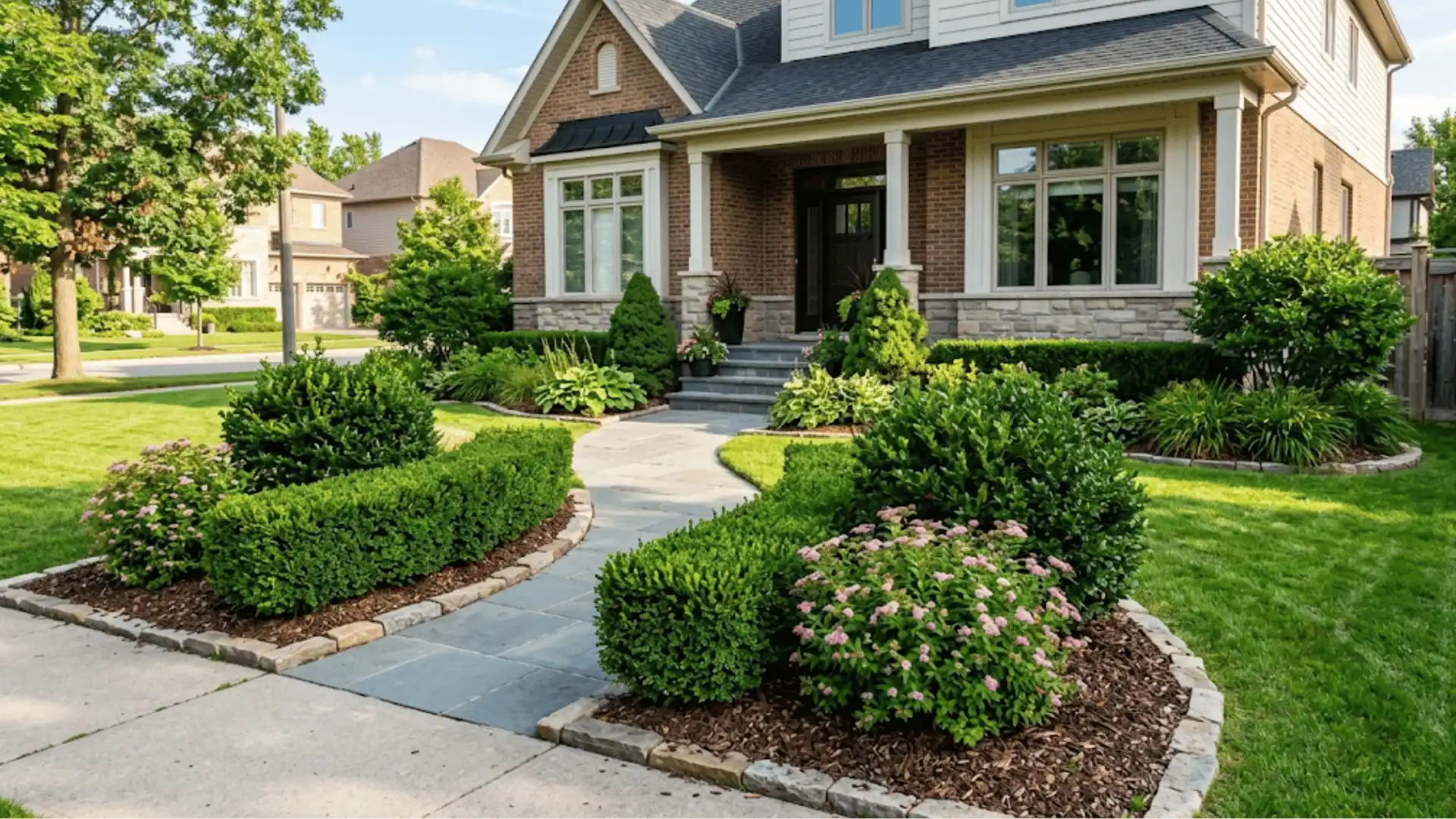
Shrubs are the backbone of a well-designed front yard. They add shape, fill empty spaces, and keep your yard looking neat and full even when flowers aren’t blooming. Choose varieties like boxwood, holly, or spirea for year-round greenery that holds its form with minimal trimming.
Unlike flowers that come and go with the seasons, shrubs remain consistent and give your yard a clean, professional look year-round. A solid investment that keeps your space looking put-together.
14. Create a Small Herb Corner
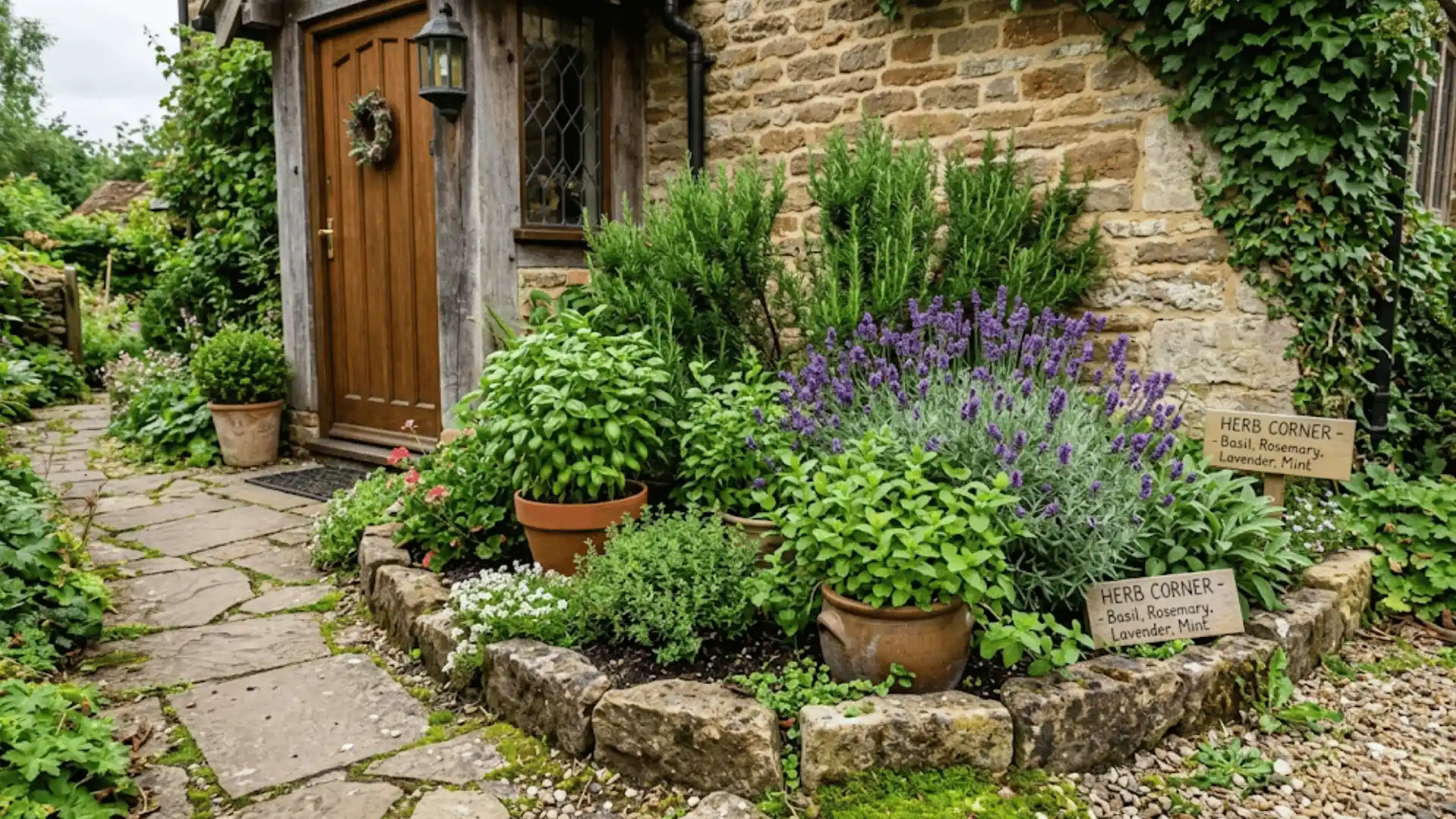
A small herb corner is both beautiful and practical, something not many yard features can claim. Tuck a few herbs like rosemary, basil, mint, or lavender into a corner of your front yard or near your entrance.
They grow easily, smell wonderful, and add fresh greenery without much effort. Most herbs are tough, low-maintenance plants that don’t need much water or attention once they’re settled in. You get a yard that looks great and a kitchen that smells even better.
15. Add Hanging Planters Near the Porch
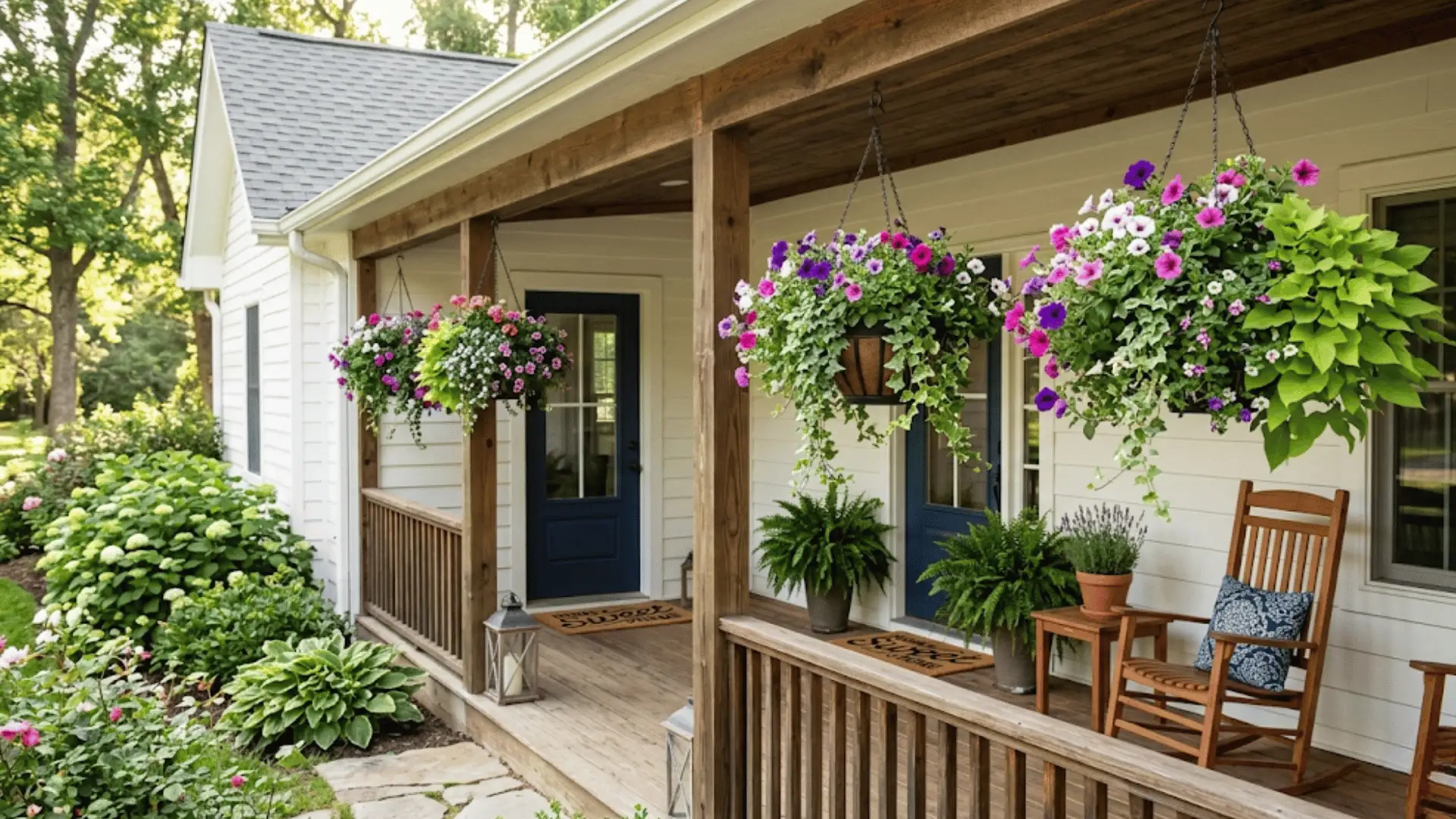
If your front yard is short on ground space, look up. Hanging planters let you add color and greenery at eye level and above, without using a single square foot of soil. Hook them from your porch ceiling, a beam, or a simple wall bracket.
Fill them with trailing plants like petunias, ivy, or sweet potato vine, and they’ll spill downward in a full, flowing way that ground pots simply can’t replicate.
They draw the eye upward, add instant depth to a flat entrance, and make even a small porch feel lush and welcoming.
16. Keep a Clean, Open Layout
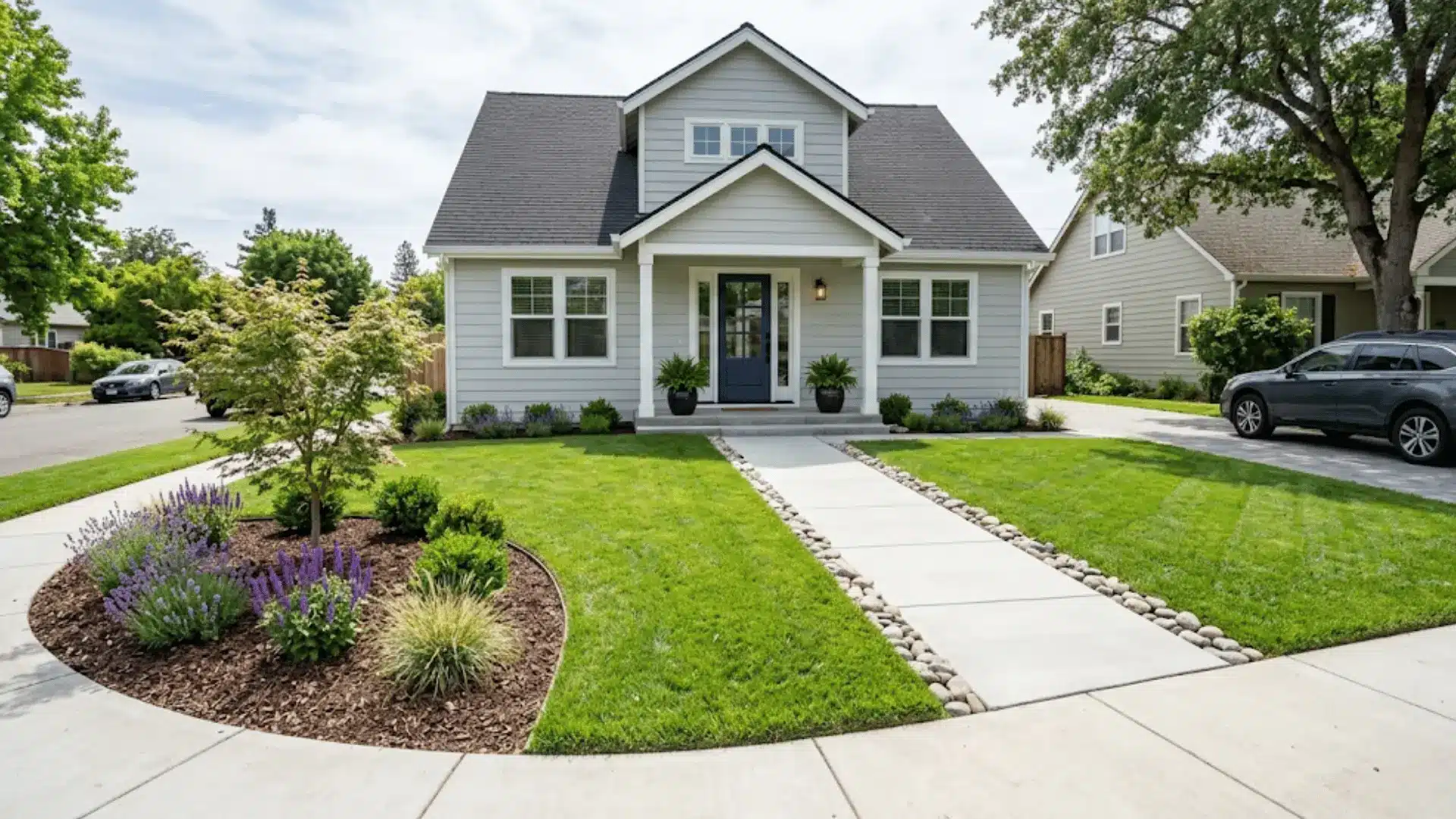
Sometimes the best thing you can do for your front yard is take things away rather than add more. A clean, open layout with defined spaces and breathing room makes your yard feel bigger and more organized.
Avoid cramming too many plants, pots, or decorations into one area. Less really is more when it comes to curb appeal. Stick to a simple plan, keep pathways clear, and let each element in your yard have its own space to shine.
17. Edge the Driveway with Plants
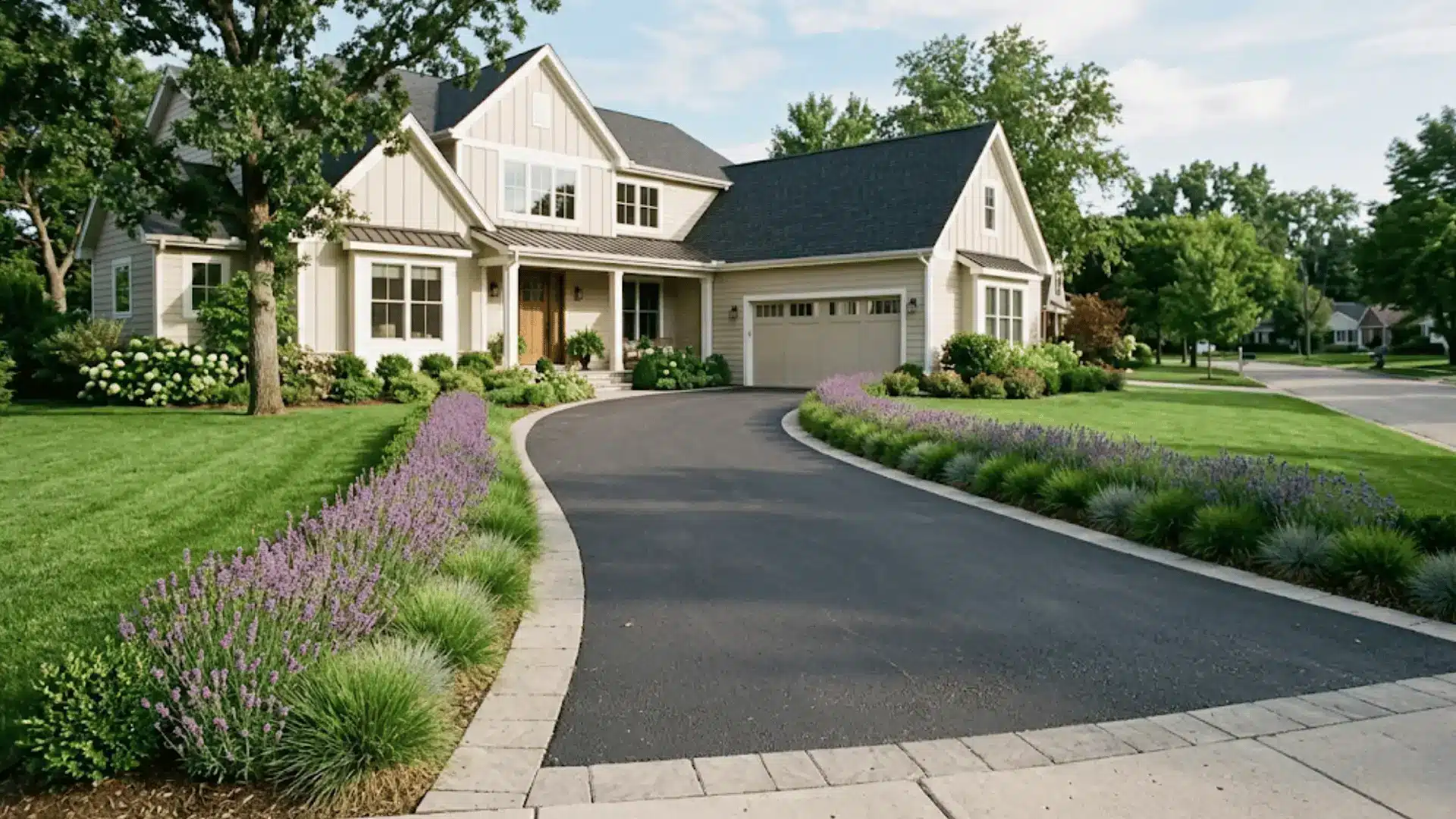
The line between your driveway and your lawn is one of the most overlooked spots in the front yard. Adding a low border of plants along the driveway edge instantly adds definition and polish to the whole space.
Use neat, compact plants like ornamental grass, lavender, or low shrubs that won’t spread too wide. It frames your driveway like a picture frame and boosts curb appeal from the street with minimal cost or effort.
18. Add One Bright Flower Bed
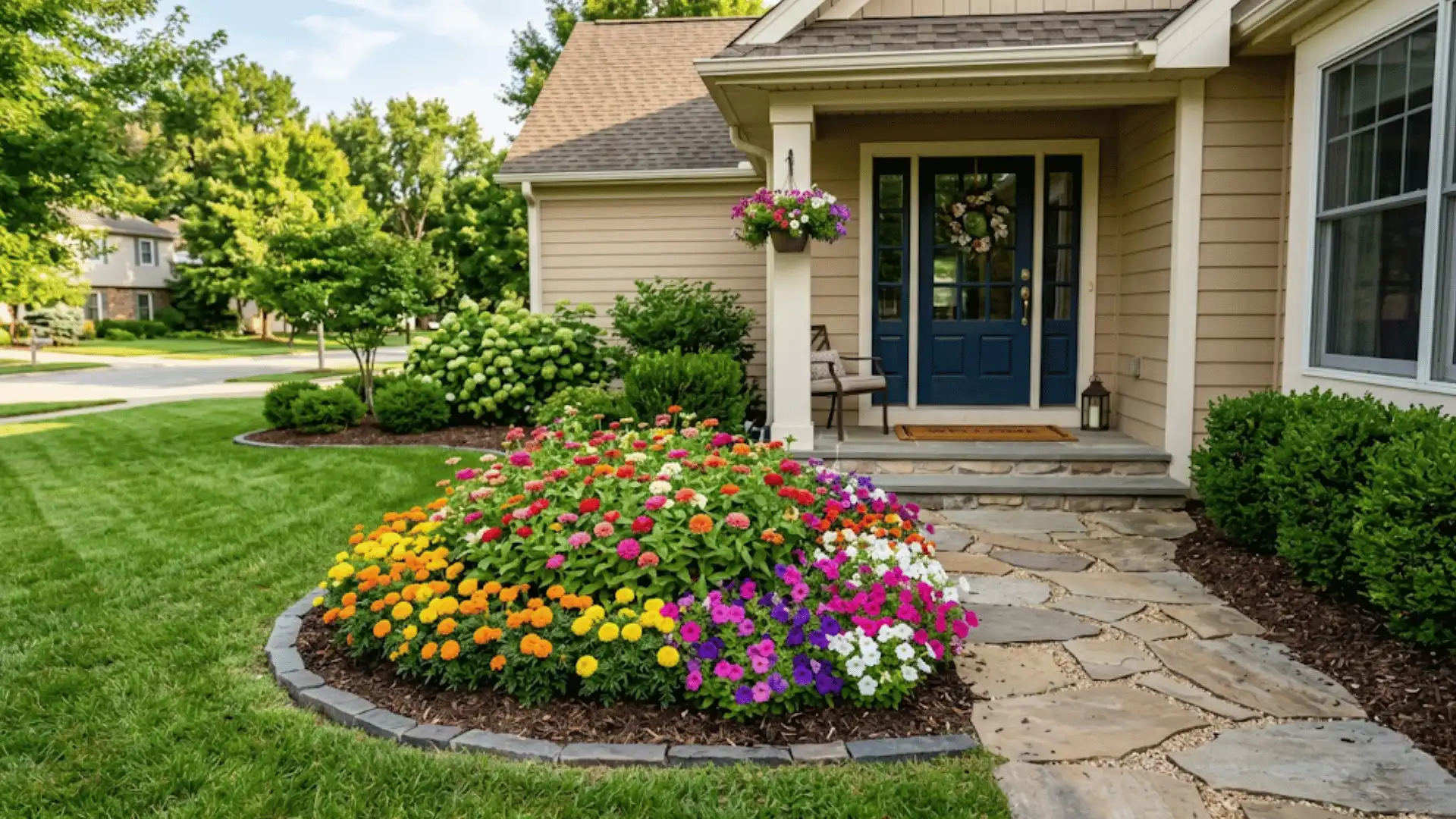
You don’t need a full garden to make an impact; just one well-placed flower bed can change everything. Pick a visible spot near your entrance or along the walkway and fill it with bright, easy-growing flowers like marigolds, zinnias, or petunias.
Keep the shape simple and the edges clean. A single flower bed draws the eye, adds color, and gives your yard a clear focal point. Small in size, but powerful in presence.
19. Use Vertical Plant Shelves
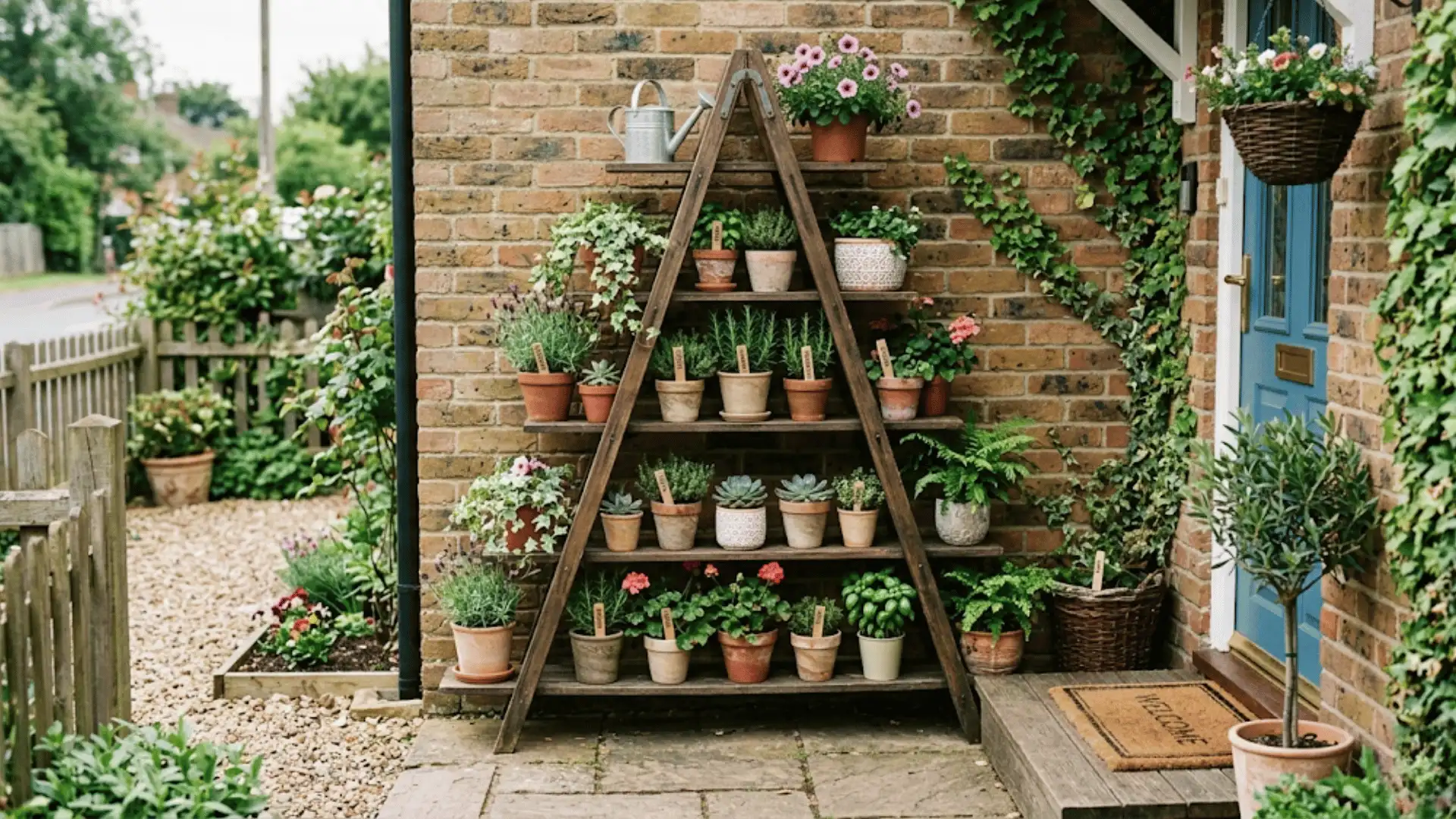
If your front yard is short on space, think vertical instead of horizontal. A simple tiered plant shelf or ladder-style rack lets you stack multiple plants in one small footprint. Place it near your entrance or against a wall and fill each level with small pots, succulents, or herbs.
It adds layers and depth to your yard without spreading out. Vertical shelves are affordable, easy to move, and a great solution for tight spaces that still deserve a green touch.
20. Create a Small Rock Accent Area
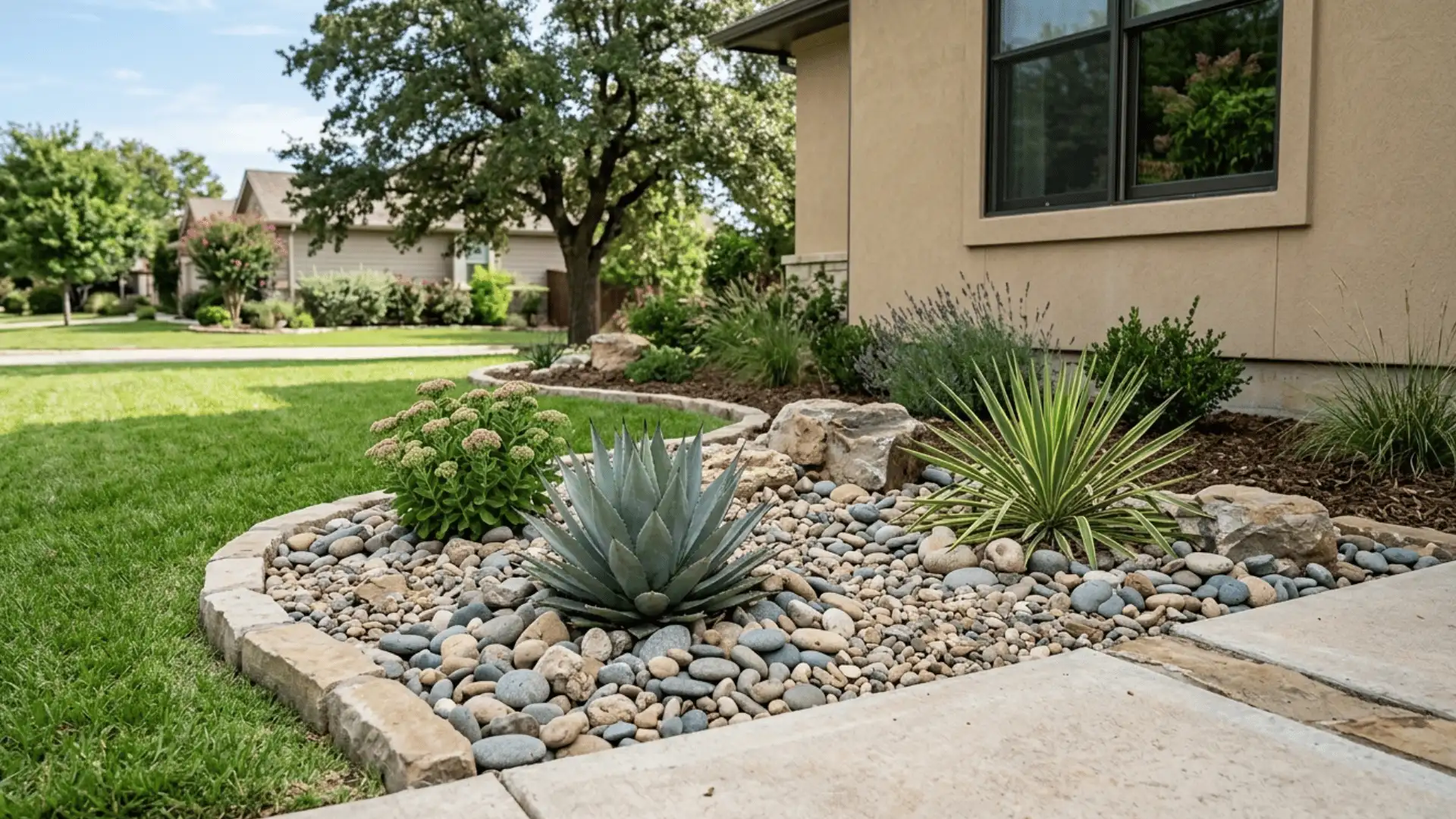
Rocks and pebbles are one of the most low-maintenance materials you can use in your front yard. Pick a corner or edge area, clear it out, and fill it with decorative rocks in different sizes and textures. No watering, no trimming, no seasonal replanting needed.
A rock accent area adds natural texture and visual interest that holds up in any weather. Pair it with a drought-tolerant plant or two for a clean, modern look that basically takes care of itself.
21. Trim and Shape What You Already Have
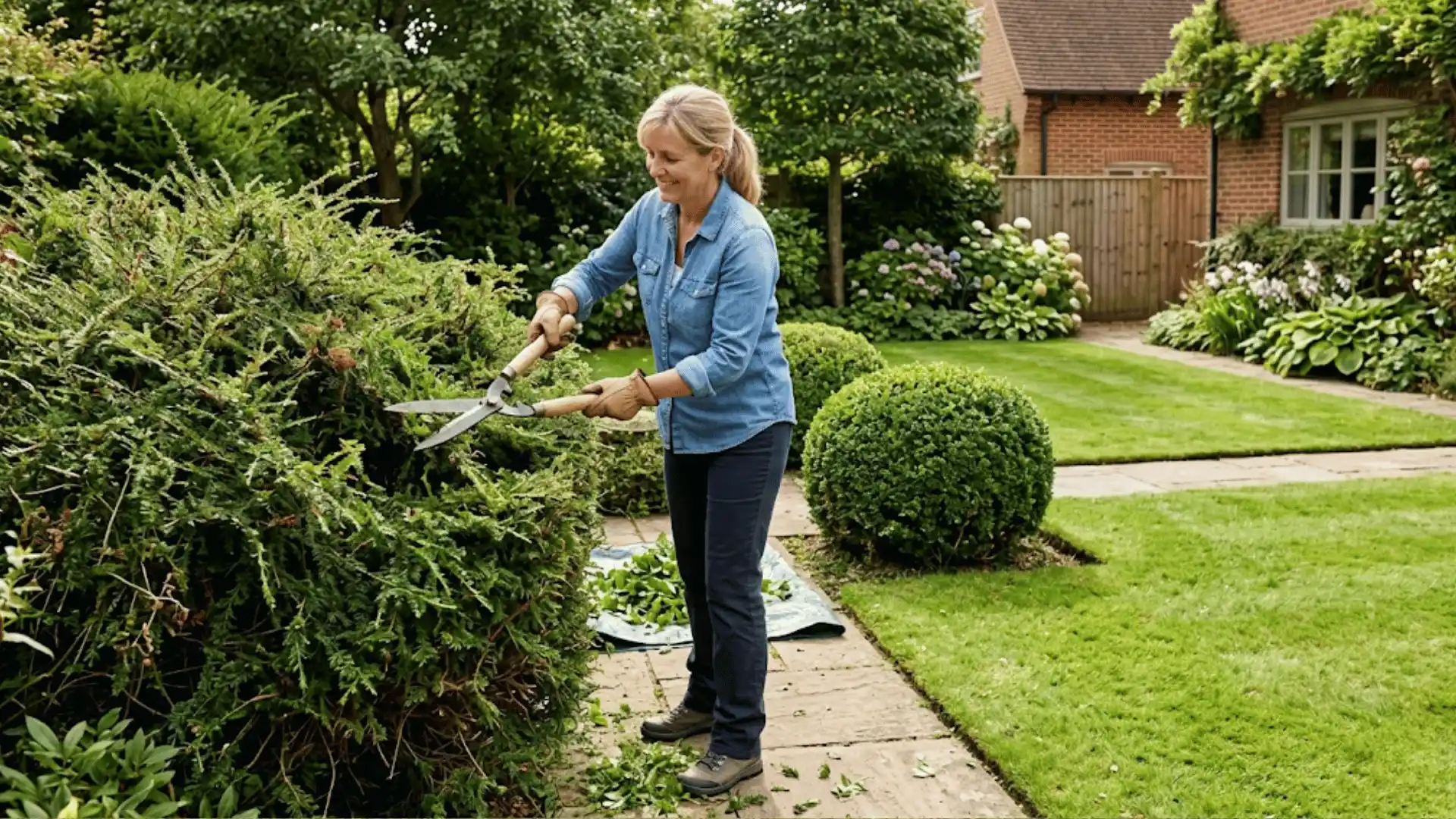
Before spending a single dollar, walk outside and look at what’s already there. Overgrown bushes, untrimmed hedges, and shaggy lawn edges can make even a nice yard look messy. Grab your shears and spend an afternoon cutting, shaping, and cleaning up what you already own.
This is a completely free improvement that delivers instant results. Clean lines and neatly shaped plants make your entire yard look more intentional and cared for, with no new plants or materials required.
Approximate Cost Breakdown by Project
Here is a rough guide to what each improvement typically costs so you can prioritize by budget:
| Project | Estimated Cost | Effort Level |
|---|---|---|
| Trim and edge what you have | Free | Low |
| Mulch a garden bed (bulk) | $20 – $50 | Low |
| Solar path lights (set of 8–10) | $15 – $40 | Very low |
| Gravel sitting spot (small) | $40 – $80 | Medium |
| Matching entrance pots + plants | $30 – $60 | Very low |
| Perennials (5–6 plants) | $25 – $50 | Low |
| Stone walkway (DIY, stepping stones) | $50 – $120 | Medium |
| Small nursery tree | $150 – $200 | Medium |
| Raised bed (cinder blocks or scrap wood) | $0 – $40 | Medium |
Prices can change depending on your location, store, and the materials you choose. You might even spend less if you reuse items you already have or find good deals nearby.
Common Mistakes to Avoid
Even the simplest front yard projects can go wrong if you’re not careful. Watch out for these five common mistakes before you get started:
- Adding too many ideas at once will overwhelm your space and your budget faster than you think.
- Picking high-maintenance plants means more watering, more trimming, and more stress every single week.
- Ignoring spacing causes plants to crowd each other out, making your yard look messy instead of neat.
- Spending money before you have a clear plan often leads to wasted materials and choices you’ll regret.
- Forgetting about drainage can lead to waterlogged soil, dead plants, and muddy patches that ruin your hard work.
One mistake I see is constantly buying plants without checking their mature size. A shrub that looks modest at the nursery can spread to four feet wide within two seasons.
Always read the plant tag and leave space accordingly. Crowding costs money to fix later.
Avoiding these mistakes will save you time, money, and a lot of frustration in the long run. Keep things simple, plan ahead, and your front yard will come together much more smoothly than you expect.
Final Call
It doesn’t take a big budget or a perfect plan to make your front yard feel right. What matters is starting, even if it’s just one small change. I found that once I began, each step made the next one easier and more enjoyable.
When you try cheap, simple front yard landscaping ideas, you’ll see how small updates can shift the whole look of your space. A little effort can turn something plain into a place you actually enjoy seeing every day.
Take your time and make it your own. There’s no rush to get everything done at once. If you’re looking for more simple ways to improve your space, feel free to check out more ideas and keep going at your own pace.
I used to walk past my front yard without noticing it, just like many people do. It felt plain and unfinished, but I kept putting off fixing it.
Then one day, I decided to change that with cheap, simple front yard landscaping ideas that anyone can try. You do not need a big budget or special skills to make your space look better.
In this blog, I will share easy ways you can improve your yard step by step. You will learn simple changes that save money, take little time, and still make a real difference.
By the end, you will feel ready to start and finally enjoy coming home each day with confidence, too.
Front Yard Landscaping Tips Before You Start
Before you grab a shovel or head to the store, a few simple rules will save you time, money, and stress. Keep these five tips in mind before you make a single move:
- Start with just one area of your yard instead of trying to fix everything at once.
- Look around your home first and use materials or plants you already have.
- Choose low-maintenance plants that grow well with little watering or care.
- Leave enough open space so your yard feels clean and easy on the eyes.
- Focus on a neat, simple layout rather than filling every spot with something new.
These tips may sound small, but they make a big difference in the long run. Follow them from the start, and you’ll avoid the most common mistakes homeowners make.
Cheap Simple Front Yard Landscaping Ideas
You don’t need a big budget or a professional crew to make your front yard look great. Here are easy ideas to get you started right away:
1. Refresh Soil with Mulch
One of the easiest and cheapest ways to improve your front yard is to add fresh mulch. It gives your garden beds an instant clean look that stands out right away. Mulch also holds moisture in the soil, so your plants stay healthy even on hot days.
On top of that, it blocks weeds from growing, so you spend less time pulling and more time relaxing. A few bags from your local store can completely transform your yard in under an hour.
2. Add a Straight Stone Walkway
A simple stone walkway does more than just look good; it guides visitors straight to your door and gives your yard a clear, organized feel. You don’t need special skills to set one up.
Just lay flat stones or pavers in a straight line, and you’re done. It’s a true DIY project that works whether your yard is big, small, narrow, or wide. Clean, simple, and always a smart choice.
3. Use Solar Path Lights
Solar path lights do more than just line a walkway; they change the entire feel of your front yard after dark.
Push them into the ground along garden borders, near your mailbox, or around a tree base to create warm, layered lighting across your whole yard.
No wiring, no electrician, no added electricity cost. They charge themselves during the day and switch on automatically at night.
Move them around any time the mood strikes. It’s the easiest way to make your yard feel welcoming long after the sun goes down.
4. Plant One Small Tree as a Focal Point
Sometimes all your yard needs is one strong focal point to pull everything together. A small tree does exactly that. It adds height, texture, and visual interest without taking over your space.
Choose a low-maintenance variety, such as a dwarf cherry, crape myrtle, or Japanese maple. Once it’s planted, it does the work for you. Low effort, big impact. This is one change that keeps giving year after year.
5. Set Up Matching Pots at the Entrance
Placing two matching pots on either side of your front door instantly creates a balanced, polished look. It’s one of the easiest ways to boost curb appeal without spending much. Fill them with colorful flowers, small shrubs, or even simple greenery.
The best part? You can swap out the plants with every season to keep things fresh. No digging, no mess, just a simple touch that makes your entrance feel warm and welcoming.
6. Grow Low-Maintenance Perennials
Unlike annual flowers that you replant every single season, perennials come back on their own year after year from the same roots.
That means you invest once and keep enjoying the results without repeated trips to the store. Options like coneflowers, black-eyed Susans, and daylilies are tough, long-lived, and handle heat or dry spells without fuss.
They’re the smart backbone of any budget front yard; reliable color and fullness that returns every spring with zero replanting effort on your part.
7. Build a Simple Raised Bed
A raised bed is a clean and organized way to grow flowers, herbs, or small plants right in your front yard. You can build one cheaply using leftover wood, cinder blocks, or even stacked stones.
It keeps everything in one neat space and makes your yard look intentional and tidy. Raised beds are also easier on your back because you don’t have to bend all the way to the ground.
A great weekend project with lasting results. Use free cinder blocks, leftover wood, or stones you already have
8. Create a Gravel Sitting Spot
Turn a small corner of your front yard into a proper place to sit and unwind without spending much at all. Clear a flat area, lay down a weed barrier, and fill it with decorative gravel.
Then add a chair or a small bench, and you have a real outdoor sitting spot for a fraction of what a paved patio would cost.
Gravel drains well, handles all weather, and needs almost no upkeep. It’s the most affordable way to add a functional, inviting seating area to your front yard. Source gravel cheaply from local landscaping suppliers or buy in bulk.
9. Plant Ground Cover Instead of Grass
If your lawn is hard to maintain or your yard has dry, patchy spots, ground cover plants are a smart swap. Options like creeping thyme, clover, or liriope spread on their own and need little to no mowing.
They stay green, look neat, and handle tough conditions much better than regular grass. This is especially helpful in shaded or dry areas where grass struggles to grow. Less work, less water, and a yard that still looks full and green.
10. Decorate Around Your Mailbox
Your mailbox is one of the first things people notice when they pass your home. A few simple plants or a small flower bed around its base can completely change how your yard looks from the street. Use low-growing flowers, ornamental grasses, or ground cover to frame it neatly.
It’s a small change with a surprisingly strong impact and takes less than an afternoon to set up. Easy to plant, easy to maintain, and always eye-catching.
11. Use Recycled Containers as Planters
Old buckets, wooden crates, tin cans, or worn-out boots can all make charming, creative planters for your front yard. This is one of the most budget-friendly ideas on the list because you’re using what you already have.
Paint them, group them, and fill them with colorful plants. The result is a fun, personalized DIY look that feels unique to your home. It’s proof that great curb appeal doesn’t always require a trip to the store.
12. Add a Neat Garden Edging Border
A short border fence, even just a few inches tall, can completely define your yard’s layout and make everything inside it look more intentional. Use inexpensive materials like wire edging, wood stakes, or basic picket pieces.
It separates your lawn from your garden beds, keeps mulch in place, and gives your yard a structured, tidy appearance. You don’t need a tall fence to make an impact. Even a small border adds a great sense of order.
13. Plant Shrubs for Structure
Shrubs are the backbone of a well-designed front yard. They add shape, fill empty spaces, and keep your yard looking neat and full even when flowers aren’t blooming. Choose varieties like boxwood, holly, or spirea for year-round greenery that holds its form with minimal trimming.
Unlike flowers that come and go with the seasons, shrubs remain consistent and give your yard a clean, professional look year-round. A solid investment that keeps your space looking put-together.
14. Create a Small Herb Corner
A small herb corner is both beautiful and practical, something not many yard features can claim. Tuck a few herbs like rosemary, basil, mint, or lavender into a corner of your front yard or near your entrance.
They grow easily, smell wonderful, and add fresh greenery without much effort. Most herbs are tough, low-maintenance plants that don’t need much water or attention once they’re settled in. You get a yard that looks great and a kitchen that smells even better.
15. Add Hanging Planters Near the Porch
If your front yard is short on ground space, look up. Hanging planters let you add color and greenery at eye level and above, without using a single square foot of soil. Hook them from your porch ceiling, a beam, or a simple wall bracket.
Fill them with trailing plants like petunias, ivy, or sweet potato vine, and they’ll spill downward in a full, flowing way that ground pots simply can’t replicate.
They draw the eye upward, add instant depth to a flat entrance, and make even a small porch feel lush and welcoming.
16. Keep a Clean, Open Layout
Sometimes the best thing you can do for your front yard is take things away rather than add more. A clean, open layout with defined spaces and breathing room makes your yard feel bigger and more organized.
Avoid cramming too many plants, pots, or decorations into one area. Less really is more when it comes to curb appeal. Stick to a simple plan, keep pathways clear, and let each element in your yard have its own space to shine.
17. Edge the Driveway with Plants
The line between your driveway and your lawn is one of the most overlooked spots in the front yard. Adding a low border of plants along the driveway edge instantly adds definition and polish to the whole space.
Use neat, compact plants like ornamental grass, lavender, or low shrubs that won’t spread too wide. It frames your driveway like a picture frame and boosts curb appeal from the street with minimal cost or effort.
18. Add One Bright Flower Bed
You don’t need a full garden to make an impact; just one well-placed flower bed can change everything. Pick a visible spot near your entrance or along the walkway and fill it with bright, easy-growing flowers like marigolds, zinnias, or petunias.
Keep the shape simple and the edges clean. A single flower bed draws the eye, adds color, and gives your yard a clear focal point. Small in size, but powerful in presence.
19. Use Vertical Plant Shelves
If your front yard is short on space, think vertical instead of horizontal. A simple tiered plant shelf or ladder-style rack lets you stack multiple plants in one small footprint. Place it near your entrance or against a wall and fill each level with small pots, succulents, or herbs.
It adds layers and depth to your yard without spreading out. Vertical shelves are affordable, easy to move, and a great solution for tight spaces that still deserve a green touch.
20. Create a Small Rock Accent Area
Rocks and pebbles are one of the most low-maintenance materials you can use in your front yard. Pick a corner or edge area, clear it out, and fill it with decorative rocks in different sizes and textures. No watering, no trimming, no seasonal replanting needed.
A rock accent area adds natural texture and visual interest that holds up in any weather. Pair it with a drought-tolerant plant or two for a clean, modern look that basically takes care of itself.
21. Trim and Shape What You Already Have
Before spending a single dollar, walk outside and look at what’s already there. Overgrown bushes, untrimmed hedges, and shaggy lawn edges can make even a nice yard look messy. Grab your shears and spend an afternoon cutting, shaping, and cleaning up what you already own.
This is a completely free improvement that delivers instant results. Clean lines and neatly shaped plants make your entire yard look more intentional and cared for, with no new plants or materials required.
Approximate Cost Breakdown by Project
Here is a rough guide to what each improvement typically costs so you can prioritize by budget:
| Project | Estimated Cost | Effort Level |
|---|---|---|
| Trim and edge what you have | Free | Low |
| Mulch a garden bed (bulk) | $20 – $50 | Low |
| Solar path lights (set of 8–10) | $15 – $40 | Very low |
| Gravel sitting spot (small) | $40 – $80 | Medium |
| Matching entrance pots + plants | $30 – $60 | Very low |
| Perennials (5–6 plants) | $25 – $50 | Low |
| Stone walkway (DIY, stepping stones) | $50 – $120 | Medium |
| Small nursery tree | $150 – $200 | Medium |
| Raised bed (cinder blocks or scrap wood) | $0 – $40 | Medium |
Prices can change depending on your location, store, and the materials you choose. You might even spend less if you reuse items you already have or find good deals nearby.
Common Mistakes to Avoid
Even the simplest front yard projects can go wrong if you’re not careful. Watch out for these five common mistakes before you get started:
- Adding too many ideas at once will overwhelm your space and your budget faster than you think.
- Picking high-maintenance plants means more watering, more trimming, and more stress every single week.
- Ignoring spacing causes plants to crowd each other out, making your yard look messy instead of neat.
- Spending money before you have a clear plan often leads to wasted materials and choices you’ll regret.
- Forgetting about drainage can lead to waterlogged soil, dead plants, and muddy patches that ruin your hard work.
One mistake I see is constantly buying plants without checking their mature size. A shrub that looks modest at the nursery can spread to four feet wide within two seasons.
Always read the plant tag and leave space accordingly. Crowding costs money to fix later.
Avoiding these mistakes will save you time, money, and a lot of frustration in the long run. Keep things simple, plan ahead, and your front yard will come together much more smoothly than you expect.
Final Call
It doesn’t take a big budget or a perfect plan to make your front yard feel right. What matters is starting, even if it’s just one small change. I found that once I began, each step made the next one easier and more enjoyable.
When you try cheap, simple front yard landscaping ideas, you’ll see how small updates can shift the whole look of your space. A little effort can turn something plain into a place you actually enjoy seeing every day.
Take your time and make it your own. There’s no rush to get everything done at once. If you’re looking for more simple ways to improve your space, feel free to check out more ideas and keep going at your own pace.