

When you are standing in front of the candy aisle, the temptation to grab your favorite chocolate bar can be overwhelming. But if you have celiac disease or gluten sensitivity, that simple choice gets complicated fast.
Thinking if Snickers has gluten is something I have experienced too, scanning packaging for hidden ingredients while dealing with unclear labels. Questions like ” Are M&Ms gluten-free come up just as often and deserve equally clear answers.
This guide covers which candy bars are truly safe, how to read tricky labels, and what lab tests actually say about gluten content.
The Truth About M&M’s and Gluten
Most standard M&M varieties do not contain gluten ingredients, which sounds reassuring at first. However, there is an important catch.
Mars Wrigley refuses to label them gluten-free because they process wheat products in the same facilities. As a result, some packages carry a may contain wheat warning, which matters a great deal if you are highly sensitive to gluten.
Not every variety is safe either, as some contain wheat flour or barley malt that makes them unsuitable for a gluten-free diet.
When in doubt, check the ingredient list and look out for wheat flour or barley malt before adding any variety to your cart.
Why Mars won’t say “gluten-Free.”
Mars Wrigley’s official stance is clear: “We don’t add gluten ingredients, but we make wheat-containing items in the same facilities, so we’re not making promises.”
This means that while they don’t use gluten directly in their M&M products, they don’t guarantee there’s no cross-contamination. For those who’ve eliminated gluten completely, even small amounts of cross-contamination can trigger symptoms.
The “may contain wheat” warnings you see on some candy packages are voluntary; companies are not legally required to disclose wheat unless it’s an actual ingredient.
Mars goes the extra step to tell you about shared production lines, even though they don’t have to. What does this mean for you?
The recipe is clean (no wheat, barley, or rye), but the factory processes gluten products on some lines, so there’s always a potential risk of cross-contamination, though it’s not guaranteed.
What Lab Tests Found?
Independent lab tests on M&M’s provide reassurance for those with gluten sensitivity. In 2021, Tricia Thompson, MS, RD, founder of Gluten Free Watchdog, analyzed Milk Chocolate M&M’s and found less than 5 ppm of gluten, well below the FDA’s 20 ppm threshold for gluten-free labeling.
This supports the low-risk profile of these varieties, even though the packaging includes warnings about shared facilities. However, it’s important to note that these results apply only to the specific batches tested on those days.
Formulations, suppliers, and factory processes can change over time, so these results aren’t permanent guarantees.
Note: This content is for informational purposes only, and individual results may vary. Always consult a healthcare professional for personalized advice.
M&M’s Gluten Free Varieties: Safe vs. Unsafe
Guiding candy choices when avoiding gluten can be tricky. Let’s break down the safest M&M varieties and the ones to be cautious of.
1. Lowest Risk
Peanut, Milk Chocolate, and Almond M&Ms do not contain gluten ingredients and test negative for gluten. Most do not carry may contain wheat warnings, which makes them the safest options available.
That said, formulas can change without notice, so always check the label before buying to make sure nothing has changed since the last time you purchased them.
2. Check Labels Every Time
Peanut Butter, Caramel, Mint Chocolate, and White Chocolate M&Ms have clean recipes but are not entirely risk-free. Some batches may contain wheat warnings, and official testing data is limited.
They sit in a middle ground where caution still matters. Always check the label every single time, rather than assuming the batch you are buying matches the last one you had.
3. Never Safe
Certain M&M varieties, like Pretzel, Crispy, Crunchy Cookie, and Honey Graham, contain gluten. Pretzel has wheat flour, while the others contain barley malt. Barley malt doesn’t appear under “Contains: Wheat,” so always scan the full ingredient list to be safe.
Pro Tip: Treat every seasonal or limited-edition item as a new product. Different production lines, sometimes different ingredients. Check labels fresh every time; companies don’t announce these changes.
How to Read M&M Labels for Hidden Gluten
Follow this 3-step label check to ensure you’re making safe choices and protecting yourself from accidental gluten exposure in packaged foods.
- Step 1: “Contains” Statement: If the label says “Contains: Wheat,” it means wheat is an ingredient. Skip the product.
- Step 2: “May Contain” Warning: This warning indicates a risk of cross-contamination due to shared production lines. How you proceed depends on your gluten sensitivity.
- Step 3: Full Ingredient Scan: Check the full ingredient list for hidden sources like barley malt, wheat starch, or modified food starch.
Always take a few extra seconds to read labels carefully before buying any packaged food. If you are just starting out, understanding the effects of eliminating gluten will help you stay motivated to check every label.
Should You Eat M&M’s: Guide by Medical Condition
Understanding your specific condition is crucial for making informed decisions about M&M’s consumption.


Important: Consult your healthcare provider or registered dietitian for personalized recommendations based on your medical history.
Certified Gluten-Free Options
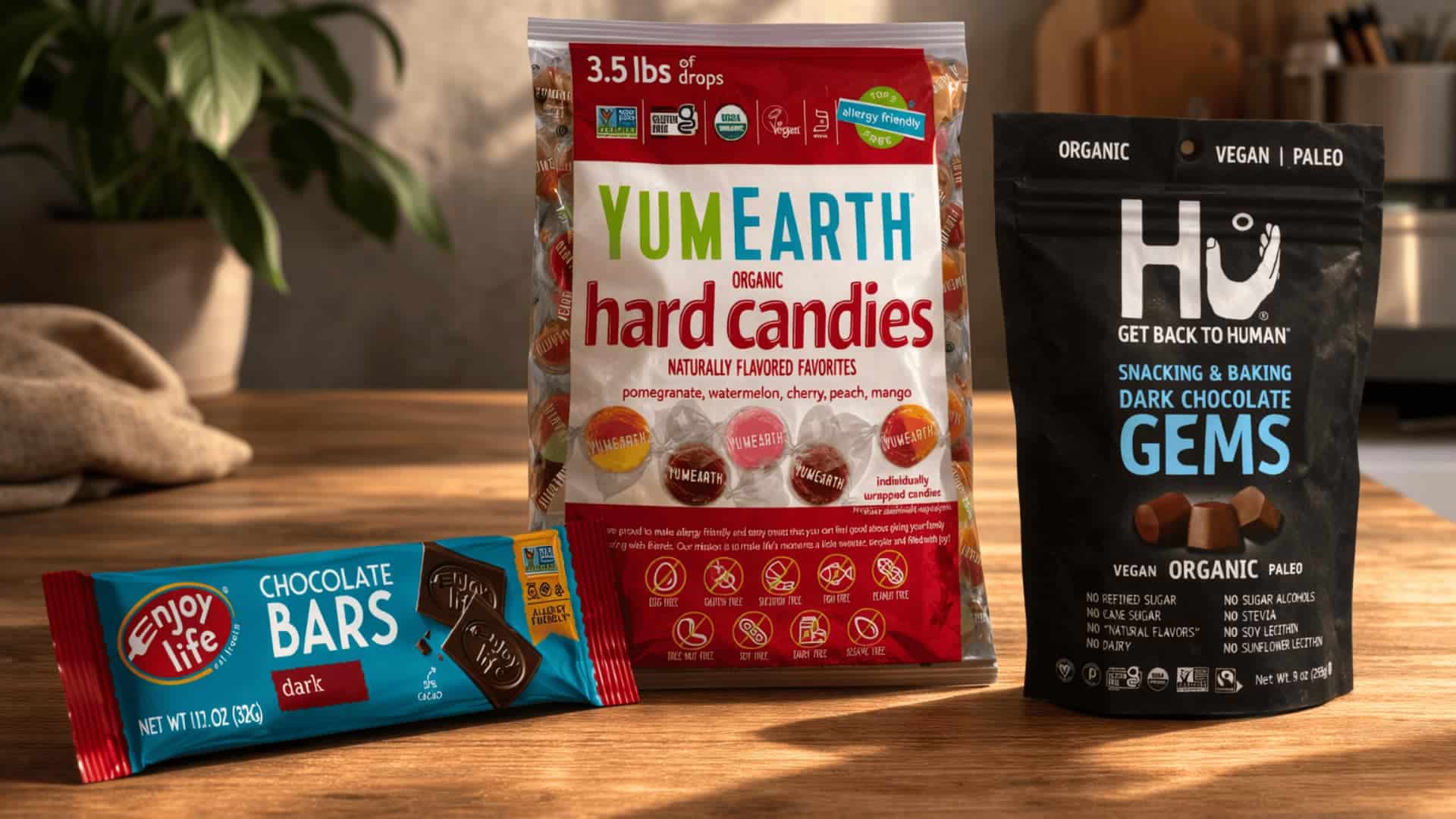
If you’re looking for gluten-free options, consider these certified alternatives:
- Enjoy Life Chocolate Bars: Made in dedicated allergen-free facilities ($1.50-$2/oz)
- YumEarth Organic Candies: GFCO certified, tested below 10 ppm ($1.80-$2.50/oz)
- Hu Kitchen Chocolate Gems: Certified gluten-free and paleo ($2-$3/oz)
However, they eliminate the guesswork, offering you peace of mind when selecting gluten-free snacks. If you need certainty, these options are worth the extra cost.
The Bottom Line
When it comes to enjoying M&Ms with celiac disease or gluten sensitivity, the question of whether M&Ms are gluten-free does not have a simple yes or no answer. That is exactly why staying informed matters.
While some varieties may be safer than others, the risk of cross-contamination cannot be ignored. Your health always comes first, and choosing certified gluten-free options gives you the most peace of mind.
Check those labels carefully every single time you shop. Feel free to leave a comment or share your personal experience with M&Ms below.