


I used to ask myself if eating steak actually builds muscle or if it is just gym talk. If you are serious about your gains, you have probably thought the same thing, too.
True growth is not driven by trends. Instead, it relies on protein quality, lifting weights, and hitting daily goals. When I look at the macros in flank steak, it is clear why lifters rely on it.
I will help you understand the cholesterol content of flank steak so you can stay healthy. Read on to find out how to enjoy flank steak while keeping your heart in mind.
This is for informational purposes only. Results and details may vary based on your specific needs and situation.
Understanding Flank Steak Cholesterol Numbers
Flank steak contains 55-70mg of cholesterol per 3-ounce cooked serving. This places it in the moderate range compared to other animal proteins.
To put it in perspective, your body produces about 1,000mg of cholesterol daily, regardless of your dietary intake, meaning the majority of your cholesterol levels come from what your liver produces.
Recent heart health guidelines focus more on saturated fat intake rather than dietary cholesterol. Saturated fat encourages your liver to produce more LDLcholesterol (the “bad” kind).
Flank steak is a solid source of protein, essential for muscle recovery and growth, making it a great option for muscle-building diets.
How Flank Steak Compares to Other Proteins
Looking at the numbers side by side clarifies where flank steak stands in terms of flank steak for muscle building:
| Protein (3 oz cooked) | Cholesterol | Saturated Fat |
|---|---|---|
| Flank steak | 55-70mg | 3g |
| Ribeye | 80mg | 7-9g |
| Skinless chicken breast | 85mg | 1g |
| Salmon | 55mg | 1.5-3g |
Flank steak has less cholesterol than chicken breast, which concentrates cholesterol during cooking. However, chicken breast contains less saturated fat, making it a better option for heart health.
Compared to ribeye, flank steak offers a similar amount of protein but at half the saturated fat.
What Research Shows About Red Meat and Cholesterol
Recent research helps us understand how steak affects your heart. A 2024 study from the National Institutes of Health shows that plain beef is usually fine. For most people, it does not affect blood pressure or cholesterol much.
However, plant proteins are often better for lowering cholesterol than red meat is. Also, processed meats like bacon are riskier because of extra salt.
Your family history matters too. About one in five people has a specific gene called APOE4. These people are “hyper-responders.”
For them, eating steak might raise bad cholesterol quickly. If that is you, try eating steak only once a week. For everyone else, lean steak fits well into a healthy diet. Stick to fresh cuts to keep your heart strong.
Portion Size and Frequency Guidelines
When it comes to heart health, portion control is crucial. A 3-ounce serving of flank steak, about the size of a deck of cards, is a good portion. However, many restaurant portions can be as large as 6-8 ounces, which doubles the saturated fat content in one meal.
Here’s how often you can safely enjoy flank steak, depending on your health:
| Health Status | Recommended Frequency | Portion Size |
| Generally Healthy | 2–4 times per week | 3–4 ounces |
| Moderate Risk | 1–2 times per week | 3 ounces |
| High Risk | Once per week | 3 ounces |
To avoid temptation, try portioning out your raw flank steak into 3-4 ounce pieces before freezing them. This way, you’ll know exactly how much you’re eating.
Cooking Methods That Preserve the Lean Advantage
How you cook your flank steak also affects its health profile.
Grilling and broiling are heart-healthy options, as the fat drips away during cooking, leaving a leaner cut of meat.
Pan-frying with butter adds extra saturated fat, so it’s best avoided.
Additionally, cooking methods like grilling at high heat can lead to the formation of HCAs (heterocyclic amines), compounds that have been linked to cancer risk.
But don’t worry, using a rosemary-based marinade can reduce HCA formation by up to 90%. The rosmarinic acid in rosemary interferes with the chemical process that creates these compounds.
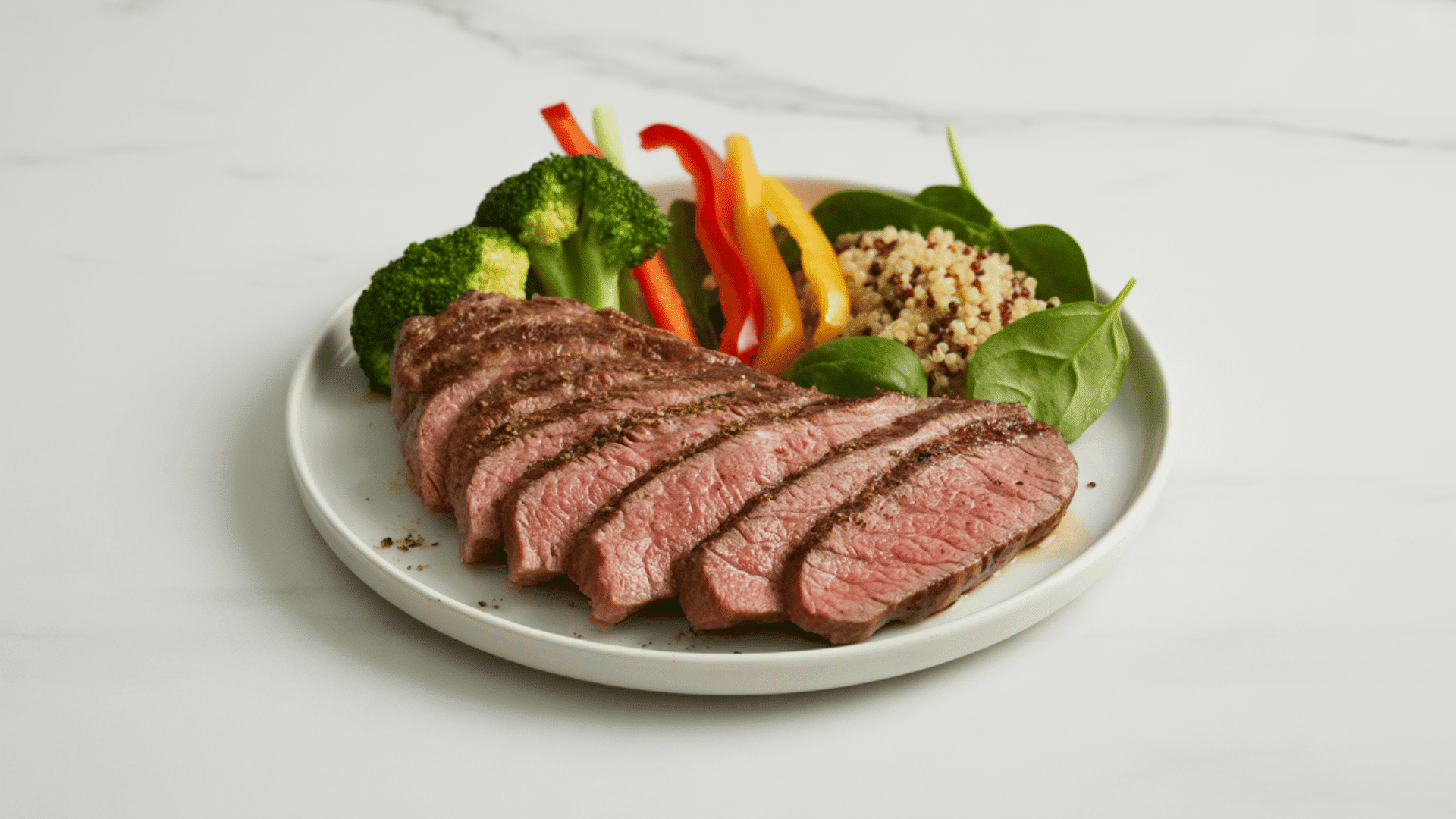
Building Your Plate Around Flank Steak
Eating a great meal is about more than just the meat. I have found that choosing the right sides helps me stay on track with my health goals. Use these simple steps to build a better plate:
- Load up on greens: Fill half of the plate with non-starchy vegetables like broccoli, peppers, or leafy greens.
- Add fiber: These vegetables provide antioxidants that help your body process the cholesterol from the steak.
- Pick healthy grains: Fill a quarter of the plate with options like quinoa, brown rice, or sweet potatoes.
- Balance your energy: These complex carbs help keep your blood sugar steady and provide lasting energy throughout the day.
When I follow this simple layout, I get the most out of every bite. It is the easiest way for me to enjoy my steak while keeping my body feeling its best.
The Bottom Line
You can fit flank steak into a heart-healthy diet if you eat it in moderation. It is a lean beef choice that is easy to include in your meals.
Just remember to watch the flank steak cholesterol content and choose small portions. I find that grilling or broiling is the best way to cook it. You should pair it with vegetables and whole grains to stay healthy.
If you have heart issues, check with a doctor about your diet. I would love to hear how you make this cut work for your own meals!







2 Responses
How do I get more info from Caleb Morton on identifying food facts?
test