A low-carb Mediterranean diet keeps the foundations of Mediterranean eating, includingolive oil, fish, vegetables, nuts, and herbs, while cutting back on bread, pasta, rice, potatoes, and added sugar.
If you prefer protein, beneficial fats, and non-starchy vegetables, this approach leaves smaller portions for grains, legumes, and sweeter fruit. But your dinner doesn’t need to become a lonely chicken breast.
When I replaced tomato-sauce pasta with roasted zucchini and eggplant, the portions still felt satisfying. I stayed full through the afternoon.
For me, useful changes were gradual, a bit of planning, good flavors, and meals that worked with my nutrition goals.
Understanding the Low-Carb Mediterranean Diet
This diet combines Mediterranean eating habits with fewer carbohydrates, emphasizing vegetables and other nutrient-rich foods, while limiting grains, starchy vegetables, and sugary foods.
This approach may support weight and blood sugar control by replacing refined carbs with fiber-rich foods and healthy fats.
Its emphasis on minimally processed ingredients can also support heart health. However, benefits vary, and carbohydrate needs differ between individuals.
According to the National Library of Medicine, low-carb eating is generally defined as consuming between 50 and 130 grams of carbohydrates per day. However, there is no single official carbohydrate limit for this eating pattern.
The right amount depends on energy needs, activity level, medical conditions, and personal goals. A stricter, keto-style version of this diet stays at 20 to 50 grams a day, the range the same review gives for ketogenic diets.
When budgeting my day, I use net carbs on food labels, total carbohydrates minus fiber. It helps me see how portions fit together without treating every food as an isolated decision.
Choosing varied foods and appropriate portions helps make this eating pattern balanced, practical, and sustainable over time.
Principles of the Low-Carb Mediterranean Diet
Build each meal around non-starchy vegetables, protein, and olive oil, then spend your remaining carbs on fiber-rich foods.
|
Food Group |
Example Serving |
Net Carbs (approx.) |
How Often |
|---|---|---|---|
|
Leafy greens |
1 cup raw spinach |
Under 1 g |
Every meal |
|
Non-starchy vegetables |
1 cup raw broccoli |
About 4 g |
Every meal |
|
Healthy fats |
1 tbsp olive oil / half an avocado |
0 g / about 2 g |
Daily |
|
Fish, poultry, and eggs |
4 oz salmon / 1 large egg |
0 g / under 1 g |
Daily |
|
Nuts |
1 oz almonds |
About 3 g |
Daily, small handful |
|
Low-carb fruit |
1 cup raspberries / 1 cup strawberries |
About 7 g / about 9 g |
Once a day |
|
Plain Greek yogurt |
7 oz whole milk |
About 6 to 8 g |
A few times a week |
|
Legumes |
½ cup cooked lentils/chickpeas |
About 12 g / about 16 g |
Occasionally, small portions |
Net carbs are total carbohydrates minus fiber. Values are rounded estimates based on USDA FoodData Central, and packaged brands vary, so check your own labels.
Foods to Include in the Low-Carb Mediterranean Diet
A low-carb Mediterranean Diet emphasizes whole, nutrient-dense foods that support optimal health while keeping carbohydrate intake lower.
1. Proteins
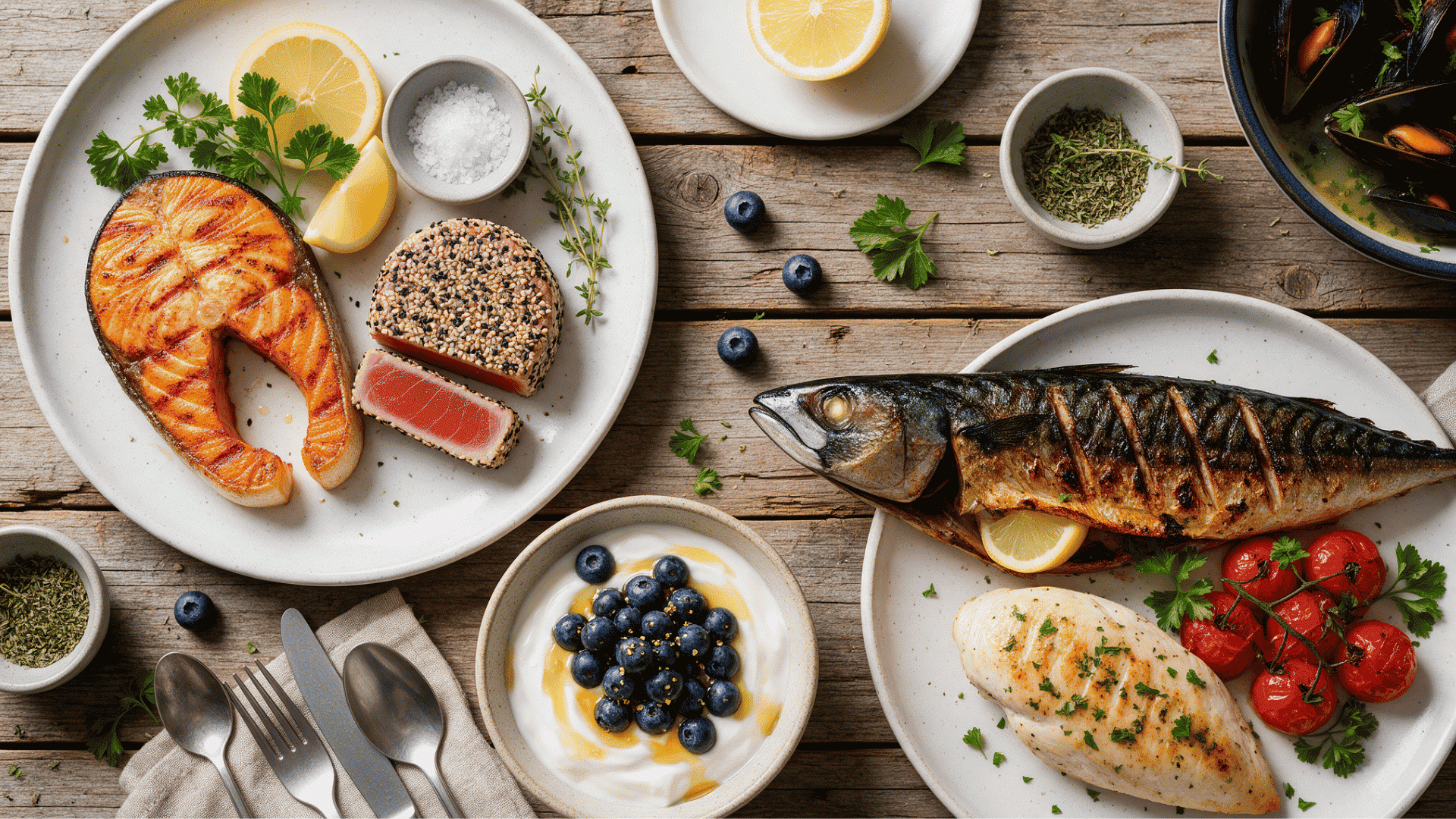
Adding high-quality protein supports muscle repair, satiety, and overall health while keeping carbs low.
-
Fish and Fatty Fish: Salmon, tuna, and mackerel provide protein and omega-3 fatty acids, which support heart health.
-
Lean Poultry: Chicken is a great, low-fat protein option that works well in many dishes.
-
Eggs: One large egg has under 1 gram of carbs.
-
Greek Yogurt: Choose plain, full-fat Greek yogurt for protein and probiotics. Flavored cups often carry added sugar.
-
Cheese: Feta and Parmesan add protein and salty flavor with very few carbs. Use them as a topping rather than the main protein.
-
Shellfish and Seafood: Shrimp and mussels add lean protein with almost no carbs.
2. Healthy Fats
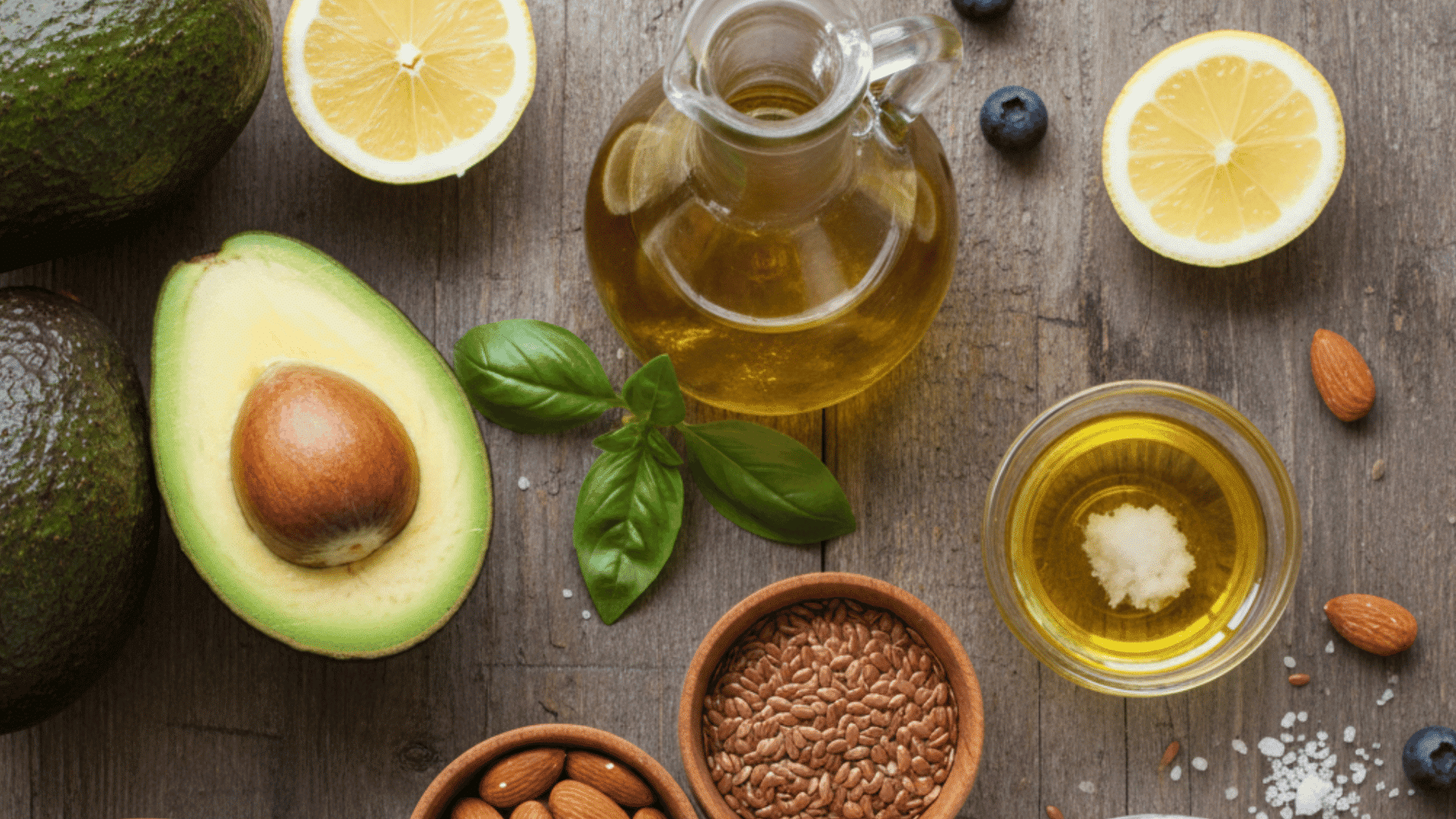
Healthy fats are essential for heart health and energy, and they help keep you feeling full longer.
-
Extra Virgin Olive Oil: The main fat in this diet, rich in monounsaturated fats and antioxidants, for cooking or drizzling.
-
Avocados: They supply fiber, potassium, and monounsaturated fat.
-
Nuts and Seeds: Almonds and walnuts are among the low-calorie nuts that aid weight loss, and chia and flax add fiber.
-
Coconut Oil: It is very high in saturated fat, so use it sparingly.
3. Vegetables
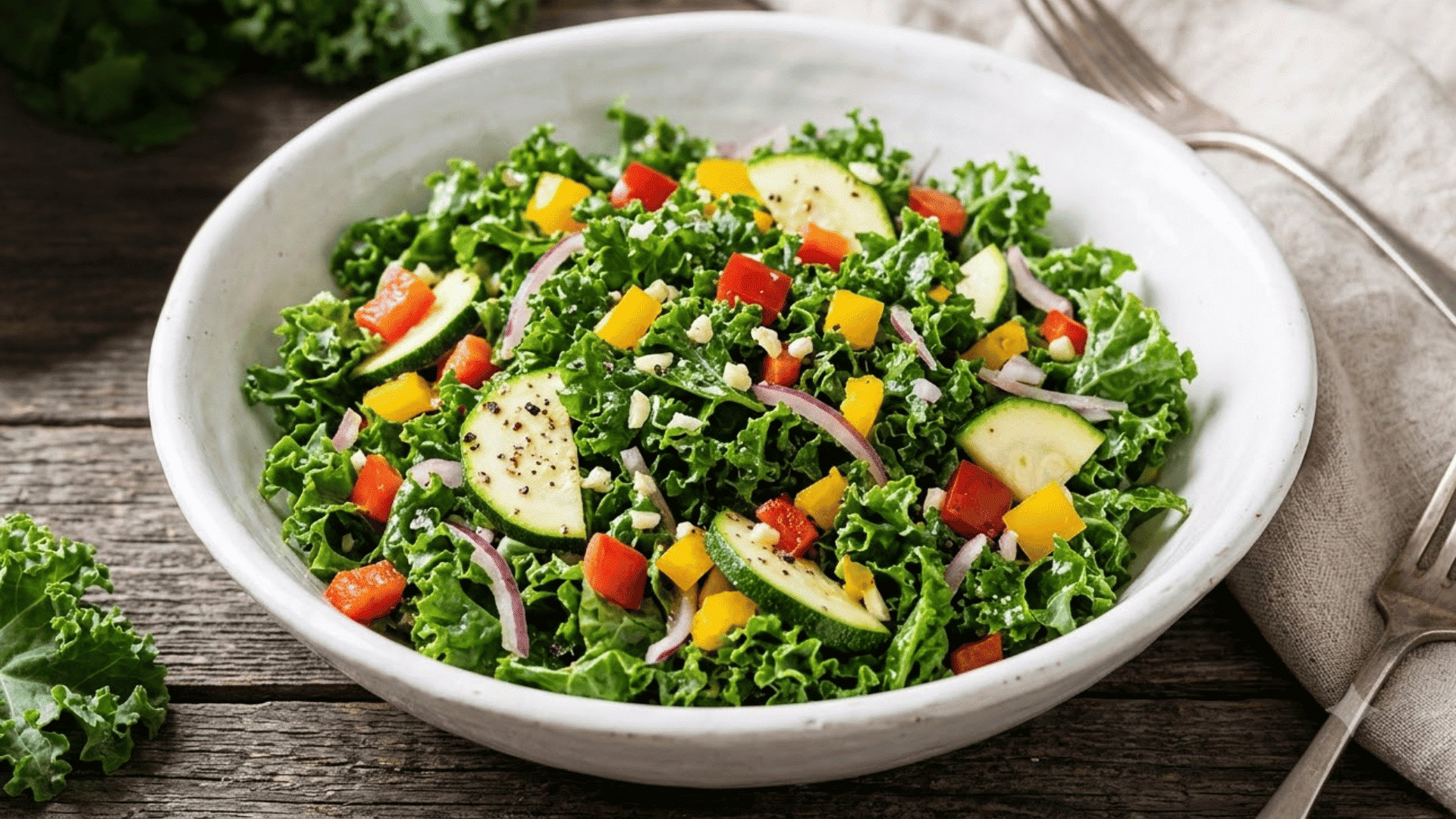
Non-starchy vegetables are low in carbs, nutrient-dense, and essential for digestive health and overall wellness.
-
Leafy Greens: Spinach, kale, and arugula are high in vitamins and minerals with almost no net carbs.
-
Cruciferous Vegetables: Broccoli and cauliflower add fiber, and cauliflower works as a rice or mash swap.
-
Other Non-Starchy Vegetables: Zucchini, eggplant, bell peppers, and cucumbers add bulk to your meals without raising carb levels.
-
Flavorful Allium Vegetables: Garlic, onions, and leeks add depth. Onions carry more carbs than greens, so use them in moderation.
4. Fruits
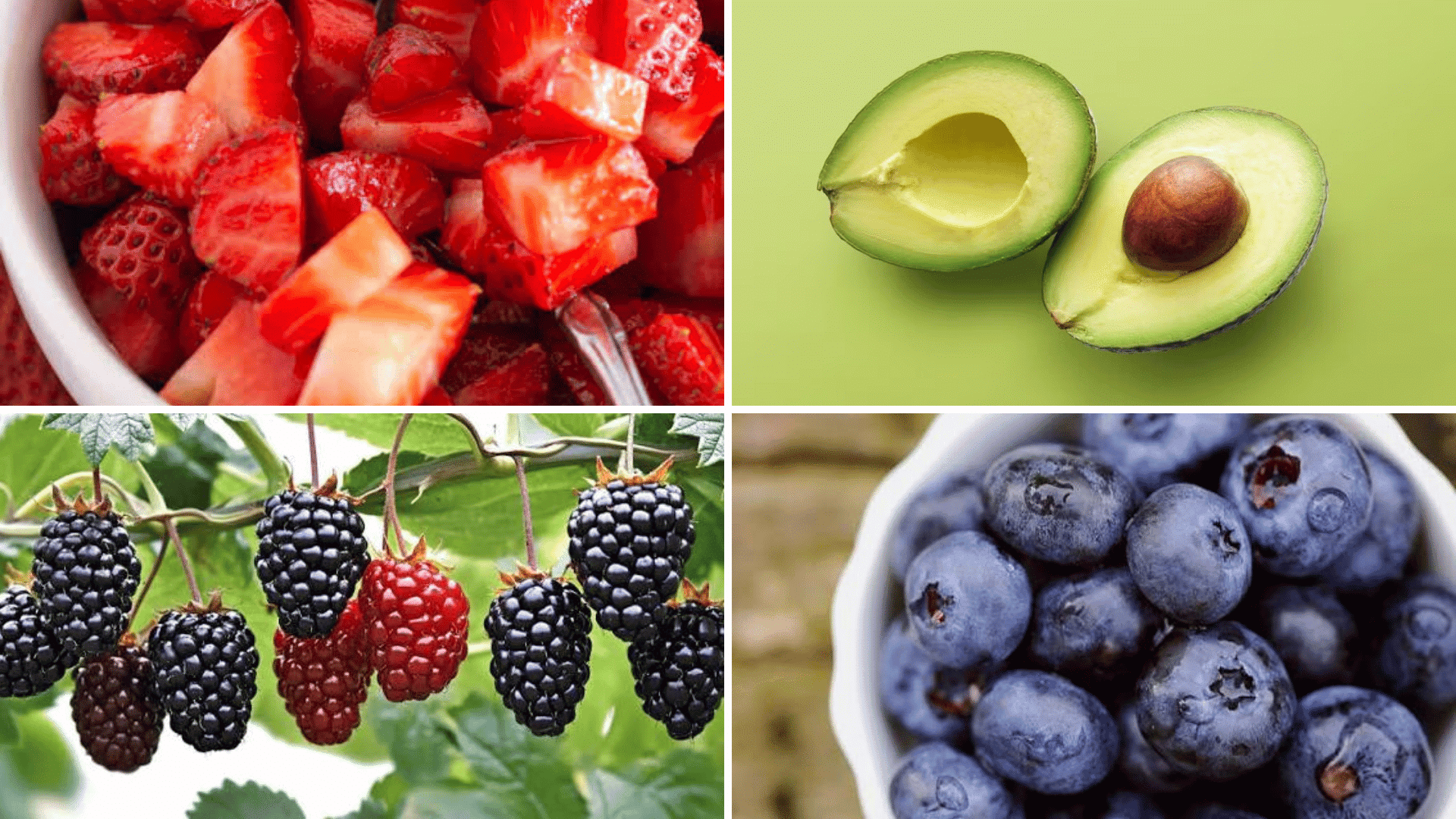
The right fruits add vitamins, fiber, and antioxidants without using up your carb budget.
-
Antioxidant-Rich Berries: Raspberries and blackberries have the most fiber per cup. Blueberries are higher in carbs, so keep portions near half a cup.
-
Pomegranate Seeds: These are higher in carbs, so sprinkle a tablespoon or two over salads or yogurt.
-
Nutrient-Rich Avocados: Avocados are botanically a fruit and add very few net carbs.
-
Olives: Another fruit, low in net carbs and rich in heart-friendly monounsaturated fat.
7 Day Low-Carb Mediterranean Meal Plan
This 7-day plan sticks to Mediterranean staples, with a stir-fry or two for variety, so the week stays interesting without adding carbs.
|
Day |
Breakfast |
Lunch |
Dinner |
Snack |
|---|---|---|---|---|
|
1 |
Greek yogurt with chia seeds, walnuts, and blueberries |
Grilled salmon with spinach and zucchini salad |
Grilled chicken with roasted cauliflower, asparagus, and tzatziki |
Almonds and sliced avocado |
|
2 |
Scrambled eggs with spinach and tomatoes |
Tuna salad with mixed greens, cucumber, olive oil dressing |
Grilled mackerel with roasted Mediterranean veggies |
Raspberries with Greek yogurt |
|
3 |
Avocado slices with boiled egg and olive oil |
Chicken stir-fry with cauliflower rice, broccoli, and bell peppers |
Baked sardines with garlic and lemon, plus a Greek salad with feta and olives |
Walnuts and cucumber slices |
|
4 |
Greek yogurt with chia seeds, flaxseeds, and raspberries |
Shrimp and arugula salad with olive oil dressing |
Grilled salmon with roasted asparagus, sautéed spinach, olive tapenade |
Sliced avocado with sea salt and lemon juice |
|
5 |
Egg and spinach muffins |
Grilled chicken with Mediterranean salad |
Baked cod with sautéed kale, roasted cauliflower, and bell peppers |
Almonds and radishes |
|
6 |
Scrambled eggs with avocado, spinach, and garlic in olive oil |
Grilled tuna with zucchini noodles and Mediterranean salad |
Lamb souvlaki with grilled zucchini, bell peppers, and tzatziki |
Greek yogurt with chia seeds and strawberries |
|
7 |
Avocado and tomato slices with olive oil and oregano, boiled egg |
Shrimp salad with spinach, arugula, cucumber, avocado |
Grilled chicken with stir-fried broccoli, bok choy, and roasted eggplant |
Walnuts and sliced cucumber |
Note: Adjust portion sizes to your individual energy needs and carbohydrate goals. Choose plain, unsweetened Greek yogurt, and check bottled stir-fry sauces and dressings for added sugar to keep carbs lower.
Shopping List for a 7-Day Low-Carb Mediterranean Meal Plan
This shopping list includes the ingredients used in the seven-day meal plan, from breakfast and lunch to dinner and snacks. The quantities are estimated for one person and can be adjusted based on portion sizes and appetite.
|
Food Category |
Ingredients |
Suggested Quantity |
|---|---|---|
|
Fish and Seafood |
Salmon, mackerel, sardines, cod, tuna, shrimp |
Salmon 2 portions, mackerel 1, sardines 1, cod 1, tuna 2, shrimp 2 |
|
Poultry and Meat |
Chicken breast, lamb |
Chicken 4 portions, lamb 1 portion |
|
Eggs and Dairy |
Eggs, plain Greek yogurt, feta cheese, tzatziki |
8 eggs, 4 cups yogurt, 2 oz feta, ½ cup tzatziki |
|
Leafy Greens |
Spinach, arugula, kale, mixed salad greens |
2 bags spinach, 1 bag arugula, 1 bunch kale, 1 bag mixed greens |
|
Fresh Vegetables |
Zucchini, cauliflower, broccoli, asparagus, bell peppers, cucumbers, tomatoes, eggplant, bok choy, radishes |
2 zucchini, 1 cauliflower, 2 broccoli heads, 2 bunches asparagus, 4 bell peppers, 4 cucumbers, 6 tomatoes, 2 eggplants, 1 bok choy, 1 bunch radishes |
|
Fruits |
Avocados, blueberries, raspberries, strawberries, lemons |
5 avocados, ½ cup blueberries, 1 cup raspberries, ½ cup strawberries, 3 lemons |
|
Nuts and Seeds |
Almonds, walnuts, chia seeds, flaxseeds |
½ cup almonds, ½ cup walnuts, ¼ cup chia seeds, 2 tbsp flaxseeds |
|
Healthy Fats |
Extra virgin olive oil, olives, olive tapenade |
1 small bottle olive oil, 1 small jar olives, ¼ cup olive tapenade |
|
Herbs and Seasonings |
Garlic, oregano, black pepper, sea salt |
1 garlic bulb and small amounts of seasonings |
Note: Quantities are approximate for one adult and assume reasonable portions, some leftovers, and the reuse of ingredients across meals. Adjust amounts based on appetite and serving sizes.
Budget tip: Choose frozen fish, canned tuna or sardines, and frozen vegetables when fresh options are expensive. Buying plain Greek yogurt in a larger container can also help reduce costs.
How to Spot Hidden Carbs on Food Labels
Many packaged foods sold as Mediterranean carry more carbs than you would expect. Start with the serving size, since a jar of pasta sauce or a tub of hummus often lists a portion smaller than what people actually eat.
Next, check total carbohydrates, dietary fiber, and the added sugars line on the Nutrition Facts panel. Bottled dressings, marinara, flavored Greek yogurt, and pita chips are common sources of surprise sugar.
When I compare products, I read the added sugars line before calories, because it tells me fastest whether a sauce or yogurt fits a low-carb plan.
Ingredient lists matter too. Sugar can appear as cane juice, honey, dextrose, or maltodextrin, and starch can show up as corn starch or wheat flour in sauces. If one of those sits near the top of the list, pick another product or make your own with olive oil, lemon, and herbs.
Foods to Limit on the Low-Carb Mediterranean Diet
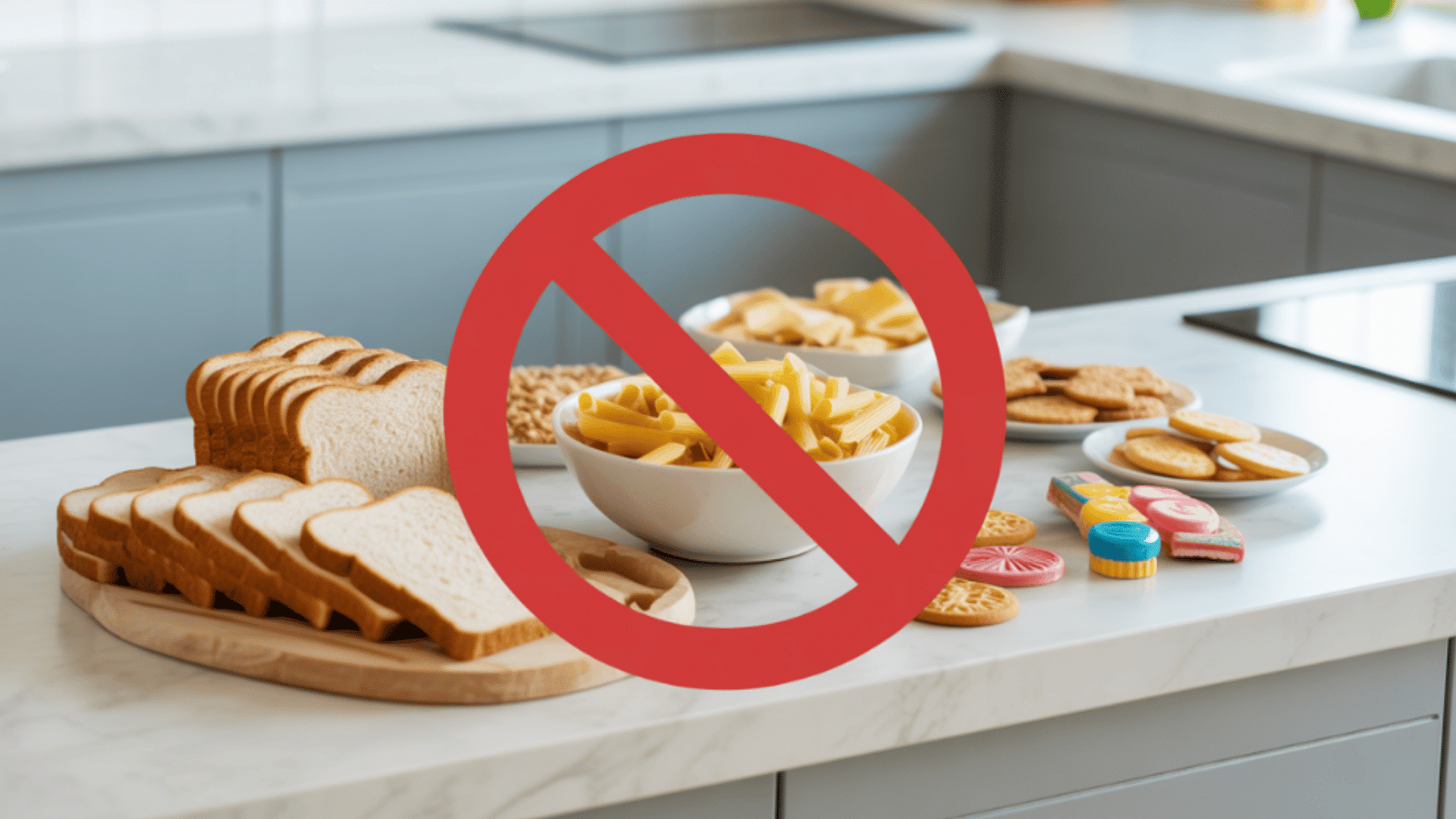
Refined carbs, added sugars, and starchy foods raise blood sugar quickly and use up your carb budget fast. Each item below comes with a simple replacement.
|
Limit or Avoid |
Why |
Better Swap |
|---|---|---|
|
White bread, pasta, pastries, sugary cereals |
Refined carbs digest fast and spike blood sugar |
Cauliflower rice, zucchini noodles, eggs |
|
Sugary drinks |
Liquid sugar with no fiber |
Sparkling water with lemon, unsweetened tea |
|
Candy, chips, processed snacks |
Added sugars and refined oils |
Almonds, olives, cucumber with tzatziki |
|
Potatoes, corn, peas |
High in starch |
Roasted eggplant, cauliflower mash |
|
Beans and lentils |
Higher in carbs, so limit portions |
¼ cup in a salad instead of a full bowl |
|
Sausages, hot dogs, bacon |
Processed and high in sodium |
Grilled chicken, fish, shrimp |
|
Flavored yogurt, sweetened milk |
Added sugars |
Plain Greek yogurt with berries |
|
Bananas, grapes, mangoes, pineapple |
Higher in natural sugar |
Raspberries, blackberries, strawberries |
|
“Sugar-free” sweets with artificial sweeteners |
Some still contain sugar alcohols or starches that add carbs |
A few berries with plain yogurt |
Red wine is a traditional part of Mediterranean meals, and a 5-ounce glass of dry red has about 4 grams of carbs. Keep it to one glass with food, and check with your doctor first if you manage diabetes with medication.
Health Benefits of a Low-Carb Mediterranean Diet
-
Blood Sugar Control: In a 12-month randomized trial of 259 overweight adults with type 2 diabetes, published in Diabetes, Obesity and Metabolism, the low-carb Mediterranean group.
-
Weight Loss: A low-carbohydrate Mediterranean diet may support weight loss. Protein-rich meals may also increase feelings of fullness, although this does not always lead to eating fewer calories.
-
Chronic Inflammation: Fish, olive oil, and leafy greens are staples of Mediterranean eating, a pattern linked with lower markers of inflammation such as C-reactive protein.
-
Easier to Stick With: In a Stanford crossover trial of 40 adults with type 2 diabetes or prediabetes, keto and a Mediterranean diet lowered HbA1c by similar amounts over 12 weeks each. LDL cholesterol fell on the Mediterranean diet but rose on keto, and participants found the Mediterranean diet easier to follow.
If you take insulin or other glucose-lowering medication, talk with your doctor before cutting carbs, since your dose may need adjusting.
Low-Carb Mediterranean vs. Traditional Mediterranean vs. Keto Diet
|
Meal |
Traditional Mediterranean Diet |
Low-Carb Mediterranean Diet |
Keto Diet |
|---|---|---|---|
|
Breakfast |
Whole-grain toast with avocado, olive oil, and tomatoes. |
Greek yogurt with chia seeds, walnuts, and berries. |
Eggs cooked in butter with avocado and spinach. |
|
Lunch |
Grilled chicken with whole-grain pita and hummus. |
Grilled salmon with spinach and zucchini salad dressed in olive oil and lemon. |
Grilled chicken with avocado, cheese, and leafy greens. |
|
Dinner |
Pasta with tomato sauce and grilled vegetables. |
Grilled chicken with roasted cauliflower and asparagus in olive oil. |
Baked salmon with butter and cauliflower mash. |
|
Grains and Legumes |
Commonly eaten as whole grains, bread, pasta, rice, and beans. |
Smaller portions based on daily carbohydrate goals. |
Generally avoided due to their carbohydrate content. |
All three diets can include healthy fats, proteins, and vegetables. The traditional Mediterranean diet includes more whole grains and legumes, while the low-carb version limits them.
Who Should Be Careful with a Low-Carb Mediterranean Diet?
A low-carb Mediterranean diet can be healthy for many adults, but reducing carbohydrates may not suit everyone. Certain people should consult a healthcare professional before making major dietary changes.
-
People with diabetes: Insulin and sulfonylurea pills can push blood sugar too low when you eat fewer carbs than usual, which the National Institute of Diabetes and Digestive and Kidney Diseases lists as a common cause of hypoglycemia. Your doctor may need to adjust your dose.
-
People with kidney disease: A protein-forward plan may not fit. People with chronic kidney disease often need smaller protein portions and lower-potassium foods, so work out the right mix with a renal dietitian
-
Pregnant or breastfeeding women: Restricting carbohydrates too much may make it harder to meet increased energy and nutrient needs.
-
People with a history of eating disorders: Tracking carbohydrates or restricting food groups may encourage unhealthy eating patterns.
Children and teenagers should also avoid strict carbohydrate restriction without professional guidance.
Final Thoughts
Eating well doesn’t have to mean giving up the foods you enjoy or following strict rules that make every meal feel like a challenge.
This way of eating offers a flexible way to bring fresh vegetables, healthy fats, lean proteins, and vibrant flavors to your table. I believe small, realistic changes can make healthy eating feel more enjoyable and easier to maintain over time.
The habits that stuck for me were simple: a tray of roasted vegetables on Sunday, a jar of lemon and olive oil dressing, and canned sardines for quick lunches. Start with one and build from there.
Everyone has different needs, so focus on what works for you. Have you tried this eating approach? Share your favorite meals, tips, or experiences in the comments below!
Frequently Asked Questions
Can you eat cheese on a low-carb Mediterranean diet?
Yes, cheese is allowed on a low-carb Mediterranean diet, but in moderation. Choose natural, flavorful options like feta, ricotta, or Parmesan, and limit processed cheeses.
Are potatoes ok on a Mediterranean diet?
Only in small portions. A medium baked potato has about 37g of net carbs, so most low-carb plans swap it for cauliflower mash or roasted eggplant.
What snacks are allowed on the Mediterranean diet?
Nuts, fresh fruit, Greek yogurt, hummus with vegetables, olives, feta, roasted chickpeas, and small amounts of dark chocolate are all Mediterranean-friendly snacks.
What is a potential downside of the Mediterranean diet?
A potential downside is weight gain from overeating calorie-dense foods like olive oil, nuts, and seeds. It can also be costlier and require more fresh-food preparation than a typical diet.
Can you eat beans on a low-carb Mediterranean diet?
Small portions of beans can fit, but limit them because they contain more carbohydrates than most non-starchy vegetables.