
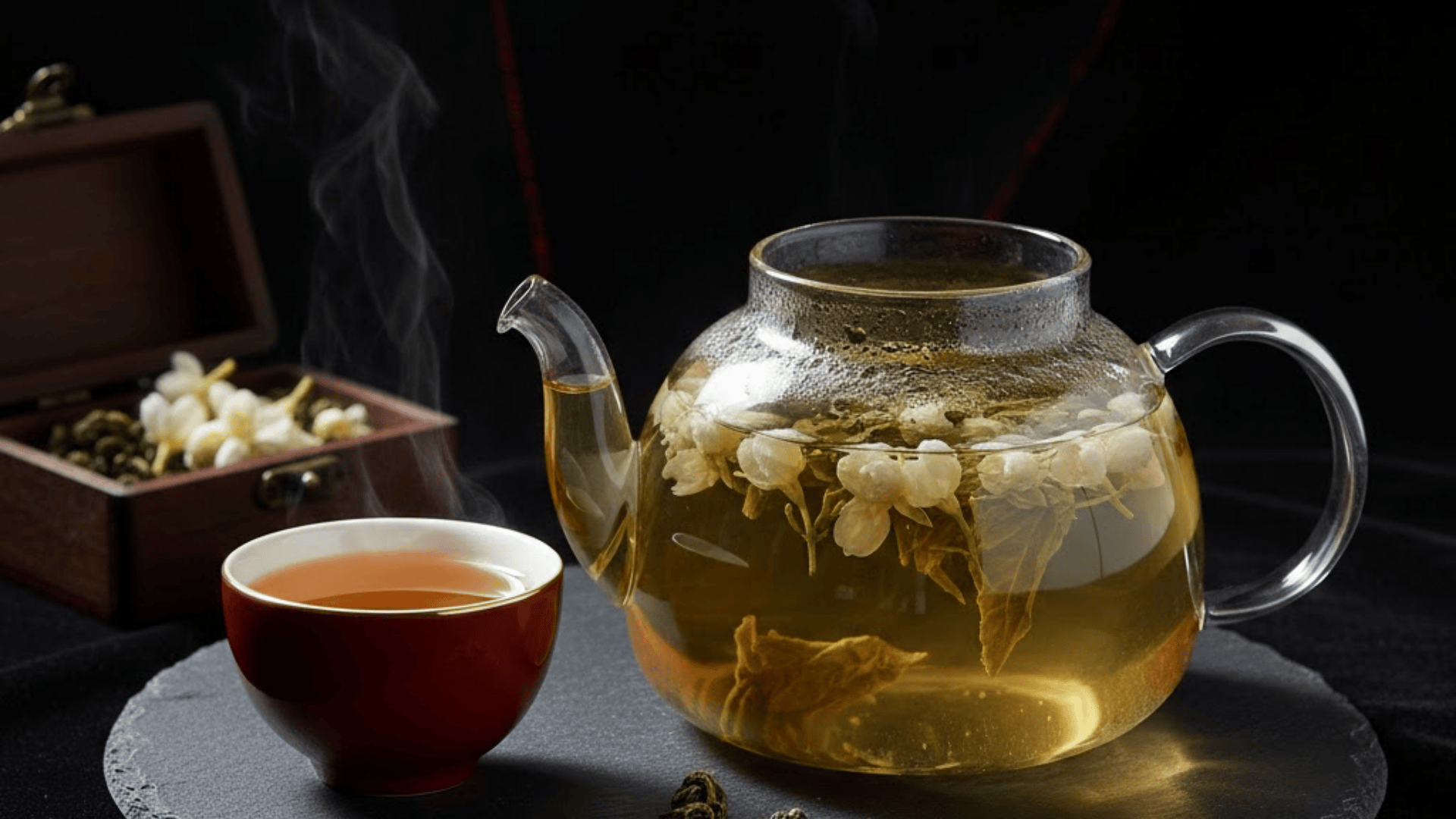
Jasmine tea feels light, floral, and calming, so it is easy to assume there is barely any caffeine in the cup.
I have thought the same thing while choosing between tea, coffee, and something gentler later in the day.
The truth is that jasmine tea caffeine content can change more than most people expect because the base tea, serving size, and brewing method all matter.
In this blog post, I’ll help you understand how much caffeine different jasmine teas may contain and how your choice of tea and brewing method can affect what ends up in your cup.
Jasmine Tea Caffeine Content at a Glance
This table gives you a quick look at the caffeine in each jasmine tea type so you can choose the right cup for your routine.
| Jasmine Tea Type | Estimated Caffeine per 8 oz Cup |
|---|---|
| Jasmine green tea | 20–45 mg |
| Jasmine white tea | 15–30 mg |
| Jasmine oolong tea | 30–50 mg |
| Jasmine black tea | 40–70 mg |
| Decaf jasmine tea | 2–5 mg |
| Pure jasmine flower tea | 0 mg |
Most jasmine tea contains caffeine because it is made with true tea leaves. The jasmine flowers add aroma but do not contribute caffeine. The final amount can change with the tea base, leaf quantity, water temperature, steeping time, and serving size.
If jasmine white tea is the one you’re curious about, white tea’s caffeine content on its own gets a closer look elsewhere on the site.
What is Jasmine Tea Made From?
Jasmine tea is made by scenting real tea leaves with fresh jasmine blossoms. Most versions begin with green tea, though white, oolong, and black tea are also used.
The flowers are layered with the dried leaves so their fragrance can naturally absorb into the tea, sometimes through several scenting rounds.
Afterward, the blossoms may be removed or left in for appearance. I always check the ingredient list because the name alone can be misleading.
Traditional jasmine tea contains caffeine from the Camellia sinensis leaves, while pure jasmine flower tea does not. Flavored herbal blends may smell similar, but they are made differently and can be completely caffeine-free when brewed alone.
If you want the fuller picture beyond caffeine, I went into more depth on what jasmine tea actually does for your skin and mood in a separate post.
Does Jasmine Tea Have Caffeine?
Yes, most jasmine tea contains caffeine because it is made with leaves from the Camellia sinensis plant. Green tea is the most common base, but jasmine tea may also use white, oolong, or black tea leaves.
The jasmine blossoms add the floral scent, but they do not add caffeine. My usual habit is to check the ingredient list before buying because products labeled jasmine tea are not always made the same way.
Traditional versions contain caffeine, while pure jasmine flower infusions are naturally caffeine-free.
Decaffeinated jasmine tea is another option, although it may still contain a small amount.
Jasmine tea usually contains between 15 and 50 milligrams of caffeine per 8-ounce cup, although stronger black tea varieties may reach about 70 milligrams.
Most cups fall closer to the lower end because jasmine tea is commonly made with green tea leaves.
My comparison of caffeine levels focuses on the tea base, serving size, leaf amount, and brewing instructions rather than relying on one number.
A longer steep or larger scoop can raise the total, while a lighter brew may contain less. Decaf jasmine tea still has a small amount, usually 2 to 5 milligrams, while pure jasmine flower infusions contain none naturally.
Factors that Affect Caffeine Content in Jasmine Tea
Caffeine levels in Jasmine tea are not always the same. They change based on the type of tea leaves, how the tea is brewed, and even the size of the cup. Below are the main factors that control the caffeine content of Jasmine tea.
1. Tea Base Strength
White tea has the lowest caffeine content, while black tea has the highest. Green tea and oolong sit in the middle range.
The jasmine scent itself doesn’t move the needle at all; if you want to see exactly how far green tea’s own caffeine range shifts with leaf variety, that comparison breaks it down cup by cup.
2. Steeping Time
The longer jasmine tea stays in hot water, the more caffeine is extracted from the leaves. A short steep usually results in a lighter drink with lower caffeine.
Extending steep time increases both flavor strength and caffeine content. Adjusting steep time is one of the simplest ways to control your cup.
3. Water Temperature
Hotter water pulls caffeine out of tea leaves more quickly, leading to a stronger cup. Slightly cooler water slows down extraction and produces a gentler drink.
Most jasmine teas brewed at near-boiling temperatures will release caffeine more fully. Temperature control helps balance taste and caffeine intake.
4. Leaf Size
Smaller, broken tea leaves release caffeine faster into water compared to whole leaves. Tea bags often contain finer particles, which can create a stronger brew more quickly.
Loose-leaf tea tends to release caffeine more gradually. This difference can change how strong your jasmine tea feels, even with the same steep time.
5. Cup Size
A larger mug naturally increases total caffeine intake because more tea is consumed in one sitting. Even if the caffeine concentration stays the same, doubling the volume doubles the amount of caffeine.
Standard 8 oz cups give a more controlled amount, while oversized mugs can significantly raise total intake.
6. Re-Steeping
The first infusion of jasmine tea releases most of the caffeine from the leaves. Each subsequent step contains noticeably less caffeine and a lighter taste.
Re-steeping is a simple way to enjoy more cups without significantly increasing caffeine intake. It’s especially useful for drinking tea later in the day.
Jasmine Tea vs. Other Drinks: Caffeine Content
To understand caffeine content better, it helps to see how it stands next to other popular drinks:
| Drink | Caffeine per 8 oz |
|---|---|
| Coffee | 90–120 mg |
| Matcha | ~70 mg |
| Black tea | 45–70 mg |
| Soda | 30–55 mg |
As you can see, Jasmine tea usually sits on the lower side of the caffeine scale, making it a gentle option for those who want some energy without the strong kick of coffee or energy-heavy drinks.
Can Jasmine Tea Affect Sleep?
Yes, jasmine tea can affect sleep because most varieties naturally contain caffeine. Whether it keeps you awake depends on how much you drink, when you have it, and how sensitive you are to caffeine.
My evening routine usually avoids caffeinated jasmine tea because even a moderate amount may delay sleep for some people.
A stronger brew or multiple cups can make the effect more noticeable. If you enjoy jasmine tea later in the day, decaf jasmine tea is a better choice.
Pure jasmine flower tea, made without true tea leaves, contains no natural caffeine and is unlikely to interfere with sleep.
Health Benefits of JasmineTea
A cup of jasmine tea offers more than a pleasant aroma. Most of its potential benefits come from the tea leaves, while jasmine blossoms add fragrance and character.
- Provides Natural Antioxidants
- Supports Calm Focus
- Support Heart Health
- Contributes to Hydration
- Offers a Low-Calorie Drink
This section shares general wellness information, not medical advice. Talk with a doctor before using tea to manage a specific health condition.
Does Jasmine Tea Caffeine Cause Side Effects?
Yes, jasmine tea caffeine can cause side effects, but they are usually linked to drinking too much or being sensitive to caffeine.
Common effects include feeling jittery, a faster heartbeat, nervousness, headaches, or trouble sleeping. My advice is to pay attention to how your body responds rather than assuming everyone reacts the same way.
Drinking several strong cups in a short time is more likely to cause discomfort than enjoying one moderate serving.
If caffeine regularly affects you, choosing decaf jasmine tea or limiting your intake can help you enjoy the flavor with fewer unwanted effects.
Bottom Line
Jasmine tea can fit comfortably into many routines once you understand what is actually in your cup.
The tea base, portion size, and preparation method all shape its caffeine level, so checking the label and adjusting your brew can make a real difference.
My approach is to choose regular jasmine tea when I want gentle alertness and switch to decaf or pure jasmine flower tea when I prefer something lighter. There is no single choice that suits everyone, especially when caffeine tolerance varies.
Pay attention to how you feel after drinking it, adjust your timing when needed, and share your favorite way to enjoy jasmine tea in the comments below.
Frequently Asked Questions
Is Jasmine Tea Good for Weight Loss?
Jasmine tea may support weight management when paired with a healthy diet. The green tea base contains catechins and caffeine, which may slightly boost metabolism. However, it is not a weight-loss solution on its own and works best as part of an overall balanced lifestyle.
Can I Drink Jasmine Tea Every Day?
Yes, jasmine tea is generally safe for daily consumption. Most people drink 1–3 cups per day without issues. Those sensitive to caffeine should monitor intake, especially if consuming green or black tea-based versions.
Is Jasmine Tea Safe During Pregnancy?
Pregnant individuals should limit caffeine intake, including jasmine tea. Since caffeine content varies, it’s best to choose low-caffeine or decaf versions and consult a healthcare provider for safe daily limits.
Can I Drink Jasmine Tea on an Empty Stomach?
Yes, but some people may feel mild stomach sensitivity due to caffeine or tannins. If that happens, it’s better to drink it after food or choose a lighter white or herbal jasmine version.