Quick Answer: Yes—a portable solar generator can easily power a complete campsite breakfast, including electric kettles, drip coffee makers, toasters, compact skillets, and blenders, without the noise of a gas generator or the hassle of damp firewood. Because breakfast appliances run in short bursts of just a few minutes, cooking a hot meal typically uses only 250Wh to 350Wh of battery capacity.
As long as your power station delivers 1,500W to 2,000W of continuous output and you run high-wattage heating appliances one at a time, you can brew coffee and cook breakfast right at your picnic table, then recharge the battery with morning sunlight.
Key Takeaways
- Short Runtimes Keep Battery Drain Low: High-wattage appliances like electric kettles (1,200W) and toasters (900W) only run for 3 to 5 minutes, meaning a full hot breakfast consumes a fraction of a 1,000Wh power station.
- Match Inverter Output to Heating Gear: Choose a solar generator with at least 1,500W to 2,000W of continuous AC output to comfortably handle heating elements in kettles, pod coffee makers, and electric griddles.
- Stagger Appliances to Avoid Overloads: Plug in and run one high-wattage appliance at a time—boil water for coffee and oatmeal first, then switch to the toaster or skillet—so combined wattage never trips the inverter.
- Start at 100% and Recharge After Eating: Top off your battery at home before leaving so cloudy mornings never delay breakfast, then unfold portable solar panels once the sun hits camp to replenish what you used by lunchtime.
- Zero Noise, Smoke, or Fuel Hassles: A solar generator lets you make fresh coffee and warm meals silently right on your campsite table without violating quiet hours or packing extra propane canisters.
Breakfast Appliances a Solar Generator Can Power
Because heating elements draw significant electricity over short bursts, knowing which kitchen appliances pair best with a portable solar generator helps you pack smart.
Coffee Makers and Electric Kettles
Coffee is usually the top priority at camp, and most compact brewers run smoothly on a mid-sized solar generator:
- Electric kettles: Travel and standard electric kettles typically draw 1,000W to 1,500W, bringing water to a boil in just 3 to 5 minutes.
- Drip coffee makers and pod machines: Compact drip brewers usually use 600W to 900W, while single-serve pod machines draw around 1,200W to 1,450W in brief heating cycles.
- Portable espresso makers: Rechargeable or 12V travel espresso units pull under 150W, making them easy to run on almost any power station.
Toasters and Blenders
Both toasters and blenders are quick-hit appliances—they pull noticeable wattage, but only for a minute or two at a time. A standard two-slice pop-up toaster typically runs between 800W and 1,100W, browning bread in under three minutes. Countertop and personal bullet blenders generally draw 300W to 800W (with a brief motor start-up surge) and finish a smoothie in less than 60 seconds.
Electric Griddles and Skillets
If you want bacon, eggs, or pancakes without hauling a camp stove, a compact nonstick electric skillet or tabletop griddle is a great alternative. Small travel griddles draw 800W to 1,200W, while family-sized skillets pull 1,200W to 1,500W.
Because their thermostats cycle the heating element on and off once hot, they use less total energy over a 15-minute cook than their peak wattage suggests.
Portable single-burner induction cooktops are another favorite among campers—they heat cookware directly with roughly 85% to 90% thermal efficiency and typically let you step down the wattage level (such as 600W, 1,000W, or 1,300W) so you never exceed your generator’s output limit.
Check Whether Your Solar Generator Can Run Them
Before plugging in your favorite kitchen gear, run through three quick checks to make sure your power station won’t trip its overload protection.
Compare Appliance Watts With Generator Output
Every solar generator has a continuous wattage rating (for example, 1,000W, 1,500W, or 2,000W) and a higher surge rating. Check the label on the bottom of your appliance—its running wattage must stay below your generator’s continuous output limit.
For typical camp cooking, a compact model like the Jackery Solar Generator 1000 v2 (1,500W continuous output, 1,070Wh capacity) handles standard electric kettles, drip coffee makers, and travel skillets with ease, while stepping up to the Jackery Solar Generator 1000 Plus (2,000W output, 1,264Wh capacity) from Jackery solar generator gives you extra headroom for higher-wattage pod brewers and family griddles.
Check the Battery Capacity
While wattage tells you what you can run, battery capacity—measured in watt-hours (Wh)—tells you how long you can run it. The good news about breakfast appliances is that you only run them for a few minutes, so total battery drain stays surprisingly low:
| Breakfast Appliance | Typical Wattage | Average Morning Runtime | Estimated Battery Used |
|---|---|---|---|
| Electric Kettle | 1,200W | 4 minutes | ~80Wh |
| 2-Slice Toaster | 900W | 3 minutes | ~45Wh |
| Compact Electric Skillet | 1,100W | 12 minutes (cycling) | ~160Wh |
| Personal Blender | 500W | 1 minute | ~10Wh |
Even if you boil water, make toast, and cook eggs, your entire morning meal typically consumes 250Wh to 350Wh—leaving plenty of charge in a 1,000Wh power station for the rest of the day.
Add the Power of Appliances Used Together
If you plug a 1,200W kettle and a 900W toaster into a mid-sized solar generator at the exact same time, their combined draw hits 2,100W, which will overload a 1,500W or 2,000W inverter. With standard units, the easiest solution is to stagger your cooking: brew your coffee or boil water first, unplug the kettle, and then start the toaster or skillet.
However, if you camp with family or a larger group and want to run multiple heating appliances simultaneously without waiting, a high-output unit like the Jackery Solar Generator 2000 Plus (3,000W continuous output) lets you brew coffee and toast bread side by side.
Make a Simple Solar Powered Breakfast
With a little planning, you can put together a filling camp breakfast in minutes with minimal battery drain and almost no cleanup.
Two simple habits make a noticeable difference: always cover your skillet or pot with a lid to trap heat and cut cooking time by 20% to 30%, and fill your electric kettle with room-temperature water rather than chilled water straight out of a 12V cooler so the heating element uses less energy to reach a boil.
Coffee and Oatmeal
An electric kettle pulls double duty for the fastest hot breakfast at camp. Fill the kettle with enough water for two mugs and two bowls, bring it to a boil, and pour the hot water over pour-over coffee grounds (or instant packets) and quick-cooking rolled oats.
Add brown sugar, dried fruit, or peanut butter, and you have a warm meal ready in five minutes using under 100Wh of battery power.
Toast and Eggs
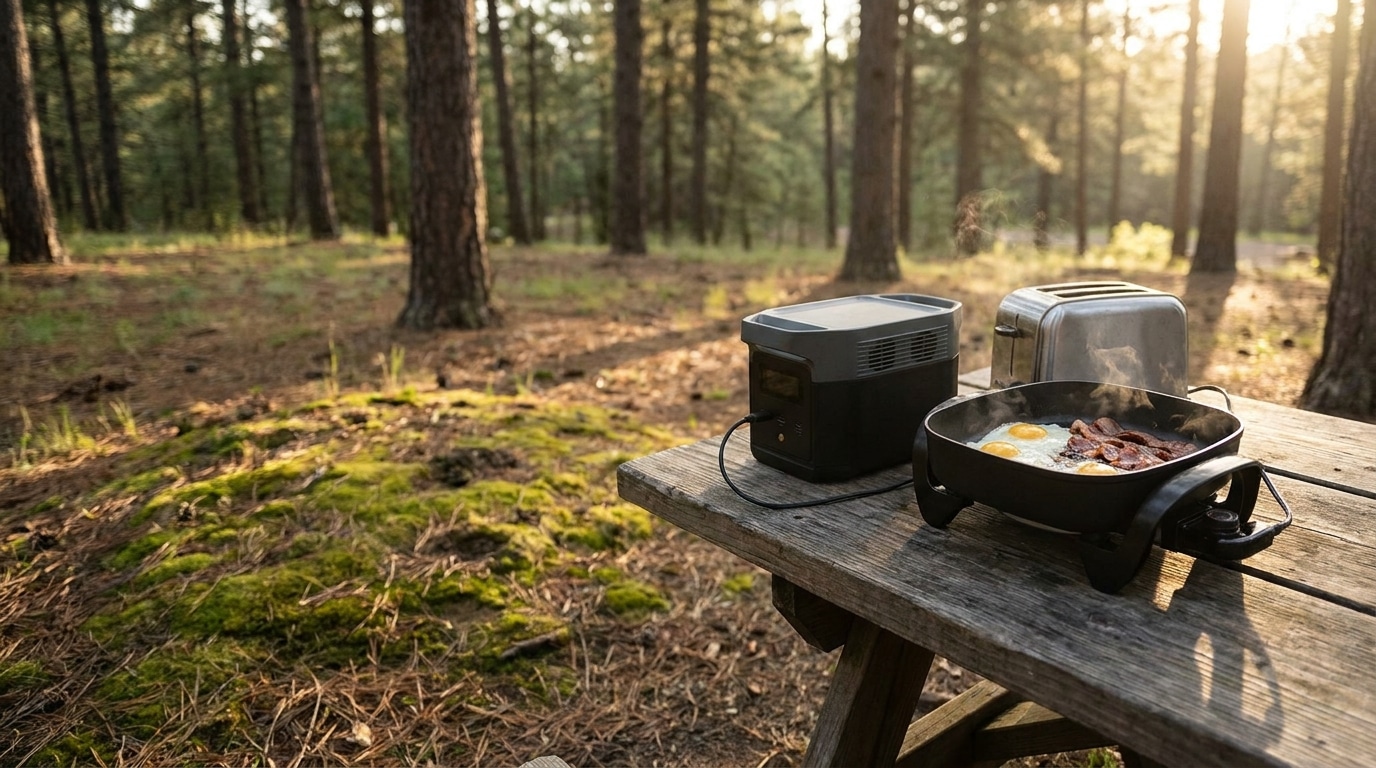
For a classic diner-style breakfast, heat a compact electric skillet to scramble eggs or fry bacon, then switch over to a two-slice toaster once the eggs are nearly done. Running the skillet and toaster back-to-back keeps your peak power draw safely under 1,200W while delivering hot, crispy toast alongside fresh eggs.
Smoothies and Cold Breakfasts
On warm summer mornings when you do not want to cook, a portable blender paired with a 12V camp cooler makes breakfast effortless.
Even a lightweight unit like the Jackery Solar Generator 600 Plus (800W output, 632Wh capacity) in Jackery portable solar generator lineup can keep a 12V cooler chilled overnight and still have plenty of charge left to blend frozen berries, banana, protein powder, and milk for 45 seconds—using barely 10Wh to 15Wh of battery power—or serve chilled yogurt, overnight oats, and cold brew coffee straight from your cooler.
Keep the Solar Generator Ready for Breakfast
A smooth morning routine starts the day before you even open your tent zipper.
Charge It Before the Trip
Always top off your solar generator to 100% from a standard wall outlet at home before hitting the road. If you are bringing a 12V portable fridge or cooler, pre-chill it at home and pack cold groceries inside so your battery does not have to work overtime cooling warm food down overnight.
Recharge With Solar at the Campsite
As soon as morning sunlight clears the trees, unfold your portable solar panels and angle them toward the sun. Because the early morning sun sits low on the horizon, prop your panel kickstands steeper—closer to a 45- to 60-degree angle—to capture direct rays, and shift them as tree shadows move across your site.
Before plugging in, wipe any overnight condensation or morning dew off the panel surface and connectors to ensure peak charging efficiency. Even if breakfast uses 250Wh of energy, a 200W solar panel array can easily replenish that power in two to three hours of clear morning sun—leaving your battery full again well before lunch.
Why Solar Breakfast Beats Propane and Campfires (Especially During Fire Bans)
Beyond convenience and quiet operation, cooking breakfast with a solar generator solves several practical headaches that come with traditional campfires and propane stoves.
Stay Compliant During Seasonal Fire Bans
Across western states like California, Colorado, and Utah, peak summer and fall camping seasons often bring strict fire restrictions that ban wood campfires—and sometimes even certain open-flame stoves. Because electric kettles, skillets, and induction cooktops produce no open flames, sparks, or embers, you can still enjoy hot coffee and a warm meal without violating park rules.
Cook Without Fighting Morning Wind
Gusty morning breezes blow propane stove flames sideways, wasting fuel and turning a simple boil into a slow, frustrating wait. Electric kettles and direct-contact heating elements transfer heat efficiently regardless of wind conditions, keeping your morning routine predictable.
Brew Safely Under Canopies on Rainy Mornings
Burning propane inside a tent vestibule or enclosed rain shelter carries a serious risk of carbon monoxide buildup and accidental fires. Because a solar generator emits zero fumes and uses no open flame, you can safely brew coffee and cook under a pop-up canopy or vehicle awning when you wake up to rain.
Ditch Half-Empty Fuel Canisters
Green propane bottles are bulky, hard to recycle in many parks, and notorious for running out mid-meal. A solar generator displays your exact remaining battery percentage on-screen and replenishes itself for free once the sun comes out.
Outdoor Safety Tips for Cooking With a Solar Generator
While solar generators eliminate carbon monoxide and open flames, following a few basic outdoor precautions keeps your equipment safe and performing reliably at camp:
- Keep the Power Station Shaded: Place your folding solar panels in direct sunlight, but keep the battery unit itself in the shade under your picnic table or vehicle awning. Direct summer sun combined with heat radiating from a skillet or kettle can trigger thermal protection and shorten lithium battery life.
- Elevate Off Damp Ground: Morning grass and dirt are often soaked with dew. Set your solar generator on a picnic bench, dry groundsheet, or vehicle tailgate rather than wet grass, and pour water or coffee away from the AC outlets and cooling vents.
- Plug High-Wattage Appliances Directly Into the Unit: Avoid running electric kettles, griddles, or toasters through thin household extension cords, which can overheat or cause voltage drops under heavy loads. Always plug heating appliances straight into the solar generator’s built-in AC outlets.
Frequently Asked Questions
Can You Use a Solar Generator While It Is Charging?
Yes. Most modern solar generators support pass-through charging, allowing you to run breakfast appliances while solar panels are plugged in and charging the battery.
Keep in mind that high-wattage heating appliances draw power faster than solar panels bring it in, so the battery will temporarily make up the difference and resume recharging as soon as you finish cooking.
Do Solar Panels Work on Cloudy Mornings?
Yes, though at reduced efficiency. Solar panels still capture diffused daylight through cloud cover, typically generating 10% to 30% of their rated wattage on overcast mornings. That is why starting your trip with a fully charged battery is essential—you can cook breakfast reliably regardless of the weather, then let the panels trickle-charge the unit throughout the day.
Does Cold Weather Affect Battery Performance?
Yes. Cold overnight temperatures slow down chemical reactions inside lithium batteries, temporarily reducing available power, and most battery management systems block charging when internal cell temperatures drop below 32°F (0°C) to prevent damage.
On chilly camping nights, store your solar generator inside your tent, SUV, or camper where it stays warmer, then bring it out in the morning once the sun starts warming up camp.
Final Thoughts
Cooking breakfast at camp does not require noisy fuel generators, smoky campfires, or cold granola bars. By matching everyday kitchen appliances to your solar generator’s output rating and staggering high-wattage gear, you can enjoy hot coffee, toasted bread, and warm meals anywhere the road takes you—recharged cleanly by the morning sun.