
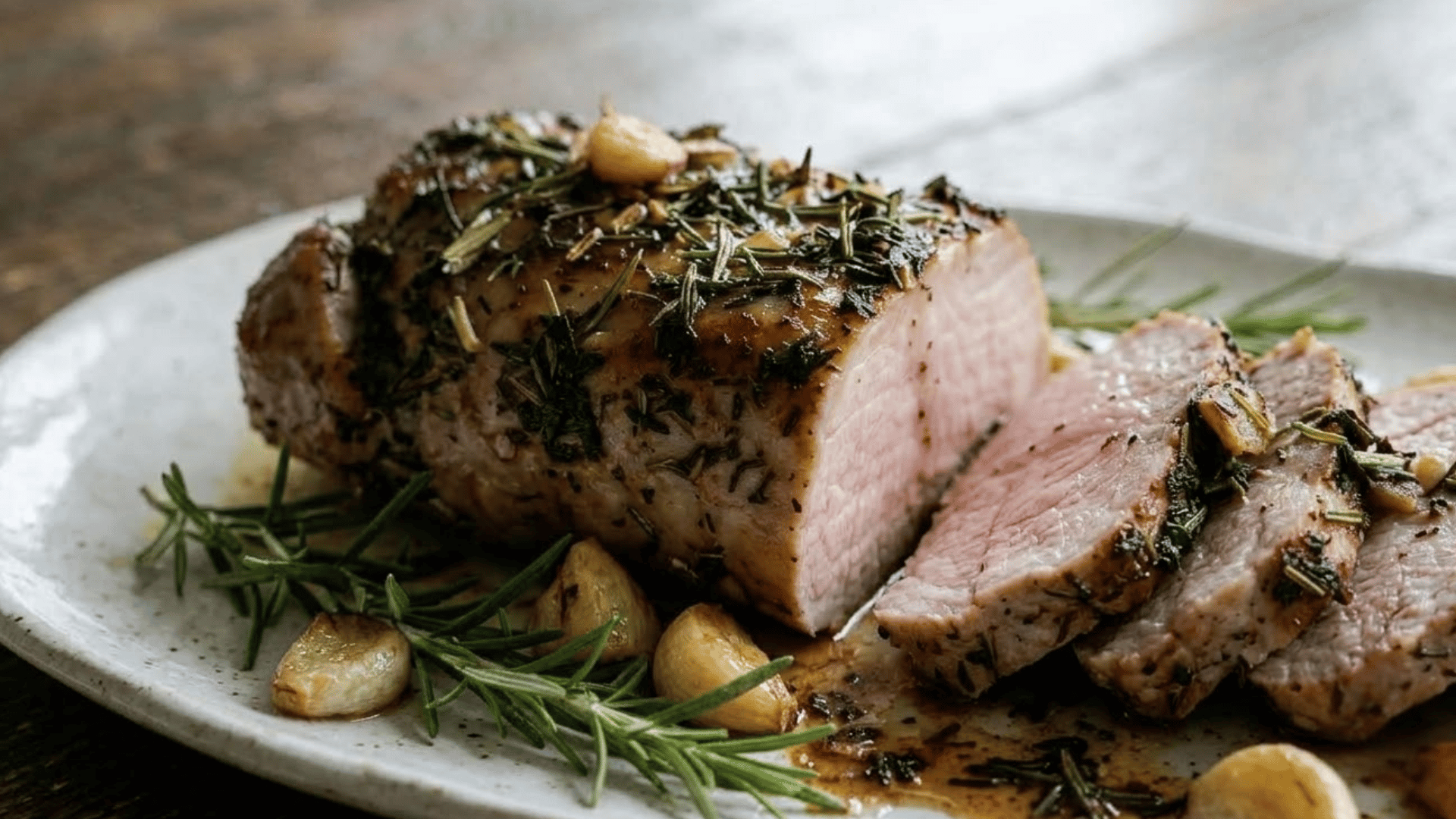
Pork loin is one of my favorite choices when I want an easy dinner that still feels filling and flavorful. With the right seasoning and cooking method, it can stay juicy and tender instead of turning dry.
These pork loin recipes give you plenty of simple ways to change things up.
You can try garlic and herbs, sweet glazes, smoky flavors, creamy sauces, fruit pairings, or slow cooker options.
From roasted and grilled pork loin to stuffed and glazed versions, these ideas make it easy to enjoy a different dinner without making cooking complicated.
Pork Loin Recipe Ingredients
A simple pork loin recipe uses a few everyday ingredients to create tender meat with plenty of flavor.
-
3 lb pork loin
-
2 tbsp olive oil
-
4 cloves garlic, minced
-
1 tbsp Dijon mustard
-
1 tsp dried rosemary
-
1 tsp dried thyme
-
1 tsp paprika
-
1 tsp salt
-
½ tsp black pepper
-
½ cup chicken broth
How to Make Juicy Pork Loin
|
Yield: 6 servings | Prep Time: 15 minutes | Cook Time: About 60 minutes | Rest Time: 10 minutes |
Step 1: Prepare the Pork Loin
Preheat the oven to 350°F. Remove the pork loin from its packaging and pat the surface dry with paper towels.
Trim away any large or tough pieces of excess fat, but leave a thin layer of fat intact. This adds flavor while the pork roasts.
Step 2: Make the seasoning rub
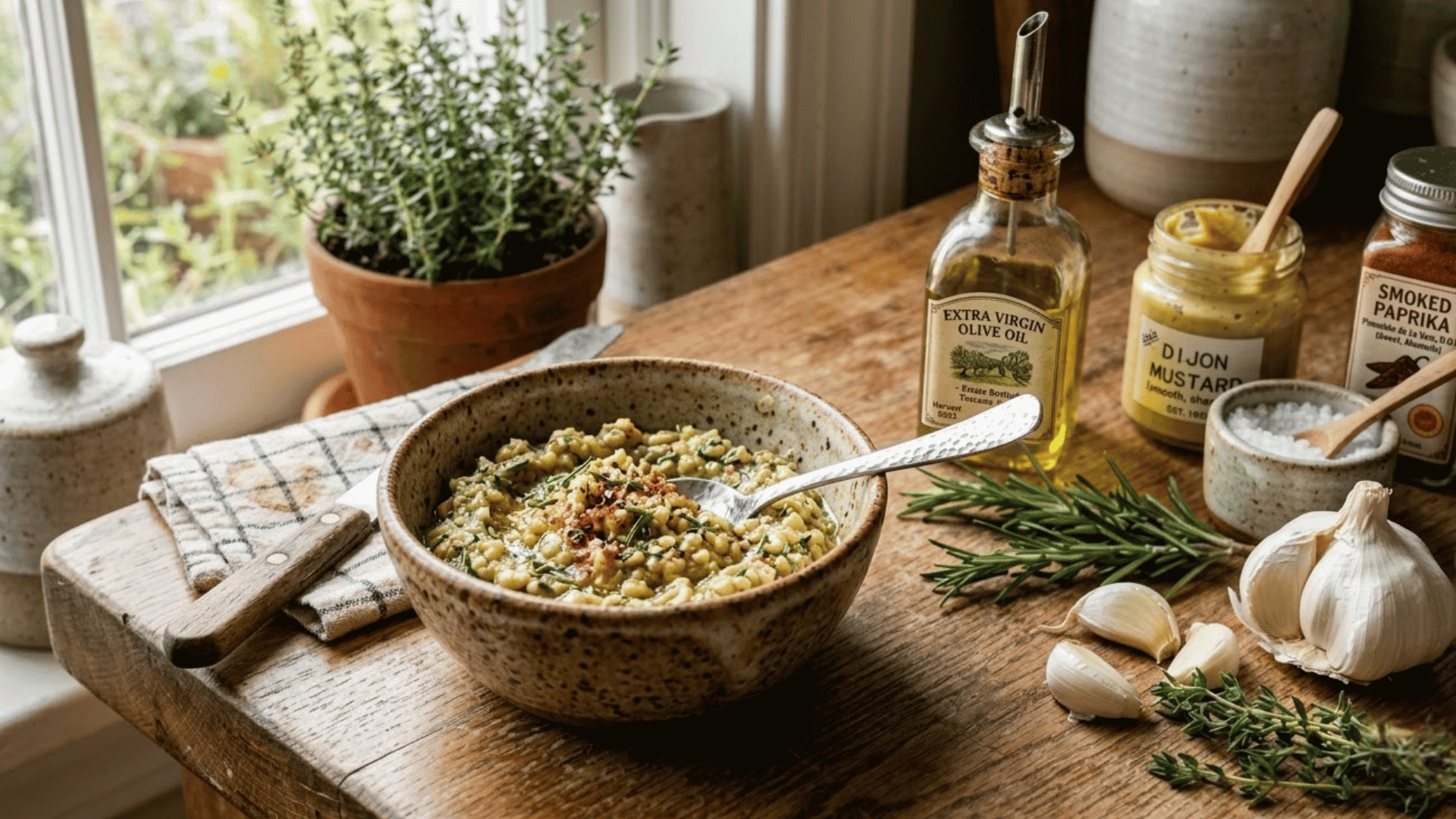
Combine olive oil, minced garlic, Dijon mustard, rosemary, thyme, paprika, salt, and black pepper in a small bowl.
Stir until everything forms a thick paste. The mustard helps the herbs and seasonings cling evenly to the pork.
Step 3: Rub the Pork With Seasoning
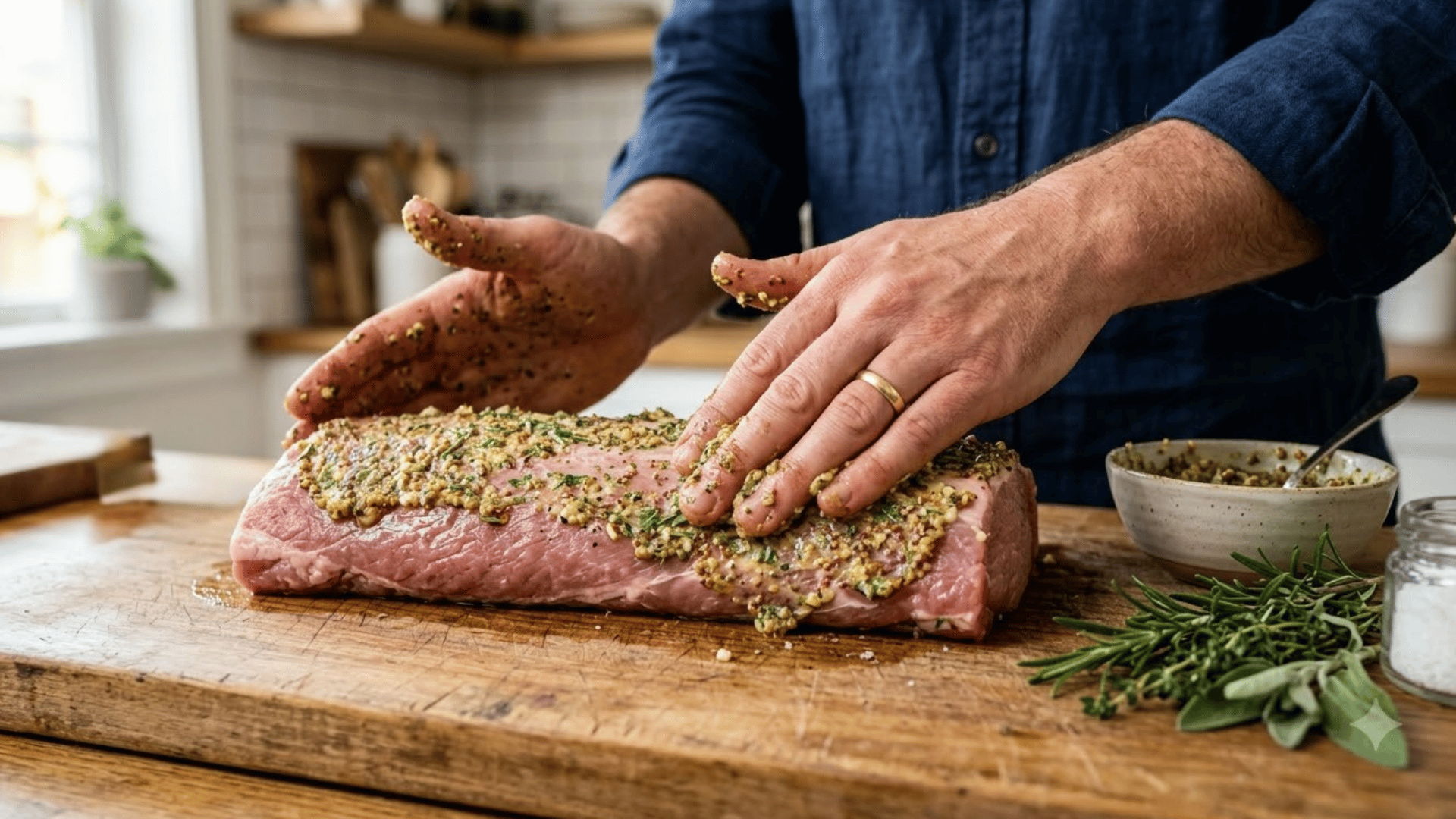
Spread the seasoning mixture over the entire pork loin, including the top, bottom, and sides. Use your hands or a spoon to press the garlic, herbs, and spices firmly onto the surface.
Make sure the pork is evenly coated so each slice has plenty of seasoning and savory flavor.
Step 4: Brown the Pork
Heat an oven-safe skillet over medium-high heat. Add the seasoned pork loin and brown it briefly on each side. This step is optional, but it helps create a golden-brown outside and adds deeper flavor.
Once browned, keep the pork in the same skillet for roasting. I skip this step only when I’m short on time, since the extra five minutes almost always pays off in flavor.
Step 5: Roast the Pork Loin
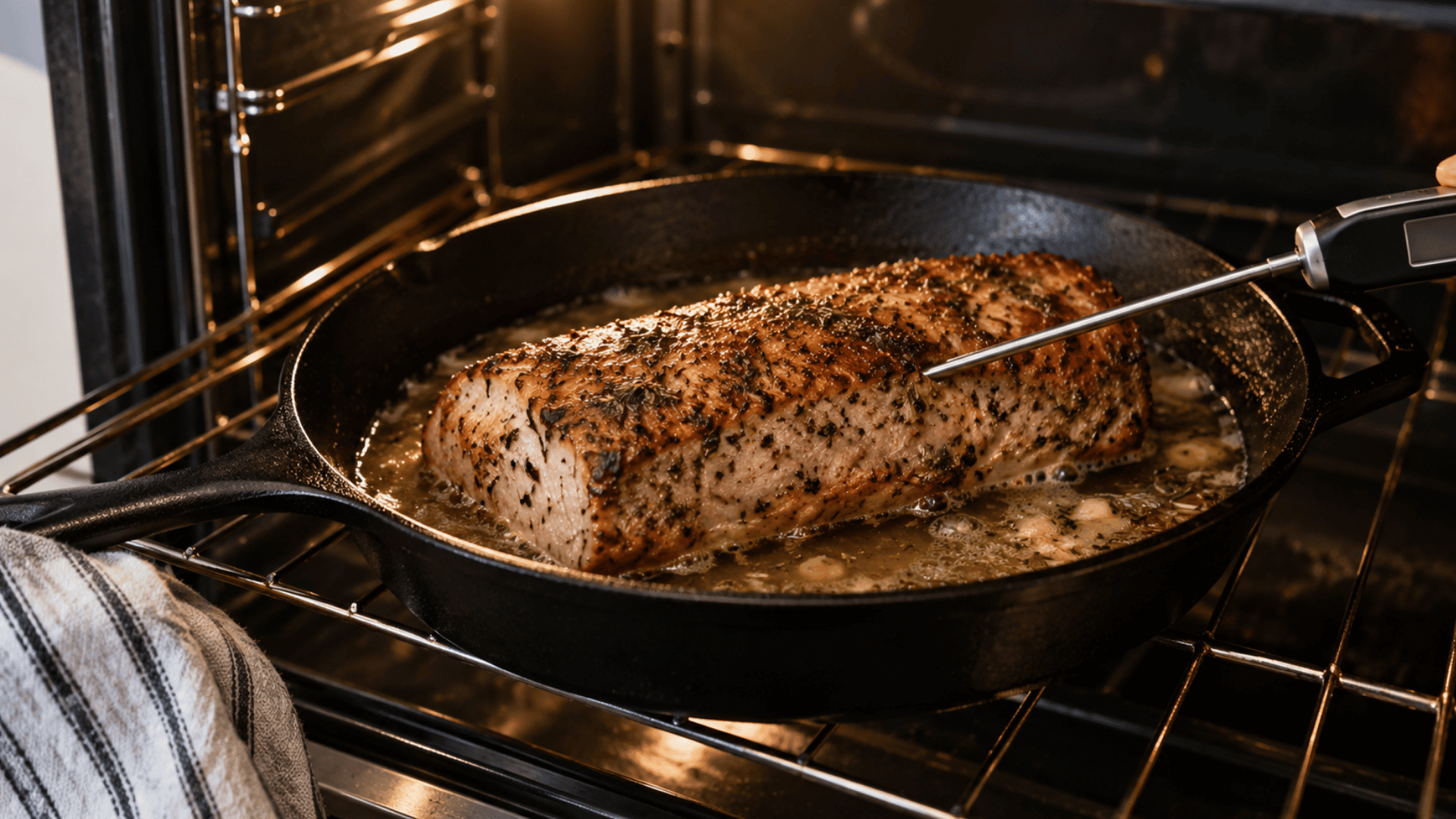
Pour chicken broth around the pork, then place the skillet in the oven.
Roast until the thickest part reaches 145°F, as measured with a meat thermometer, the doneness point set by USDA’s safe minimum temperature guidelines for whole cuts of pork.
A 3-pound pork loin may take about one hour, though cooking time can vary. Check the internal temperature rather than relying only on the cooking time.
For other weights, see the timing guide below.
Step 6: Let It Rest
Remove the pork loin from the oven and place it on a clean cutting board. Let it rest for about 10 minutes before slicing. This allows the juices inside the meat to settle and spread evenly.
Cutting it too soon can cause more juices to run out, leaving the pork less moist.
Step 7: Slice and Serve
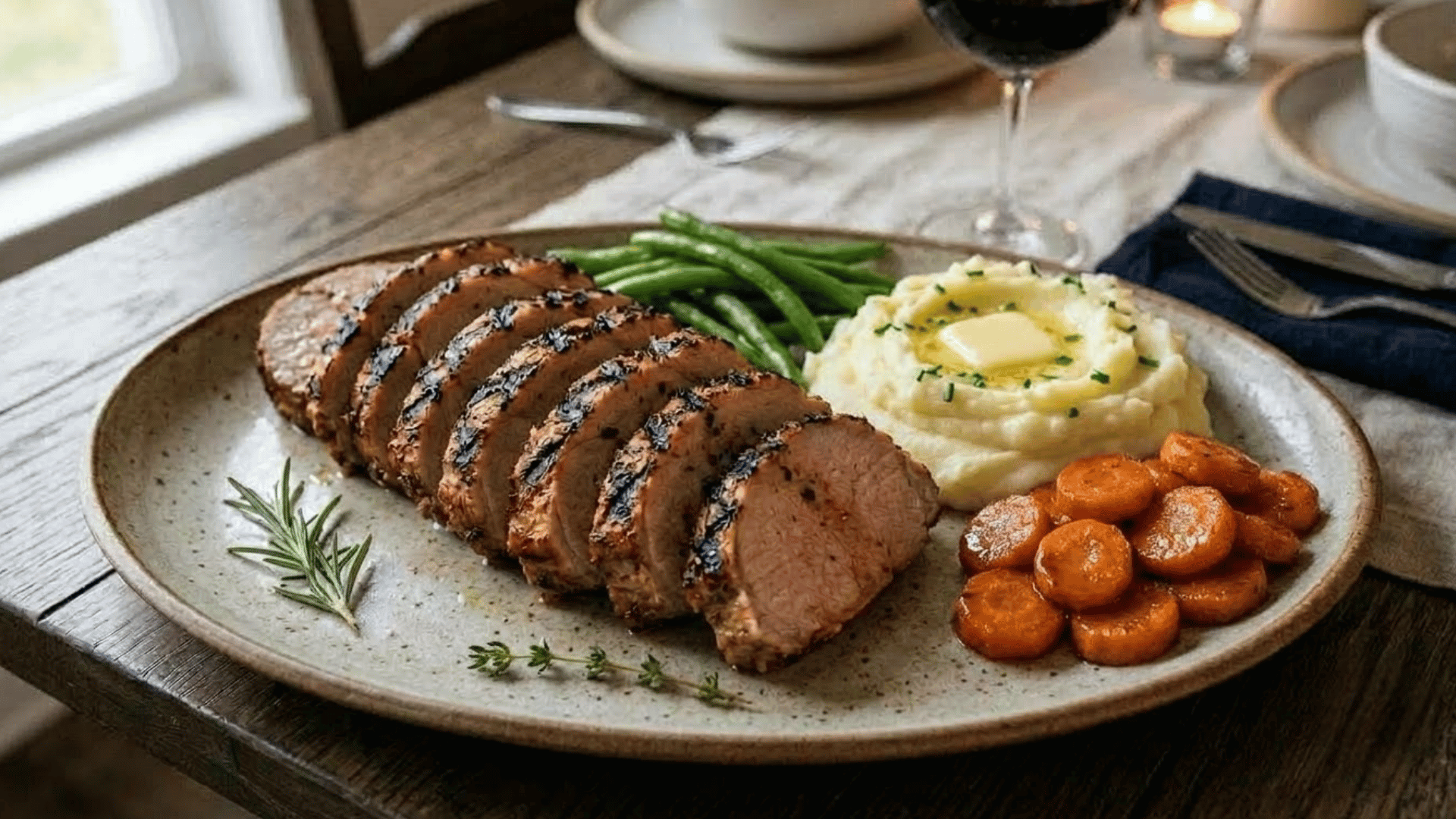
Slice the pork loin across the grain into even pieces.
Spoon some of the warm pan juices over the slices before serving.
Pair it with mashed potatoes, roasted vegetables, green beans, rice, or a fresh salad for a complete dinner.
How Long to Cook Pork Loin by Weight
A three-pound pork loin needs about an hour at 350°F, and roughly twenty minutes per pound is a reliable starting point for other sizes.
Always confirm doneness with a meat thermometer instead of the clock, since oven accuracy and the shape of the roast can shift the actual time.
|
Pork Loin Weight |
Approximate Roasting Time at 350°F |
|---|---|
|
2 lbs |
About 40 minutes |
|
3 lbs |
About 60 minutes |
|
4 lbs |
About 80 minutes |
|
5 lbs |
About 100 minutes |
These times assume a boneless loin roasted uncovered at 350°F. A bone-in roast or a colder starting temperature can add extra time, so start checking the internal temperature about fifteen minutes before the estimate above.
Pork Loin vs Pork Tenderloin
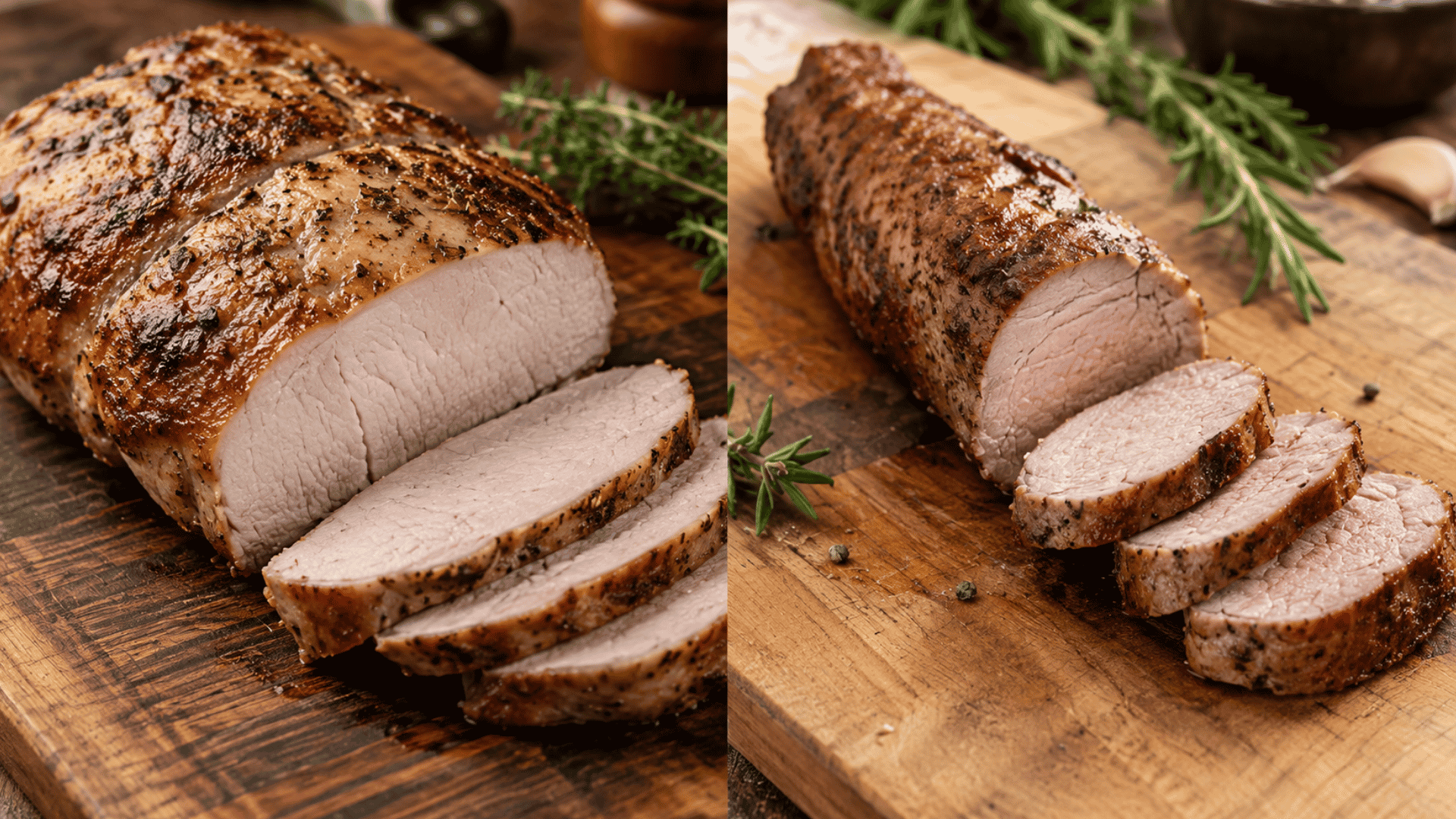
Pork loin and pork tenderloin are two different cuts of pork, even though their names sound similar.
Pork loin is a larger, wider cut from the back of the pig. It often has a layer of fat on top and has a firmer texture. Because of its size, pork loin works well for roasting, grilling, and slicing into thick portions.
Pork tenderloin is smaller, thinner, and much leaner. It comes from a muscle that runs along the backbone and is naturally very tender. Since it is a smaller cut, it cooks much faster and works well for roasting, searing, or cutting into medallions.
The two cuts should not be used interchangeably without adjusting the cooking time and method.
Ways to Keep Pork Loin Juicy
Because pork loin is relatively lean, a few small cooking choices can make a noticeable difference in its texture.
-
Do Not Overcook: Remove the pork once the center reaches 145°F.
-
Use a Meat Thermometer: Check the thickest part for accurate doneness.
-
Sear Before Roasting: Browning the outside adds flavor and a better crust, the same trick that gives Cajun blackened tilapia its golden edge.
-
Add Moisture: Broth, butter, or pan juices can help keep the roast flavorful.
-
Let It Rest: Rest the pork for about 10 minutes before slicing so the juices stay inside.
-
Slice Across the Grain: This helps the pork feel more tender when served.
Pork Loin Recipe Variations
Pork loin can take on plenty of different flavors with a few simple changes to the seasonings, sauces, and cooking method.
|
Pork Loin Variation |
How to Make It |
|---|---|
|
Garlic Herb Pork Loin |
Rub with garlic, rosemary, thyme, olive oil, salt, and pepper, then roast until cooked through. |
|
Honey Garlic Pork Loin |
Coat with a mixture of honey, garlic, soy sauce, and seasonings before roasting. |
|
Apple Pork Loin |
Roast the pork with sliced apples, onions, and herbs until tender. |
|
BBQ Pork Loin |
Season the pork, brush generously with barbecue sauce, then roast or grill. |
|
Maple Dijon Pork Loin |
Mix maple syrup with Dijon mustard, spread it over the pork, and roast. |
|
Slow Cooker Pork Loin |
Add pork, broth, onions, garlic, and seasonings to a slow cooker and cook until tender. |
|
Stuffed Pork Loin |
Butterfly the loin, add a spinach, mushroom, herb, or cheese filling, then roll and roast. |
|
Balsamic Pork Loin |
Coat with balsamic vinegar, garlic, herbs, and a little honey before roasting. |
|
Cajun Pork Loin |
Rub generously with Cajun seasoning and roast or grill until cooked through. |
|
Sheet Pan Pork Loin |
Arrange the pork with potatoes and vegetables on a sheet pan and roast everything together. |
What to Serve With Pork Loin
-
Potatoes: Mashed potatoes, roasted potatoes, or sweet potatoes
-
Vegetables: Green beans, roasted carrots, or Brussels sprouts
-
Salads: Garden salad, Caesar salad, or apple walnut salad
-
Rice and Grains: Rice pilaf, wild rice, or quinoa
-
Pasta: Mac and cheese, buttered noodles, or creamy pasta
-
Fruit-Based Sides: Applesauce, baked apples, or cranberry sauce
-
Bread: Dinner rolls, garlic bread, or cornbread
How to Store Leftover Pork Loin
Let the pork loin cool slightly before storing it, but don’t leave it at room temperature for more than 2 hours. Place the leftovers in an airtight container or wrap them tightly before refrigerating.
-
Refrigerator: Store cooked pork loin for 3–4 days, in line with USDA’s guidance for cooked meat leftovers.
-
Freezer: Freeze in an airtight container or freezer-safe bag for 2–3 months for best quality.
-
Before Storing: Slice only what you need and keep the remaining loin whole when possible to help retain moisture.
-
Reheating: Warm gently with a little broth or cooking juices to help prevent the pork from drying out.
Common Pork Loin Cooking Mistakes
-
Overcooking the Roast: Continuing far beyond the target temperature can dry out lean pork.
-
Removing All the Fat: Leaving a modest fat layer can add flavor during roasting.
-
Skipping the Thermometer: Cooking time alone cannot confirm that the center has reached the proper temperature.
-
Under-Seasoning the Meat: Pork loin benefits from generous seasoning across the entire surface.
-
Slicing Immediately: Let the roast rest before carving it into individual portions.
Conclusion
A flavorful pork loin dinner can still be simple enough for a busy weeknight.
I like starting with a basic garlic herb version, then switching things up with honey mustard, apples, balsamic, bacon, or cranberry orange.
The key is to cook the pork to the right temperature and let it rest before slicing.
With those basics in place, these pork loin recipes work well for family dinners or special meals.
Try one and share your favorite variation in the comments.
Frequently Asked Questions
Should Pork Loin Be Covered While Cooking?
No, Pork loin can generally roast uncovered. If its surface begins browning too quickly before the center is ready, loosely tent it with foil.
Should Pork Loin Be Marinated Overnight?
You can marinate pork loin overnight for stronger flavor, but even a few hours can help season the meat effectively.
What Can You Do With Leftover Pork Loin?
Use leftover pork loin in sandwiches, tacos, fried rice, pasta, wraps, salads, or grain bowls for quick next-day meals.