

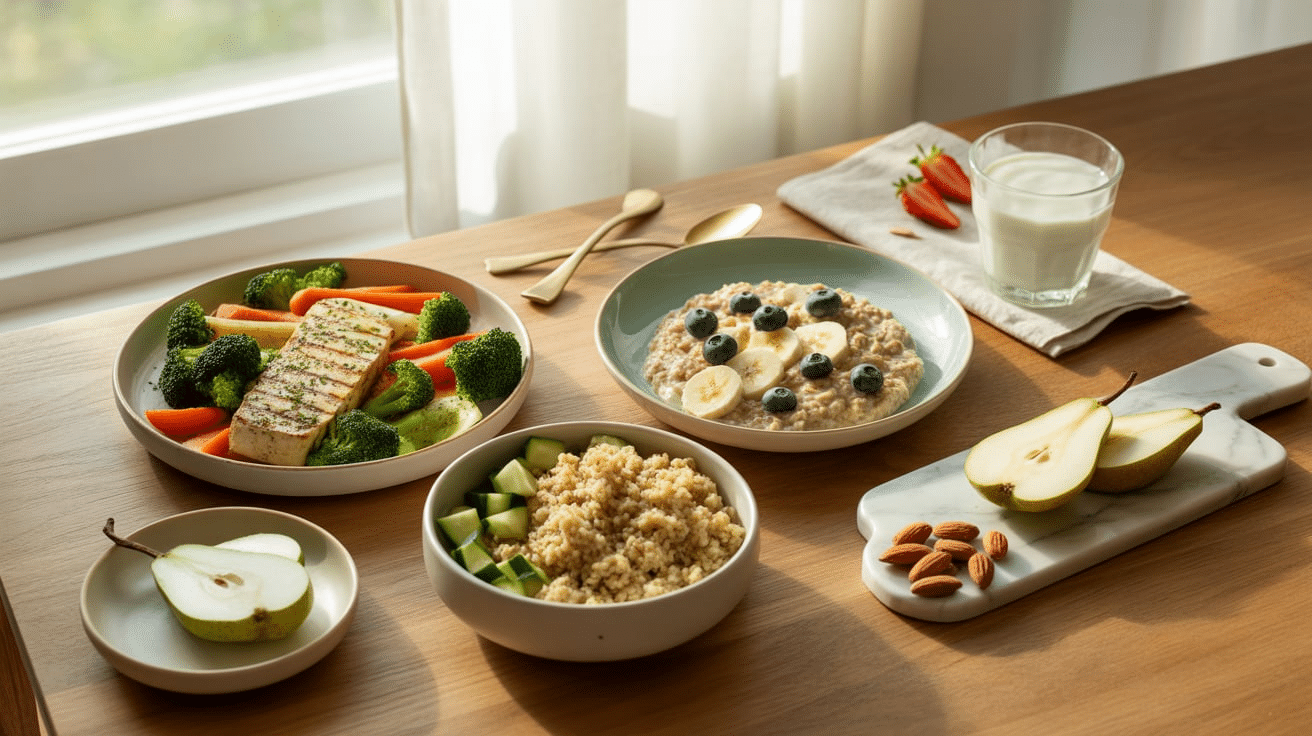
If you’ve ever gone to bed hoping tonight won’t end with that familiar chest burn, you know how frustrating it can be. GERD can make everyday eating feel like a guessing game. One wrong bite, and discomfort follows.
That’s usually when you start asking questions. What can I eat? What should I avoid? Is there a simple way to reset my meals without overthinking everything?
That’s where a 7-day GERD diet plan can help. I put this together with you in mind, focusing on real meals you’d actually eat, not complicated rules. The goal is simple: to help you feel more in control around food again, one day at a time.
What is a GERD Diet Plan?
A GERD (Gastroesophageal Reflux Disease) diet plan is a structured eating approach designed to reduce acid reflux symptoms by avoiding trigger foods that worsen heartburn and indigestion.
The plan emphasizes low-acid, low-fat foods while eliminating common irritants like citrus, tomatoes, chocolate, caffeine, spicy foods, and fried items.
It focuses on lean proteins, whole grains, non-citrus fruits, vegetables, and healthy fats prepared through gentle cooking methods.
This diet helps minimize stomach acid production and prevents acid from flowing back into the esophagus. This provides relief from burning sensations, chest pain, and digestive discomfort while promoting overall gut health.
7-Day GERD Diet Plan for Non-Vegetarians
I’ve created this 7-day meal plan to help manage GERD by focusing on low-acid, non-irritating foods. With lean proteins, whole grains, and alkaline vegetables, this plan ensures balanced nutrition while avoiding common GERD triggers.
Here’s a simple, reflux-friendly diet to support your digestive health:
Day 1: Gentle Start
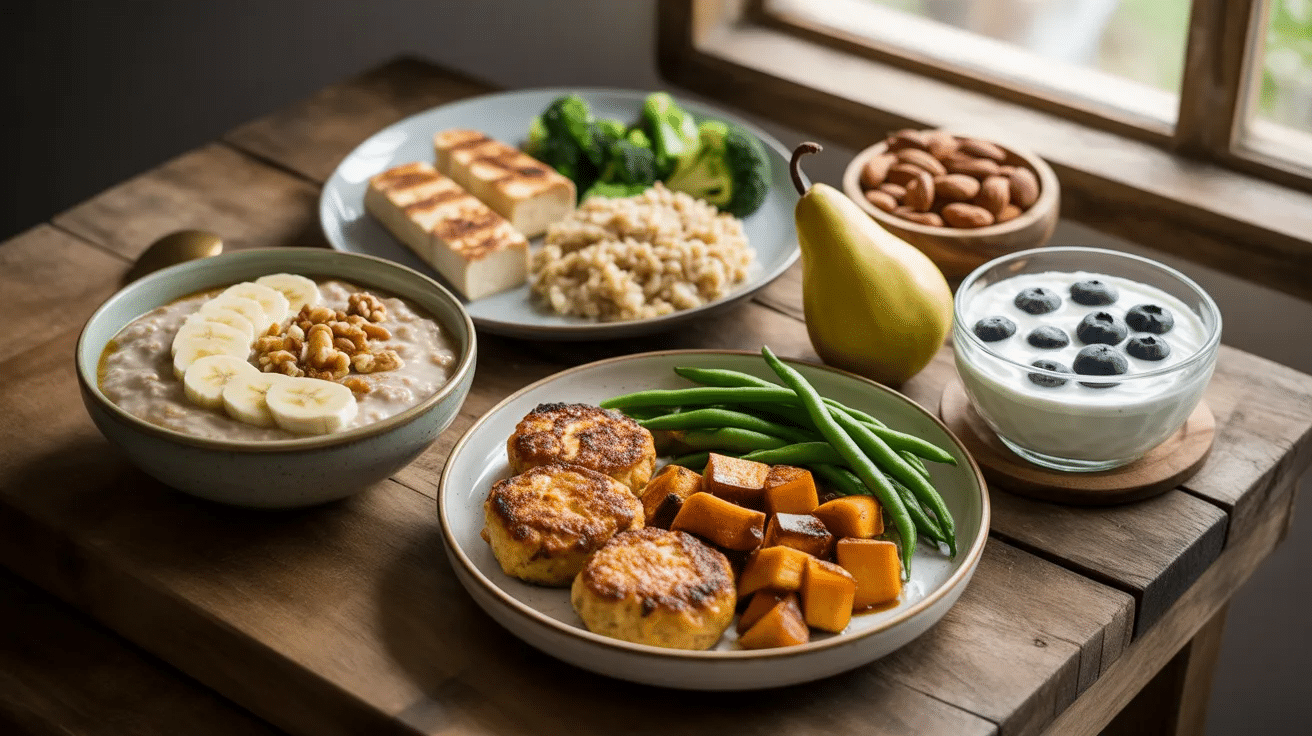
Ease into your GERD-friendly journey with gentle, soothing foods that are easy to digest and won’t trigger uncomfortable reflux symptoms.
- Breakfast: Oatmeal with almond milk, banana, and chopped walnuts
- Lunch: Grilled tofu, brown rice, and steamed broccoli
- Dinner: Baked chickpea patties, roasted sweet potatoes, and steamed green beans
- Snacks: Low-fat Greek yogurt with blueberries, pear, and almonds
Day 2: Protein & Whole Grains

Focus on lean proteins and fiber-rich whole grains to maintain steady energy levels while keeping acid reflux at bay throughout the day.
- Breakfast: Scrambled egg whites with spinach, whole-grain toast, and avocado
- Lunch: Grilled tofu wrap with lettuce, cucumber, and melon cubes
- Dinner: Baked tempeh with quinoa pilaf and roasted zucchini
- Snacks: Rice cakes with almond butter, apple, and carrot sticks
Day 3: Protein-Packed Day
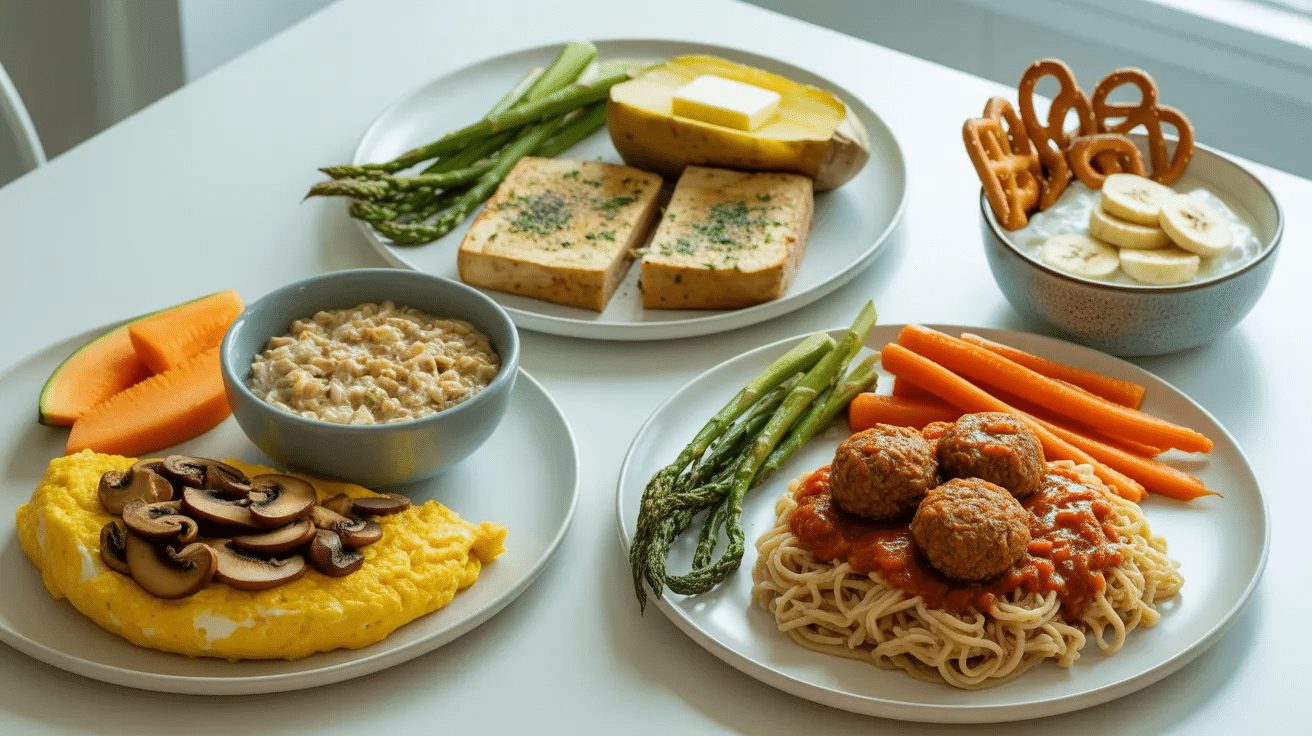
Maximize your protein intake with alkaline-friendly options that support muscle health and digestion without triggering heartburn or acid reflux.
- Breakfast: Egg white omelet with mushrooms, cooked oatmeal, and melon slices
- Lunch: Baked marinated tofu, baked potato, and steamed asparagus
- Dinner: Lentil meatballs, whole-wheat pasta, and steamed carrots
- Snacks: Low-fat cottage cheese, banana, and pretzels
Day 4: Complex Carbs & Proteins

Balance complex carbohydrates with quality proteins to stabilize blood sugar and provide sustained energy while preventing uncomfortable GERD symptoms.
- Breakfast: Smoothie with almond milk, banana, spinach, and chia seeds
- Lunch: Chickpea salad with romaine, cucumber, and whole-grain crackers
- Dinner: Baked white beans, brown rice pilaf, and steamed green beans
- Snacks: Air-popped popcorn, fresh pear, and string cheese
Day 5: Legumes & Alkaline Veggies

Incorporate nutrient-dense legumes and alkaline vegetables that naturally reduce stomach acidity and promote optimal digestive health and comfort.
- Breakfast: Greek yogurt parfait with granola and berries
- Lunch: Hummus and avocado sandwich with carrots and cantaloupe
- Dinner: Grilled tempeh strips, couscous, and roasted Brussels sprouts
- Snacks: Rice cakes with almond butter and sliced cucumber
Day 6: Comforting Root Veggies
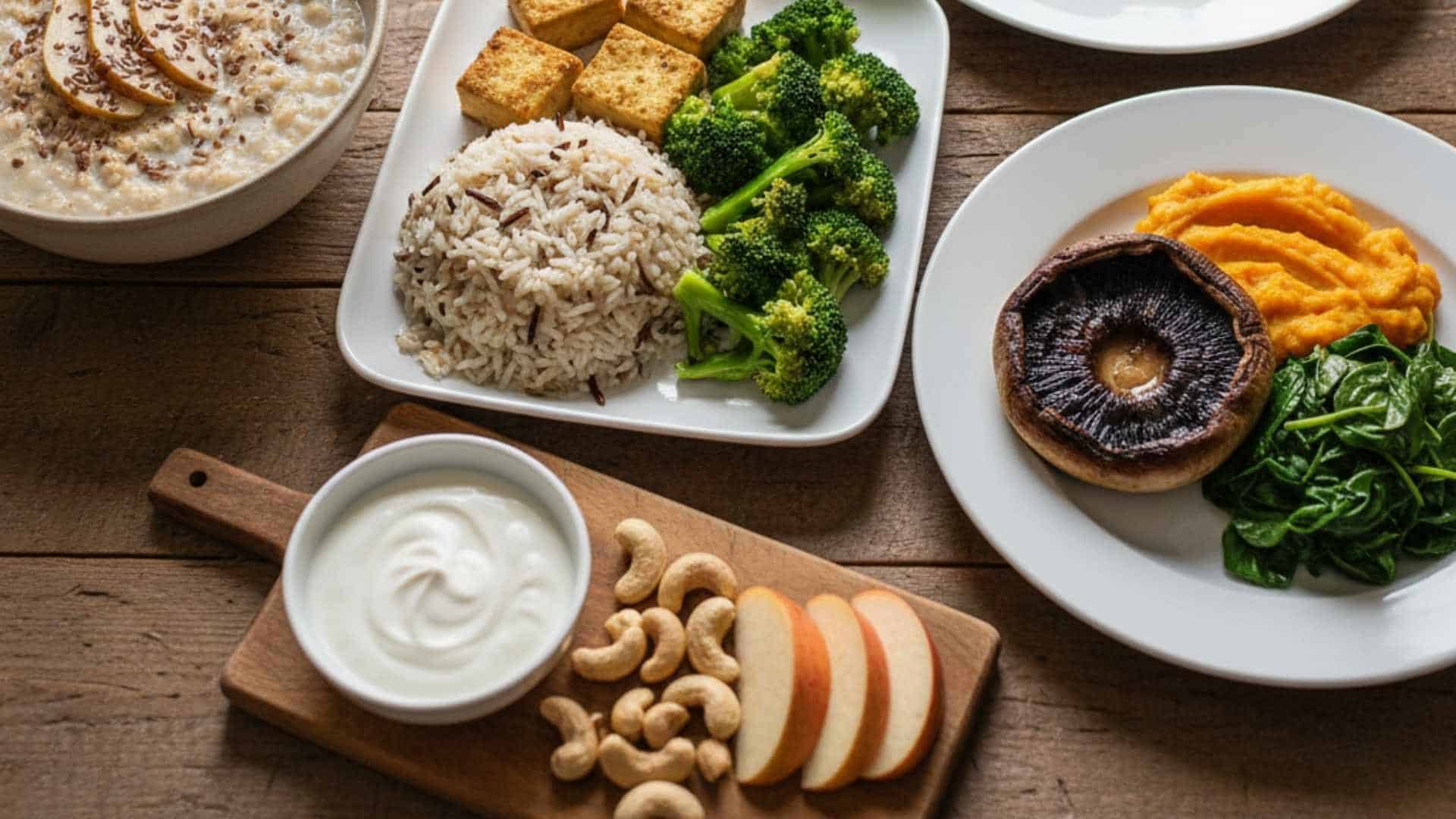
Enjoy naturally soothing root vegetables that provide essential nutrients and gentle comfort to your digestive system without causing reflux.
- Breakfast: Oatmeal with sliced pear, ground flaxseed, and almond milk
- Lunch: Baked tofu, wild rice, and steamed broccoli
- Dinner: Grilled portobello mushrooms, mashed sweet potatoes, and sautéed spinach
- Snacks: Low-fat yogurt, cashews, and apple slices
Day 7: Balanced & Digestive Comfort

Complete your week with a perfectly balanced menu that combines all GERD-friendly principles for optimal digestive comfort and nutritional balance.
- Breakfast: Scrambled egg whites with bell peppers, whole-grain toast, and melon
- Lunch: Grilled tofu steaks, quinoa salad with cucumber, and steamed carrots
- Dinner: Baked chickpea patties, brown rice, and roasted cauliflower
- Snacks: Low-fat cottage cheese with peaches, whole-grain crackers, and celery with hummus
Consult your healthcare provider for persistent GERD symptoms and personalized dietary recommendations.
7-Day GERD Diet Plan for Vegetarians
Managing GERD with diet means choosing low-acid, soothing foods while avoiding common triggers. I’ve found that nutrient-rich meals can help minimize symptoms and support digestion.
Here’s a simple 7-day vegetarian meal plan:
| Day | Breakfast | Lunch | Dinner |
|---|---|---|---|
| Day 1 | Oatmeal with almond milk and bananas | Whole grain pasta with grilled vegetables (no tomatoes) | Quinoa with steamed broccoli and small portion of tofu |
| Day 2 | Smoothie with spinach, apple, and non-dairy yogurt | Brown rice with sautéed greens and lentils | Sweet potatoes with steamed carrots and peas |
| Day 3 | Whole-wheat toast with almond butter | Chickpea salad with cucumbers, olives, and olive oil dressing | Stir-fried tofu with zucchini and quinoa |
| Day 4 | Avocado on whole grain toast | Couscous with roasted cauliflower and chickpeas | Lentil soup with mild herbs and side of steamed kale |
| Day 5 | Fresh fruit salad (non-citrus) with chia seeds | Veggie wrap with spinach, avocado, and hummus | Grilled portobello mushrooms with quinoa and sautéed spinach |
| Day 6 | Rice cakes with avocado and flaxseeds | Grilled veggie and quinoa bowl with olive oil dressing | Baked sweet potato with steamed asparagus |
| Day 7 | Chia pudding with almond milk and blueberries | Brown rice and stir-fried veggies with tofu | Baked zucchini with side of mashed cauliflower |
Consult your healthcare provider for persistent GERD symptoms and personalized dietary recommendations.
Foods That May Soothe Symptoms
To further ease your GERD symptoms,here are some foods I’ve found that can actively soothe your digestive discomfort and help reduce acid reflux naturally:
- High-Water Foods: Cucumbers, celery, lettuce, and watermelon help dilute stomach acid naturally.
- Ginger-Based Foods: Fresh ginger tea or ginger-infused dishes reduce inflammation and nausea.
- Broth-Based Soups: Clear vegetable or miso broths provide warmth without triggering reflux.
- Oatmeal and Bananas: These bland, alkaline foods coat the stomach lining and absorb excess acid.
Incorporating these soothing foods into your routine can make a real difference in managing GERD symptoms and improving your digestive health.
Best Foods to Eat on a GERD Diet
Understanding which foods support digestive health is important for managing acid reflux. These GERD-friendly options help reduce symptoms while providing complete nutrition for daily wellness:
| Food Category | Best Options |
|---|---|
| Non-Citrus Fruits | Bananas, melons, apples, pears, berries |
| Low-Acid Vegetables | Broccoli, cauliflower, green beans, leafy greens, cucumbers, zucchini |
| Lean Proteins | Tofu, tempeh, egg whites, legumes, beans, lentils |
| Whole Grains | Oatmeal, brown rice, quinoa, whole-wheat bread, couscous |
| Low-Fat Dairy | Greek yogurt, almond milk, cottage cheese, plant-based alternatives |
| Healthy Fats | Avocado (small portions), olive oil, nuts, seeds |
Beyond choosing the right food categories, certain items offer additional soothing properties that can actively calm digestive discomfort.
Foods to Avoid or Limit With GERD
Certain foods and beverages can trigger or worsen acid reflux symptoms. Identifying and limiting these common culprits is important for effective GERD management and long-term relief:
- High-Fat and Fried Foods: Slow digestion and relax the esophageal sphincter, allowing acid to escape upward.
- Spicy Foods: Irritate the esophagus lining and increase stomach acid production.
- Acidic Foods: Tomatoes, citrus fruits, and vinegar-based items trigger immediate reflux in most people.
- Caffeine and Carbonated Drinks: Relax the esophageal sphincter and create pressure that pushes acid up.
- Chocolate and Peppermint: Contain compounds that weaken the valve between the stomach and esophagus.
- Alcohol: Increases acid production while weakening the esophageal sphincter.
- Common Hidden Triggers: Onions, garlic, processed foods, mint products, and high-sodium meals.
These foods are often the main culprits behind acid reflux, and limiting or avoiding them can significantly reduce symptoms and support long-term digestive health.
Eating Habits That Reduce GERD Symptoms
How and when you eat matters just as much as what you eat. These practical habits can significantly reduce acid reflux episodes and improve your overall digestive comfort:
| Eating Habit | GERD-Friendly Recommendation |
|---|---|
| Meal Timing | Stop eating 3-4 hours before bedtime to allow digestion before lying down; avoid late-night snacks. |
| Meal Size and Frequency | Eat 4-5 smaller meals throughout the day instead of 3 large ones to prevent stomach pressure. |
| Post-Meal Posture | Stay upright for at least 2-3 hours after eating; take a gentle walk instead of lying down. |
| Exercise Timing | Wait 2-3 hours after meals before vigorous exercise; opt for light walking immediately after eating. |
| Hydration Habits | Sip water between meals rather than during; avoid drinking large amounts with food to prevent diluting digestive enzymes. |
Implementing even a few of these habits consistently can make a noticeable difference in managing your GERD symptoms alongside dietary changes.
When to Work With a Dietitian or Doctor
If dietary changes don’t improve your symptoms within 2-3 weeks, or if you experience persistent heartburn, difficulty swallowing, or unexplained weight loss, consult a healthcare professional.
A registered dietitian can create personalized GERD meal plans suited to your specific triggers and lifestyle. This is especially important if you’re managing multiple conditions like GERD with IBS, diabetes, or obesity, where dietary needs overlap.
Often, the most effective approach combines prescription medications with strategic dietary modifications under professional guidance for optimal symptom control and long-term digestive health.
Final Thoughts
Managing GERD doesn’t have to feel confusing or restrictive. A 7-day GERD diet plan gives you a clear starting point to understand how everyday foods affect your body.
When meals feel predictable, it becomes easier to notice what works and what doesn’t. You can adjust portions, swap foods, and repeat meals that help you feel better. Over time, those small choices add up to more comfortable days and calmer nights.
If you want to keep building on this, I’ve shared more guides that break down GERD-friendly foods, eating habits, and meal ideas in simple terms.
Take a look at my other blogs to find tips that fit your routine and help you stay consistent beyond these seven days.