

I used to think pizza had to be an occasional treat or a guilty choice. Over time, I realized that small ingredient changes can completely shift how pizza fits into everyday meals.
You might enjoy pizza but feel unsure about how it works with regular eating habits.
That’s where healthy pizza recipes make a real difference. They allow you to keep familiar flavors while improving balance, portion control, and how filling each slice feels. This topic matters because pizza is practical, flexible, and easy to adjust at home.
What follows breaks down smart choices, simple methods, and realistic options so pizza feels doable again, not complicated or limiting.
What Makes a Pizza “Healthy”
A pizza is considered healthy when it uses better ingredients and sensible portions, not strict rules. You do not need to remove carbs or cheese to make it work.
A healthier pizza usually starts with a crust that offers more fiber or protein than refined white dough. The sauce should be simple, with real tomatoes and limited added sugar.
Toppings matter most. Using vegetables adds volume and nutrients, while a solid protein like chicken, beans, or yogurt-based dough helps keep you full. Cheese still fits, but smaller amounts work better than heavy layers.
Cooking method also plays a role. Baking until crisp helps avoid sogginess and extra oil. In simple terms, a healthy pizza supports regular meals, feels filling, and is easy to repeat without feeling restricted.
Healthy Pizza Recipes
These recipes focus on simple steps, flexible ingredients, and reliable results, making it easier to prepare pizza at home without long prep or complicated methods.
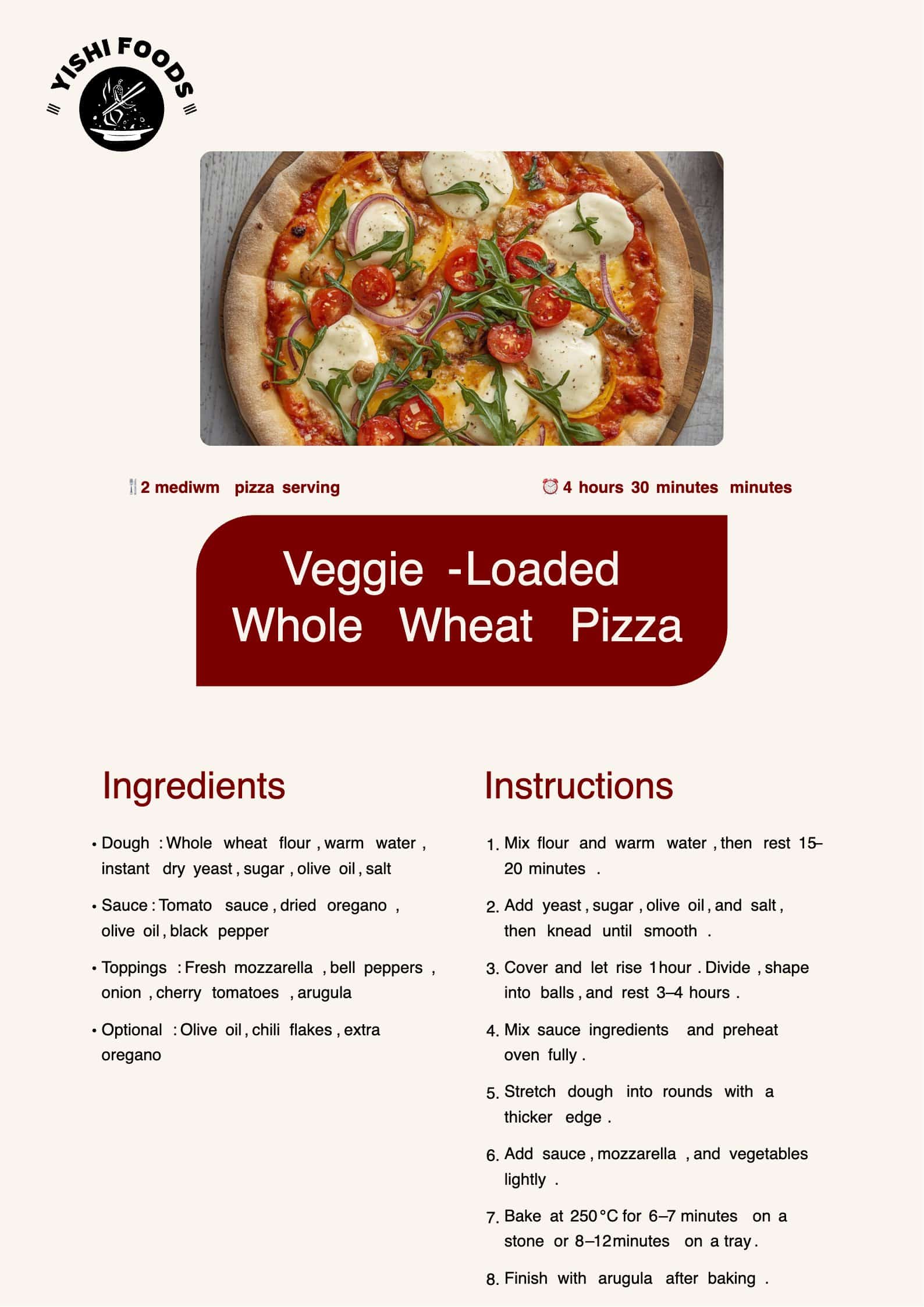
Recipe 1: Veggie-Loaded Whole Wheat Pizza
It started as a simple plan to make pizza at home without relying on refined flour. Whole wheat dough felt like the right place to begin, but the goal was not to make something dense or heavy.
The focus stayed on patience, proper resting time, and keeping the dough soft and workable. Once baked, the crust turned light with crisp edges, ready to hold generous vegetable toppings.
Bell peppers, onions, tomatoes, and fresh greens brought color and texture, while mozzarella tied everything together. This pizza works well for shared meals, tastes familiar, and still feels thoughtful in how it is put together.
Serves: 2 medium pizzas
Ingredients
This ingredient list keeps the pizza simple, balanced, and easy to prep, using familiar items that work well together.
| Section | Ingredients |
|---|---|
| Whole wheat dough | 2 cups whole wheat flour, 1 cup warm water, 3 g instant dry yeast, ½ teaspoon sugar, 1 tablespoon olive oil, ¾ teaspoon salt |
| Sauce | ½ cup tomato sauce, dried oregano, 1 teaspoon olive oil, black pepper |
| Toppings | Fresh mozzarella, sliced bell peppers, thin onion slices, cherry tomatoes, fresh arugula |
Keeping ingredients straightforward helps the crust bake evenly, toppings cook properly, and flavors stay clear without needing extra steps.
Method
Step 1: Mix flour and warm water until combined. Cover and let rest for 15–20 minutes. Add yeast, sugar, olive oil, and salt. Knead for 6–8 minutes until soft and smooth. Lightly oil, cover, and let rest for 1 hour.
Step 2: Divide the dough into portions, shape into smooth balls, and rest for 3–4 hours at room temperature.
Step 3: Stir tomato sauce with oregano, olive oil, and black pepper. Keep it simple.
Step 4: Stretch dough gently, leaving a border. Spread sauce lightly, add mozzarella, vegetables, and a drizzle of olive oil.
Step 5: Bake on a hot pizza stone at 250°C for 6–7 minutes, or on a baking tray for 8–12 minutes, until golden and crisp.
Tip for a crisp crust: Preheat the oven fully, keep the sauce light, and avoid overcrowding toppings. Finish with arugula after baking.
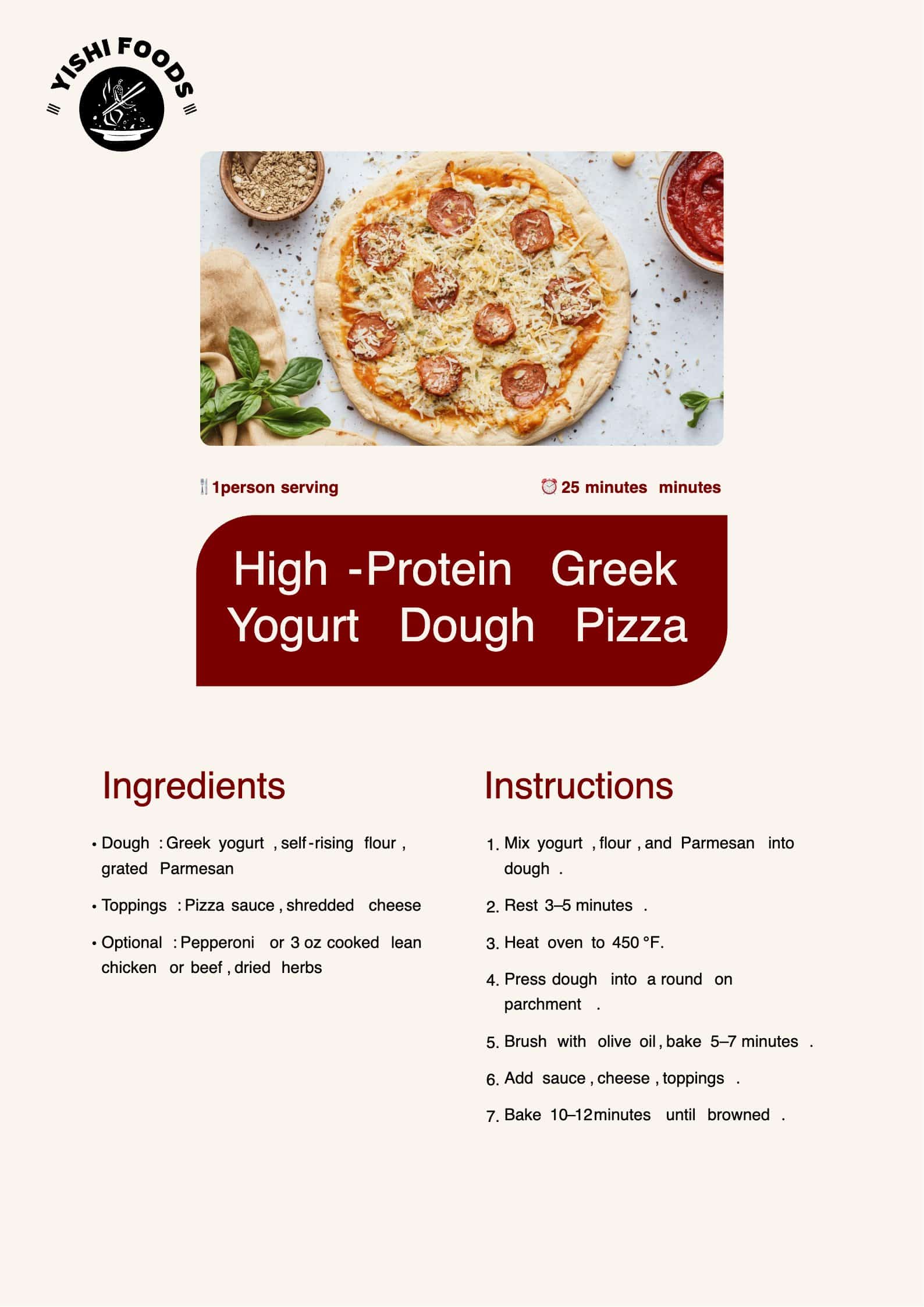
Recipe 2: High-Protein Greek Yogurt Dough Pizza
It started with a craving for pizza that felt lighter, quicker, and still crisp. Greek yogurt dough made that possible with only a few ingredients and almost no mess.
The crust bakes up airy with a chewy bite, and it holds sauce and cheese without turning soggy. A short pre-bake helps the base firm up, then it finishes fast once toppings are added.
This pizza is easy to scale up, easy to customize, and works well when protein matters more. Add pepperoni, chicken, or lean ground meat, then finish with simple seasonings to keep the flavor strong.
Serves: 1 personal pizza
Ingredients
These ingredients keep preparation quick while supporting a crisp crust, strong flavor, and flexible topping choices at home today.
| Category | Ingredients |
|---|---|
| Dough | 100 g plain whole milk Greek yogurt, 10 g grated Parmesan, 90 g self-rising flour |
| Base and toppings | Olive oil for brushing, ¼ cup pizza sauce, ¼ cup shredded pizza cheese, optional pepperoni, optional protein: 3 oz lean ground beef or chicken |
| Optional dough seasoning | Garlic powder or onion powder, oregano, basil, Italian seasoning, crushed red pepper |
Grouped ingredients make cooking smoother, reduce mistakes, and help you adjust portions or toppings without slowing down dinner plans at home.
Method
Step 1: Add Greek yogurt, grated Parmesan, and self-rising flour to a bowl. Mix until it starts forming clumps, then use your hands to bring it into a smooth dough. It should not feel sticky. Let it rest for a few minutes.
Step 2: Heat the oven to 450°F. Place dough on lightly floured parchment paper. Press or roll into a round, keeping it thin or thick based on preference.
Step 3: Brush the top lightly with olive oil. Bake for 5 to 7 minutes until the surface firms up.
Step 4: Spread ¼ cup of sauce, add ¼ cup of cheese, and top with pepperoni or 3 oz lean protein if using.
Step 5: Return to the oven for 10 to 12 minutes, or until the crust looks browned and the cheese is melted.
Tips
- Full or reduced-fat Greek yogurt works better than fat-free.
- Add seasoning to the dough for more flavor.
- Double the recipe for a larger pizza.
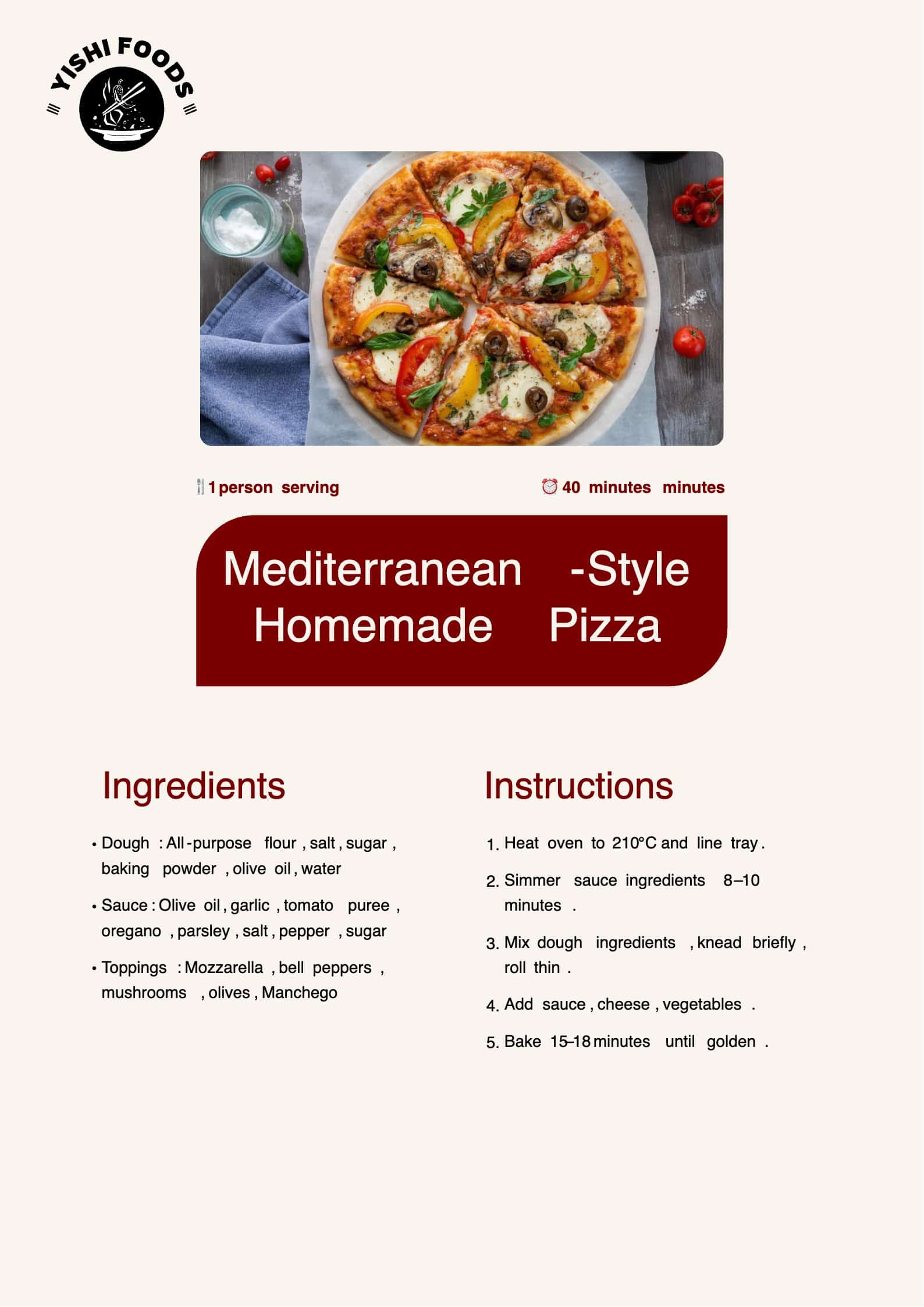
Recipe 3: Mediterranean-Style Homemade Pizza
It starts with the idea that homemade pizza does not need hours of prep or special tools. This version comes together in about the same time it takes to order delivery, but with full control over ingredients.
The dough mixes quickly, rolls out easily, and bakes into a thin, crisp base. A simple stovetop tomato sauce adds depth without overpowering the toppings.
Bell peppers, mushrooms, olives, and fresh mozzarella keep the flavor balanced and familiar. This pizza works well for weeknight meals when time is limited, but homemade food still matters.
Serves: 1 large pizza
These ingredients support quick preparation, balanced flavor, and reliable results while keeping the pizza simple and easy to cook.
| Category | Ingredients |
|---|---|
| Dough | 1 cup all-purpose flour, 1 teaspoon sea salt, ½ teaspoon white sugar, 1 teaspoon baking powder, 1 tablespoon extra virgin olive oil, ⅓ cup lukewarm water |
| Sauce | 1 tablespoon extra virgin olive oil, 2 garlic cloves (finely minced), 1 cup tomato puree, ½ teaspoon dried oregano, ½ teaspoon dried parsley, ½ teaspoon sea salt, black pepper, pinch of white sugar |
| Toppings | Fresh mozzarella (thinly sliced), red and green bell peppers (sliced), button mushrooms (sliced), green olives, grated Manchego cheese, olive oil for finishing |
Grouping items this way helps timing, reduces confusion, and allows smooth assembly from dough to topping without rushing during cooking.
Method
Step 1: Set the oven to bake and broil at 210°C (410°F). Line a baking tray with parchment paper and drizzle lightly with olive oil.
Step 2: Heat olive oil in a small pan over medium heat. Add garlic and cook briefly until fragrant. Add tomato puree, oregano, parsley, salt, pepper, and sugar. Stir well, lower the heat, and simmer gently while preparing the dough.
Step 3: Add flour, salt, sugar, baking powder, olive oil, and water to a bowl. Mix until combined, then knead on a floured surface for a few minutes. Roll into a thin 12-inch round.
Step 4: Place the dough on the prepared tray. Spread sauce evenly, leaving a small border. Add mozzarella, vegetables, olives, and a light sprinkle of Manchego. Drizzle lightly with olive oil.
Step 5: Bake for 15 to 18 minutes, until the crust is golden and the cheese has melted. Slide onto a board, remove parchment, slice, and serve warm.
Tip: Keeping toppings light helps the crust stay crisp and prevents excess moisture during baking.
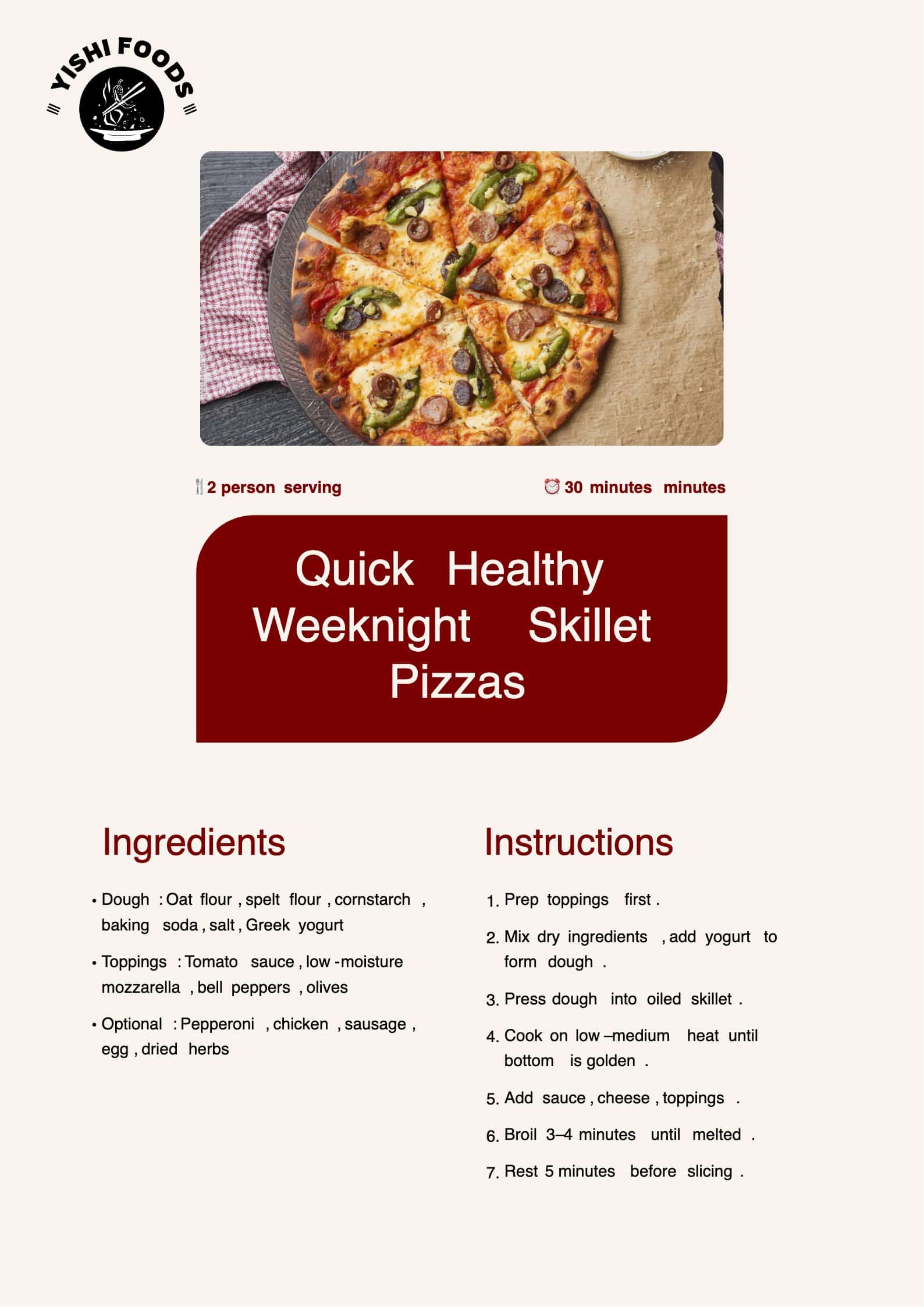
Recipe 4: Quick Healthy Weeknight Pizzas
It started with the idea that homemade pizza should not require long prep, resting time, or special tools. This method uses a skillet and cooks partly on the stovetop, which helps create crisp edges while keeping the center soft.
The dough comes together fast, needs no rising time, and works well when dinner has to happen quickly.
Cooking in a cast-iron skillet helps control heat and texture without a pizza stone. This style fits busy nights, reheats well, and keeps portions reasonable while still feeling satisfying.
Serves: 2 small skillet pizzas
Ingredients
These ingredients are grouped to keep prep fast, limit moisture issues, and help the skillet method cook evenly every time.
| Category | Ingredients |
|---|---|
| Dough | Oat flour and spelt flour in equal amounts, a small amount of cornstarch, baking soda, salt, and thick Greek yogurt |
| Base and toppings | Olive oil for the skillet, tomato sauce (homemade or store-bought), low-moisture mozzarella (grated), thinly sliced bell peppers, sliced olives |
| Optional toppings | Pepperoni, ham, cooked chicken, sausage, egg |
Keeping ingredients organized makes assembly quicker, prevents overloading the crust, and supports crisp edges during stovetop and oven cooking.
Method
Step 1: Slice the vegetables thinly and grate the cheese. Keep everything ready before working with the dough.
Step 2: Add flours, cornstarch, baking soda, salt, and optional dried herbs to a bowl. Stir in Greek yogurt until the mixture comes together. Transfer to a lightly floured surface and shape gently. Add small amounts of flour only if needed.
Step 3: Lightly oil a skillet. Place the dough in the center and press outward evenly. Cook on low to medium heat until the bottom firms up and turns golden.
Step 4: Spread sauce to the edges, add cheese, then toppings. Keep layers light to avoid moisture buildup.
Step 5: Move the skillet under the broiler for 3 to 4 minutes, until the cheese melts and the top browns.
Step 6: Let the pizza sit for 5 minutes before slicing. This helps the cheese settle and keeps slices intact.
Reheating tip: Cover the skillet and warm on low heat until soft and heated through.
Choose the Best Healthy Pizza for Your Goal
This section helps you pick the right healthy pizza style based on eating habits, time limits, and nutrition goals.
If Your Goal Is Weight Balance
If weight balance matters most, focus on pizzas that feel filling without going heavy on calories. A thinner crust helps control portions while still giving a proper pizza base.
Load toppings with vegetables like peppers, onions, mushrooms, or spinach to add volume and fiber. Use cheese with care. A light, even layer works better than thick coverage and still delivers flavor.
Adding a lean protein such as chicken or beans can help keep hunger in check after eating. This type of pizza works well as a regular dinner without feeling heavy or restrictive.
If You Want More Protein
If staying full longer is the goal, protein-focused pizzas are a strong option. Yogurt or cottage cheese dough adds protein directly to the crust, not just the toppings.
Chicken, turkey, beans, or plant-based protein can be added without overpowering the pizza. Sauces also matter.
Greek yogurt blends, lighter cheese sauces, or bean-based spreads can raise protein without extra grease. This style works well after workouts or on busy days when meals need to last longer before the next snack or meal.
If You Eat Plant-Based
Plant-based pizzas rely on variety rather than removal. Use several vegetables instead of one or two to improve texture and flavor. Roasted vegetables work especially well because they reduce moisture.
Dairy-free cheese can be used, but it is not required for a satisfying pizza. Olive oil–based sauces, tomato sauces, or blended vegetable spreads keep things simple and flavorful.
Beans, lentils, or tofu can add structure and protein. This approach keeps meals filling while staying aligned with plant-based eating habits.
If You’re Cooking for Kids
When cooking for kids, familiar flavors help avoid pushback at the table. Simple tomato sauce, mild cheese, and common toppings usually work best.
A build-your-own pizza setup allows kids to feel involved, which often increases willingness to eat what they made. Vegetables can be chopped small, mixed into sauces, or paired with favorite toppings to blend in naturally.
Personal-sized pizzas also help with portions and reduce food waste. This setup works well for family dinners and weekend meals.
If You’re Short on Time
On busy days, speed matters more than perfection. Flatbread or tortilla pizzas cook quickly and still crisp well in the oven or pan. Store-bought crusts save prep time and work fine when paired with better toppings.
Use pre-cut vegetables, leftover proteins, or rotisserie chicken to reduce effort. Keep toppings light so cooking stays fast and even. This option works well for quick lunches, last-minute dinners, or nights when cooking energy is low but a solid meal is still needed.
Healthy Pizza Crust Options (With When to Use Each)
Different crusts change texture, fullness, and prep time, so picking the right base helps match your meal needs for better results.
| Crust Type | Best When to Use It | Key Benefits | Watch Outs |
|---|---|---|---|
| Whole wheat crust | For classic pizza nights | More fiber, sturdy base | Can feel heavy if toppings are dense |
| Spelt or mixed-grain crust | For homemade dough lovers | Easier to digest for some, good texture | Needs proper baking to crisp |
| Yogurt-based dough | For high-protein meals | Adds protein, quick to make | Softer texture than yeast dough |
| Cottage cheese dough | For protein-focused eating | Filling and mild in taste | Slightly sticky to handle |
| Flatbread crust | For quick dinners or lunch | Fast cooking, portion-friendly | Does not hold heavy toppings well |
| Tortilla crust | For a very short prep time | Thin, crisp, cooks fast | Best with light toppings only |
| Gluten-free crust | For gluten avoidance | Works with many diets | Texture varies by brand |
Use this chart as a quick reference when planning meals, adjusting toppings, or cooking based on the time available that day.
Healthy Pizza Sauce Choices (Often Overlooked)
Sauce affects calories, sugar, and flavor more than most toppings, so choosing the right one helps keep pizza filling and balanced.
Tomato-Based Sauces
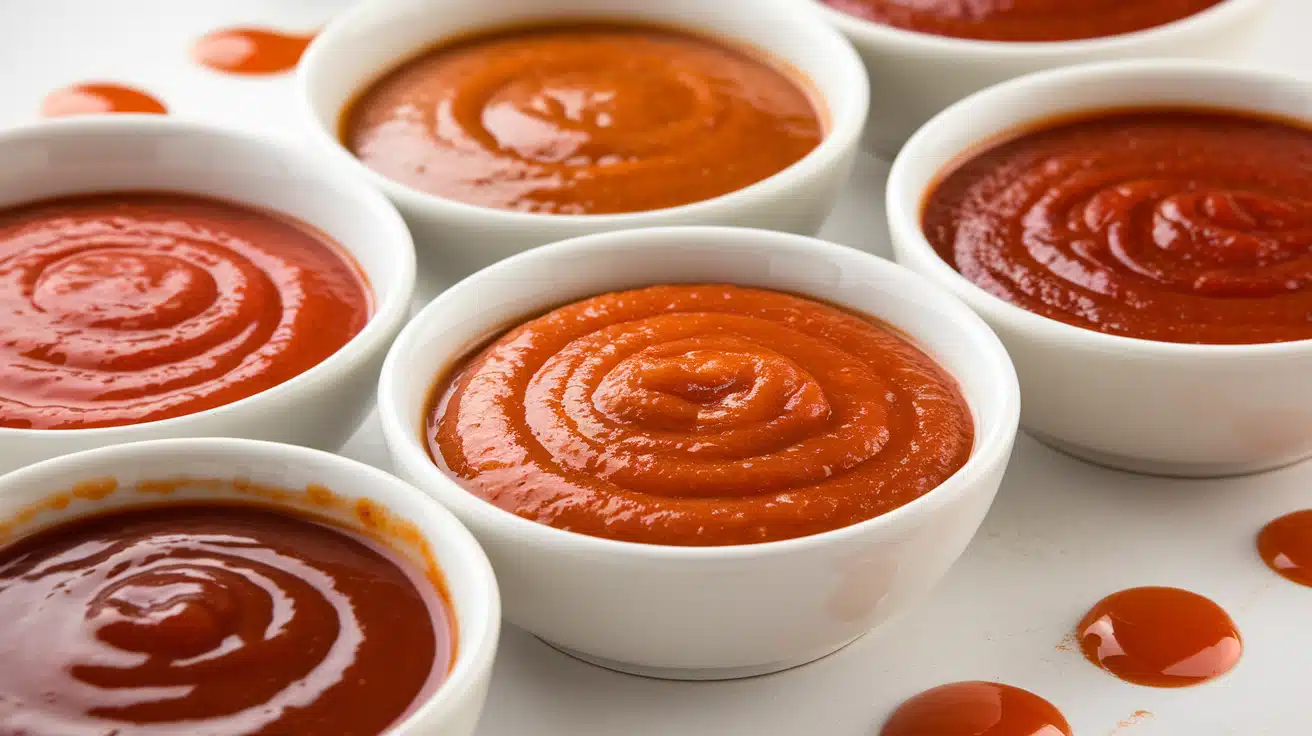
Tomato-based sauces are the most common option and can be very reasonable when chosen carefully. Homemade versions give full control over ingredients and usually contain just tomatoes, herbs, and oil.
Store-bought sauces save time but vary widely. Look for short ingredient lists, low added sugar, and moderate sodium levels.
A thinner layer works better than heavy coverage, since too much sauce can make the crust soggy. Tomato sauces pair well with vegetables and lean proteins and suit most pizza styles.
Pesto-Style Sauces
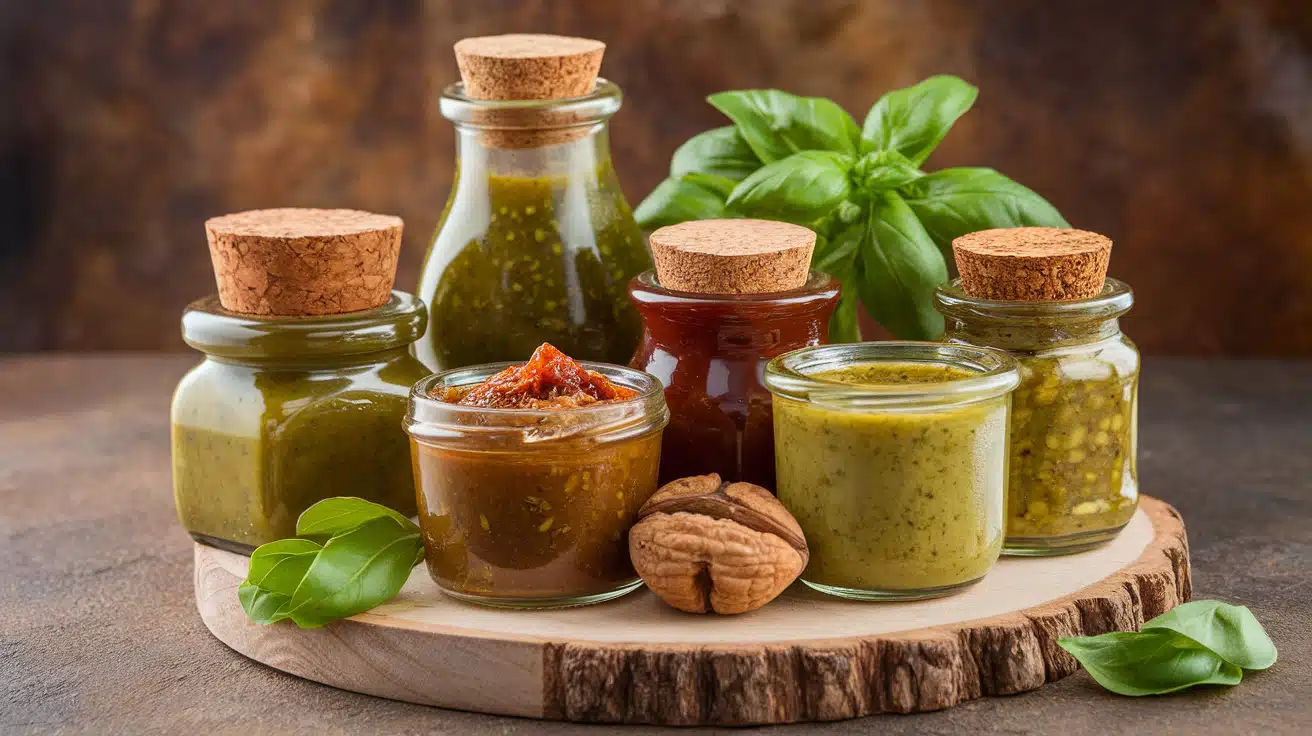
Pesto-style sauces bring bold flavor, which means you can use less cheese without losing taste. These sauces often include olive oil, nuts, and herbs, adding fats that help meals feel more filling.
Because pesto is rich, a small amount goes a long way. Spread it lightly or mix it with tomato sauce to avoid overpowering the pizza. This option works especially well with vegetable toppings, chicken, or simple flatbread-style pizzas.
Non-Traditional Sauces
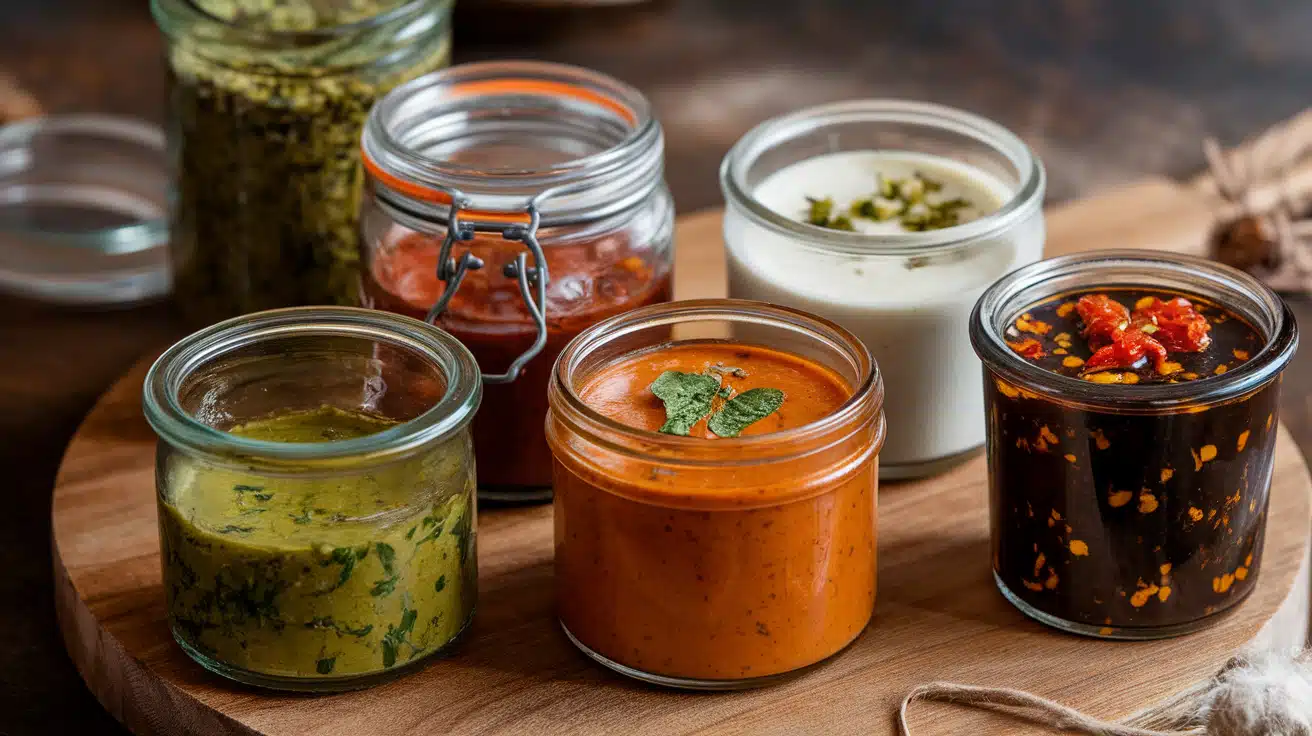
Non-traditional sauces offer variety and work well when used with care. Barbecue sauce adds sweetness, so using a thin layer helps keep sugar in check. Buffalo sauce brings heat and pairs well with chicken or roasted vegetables.
Yogurt-based sauces add protein and a creamy texture without heavy oils. These sauces work best on thin or quick-cook crusts and should be balanced with simple toppings to keep flavors from becoming too strong.
Healthy Pizza Topping Formula (Use This Every Time)
This simple topping structure helps keep pizza filling balanced and easy to repeat without overloading calories, moisture, or prep time.
- One protein: Choose chicken, turkey, beans, lentils, or plant-based protein to support fullness and steady energy.
- Two to three vegetables: Use a mix of cooked and fresh vegetables to add texture, fiber, and volume without making the crust soggy.
- One cheese or alternative: A light, even layer works best. This keeps the flavor strong without overpowering the pizza.
- One finishing element: Add greens, herbs, or a light drizzle after baking for freshness and contrast.
Common Healthy Pizza Mistakes to Avoid
Small choices can ruin texture and flavor, so avoiding these mistakes helps keep pizza crisp, filling, and enjoyable every time.
- Using too much sauce, which makes the crust soft and soggy
- Adding watery vegetables without cooking them first
- Overloading toppings so the crust cannot bake evenly
- Choosing the wrong crust for heavy toppings
- Adding cheese too thickly instead of spreading it lightly
Portion Guidance: How Much Healthy Pizza Is Reasonable?
Portion size helps pizza fit regular meals, keeping energy steady, hunger controlled, and enjoyment high without turning one meal into excess or later discomfort issues.
Typical Serving Ranges
Serving size changes by crust and toppings, so use these ranges to guide portions without strict counting at mealtime consistently.
- Thin crust. Usually, 2 to 3 slices work well, especially when paired with vegetables or a light side.
- Whole-grain crust. Often, 1 to 2 slices feel filling due to added fiber and thicker texture.
- Protein-heavy pizzas, one to 2 slices may be enough since added protein increases fullness.
How to Build a Balanced Plate
Pairing pizza with simple sides helps meals feel complete, supports fullness, and keeps portions reasonable without extra effort each time.
- Pizza + salad adds volume and crunch, helping you feel satisfied with fewer slices.
- Pizza + protein side works well when pizza toppings are lighter or mostly vegetable-based.
- Pizza as part of a meal, not the whole thing. Treat pizza as one component rather than the entire plate.
Storage and Reheating Guide
Storing pizza the right way helps keep the crust firm and the toppings from turning soft. Let the pizza cool fully before storing to avoid trapped steam.
Place slices in an airtight container, using parchment paper between layers if stacking. In the fridge, pizza keeps well for up to three days. For longer storage, wrap slices tightly and freeze for up to two months.
When reheating, skip the microwave if possible, since it softens the crust. A skillet on low heat works best for crisp bottoms and warm toppings.
Cover the pan lightly so the heat spreads evenly. An oven also works well for larger portions. Let frozen slices thaw slightly before reheating for better texture and even warming throughout.
Conclusion
Making pizza at home does not have to feel confusing or time-consuming. Throughout this post, I covered how ingredient choices, crust styles, sauces, and portions all shape how pizza fits into regular meals.
The key idea is flexibility. When you match toppings, crust, and sides to your needs, pizza becomes reliable instead of occasional. One practical takeaway is keeping portions reasonable while adding vegetables or protein for balance.
If you enjoy cooking meals that feel familiar yet thoughtful, healthy pizza recipes offer plenty of room to adjust and repeat. Try one method this week and see how it fits your routine.
You can also check out related posts for more easy meal ideas that work the same way.