

Maybe you already love the smell of jasmine tea, or you’re just curious why so many people drink it to relax and recharge. Either way, you’re in the right place.
In this guide, I’ll walk you through the most useful jasmine tea benefits in simple, honest language, so you can decide if it deserves a spot in your daily routine.
You’ll see how it may support your heart, digestion, skin, mood, and focus, plus how much to drink, the best time to sip it, and common mistakes to avoid.
By the end, you’ll know exactly how to make this gentle floral tea work for your body and your lifestyle.
What is Jasmine Tea and How is it Made?
Jasmine tea is a fragrant drink made by gently scenting tea leaves with jasmine blossoms. Instead of adding artificial flavor, real flowers are placed with the tea so their natural aroma moves into the leaves.
Most jasmine teas start with one of these bases:
- Green tea (the most common base)
- White tea
- Oolong tea
- Black tea
The scenting process is simple but slow. Tea leaves are prepared, then jasmine flowers are picked and layered with the leaves in the evening when their scent is strongest.
As the flowers open, they release their aroma into the tea. This step may be repeated several times for a deeper fragrance.
Different tea bases create slightly different cups:
| Type of Jasmine Tea | Taste Profile | Caffeine Level |
|---|---|---|
| Jasmine Green Tea | Fresh, grassy, and floral | Medium |
| Jasmine White Tea | Light, soft, and slightly sweet | Low |
| Jasmine Oolong or Black Tea | Bold, rich, and stronger aroma | Medium–High |
No matter which type is chosen, the gentle jasmine scent adds a calming, floral touch to every cup.
Jasmine Tea Benefits for Your Body
Jasmine tea isn’t just pleasant to drink. Many studies show that regular tea drinkers may enjoy health benefits related to heart support, digestion, skin health, and more.
Here’s a clear breakdown to help understand how jasmine tea supports the body:
1. Antioxidant Support for Cell Protection
Jasmine tea contains polyphenols, which are natural antioxidants. These help protect the body from damage caused by daily stress, pollution, and unhealthy foods.
Key points:
- Supports overall cell health
- Helps the body fight oxidative stress
- May help slow down the early signs of aging
2. Heart Health Support
Jasmine tea, especially when made with green tea, may support a healthy heart.
How it helps:
- May support healthy cholesterol levels
- Helps protect blood vessels
- Supports better circulation
3. Blood Sugar and Metabolism
Some studies show that green tea compounds may help the body use insulin more efficiently.
This may lead to:
- Better blood sugar balance
- Steadier energy
- Support for people aiming for long-term wellness
4. Immune Support and Digestive Comfort
Jasmine tea’s antioxidants may help the body defend itself against everyday germs.
- Supports a healthy immune system
- Encourages a balanced gut environment
- May soothe mild stomach discomfort after meals
5. Weight Support and Gentle Metabolism Boost
The caffeine and catechins in jasmine green tea may help the body burn a few extra calories naturally. It’s not a fast solution, but it can support a balanced lifestyle.
Helpful effects:
- Slight boost in metabolic rate
- More steady energy
- Encourages mindful sipping instead of sugary drinks
6. Oral Health Benefits
The natural compounds in jasmine tea may help reduce bacteria linked to plaque and bad breath.
Good to know:
- May lower plaque buildup
- Helps reduce odor-causing bacteria
- Supports fresh breath during the day
Jasmine Tea Benefits for Mind and Mood
Beyond physical health, jasmine tea is well-loved for the sense of calm it brings. The aroma plays a huge role in how the tea makes people feel.
7. Calm Focus from Caffeine + L-Theanine
Jasmine tea contains two natural compounds:
- Caffeine: boosts alertness
- L-theanine: brings calm and relaxation
Together, they help create calm focus, making it easier to concentrate without feeling on edge.
8. Stress Relief and Relaxation
The scent of jasmine is naturally soothing. Many people find that even a few breaths of jasmine aroma help the mind settle and unwind.
Benefits:
- Promotes relaxation
- Softens feelings of tension
- Creates a mini “pause” during busy moments
9. Brain Health Support Over Time
Jasmine tea may help the brain stay sharp as the years go by. Its natural antioxidants support overall well-being, which can help keep the mind feeling clear and steady.
Many people enjoy jasmine tea during study sessions, work, or quiet moments because it brings a sense of calm focus.
Over time, making it a regular part of your routine may help support mental clarity and daily concentration in a gentle, natural way.
10. Sleep
Jasmine tea can help evenings feel calm and relaxingbecause of its soft floral scent. But the caffeine in jasmine tea may keep some people awake.
A simple tip is to drink it earlier in the evening or choose a lighter base like jasmine white tea if sensitive.
Jasmine Tea Benefits for Skin and Beauty
Many people enjoy jasmine tea as part of a simple, natural beauty routine. The drink works from the inside out to support healthier-looking skin.
11. Antioxidants for Glowing Skin
Jasmine tea contains natural antioxidants that help the skin look fresh and bright. These antioxidants support the skin’s ability to handle daily stress from sun, pollution, and lifestyle.
Over time, this gentle support may help the skin appear smoother, clearer, and more even-toned.
12. Soothing for Redness and Irritation
Jasmine tea’s natural compounds may help calm mild redness and irritation from within. When the body feels more balanced, the skin often shows it on the outside.
Sipping it regularly can be a simple, comforting step in a calm, skin-friendly routine.
13. Simple Skin-Friendly Habits
A few easy jasmine tea habits can gently support skin from the inside out:
- Drink 1–3 cups a day for steady hydration
- Use cooled jasmine tea as a gentle face rinse (optional)
- Check with a dermatologist first if the skin is sensitive
These small steps can fit smoothly into a calm, simple daily routine.
Side Effects and Who Should Be Careful
Jasmine tea is safe for most people, but it still helps to know a few things before turning it into a daily habit.
The table below gives a clear overview of who should be more careful and what simple steps can reduce risk.
| Concern | What to Watch For | Simple Tip |
|---|---|---|
| Caffeine Sensitivity | Jitters, faster heartbeat, trouble sleeping | Choose jasmine white tea, use fewer leaves, or steep for a shorter time |
| Iron Absorption | Lower iron levels over time if tea is taken with meals | Drink jasmine tea between meals, not during, especially if iron is low |
| Pregnancy & Breastfeeding | Extra caffeine intake during a sensitive time | Talk with a healthcare provider before drinking jasmine tea regularly |
| Medical Conditions & Medicines | Heart issues, blood pressure, reflux, or certain medications | Check with a doctor before adding large amounts of jasmine tea each day |
Keeping these points in mind helps enjoy the calming taste of jasmine tea while still staying safe and listening to the body’s needs.
How Much Jasmine Tea Should You Drink?
Many people enjoy 1–3 cups of jasmine tea per day, which is a comfortable range for most healthy adults.
The right amount depends on caffeine tolerance, daily routine, and personal preference. It’s always smart to start with one cup and see how the body responds.
Here are some good times to drink jasmine tea:
- Morning: for a gentle energy boost
- After meals: to support comfortable digestion
- Afternoon: to help with focus and mood instead of another coffee
- Evening: only if caffeine does not disturb sleep
Choosing the timing that fits your day makes it easier to enjoy jasmine tea as a calm, helpful habit rather than something that feels too strong or overstimulating.
How to Brew Jasmine Tea for the Best Taste and Benefits
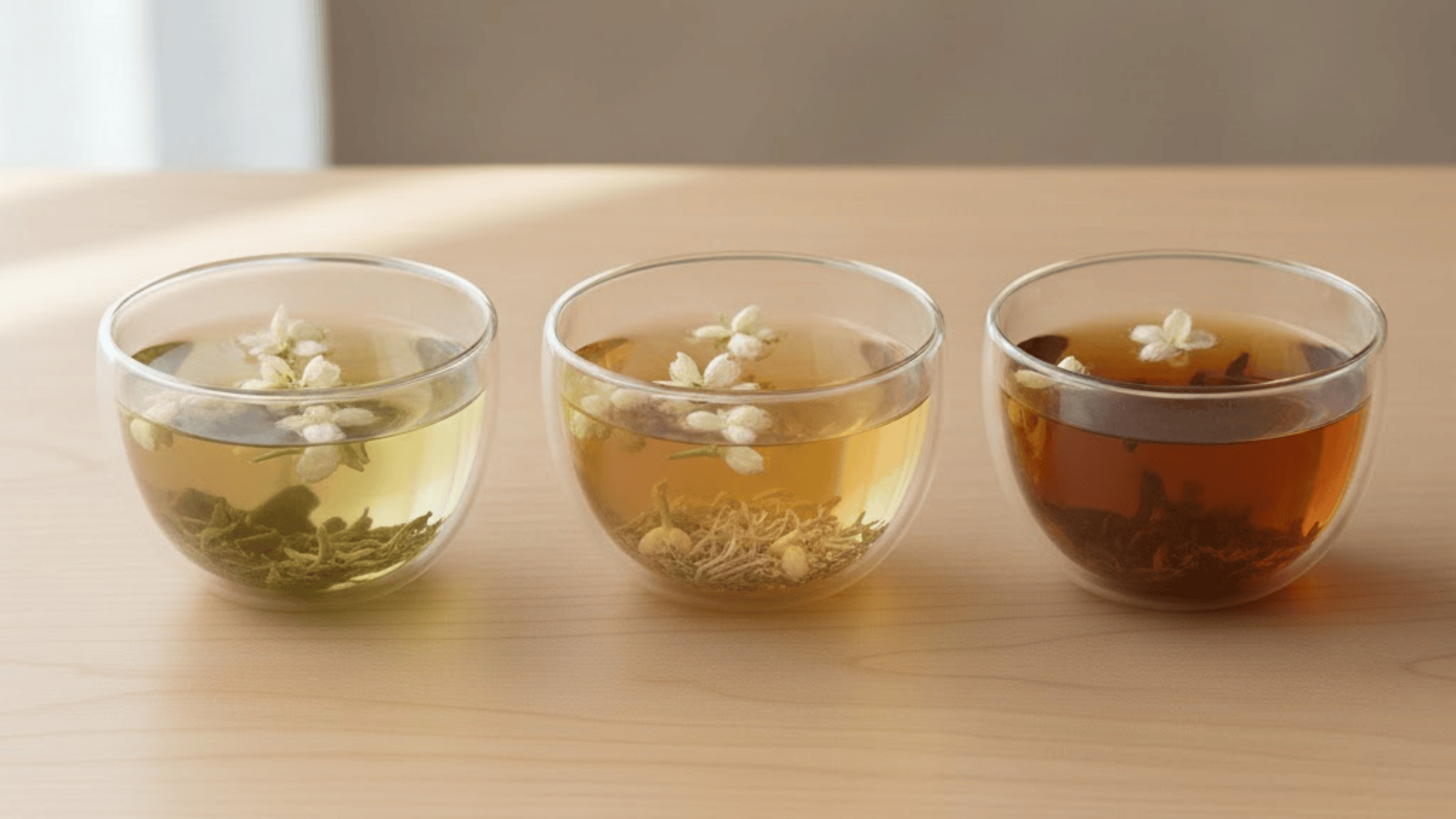
Brewing jasmine tea the right way helps protect its delicate flavor and gentle health effects.
| Tea Type | Water Temp | Steep Time | Flavor Notes |
|---|---|---|---|
| Green Jasmine Tea | 170–185°F | 2–3 mins | Fresh, floral |
| White Jasmine Tea | 175–185°F | 2–3 mins | Soft, sweet |
| Oolong/Black Jasmine Tea | 190–200°F | 3–5 mins | Deeper flavor |
Tips for Better Brewing (Hot and Cold)
A few simple steps can make jasmine tea taste smoother and support its health benefits.
For hot jasmine tea:
- Use loose-leaf tea or jasmine pearls when possible for better flavor.
- Avoid boiling water for green or white jasmine tea; slightly cooler water keeps the taste gentle.
- Keep sugar or sweeteners low so the drink stays light and healthy.
For iced or cold-brew jasmine tea:
- Add jasmine tea leaves to cool water in a jug or bottle.
- Place it in the fridge for 6–12 hours to let the flavor slowly develop.
- Strain the leaves and serve over ice for a smooth, refreshing drink.
With these simple tips, jasmine tea can become a calming, tasty part of everyday life.
Common Mistakes to Avoid When Choosing Jasmine Tea
When choosing jasmine tea, a few small errors can easily lead to a drink that tastes flat, bitter, or too perfume-like. Knowing what to avoid makes your cup much more enjoyable.
- Picking very cheap, strong-smelling tea: Often means heavy artificial flavor, not real jasmine.
- Ignoring the tea base: Green, white, oolong, and black all taste different and have different caffeine levels.
- Relying only on tea bags: Handy, but loose leaf or pearls usually give cleaner, smoother flavor.
- Using boiling water for all teas: Especially for green and white, boiling water makes the tea bitter.
- Not checking freshness: Old jasmine tea loses aroma and tastes dull.
- Wanting a very strong floral taste: True jasmine tea is gently floral, not like perfume.
By keeping these points in mind, it becomes much easier to choose jasmine tea that tastes balanced, natural, and relaxing in every cup.
Wrap Up
Now that you’ve gone through everything, you can see how jasmine tea benefits touch a lot of parts of daily life. It can gently support your heart, mind, skin, digestion, and even your stress levels, all while giving you a calm moment to breathe.
I hope this guide makes it easier for you to decide how jasmine tea fits into your routine. You now know how much to drink, when to sip it, how to brew it, and what to avoid so your tea feels good in your body and you’re not just guessing.
If this helped, I’d love for you to stick around and read more of my blog posts for simple ideas, support, and inspiration for your health and habits.