

If you’ve been searching for a delicious and simple way to make pesto without pine nuts, you’re in the right place.
Whether it’s due to allergies, budget constraints, or just a personal preference, making pesto without pine nuts doesn’t mean sacrificing flavor.
In this blog, I’ll show you how to create a vibrant, nut-free pesto using just a few ingredients. You’ll learn about different nut alternatives like sunflower seeds and hemp seeds, along with easy variations you can try.
I’ll also cover how to store your pesto for maximum freshness, ensuring it lasts as long as you need. Ready to dig into a fresh, creamy pesto recipe that’s perfect for pasta, sandwiches, or pizza.
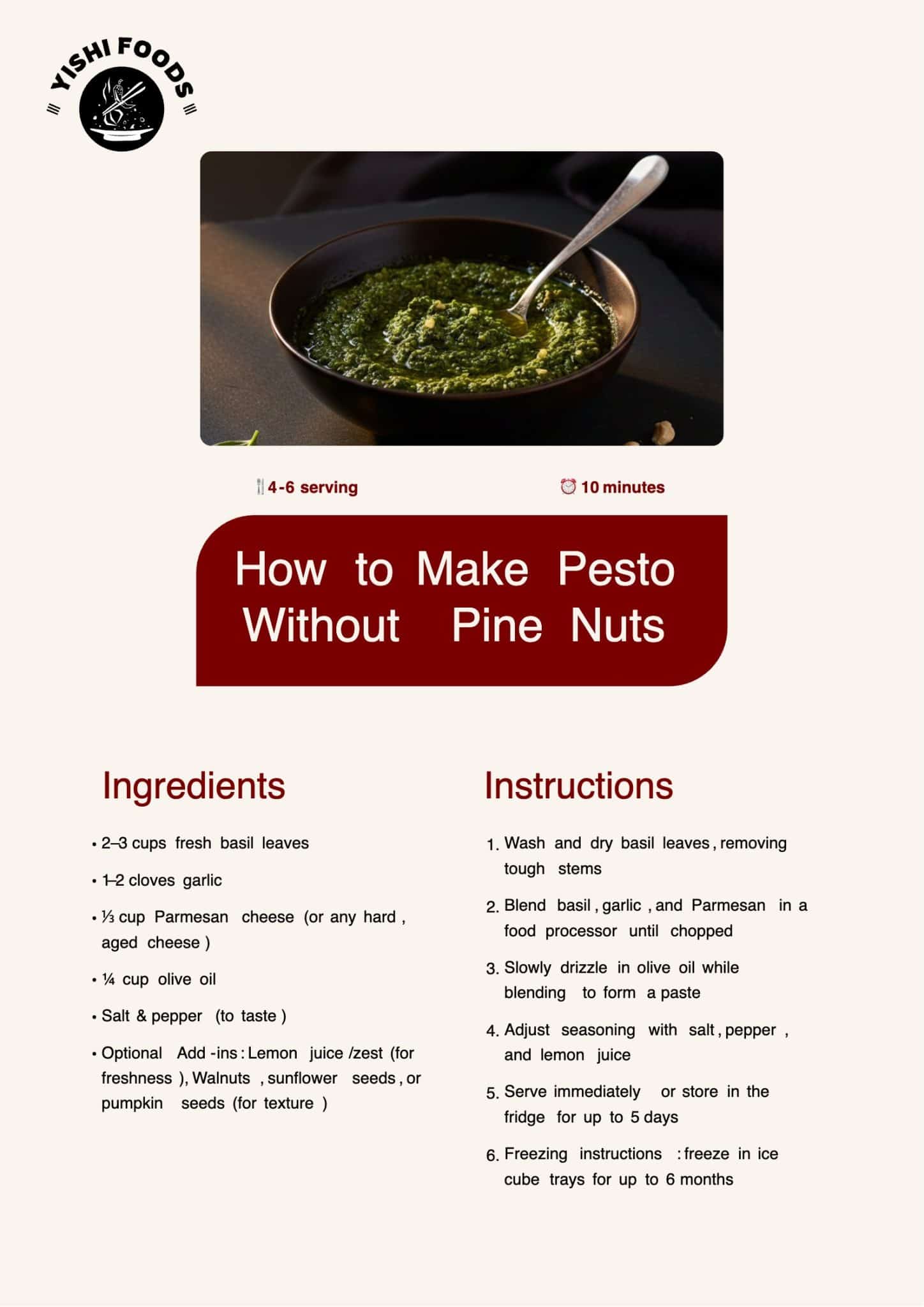
How to Make Pesto Without Pine Nuts
A simple, delicious pesto made without pine nuts, perfect for those with allergies or those looking for a budget-friendly option.
- No. of Servings: 4-6
- Cooking Time (Minutes): 10
- Calories: 180 per serving
Ingredients
| Ingredient | Amount | Description |
|---|---|---|
| Fresh Basil | 2–3 cups | The main flavor. Fresh basil is key to vibrant pesto. |
| Garlic | 1–2 cloves | Adds a pungent, savory flavor to balance the basil. |
| Parmesan Cheese | ⅓ cup | Hard, aged cheese like Parmigiano-Reggiano or Asiago. |
| Olive Oil | ¼ cup | Regular olive oil is fine, but extra virgin offers more flavor. |
| Salt & Pepper | To taste | Seasoning to enhance the flavors. |
Optional Add-ins:
- Lemon Juice/Zest: Adds freshness and helps preserve the pesto’s bright green color.
- Nuts/Seeds (optional): Use walnuts, sunflower seeds, or pumpkin seeds for a nutty texture (omit or replace as needed).
Step 1: Prep the Basil
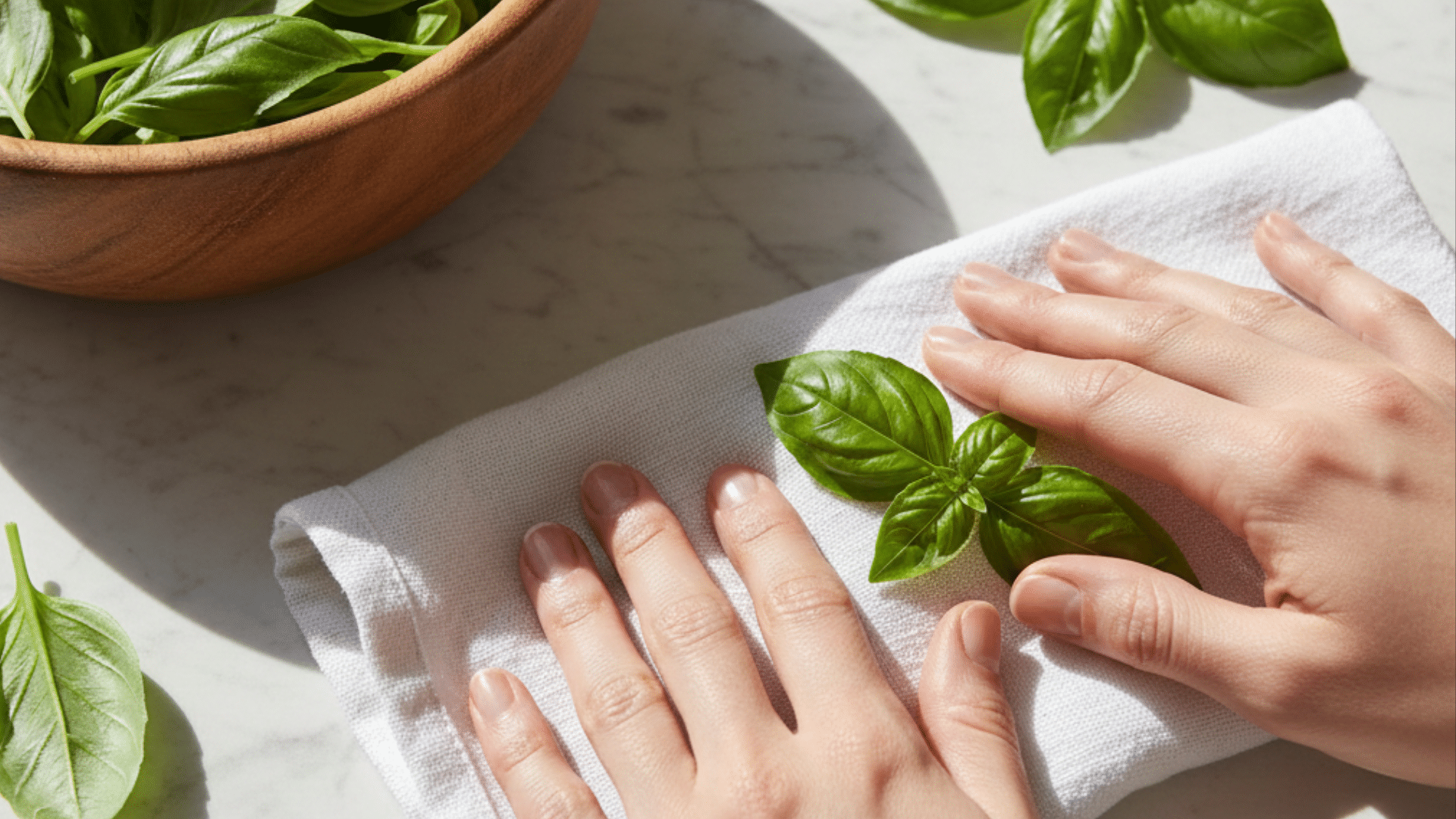
Start by thoroughly washing and drying fresh basil leaves. Remove any tough stems, as they won’t blend well and could add bitterness to your pesto. Only use the tender, bright green leaves for the best flavor.
It’s important to wash and dry them well to avoid any moisture affecting the texture of the pesto. You can either tear the leaves by hand or chop them roughly before adding to the food processor, ensuring a smoother consistency later when everything is blended.
Step 2: Blend Dry Ingredients
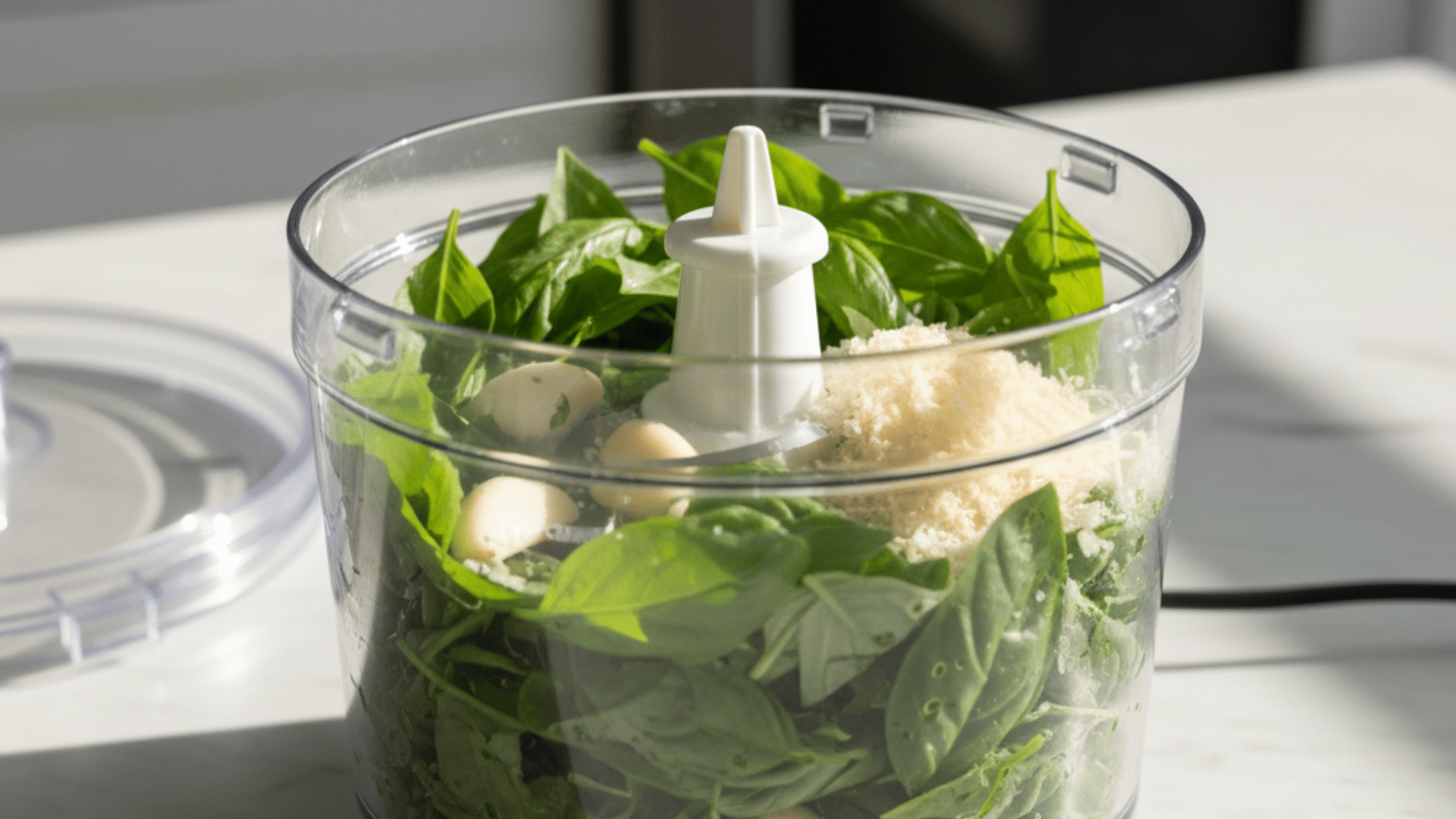
Place the fresh basil, garlic, and Parmesan cheese into the bowl of a food processor. Pulse the mixture 5–7 times to break it down into small pieces. This is an important step to ensure that the basil and garlic are evenly chopped before adding the olive oil.
Pulsing helps incorporate all ingredients evenly, making the final pesto smoother. It also helps release the oils in the basil, enhancing the flavor. The finer you chop these, the better the texture of your pesto will be.
Step 3: Add Oil & Season
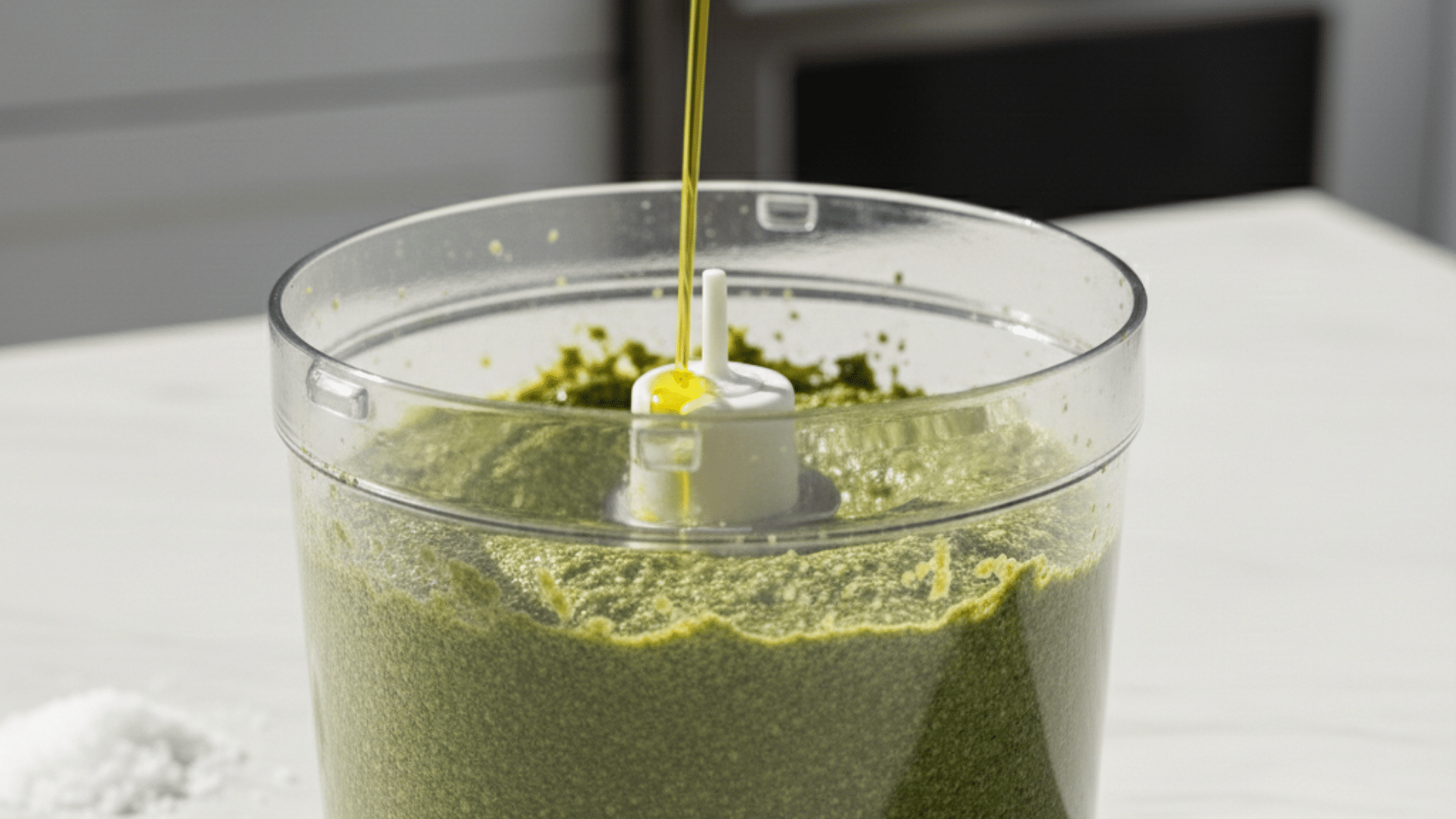
Once the dry ingredients are chopped, slowly drizzle in the olive oil while the food processor runs. This helps the oil incorporate smoothly into the mixture, turning it into a thick, creamy paste.
Continue blending for another 10–15 seconds until the mixture reaches your desired consistency. If the pesto is too thick, you can add more olive oil to loosen it. This step gives your pesto the right texture, making it perfect for spreading, mixing, or drizzling over your favorite dishes.
Step 4: Adjust Seasoning
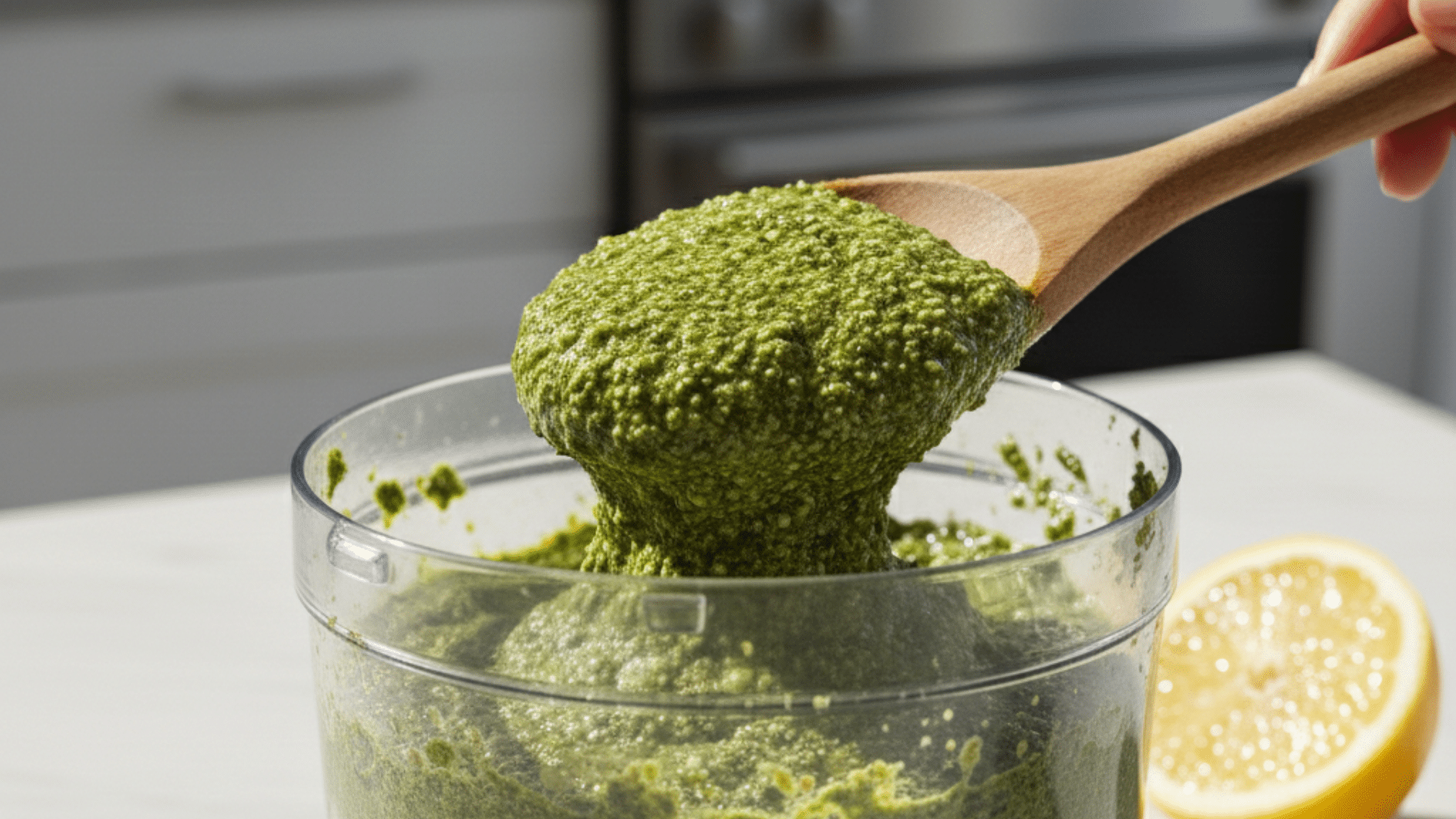
After blending, taste your pesto and adjust the seasoning as needed. Add more salt or pepper to balance the flavor, or squeeze in a little lemon juice for a burst of freshness. If you like a more robust flavor, consider adding extra garlic or a pinch of cheese.
Don’t forget to stir the pesto well to evenly distribute any adjustments. The beauty of homemade pesto is that you can easily tailor it to suit your tastes, so feel free to make it as garlicky or tangy as you prefer.
Step 5: Serve or Store
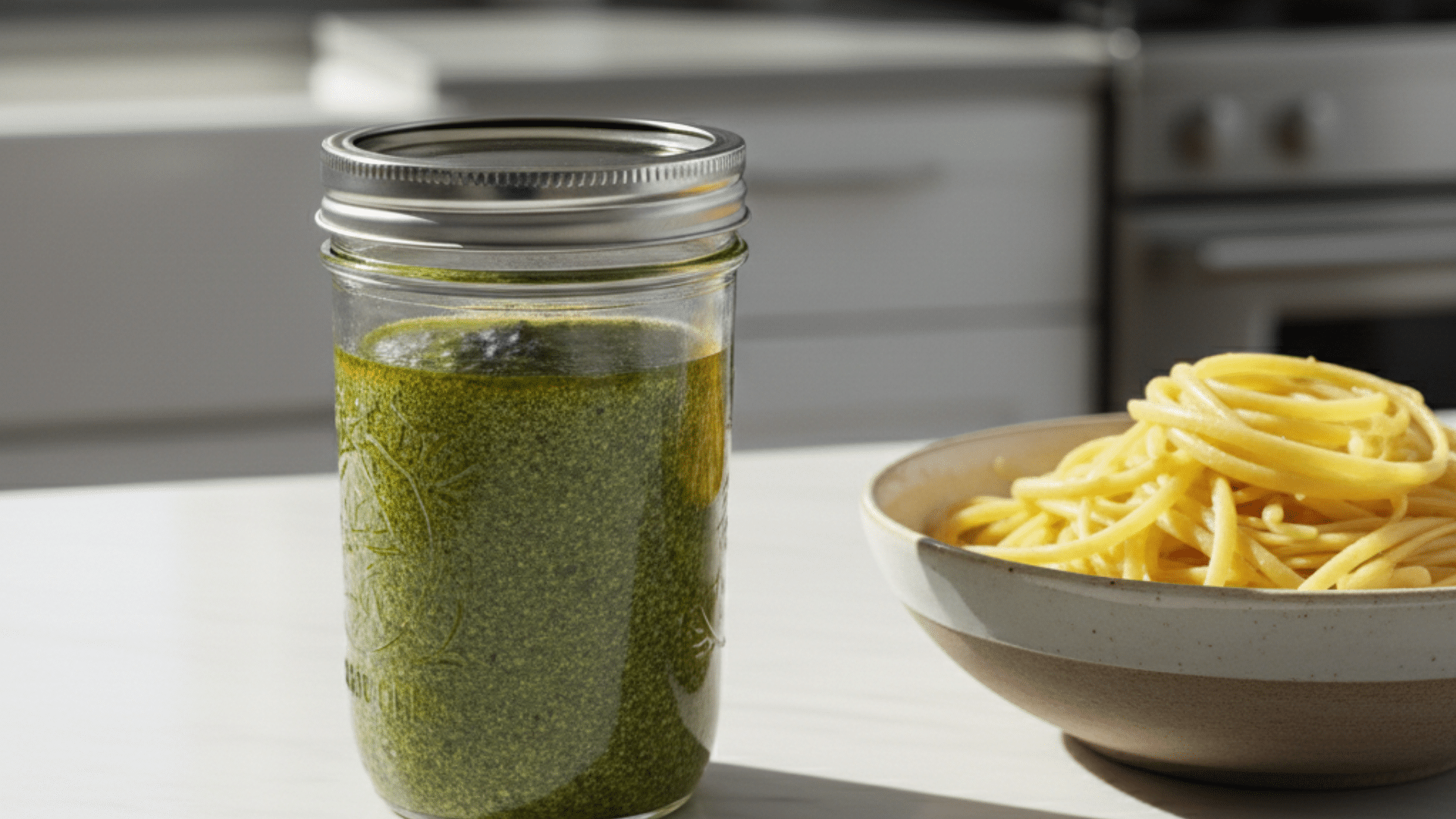
Once your pesto is perfectly blended and seasoned, it’s ready to serve immediately on pasta, pizza, or sandwiches. If you’re not using it right away, store it in an airtight container in the fridge for up to 5 days.
To preserve its bright color and prevent browning, drizzle a thin layer of olive oil over the top before sealing the container. If you want to keep it for longer, freeze the pesto in ice cube trays, then transfer the frozen cubes to a freezer bag for up to 6 months.
Nut-Free Alternatives (For Those Avoiding Nuts)
If you’re avoiding nuts for allergy reasons, budget constraints, or preference, there are several fantastic alternatives to pine nuts. You can still enjoy the same creamy, nutty flavor without the nuts. Here are some great options:
- Sunflower Seeds: A fantastic alternative that provides a mild, nutty flavor and a great texture. Opt for unsalted seeds to keep the pesto balanced and avoid any extra sodium. These seeds give a similar richness to pine nuts.
- Pumpkin Seeds: Another seed-based option that offers a mild and earthy flavor. Pumpkin seeds are a great substitute in nut-free pesto. They’re rich in nutrients and maintain the creamy texture that makes pesto so beloved.
- Hemp Seeds: If you’re looking for a slightly earthy flavor, hemp seeds are a good choice. They add a creamy texture and healthy omega-3 fatty acids, making them a perfect replacement for pine nuts in pesto.
- No Nuts at All: If you prefer a lighter version, you can skip the nuts or seeds entirely. To maintain texture, just add more cheese to thicken the pesto and achieve a rich, smooth consistency without the extra nutty flavor.
Substitute Ratios: Use the same amount of seeds or cheese as the recipe calls for nuts (e.g., ¼ cup of seeds instead of ¼ cup pine nuts). This keeps the recipe balanced and easy to follow while still giving you the right consistency and flavor.
Allergy-Friendly Pesto Options
For those with dietary restrictions, pesto can be easily customized. This pesto recipe is naturally nut-free, but it can also be dairy-free and gluten-free with a few simple swaps:
Dairy-Free/Paleo: Use nutritional yeast instead of Parmesan cheese, or opt for vegan Parmesan.
Soy-Free, Nut-Free: Stick to seed-based alternatives like sunflower or pumpkin seeds. These provide the same creamy texture without any nut or soy ingredients.
Gluten-Free: This recipe is naturally gluten-free, but always check labels when pairing with pasta or other dishes.
Flavor Variations You Can Try
Pesto is versatile, and you can easily mix up the flavors by swapping basil for other greens or adding extra ingredients. Here are a few tasty variations to consider:
| Flavor | Variation | Flavor Profile |
|---|---|---|
| Spinach Pesto | Replace half the basil with spinach for a milder, leafy green pesto. | Lighter, with a subtle flavor, perfect for those who prefer less bite. |
| Arugula Pesto | Use arugula instead of basil for a peppery, bold flavor. | Adds a peppery kick and is great for a more unique, sharp pesto. |
| Sun-Dried Tomato Pesto | Add 1 cup of sun-dried tomatoes to the mixture for a tangy, rich flavor. | Rich and tangy with a deeper, slightly sweet note from the sun-dried tomatoes. |
| Kale Pesto | Swap the basil for kale for a heartier, more substantial pesto, especially during the winter months. | Earthy and robust, this variation adds texture and depth to your pesto. |
| Cilantro Pesto | Replace basil with cilantro for a fresh, zesty twist on the classic. | Bright and herbaceous with a citrusy edge, perfect for a fresh flavor. |
| Roasted Garlic Pesto | Roast the garlic beforehand for a smoother, milder garlic flavor. | Sweet and creamy with less bite than fresh garlic, perfect for a mellow flavor. |
These pesto variations offer new and exciting ways to enjoy the dish. Whether you’re looking for a milder, earthy flavor or a bolder, spicier version, there’s a pesto for every taste preference.
Feel free to experiment with these swaps or create your own combinations based on what ingredients you have available!
Health Benefits and Nutritional Information
Pesto without pine nuts is not only delicious but also packed with nutrients. Here are the health benefits of the key ingredients:
1. Basil
Basil is a powerhouse of antioxidants, which support immune health and help reduce inflammation in the body. Rich in vitamins A, K, and C, basil helps maintain healthy skin and supports the body’s natural healing process.
It also has antibacterial and anti-inflammatory properties, making it a great addition to any meal, especially when fresh. By incorporating basil into your pesto, you get both flavor and health benefits.
2. Garlic
Garlic is well-known for its heart-health benefits. It contains compounds like allicin that can help lower blood pressure and cholesterol levels. It is also a natural immune booster, aiding in the prevention of illnesses.
Garlic has been linked to improved circulation and better cardiovascular health. Using fresh garlic in pesto adds a bold, savory flavor while contributing to better overall health, especially for heart function.
3. Olive Oil
Olive oil, particularly extra virgin olive oil, is rich in monounsaturated fats, which are known to support heart health. These healthy fats can help reduce bad cholesterol (LDL) levels and increase good cholesterol (HDL).
Additionally, olive oil is packed with anti-inflammatory compounds that can protect against chronic diseases. Adding this oil to pesto helps improve the texture while providing your body with heart-healthy nutrients.
4. Parmesan Cheese
Parmesan cheese is a great source of protein and calcium, both essential for building strong bones and maintaining muscle function. It also contains healthy fats and vitamin A, which support eye health.
While adding rich, salty flavor to pesto, Parmesan can help improve bone density and contribute to overall wellness. Opting for aged Parmesan enhances the depth of flavor in pesto while adding essential nutrients to your meal.
5. Nut-Free
By using seeds like sunflower or pumpkin seeds, or by skipping nuts entirely, you make pesto more accessible for those with allergies. This also makes the recipe lighter without compromising the texture or flavor.
Nut-free pesto still provides plenty of healthy fats, fiber, and protein through the seeds, ensuring it remains nutritious and satisfying for everyone, especially those with nut sensitivities or preferences.
Nutritional Breakdown (Per Serving)
A typical serving of pesto (about 2 tablespoons) contains the following approximate values:
- Calories: 180
- Fat: 18g (including 2g saturated fat)
- Carbohydrates: 3g
- Fiber: 1g
- Protein: 3g
- Calcium: 60mg
- Iron: 1mg
This pesto offers a good balance of healthy fats, vitamins, and minerals, making it a nutritious addition to your meals without overwhelming your calorie count.
How to Store Pesto for Maximum Freshness
Storing pesto correctly ensures it stays fresh and maintains its vibrant green color. For fridge storage, place your pesto in an airtight container and keep it for up to 5 days.
To prevent browning, drizzle a thin layer of olive oil over the surface before sealing it. For freezing, pour pesto into ice cube trays and freeze until solid.
Once frozen, transfer the cubes to a freezer bag to store for up to 6 months, preserving both flavor and texture. Avoid browning by adding a bit of lemon juice or extra olive oil, which helps preserve the pesto’s freshness.
Final Thoughts
By now, you’ve learned how to make a flavorful pesto without pine nuts, using easy substitutes like sunflower and pumpkin seeds.
I also shared creative variations like spinach or sun-dried tomato pesto, so you can enjoy different flavors. You now know how to store pesto properly to keep it fresh for days or even months.
If you’re making it for a special dinner or meal prepping for the week, this simple recipe will be your go-to.
Don’t forget to experiment with your own variations and share your experiences! Let me know how your pesto turns out or if you have any other tips. I’m always excited to hear from you!