
You run your dishwasher almost every day, but it rarely gets cleaned itself. I used to think mine stayed fresh because it handled dirty dishes daily. Then I started noticing a slight odor and cloudy glasses that did not look fully clean.
That made me realize buildup can form inside without you seeing it. Here, you’ll learn how to clean your dishwasher step by step, including the filter, spray arms, and door seals.
I’ll also explain how often to clean it, how to clean dishwasher parts safely, and what to do if smells still linger. Keep reading, and you may look at your dishwasher a little differently tonight.
Why Your Dishwasher Needs Cleaning And How Often
To clean your dishwasher, remove and soak the filter in warm vinegar water, wipe the door seals, clear spray arms, then run a hot cycle with white vinegar or a cleaning pod. Repeat monthly to prevent odors, buildup, and cloudy dishes.
Most people don’t think about cleaning their dishwasher until something goes wrong. Maybe the dishes come out cloudy. Maybe there’s a smell you can’t quite place. And once you look inside, it’s easy to see why.
Grease and food residue collect in the filter and drain. Soap scum sticks to the walls and spray arms. Hard water minerals leave chalky deposits on the interior. Mold and bacteria grow along rubber seals where moisture sits.
When the buildup gets bad, your dishwasher works harder, smells worse, and leaves residue on your dishes. Staying on top of it doesn’t take much. Do a quick filter and door check every week.
Run a full clean monthly. Every three months, go deeper with the spray arms, drain, and limescale.
How to Clean Your Dishwasher
Cleaning your dishwasher is simpler than it sounds. With a few basic supplies and the right steps, you can have it smelling fresh and running like new in no time.
What You’ll Need Before You Start
Most of these are already sitting in your kitchen. Having it all ready saves you from having to stop mid-clean to hunt things down.
| Item | Purpose |
|---|---|
| White vinegar | Soaking filter and running a clean cycle |
| Dawn dish soap | Mixed with vinegar for a DIY cleaning spray |
| Baking soda | Odor removal add-on step |
| Microfiber cloth | Wiping door edges and seals without scratching |
| Soft brush or old toothbrush | Scrubbing tight spots around the filter and spray arms |
| Flathead screwdriver | Opening the vent port if your dishwasher has one |
| Cascade cleaning pods (optional) | Deeper machine cleaning during the wash cycle |
| Bar Keepers (optional) | Cleaning stainless steel exterior |
How to Clean Your Dishwasher Easily?
Follow these steps to get your dishwasher looking and smelling like new. Most of this takes under 30 minutes, plus a full wash cycle.
Step 1: Remove the Filter and Bottom Tray
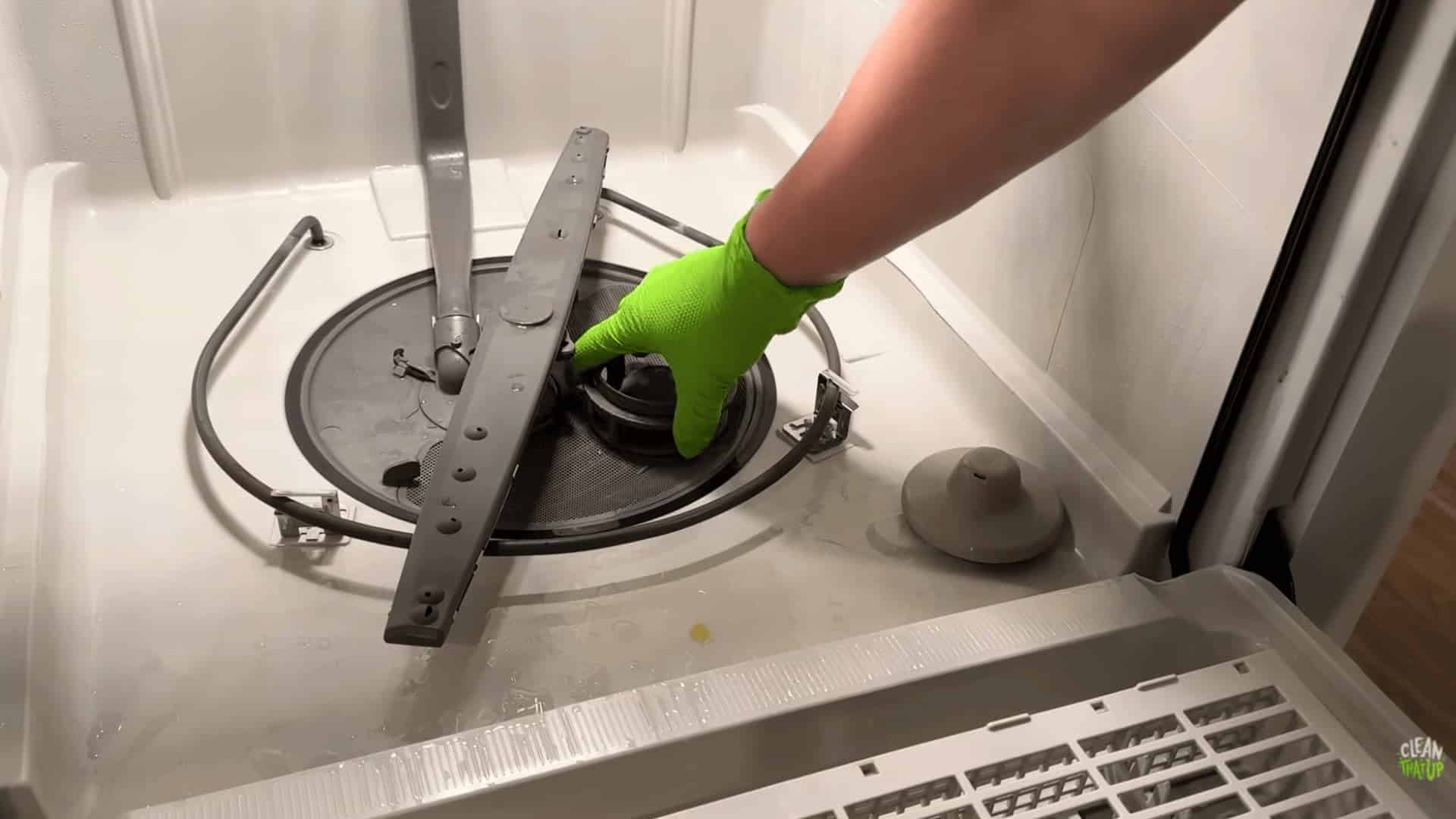
Pull out the bottom rack first. You’ll see the filter sitting right at the base, twist it counterclockwise, and lift it out. Also, grab the bottom basket tray. Don’t skip this step.
The filter is usually the dirtiest part of the whole machine, and cleaning it makes the biggest difference.
Step 2: Soak the Filter in Vinegar and Dish Soap
Fill your sink with warm water. Add about one cup of white vinegar and a squirt of Dawn dish soap. Drop the filter and the bottom basket tray into a sink and let them soak.
This breaks down grease and grime without scrubbing too hard. While they soak, move on to cleaning the interior.
Step 3: Wipe Down the Door Edges and Seals
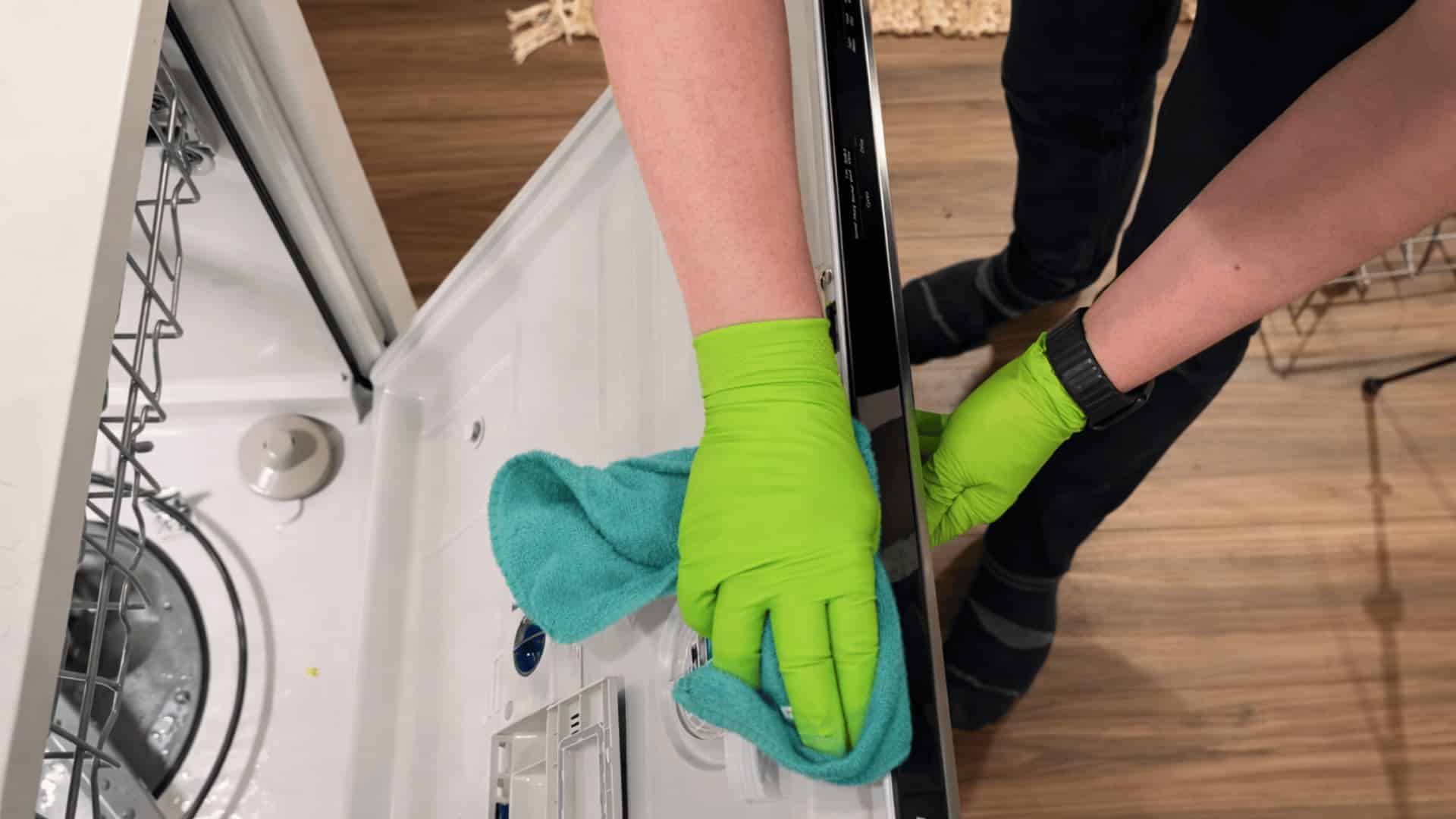
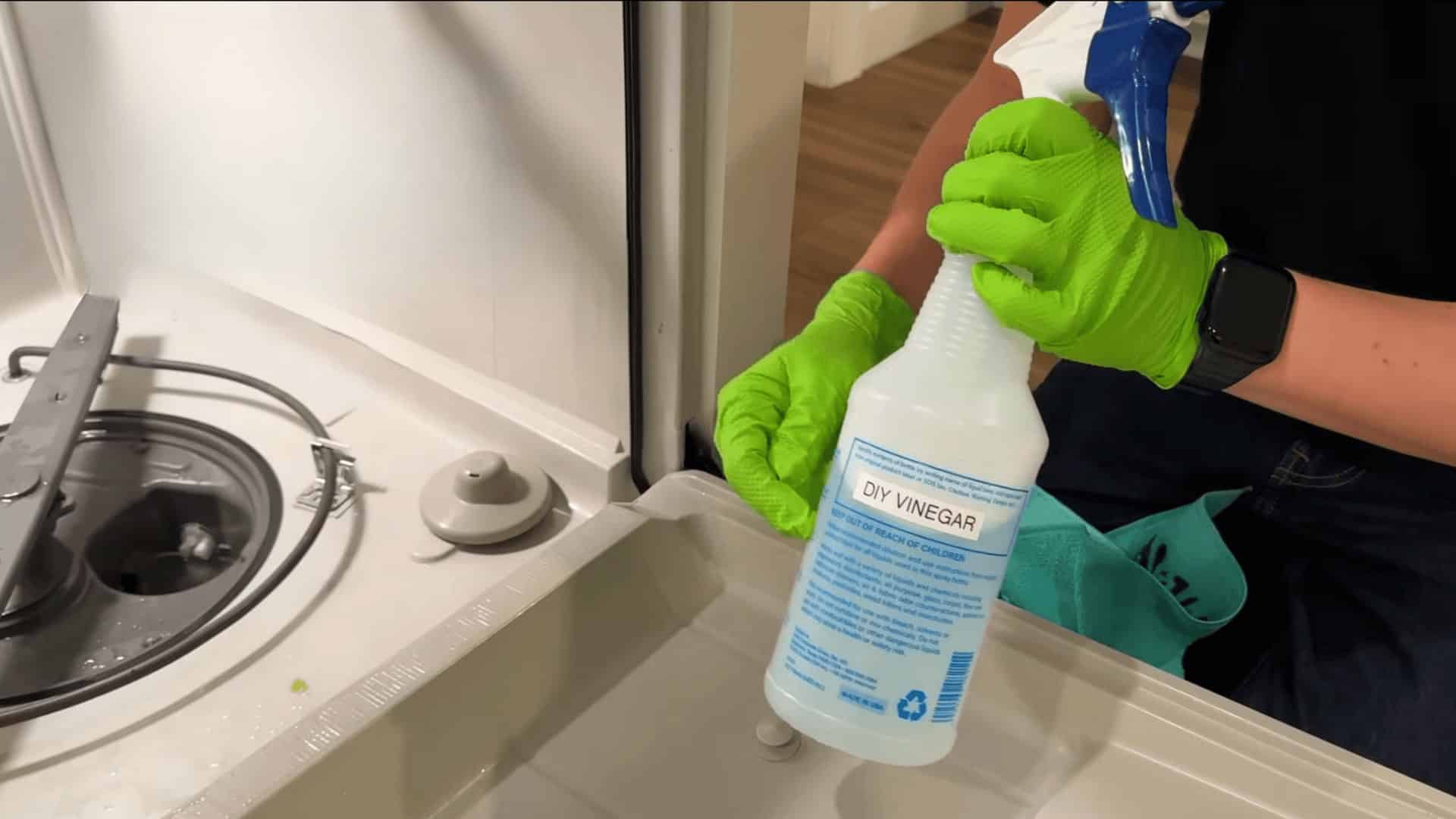
Mix 1 cup of white vinegar, 1 cup of water, and 1 teaspoon of Dawn in a spray bottle. Spray along the door edges and rubber seals; this is where gunk hides. Wipe it down with a microfiber cloth.
Pay extra attention to the inner lip of the door, which never gets hit by the wash cycle.
Step 4: Check and Clean the Vent Port
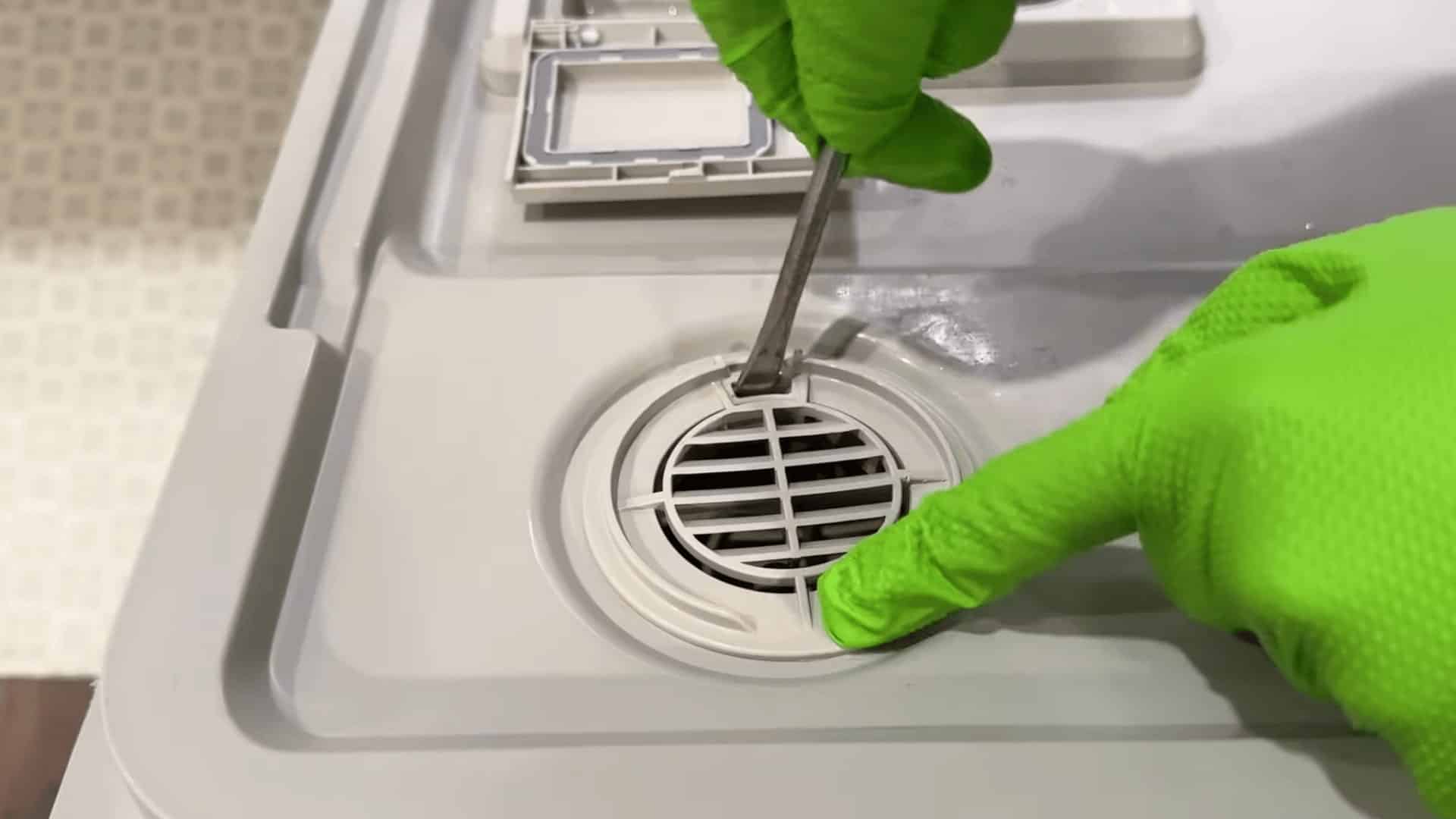
Not every dishwasher has one, but if yours does, look for a small vent on the inside of the door. Use a flathead screwdriver to open it and check for buildup.
Pop it in the sink to soak with the filter. It’s a small detail, but clearing it out keeps airflow and drying performance on point.
Step 5: Rinse and Reassemble
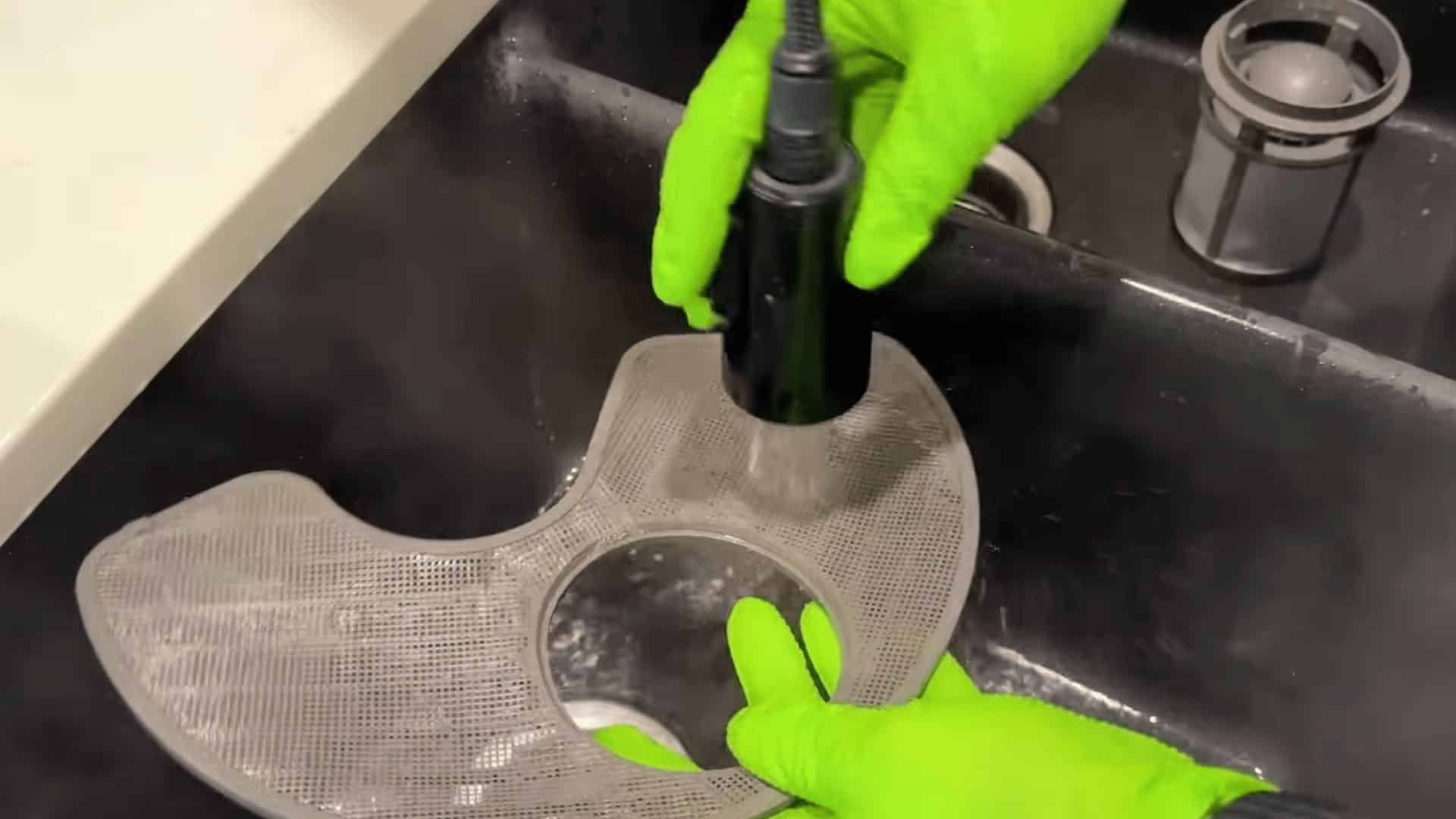
Once the filter and tray have soaked, rinse them thoroughly under running water. You’ll notice the water in the sink already looks pretty grimy; that’s all coming out of your machine.
Put the filter back in, turn it clockwise to lock it, replace the tray, and slide the bottom rack back in.
Step 6: Run a Hot Clean Cycle
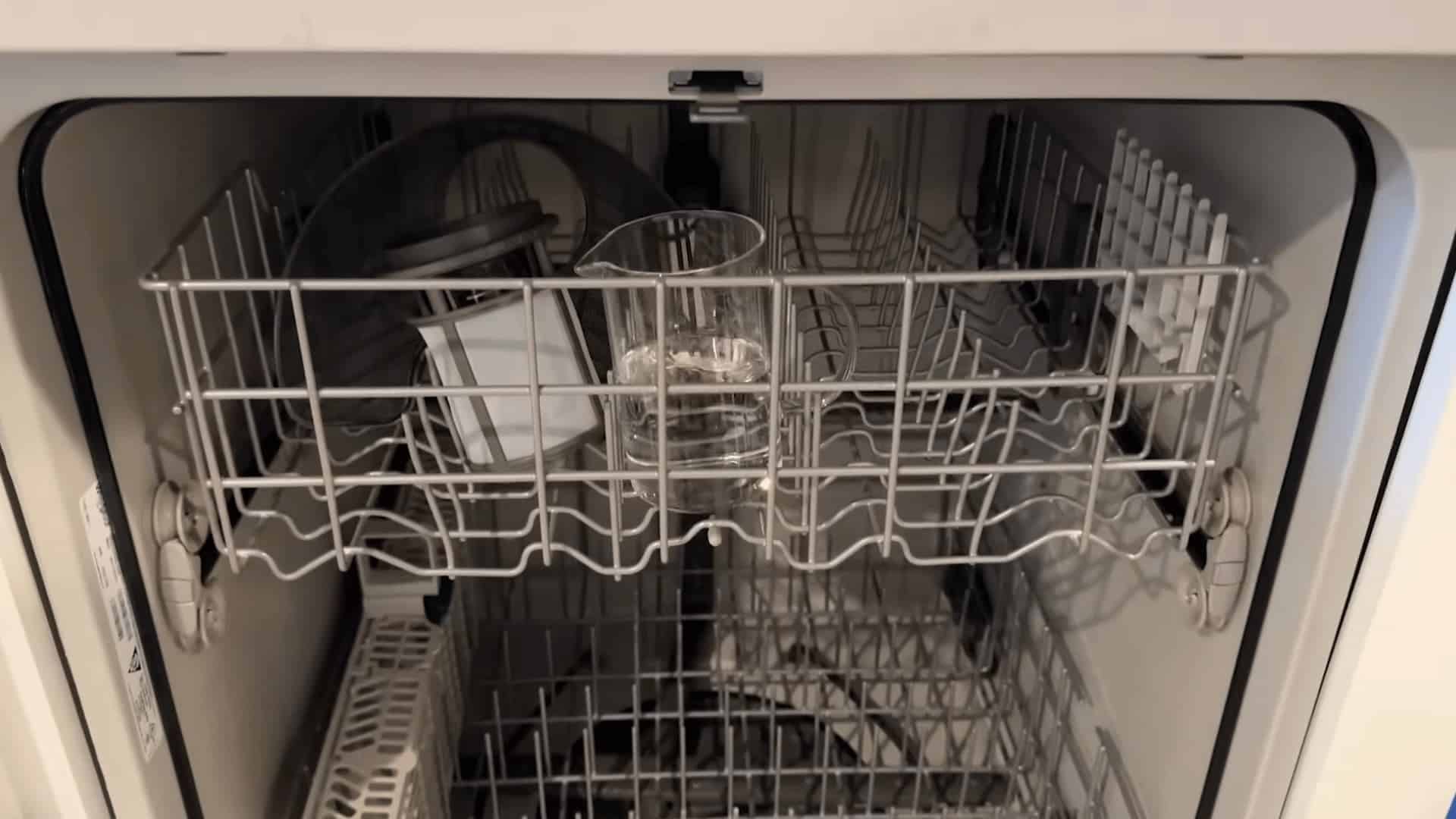
Place a Cascade cleaning pod in the detergent drawer, or set a cup of white vinegar on the top rack if you prefer a natural option. Before starting, run the hot water in your kitchen sink for 30 seconds.
This fills the line with hot water so your dishwasher starts the cycle at full temperature. Select the normal wash with the high-temp option, then let it run.
Step 7: Detail the Interior After the Cycle
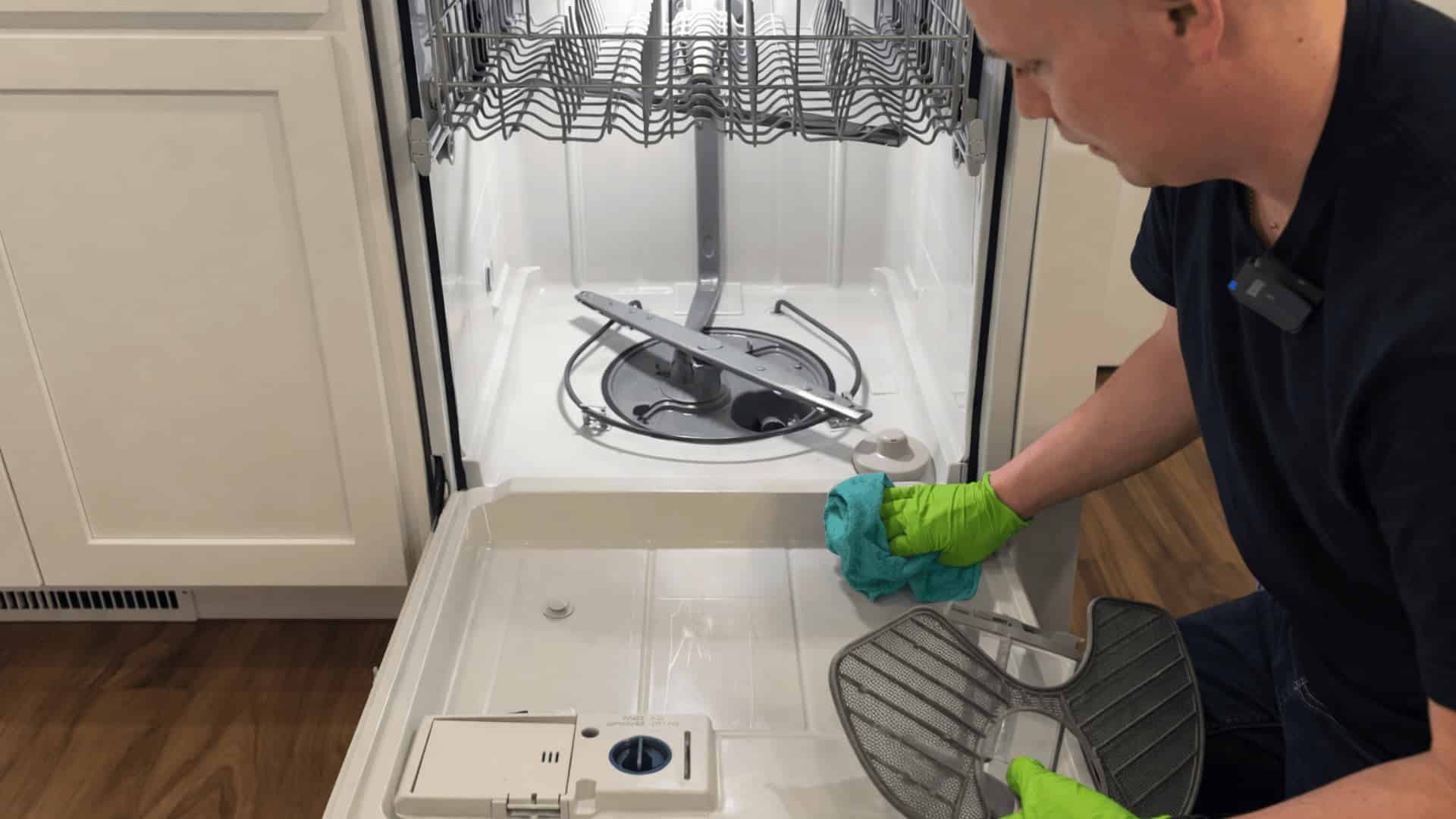
Once the cycle finishes, pull out the bottom rack and do a quick once-over. Check the heating coils for any rust spots or residue and wipe gently with your vinegar mix.
This final detail step keeps things clean between monthly washes and helps you spot any issues early.
Common Mistakes to Avoid
A few small habits can do more damage than you’d expect. Here’s what to skip entirely.
| Mistake | Why It’s a Problem |
|---|---|
| Using bleach on the stainless steel interior | Causes discoloration and corrosion |
| Mixing bleach and vinegar | Creates harmful fumes, damages the machine |
| Using abrasive pads | Scratches interior walls and finishes |
| Ignoring the filter | Leads to odors, poor wash performance |
| Overusing detergent | Leaves residue on dishes and the interior |
Avoiding these keeps your dishwasher running longer and your dishes coming out cleaner every time.
Quick Tips to Keep It Cleaner Longer
One good clean gets you started. These simple habits make sure you never have to start from scratch again.
- Weekly: Give the door edges and filter a quick visual check. Wipe down any visible buildup before it sets.
- Monthly: Run the full routine, filter soak, vinegar cycle, and door wipe-down.
- Quarterly: Soak the spray arms, check the drain area, and tackle any mineral buildup.
- Never mix bleach and vinegar creates harmful fumes and can damage your machine.
- Avoid abrasive scrubbers: use on interior walls or stainless steel surfaces.
- Use Bar Keepers Friend: use on stainless steel exteriors, spray, wipe with the grain, and buff dry for a streak-free finish.
- Skip bleach entirely if you have a stainless steel interior; it causes discoloration and corrosion.
Small habits go a long way. Stick to this routine, and your dishwasher will stay cleaner, smell fresher, and last longer.
Key Takeaway
A clean dishwasher makes a bigger difference than most people realize. Throughout this guide, we covered why buildup happens, how often to clean, and every step you need to get it done right.
From soaking the filter to running a hot cycle, each step plays a role in keeping your machine working at its best. How to clean your dishwasher doesn’t have to feel like a big job.
With the right routine and a few basic supplies, it takes less than an hour and pays off every single time you run a load. Your dishes come out cleaner, your kitchen smells fresher, and your machine lasts longer.
Tried this method? Drop a comment below and let us know how it went. We’d love to hear from you.
Frequently Asked Questions
Can I Use Vinegar to Clean My Dishwasher?
Yes, white vinegar is one of the safest and most effective ways to clean a dishwasher naturally. Place a cup of white vinegar on the top rack and run a hot wash cycle with the machine empty. The vinegar helps dissolve grease, soap scum, and light mineral buildup while neutralizing odors. Avoid mixing vinegar with bleach, especially in stainless steel interiors.
How Do I Get Rid of Dishwasher Smell?
Dishwasher smells usually come from trapped food particles in the filter, drain, or door seals. Start by removing and cleaning the filter thoroughly. Wipe down the rubber seals and check the drain area for debris. After cleaning those parts, run a hot cycle with vinegar or a dishwasher cleaning pod. If the smell persists, inspect the spray arms and vent area for hidden buildup.
Can I Use Baking Soda and Vinegar Together in the Dishwasher?
You should not pour baking soda and vinegar into the dishwasher at the same time. When combined, they react immediately and neutralize each other, reducing cleaning power. Instead, run a vinegar cycle first. After it finishes, sprinkle a small amount of baking soda along the bottom of the dishwasher and run a short hot cycle to help freshen and deodorize the interior.
How Often Should I Clean My Dishwasher?
For most households, a light cleaning once a month is enough to keep buildup under control. However, you should check and rinse the filter weekly, especially if you run your dishwasher frequently. A deeper clean, including spray arms and limescale removal, is recommended every three months to maintain performance and prevent odors.