
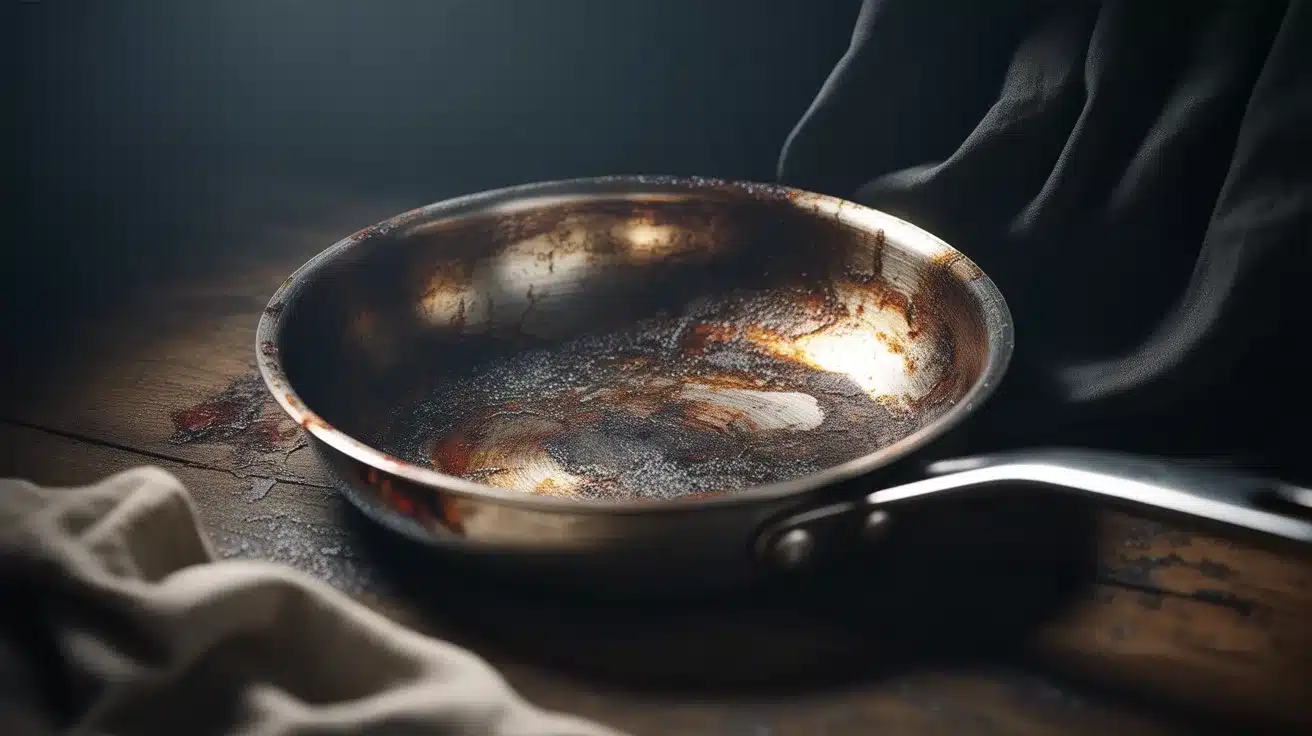
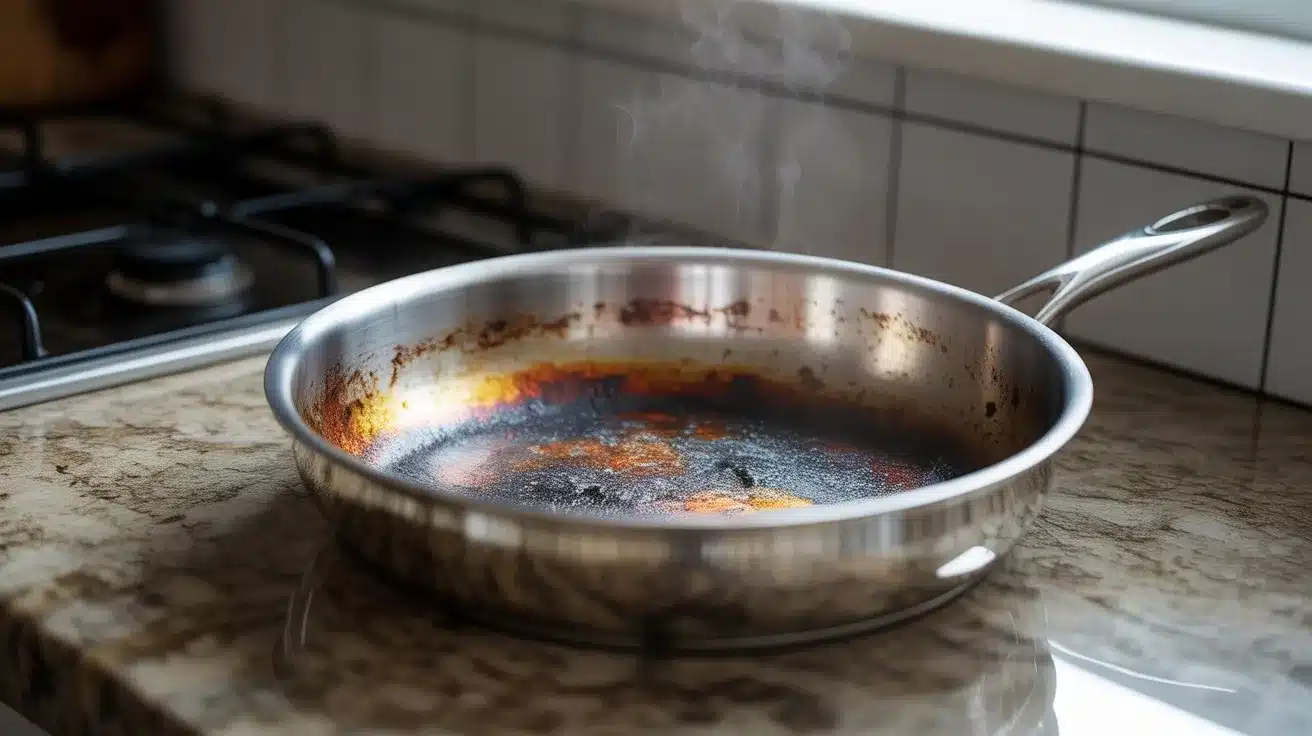
It happens to everyone. You walk away from the stove for just a minute, and by the time you return, the pan has a thick layer of blackened residue baked onto the surface.
Burnt pans are one of the most common kitchen frustrations, and the first instinct is usually to toss the whole thing. My advice: don’t. Most pans, even the ones that look completely ruined, can be brought back with the right method.
Today, I’ll teach you how to clean a burnt pan from the inside out, including stubborn burnt pan bottoms that get overlooked. The methods here are practical, straightforward, and genuinely work on real messes.
In short, do this to clean your burnt pan-
To clean a burnt pan, fill it with water and baking soda, bring it to a simmer for 10–15 minutes, then gently scrape and wash. For burnt pan bottoms, apply baking soda paste directly to the outside surface and scrub after 30 minutes.
What Happens When a Pan Burns?
Before jumping into solutions, it helps to understand what you are actually dealing with. That dark, sticky layer stuck to your pan is carbonized food and oil, residue that has been bonded to the metal under high heat.
Stainless steel, nonstick, and cast iron each react differently to burns. Stainless steel handles aggressive cleaning better, while nonstick surfaces need gentler treatment to avoid damaging the coating.
Burnt pan bottoms are a separate challenge because they come into direct contact with the flame, which makes stains darker and harder to shift. In most cases, the damage is cosmetic and fully fixable.
The only time a pan may not be worth saving is when the coating is visibly flaking or peeling; at that point, replacement is the safer call.
Effective Ways to Clean a Burnt Pan
Different burn levels call for different approaches. Some methods work best on inside stains, while others target burnt pan bottoms more effectively. The table below gives a quick overview so you can choose based on the severity of the burn and the type of pan you are working with.
| Method | Best For | Safe for Nonstick |
| Baking Soda Paste | Light to medium burns | Yes |
| Vinegar + Baking Soda Boil | Stubborn inside burns | No |
| Dishwasher Tablet Simmer | Thick burnt layers | Check label |
| Lemon Boil | Mild scorch and odor | Yes |
| Hydrogen Peroxide Boil | Heavy stains | No |
| Stainless Steel Cleaner | Burnt pan bottoms | No |
Starting with the gentlest method and working up based on how the pan responds is usually the smartest approach. Most light to medium burns respond well before you need anything stronger.
Step-by-Step: How to Clean a Burnt Pan (Baking Soda Boil Method)
The baking soda boil method is, in my experience, one of the safest options for most stainless steel pans and mildly burnt pan bottoms. Follow these six steps for a clean, residue-free surface without harsh chemicals or heavy scrubbing:
Step 1: Let the Pan Cool Completely
Never attempt to clean a hot pan straight off the stove. Sudden temperature changes can warp the metal, especially on thinner pans.
Set it aside and let it reach room temperature before adding any water or cleaning agents. This step protects both the pan and you from steam burns during the process.
Step 2: Rinse Out Loose Debris
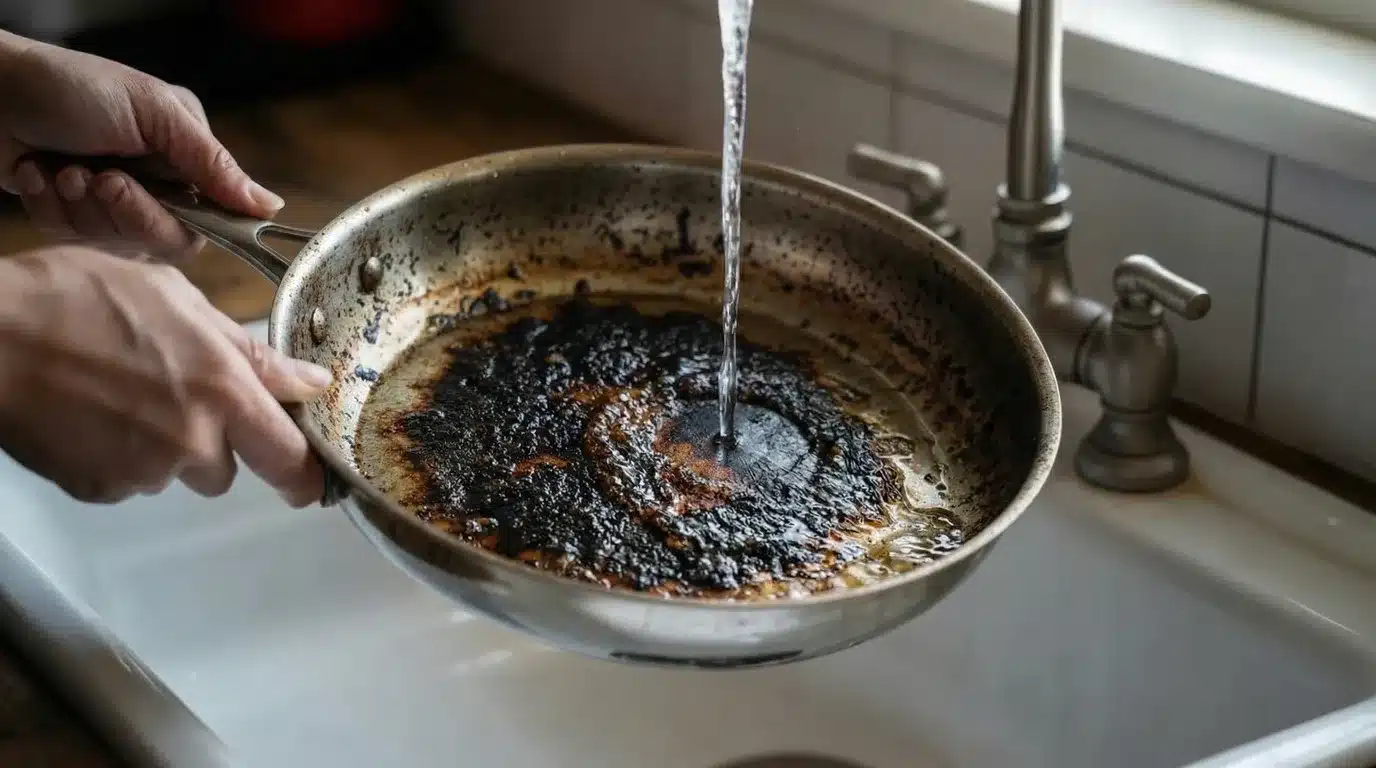
Run the pan under warm water and remove any loose food chunks sitting on the surface. You are not scrubbing yet, just clearing away anything that lifts easily.
What remains is the stubborn burnt layer that needs the soda treatment to break down. Skipping this step means your baking soda solution works harder than it needs to.
Step 3: Add Water and Baking Soda
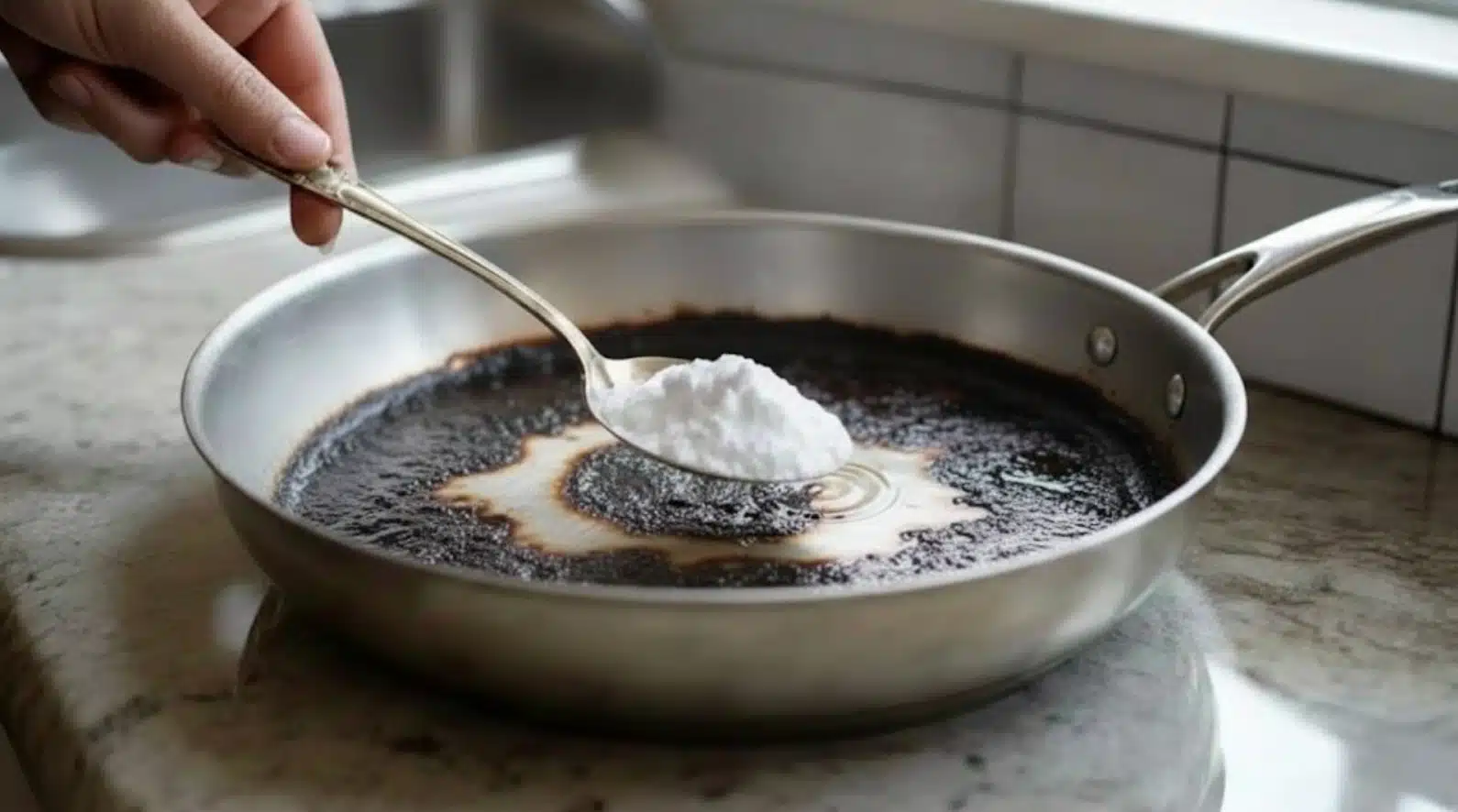
Fill the pan with enough water to completely cover the entire burnt area. Add two to three tablespoons of baking soda and stir briefly to distribute it evenly.
The alkaline nature of baking soda does the work here; it breaks down the carbonized residue without scratching or damaging the metal underneath when used correctly.
Step 4: Bring to a Gentle Boil
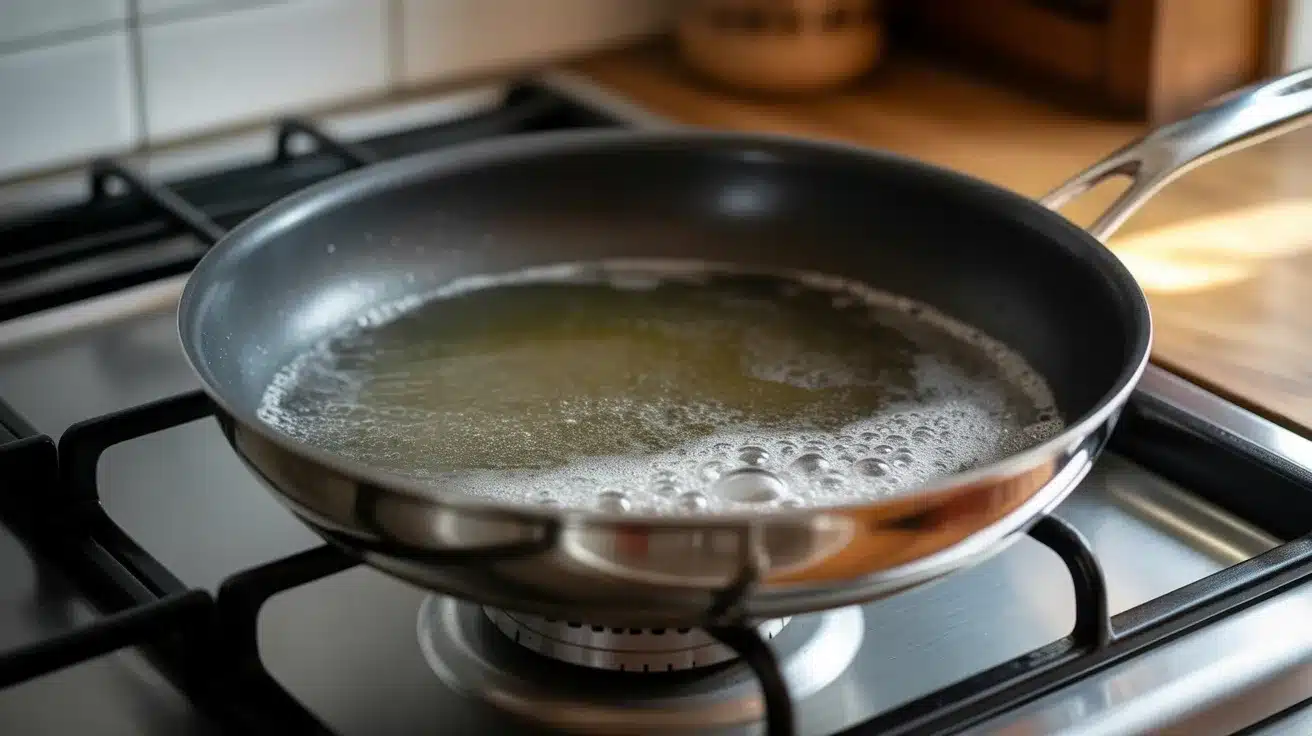
Place the pan on the stove over medium heat and bring the solution to a gentle simmer. Let it run for ten to fifteen minutes.
As the water heats, you will notice the burnt residue beginning to lift and loosen from the surface. Keep the heat steady; a hard boil is not necessary and can make the solution evaporate too quickly before it does its job.
Step 5: Scrape and Scrub Gently
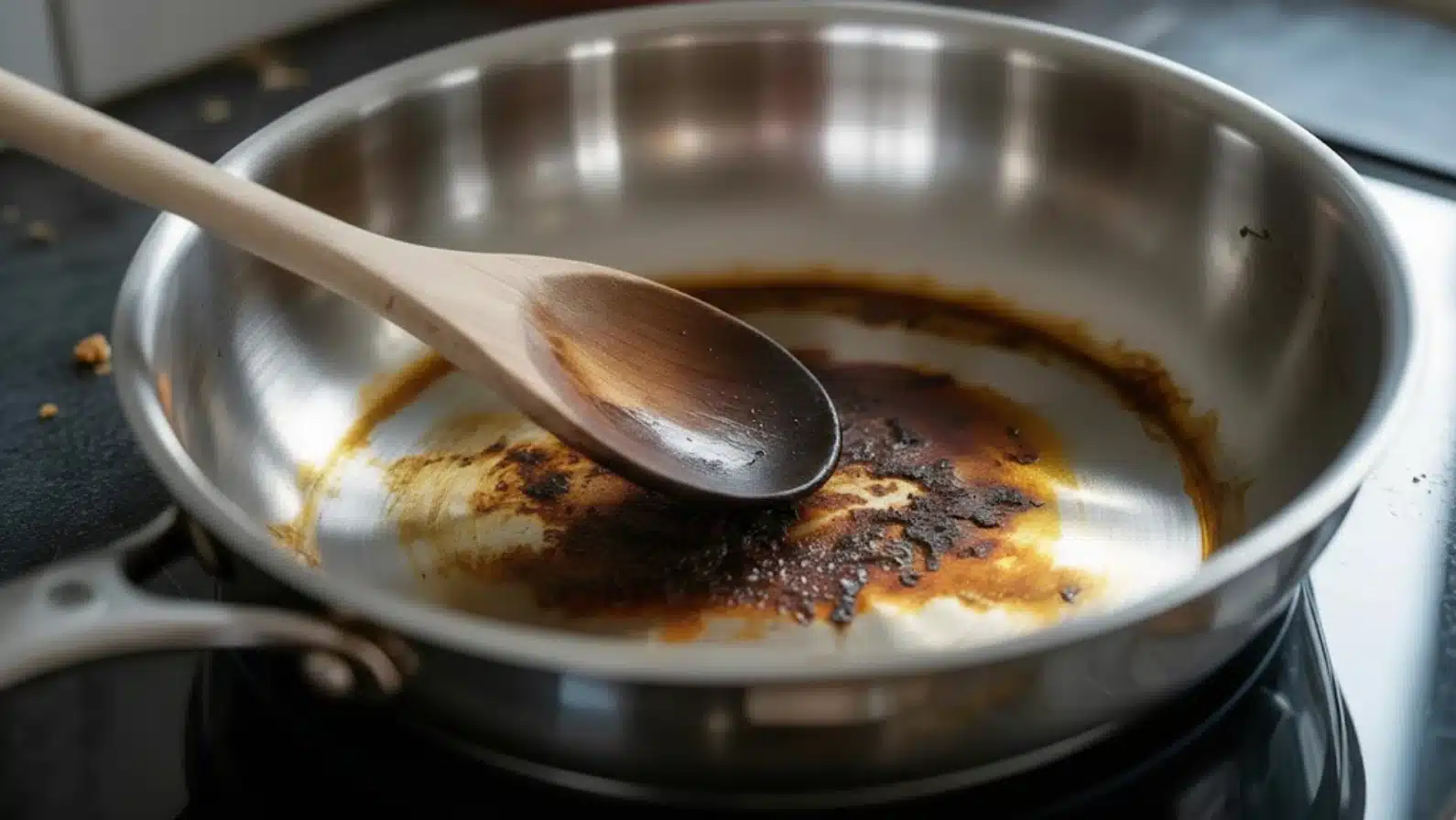
Turn off the heat and allow the pan to cool for a few minutes before handling. Use a wooden spoon to scrape away the softened buildup; it should release with minimal effort at this stage.
Follow up with a non-abrasive sponge to work through any remaining patches. Avoid steel wool on the inside unless the pan is uncoated stainless steel.
Step 6: Wash, Rinse, and Dry
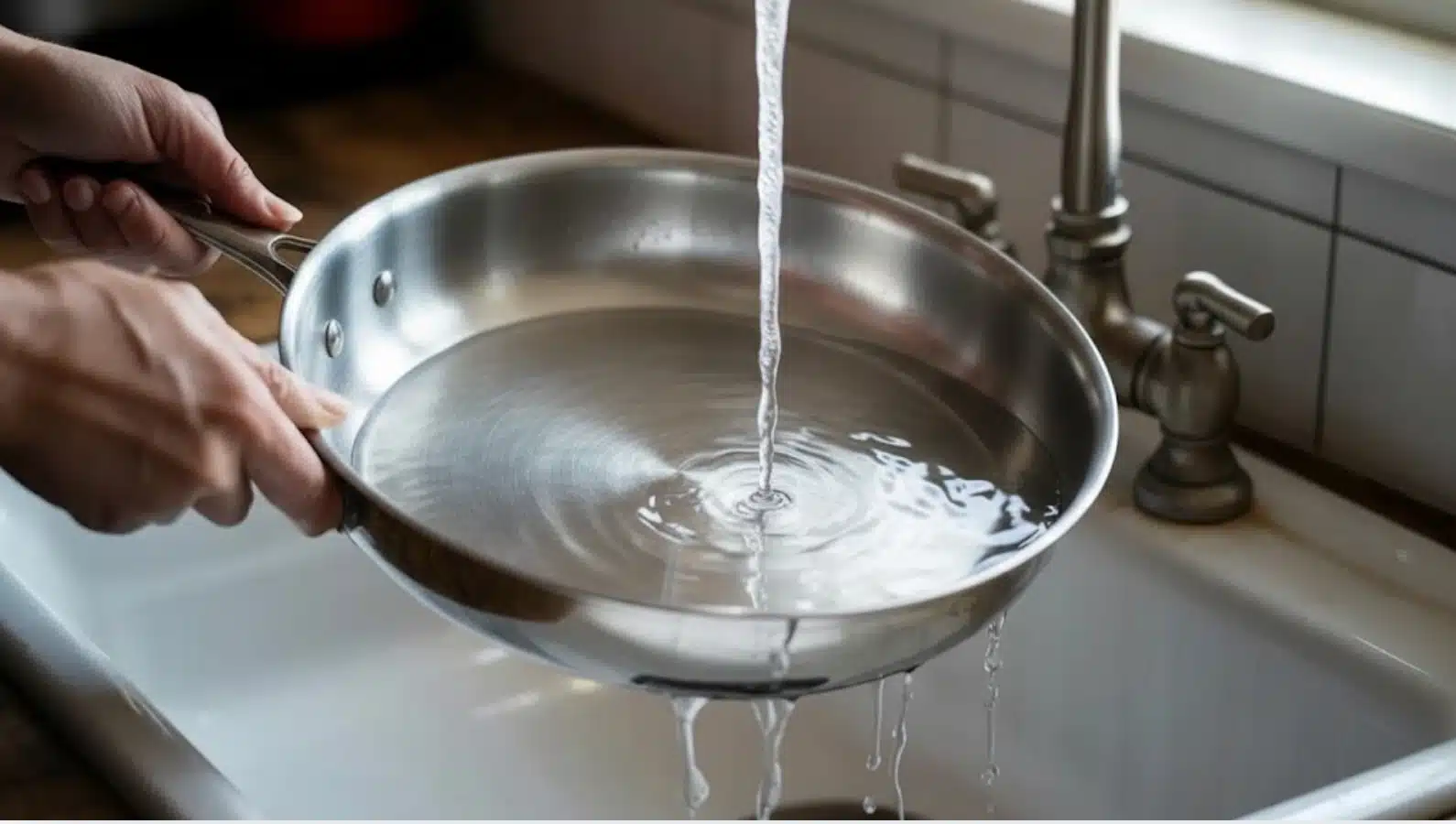
Wash the pan thoroughly with dish soap, rinse well, and dry it completely before storing. Leaving any moisture behind, especially on stainless steel, can cause water spots or early rust on certain pan types.
For burnt pan bottoms, apply the same baking soda paste directly to the outside surface, let it sit for thirty minutes, then scrub and rinse clean. If the residue does not fully clear after one round, repeat the process once more before reaching for stronger products.
Quick Methods to Clean a Burnt Pan (Comparison Table)
| Method | Best For | How It Works | Safe for Nonstick | Notes |
|---|---|---|---|---|
| Salt Method | Fresh spills and light burns | Salt absorbs moisture and loosens residue while the pan is still warm | Yes | Best used immediately after burning; not effective for old, thick carbon buildup |
| Dryer Sheet Soak | Medium inside burns | Soaking the pan with warm water and a dryer sheet helps soften stuck-on residue | No | Some people find it effective, but it contains chemicals and is not a natural method |
| Coke Method | Light scorch marks | The mild acids in Coca-Cola help break down residue when simmered | Yes | Works better for mild burns; less effective on thick, layered buildup |
| Cream of Tartar Method | Stainless steel pans with discoloration | Mixed with water and simmered to help lift stains and restore shine | No | Especially useful for stainless steel; avoid on coated or nonstick surfaces |
What Reddit Users Say Actually Works
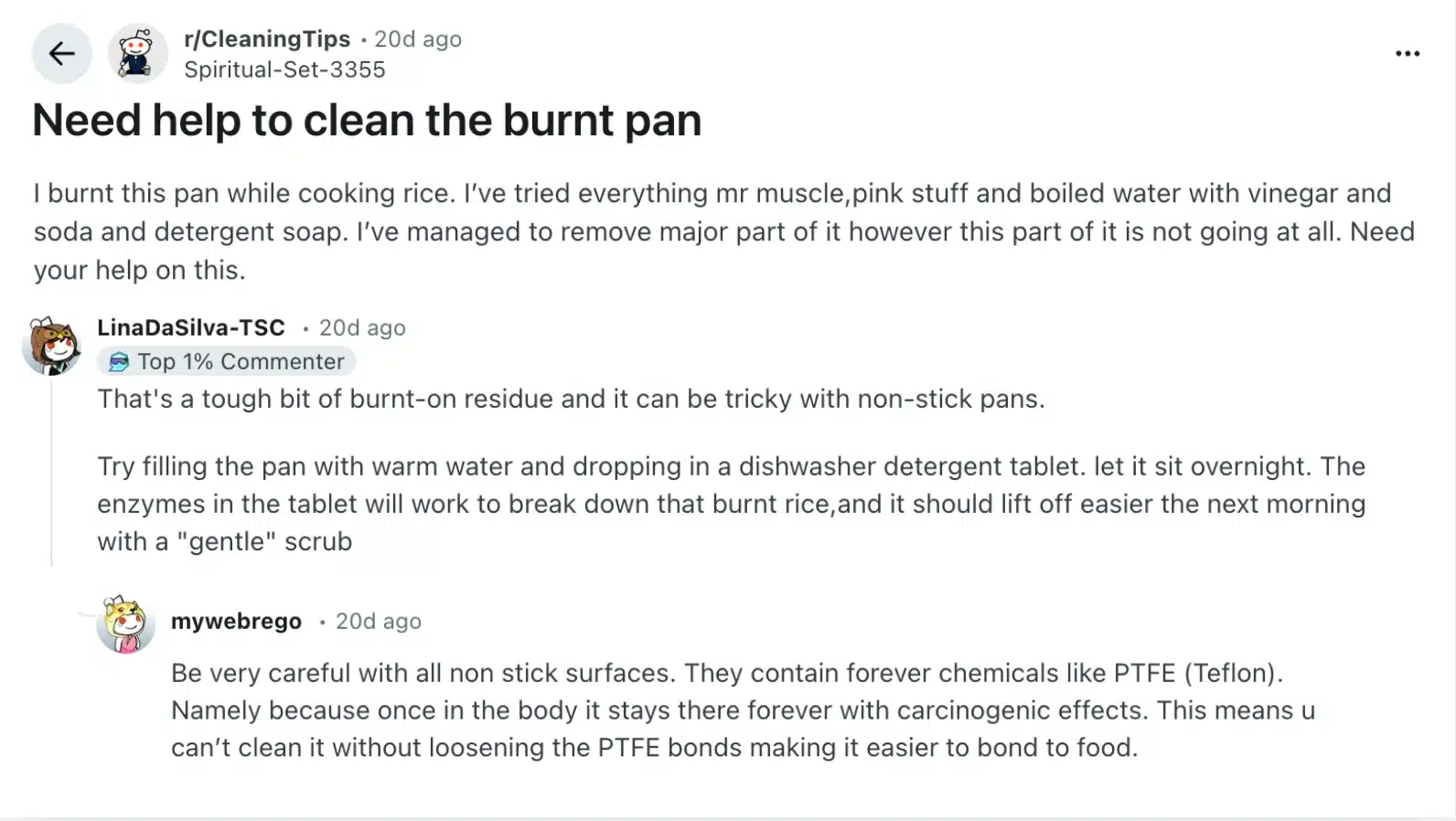
After going through this Reddit thread, a few patterns became clear to me. Users said the baking soda boil method works best for most burnt pan problems. Letting it simmer long enough helped loosen thick buildup that looked permanent at first.
Several users said adding a dishwasher detergent tablet to simmering water cut through heavy, layered burns faster than baking soda alone. This method came up often for tough stainless steel pans.
Some users mentioned soaking the pan in vinegar before boiling to help soften older stains.
For burnt pan bottoms, users said flipping the pan and applying a baking soda paste worked well. A few were gently scrubbed with aluminum foil to lift dark marks.
One repeated mistake users warned about was using baking powder instead of baking soda. Many admitted they almost threw their pan away before trying these fixes.
Additional Tips That Make Cleaning Easier
Small habits make a real difference in how often you end up dealing with serious buildup. Timing and technique affect cleanup more than most people realise. Here are some special tips just for you:
- Clean the pan the same day if possible, residue hardens significantly overnight
- Use a wooden spoon to stir and scrape while simmering, never metal utensils
- Avoid steel wool on nonstick surfaces; use a soft sponge or silicone scrubber instead
- Never overheat an empty pan; this is the most common cause of stubborn burns
- Lower the heat when cooking thick sauces or anything with high sugar content
- If your pan burns repeatedly, check whether the burner is running hotter than the dial suggests
- When the coating starts to peel or flake visibly, cleaning is no longer the right solution; replacement is
Most of these points take almost no extra effort to follow. Building them into a regular cooking routine means dealing with fewer serious burns over time.
Final Thoughts
A burnt pan does not have to mean a ruined one. Most burns, whether on the inside surface or the outside bottom, respond well to simple cleaning methods when approached the right way.
My go-to starting point is always baking soda before anything stronger, and in most cases, that is all it takes. Choosing the right method based on burn severity and pan type speeds up the process and protects the surface.
Burnt pan bottoms need a little extra attention, but the same principles apply. With the right approach, a pan that looks completely lost can come back looking close to new, and that is worth the effort every time. Drop a comment below and ask any further questions.
Frequently Asked Questions
Can You Fix a Severely Burnt Pan?
Yes, in most cases you can fix a severely burnt pan. Even thick black residue can usually be removed using methods like a baking soda boil, vinegar soak, or dishwasher tablet simmer. Stainless steel pans respond best to stronger cleaning methods. However, if a nonstick pan has peeling or flaking coating, it is safer to replace it rather than attempt aggressive cleaning.
Does Vinegar Remove Burn Marks From a Pan?
Vinegar can help remove burn marks, especially when combined with baking soda. The mild acidity of vinegar helps loosen carbonized residue and break down grease. On its own, vinegar works best for lighter scorch marks. For deeper burns, it works more effectively when heated with water or paired with baking soda.
Is it Safe to Use Steel Wool on a Burnt Pan?
It depends on the type of pan. Steel wool is generally safe for uncoated stainless steel pans when used gently. However, it should never be used on nonstick, ceramic, or coated surfaces because it can scratch and permanently damage the finish. Always start with a non-abrasive sponge before using stronger tools.