
I’ll be honest: I used to make the saddest cups of green tea. Boiling water, a forgotten tea bag, and suddenly I’m sipping something bitter and harsh instead of soothing and peaceful.
It wasn’t until I learned that green tea is delicate (like, genuinely temperamental) that everything changed.
The right brewing time and temperature don’t just prevent bitterness. They unlock those dreamy, grassy notes and preserve all those good-for-you antioxidants we’re after.
So let me walk you through the gentle art of brewing green tea properly: the timing, the temperatures, and, honestly, how to fix it when things go wrong.
Why Brewing Time & Temperature Matter for Green Tea?
Here’s why your brewing method matters so much: green tea leaves are packed with catechins (those lovely antioxidants) and tannins, and they extract at different rates depending on heat and time.
When water gets too hot, it pulls out harsh tannins way too quickly, leaving you with that mouth-puckering bitterness.
The ideal temperature for green tea sits around a gentle warmth that coaxes out the sweet, grassy flavors without the astringency.
As for how long to steep green tea, that’s your caffeine control. Longer steeping means more caffeine, but it also risks overdoing the tannins.
It’s all about finding that sweet spot where flavor, benefits, and smoothness align perfectly
Ideal Brewing Time & Temperature for Green Tea
Green tea comes in so many beautiful varieties, and each one has its own personality when it comes to brewing. Different types need different care, and knowing these details transforms your entire tea experience.
Standard Green Tea (Loose Leaf or Tea Bags)
For your everyday green tea, aim to steep for two to three minutes in water that’s around 160 to 180 degrees Fahrenheit. This range gives you that balanced, slightly sweet flavor without any harshness.
If you steep for just one to two minutes, you’ll get a lighter, more delicate cup with subtle grassy notes. Push it to four minutes or beyond, and the bitterness starts creeping in, though you will extract more caffeine and antioxidants.
The key is tasting as you go and finding what feels right for your palate.
Green Tea Brewing Guide by Type
Not all green teas are created equal, and each variety deserves its own approach. Here’s how to brew the most popular types for the best flavor and experience.
| Green Tea Type | Water Temperature | Steep Time | Notes |
|---|---|---|---|
| Sencha | 160-170°F | 1-2 minutes | Japan’s most popular green tea; bright, grassy, and refreshing |
| Matcha | 160-175°F | Not steeped | Whisked into water or milk; smooth, creamy, and vibrant |
| Gyokuro | 140-160°F | 2-3 minutes | Shade-grown and sweet; requires cooler water for delicate umami flavor |
| Dragonwell (Longjing) | 170-180°F | 2-3 minutes | Nutty, sweet, and mellow; one of China’s finest green teas |
| Genmaicha | 170-180°F | 2-3 minutes | Blended with roasted rice; toasty, comforting, and less delicate |
| Jasmine Green Tea | 160-180°F | 2-3 minutes | Floral and fragrant; temperature affects how much jasmine aroma releases |
Step-by-Step: How to Brew Green Tea?
Brewing green tea is less about following strict rules and more about creating a little ritual that works for you. These steps will guide you through the process, and soon it’ll feel like second nature.
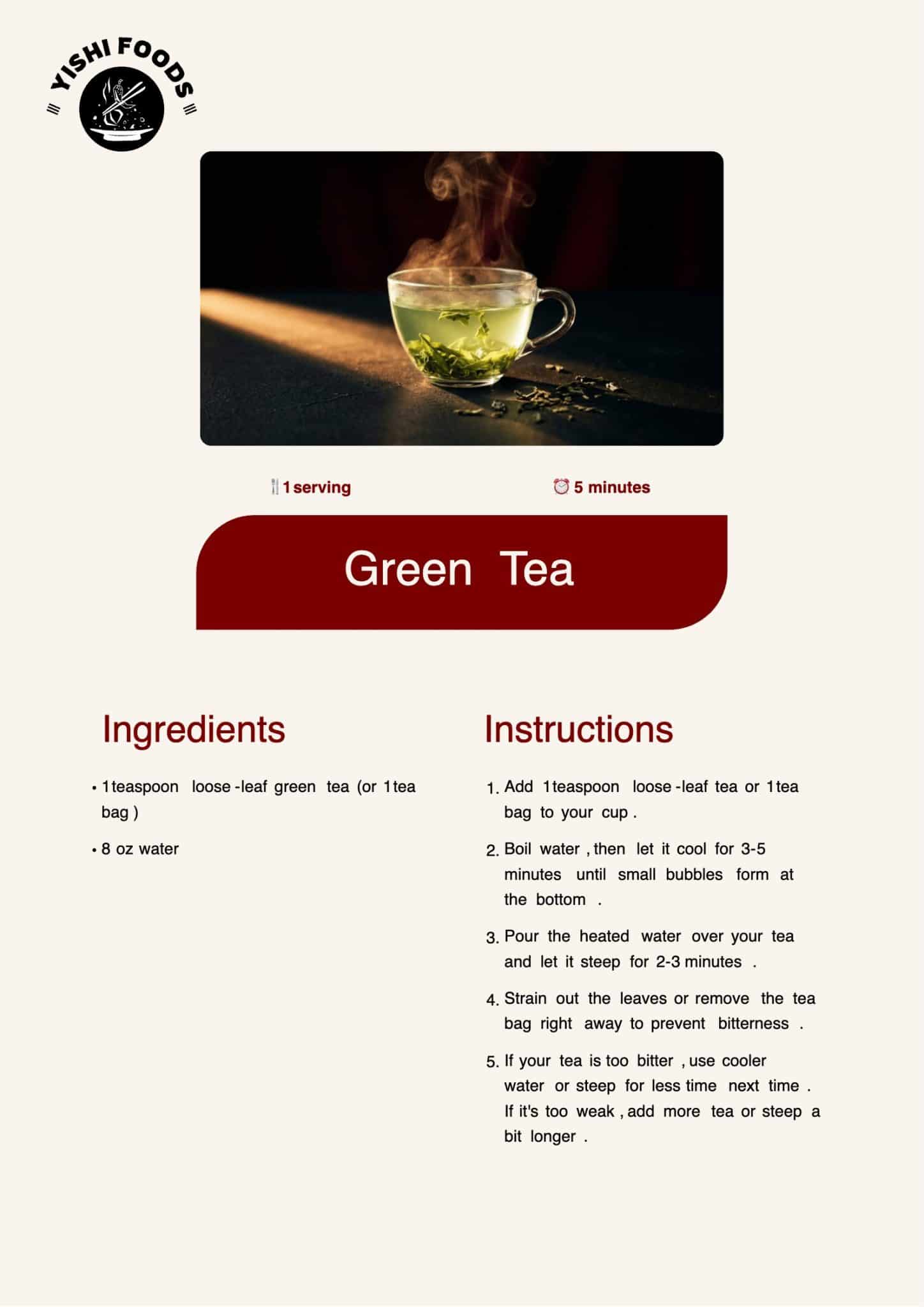
Step 1: Measure Your Tea
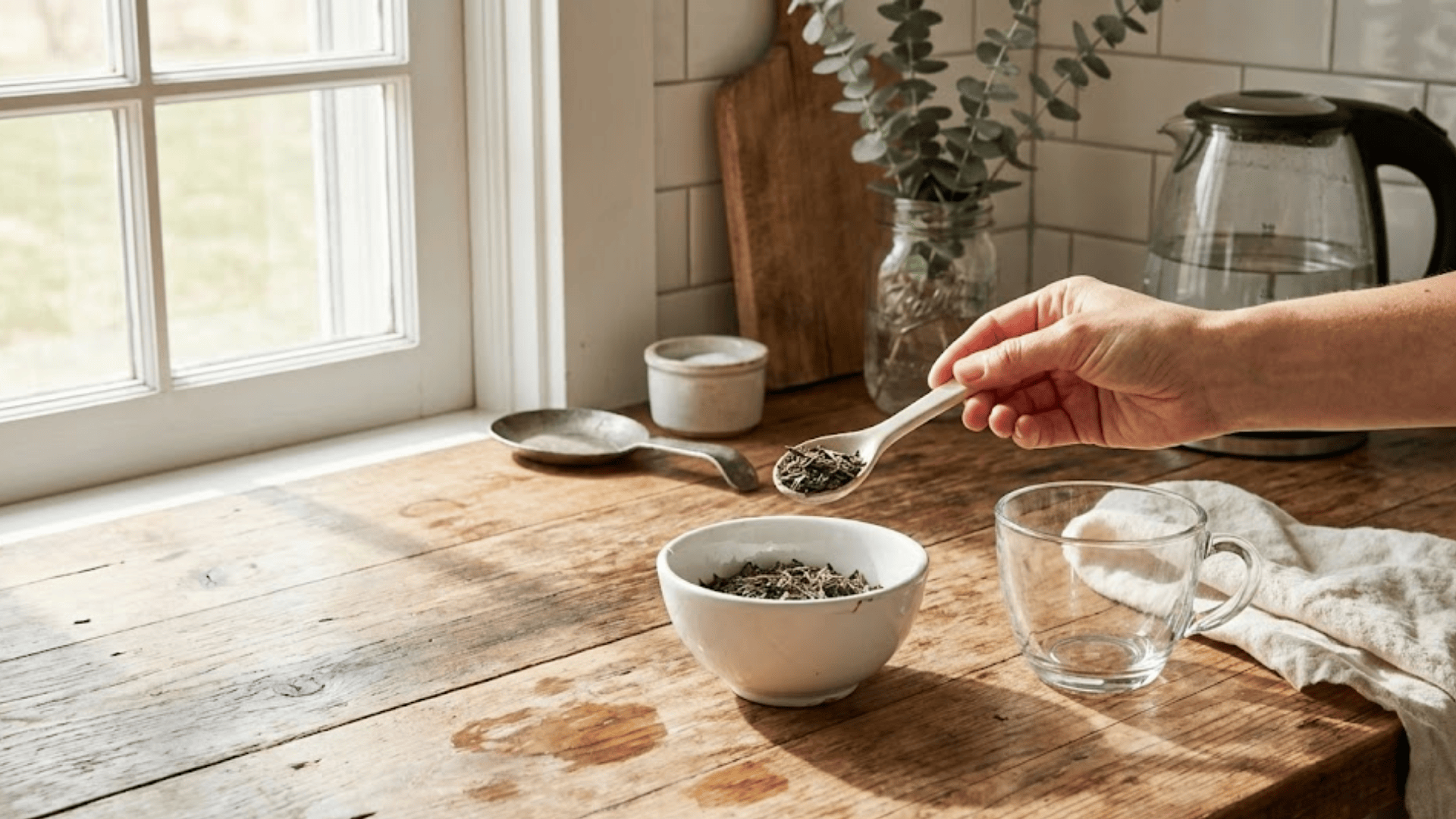
Start with about one teaspoon of loose-leaf green tea per cup, or one tea bag if that’s what you’re using. If you prefer a stronger flavor, you can add a bit more, but resist the urge to over-steep instead.
Too many leaves can make your tea cloudy and overly intense. For beginners, tea bags are perfectly fine while you’re getting the hang of temperatures and timing.
Once you feel confident, loose-leaf opens up a whole new world of quality and flavor.
Step 2: Heat Water to the Right Temperature
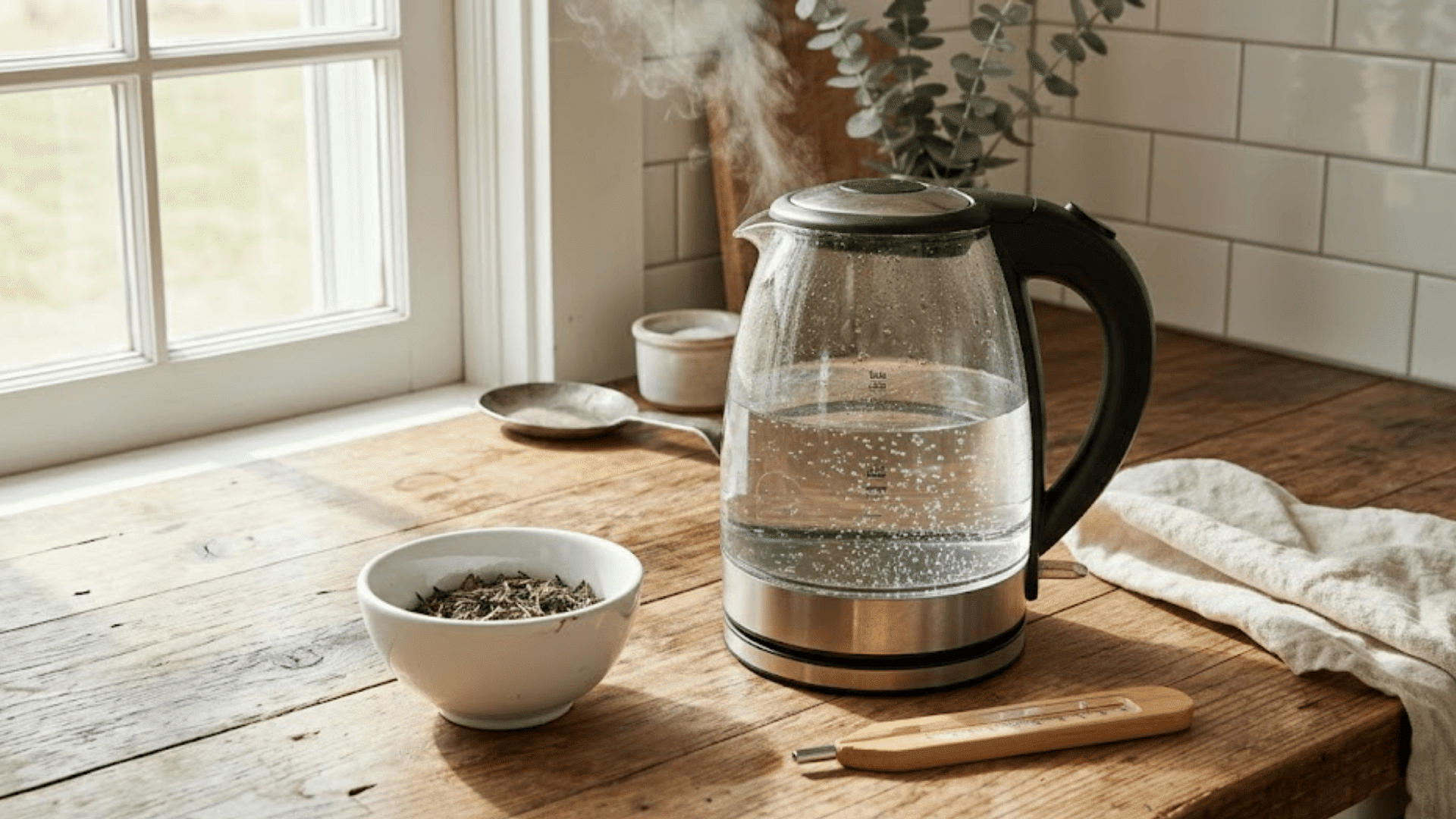
Bring your water to a boil, then let it cool for about three to five minutes until it reaches 160 to 180 degrees Fahrenheit.
If you don’t have a thermometer, look for small bubbles forming at the bottom of the kettle, not a rolling boil.
Boiling water is green tea’s worst enemy. It scorches the delicate leaves and brings out all that bitterness you’re trying to avoid.
Step 3: Steep for the Recommended Time
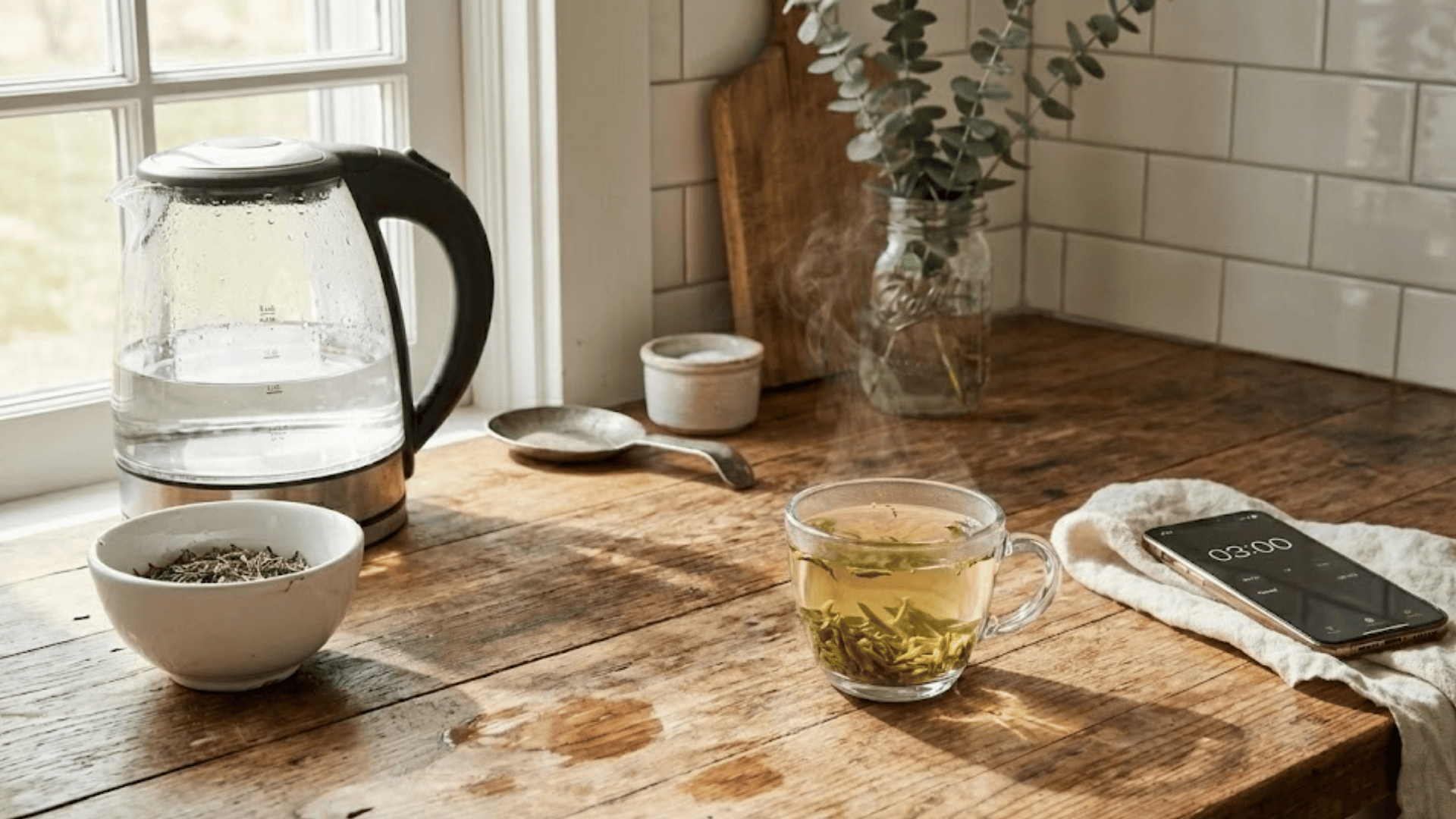
Pour the heated water over your tea and let it steep for two to three minutes. Set a timer if you need to.
This is where patience pays off. Steeping too long pulls out harsh tannins, while too short leaves you with weak, underwhelming flavor.
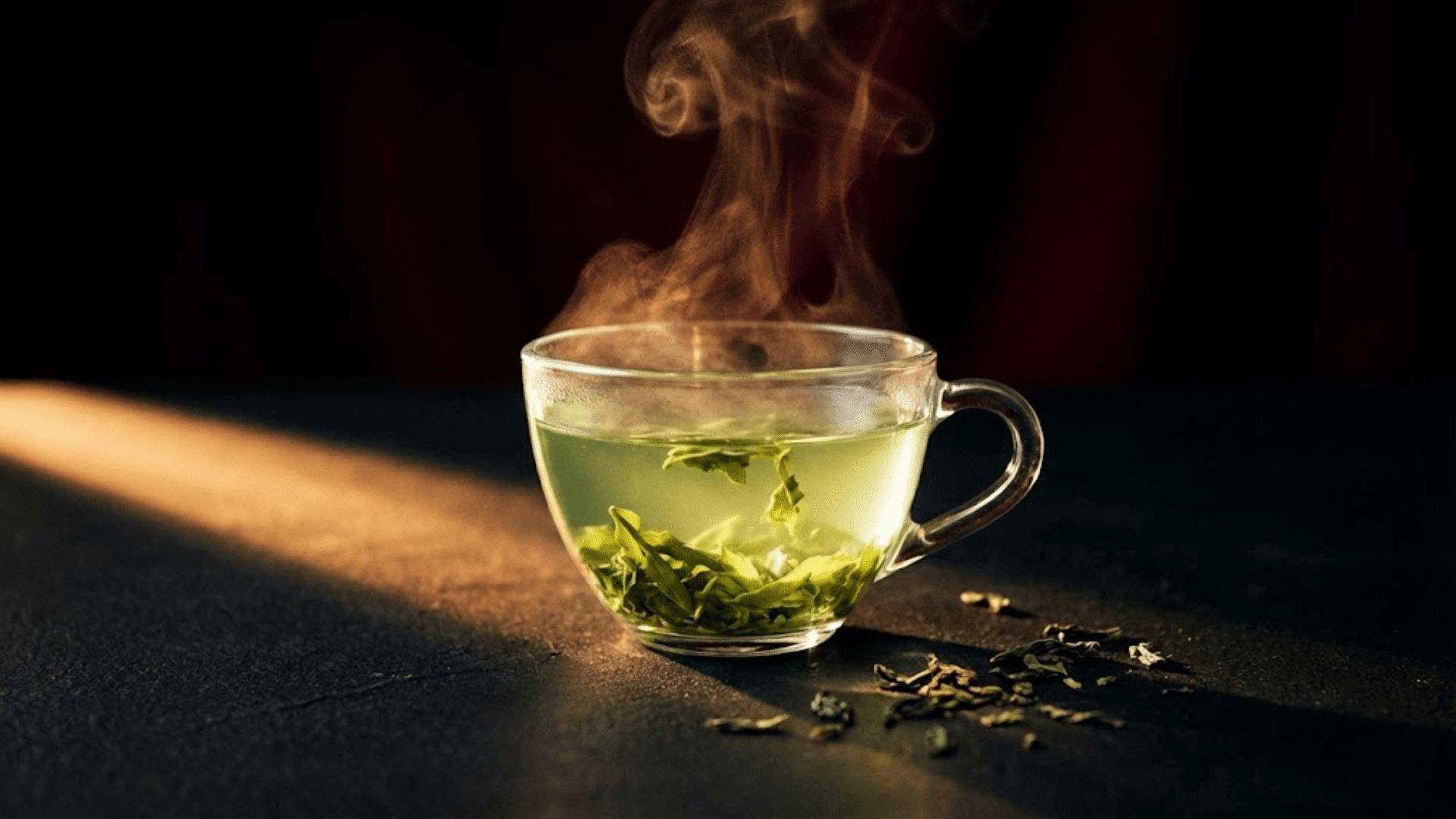
Watch the color deepen from pale yellow to soft green as the leaves unfurl.
Step 4: Remove the Tea Immediately
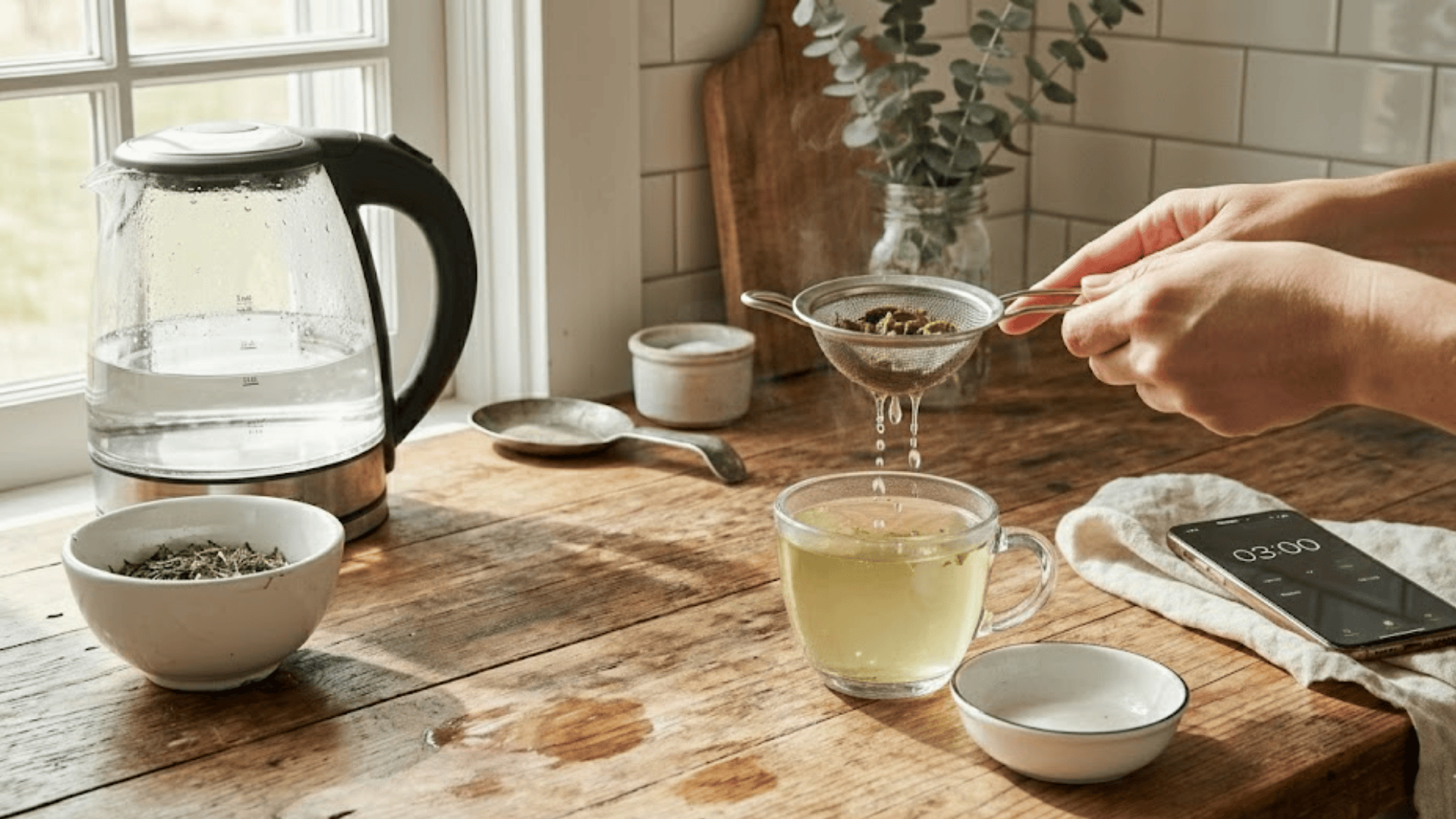
Once your timer goes off, remove the tea bag or strain out the loose leaves right away.
Leaving them in continues the extraction process, and your perfect cup quickly turns bitter. This step is non-negotiable if you want consistently good tea.
Pour your tea into your favorite mug and take a moment to appreciate the aroma before that first sip.
Step 5: Taste and Adjust for Next Time
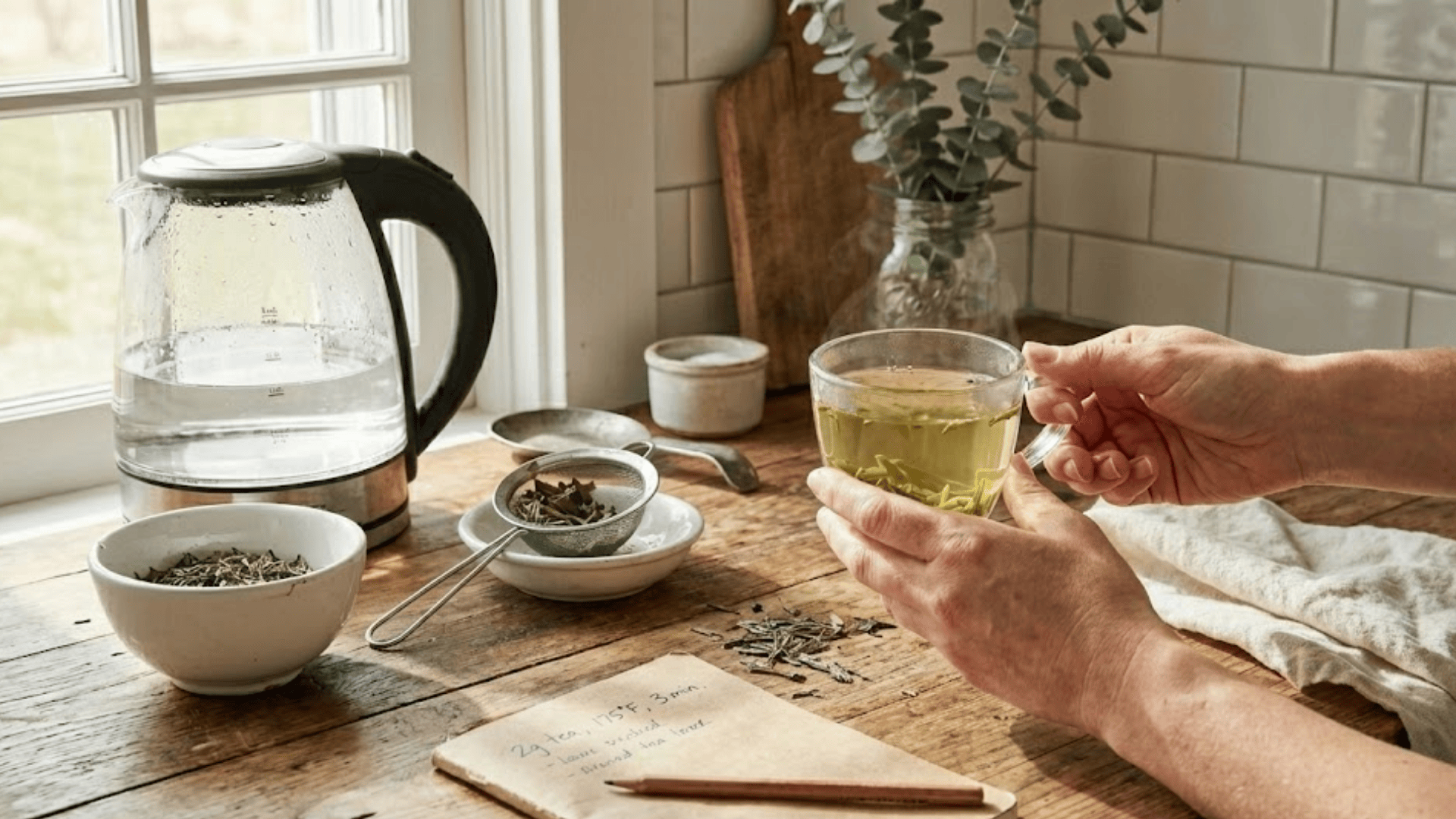
Take a sip and notice the flavor. Is it too bitter? Try cooler water or shorter steeping next time. Too weak? Add more leaves or an extra thirty seconds.
Green tea is forgiving once you understand its preferences.
Keep mental notes of what works, and soon you’ll be brewing instinctively without measuring or timing anything.
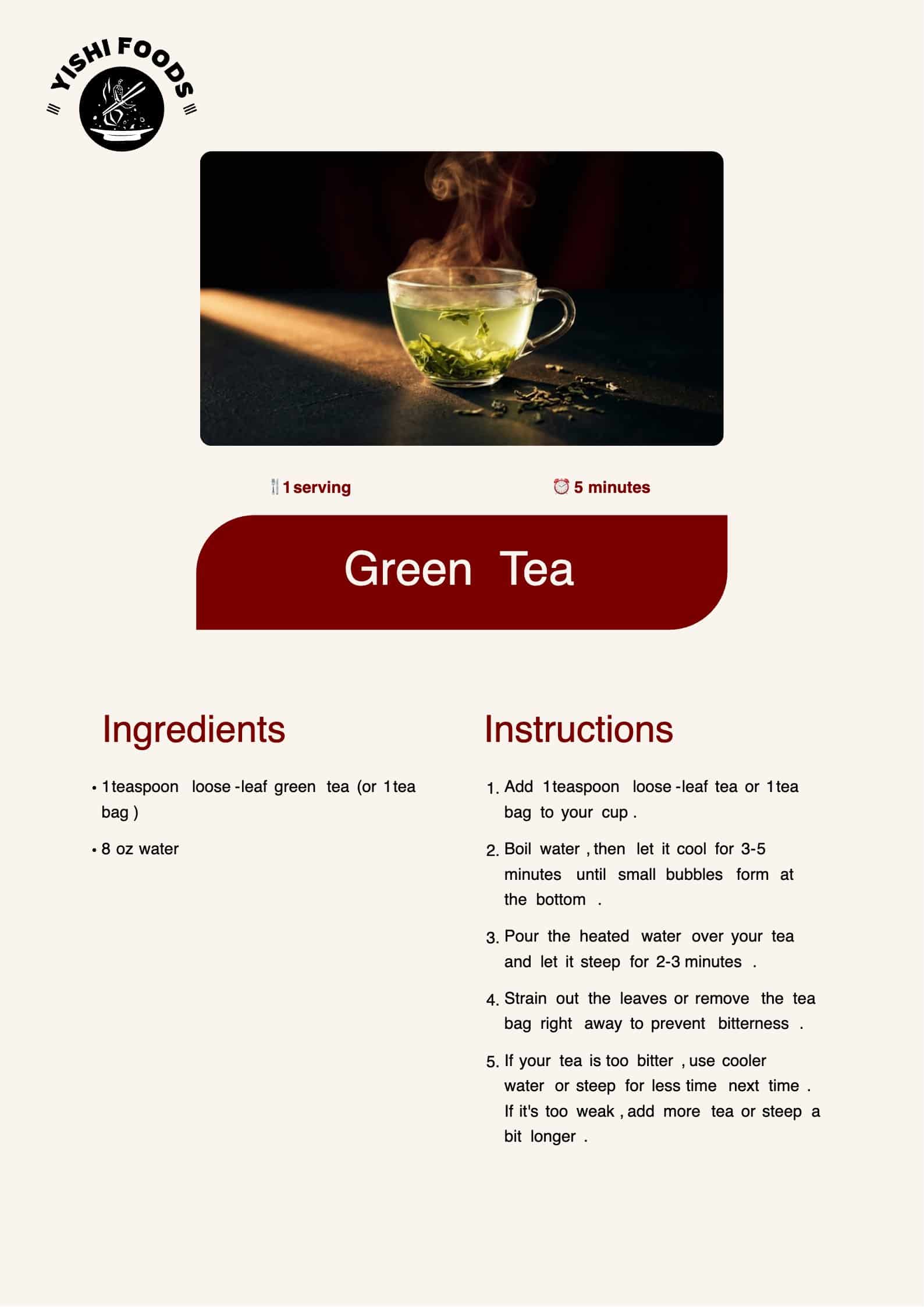
Easiest Green Tea Recipe to Follow
What Happens If You Steep Green Tea Too Long?
When you steep green tea beyond three or four minutes, the tannins take over, and you’re left with a cup that’s harsh, bitter, and almost mouth-puckering.
The color deepens to a murky brownish-green instead of that delicate pale jade, and yes, you’ll extract more caffeine, but at the cost of drinkability.
If you accidentally over-steep, don’t toss it. Try diluting it with a splash of hot water to mellow the bitterness, or add a touch of honey to balance the astringency.
A squeeze of lemon can also brighten the flavor and cut through that heaviness beautifully.
Does Brewing Time Change Green Tea Caffeine Levels?
Yes, brewing time directly affects how much caffeine ends up in your cup. Caffeine extracts quickly in the first minute or two, with most of it released early in the steeping process.
A short steep of one to two minutes gives you a gentler caffeine lift, while pushing it to four or five minutes maxes out the extraction.
Even at its strongest, green tea contains about 25 to 50 milligrams of caffeine per cup, compared to black tea’s 40 to 70 milligrams and coffee’s 95 to 200 milligrams.
So green tea stays on the gentler side regardless of steep time.
How Temperature Affects Green Tea Flavor?
Temperature is honestly the secret ingredient most people overlook when brewing green tea. Getting it right unlocks flavors you didn’t even know existed, while getting it wrong turns your tea into a bitter disappointment.
- Low temperature brewing (140 to 160 degrees) brings out sweeter, more delicate flavors with less bitterness.
- Cold brew green tea steeps in cold water for six to twelve hours, creating naturally sweet tea with zero bitterness.
- Using a thermometer gives you precision and consistency, especially when learning or working with expensive teas.
- Visual cues work well once practiced: small bubbles at the kettle bottom indicate 160 to 180 degrees.
- Boiling water (212 degrees) is always too hot and will scorch leaves, releasing harsh tannins instantly.
Cooler water means more sweetness and subtlety, while hotter water pulls out strength and intensity. It’s worth experimenting to find your perfect temperature sweet spot.
Brewing Green Tea Without a Thermometer
You don’t need fancy equipment to brew perfect green tea.
Here are simple, practical methods you can use right in your kitchen to get the temperature just right without a thermometer.
| Method | How It Works | Approximate Temperature |
|---|---|---|
| Boil and wait | Let boiled water sit off the heat for 3-5 minutes | 160-180°F |
| The mixing method | Mix half boiling water with half room temperature water | 160-170°F |
| Small bubble technique | Heat until tiny bubbles form at the bottom, before rolling boil | 160-180°F |
| Steam observation | Look for gentle steam rising, not aggressive clouds | 170-185°F |
| Pour and cool | Pour boiled water into another vessel, wait 2-3 minutes | 165-180°F |
| Finger test (careful!) | If comfortable for 3-4 seconds, it’s ready | 160-175°F |
Common Green Tea Brewing Mistakes
Even tea lovers who’ve been brewing for years can fall into these traps without realizing it. Here are the most common mistakes that ruin an otherwise perfect cup of green tea.
- Using boiling water is the biggest culprit, instantly scorching delicate leaves and releasing all that harsh bitterness you’re trying to avoid.
- Over-steeping past three to four minutes pulls out excessive tannins, turning your tea astringent and undrinkable, no matter how good the leaves are.
- Squeezing tea bags seems like it would give you a stronger flavor, but it actually just releases bitter compounds and makes the tea taste worse.
- Reusing leaves without adjusting steep time leads to weak, flavorless tea since most flavor extracts are in the first steep.
- Using tap water with strong mineral content or chlorine can interfere with the delicate flavor profile, making even premium tea taste off.
The good news is that once you know what not to do, fixing your brewing routine becomes incredibly simple. Green tea is forgiving once you understand its preferences.
Re-Steeping Green Tea Leaves
High-quality loose-leaf green tea can be steeped two to three times, and sometimes even more with premium varieties like Gyokuro or Dragonwell.
For the second steep, add an extra 30 seconds to your original time since the leaves have already opened. By the third steep, you might need to add a full minute or slightly increase the temperature by 5 to 10 degrees.
Expect the flavor to evolve with each infusion: the first steep is bright and grassy, the second becomes mellower and sweeter, and the third turns subtle and delicate.
Tea bags, however, are generally one-and-done.
That’s a Wrap
Learning how long to brew green tea really does transform your entire tea experience. Those few minutes of attention to temperature and timing unlock flavors you’ve been missing all along.
Quick morning cups or slow afternoon rituals both follow the same principles: gentle heat, mindful timing, and a little patience.
Start experimenting with what feels right for your palate, and soon it’ll become intuitive.
I’d love to hear how your green tea experience is going. Drop a comment below and share your favorite brewing tips or the tea variety you’re currently obsessed with.