
I first noticed how often cottage cheese and egg flatbread kept showing up in food groups and short videos.
You see it baked, wrapped, sliced, and filled in so many ways. It feels like one of those recipes that fit real life. You only need a few ingredients, and there is no dough to knead or rest.
That alone makes it easier on busy days. Still, many people feel unsure about texture, cooking time, or whether it will actually hold fillings. That is where this guide helps.
You will see clear steps, real cooking methods, and honest feedback so cottage cheese and egg flatbread feels simple and doable from start to finish.
Cottage Cheese & Egg Flatbread is Everywhere Right Now
Cottage cheese and egg flatbread is everywhere right now because it fits how you like to cook and eat.
You only need a few basic ingredients, and most people already have them at home. There is no flour to measure, knead, or rest, which saves time and effort.
Many home cooks like that it feels filling without being heavy. It also works for breakfast, lunch, or quick snacks. Another reason it spread fast is how easy it is to change.
You can cook it in a pan, oven, or air fryer. People share results, fixes, and variations in online groups every day. That steady sharing is what pushed this flatbread into the spotlight.
The Base Cottage Cheese and Egg Flatbread Recipe
This base cottage cheese and egg flatbread recipe is the starting point most people use online. It is simple, flexible, and easy to adjust before trying flavors, fillings, or cooking changes.
Ingredients
- 1 cup cottage cheese (low-fat or full-fat)
- 2 eggs
- 1/4 teaspoon garlic powder
- 1/4 teaspoon Italian seasoning
Optional swaps from the same method
- 4 egg whites instead of 2 whole eggs (about 1/2 cup liquid egg whites)
- Everything bagel seasoning to replace Italian seasoning
- Cooking spray if using egg whites (helps prevent sticking)
Step 1: Prep the Oven and Sheet Pan
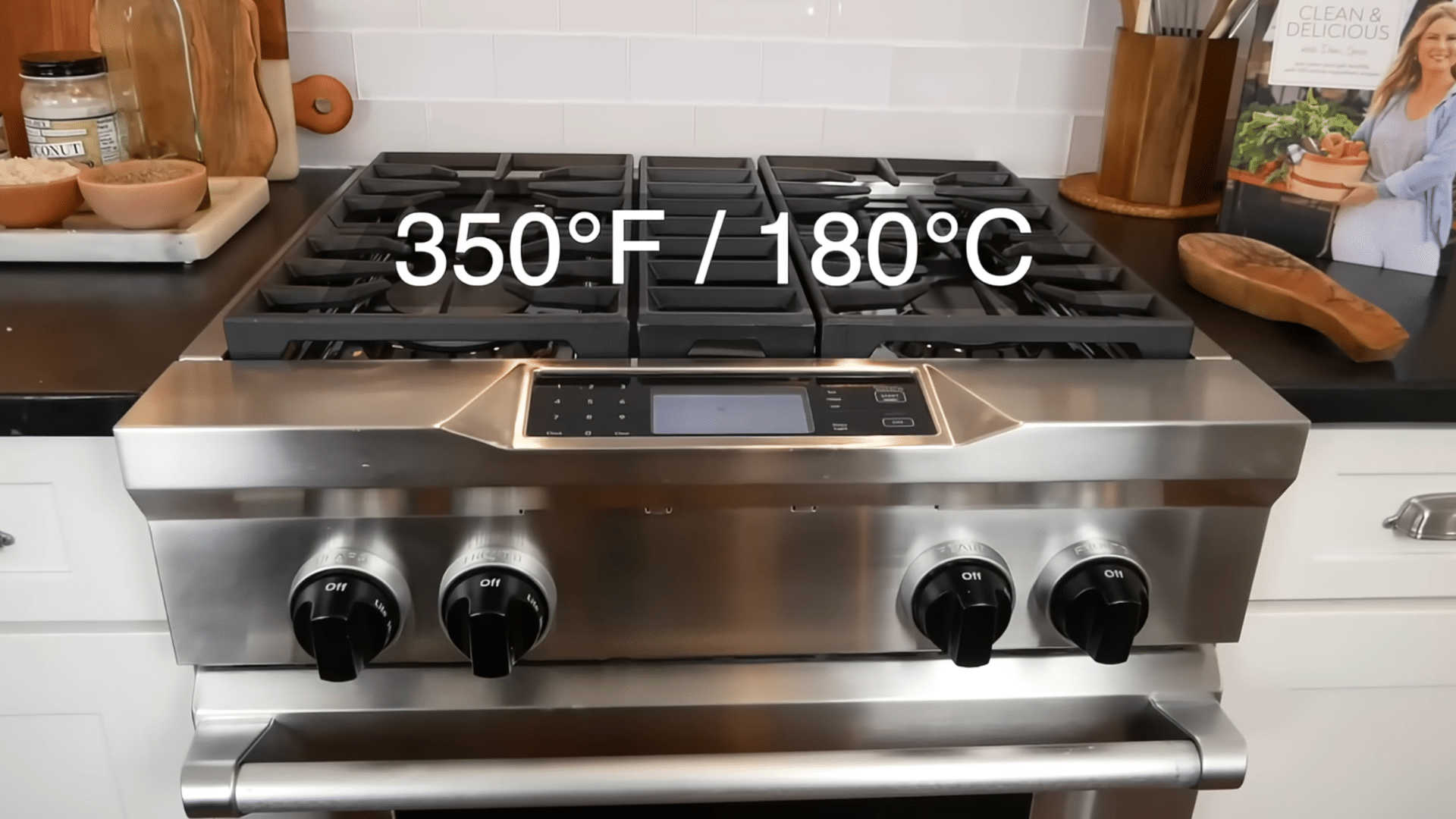
Start by preheating your oven to 350°F (180°C). This temperature allows the flatbread to cook through slowly without drying out.
While the oven heats, prepare a small rimmed sheet pan. Line it fully with parchment paper, making sure the paper lies flat with no curling edges. This step matters because the batter is thin and egg-based.
Without parchment, it will stick and tear. A properly lined pan makes removal clean and stress-free once baking is done.
Step 2: Blend the Ingredients Until Smooth
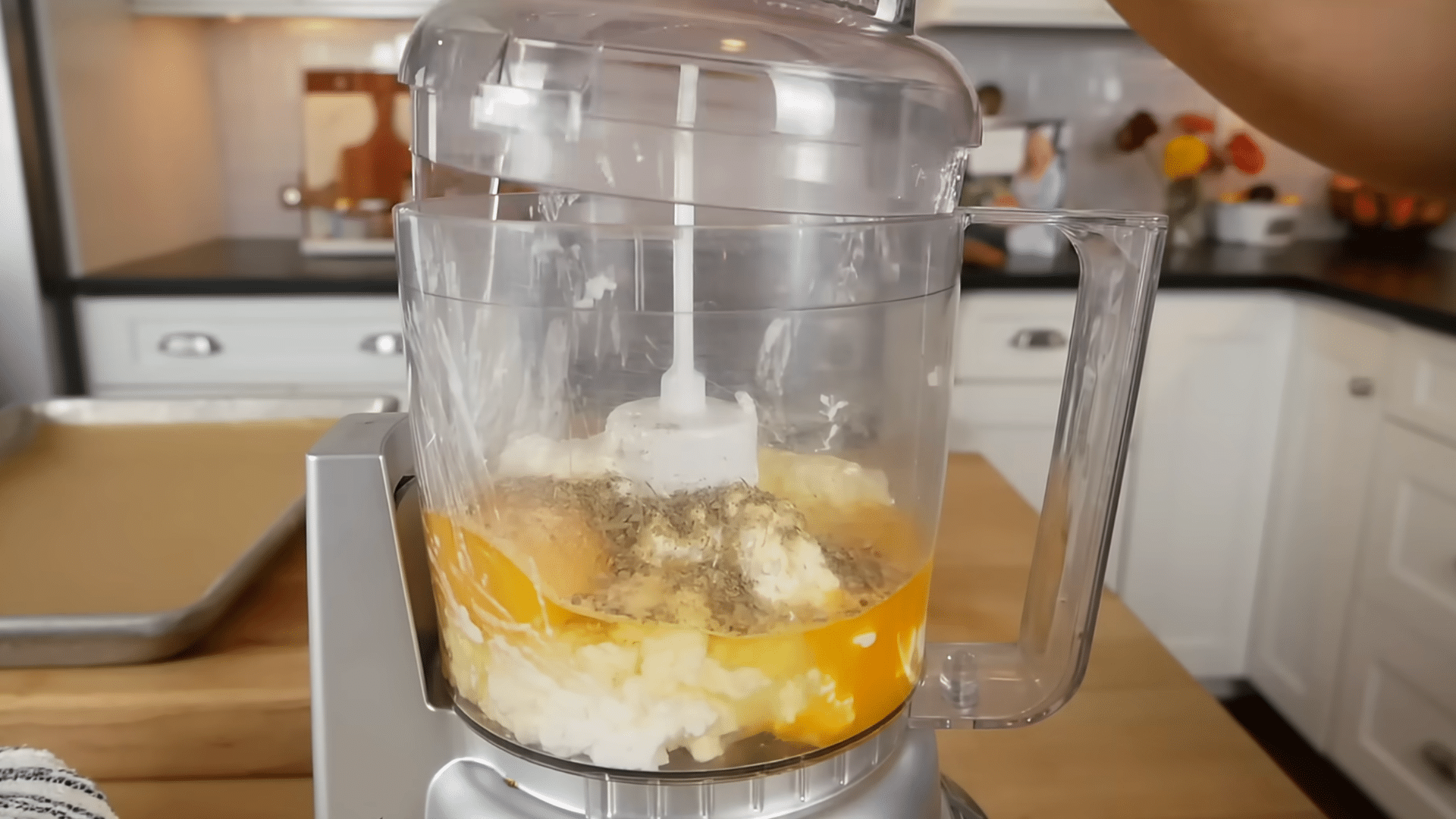
Add 1 cup cottage cheese, 2 eggs, garlic powder, and Italian seasoning to a blender or mini food processor. Blend until the mixture looks smooth, creamy, and evenly combined.
You should not see large curds or streaks of egg. This step controls the final texture. A fully blended batter creates a flatbread that is flexible and even, instead of lumpy or fragile.
If using low-fat cottage cheese, blending well is especially important to prevent excess moisture pockets.
Step 3: Spread the Batter Evenly on the Pan
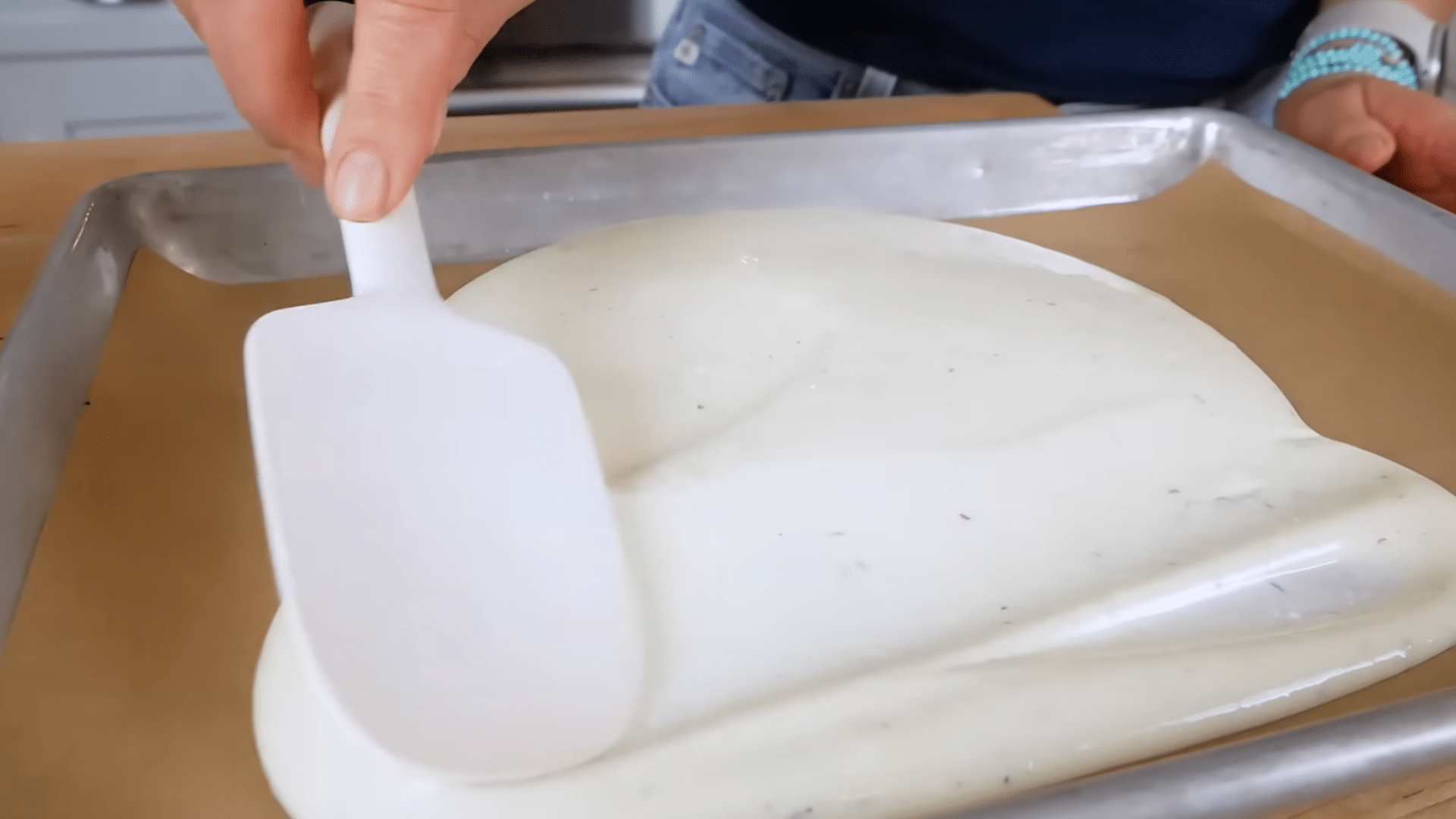
Carefully pour the blended batter into the center of the prepared sheet pan. Use a spatula to gently spread it outward in all directions. Aim for an even layer, but do not stress about perfect edges.
Thickness matters more than shape. If some areas are thicker, they may stay soft in the center. Keep the batter thin and consistent so it bakes evenly. Avoid spreading it all the way to the rim. Leaving a small border helps prevent overcooking at the edges.
Step 4: Bake Until Set and Lightly Golden
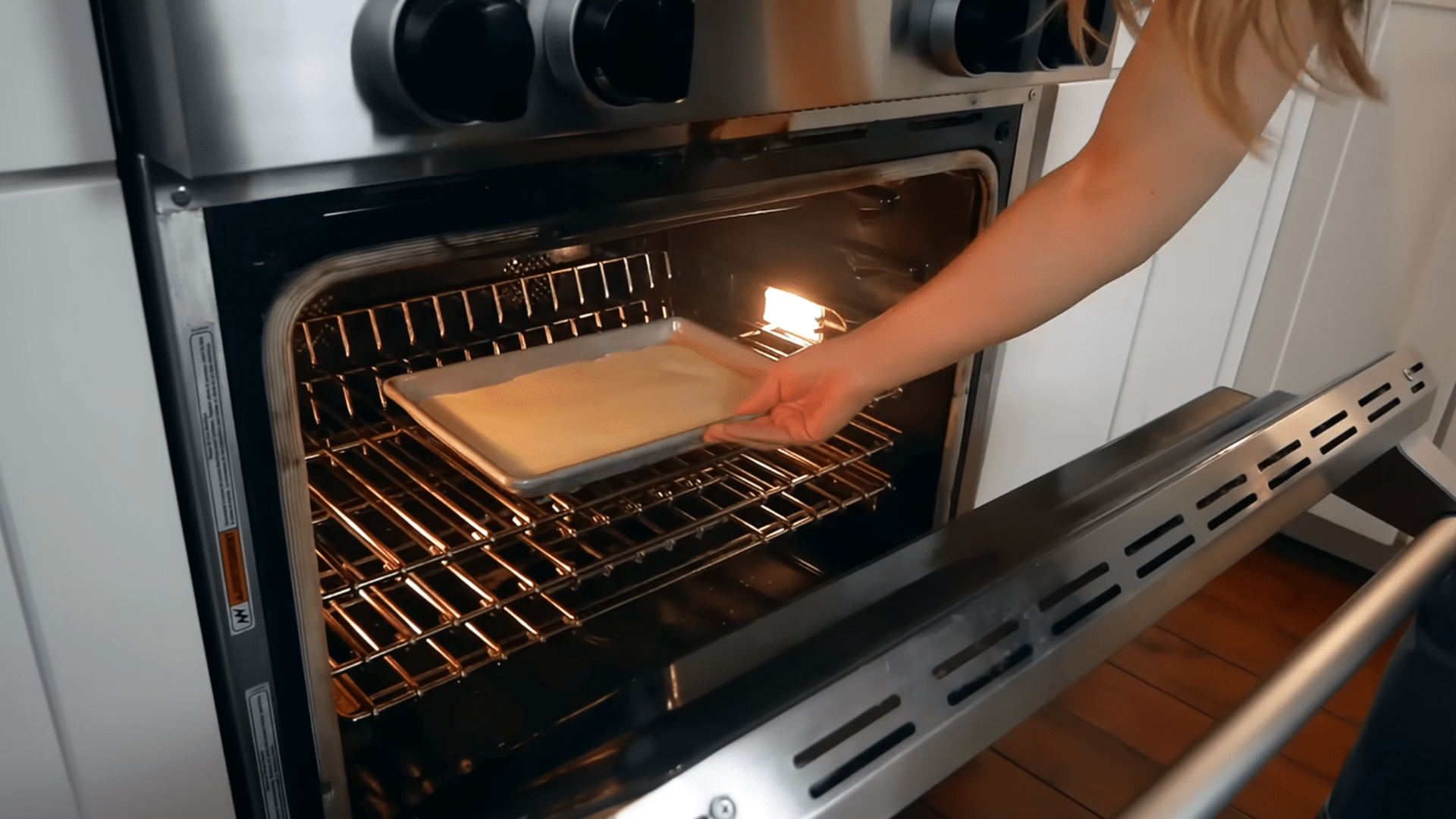
Place the pan on the center rack of your oven and bake for about 30 minutes. Depending on your oven, baking time may range from 25 to 35 minutes. Watch for visual cues instead of the clock.
The top should look lightly golden, and the center should feel set when gently touched. It should not jiggle or look wet. Overbaking can make the flatbread dry, while underbaking leaves it too soft to lift cleanly.
Step 5: Cool Before Removing the Flatbread
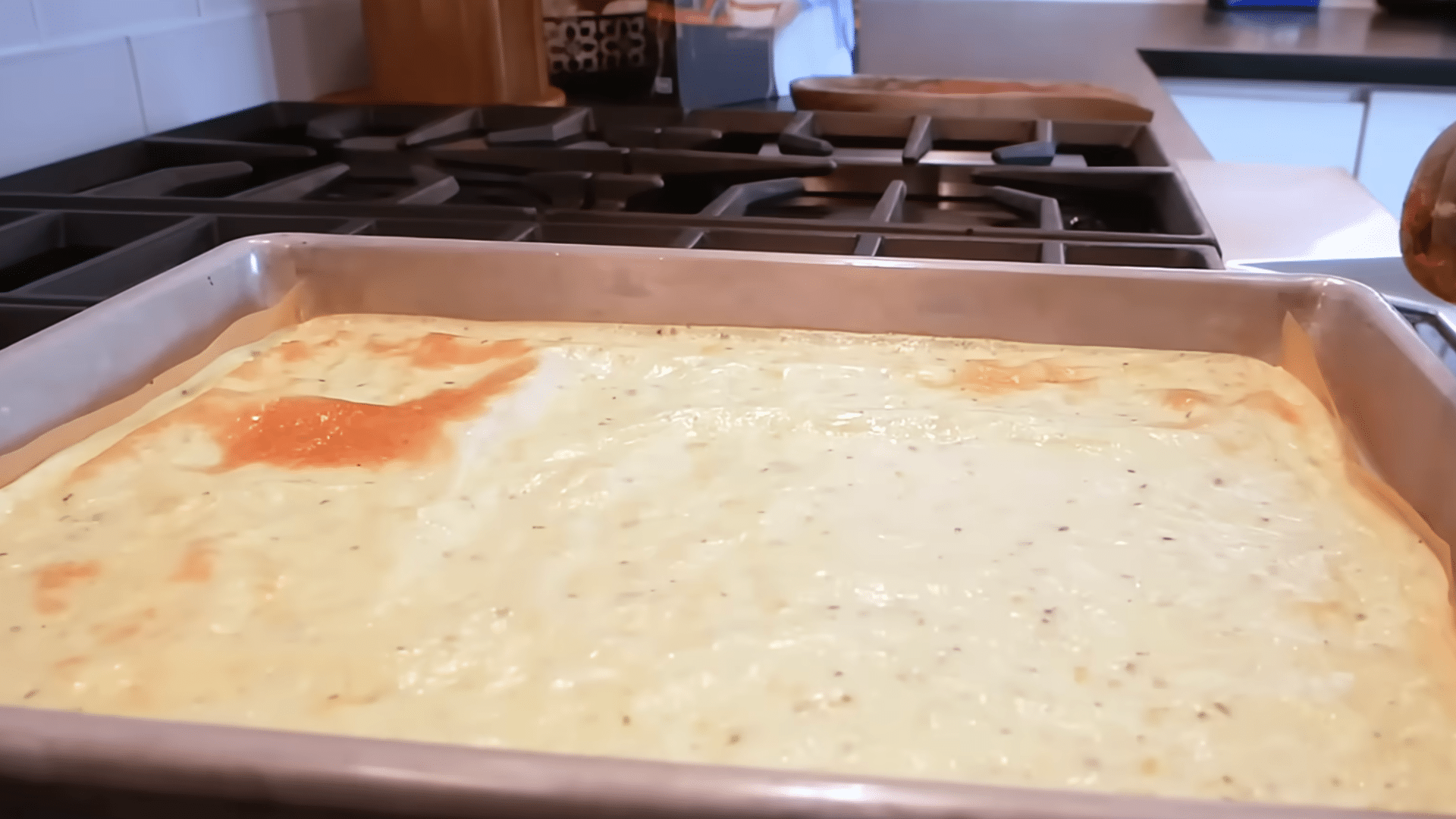
Once baked, remove the pan from the oven and let the flatbread cool for 5 to 10 minutes. This resting time allows the eggs to firm up slightly, making the flatbread easier to handle.
Before lifting it out, run a knife along the edges where any batter may have spread past the parchment. Then slowly peel the parchment away from the flatbread.
It should release easily. Rushing this step can cause tearing, especially while the bread is still hot.
Step 6: Store Properly for Meal Prep
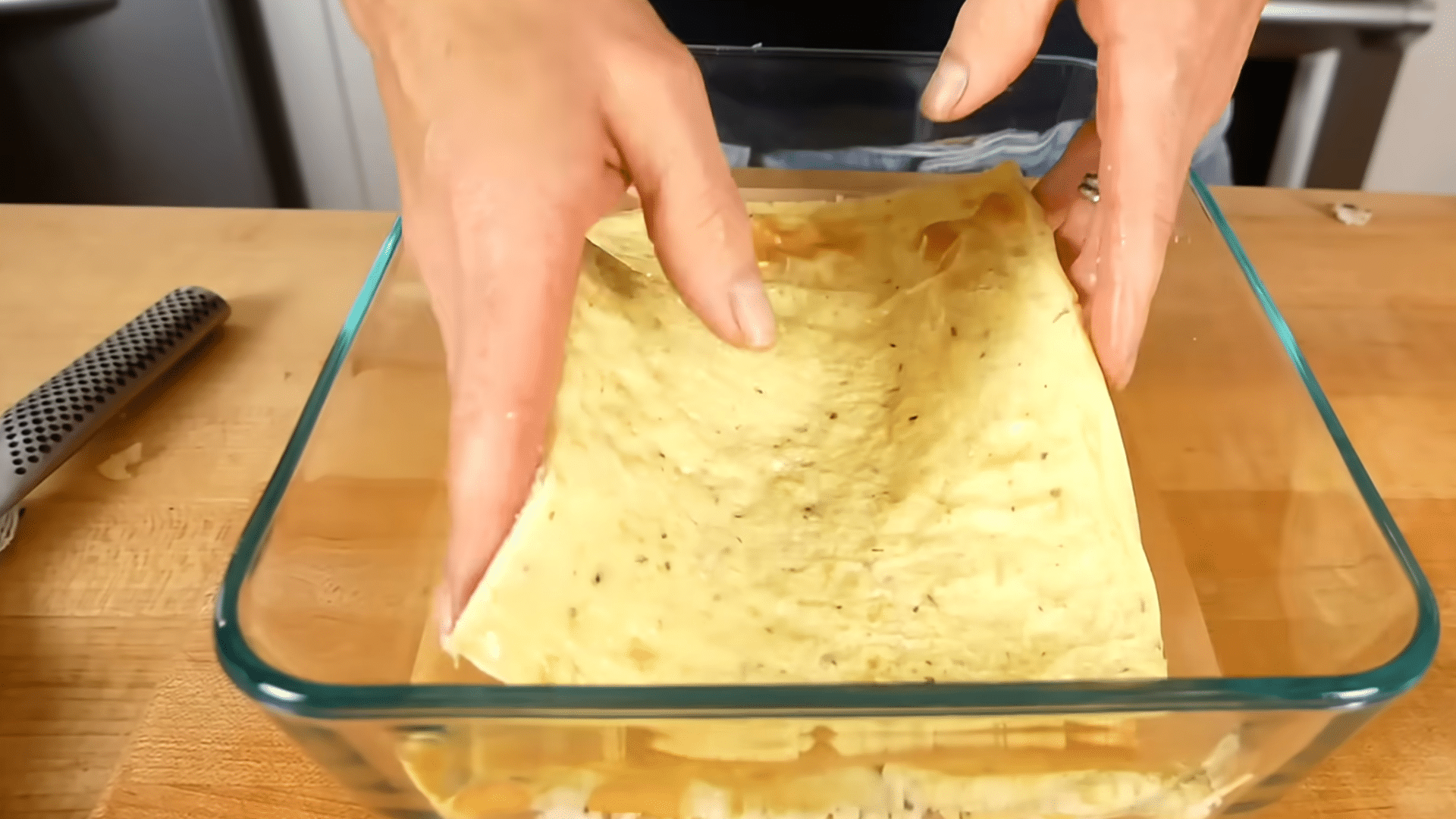
After cooling, cut the flatbread in half using a sharp knife. Place the pieces in an airtight container with parchment paper between each layer. This prevents sticking and keeps the texture intact.
Store the container in the refrigerator for up to 4 or 5 days. The flatbread stays soft and flexible when stored this way. Avoid stacking without parchment, as moisture can cause pieces to stick together and tear when separated later.
Step 7: Build a Simple High-Protein Wrap
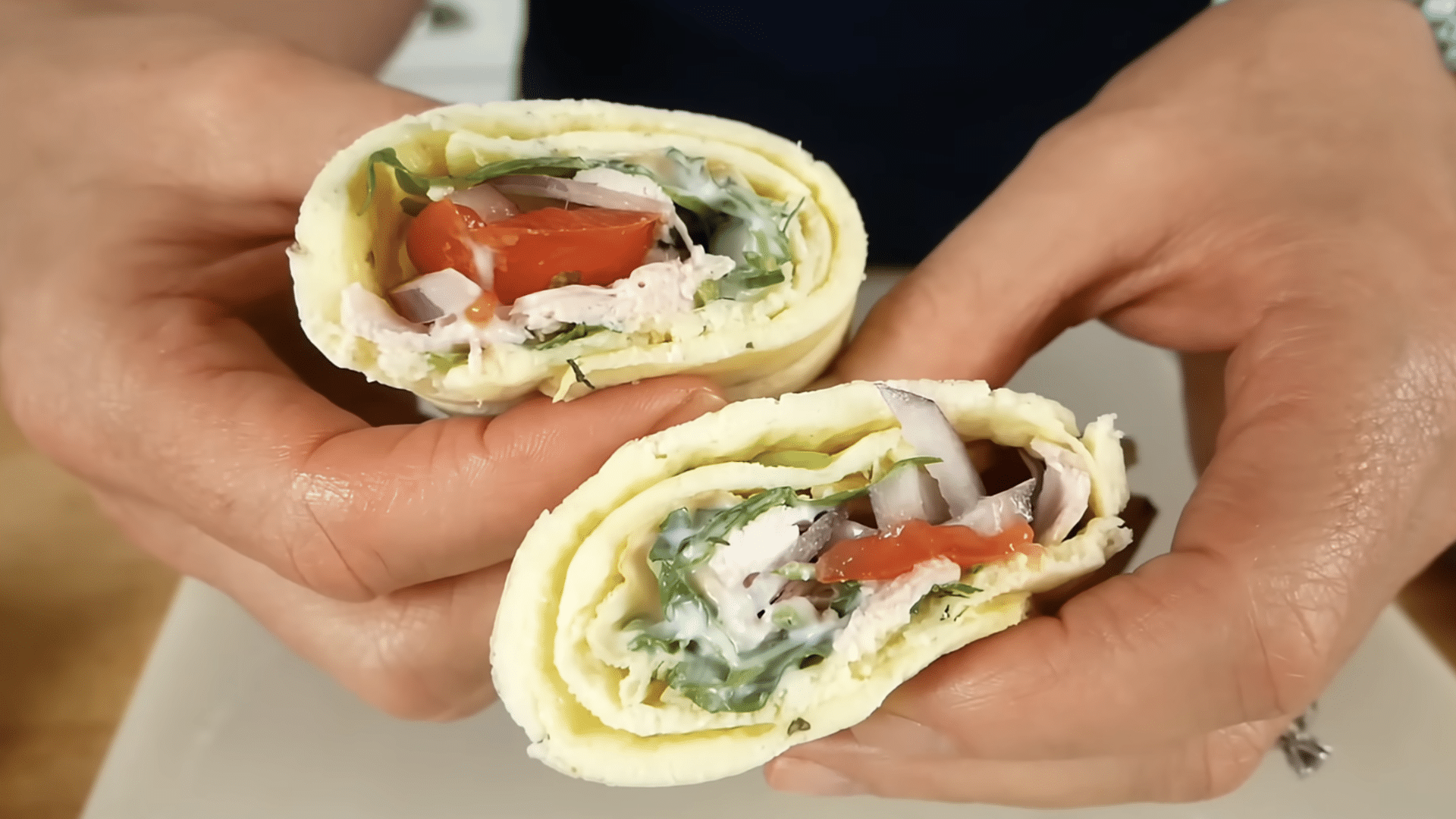
Use half of the flatbread as one serving. Spread a few tablespoons of tzatziki on one side, leaving space around the edges. Add a small handful of arugula, followed by shredded chicken, sliced tomatoes, and thin red onion.
Keep the fillings light to avoid tearing. Roll the flatbread gently into a wrap, then slice it in half. The texture is closer to a crepe than bread, but it holds fillings well when not overstuffed.
Different Cooking Methods (Pan, Oven, Air Fryer)
This section compares the three most common ways to cook cottage cheese and egg flatbread, based on texture, ease, and control.
| Cooking Method | Texture Result | Best For | Common Issue |
|---|---|---|---|
| Pan | Soft with crisp spots | Quick meals and small batches | Uneven cooking |
| Oven | Even and flexible | Meal prep and wraps | Longer cook time |
| Air Fryer | Firmer edges | Fast cooking | Over-browning |
Each method works well, but the best choice depends on your kitchen tools, time, and how you plan to use the flatbread.
What People are Saying About Cottage Cheese & Egg Flatbread
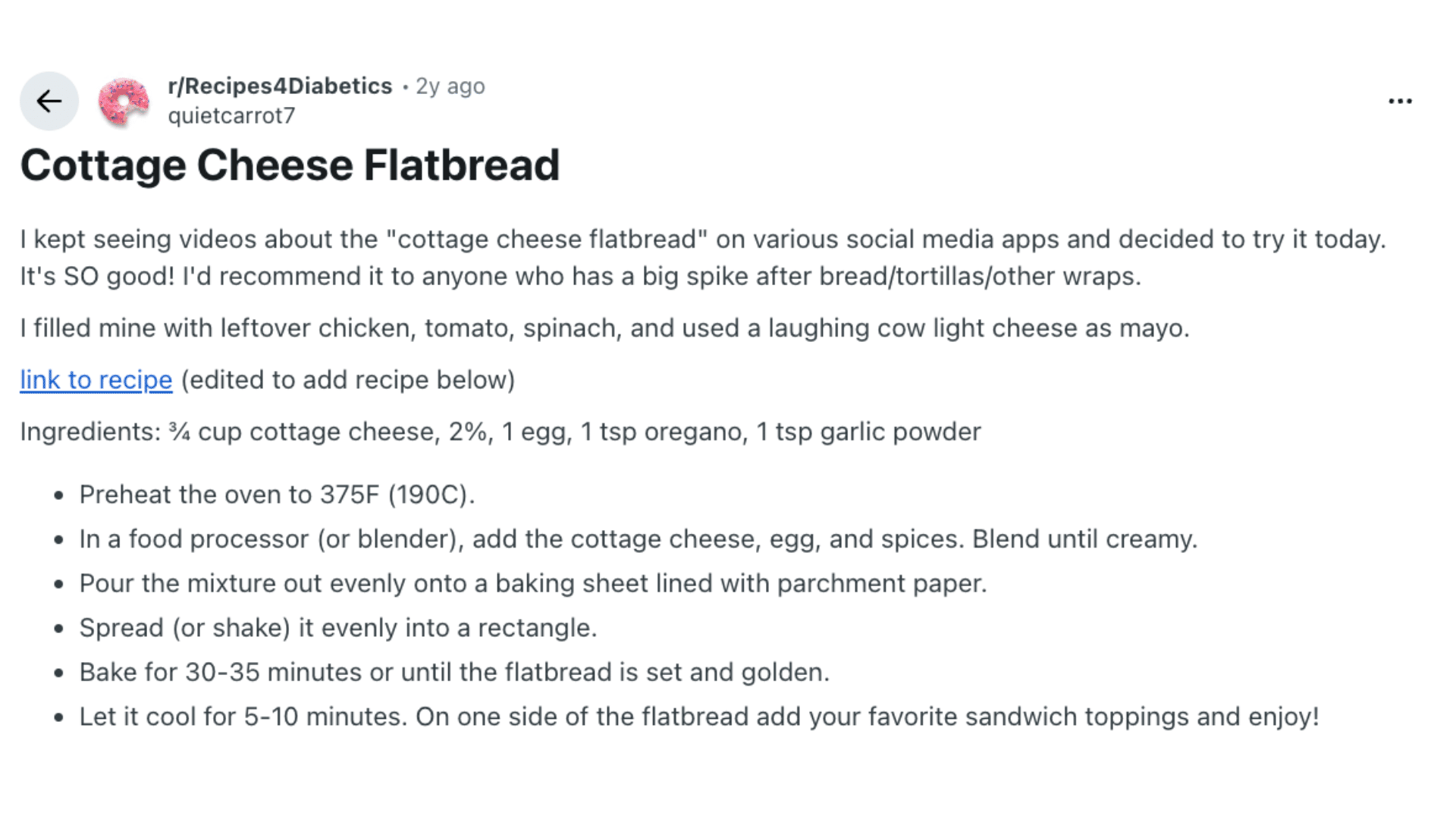
Cottage cheese and egg flatbread started showing up across Reddit when home cooks began looking for bread swaps that felt filling without causing big blood sugar spikes.
In the r/Recipes4Diabetics community, a user named quietcarrot7 shared that the flatbread worked well as a wrap replacement and tasted better than expected. They described it as one of the few bread-style options that did not cause the same reaction as tortillas or regular bread.
Another Reddit user, snorkie, commented that it was one of the best low-carb crusts they had tried, even after adjusting the ingredient ratios. They noted that using more cottage cheese and eggs still produced a sturdy result.
A third user, InterestingEditor378, asked about making the flatbread ahead for the week, which sparked discussion around storage and meal prep.
Overall, Reddit users praised the flatbread for being simple, flexible, and reliable for everyday meals, especially when bread is usually a problem.
What People are Sharing on Facebook About Cottage Cheese Flatbread
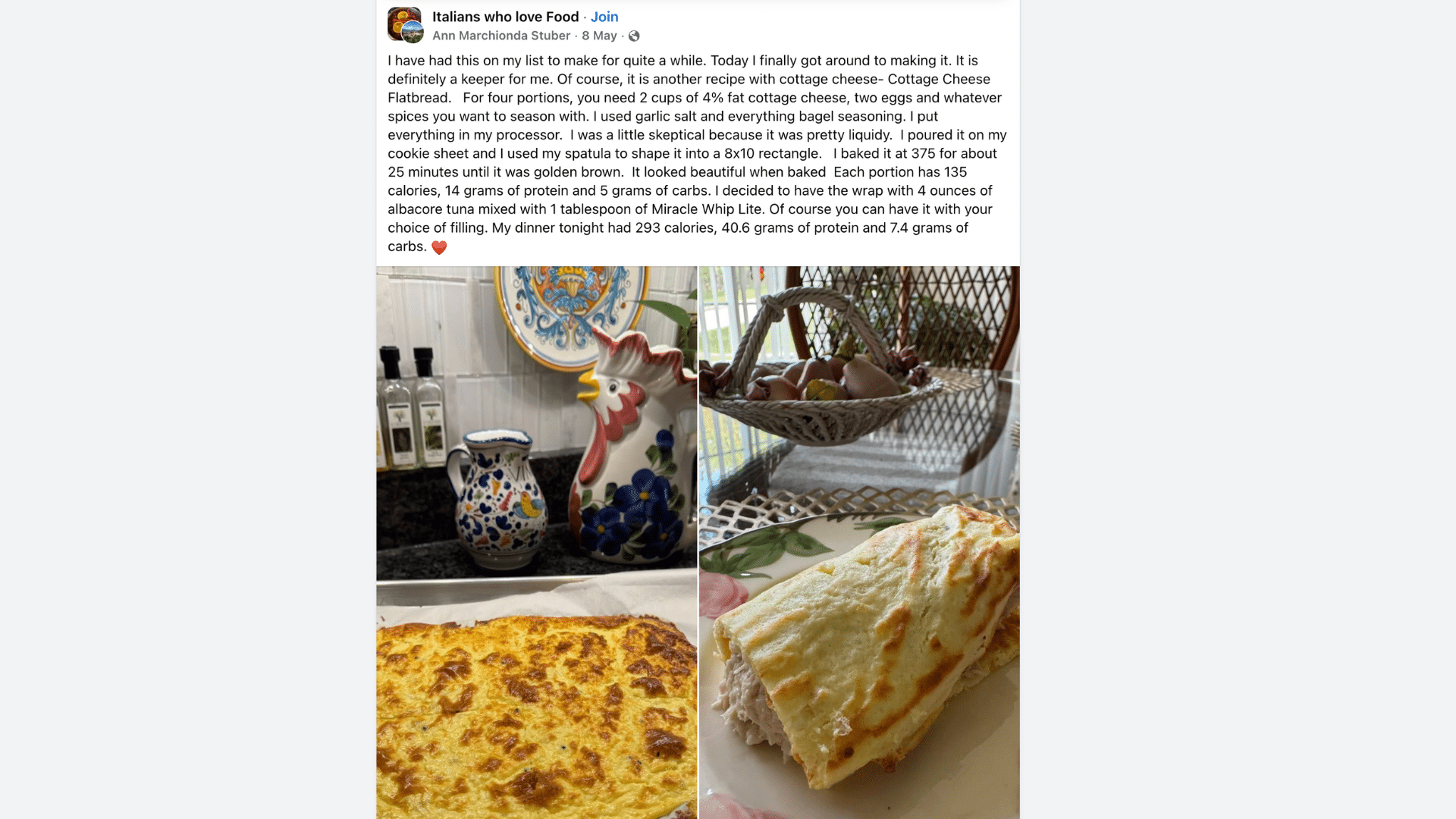
Cottage cheese flatbread has also gained attention in Facebook food groups, especially among home cooks who enjoy simple, practical recipes.
In the Italians Who Love Food group, Ann Marchionda Stuber shared her experience making the flatbread after seeing it recommended several times. She mentioned feeling unsure at first because the batter looked very liquid, but the final result baked up golden and sturdy. She used 4% cottage cheese, eggs, garlic salt, and everything bagel seasoning, shaping it into a rectangle before baking.
Nutrition was a big reason the recipe stood out. Ann noted that each portion contained 135 calories, 14 grams of protein, and only 5 grams of carbs.
Other members, including Elizabeth Mitchell Plante, asked about using lower-fat cottage cheese when 4% was not available, showing how adaptable the recipe felt.
Comments overall focused on how useful the flatbread was as a wrap base, how good it looked baked, and how easily it fit into everyday meals without much effort.
Cottage Cheese Choices and How They Change Results
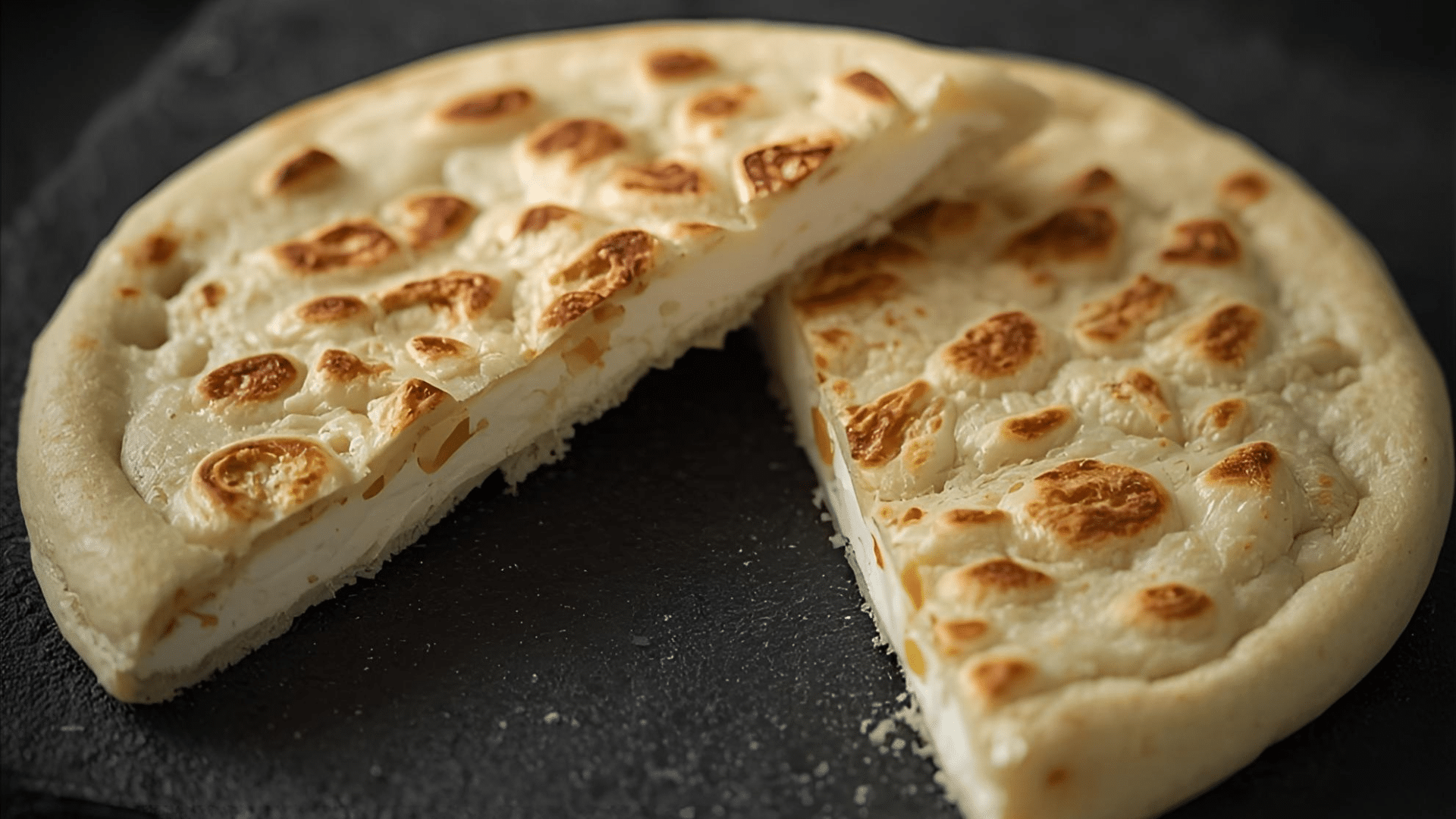
The type of cottage cheese you use affects texture, moisture, and how the flatbread cooks, even when the rest of the recipe stays the same.
Small Curd vs. Large Curd Cottage Cheese
Small curd cottage cheese blends faster and creates a more even batter. When baked, the flatbread turns out smoother and more flexible, which helps when using it for wraps or sandwiches.
Large curd cottage cheese has more visible curds and releases moisture at different rates. If not blended well, it can leave soft spots or uneven thickness.
Large curd works best when fully blended and baked in the oven, where steady heat helps set the center more evenly across the pan.
Full-Fat vs. Low-Fat Cottage Cheese
Full-fat cottage cheese produces a richer texture and helps the flatbread stay tender after baking. The added fat supports even cooking and reduces the risk of dryness.
Low-fat cottage cheese contains more moisture, which can lead to a softer or slightly wet center if not baked long enough. When using low-fat, spreading the batter thinner and allowing a few extra minutes in the oven helps.
Cooking spray on parchment is also helpful, since lower fat increases the risk of sticking.
Blended vs. Unblended Batter
Blended batter creates a smooth, crepe-like flatbread that bends easily without tearing. This is the version most people prefer for wraps and layered fillings.
Unblended batter keeps some curd texture, which can feel more rustic but often cooks unevenly. Online cooks usually recommend blending fully, especially when baking on a sheet pan.
Community feedback shows blended versions hold together better, slice cleaner, and reheat more evenly, making them easier for meal prep and repeat use.
Mistakes New Makers Admit Online
Before diving in, many first-time cooks share small missteps that affect texture, cooking, and overall results when making this flatbread.
- Using cottage cheese that is too watery
- Not blending the batter long enough
- Spreading the mixture too thickly or unevenly
- Baking at the wrong temperature
- Skipping parchment paper and dealing with sticking
Conclusion
The recipe works because the steps stay simple and the methods stay flexible. You saw how oven, pan, and air fryer cooking each change the texture and timing.
Small choices, like which cottage cheese you use or how well you blend the batter, can affect the final result more than expected.
Once those details make sense, the recipe becomes easy to repeat and adjust.
If you have already made cottage cheese and egg flatbread, I would enjoy hearing what worked for you or how you filled it. You can also check out other simple, practical recipes on the blog to keep building meals that fit your daily routine