
Bringing a Labrador puppy into a small apartment can work well, but it requires planning before the puppy walks through the door. Labradors are friendly, active, curious dogs. They grow quickly, chew heavily during puppyhood, and want to be close to their people. In a small apartment, those traits become more noticeable because every corner matters.
A small home does not need to feel crowded with a puppy. The key is to divide the space clearly, remove risks early, buy only useful supplies, and build a routine from day one. A Labrador does not need a huge house to become a well-behaved family dog. It needs structure, exercise, supervision, sleep, and people who follow the same rules.
This guide explains how to prepare a small apartment for a new Labrador puppy in a practical way. It covers the home setup, safety checks, supplies, daily routines, and family rules that make the first weeks easier.
1. See the Apartment Through a Labrador Puppy’s Eyes
A Labrador puppy enters an apartment with no understanding of human rules. A shoe looks like a chew toy. A phone charger feels interesting in the mouth. A rug corner invites pulling. A trash bin smells like treasure. A puppy does not know what is expensive, dangerous, private, or off-limits.
A small apartment needs preparation because the puppy will reach most areas quickly. In a larger house, people sometimes close off rooms and slowly introduce the dog to new spaces. In a small apartment, the puppy may see the kitchen, sofa, front door, hallway, and bedroom within minutes. Without boundaries, the puppy can make messes faster than the owner can respond.
A Labrador also grows fast. The tiny puppy that fits under a coffee table will soon have enough strength to pull, jump, knock over bowls, and reach higher surfaces. Plan for the dog the puppy will become, not only the small animal arriving on the first day.
The puppy’s natural habits should guide your setup. Labradors like to chew, carry objects, sniff food, follow people, and play with energy. They also need plenty of sleep. A tired puppy often becomes wild, mouthy, and noisy rather than calm. Many new owners mistake overtired behavior for extra energy, then add more play. The better response is often a nap in a safe space.
The apartment should support four basic needs: rest, toilet training, eating, and supervised play. These needs should not compete with each other. A puppy should not sleep beside the trash can, eat next to a pile of shoes, or have free access to the whole apartment during toilet training.
A prepared apartment also protects your patience. Puppy accidents, chewing, barking, and jumping feel less stressful when the home is arranged for them. You will still clean messes and correct behavior, but you will not spend the whole day chasing the puppy away from cords, socks, bins, and furniture legs.
2. Build a Puppy Map Before the Puppy Comes Home
A puppy map is a simple plan for how each part of the apartment will be used. It helps you decide where the puppy sleeps, eats, plays, trains, and stays when you cannot supervise. In a small apartment, this matters more than buying extra supplies.
Start with the main puppy zone. This should be the area where the puppy spends most of the first weeks. For many apartments, the best place is part of the living room or a corner near the kitchen. Choose a spot with washable flooring if possible. If the floor is wood or carpet, use a washable mat or protective covering under the playpen, crate, or food bowls.
The sleeping area should feel calm but not isolated. Labradors usually want to be near people. A crate or bed in a quiet corner of the living room can work well. Some owners keep the crate in the bedroom at night during the first weeks, then slowly move it if needed. The goal is to help the puppy settle without learning that crying brings constant attention.
The feeding area should be easy to clean. Place food and water bowls on a non-slip mat. Avoid narrow walkways where someone may kick the bowl or step in spilled water. Labradors can be messy drinkers, so keep towels nearby.
The toilet training plan needs thought before the puppy arrives. If you live on a high floor, do not wait until the first accident to decide how you will get outside. Puppies need to go out after sleeping, eating, drinking, playing, and training. In the first weeks, that can mean many trips per day.
If outdoor access is easy, use the same outdoor toilet spot each time. If you live in a building with elevators or long hallways, prepare for quick exits. Keep the leash, treats, poop bags, and shoes near the door. Some owners use puppy pads for a short period, especially in high-rise apartments, but pads should not become a permanent habit unless there is a specific reason. If you use them, place them in one defined area and move toward outdoor toilet training as soon as possible.
No-go areas should be clear from the beginning. Bedrooms, bathrooms, balconies, laundry spaces, and storage corners often contain items a puppy should not reach. Use baby gates, closed doors, or a playpen. Do not rely on verbal correction alone. A puppy learns better when the environment makes good choices easier.
A studio apartment needs a tighter plan. One corner may serve as the sleeping and resting area, while the middle of the room becomes the supervised play area. Use storage bins with lids, foldable gates, and washable mats. Keep the floor as empty as possible.
A one-bedroom apartment can separate zones more easily. The living room can be the puppy’s main area, the bedroom can stay off-limits at first, and the kitchen can serve as the feeding zone if it is safe. This setup helps the puppy learn that not every door and room belongs to them.
3. Remove Hidden Dangers Before Buying Cute Supplies
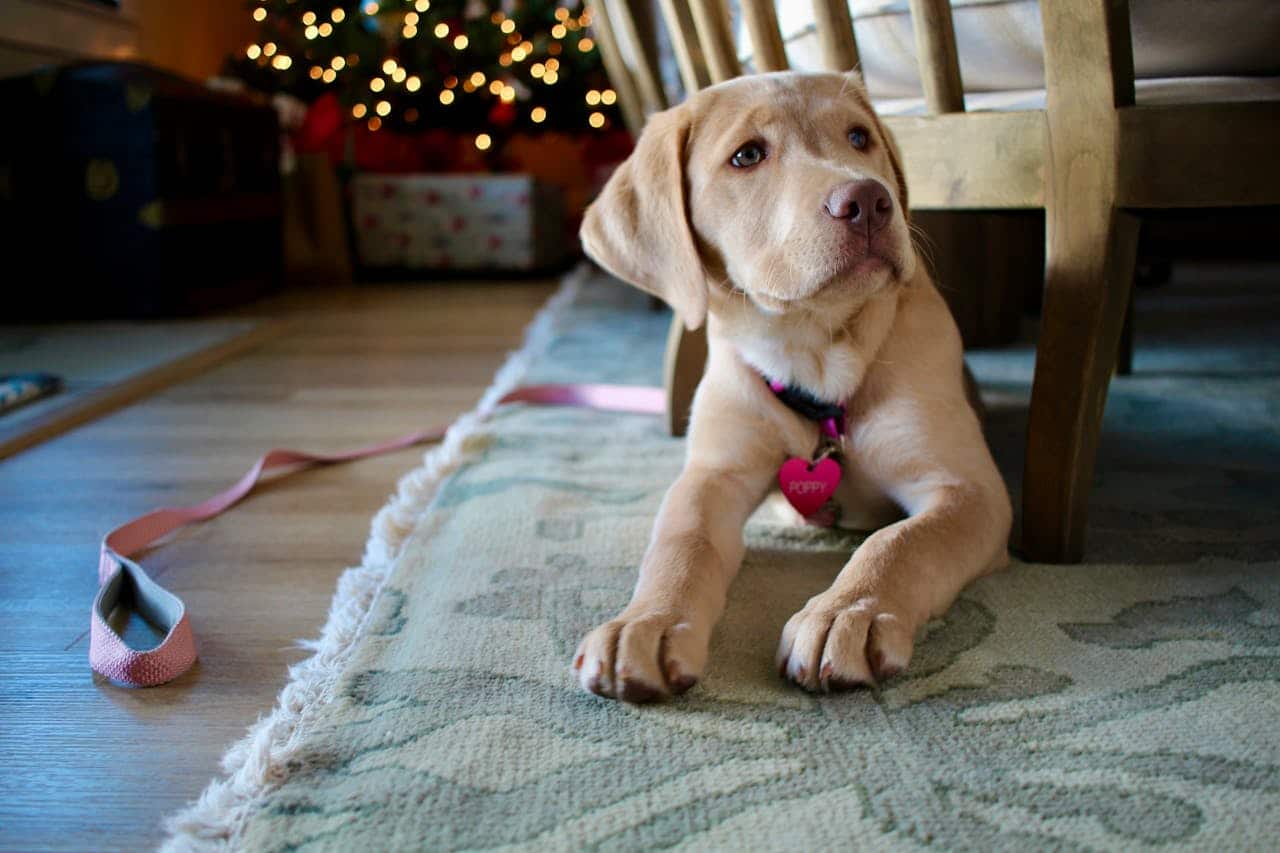
Puppy-proofing should happen before shopping for toys, beds, and collars. A Labrador puppy can swallow small objects, bite electrical cords, raid trash, chew furniture, and eat unsafe foods. Small apartments often hold many objects at puppy level because storage space is limited.
Start with electrical cords. Move chargers, lamp cords, router cables, and extension leads behind furniture or inside cable covers. A puppy chewing a live cord can suffer serious injury. Do not leave laptop chargers hanging from tables. Unplug cords that are not in use.
Clear low surfaces next. Coffee tables, TV stands, bedside tables, and open shelves should not hold remotes, pens, coins, earbuds, keys, candles, medication, or small decorations. A Labrador puppy can grab an item in seconds and turn it into a choking risk.
Check cleaning products and chemicals. Store detergents, laundry pods, sprays, bleach, dishwasher tablets, and pest products inside locked cabinets or high shelves. Bathroom bins and kitchen bins should have secure lids or stay behind cabinet doors. Labradors are food-driven, and trash smells interesting even when it looks disgusting to humans.
Move unsafe foods out of reach. Chocolate, grapes, raisins, onions, garlic, alcohol, caffeine, macadamia nuts, and products containing xylitol can harm dogs. Do not leave gum, candy, baked goods, or leftovers on low tables. Teach family members that the puppy does not get scraps without permission.
Look at plants. Some common houseplants can irritate or poison pets. Move plants to high shelves or a closed room until you confirm they are safe. Even safe plants can become a digging project if the puppy can reach the soil.
Secure the balcony. A balcony can be dangerous for a puppy, especially in an apartment building. Check rail spacing, gaps near the floor, loose panels, and furniture the puppy could climb. Do not leave the puppy alone on a balcony. Even a calm puppy can panic at a noise or chase a bird.
Protect furniture in simple ways. Labradors chew during teething, and wooden chair legs, sofa corners, rug edges, and cabinet handles can become targets. Move valuable pieces away from the puppy zone when possible. Use bitter spray only as a backup, not as the main plan. Good supervision, chew toys, and restricted access work better.
Reduce floor clutter. Shoes, laundry, children’s toys, bags, and delivery boxes should not sit within reach. A puppy cannot tell the difference between an old slipper and a new sneaker. If the puppy gets one shoe sometimes, it may go after every shoe.
Get down to puppy height and scan the apartment. Look under the sofa, near the bed, behind doors, beside the fridge, and along walls. Anything loose, sharp, toxic, or chewable should be moved or blocked.
4. Buy Less, But Buy the Right Things
A small apartment can become crowded quickly if every puppy product comes home at once. Labradors need durable, washable, practical items. They do not need five beds, twenty toys, or bulky gear that blocks walkways.
Start with a crate or playpen. A crate gives the puppy a safe place to sleep and rest. A playpen gives more room during supervised apartment time. Some owners use both. Choose a size that fits your apartment but can still support a growing Labrador. Many crates come with dividers, so the space can expand as the puppy grows.
Choose washable bedding. Puppies have accidents, spill water, chew corners, and bring dirt inside. A simple crate mat or washable bed is better than an expensive soft bed during the first months. Avoid bedding with loose stuffing if the puppy likes to destroy fabric.
Buy food and water bowls with a non-slip base. Stainless steel bowls are easy to clean. A mat underneath helps catch spills. Labradors often eat quickly, so a slow feeder can help. It also adds a small mental challenge during meals.
Choose chew toys carefully. Labrador puppies need legal items to chew. Pick toys made for puppies and strong chewers, but avoid anything too hard for baby teeth. Rotate toys instead of leaving every toy on the floor. A small basket with a few options is easier to manage than a scattered pile.
Use puzzle feeders and treat toys for short indoor activities. These help the puppy work for food and stay busy without racing around the apartment. Keep sessions short, especially at first. The goal is calm engagement, not frustration.
Buy an enzyme cleaner before the puppy comes home. Regular cleaning products may remove the visible mess but leave odor that encourages repeat accidents. An enzyme cleaner breaks down urine and stool smells more thoroughly.
Prepare walking gear. You will need a collar, ID tag, harness, and leash. A front-clip harness may help as the puppy grows stronger. Do not wait until the first vet visit or first outdoor trip to buy proper gear.
Keep grooming simple. A soft brush, nail clippers or grinder, puppy-safe shampoo, towels, and grooming wipes are enough at the start. Labradors shed, and regular brushing helps keep hair under control in a small apartment.
Create one storage spot for puppy items. Use a bin, cabinet shelf, or basket for treats, bags, grooming supplies, and toys. Small apartments need order. A dedicated storage area keeps the home from feeling like a pet store aisle or a showroom for commercial furniture, where every object has a display purpose but no real place in daily life.
Avoid overbuying. Puppies change quickly. A bed may become too small. A toy may be ignored. A harness may fit for only a short time. Buy the basics first, then adjust after you learn the puppy’s habits.
5. Create a Daily Rhythm That Protects the Puppy and the Apartment
A small apartment works best when the puppy follows a steady routine. Labradors are energetic, but they also respond well to predictable days. Feeding, toilet breaks, naps, play, and training should happen in a rhythm the puppy can learn.
Begin toilet training immediately. Take the puppy out after waking, after meals, after drinking, after play, and before bedtime. Praise calmly and reward the puppy when it goes in the right place. Do not punish accidents. Clean them well and adjust the schedule.
Feed at set times. Free-feeding can make toilet training harder because you cannot predict when the puppy needs to go. Measured meals also help prevent overeating. Labradors often love food, so portion control matters from the beginning.
Use short training sessions indoors. A small apartment is a good place to teach sit, down, name response, leave it, drop it, and calm handling. Keep sessions brief, usually a few minutes. End before the puppy loses focus. Training should feel like part of daily life, not a long event.
Schedule naps. Puppies need far more sleep than many new owners expect. Without rest, they may bite more, bark more, jump more, and ignore simple cues. Use the crate or playpen for quiet time after meals, play, and short training sessions.
Control indoor play. Labradors enjoy movement, but a small apartment is not the place for wild running, hard tugging near furniture, or jumping on and off the sofa. Use softer games. Practice toy trades, gentle tug with rules, basic fetch in a short hallway only if safe, and sniffing games with hidden treats.
Teach door manners early. Apartment dogs pass through building doors, elevators, stairwells, and shared halls. A Labrador puppy should learn to sit or pause before leaving the apartment. This prevents rushing into neighbors, delivery workers, or other dogs.
Handle elevator and hallway behavior with care. Keep the puppy close to you. Reward calm behavior when people pass. Do not let the puppy jump on neighbors, even if they say it is fine. A small puppy jumping may seem cute, but a grown Labrador doing the same can become a problem.
Practice alone time in tiny steps. Many Labradors love company and may struggle when left alone. Start with short separations while you are still home. Place the puppy in the crate or pen with a safe chew, step away briefly, then return calmly. Do not make departures emotional.
Manage noise. Apartment living means shared walls, floors, and halls. Puppies bark, whine, drop toys, and run. You cannot prevent every sound, but you can reduce unnecessary noise. Use rugs or mats where safe, avoid late-night active play, and respond to barking with calm training rather than shouting.
Exercise should match the puppy’s age and development. A young puppy does not need long forced walks. It needs frequent toilet trips, gentle exploration, training, and rest. As the dog grows, increase activity with guidance from your vet.
6. Prepare the People, Not Just the Apartment
A Labrador puppy needs consistent people as much as a safe home. If one person allows sofa jumping and another forbids it, the puppy becomes confused. If one person feeds from the table and another tries to stop begging, training becomes harder.
Set house rules before the puppy arrives. Decide whether the puppy can go on the sofa, enter the bedroom, sleep in the crate, eat in the kitchen, or receive food from people’s plates. These choices do not need to match another owner’s rules. They only need to be clear and consistent in your home.
Divide responsibilities. Someone must handle morning toilet trips, meals, cleaning, training, grooming, vet visits, and evening walks. In a small apartment, ignored tasks become visible fast. A missed toilet break can mean an accident. A missed walk can mean restless behavior. A missed cleaning job can make the apartment smell.
Prepare children for calm behavior. Children should not chase the puppy, pull ears, grab toys from the mouth, or wake the puppy from sleep. Teach them to offer toys instead of hands and to leave the puppy alone during meals and naps.
Prepare roommates or partners for the first weeks. Puppyhood interrupts sleep, work calls, meals, and quiet evenings. Everyone in the apartment should expect some mess, noise, and schedule changes. Clear expectations reduce frustration.
Plan the first vet visit early. Ask about vaccinations, parasite prevention, diet, safe socialization, and exercise limits. Do not wait for a problem before choosing a vet. Keep medical records in one place.
Research puppy classes or trainers nearby. Labrador puppies benefit from early training and socialization. Choose a trainer who uses reward-based methods and teaches practical skills, not only tricks. Apartment puppies especially need help with leash manners, greeting people, settling, and ignoring distractions.
Prepare for cleaning as part of life. Keep towels near the door for rainy days. Keep poop bags by the leash. Keep enzyme cleaners accessible. Brush the puppy regularly. Wash bedding often. A Labrador can bring mud, hair, water, and chewed bits of toy into every corner of a small home.
Give neighbors a little consideration. You do not need to announce every detail, but a polite note or brief conversation can help if you expect some early crying or training noise. This matters more in buildings with thin walls or shared hallways.
Stay patient during the adjustment period. The puppy has left its mother, littermates, and familiar surroundings. It must learn where to sleep, where to pee, what to chew, how to be alone, and how to live with human routines. Mistakes are part of that learning.
A small apartment can become a good home for a Labrador when the setup matches the dog’s needs. Clear zones reduce confusion. Safety checks prevent emergencies. Useful supplies save space. A steady routine teaches the puppy what to expect. Consistent people turn that structure into daily behavior.