
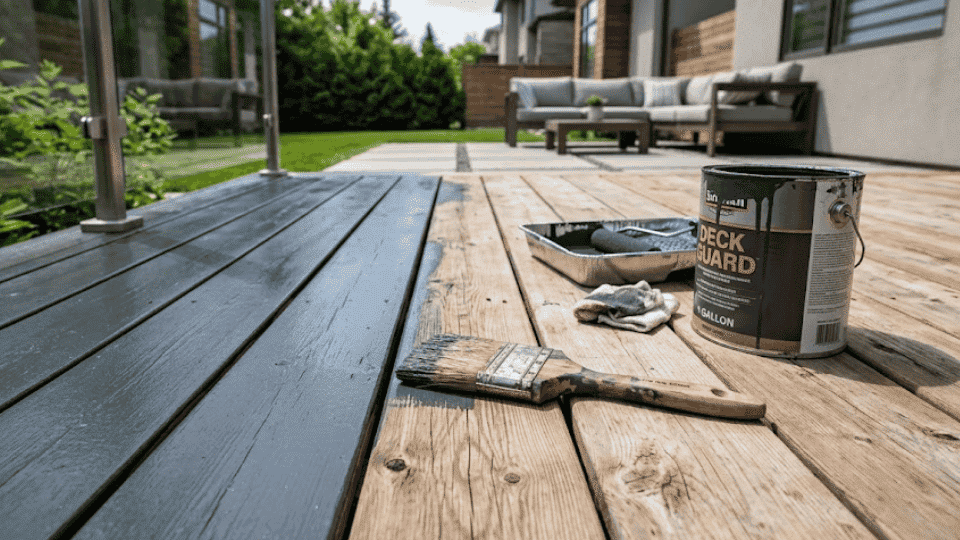
When I first tried painting outdoor wood, I thought any paint would work. I quickly learned that outdoor wood needs special care. Sun, rain, and temperature changes can damage wood quickly if you use the wrong paint. That’s why choosing the best paint for outdoor wood is so important.
Here, I’ll share everything I’ve learned through research and real testing. We’ll look at the best exterior paint options, compare top brands, and break down what actually works in different weather conditions.
I’ll also explain the difference between acrylic and oil-based paints, and show you how to pick the right one for your project. By the end of this post, you’ll know exactly which paint to choose and how to make your outdoor wood last for years.
What Is the Best Paint for Outdoor Wood?
If you’re wondering what the best paint for outdoor wood is, the simple answer is this: go for a high-quality 100% acrylic latex paint. Acrylic paints are breathable, allowing moisture trapped in the wood to escape as vapor.
This prevents blistering and rot from forming beneath the film, which is the main reason they outperform oil-based options on wood in the long run.
I’ve found that it works best because it can expand and shrink with the wood as the weather changes, so it doesn’t crack or peel easily.
If you want something more premium, brands like Sherwin-Williams Duration and Benjamin Moore Aura are great choices and last a long time. For smaller areas like doors and trim, oil-based or urethane paints can give a tougher finish.
Choosing the right paint really matters because outdoor wood is exposed to sun, rain, and heat every day, and the right paint helps protect it and keep it looking fresh for years.
Quick answer for different surfaces:
Siding and fences: 100% acrylic latex (e.g., Sherwin-Williams Duration, Benjamin Moore Aura).
Doors and trim: oil-based or waterborne alkyd for a harder, smoother finish.
Decks and floors: porch-and-floor formulas with slip-resistant properties.
Furniture: acrylic latex or indoor/outdoor furniture-specific paint.
Types of Exterior Paint for Wood
Choosing the right type of paint can make a big difference in how long your outdoor wood lasts. I’ll break down the main options so you can pick the one that works best for your needs.
| Feature | Acrylic Latex Paint | Oil-Based Paint | Solid Stain | Exterior Paint |
|---|---|---|---|---|
| How it Works | Sits on the surface but stays flexible with wood movement | Forms a hard outer layer on top of wood | Penetrates into the wood surface | Sits on top and creates a thick protective coating |
| Drying Time | Fast drying | Slow drying | Medium drying time | Depends on formula (usually moderate) |
| Maintenance Level | Low maintenance, long-lasting | May need touch-ups if cracking occurs | Needs reapplication sooner than the paint | Low to medium, depending on quality |
| Protection Level | Strong protection against weather and UV | Very strong surface protection | Moderate protection | High protection from weather elements |
| Best Use Case | General outdoor wood like siding, fences | High-use areas like doors and trim | Natural look projects like decks or fences | Full coverage projects needing maximum protection |
This comparison makes it easier to understand how each option works, so you can choose the right one for your needs and project.
Best Paints for Outdoor Wood
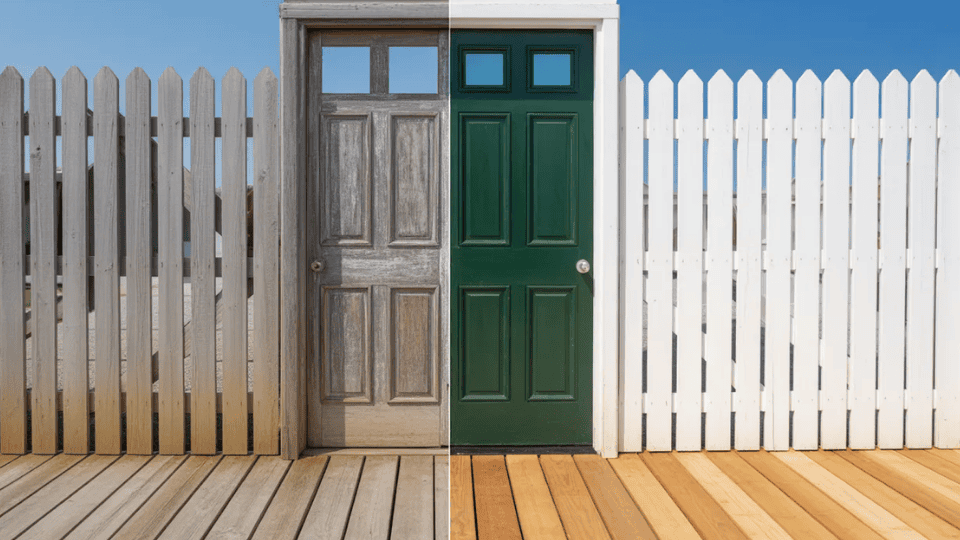
Here are some of the best exterior paint options I’ve come across, with simple pros, cons, and where each one works best.
1. Sherwin-Williams Duration Exterior Paint
A high-quality exterior paint known for strong protection against weather, mildew, and wear, making it a trusted choice for long-lasting outdoor wood surfaces.
- Pros: Excellent adhesion and mildew resistance, holds up well in harsh weather, provides long-lasting protection, and has a smooth finish over time.
- Cons: Higher price than others, may not suit tight budgets, and availability can vary by store.
- Best for: Siding and areas exposed to harsh weather
2. Benjamin Moore Aura Exterior Paint
This premium exterior paint offers rich color, smooth finish, and long-lasting durability, making it ideal for homeowners who want a high-end look.
- Pros: Outstanding color retention, smooth premium finish, resists fading, and provides excellent durability even in changing weather conditions over many years.
- Cons: Expensive option, not ideal for budget projects, and may feel costly for large surfaces like full exterior siding or fences.
- Best for: Premium outdoor projects
3. Behr Marquee Exterior Paint
A popular and budget-friendly paint that offers good coverage and durability, making it a great option for DIY users working on outdoor wood projects.
- Pros: Great coverage in fewer coats, affordable pricing, easy to apply, and widely available, making it ideal for beginners and DIY projects.
- Cons: Slightly thick consistency can make application harder, may need proper mixing, and is not as premium as higher-end paint brands overall.
- Best for: DIY users and budget projects
4. PPG Breakthrough Paint
A fast-drying and highly durable paint designed for high-use surfaces, offering a tough finish that works especially well for trim and doors.
- Pros: Very durable finish, dries quickly, resists wear and tear, and performs well on surfaces that are used often, like doors.
- Cons: Limited color options compared to others, may restrict design choices, and not always easy to find in all local markets.
- Best for: Doors and trim
5. Rust-Oleum Exterior WoodPaint
An affordable, reliable paint option that provides basic protection and is ideal for smaller outdoor wood projects, such as furniture and decorative pieces.
- Pros: Budget-friendly option, provides rust and weather protection, easy to use, and works well for small outdoor wood furniture projects.
- Cons: Less flexible than acrylic paints, may crack over time, and not ideal for large surfaces exposed to extreme weather conditions.
- Best for: Furniture and small projects
6. Zinsser AllCoat Exterior Paint
A versatile paint that works on multiple surfaces, offering strong adhesion and durability, making it useful for mixed-material outdoor projects.
- Pros: Strong bonding to many surfaces, good durability, works on wood and more, and saves time when painting mixed materials outdoors.
- Cons: Mid-range price may not suit all budgets, and while performance is good, it’s not as premium as top-tier exterior paint brands.
- Best for: Mixed surfaces
7. Sadolin Superdec Opaque Wood Protection
A flexible and weather-resistant paint designed for extreme conditions, helping protect outdoor wood while maintaining a smooth and durable finish.
- Pros: Highly flexible coating, resists cracking and peeling, offers strong weather protection, and works well in extreme climates with changing temperatures.
- Cons: Limited availability in the US market, may be harder to find, and sometimes comes at a higher price point.
- Best for: Extreme climates and weather exposure.
Step-by-Step: How to Paint Outdoor Wood Properly
Following the right steps can make a big difference in how long your paint lasts and how good it looks on outdoor wood surfaces.
- Clean and Prepare the Surface: Start by using a deck cleaner and a stiff brush to remove dirt, debris, and mildew. Rinse with a low-pressure washer and let the wood dry fully.
- Inspect and Repair the Wood: Check for loose boards or damaged areas. Fix loose parts, replace rotted wood, and fill cracks with an acrylic crack filler to create a smooth surface.
- Apply a Quality Primer: Use a thick wood primer that penetrates the surface well. Apply with a brush or roller, evenly covering all areas, including rails and posts.
- Allow Proper Drying Time: Let the primer dry for about 1–2 hours and ensure clear weather conditions so the coating sets properly before applying the final paint.
- Apply Deck Coating Evenly: Once the primer is dry, apply your paint or deck coating in even layers to achieve a smooth, durable, and long-lasting finish.
Taking a little extra time with each step will help your outdoor wood stay protected and look great for years.
Paint Finish and Sheen: Which One Should You Choose?
This is a question top-ranking sources cover that your current blog doesn’t address at all, and it’s something almost every buyer has to decide at the store.
Here’s how the finishes break down for outdoor wood specifically:
| Finish | Sheen Level | Best For | Tradeoff |
|---|---|---|---|
| Flat / Matte | No shine | Siding with surface imperfections hides flaws well | Harder to clean; less moisture-resistant |
| Eggshell | Very low sheen | Fences, garden structures, smooth siding | Slightly easier to clean than flat |
| Satin | Moderate sheen | Siding in good condition, brick, and general outdoor wood | Easy to clean; shows surface imperfections more |
| Semi-Gloss | High sheen | Doors, trim, window frames, and areas with frequent contact | Very durable and cleanable; every imperfection shows |
| Gloss | Very high sheen | Front doors, railings, decorative trim | Maximum durability; requires very smooth surface prep |
In my experience, satin is the most forgiving choice for general outdoor wood projects. It has enough sheen to repel water and wipe clean, but it doesn’t demand a flawlessly sanded surface the way semi-gloss does.
For doors and trim, I always go to semi-gloss because those areas take more physical contact and need to be scrubbed down occasionally.
VOCs in Exterior Paint: What You Should Know
Volatile organic compounds (VOCs) are chemicals in paint that evaporate as it dries. Traditional oil-based paints are high in VOCs.
Most modern 100% acrylic paints come in low-VOC or zero-VOC versions, which is better for your health during application and better for the environment.
Some US states, including California, have strict VOC limits on exterior coatings, which has pushed most major brands toward low-VOC formulations anyway.
If you’re buying in California or the Northeast, the version you find on shelves may already be the low-VOC variant.
For painting near garden beds, children’s play areas, or areas where pets spend time, always look for low-VOC or zero-VOC exterior paint. The fumes off-gas quickly, but during application in enclosed outdoor spaces like pergolas or sheds, ventilation still matters.
Community Shared Testing Insights
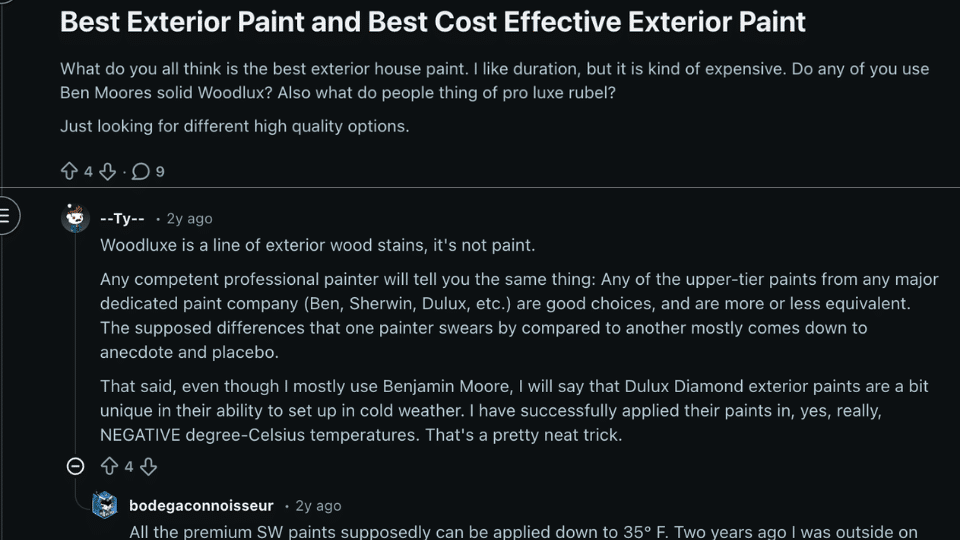
When reading the discussion titled “Best Exterior Paint”, it is clear that the original poster was looking for high-quality exterior paint options, mentioning Sherwin-Williams Duration as effective but expensive, and asking about alternatives like Benjamin Moore.
In the replies, one user clarified that Woodluxe is actually a stain, not paint. Others pointed out that most premium brands, such as Sherwin-Williams, Benjamin Moore, and Dulux, perform similarly, and the differences are often based on personal experience rather than major performance gaps.
From a broader perspective, it can be said that people often focus too much on brand names when choosing paint. In reality, selecting a good acrylic paint, using a proper primer, and following correct application steps matter far more for achieving long-lasting results.
When Does Outdoor Wood Need Repainting?
Knowing when to repaint is just as important as knowing how to do it right. The warning signs that it’s time for a new coat include:
- Paint is visibly peeling, flaking, or bubbling in sections
- Color has faded significantly and looks chalky to the touch (this is called chalking, where UV breaks down the surface of the paint)
- You can see bare wood showing through in spots
- There are visible cracks running along the wood grain
- Mold or mildew is recurring in the same spot despite cleaning
Most quality exterior paints advertise 10 to 15-year warranties, but real-world life on siding is typically 7 to 10 years, and on horizontal surfaces like decks, closer to 3 to 5 years.
Horizontal wood takes more UV and moisture than vertical surfaces, which is why decks and porch floors degrade faster and why most paint warranties explicitly exclude them.
Common Mistakes to Avoid
Avoiding these simple mistakes can help your paint last longer and keep your outdoor wood looking fresh and protected.
- Skipping Primer: Not using a primer can lead to poor paint adhesion, uneven finish, and faster peeling, especially on bare wood exposed to outdoor weather conditions.
- Using Indoor Paint Outside: Indoor paint is not made to handle sun, rain, or temperature changes, so it can fade, crack, or peel quickly when used outdoors.
- Painting Wet Wood: Applying paint on damp wood traps moisture inside, which can cause bubbling, peeling, and long-term damage to both the paint and the wood.
- Ignoring Weather Conditions: Painting in extreme heat, cold, or humidity can affect drying and finish quality, leading to uneven coverage and reduced durability over time.
By avoiding these mistakes, you can make sure your exterior paint job looks better and lasts much longer.
Final Coat
After trying different paints and learning from experts, I can say that not all exterior paints are the same. The best paint for outdoor wood is usually a high-quality acrylic latex paint because it moves with the wood and handles weather changes well.
I always suggest focusing on preparation just as much as the paint itself. A good primer and proper application can make a huge difference in how long your paint lasts. Even the best exterior paint won’t perform well if the surface isn’t ready.
If you take the time to choose the right product and apply it correctly, your outdoor wood can stay protected and look great for years. If you found this helpful, don’t forget to comment your thoughts, share it with others, or save it for later!