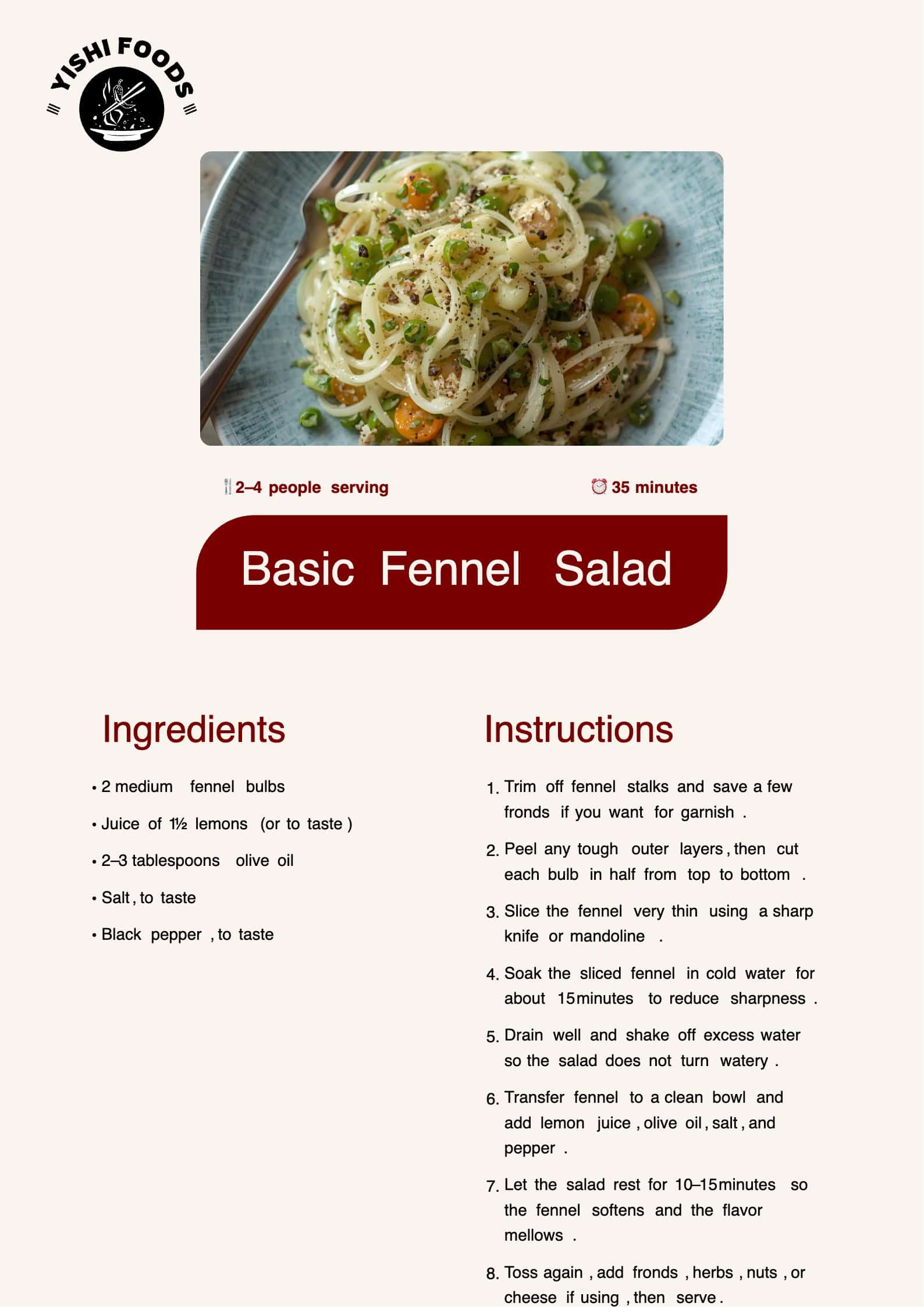

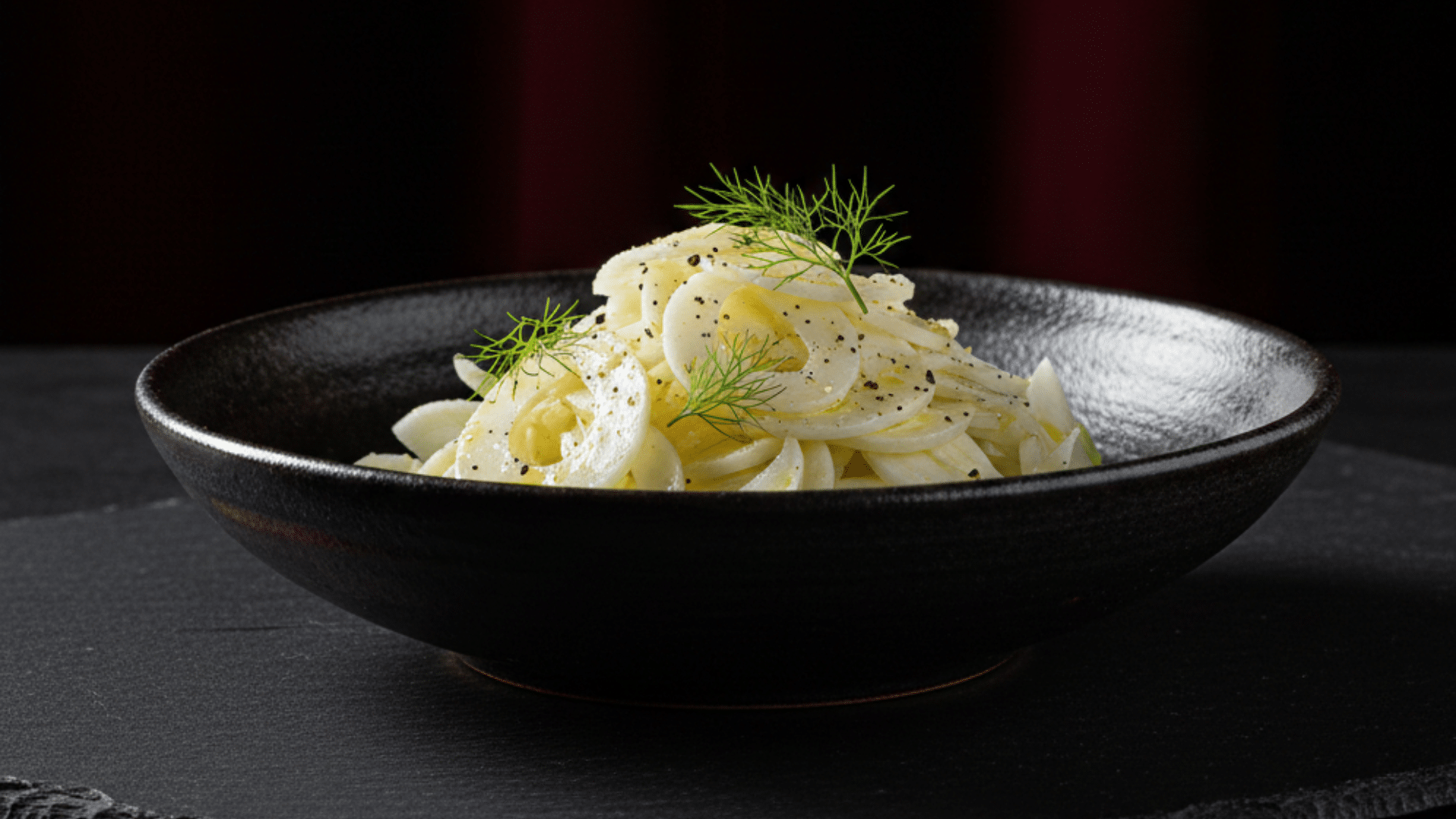
I used to walk past fennel at the store without a second thought, unsure what to do with it.
You may have done the same. It looks simple, but it can feel confusing if you have never used it before. A good fennel salad recipe changes that fast.
When sliced thin and dressed the right way, fennel turns crisp, fresh, and easy to enjoy.
It works for quick dinners, make-ahead meals, or simple sides that do not feel heavy. This post breaks things down clearly, from picking fennel to serving it well.
By the time you reach the end, you will feel ready to make a fennel salad recipe that fits your table and routine.
Understanding Fennel Salad
A fennel salad is made using raw fennel bulb sliced very thin, usually with a knife or mandoline. When cut this way, fennel stays crisp but becomes easier to chew.
The salad is lightly dressed with citrus juice or vinegar, olive oil, salt, and pepper. This simple mix helps balance fennel’s sharp taste.
Once the fennel is sliced and rested for a short time, the flavor softens and becomes milder. Many people are surprised by how fresh and clean it tastes. There are a few common styles you’ll see.
A basic lemon fennel salad keeps things simple. Citrus versions use orange or grapefruit for gentle sweetness. Other versions add apples, nuts, or leafy greens to make the salad more filling while keeping its crunch.
Basic Fennel Salad Recipe
There’s something comforting about how simple this fennel salad is. It’s the kind of dish that doesn’t need much explaining.
Thin slices of fennel, plenty of lemon, good olive oil, and time to sit. That’s it. This style of fennel salad is common in many homes, served casually, grabbed from the bowl throughout the day, and enjoyed without fuss.
The lemon softens the fennel, the salt pulls everything together, and the crunch stays just right. It works as a quick side for dinner or something to keep in the fridge for a few days. Simple food, done well.
Serves: 2–4 people
Ingredients
- 2 medium fennel bulbs
- Juice of 1½ lemons (or to taste)
- 2–3 tablespoons olive oil
- Salt, to taste
- Black pepper, to taste
Optional:
- Chopped fennel fronds or fresh herbs
- Chopped nuts or shaved cheese
Step 1: Prepare the Fennel
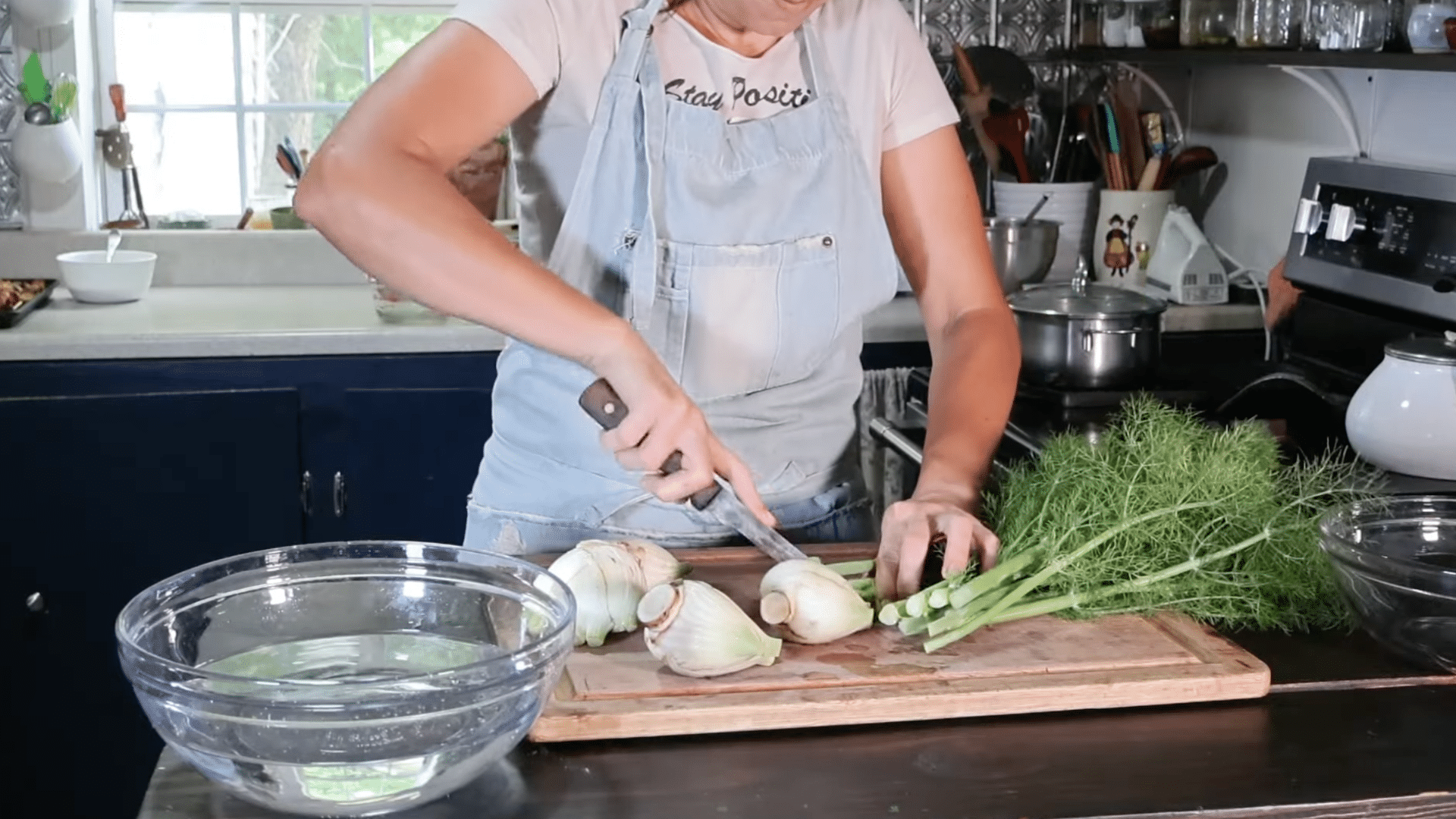
Start by cutting off the green stalks from the fennel bulbs. Set aside a small handful of fronds if they are fresh and green, as they can be used later. Remove any tough outer layers from the bulb.
Cut each bulb in half from top to bottom, then slice into thin pieces. The thinner the slices, the easier they will be to eat. Thin slices also help the fennel soften faster once seasoned.
Step 2: Soak and Drain
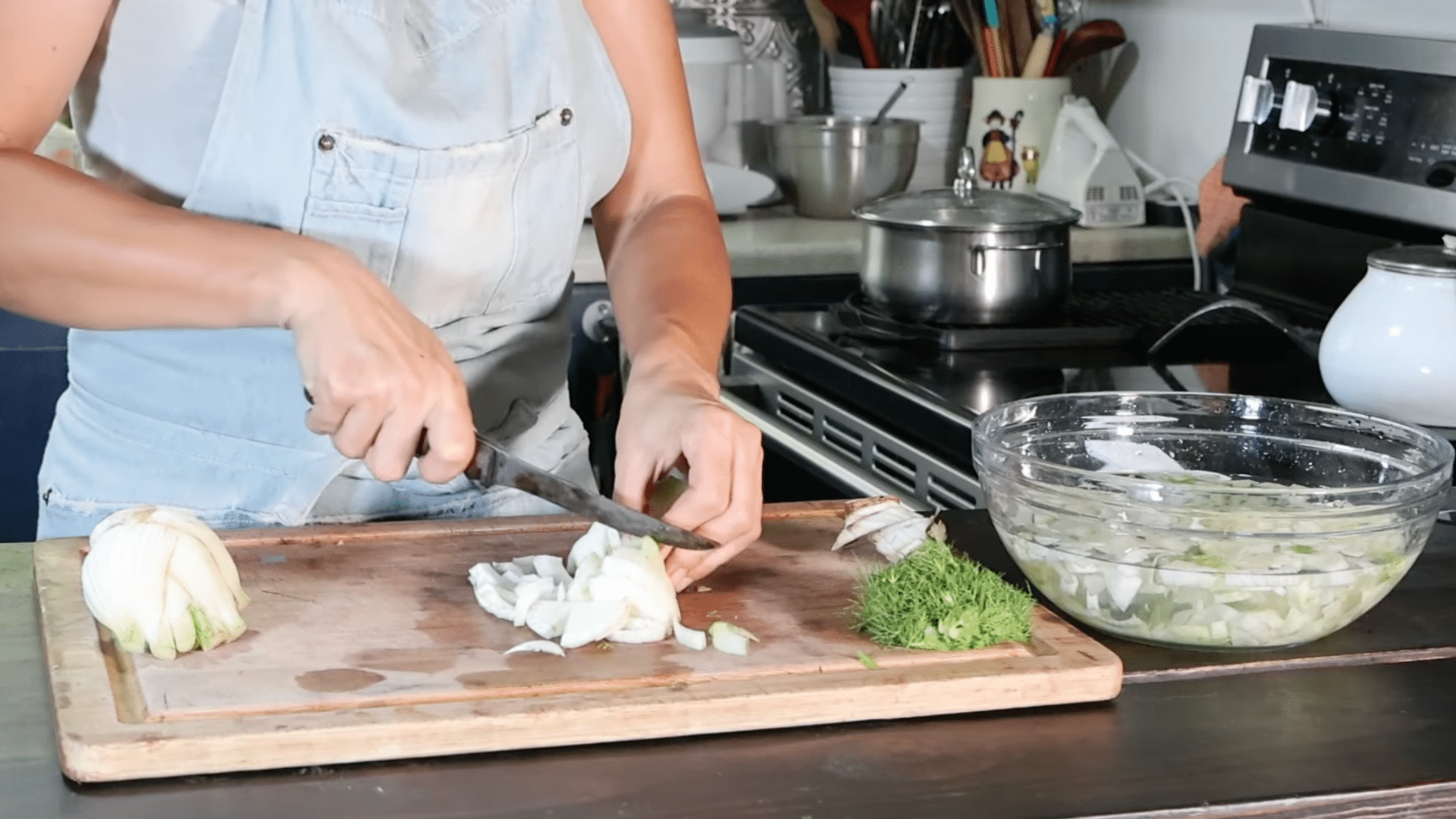
Place the sliced fennel into a large bowl filled with cold water. Let it soak for about 15 minutes. This step helps relax the fennel and slightly reduces its sharp bite.
After soaking, pour the fennel into a strainer and allow it to drain fully. Give it a few minutes so the excess water drips away. Well-drained fennel keeps the salad from becoming watery once the dressing is added.
Step 3: Season the Salad
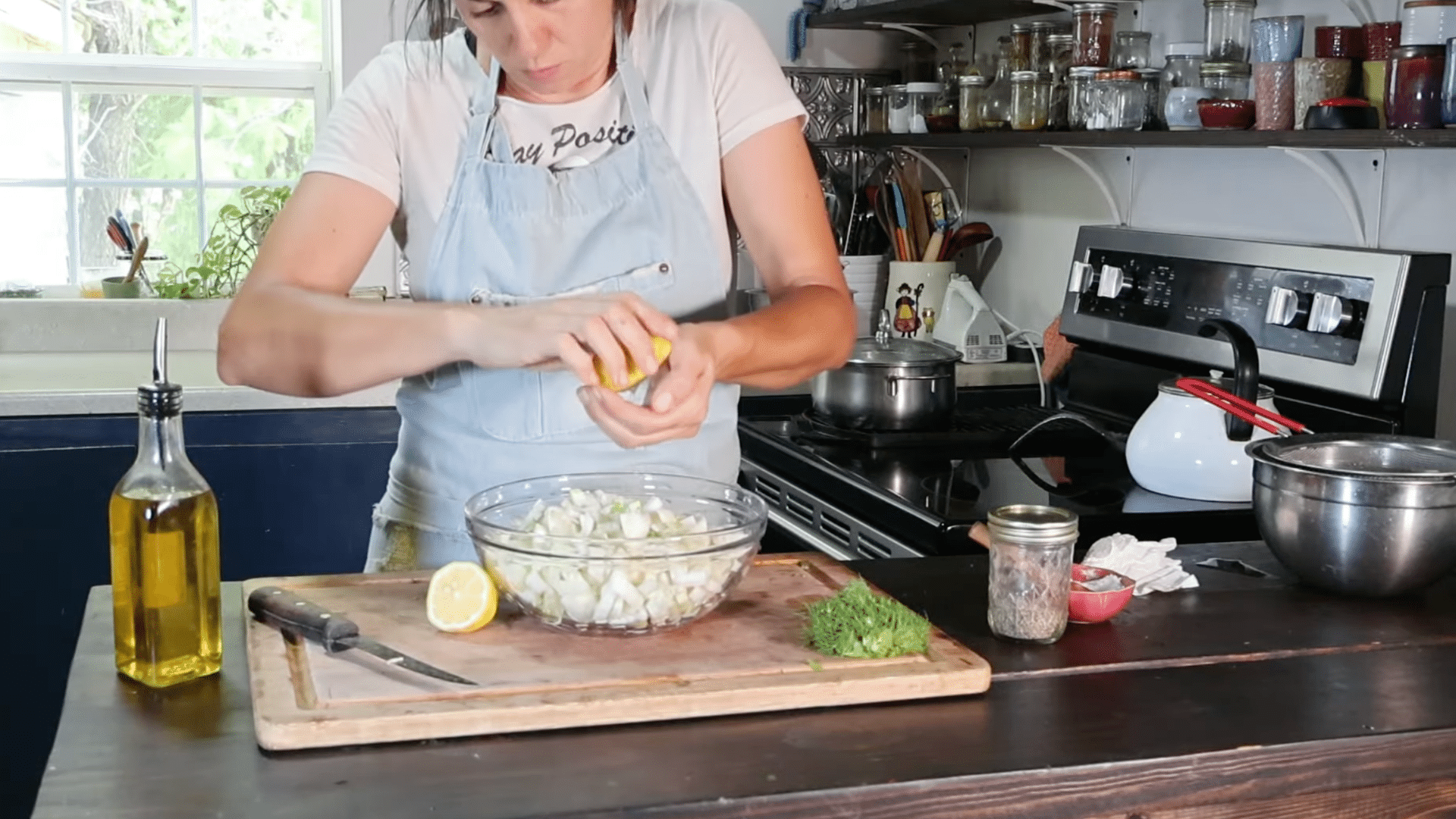
Transfer the drained fennel slices to a clean mixing bowl. Add fresh lemon juice, olive oil, salt, and black pepper. Use enough lemon juice to fully coat the fennel. Toss gently but thoroughly so every slice gets seasoned.
The salt will begin to draw out moisture, while the lemon juice starts softening the texture. At this stage, the salad will smell sharp and fresh, which is exactly what is needed.
Step 4: Rest and Finish

Let the salad sit at room temperature for 10 to 15 minutes before serving. This resting time allows the lemon juice and salt to continue softening the fennel and balancing the flavor.
After resting, give the salad another gentle toss. Add chopped fennel fronds, herbs, nuts, or cheese if using. Taste once more and adjust seasoning if needed. The salad can be served right away or stored in the fridge.
How to Choose a Good Fennel Bulb
Choosing fresh fennel makes a clear difference in taste and texture, especially when eating it raw in salads at home.
- Pick bulbs that feel heavy and firm: A good fennel bulb should feel solid for its size. Light or spongy bulbs are often old and less crisp.
- Avoid brown spots and dry patches: Skip fennel with dark marks, cracks, or dry areas. These signs usually mean the bulb is past its best.
- Check the color carefully: Fresh fennel is pale green or creamy white. Yellowing or dull color can point to age or poor storage.
- Smell the fronds if they are attached: Fronds should smell clean and lightly fresh. A musty or sour smell is a sign to pass.
- Choose smaller bulbs when possible: Smaller fennel bulbs tend to be more tender and easier to slice, making them better for raw salads.
How to Slice Fennel the Right Way
Slicing fennel correctly makes a big difference in how the salad tastes and feels when eaten. Start by trimming the base only if it looks very thick or tough.
Leaving a small part of the base helps the layers stay together while slicing. Cut the bulb in half from top to bottom to create a stable surface. Always slice across the grain, not lengthwise, to keep the texture tender.
Thin slices are more important than the tool used. Very thin pieces soften faster once dressed and are easier to chew. Thicker slices stay sharp and can feel tough, even after resting. Aim for slices that bend easily but still hold their crunch.
Simple Dressing Options That Work Best
These simple dressing choices soften fennel while keeping its natural taste clear, making the salad easy to enjoy with meals.
| Dressing Type | Why It Works | Key Ingredients |
|---|---|---|
| Lemon-Based Dressing | Keeps the salad sharp and helps soften raw fennel without masking its natural taste. | Olive oil, lemon juice and zest, salt, black pepper |
| Sweet and Tangy Dressing | Adds mild sweetness that pairs well with fruit, nuts, or sharper fennel bulbs. | Citrus juice, honey or maple syrup, Dijon mustard |
| Vinegar-Based Dressing | Gives a clean bite that works well alongside heavier or richer main dishes. | Apple cider or red wine vinegar, olive oil, light sweetener, or none |
Each option uses ingredients, so you can adjust amounts easily and match the dressing to the rest of your meal.
Popular Fennel Salad Variations
These common fennel salad variations show easy ways to adjust flavor and texture while keeping the base simple and flexible.
Citrus Fennel Salad
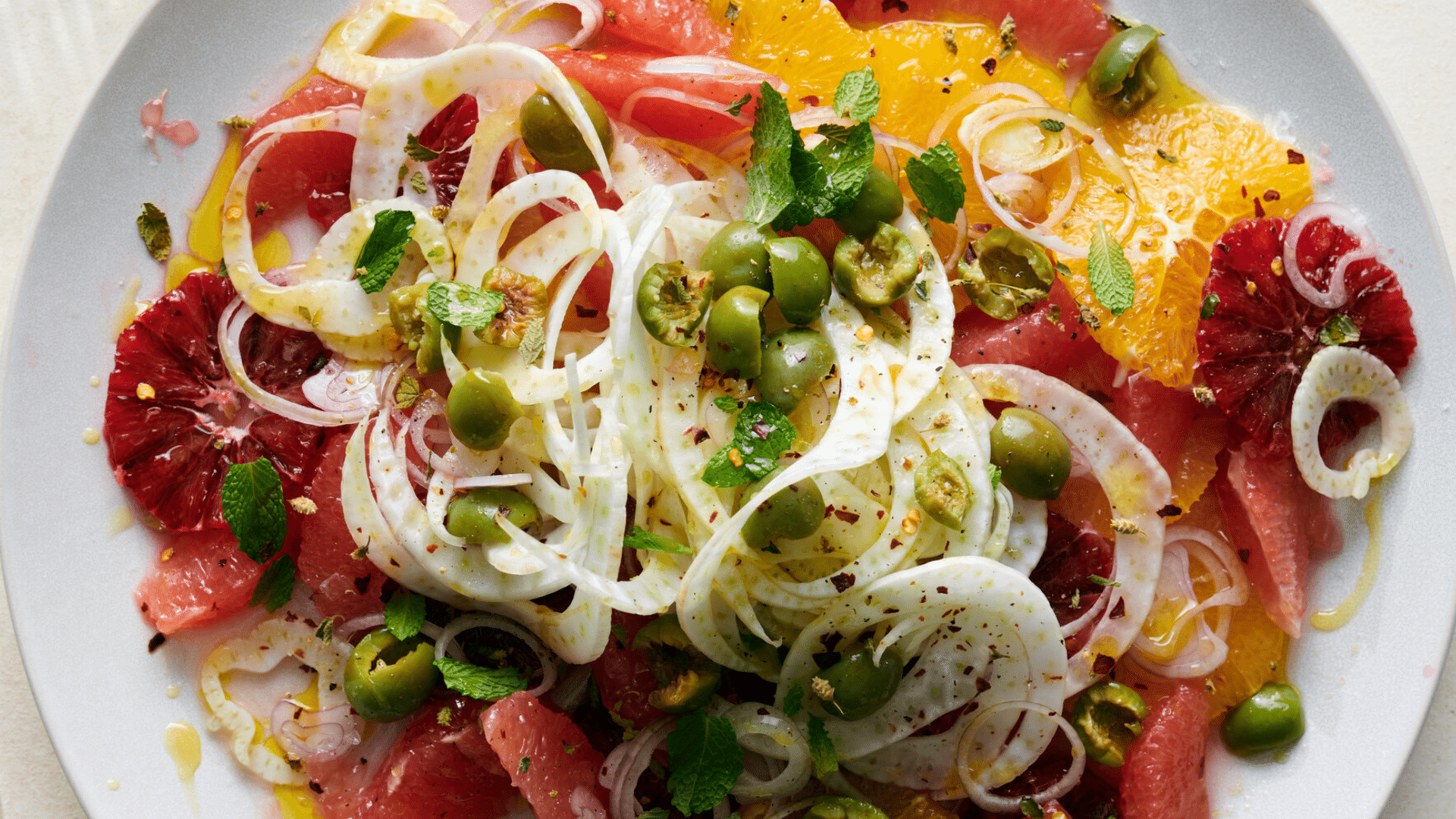
Citrus fennel salad pairs thinly sliced fennel with orange or grapefruit segments for a gentle contrast to its sharp bite. The citrus adds moisture and softness without making the salad heavy.
Mint brings a cool note, while parsley keeps the flavor clean and mild. This version works well as a side for fish, chicken, or grain dishes.
Use fresh citrus cut into small pieces so the juice mixes naturally with the dressing and helps the fennel relax before serving gently.
Apple Fennel Salad
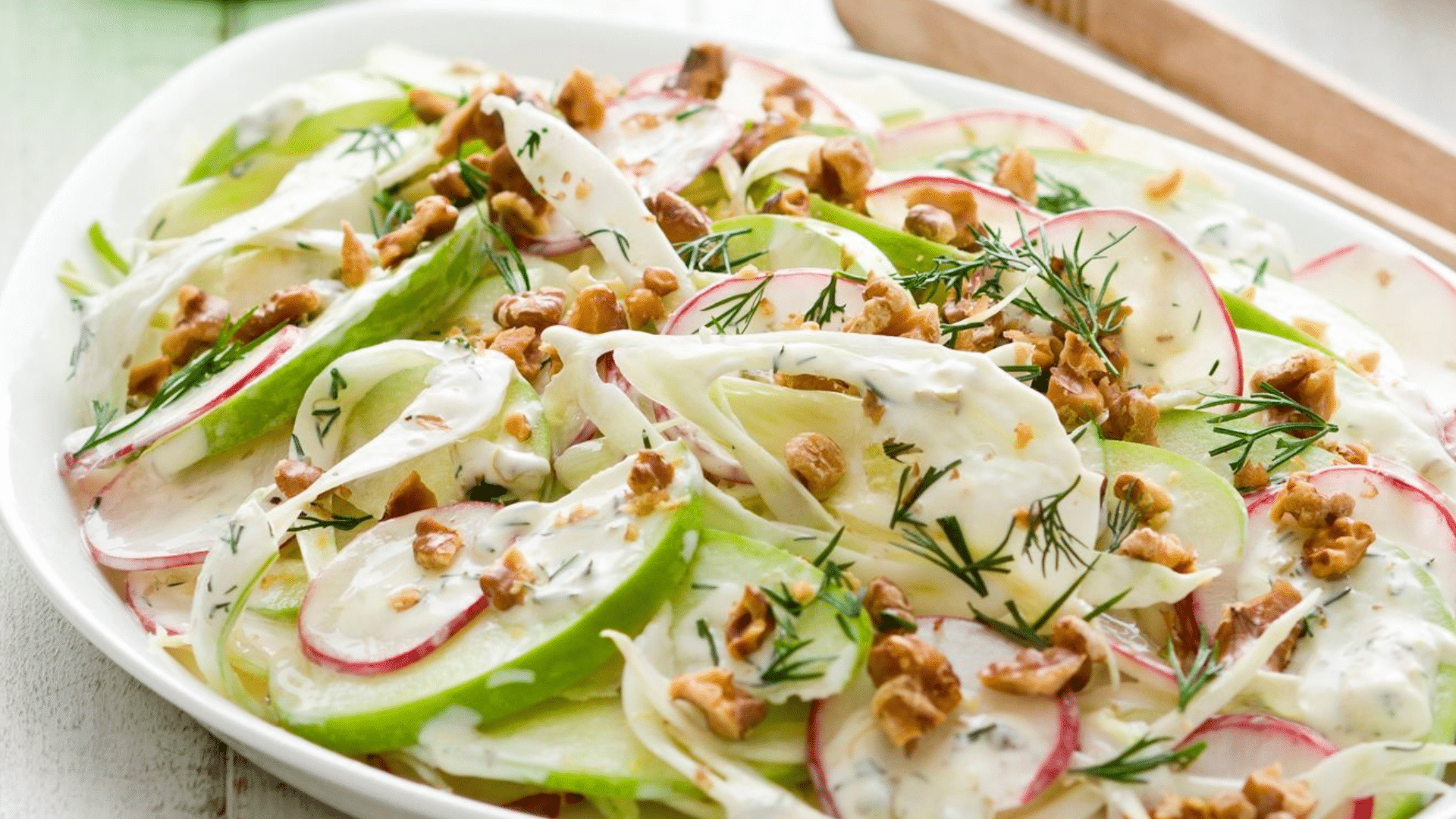
Apple fennel salad adds crisp apple slices that echo fennel’s crunch while offering a mild sweetness.
Choose firm apples that hold their shape after slicing. Almonds or walnuts bring texture and a toasty note without overpowering the salad. This version feels heartier and works well for lunch or potlucks.
Slice apples thin and add them just before serving to keep them from browning too quickly. A short squeeze of lemon slows browning and keeps the texture steady during a short resting time.
Spicy Fennel Salad
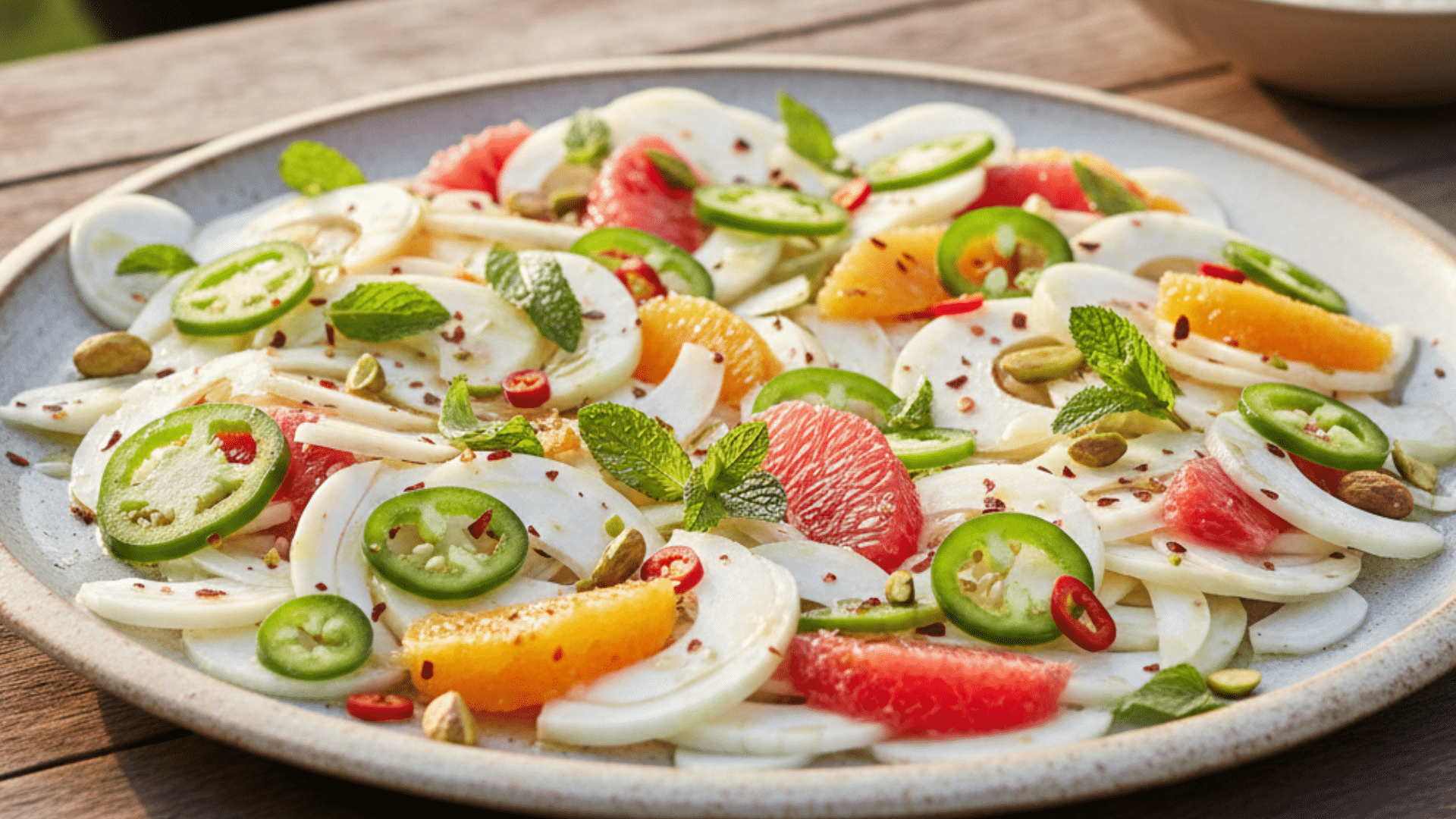
Spicy fennel salad adds heat that cuts through fennel’s natural sharpness. Thin slices of jalapeño or a pinch of chili flakes are enough to change the mood of the dish.
The heat works especially well when fruit or sweet dressing elements are included. Start small and adjust after resting, since spice grows stronger over time. This version pairs well with grilled meats or rice dishes.
Use fresh peppers for brightness and remove seeds to control heat during the final seasoning check.
Fennel Salad with Greens
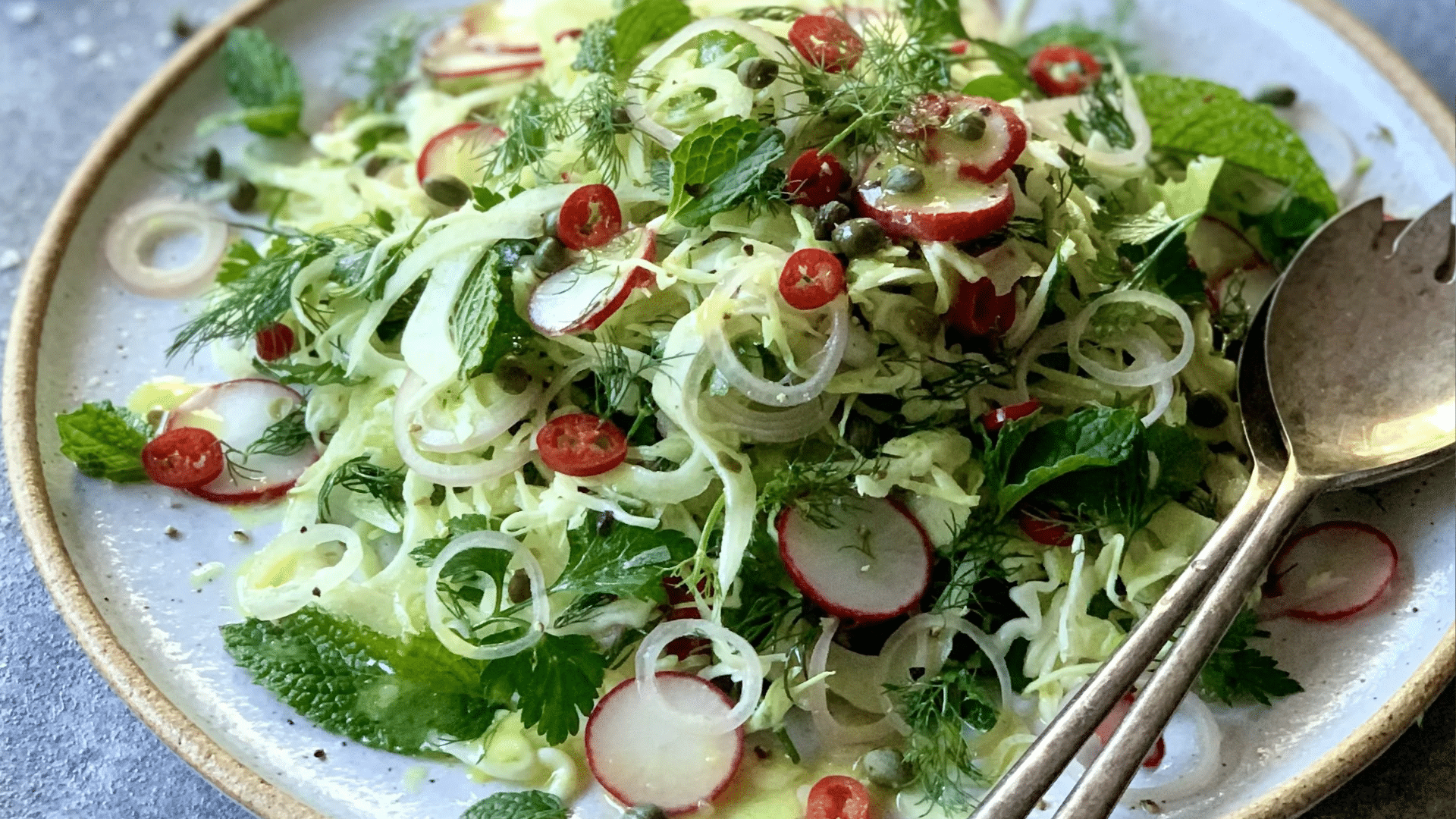
Fennel salad with greens turns a light side into a more filling dish. Arugula adds a peppery edge, while mixed greens keep things mild.
The fennel still stays crisp, but the greens add volume and softness. This option works well as a main for warm days. Dress the fennel first, then fold in the greens just before serving to avoid wilting.
This order helps the texture stay pleasant and prevents excess moisture in the bowl from collecting at the bottom during service.
Build-Your-Own Fennel Salad Formula
This simple formula helps you mix and match ingredients easily, so you can make a fennel salad using what you already have.
| Salad Part | What to Add | Simple Examples |
|---|---|---|
| Base | Thinly sliced fennel | Fresh fennel bulb |
| Acid | Something sour | Lemon juice, orange juice, vinegar |
| Fat | Something smooth | Olive oil |
| Crunch | Extra texture | Almonds, walnuts, seeds |
| Sweet | Mild balance | Apple slices, dried cranberries |
| Fresh add-on | Light lift | Parsley, mint, fennel fronds |
| Salty add-on | Extra depth | Cheese, olives, capers |
Using this method keeps the salad flexible, balanced, and easy to adjust for meals, seasons, or personal taste preferences.
Make-Ahead and Storage Tips
Making fennel salad ahead of time can save effort and improve flavor, as long as a few simple storage steps are followed.
- Can be made up to 48 hours ahead: Fennel salad holds well in the fridge for two days, making it useful for meal prep or planned gatherings.
- Best texture within 24 hours: The fennel stays most crisp during the first day, while still absorbing enough dressing to taste balanced.
- Store nuts and cheese separately: Keeping these add-ins separate prevents them from becoming soft or losing texture before serving.
- Dressing softens fennel over time: Lemon, vinegar, and salt gradually relax the fennel, reducing sharpness while changing the crunch slightly.
- Flavor improves as it rests: Resting time allows the dressing to soak in evenly, giving the salad a smoother, more rounded taste.
What to Serve With Fennel Salad
Fennel salad pairs well with many meals because its crisp texture and bright taste help balance heavier foods on the plate.
Best With Grilled Foods
Fennel salad works especially well alongside grilled dishes. The fresh crunch helps cut through smoky, cooked flavors from the grill. It pairs nicely with grilled fish, adding a clean contrast without competing for attention.
Chicken brings lightness that keeps the meal from feeling too filling. Lamb also benefits from fennel salad, since the sharp, lemony dressing helps balance richer meat. Serve the salad chilled or at room temperature for the best contrast with warm grilled foods.
Best With Rich Dishes
Rich dishes often need something fresh on the side, and fennel salad fits that role well. Creamy pasta dishes feel lighter when paired with its crisp bite. Roasted meats benefit from the sour notes, which help cut through heavier flavors.
Cheesy casseroles also pair well, as the salad adds contrast without adding extra weight. Keep the dressing simple so it supports the main dish instead of competing with strong sauces or seasonings already on the plate.
Vegetarian Pairings
Fennel salad fits easily into vegetarian meals as either a side or a main addition. It pairs well with grain bowls, adding crunch next to softer grains. Roasted vegetables benefit from its fresh texture, especially when the vegetables are warm.
Legume-based mains like lentils or beans also work well, since the salad adds brightness and balance. In these meals, fennel salad helps bring variety to texture and keeps the plate feeling fresh and complete.
Common Mistakes to Avoid
Avoiding these simple mistakes helps keep fennel salad crisp, balanced, and pleasant to eat from the first bite to the last.
- Cutting fennel too thick: Thick slices stay sharp and tough, making the salad harder to chew and less enjoyable, even after dressing.
- Skipping the resting time: Resting allows salt and acid to soften the fennel, reducing harshness and improving overall flavor balance.
- Overdressing: Too much dressing can drown the fennel, making the salad soggy and masking its natural crunch and taste.
- Using old fennel: Older bulbs tend to be dry or woody, which affects texture and flavor, especially when eaten raw.
- Adding all toppings too early: Nuts, cheese, and herbs lose texture if added too soon, so they should go in just before serving.
Conclusion
We covered everything you need to feel comfortable making fennel salad at home. From choosing fresh bulbs to slicing them right, each step helps keep the salad crisp and balanced.
Simple dressings, easy add-ins, and resting time all play a role in how it turns out. I find that once you understand the basics, this dish becomes easy to repeat and adjust.
The real benefit of a fennel salad recipe is how flexible it is with meals and timing. If you enjoyed this, try pairing it with different dishes or testing new add-ins next time.
Want more simple ideas like this? Take a look at the other blogs and keep building your kitchen confidence.