
Layered rugs in living room designs have become one of the easiest ways to make a space feel warmer, more stylish, and thoughtfully decorated.
By combining two rugs with different sizes, textures, or patterns, you can add depth, define your seating area, and refresh your décor without replacing all your furniture.
If you love a modern, farmhouse, boho, or traditional style, layering rugs offers endless design possibilities.
You don’t need a designer to get the look. The right rug placement and pairing can make your living room feel balanced and inviting.
What Do Layered Rugs Do to a Room?
- Adds Depth: Layering rugs creates visual depth by combining different colors, patterns, and textures, making the room feel more designed and complete.
- Creates Warmth: Multiple rug layers add a cozy feel underfoot and make living spaces feel more comfortable and inviting.
- Defines Spaces: Rugs help separate seating areas, reading corners, or open-plan zones without needing walls or dividers.
- Brings Style: Mixing rug designs, materials, and sizes adds personality and helps highlight your interior style.
- Improves Balance: A well-layered rug arrangement can connect furniture pieces and make the overall room layout feel more balanced.
Layered Rugs vs. Single Large Rug
Both options can enhance a living room, but each has its own advantages. Your choice depends on your decorating style, budget, and how often you like to refresh your space.
|
Feature |
Layered Rugs |
Single Large Rug |
|---|---|---|
|
Style |
Adds texture and visual interest |
Creates a clean, simple look |
|
Flexibility |
Easy to change the top rug |
Requires replacing the entire rug |
|
Cost |
Budget-friendly by reusing existing rugs |
Often costs more for larger sizes |
|
Comfort |
Multiple layers add softness |
Comfortable with fewer layers |
|
Design Options |
Endless color and texture combinations |
Limited to one design |
|
Room Definition |
Excellent for defining seating areas |
Anchors the room with one rug |
|
Seasonal Updates |
Easy to refresh by swapping the top rug |
Less convenient to update |
Layered Rugs Living Room Ideas to Inspire Your Space
1. Neutral Base Rug With a Bold Patterned Accent Rug
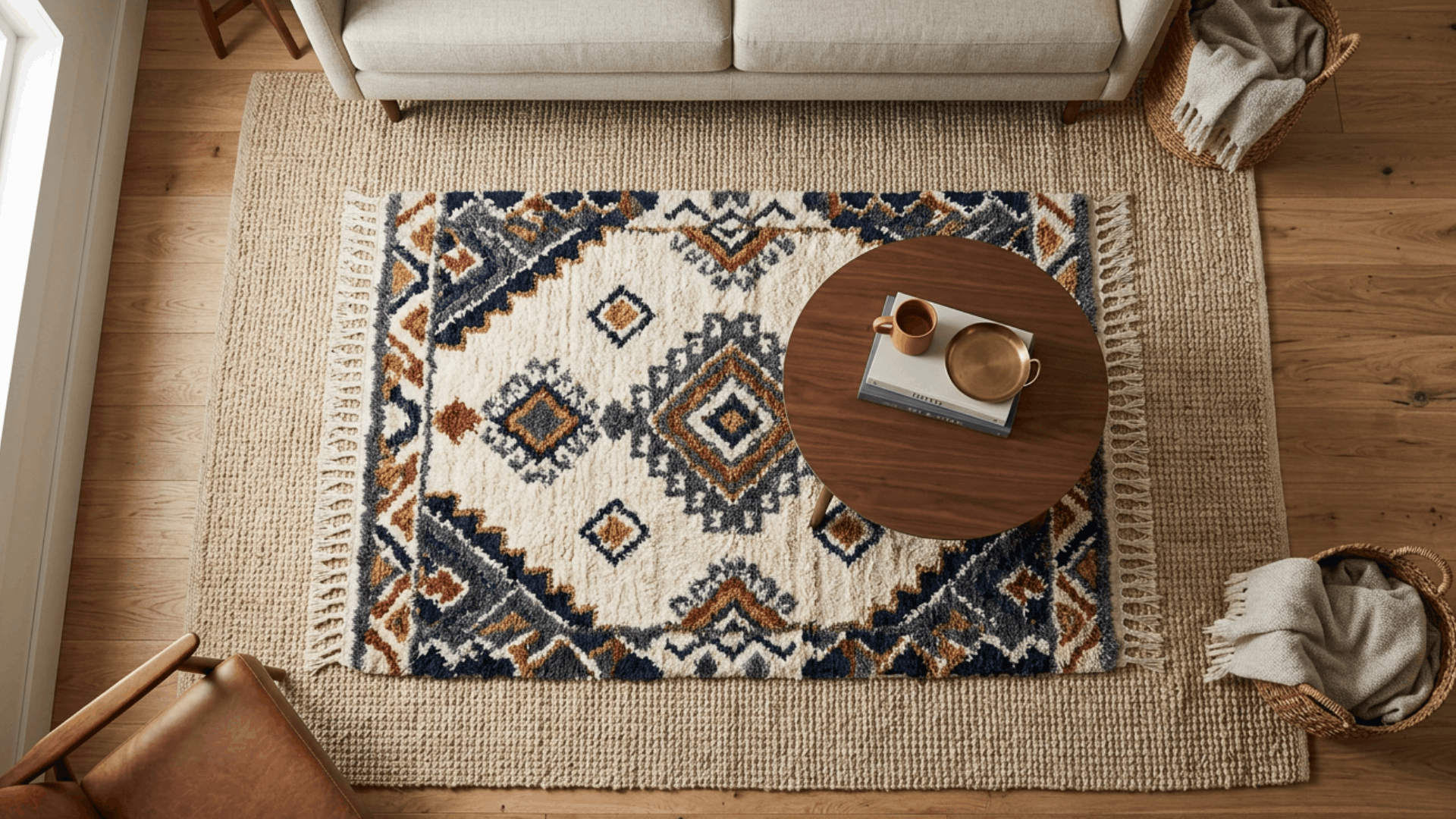
A neutral rug as the base with a smaller patterned rug on top is an easy way to create a layered look. The bottom rug keeps the space calm, while the top rug adds style and becomes the main highlight of the room.
This combination is perfect for making your living room look stylish and balanced without feeling too busy.
Pair beige, ivory, or jute rugs with accent rugs in deep blue, rust, green, or black patterns for contrast.
A larger base rug with a smaller center rug creates a stylish layered look for modern, minimalist, or bohemian living rooms.
2. Mix Different Rug Textures for a Cozy Look
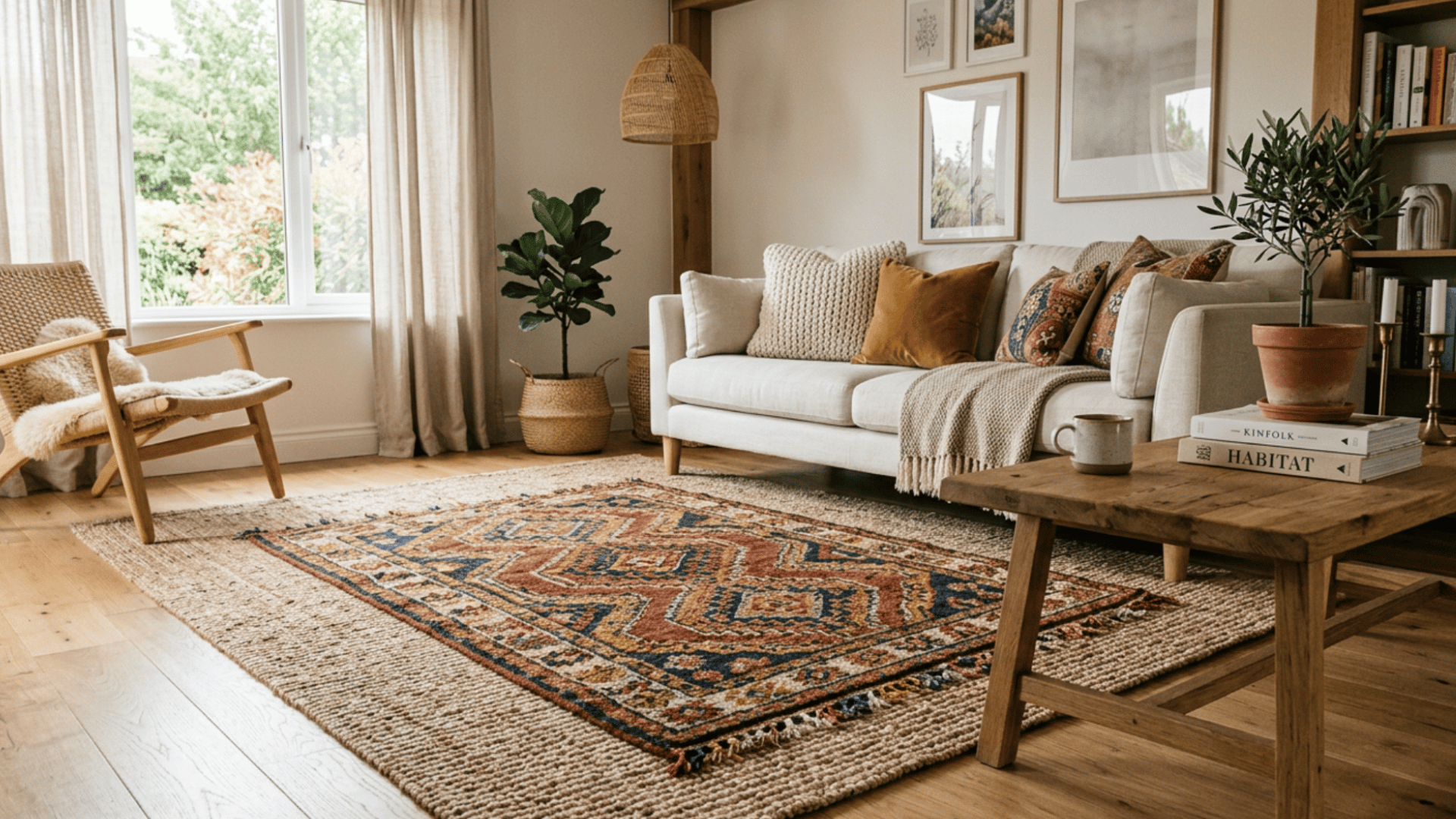
A flat woven rug paired with a softer textured rug can instantly make a living room feel warmer and more inviting. Mix textures by pairing a natural jute rug with a soft wool or cotton rug for a cozy layered effect.
Combining woven, shag, braided, or hand-knotted styles adds depth, while different rug heights create dimension.
This look works well in reading corners, family rooms, and relaxed seating areas.
3. Create a Stylish Look With Contrasting Rug Colors
Color contrast can completely change the appearance of a living room. Layering rugs with different shades allows you to highlight specific areas while adding character to the floor.
The trick is choosing colors that feel connected instead of competing with each other.
Pair light neutral rugs with dark patterns for a modern feel, or mix beige, terracotta, and mustard for warmth.
Blue, gray, and green create a calm look. Keep a shared shade between rugs to maintain a balanced layered design.
4. Mix Different Rug Sizes and Shapes
Layering rugs does not always mean placing two similar rectangular rugs together. Mixing different sizes and shapes can make your living room layout more interesting.
A large rug can anchor the furniture, while a smaller rug can highlight a specific area like a coffee table or lounge chair.
Start with a large rug to anchor your sofa, chairs, and coffee table, then add a smaller accent rug for style.
Leave visible borders around the top rug to highlight both layers. Layered rugs also help define seating zones in open spaces.
5. Combine Patterns for a Designer-Inspired Living Room
Mixing different rug patterns can make your living room look unique and stylish. The key is to choose patterns that look good together and create a balanced feel.
A patterned rug on top of a simple base rug adds character and becomes the main attraction of the room.
Pair a simple striped or textured rug with a detailed floral, vintage, or geometric rug for a balanced look.
6. Use Natural Rugs for an Earthy Touch
Natural fiber rugs bring warmth and a relaxed feel to living rooms. Materials like jute and sisal work as beautiful base layers because they add texture without overpowering the room.
Adding a softer rug on top creates a comfortable combination that feels effortless.
Choose jute, sisal, or woven rugs in neutral shades like tan, cream, or beige as a natural base.
Add accent rugs in earthy tones like olive, brown, or clay for warmth.
How to Choose Colors That Work Together
- Use the 60-30-10 rule: Keep the main rug at around 60% of the room’s color influence, the accent rug at around 30%, and smaller décor pieces at around 10%.
- Start with neutrals: Beige, cream, gray, and ivory rugs create a flexible base that works with almost any accent color.
- Match one shared color: Choose two rugs that have at least one similar shade to make the combination feel connected.
- Balance bold patterns: If one rug has a strong design, pair it with a simpler rug to avoid a crowded appearance.
Layered Rugs for Different Interior Styles
The right rug combination can enhance your living room’s style. Choose materials, colors, and patterns that match your décor for a balanced layered look.
|
Interior Style |
Best Rug Combination |
Color Palette |
Layering Tip |
|---|---|---|---|
|
Modern |
Neutral wool rug + geometric accent rug |
Gray, black, white, beige |
Keep patterns simple and use clean lines for a minimalist look. |
|
Bohemian |
Jute rug + vintage Persian or Moroccan rug |
Earth tones, rust, mustard, teal |
Mix bold patterns and textures to create a relaxed, collected style. |
|
Farmhouse |
Natural jute rug + distressed vintage rug |
Cream, beige, brown, muted blue |
Choose warm, natural materials for a cozy and inviting feel. |
|
Scandinavian |
Flatweave rug + faux fur rug |
White, light gray, soft beige |
Focus on light colors and soft textures to keep the space bright. |
|
Traditional |
Large wool rug + classic Persian rug |
Burgundy, navy, ivory, gold |
Layer elegant patterns while keeping furniture arranged symmetrically. |
|
Coastal |
Sisal rug + striped cotton rug |
White, blue, sand, light gray |
Use natural textures and soft colors for an airy appearance. |
|
Contemporary |
Solid rug + abstract patterned rug |
Neutral shades with bold accents |
Add one statement rug while keeping the rest of the décor simple. |
|
Minimalist |
Plain flatweave rug + subtle textured rug |
White, beige, gray |
Stick to neutral colors and limit patterns for a clean, uncluttered look. |
How to Arrange Furniture on Layered Rugs
- Front Legs on the Base Rug: Place the front legs of sofas and chairs on the base rug to anchor the seating area.
- Keep the Top Rug Centered: Position the accent rug under the coffee table or in the middle of the seating arrangement for a balanced look.
- Avoid Covering the Accent Rug: Let the smaller rug remain visible instead of hiding it completely under large furniture.
- Leave a Visible Border: Keep at least 12 to 24 inches of the base rug showing around the top rug to highlight the layered design.
- Align with the Seating Area: Make sure both rugs are centered with the furniture rather than the entire room to create a cohesive layout.
- Maintain Clear Walkways: Arrange the rugs so they do not block pathways or create tripping hazards around frequently used areas.
Common Layered Rug Mistakes to Avoid
|
Mistake |
Why It Doesn’t Work |
|---|---|
|
Choosing rugs with no color connection |
The layers may look random instead of coordinated |
|
Using rugs of similar sizes |
The top rug may hide the bottom layer completely |
|
Mixing too many patterns |
The room can feel visually overwhelming |
|
Ignoring rug thickness |
Uneven surfaces can create an uncomfortable walking area |
|
Skipping a rug pad |
Rugs may slide or bunch together |
Do Layered Rugs Work in Small Living Rooms?
Yes, layered rugs can work well in small living rooms when done correctly. They add texture, warmth, and visual interest without making the space feel crowded.
The key is choosing the right rug sizes, colors, and patterns. Start with a larger neutral base rug and add a smaller patterned or textured rug on top to create depth.
Keeping the layers balanced helps define the seating area while making the room feel more comfortable and styled.
Avoid using too many bold patterns or oversized rugs, as they can make a small living room feel busy. With thoughtful placement, layered rugs can make a compact space look cozy and intentional.
Conclusion
A layered rug look is an easy way to add warmth, texture, and personality to your living room. By choosing the right rug sizes, materials, colors, and placement, you can create a space that feels stylish and well-balanced without replacing your existing decor.
Doesn’t matter if your style is modern, farmhouse, boho, or traditional; layered rugs offer endless design possibilities.
Even small changes, like swapping the top rug or trying a new color combination, can give your living room a fresh, updated look.
Ready to try this trend? Experiment with different rug combinations to find the look that suits your home, and share your favorite layered rug ideas or styling tips.
Frequently Asked Questions
Can You Layer Two Area Rugs in a Living Room?
Yes. Layering two area rugs is one of the easiest ways to add texture, color, and depth.
How Much of the Bottom Rug Should Be Visible?
Leave about 12 to 24 inches of the base rug visible around the top rug. This creates a balanced and intentional layered look.
Can Layered Rugs Have Different Shapes?
Yes. Mixing shapes can create a unique design. For example, place a round accent rug over a rectangular base rug to soften the look of the seating area.
Can You Layer Rugs Over Carpet?
Yes. Layering an area rug over wall-to-wall carpet is a common decorating technique. It helps define the seating area and adds texture and color to the room.