
A home should feel personal, expressive, and full of character, yet many people worry that bold decorating will quickly look crowded.
Maximalist interior design solves that concern by giving color, pattern, artwork, furniture, and collections a clear purpose.
I believe the most inviting spaces are the ones that reflect the people who live in them. A favorite painting, a vintage find, or a meaningful collection can become the starting point for a room that feels unique and connected.
Instead of filling every surface, this style uses thoughtful repetition, layered materials, and personal objects to create rooms that feel energetic but balanced.
Starting with one confident choice and building gradually can make a rich, organized, and expressive interior feel much more achievable.
Key Characteristics of Maximalist Interior Design
Maximalist spaces can look very different, but successful rooms usually share several clear design attributes that create richness without losing visual order.
- Bold Colors: Jewel tones, earthy shades, deep blues, warm reds, and bright greens add energy and define the room’s mood.
- Mixed Patterns: Florals, stripes, checks, geometric prints, and traditional designs work best when colors connect, or patterns vary in scale.
- Layered Textures: Velvet, wool, linen, wood, metal, glass, and ceramic elements add depth and visual interest.
- Personal Art and Collections: Artwork, books, photographs, ceramics, and keepsakes make the space feel personal and meaningful.
- Eclectic Furniture: Modern, vintage, and traditional pieces can blend when colors, materials, and shapes feel connected.
Maximalist Interior Design Ideas for Every Room and Budget
These maximalist interior design ideas show how to combine bold colors, patterns, textures, and personal decor across different rooms while staying within your budget
1. Statement Ceiling Design
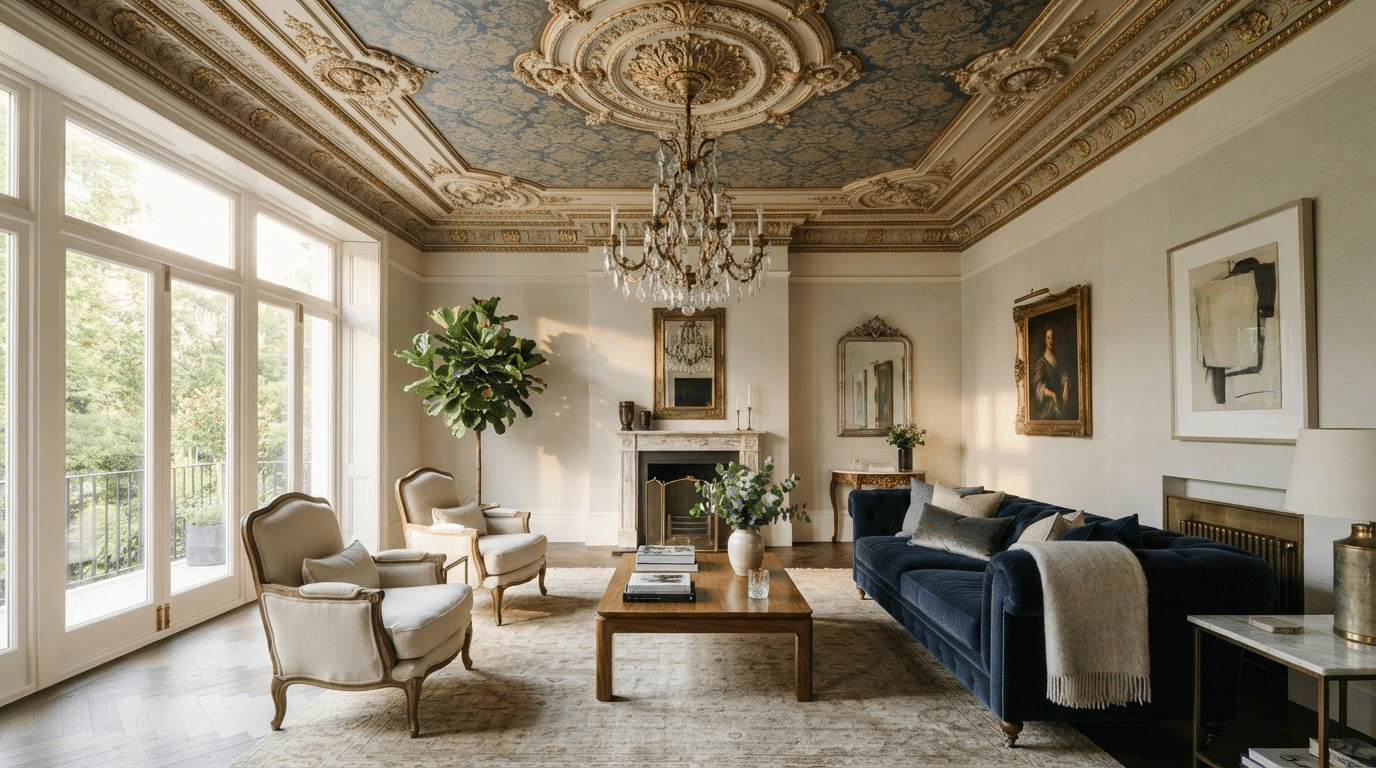
A statement ceiling can completely change the look of a maximalist room by adding color, texture, and visual interest above eye level.
Paint, wallpaper, decorative molding, or wood panels can turn a plain ceiling into an eye-catching feature.
I like how a bold ceiling makes the room feel more complete because it draws attention upward and connects with the rest of the decor. Repeating similar colors or finishes throughout the room helps create a balanced design.
Tip: Repeat one ceiling color in your cushions or artwork for a cohesive look.
2. Bold Window Treatments
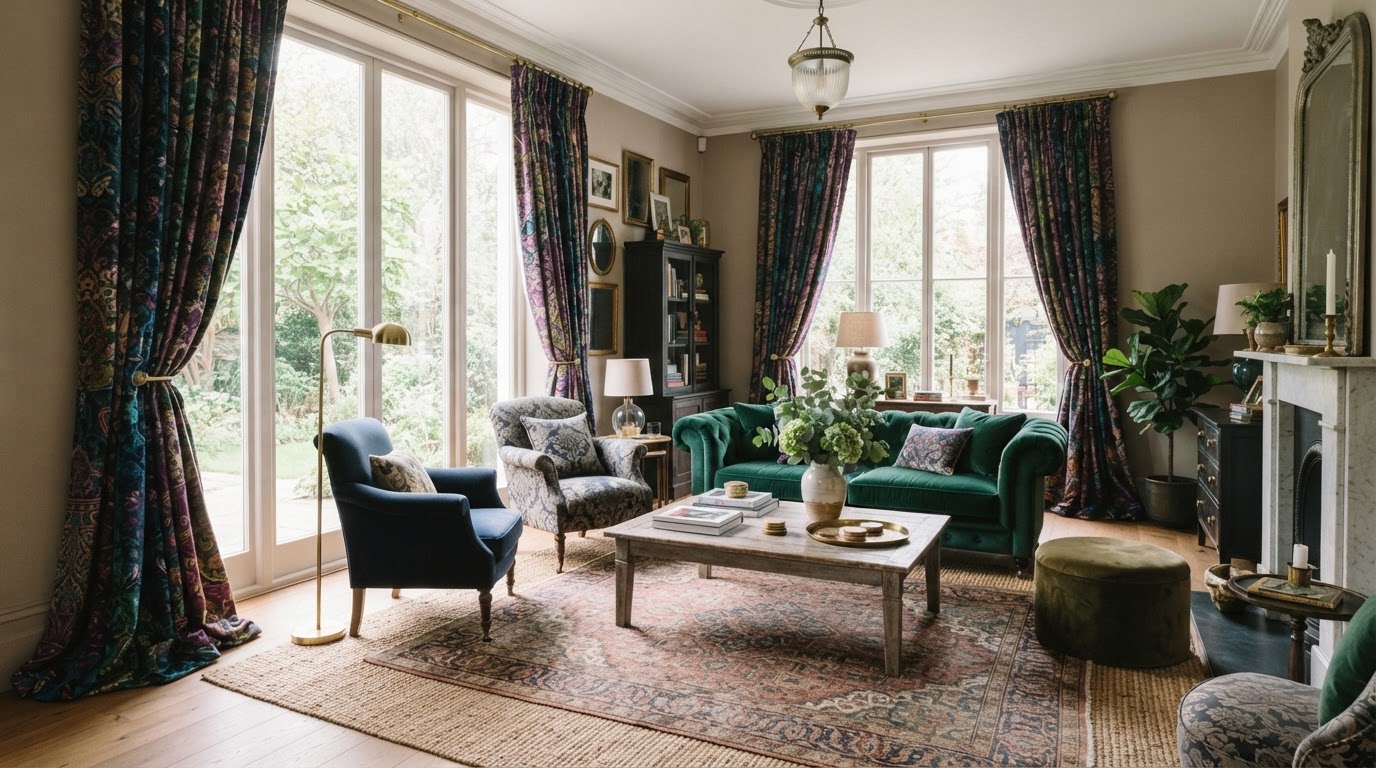
Bold window treatments make windows an important part of a maximalist interior instead of blending into the background.
Patterned curtains, layered drapes, or rich fabrics add warmth, texture, and color while framing the room beautifully.
Bold curtains soften colorful interiors and help connect furniture with decorative accessories.
Choosing fabrics that share colors with rugs or artwork creates a more unified appearance without making the room feel overwhelming.
Tip: Let curtains touch the floor to create a taller and more elegant look.
3. Decorative Mantel Styling
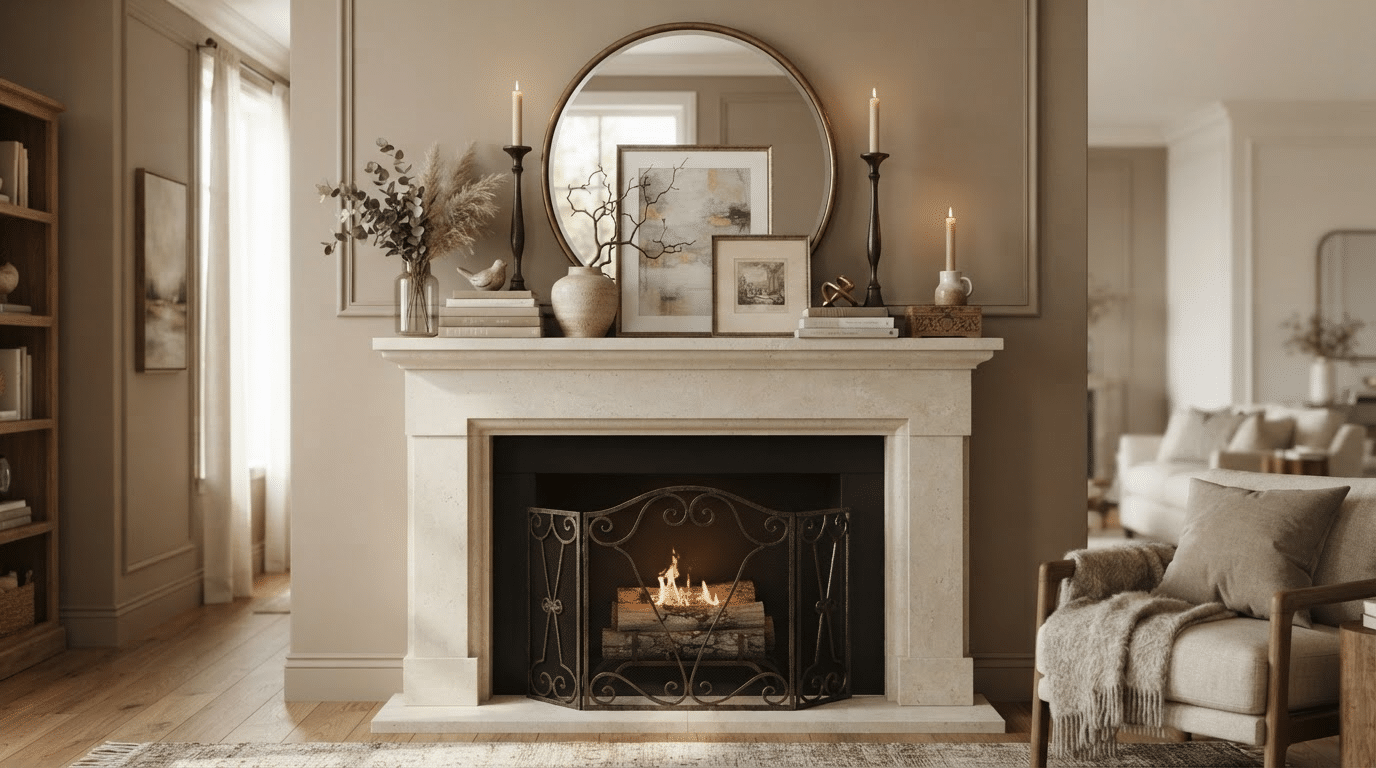
A decorated mantel creates a natural focal point while providing space for artwork, books, candles, mirrors, and decorative accessories.
Layering items at different heights helps the display feel balanced rather than crowded.
I enjoy styling mantels because they allow meaningful collections to become part of the room’s personality.
Starting with one large statement piece and adding smaller decorative accents creates a display that feels organized and visually interesting.
Tip: Place taller items at the back and smaller pieces in front to create depth.
4. Pattern Mixing
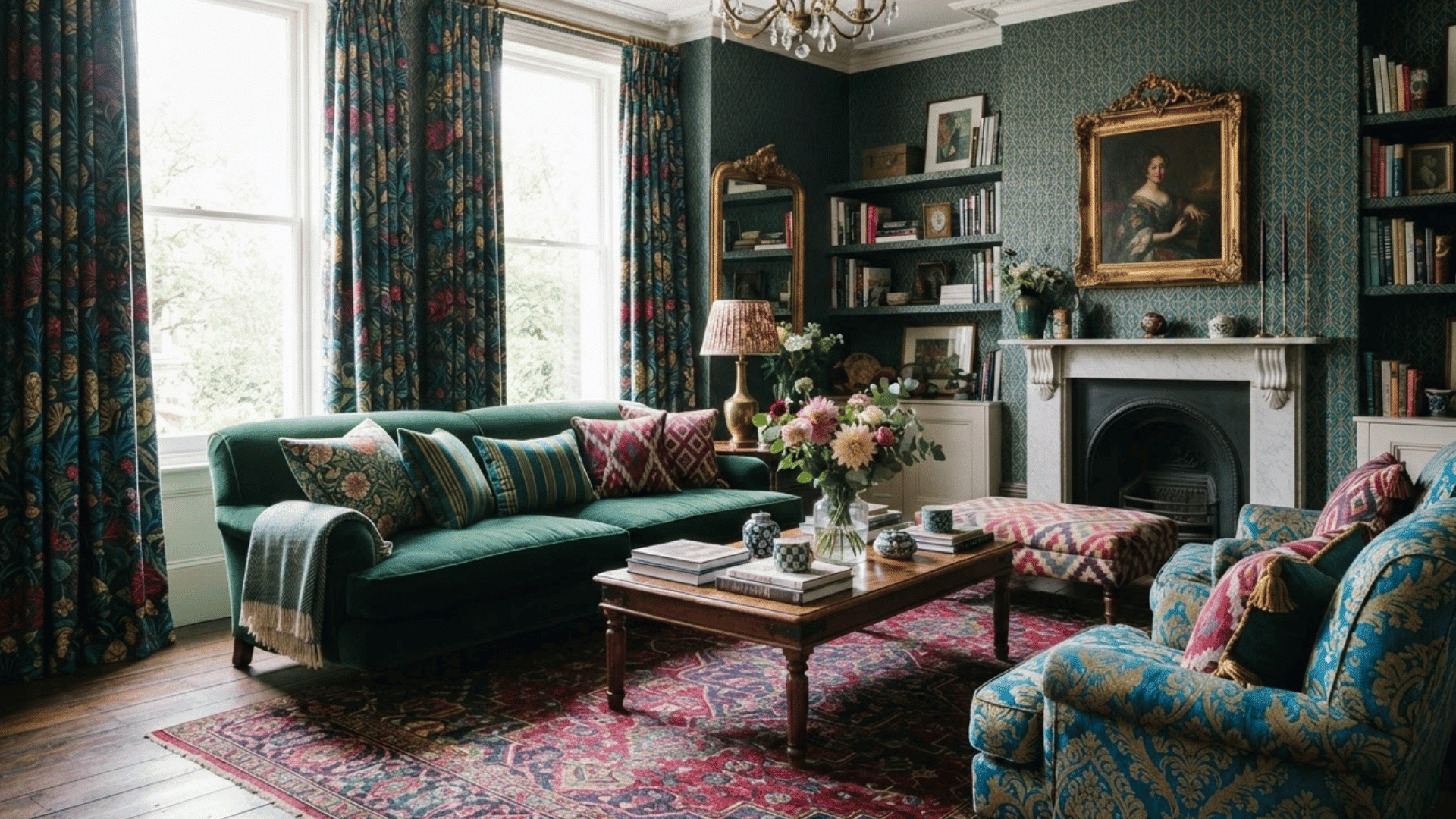
Mixing patterns is one of the easiest ways to make a maximalist room feel lively and full of personality.
Floral, striped, geometric, and abstract prints work well together when they share similar colors or different scales.
Combining multiple patterns creates visual movement without feeling chaotic.
Keeping one consistent color palette helps every fabric and surface feel connected while allowing each pattern to stand out naturally.
5. Rich Jewel Tone Color Palette
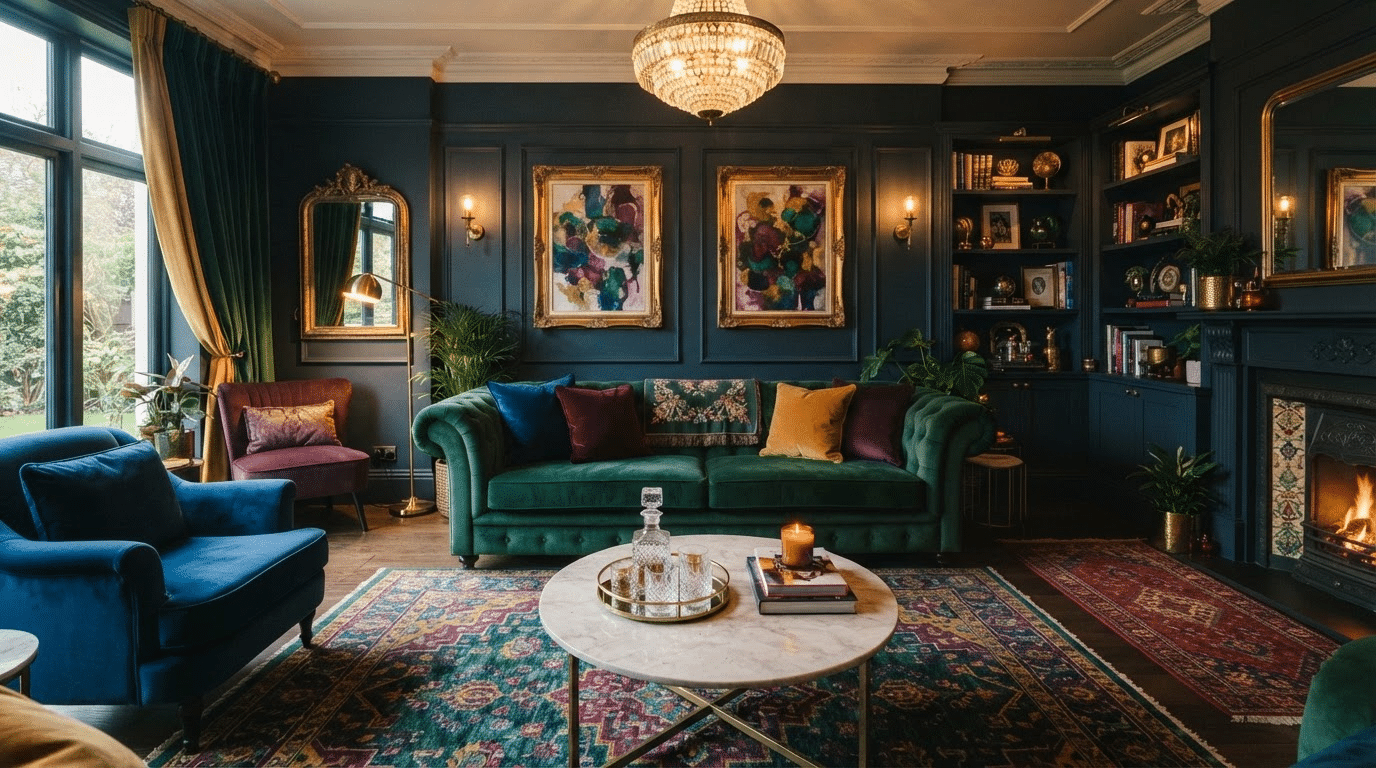
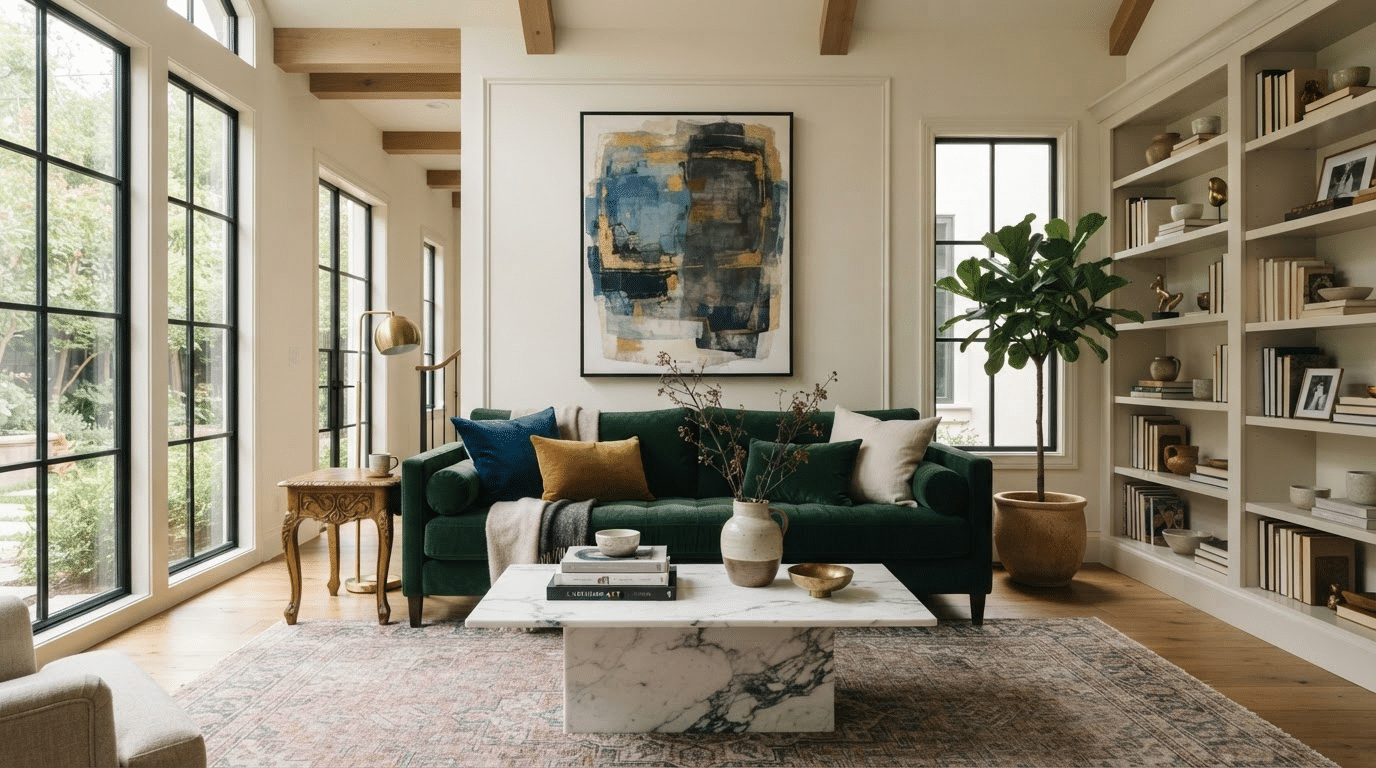
Rich jewel tones create a dramatic foundation that suits maximalist interiors beautifully. Emerald green, sapphire blue, burgundy, mustard, and deep plum add warmth while making decorative details stand out.
Repeating these colors across furniture, artwork, textiles, and accessories makes a room feel connected instead of overwhelming.
Layering bold colors with neutral accents also creates balance while maintaining the room’s expressive character.
Tip: Repeat each accent color in several places to create visual harmony.
6. Decorative Built-In Shelves
Built-in shelves become decorative features when styled with books, artwork, ceramics, plants, and collected objects.
Mixing practical storage with decorative pieces creates displays that feel personal and organized.
Leaving small open spaces between objects also helps each piece stand out while keeping the arrangement balanced.
7. Oversized Artwork
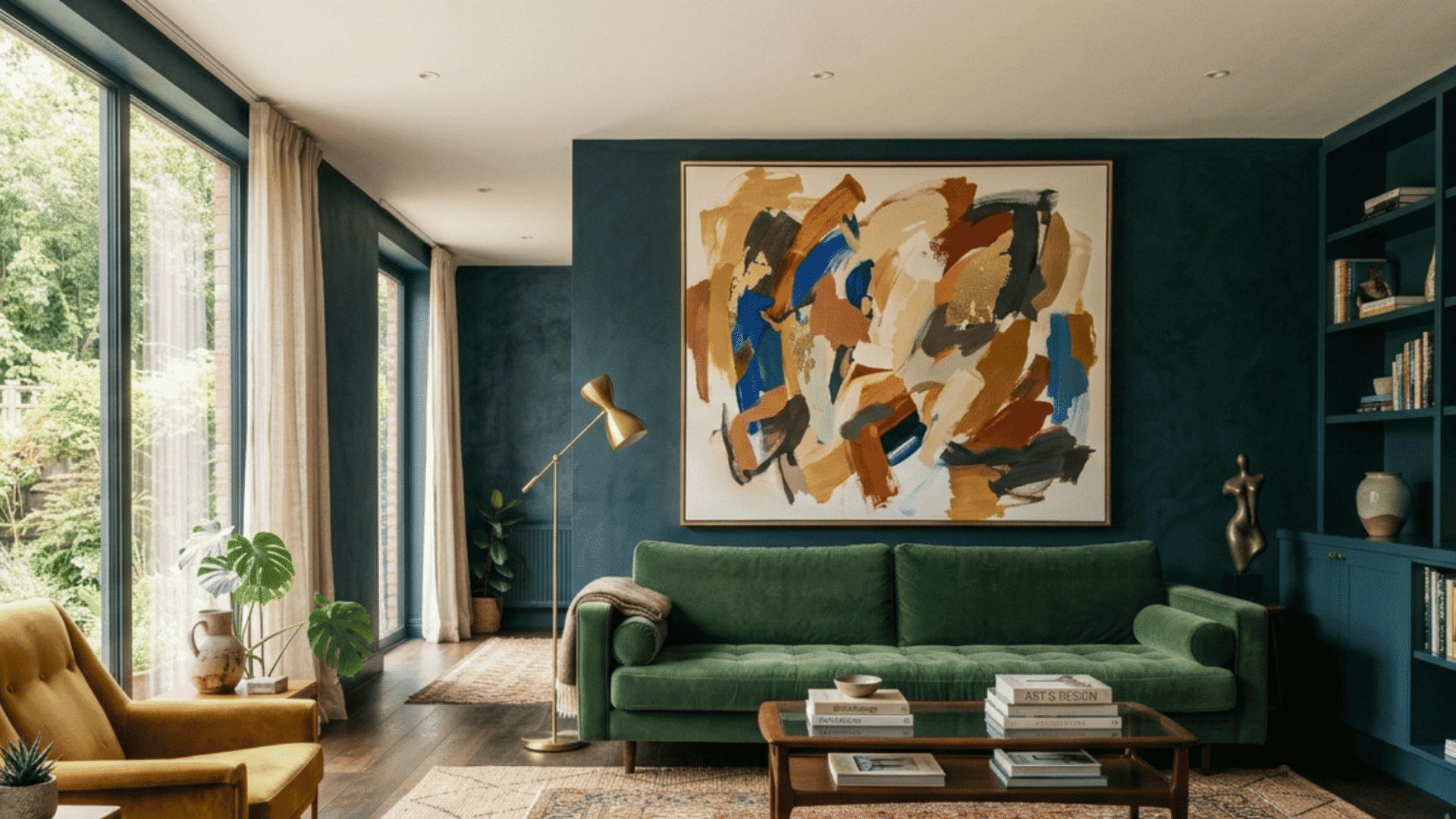
Oversized artwork creates an immediate focal point and adds personality without covering every wall. A single large painting, framed print, or abstract canvas wall art idea can make a stronger impact than several smaller pieces.
I like how oversized artwork helps anchor the room while tying together surrounding colors and furniture.
Choosing artwork that reflects your personal style makes the space feel more meaningful and visually connected.
8. Decorative Coffee Table Styling
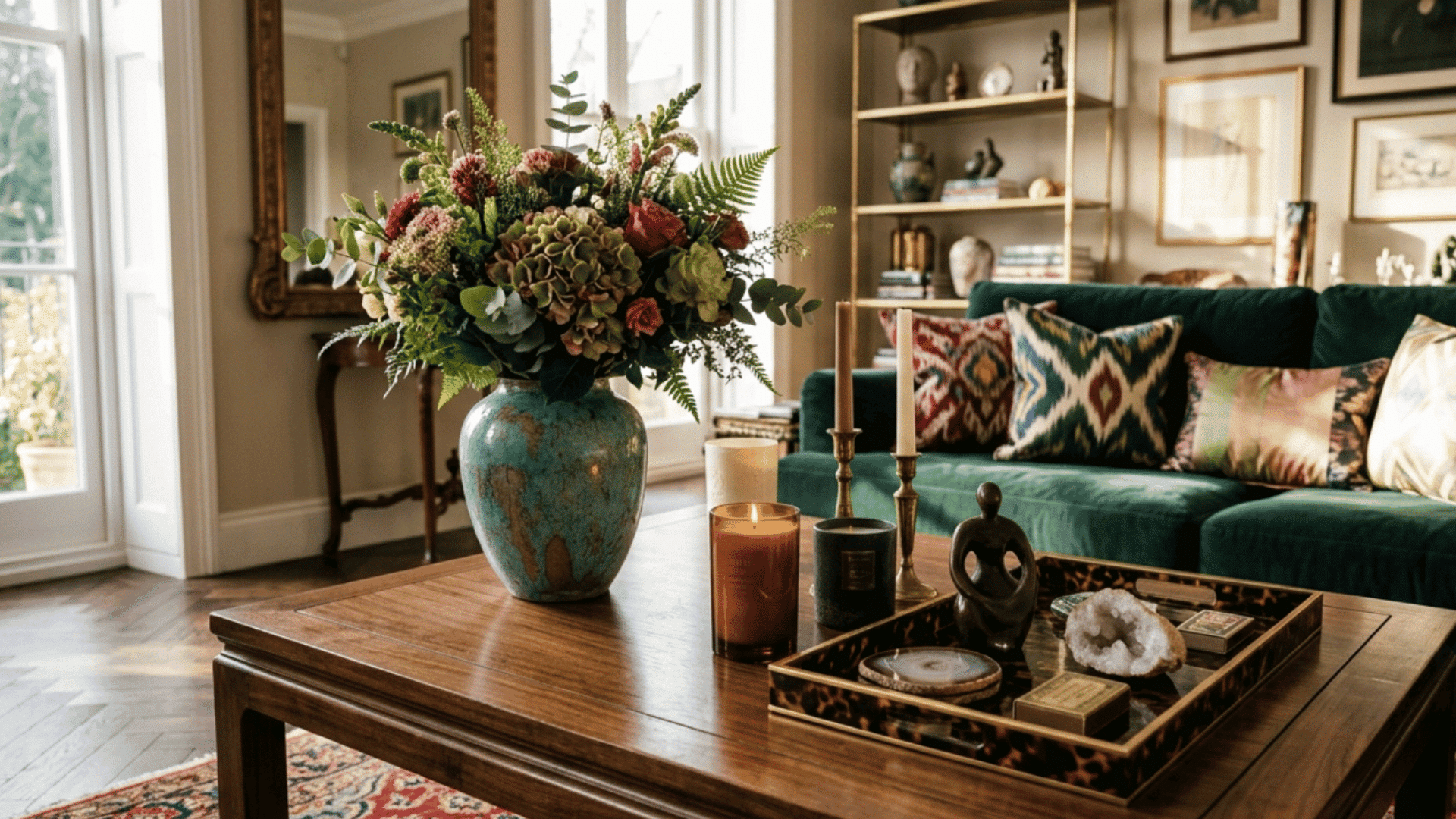
A styled coffee table adds another decorative layer while remaining practical for everyday use.
Books, trays, candles, flowers, and sculptural accessories arranged in small groups create visual balance without feeling crowded.
Mixing different heights, textures, and materials keeps the arrangement interesting while maintaining a polished appearance.
Tip: Group decorative items in odd numbers for a more natural arrangement.
9. Mixed Metal Finishes
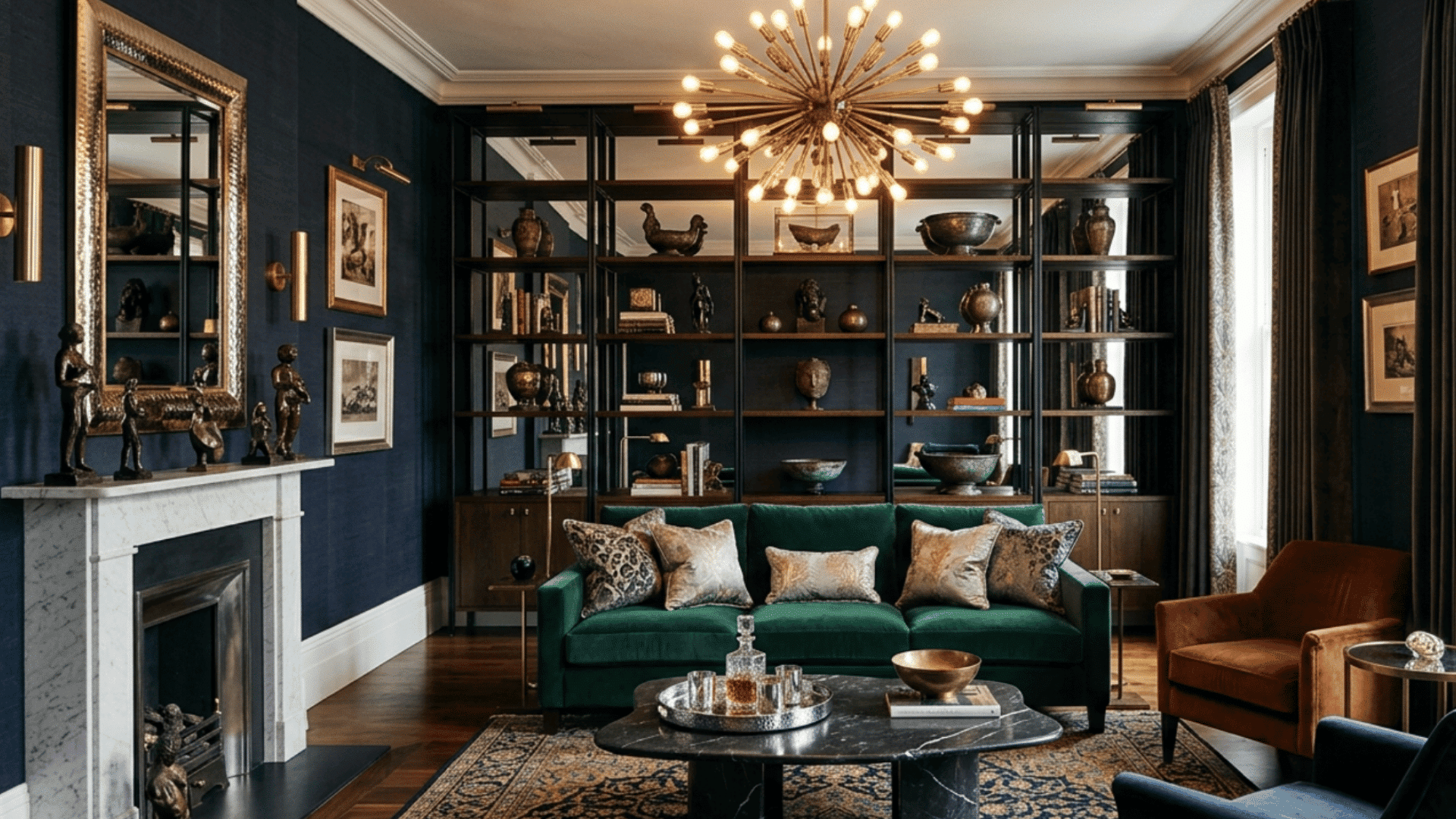
Mixing metal finishes adds depth and variety without overwhelming a maximalist room. Brass, bronze, black metal, and chrome can work together when each finish appears more than once throughout the space.
Use different metals because they create subtle contrast while connecting lighting, furniture, and decorative accessories.
Repeating finishes helps everything feel intentional instead of mismatched.
10. Bold Entryway Design
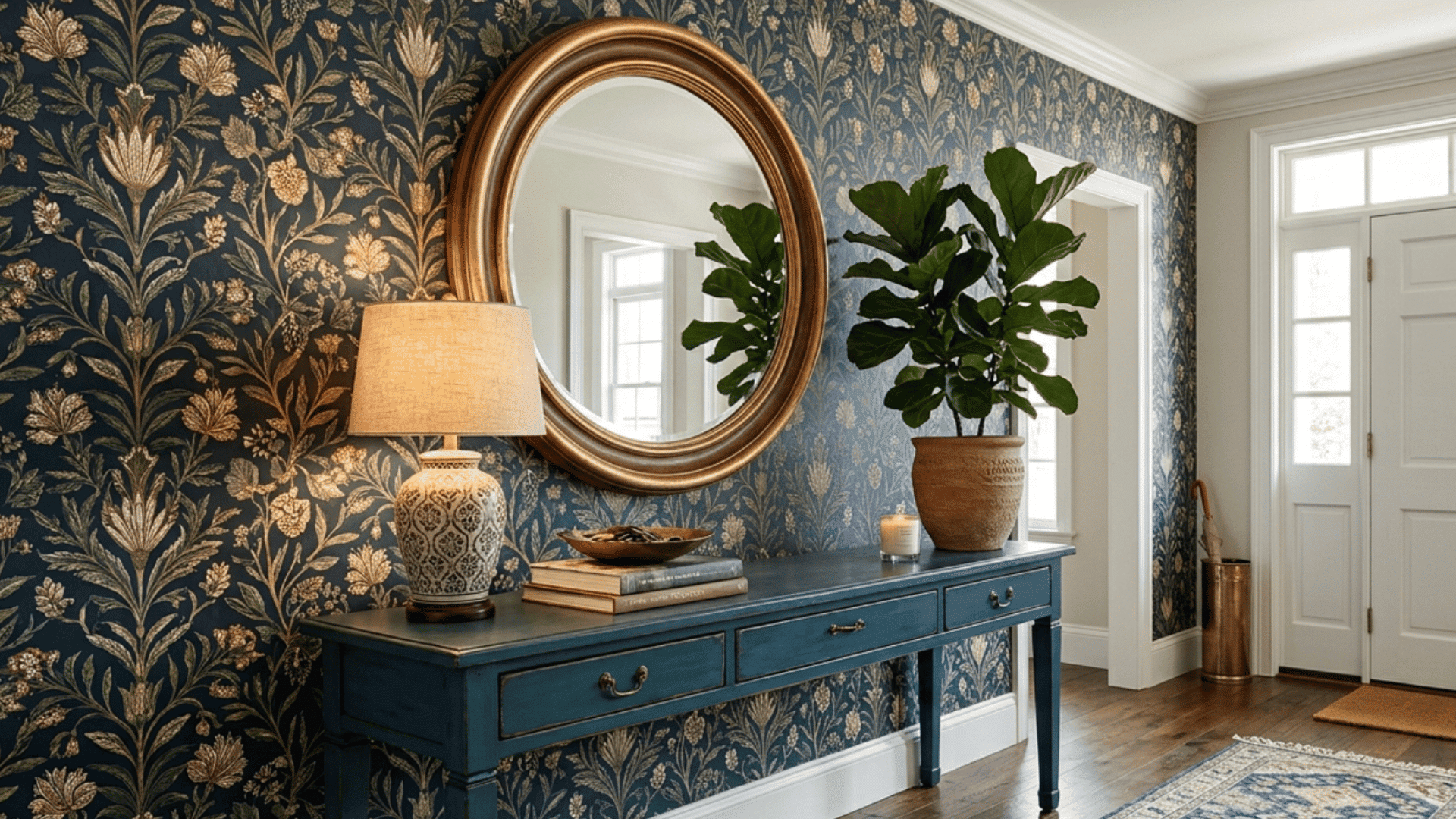
A bold entryway introduces your decorating style before anyone enters the rest of the home.
Patterned wallpaper, colorful furniture, statement mirrors, and artwork create a welcoming first impression.
Choosing one standout feature and adding complementary accessories keeps the space balanced while making it memorable.
Tip: Use a large mirror to reflect light and brighten the entrance.
11. Decorative Room Dividers
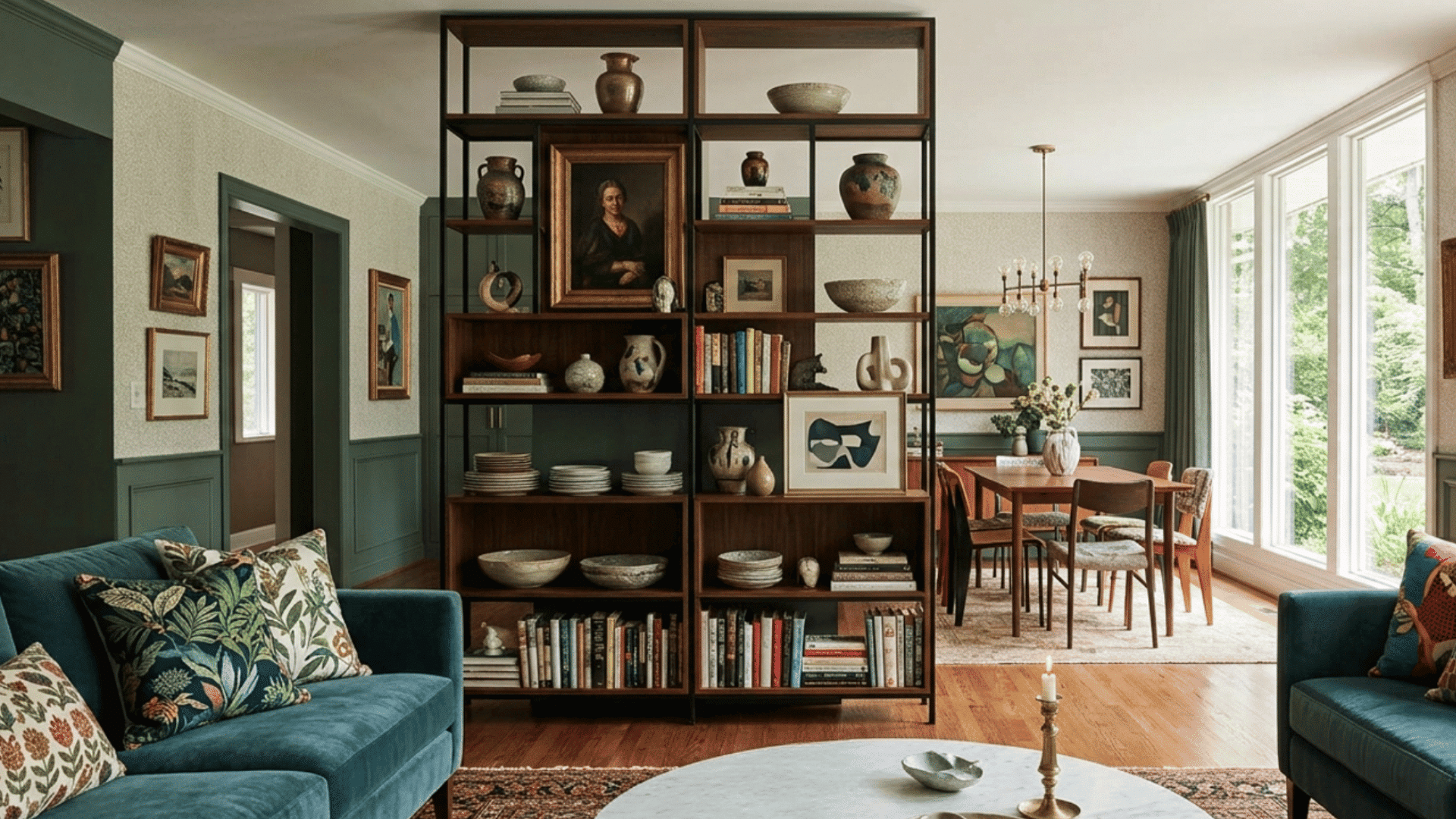
Decorative room dividers help separate spaces while becoming part of the room’s overall design.
Open shelving, folding screens, or decorative partitions define different areas without blocking natural light.
I like how room dividers make open layouts feel more organized while still maintaining a spacious atmosphere.
Choosing materials that match nearby furniture creates a smoother visual transition between spaces.
12. Vintage Decor Accents
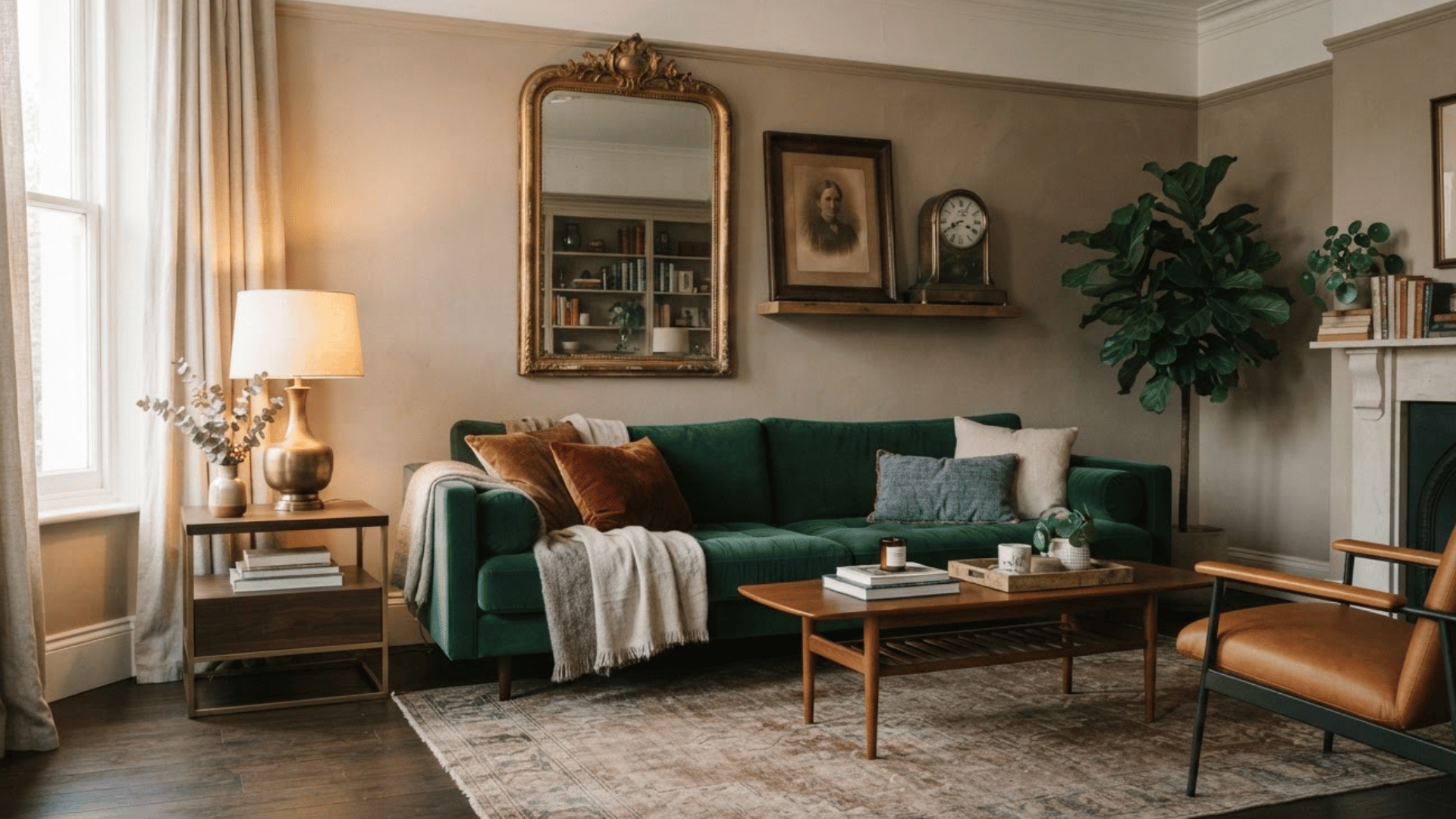
Vintage decor adds history and character while making maximalist interiors feel more personal.
Antique mirrors, clocks, lamps, and decorative objects introduce contrast alongside modern furniture. I like mixing vintage finds because every piece brings its own story into the room.
Combining older accessories with newer designs creates a balanced interior that feels collected instead of matching perfectly.
13. Sculptural Decorative Accessories
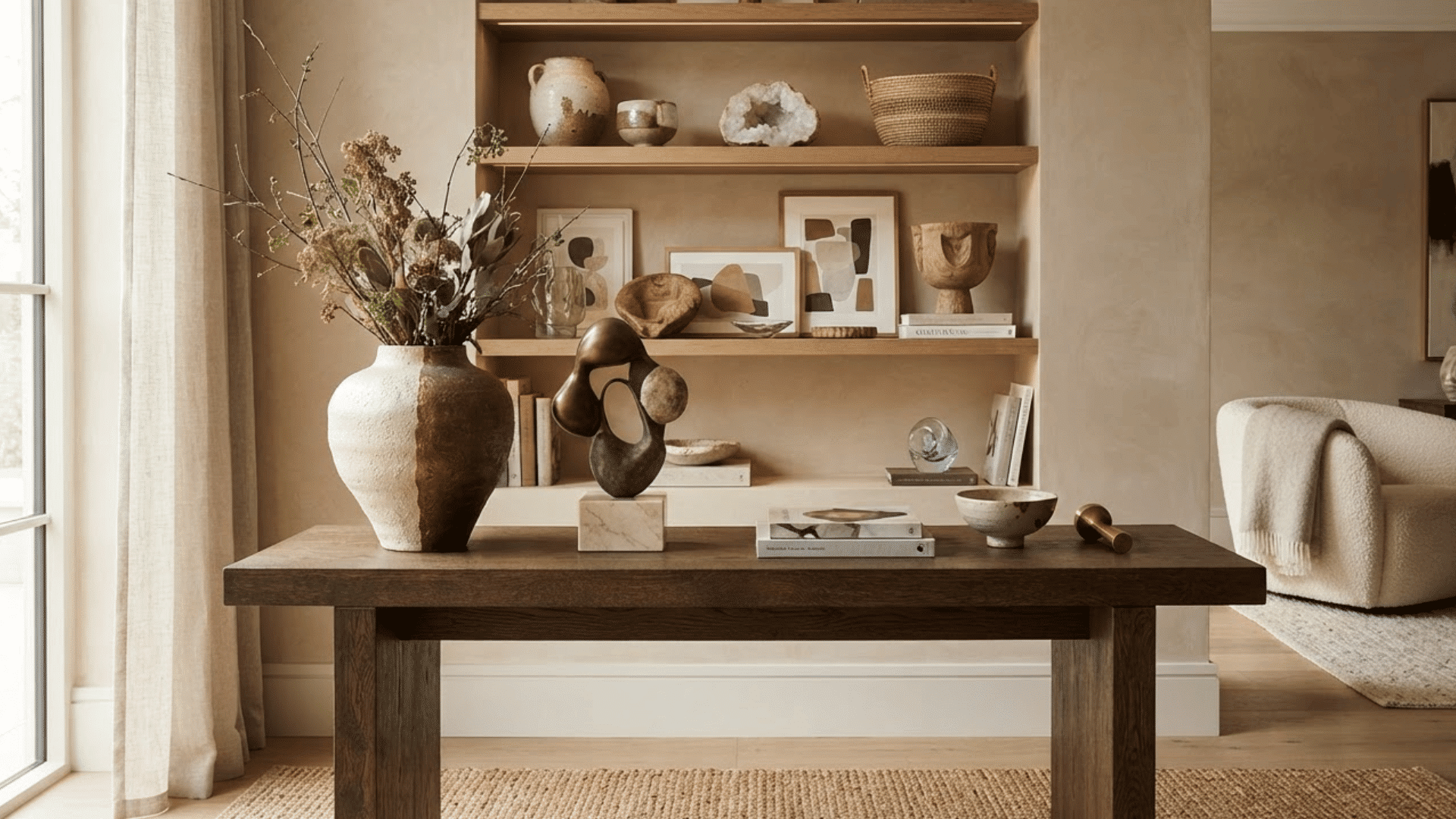
Sculptural accessories introduce artistic shapes that add interest beyond color alone.
Ceramic vases, abstract sculptures, and handcrafted objects create focal points on shelves, consoles, and tables.
Mixing different materials and heights creates displays that remain visually balanced while reflecting personal taste.
14. Decorative Plant Corners
Decorative plant corners bring natural color and texture into maximalist interiors while softening bold decorating choices.
Mixing tall plants, trailing vines, and smaller varieties creates layered displays that feel lively and balanced.
I like how plants make colorful rooms feel fresher without competing with artwork or furniture. Different planter styles can also become part of the room’s decorative theme.
Tip: Combine plants of different heights for a fuller display.
15. Patterned Upholstery
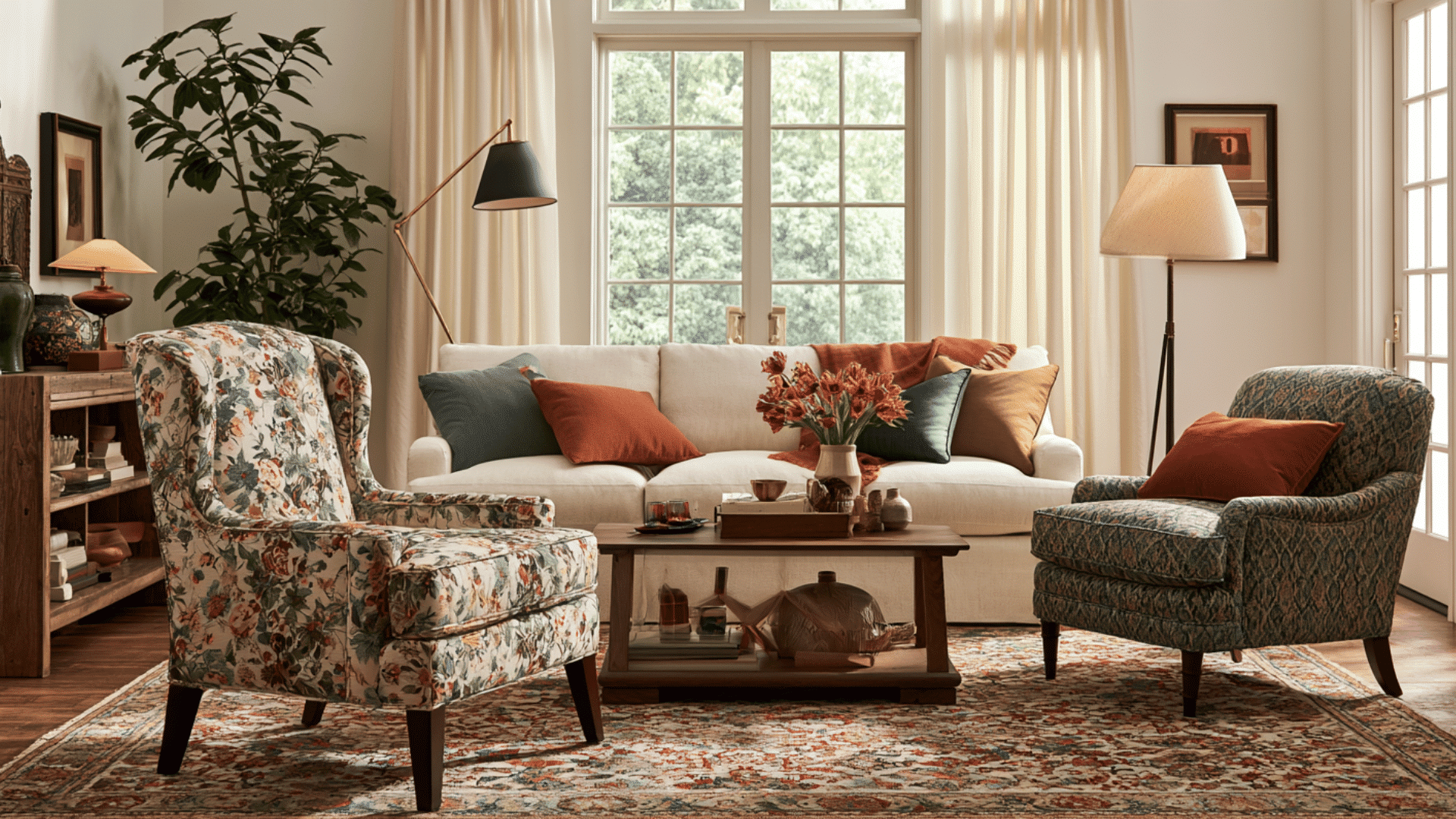
Patterned upholstery adds personality to furniture while introducing another decorative layer into the room.
Floral, striped, or geometric fabrics on chairs, benches, and ottomans help create visual interest without needing extra accessories.
Pairing bold upholstery with a few solid-colored pieces keeps the design balanced.
16. Decorative Bar Cart Styling
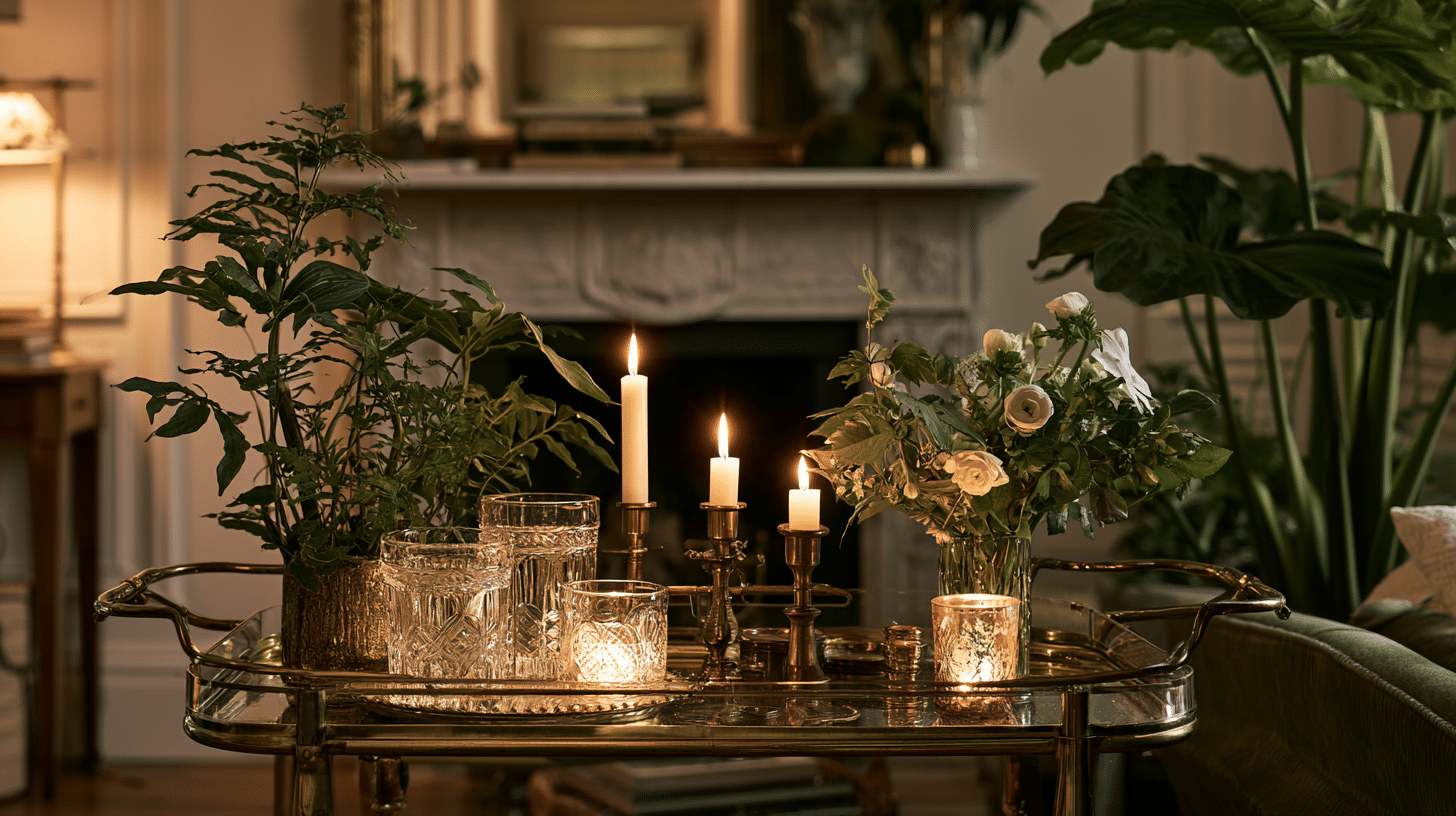
A decorative bar cart combines storage with stylish display, making it a functional part of a maximalist interior.
Glassware, books, candles, plants, and decorative accessories arranged together create an attractive layered look.
Keeping everyday items accessible ensures the cart remains practical as well as decorative.
17. Architectural Details
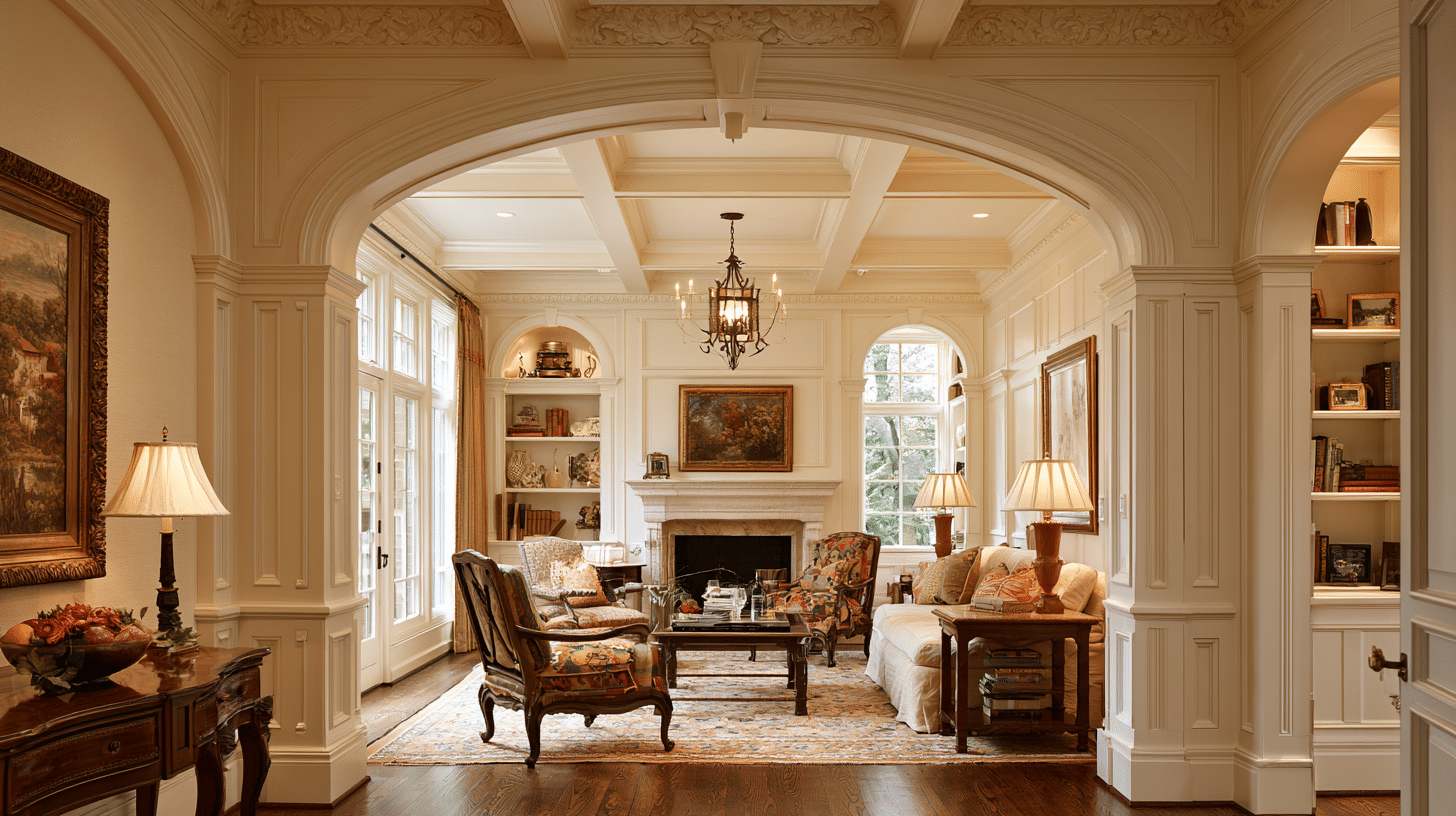
Architectural details add character before any furniture or decorations are introduced. Decorative molding, wall panels, arches, and ceiling beams create texture while making rooms feel more distinctive.
Painting or subtly lighting these details helps them become part of the room’s overall design.
How to Layer Textures in a Maximalist Room?
Texture adds depth to a colorful maximalist room and prevents furniture, walls, and accessories from appearing flat.
- Mix Soft and Structured Materials: Pair velvet, cotton, linen, wool, silk, and fringe with wood, stone, metal, ceramic, or glass. A velvet chair, metal lamp, wool rug, glass table, and carved cabinet can create balanced contrast.
- Add Texture at Lower Levels: Use layered rugs, woven baskets, carved furniture legs, and textured floor coverings to make the lower part of the room feel visually complete.
- Build Interest at Eye Level: Add cushions, upholstered furniture, books, ceramics, framed textiles, and decorative objects where they can be easily noticed.
- Carry Texture Upward: Use curtains, wall hangings, mirrors, molding, wallpaper, pendant lights, and painted ceilings to spread visual interest throughout the full room.
Common Maximalist Decorating Mistakes
Maximalist rooms can still feel calm and comfortable when every design choice has a clear purpose and supports the overall look of the space.
- Using Unrelated Colors
- Mixing Similar-Sized Patterns
- Overfilling Surfaces
- Creating Too Many Focal Points
- Ignoring Storage and Movement
Conclusion
Maximalist interior design gives a home the freedom to feel expressive, personal, and full of character without losing comfort or function.
I believe the most memorable spaces are not created by adding more decorations but by choosing pieces that hold meaning and connect with your lifestyle.
A favorite artwork, a collected item, or a unique piece of furniture can become the detail that brings the entire room together.
Start with one feature that feels right and slowly build around it with colors, textures, patterns, and objects you genuinely enjoy.
Keep the space organized, leave room to move, and remove anything that distracts from the overall feeling. Share your favorite maximalist decorating idea in the comments.
Frequently Asked Questions
What Colors Work Best in Maximalist Interiors?
Jewel tones, earthy shades, bright accents, dark grounding colors, and lighter supporting tones can work well when key colors are repeated throughout the room.
How Many Patterns Can Be Used in One Room?
There is no fixed limit. Patterns work best when they share related colors, vary in scale, and are distributed evenly throughout the room.
Is Maximalist Interior Design Expensive?
It does not need to be expensive. Secondhand furniture, personal artwork, paint, textiles, photographs, and gradually collected objects can create the style affordably.