

Some days, it can feel like your body is following a completely different routine. I know how frustrating it can be when changes in energy, sleep, mood, or weight seem to appear without warning.
Menopause brings many natural changes, and the foods you eat can become an important part of supporting your overall health during this stage of life.
With so much conflicting advice available, it is not always easy to know what truly deserves a place on your plate.
Understanding the basics can make everyday meal choices feel simpler and help you build healthier habits that last over time.
Disclaimer: Dietary changes may support overall health during menopause, but they do not replace medical advice or treatment for menopause symptoms or health conditions.
What Is the Menopause Diet?
The menopause diet is a balanced dietary approach that supports your body’s changing nutritional needs during and after menopause. It is not a strict meal plan or a temporary eating trend.
A healthy menopause diet provides protein, fiber, calcium, vitamin D, and healthy fats for strong bones, heart health, and weight control
According to research published through the U.S. National Library of Medicine, nutrition plays an important role in supporting health during menopause and perimenopause, with dietary choices influencing bone health, cardiovascular health, body composition, and overall well-being.
Rather than removing entire food groups, this approach encourages balance, variety, and sustainable habits that are easier to maintain long-term.
It also encourages mindful eating and regular hydration, helping your body adapt to hormonal changes more effectively.
|
Foods to Eat More Often During Menopause
Instead of looking for one “best” food, aim for a variety of whole foods that supply protein, fiber, healthy fats, vitamins, and minerals.
- Protein-Rich Foods: Fish, chicken, eggs, tofu, Greek yogurt, beans, lentils, cottage cheese.
- Calcium-Rich Foods: Milk, yogurt, cheese, fortified plant-based milk, tofu, leafy greens.
- Fruits and Vegetables: Berries, broccoli, spinach, kale, oranges, carrots, bell peppers.
- Whole Grains: Oats, quinoa, brown rice, whole-wheat bread, barley, whole-grain pasta.
- Healthy Fats: Olive oil, avocados, walnuts, almonds, chia seeds, flaxseeds.
- Legumes: Lentils, chickpeas, black beans, kidney beans, peas.
- Nuts and Seeds: Almonds, walnuts, pumpkin seeds, sunflower seeds, flaxseeds, chia seeds.
- Phytoestrogen-Rich Foods: Soybeans, tofu, tempeh, edamame, soy milk, flaxseeds.
How Does Menopause Affect Your Body?
Menopause affects much more than your menstrual cycle. As hormone levels change, they can influence your bones, heart, muscles, digestion, mood, energy, and overall health, making healthy lifestyle habits increasingly important.
1. Supports Strong Bones
Estrogen plays an important role in maintaining bone density. As its levels decline during menopause, bones gradually lose strength, increasing the risk of osteoporosis and fractures over time.
Because bone loss often occurs without noticeable symptoms, supporting bone health early becomes increasingly important.
Postmenopausal women generally need around 1,200 mg of calcium and 600 to 800 IU of vitamin D per day, though needs vary and are worth confirming with your doctor.
A balanced diet, regular weight-bearing exercise, and routine bone health screenings can all help maintain stronger bones as you age.
2. Protects Heart Health
Menopause brings changes that can affect cardiovascular health, including shifts in cholesterol levels and blood vessel function.
As estrogen declines, the natural protection it provides to the heart is reduced, which may increase the risk of heart disease.
Maintaining healthy lifestyle habits during this stage can support heart function, help lower long-term cardiovascular risks, and promote overall wellness.
3. Helps Maintain Muscle and Metabolism
Hormonal changes during menopause can slow metabolism and contribute to the gradual loss of lean muscle mass.
These changes may make weight management more challenging and reduce overall strength if left unaddressed.
Supporting muscle health becomes increasingly important for maintaining mobility, balance, and daily function. Combining nutritious eating with regular physical activity can help preserve strength throughout menopause.
Prioritizing protein at meals matters here too, and it helps to know how different meats compare in protein when building a plate around muscle support.
4. Supports Energy and Daily Well-Being
Many women notice changes in their energy levels during menopause due to hormone fluctuations, poor sleep, night sweats, or increased stress.
Feeling more tired than usual can affect work, exercise, and everyday activities.
Maintaining healthy daily habits, staying active, and getting enough rest can help support consistent energy while improving overall quality of life during this transition.
5. Promotes Healthy Digestion
Digestive changes such as bloating, constipation, or slower digestion may become more noticeable during menopause because hormonal shifts can influence gut function.
A healthy digestive system helps the body absorb nutrients efficiently while supporting overall comfort.
Paying attention to digestive health, staying hydrated, and maintaining healthy lifestyle habits can help improve digestive function throughout menopause and beyond.
6. Supports Mood and Brain Function
Hormonal fluctuations during menopause can influence mood, memory, concentration, and emotional well-being.
Some women may experience increased stress, brain fog, or difficulty focusing as hormone levels change.
While these experiences vary from person to person, supporting overall physical and mental health through consistent healthy habits can help improve resilience and maintain cognitive function during menopause.
A Sample Menopause Diet Plan
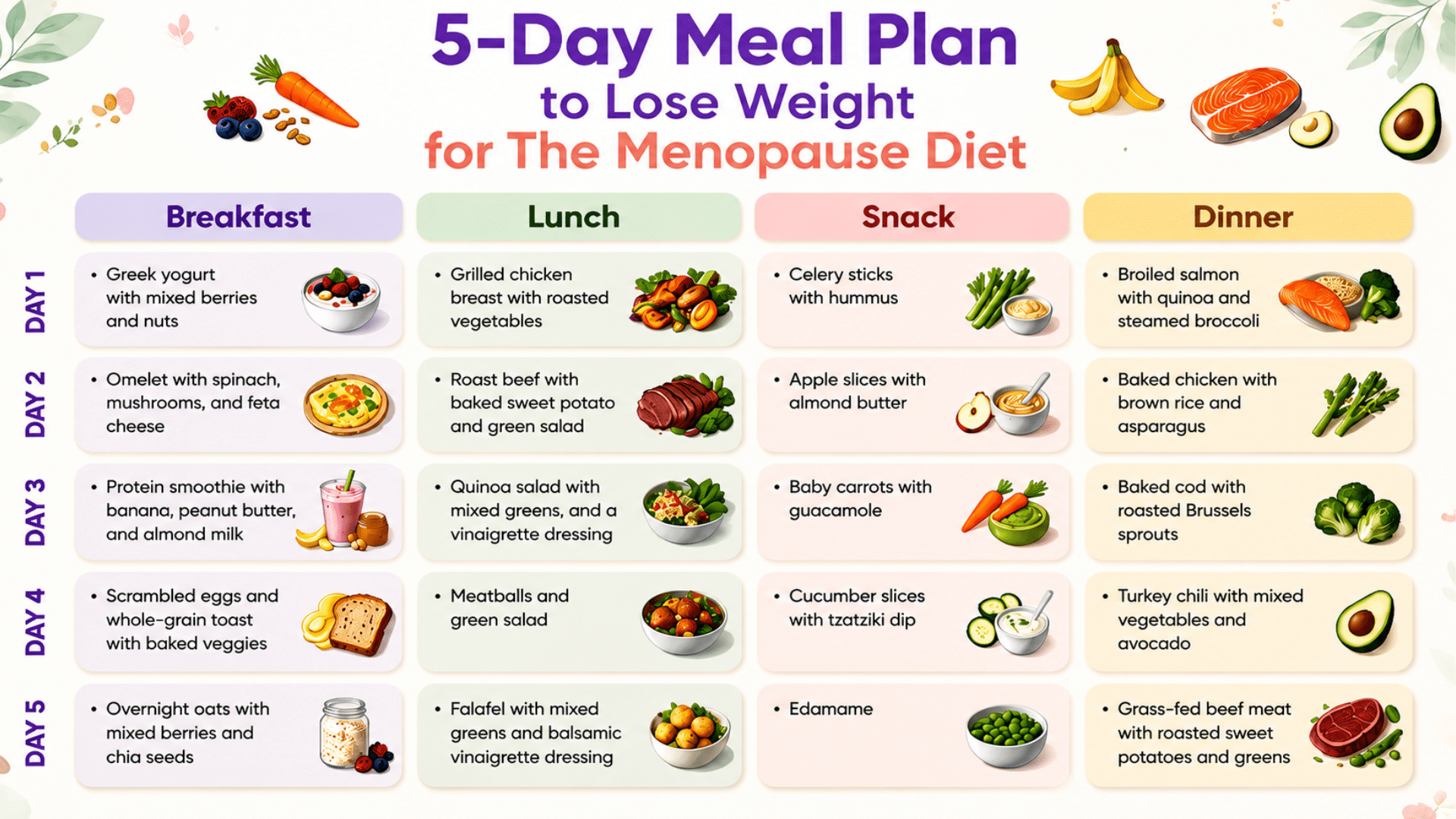
Note: This sample menopause diet plan is for general guidance only. Your nutritional needs may vary based on your age, health conditions, medications, activity level, and dietary preferences
Foods and Drinks that May Worsen Menopause Symptoms
Not every food affects menopause symptoms in the same way, but some may make hot flashes, poor sleep, bloating, or energy fluctuations more noticeable.
- Added Sugars: May cause blood sugar spikes and energy crashes. Choose fresh fruit or plain yogurt instead.
- Highly Processed Foods: Often contain excess sodium, added sugars, and unhealthy fats. Opt for homemade meals made with whole foods.
- Salty Foods: Too much sodium may contribute to bloating and high blood pressure. Season meals with herbs, spices, or lemon juice instead.
- Alcohol: May worsen hot flashes and disturb sleep in some women. Try sparkling water or herbal tea as an alternative.
- Excess Caffeine: It can interfere with sleep and may trigger hot flashes for some people. Choose decaffeinated coffee or herbal tea when possible.
- Foods High in Saturated Fat: Frequent intake may negatively affect heart health. Replace them with healthier fats like olive oil, nuts, avocados, and fatty fish.
Cutting back on caffeine later in the day and reaching for caffeine-free tea options in the evening instead may ease hot flashes and support more restful sleep without giving up a warm drink ritual.
What Are the Five Stages of Menopause?
Menopause develops gradually through several stages, with each stage bringing changes in hormone levels, menstrual cycles, and overall health.
| Stage | What Happens |
|---|---|
| Stage 1 (Reproductive Years) | Periods are usually regular, and estrogen and progesterone levels remain stable. Healthy lifestyle habits can support long-term health before menopause begins. |
| Stage 2 (Perimenopause/Menopause Transition) | Hormone levels begin to fluctuate, causing irregular periods and symptoms such as hot flashes, mood changes, and sleep problems. |
| Stage 3 (Menopause) | Menopause is reached after 12 consecutive months without a period. Lower hormone levels make bone, heart, and muscle health more important. |
| Stage 4 (Early Postmenopause) | The body continues adjusting to lower hormone levels, and menopause symptoms may gradually improve. Preventive healthcare becomes increasingly important. |
| Stage 5 (Late Postmenopause) | Most symptoms have eased, but maintaining bone, heart, and overall health remains essential through healthy lifestyle habits and routine checkups. |
Smart Eating Habits that Make the Menopause Diet Easier to Follow
Healthy eating during menopause does not require perfection. Building a few consistent habits can make balanced nutrition feel more natural and easier to maintain.
- Include protein with every meal: Add foods like eggs, fish, beans, yogurt, or lean meats to support muscle maintenance and help you feel satisfied for longer.
- Choose fiber-rich foods daily: Include fruits, vegetables, legumes, and whole grains to support digestion, heart health, and overall nutrition.
- Stay hydrated: Drink enough water throughout the day to support energy levels and help your body function properly.
- Plan balanced meals: Preparing meals ahead of time can reduce the need for highly processed convenience foods.
- Practice mindful eating: Eat slowly and pay attention to hunger and fullness cues to develop healthier eating habits.
- Combine nutrition with exercise: Pair healthy eating with regular physical activity, such as walking and strength training, to support strength and overall health during menopause.
Nutrients that Matter Most During Menopause
Certain nutrients become even more important during menopause because they help support bone strength, muscle maintenance, heart health, and overall well-being.
| Nutrient | Why It Matters | Food Sources |
|---|---|---|
| Protein | Helps preserve muscle mass and supports recovery | Fish, eggs, poultry, tofu, beans |
| Calcium | Maintains bone strength | Milk, yogurt, cheese, fortified plant-based milk |
| Vitamin D | Helps absorb calcium and supports bone health | Fatty fish, egg yolks, fortified foods |
| Fiber | Supports digestion and heart health | Fruits, vegetables, legumes, whole grains |
| Omega-3 Fatty Acids | Support heart health | Salmon, sardines, walnuts, flaxseeds |
| Magnesium | Supports muscle and nerve function | Spinach, almonds, pumpkin seeds |
| Potassium | Helps maintain healthy blood pressure | Bananas, potatoes, beans, leafy greens |
Should You Follow a Specific Eating Pattern During Menopause?
There is no single eating pattern that works best for everyone during menopause.
The most helpful approach is choosing a balanced diet that provides enough protein, fiber, healthy fats, vitamins, and minerals.
Eating patterns like the Mediterranean diet, which focuses on vegetables, fruits, whole grains, fish, nuts, and olive oil, may support heart health and overall wellness.
Some women may benefit from adjusting meal timing or reducing certain trigger foods based on their symptoms.
The key is creating sustainable habits that match your health needs, preferences, and lifestyle rather than following strict food rules.
Common Menopause Diet Mistakes to Avoid
Healthy eating during menopause is not only about choosing the right foods but also about avoiding habits that can make it harder to meet your nutritional needs.
- Eating too little protein: This can lead to muscle loss and make it harder to stay full between meals.
- Following very low-calorie diets: This may reduce energy levels and increase the risk of losing lean muscle.
- Ignoring calcium and vitamin D: It can affect bone health as bone loss naturally increases after menopause.
- Depending only on supplements: Consuming supplements only instead of whole foods may reduce the variety of nutrients your body receives.
- Following restrictive fad diets: This often makes healthy eating difficult to maintain over the long term.
- Skipping exercise: It limits the benefits of good nutrition for bone, muscle, and heart health.
When to Speak with a Doctor or Dietitian?
Seek help for severe hot flashes, ongoing sleep problems, rapid weight changes, digestive issues, low mood, or concerns about bone and heart health.
Speak with a doctor or dietitian when menopause symptoms affect daily life or dietary changes feel difficult to manage.
A doctor can check for other health conditions, review medicines, and discuss suitable treatments.
A registered dietitian can create an eating plan based on your symptoms, health needs, food preferences, and nutrient intake.
Professional advice is also important before taking supplements or following a restrictive diet during menopause.
Conclusion
Menopause looks different for everyone, and I have learned that there is no perfect diet or one-size-fits-all solution.
Instead of aiming for perfection, I prefer focusing on small, sustainable habits that I can maintain every day.
Choosing more protein, fiber, healthy fats, and calcium-rich foods while staying active helps me support my overall well-being through this stage of life.
We all respond differently to foods and lifestyle changes, so finding what works best for our own bodies is what truly matters.
Have you found certain foods, meals, or healthy habits that have made a difference for you? Share your thoughts and tips in the comments below.
Frequently Asked Questions
What Should Be Avoided During Menopause?
Avoid smoking, excessive alcohol, chronic stress, inactivity, and crash diets, as these habits may worsen symptoms and affect long-term health.
Does Meal Timing Matter During Menopause?
Regular meal times may help maintain steady energy and reduce overeating by supporting better appetite control throughout the day.
Can the Menopause Diet Be Followed After Menopause?
Yes, the same balanced eating pattern supports healthy aging, bone strength, heart health, and muscle maintenance well beyond menopause.
Can Diet Reduce Menopause Symptoms?
A balanced diet may help ease hot flashes, fatigue, poor sleep, and weight changes while supporting bone, heart, and muscle health during menopause.
What to Eat During Perimenopause?
Choose protein-rich foods, whole grains, fruits, vegetables, calcium sources, and healthy fats to support energy, hormone changes, bone strength, heart health, and muscle maintenance.