
Some rooms look complete on paper, yet every time I walk into the dining room, I feel like something is still missing.
I can change the table, swap the chairs, or update the lighting, but the space often lacks that one feature that truly ties everything together.
For me, a dining room accent wall is one of the easiest ways to add warmth, character, and visual interest without taking on a full renovation.
From simple painted walls to wood panels, wallpaper, and creative DIY ideas, there are plenty of ways to give the room a fresh new look. I’ve gathered some of my favorite ideas to help inspire your next dining room makeover.
Top Dining Room Accent Wall Ideas
These Dining room accent walls can suit almost any decorating style, room size, or budget.
1. Vertical Wood Slat Wall
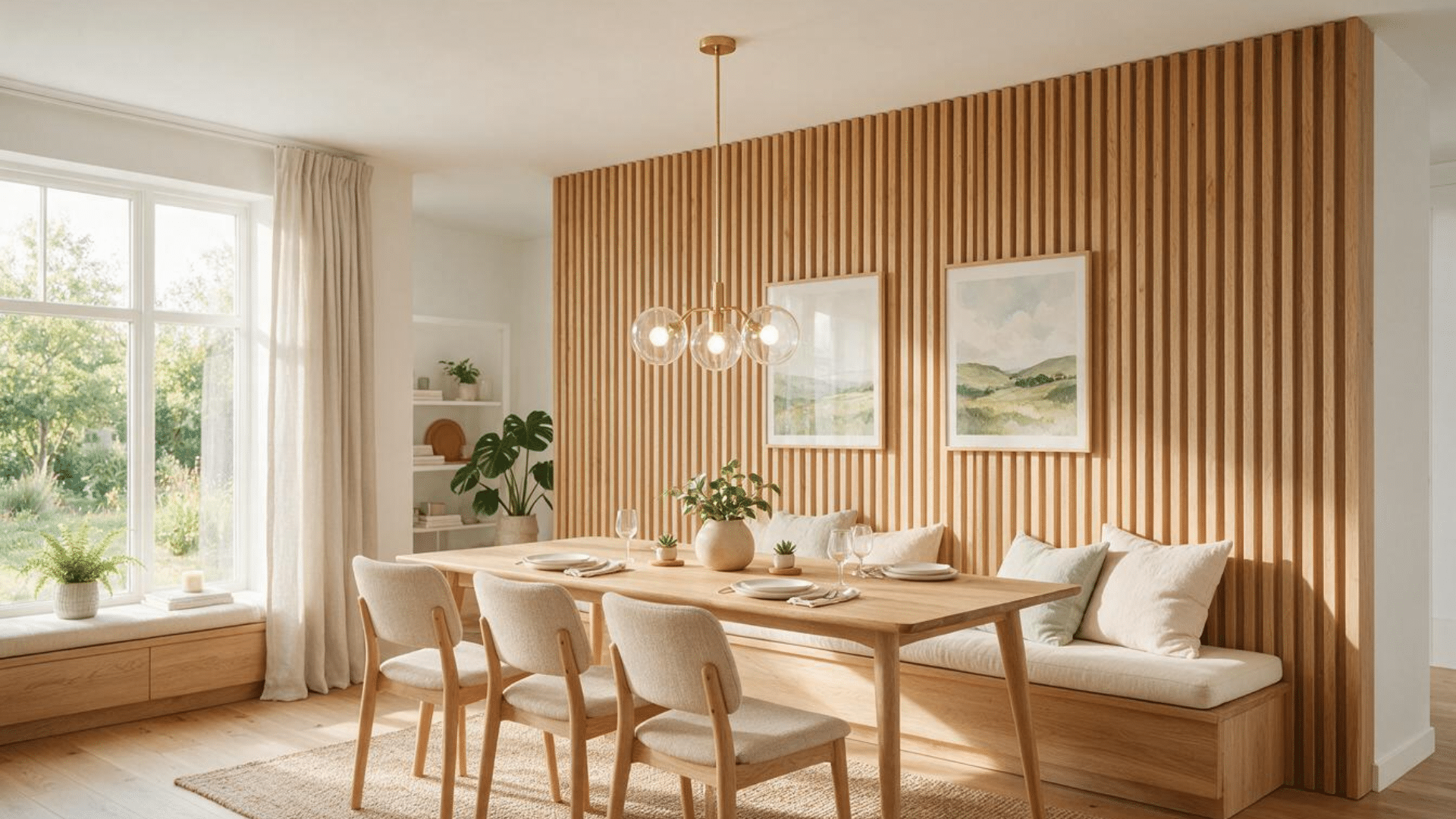
Vertical wood slats bring warmth, texture, and a clean architectural look to a dining room.
Their vertical pattern naturally draws the eye upward, helping the ceiling appear taller while creating a stylish focal point.
Light oak works well in Scandinavian or modern spaces, while walnut adds a richer appearance.
Cover the entire wall, install slats behind the dining table, and finish the look with simple artwork or soft lighting.
2. Matte Black Statement Wall
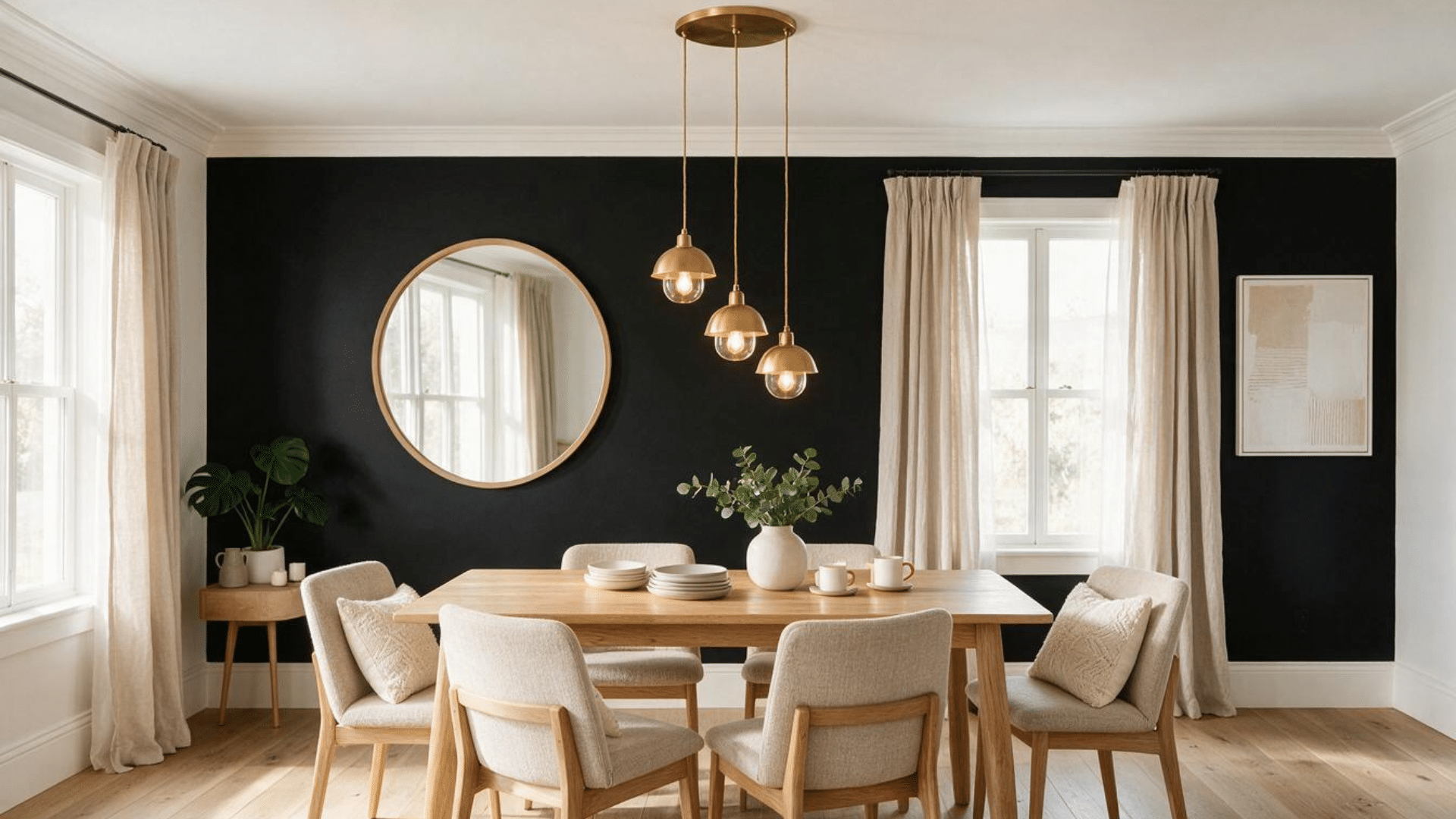
A matte black accent wall creates a bold focal point that instantly adds depth and elegance to a dining room.
It works especially well in spaces with plenty of natural light and simple furniture. Balance the dark color with white trim, brass lighting, pale wood furniture, or light-colored artwork.
Mirrors and soft fabrics also help brighten the room and keep the space feeling comfortable.
3. Large Abstract Wall Mural
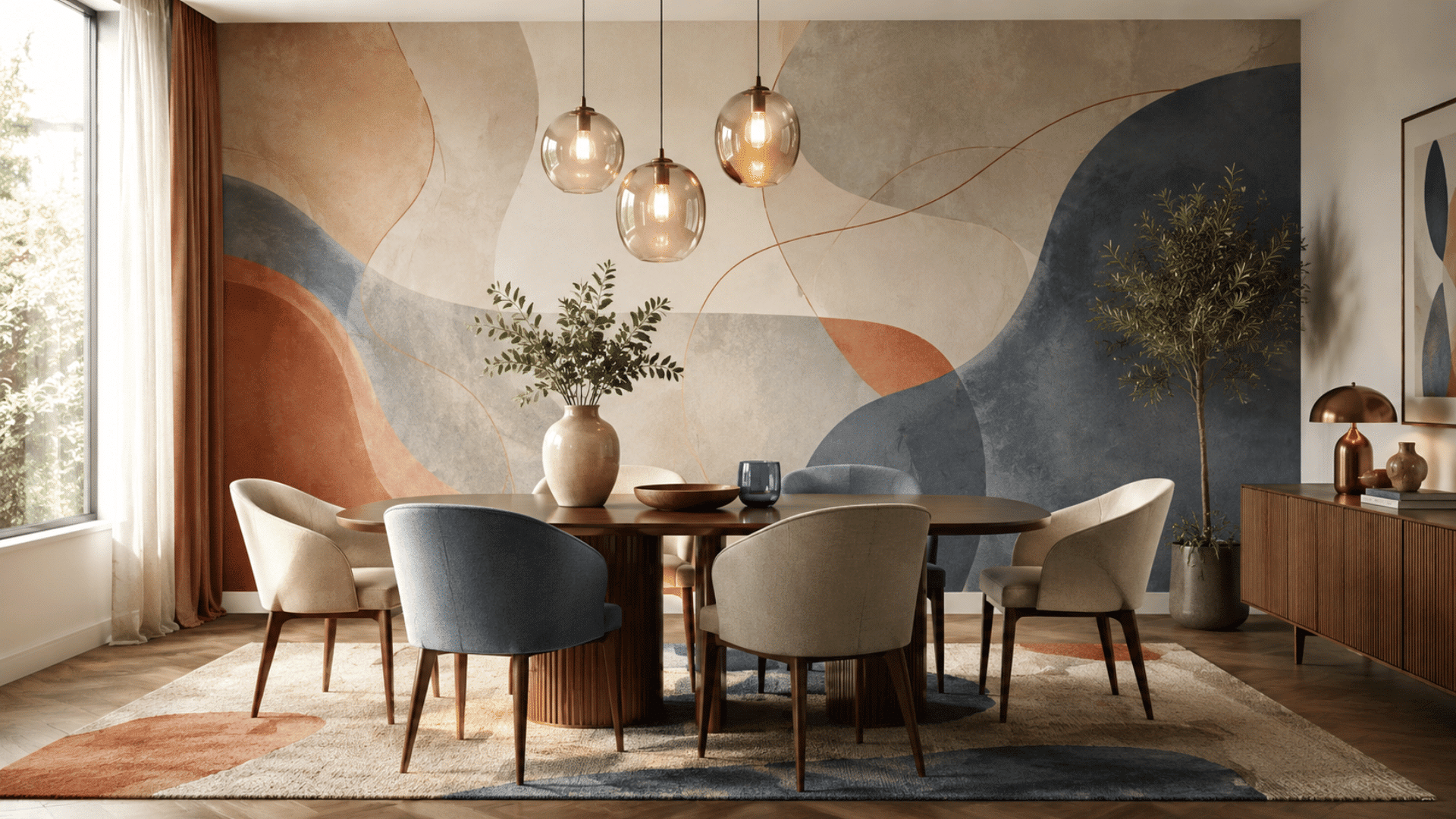
A large abstract mural can completely change the look of a plain dining room without adding extra furniture.
It adds personality while making the wall feel more artistic and visually interesting. Choose soft neutral shapes for a calming atmosphere or brighter colors for extra energy.
Match a few mural colors with your rug, curtains, chairs, or table decor for a balanced design.
4. Textured Plaster Accent Wall
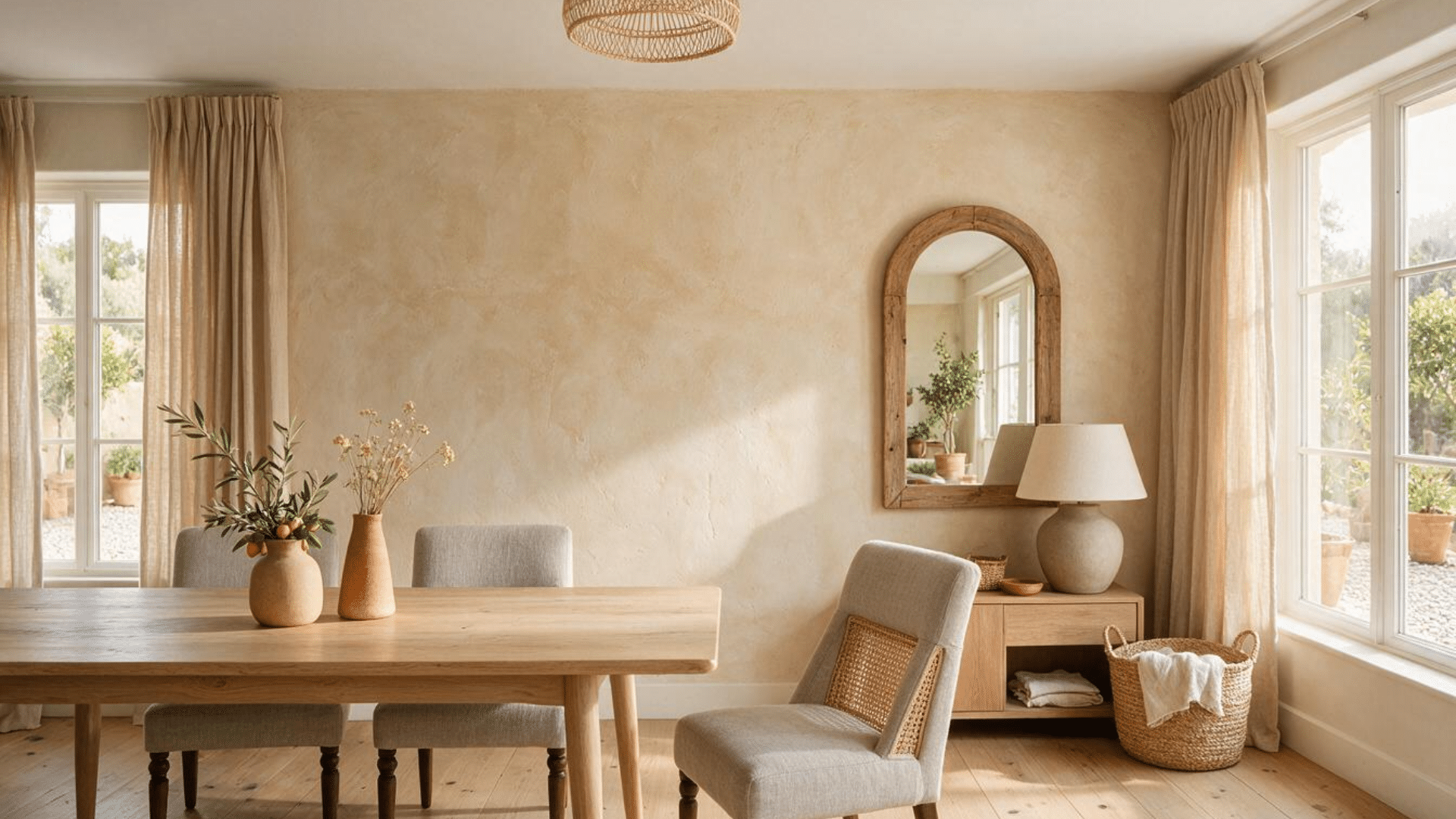
A textured plaster wall adds depth and character while keeping the dining room simple and elegant.
The changing surface catches natural and artificial light, giving the wall a soft layered appearance.
Limewash, Venetian plaster, and concrete-style finishes are popular choices.
Neutral shades like beige, cream, taupe, or warm gray blend easily with modern, Mediterranean, and minimalist interiors.
5. Reclaimed Wood Paneling
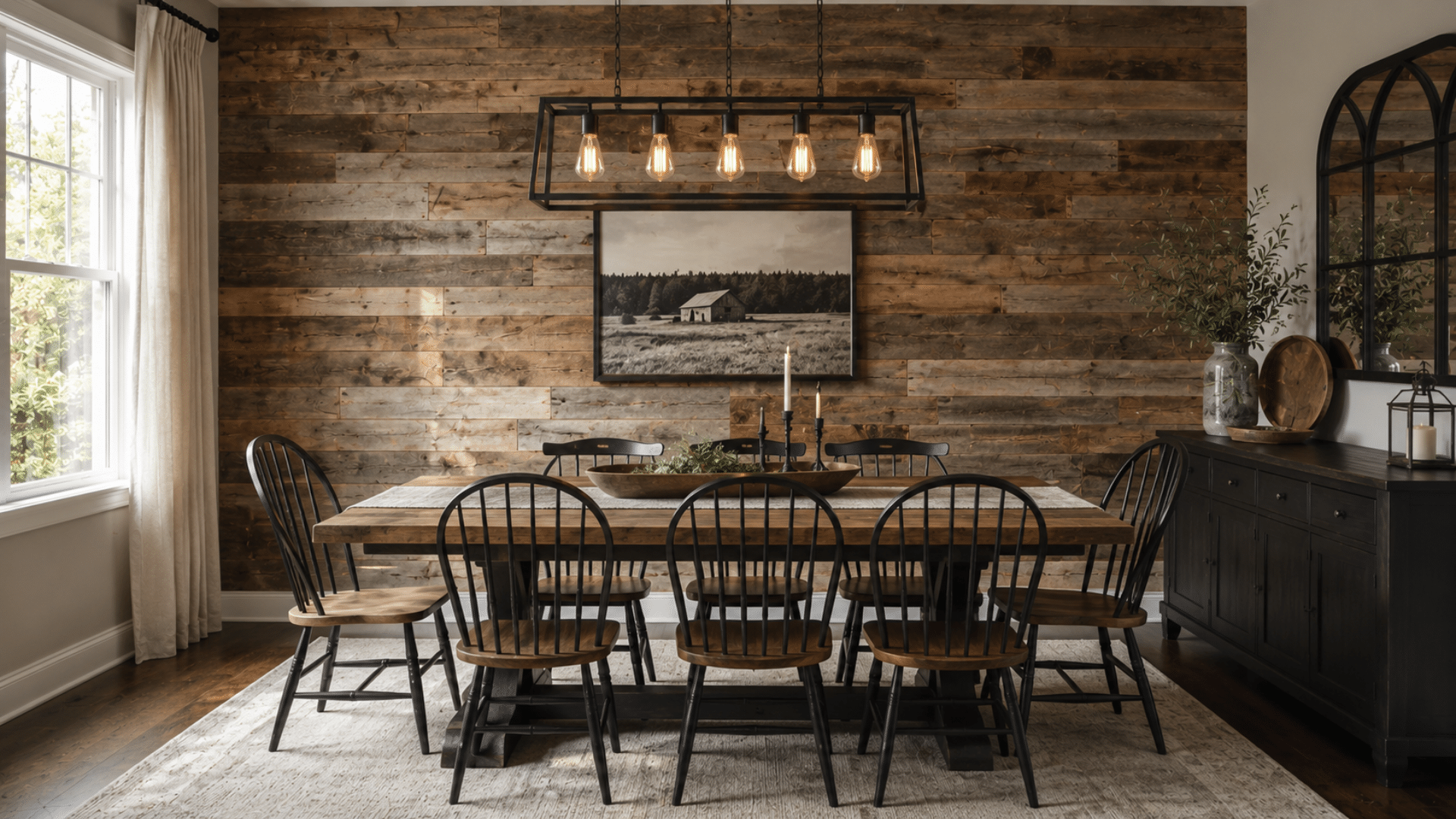
Reclaimed wood paneling creates a warm and welcoming dining room filled with natural texture and rustic charm.
Every board has unique grain patterns, knots, and weathered details that make the wall stand out.
Pair reclaimed wood with farmhouse tables, industrial lighting, and neutral fabrics for a timeless look. Wood-look panels offer a similar style while being lighter, easier to install, and budget-friendly.
6. White Shiplap Wall
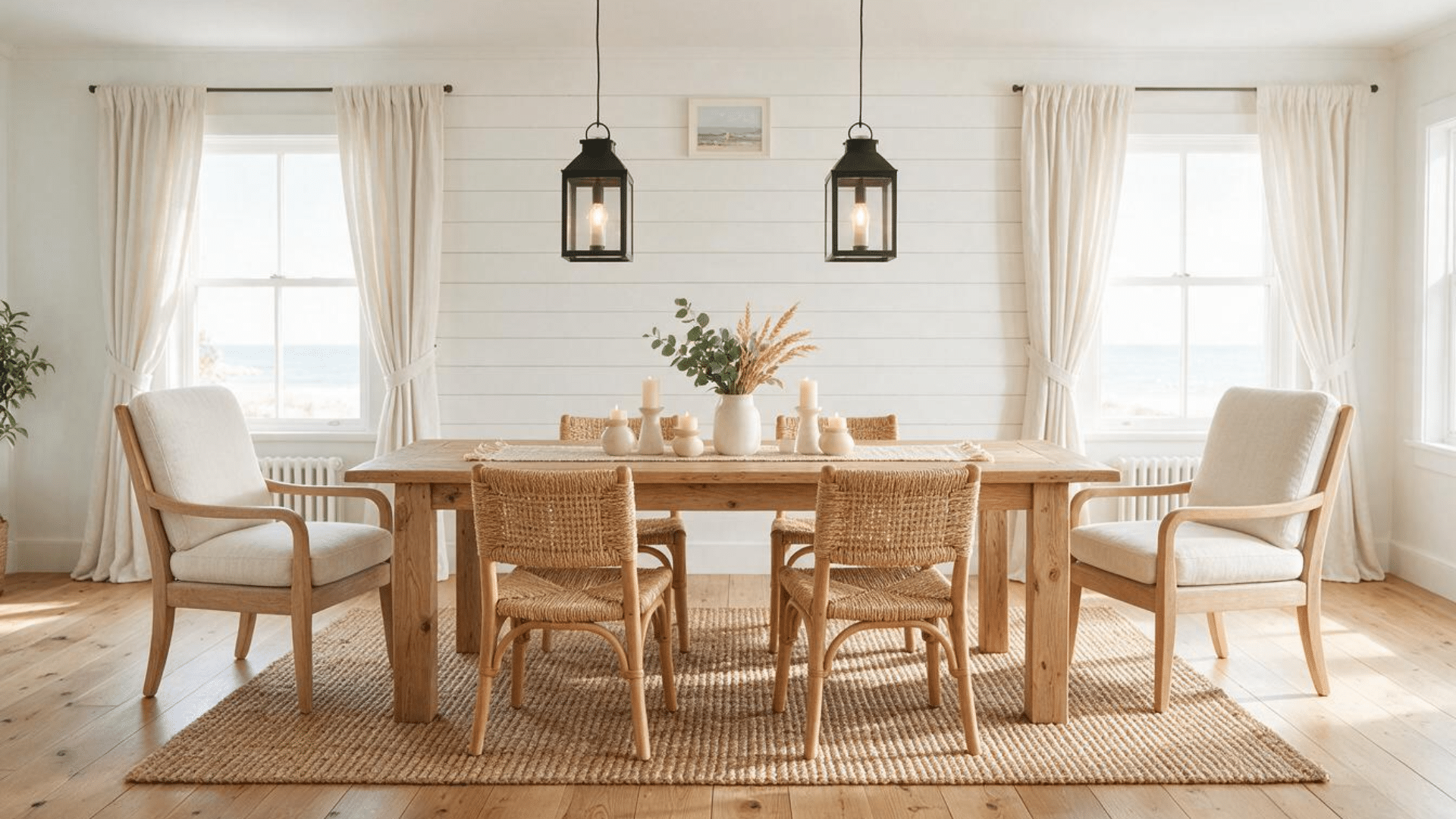
A white shiplap wall gives the dining room a bright, fresh look that works in farmhouse, coastal, and transitional homes.
The clean lines also add texture without making the room feel busy. Horizontal boards help a narrow room appear wider, while vertical installation creates extra height.
Complete the space with natural wood furniture, woven decor, black fixtures, or vintage-inspired lighting.
7. Brick Veneer Accent Wall
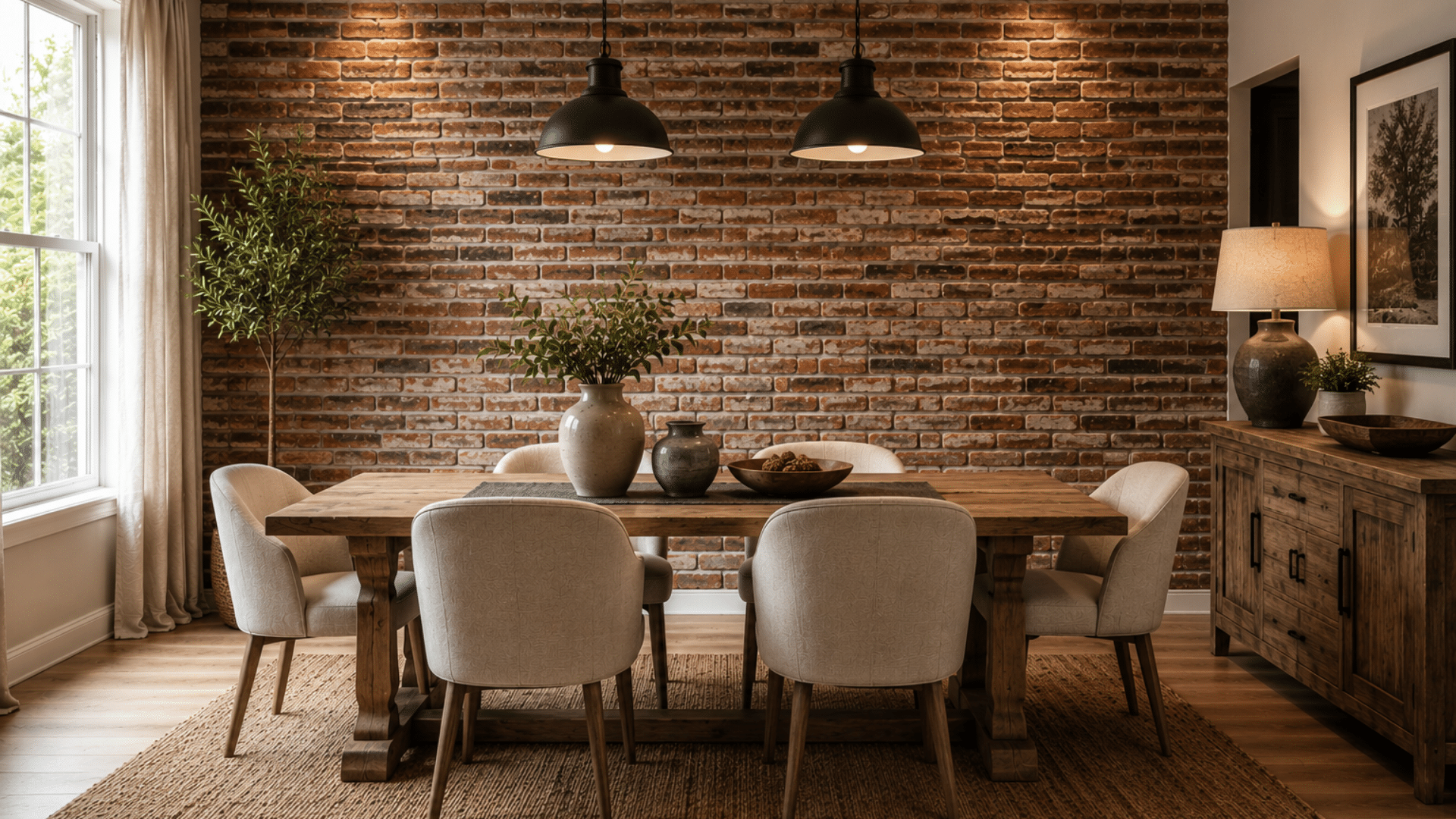
Brick veneer offers the classic look of exposed brick without the heavy construction work of real masonry.
It adds texture and character while fitting both rustic and modern dining room styles.
Choose red brick for warmth or whitewashed and gray finishes for a cleaner appearance. Use warm lighting to highlight the texture and keep surrounding furniture simple for better balance.
8. Marble-Look Wall Panels
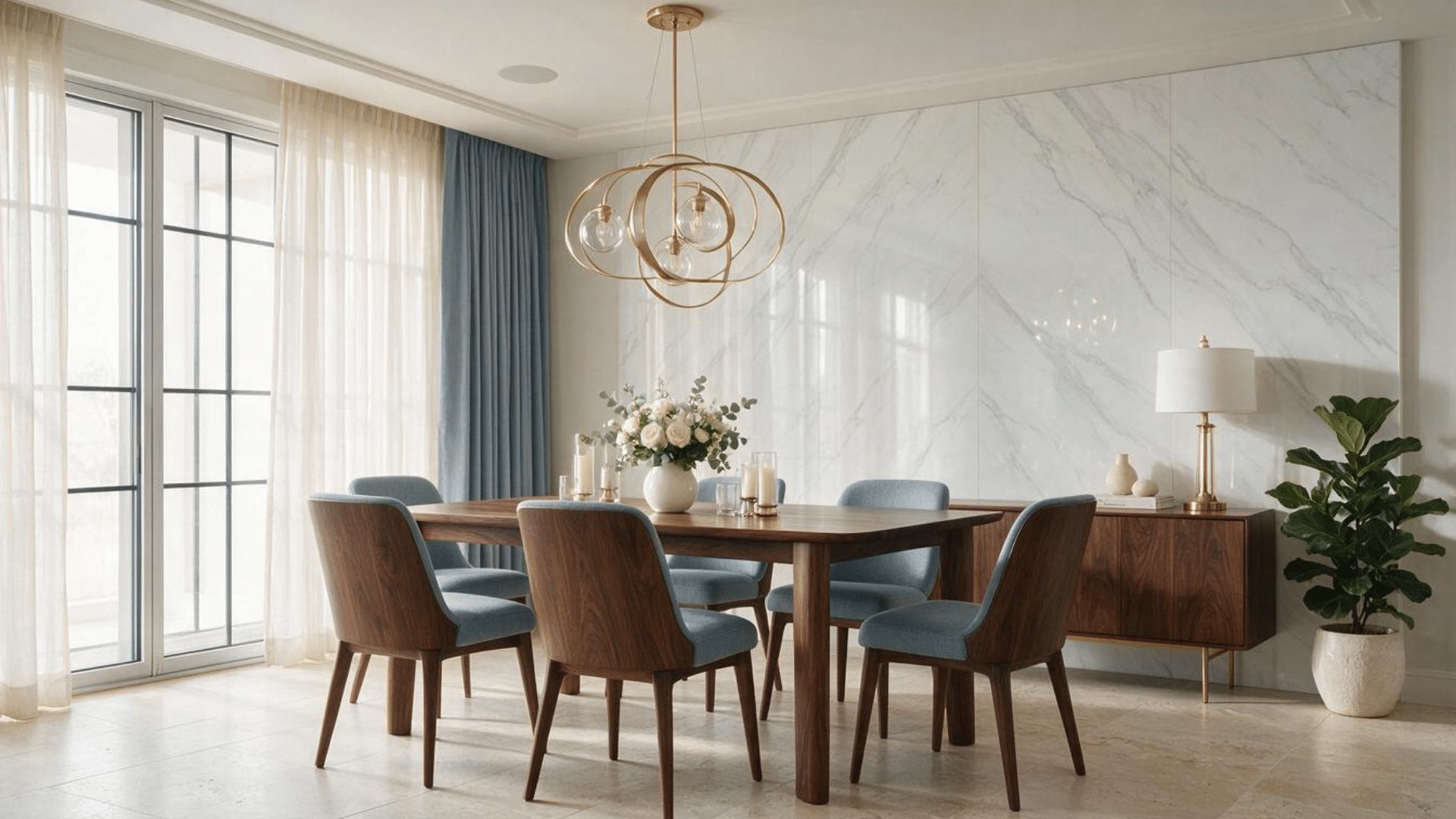
Marble-look wall panels bring a luxurious style to the dining room without the high cost or maintenance of natural stone.
They create a polished backdrop that instantly elevates the entire space. Large panels with soft veining look more realistic and reduce visible seams.
Install them behind the dining table, buffet, or bar area and pair them with brass or dark wood finishes.
9. Floor-to-Ceiling Wall Molding
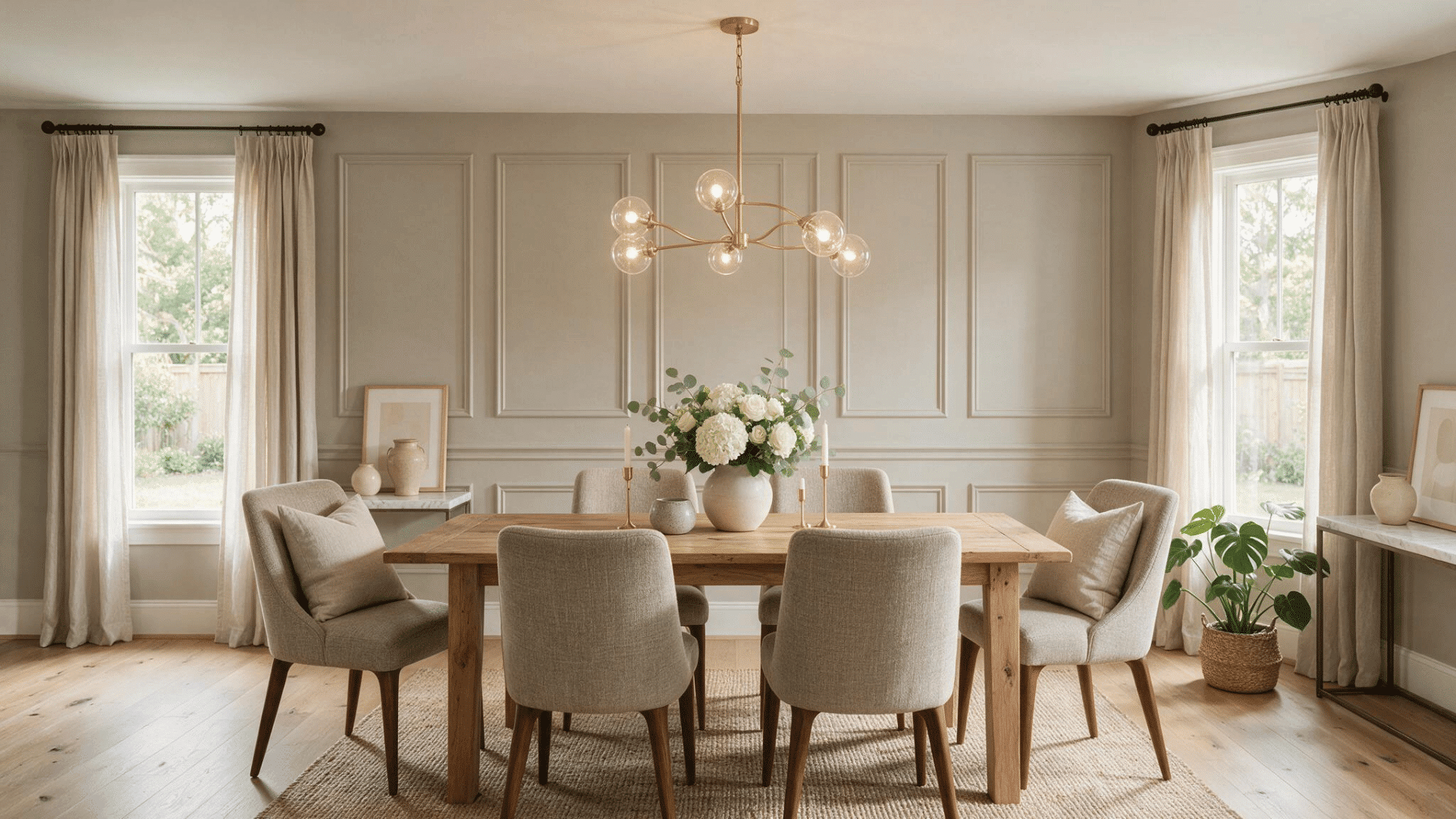
Floor-to-ceiling wall molding adds detail to a plain dining room while adding structure and timeless elegance.
It creates visual interest without needing bold colors or complicated decorative elements. Picture frame molding, grid designs, and vertical trim all work beautifully.
Paint the molding the same color as the wall for subtle depth or use contrast for greater visual impact.
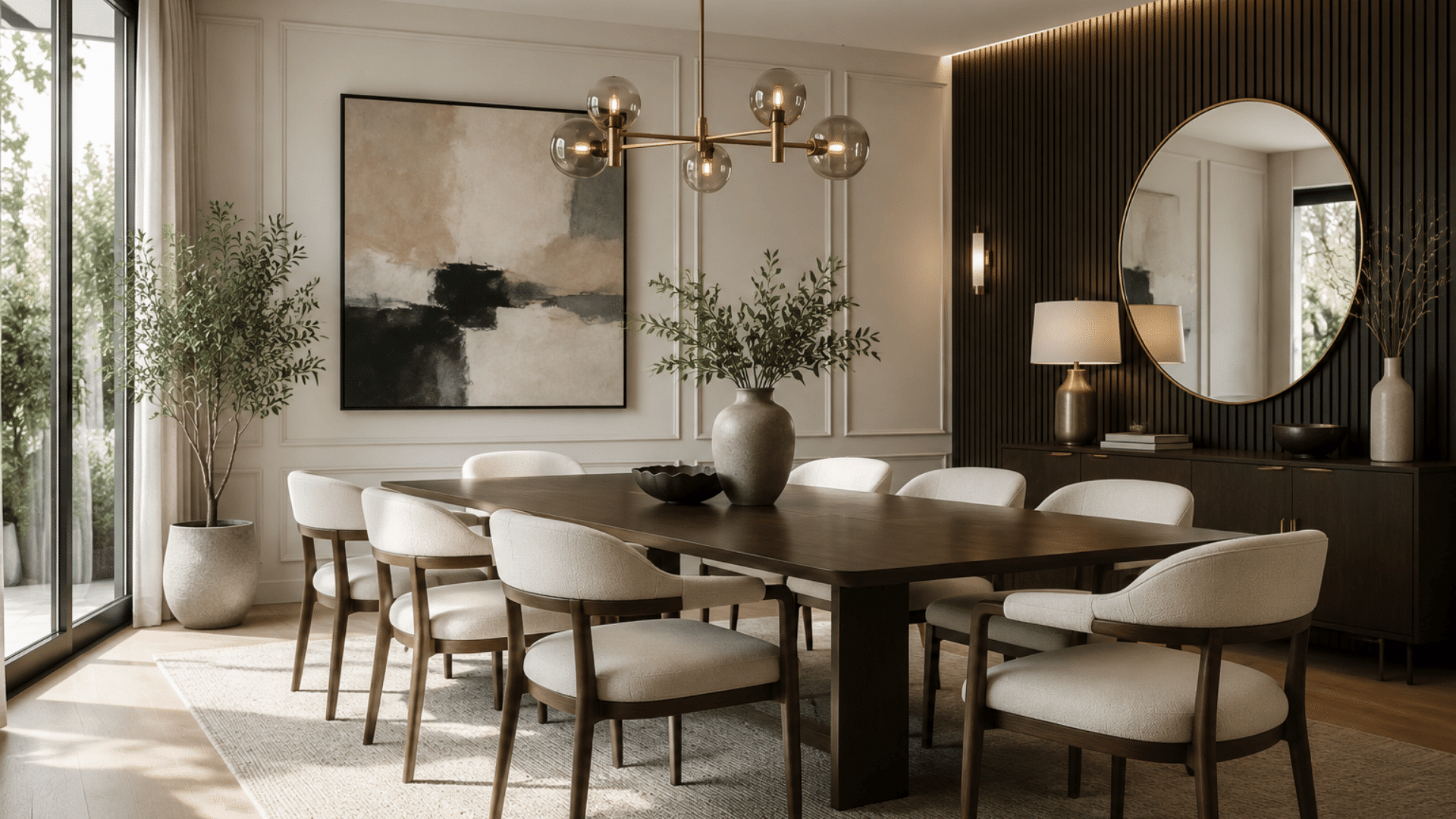
10. Fluted Wall Panels
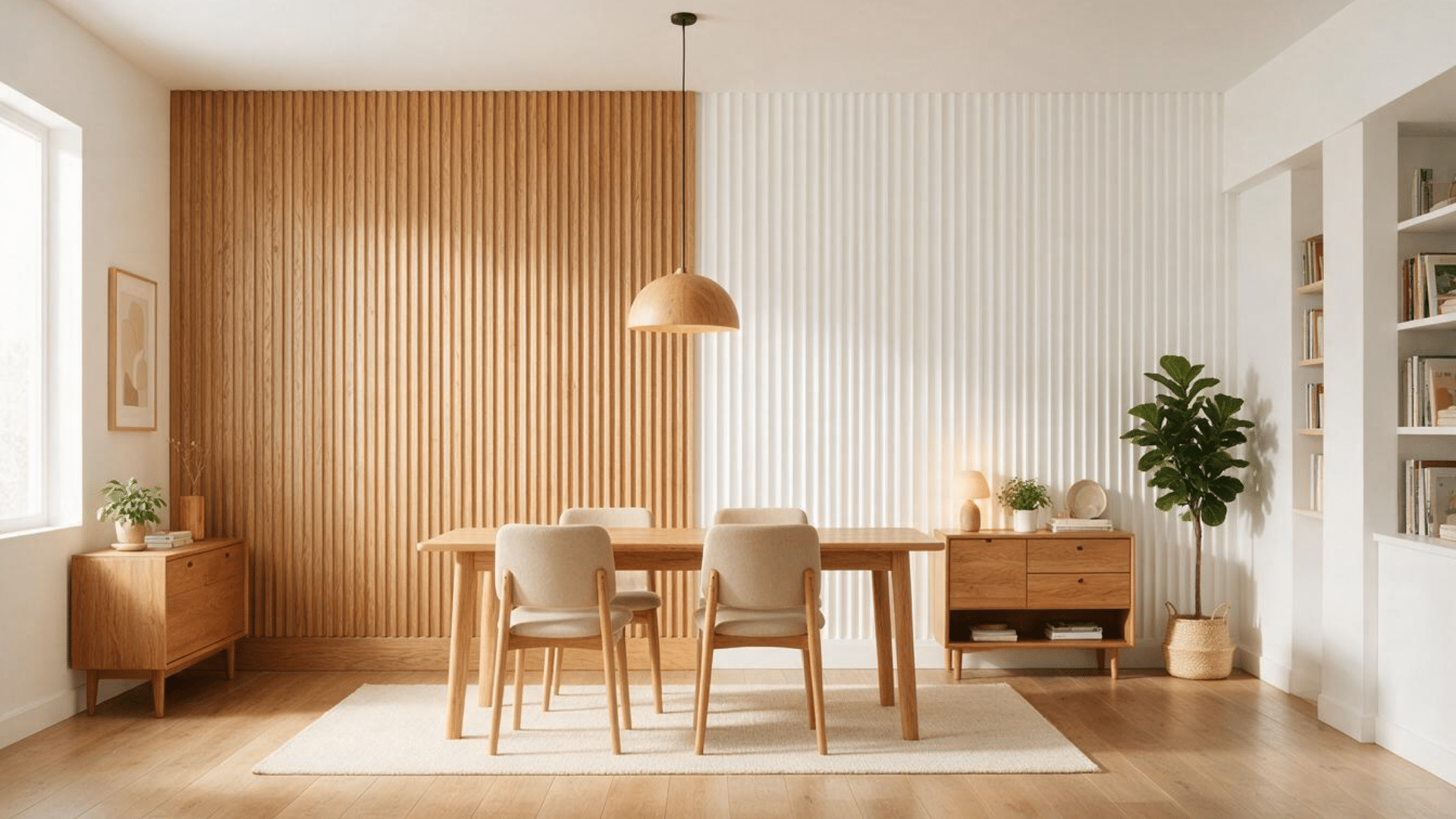
Fluted wall panels feature narrow vertical grooves that create texture while making the dining room feel taller and more refined.
Their clean lines suit both modern and classic interior styles. Natural wood finishes add warmth, while painted panels create a sleek contemporary appearance.
Install them across the full wall or only behind the dining table for a focused accent.
11. Botanical Wallpaper
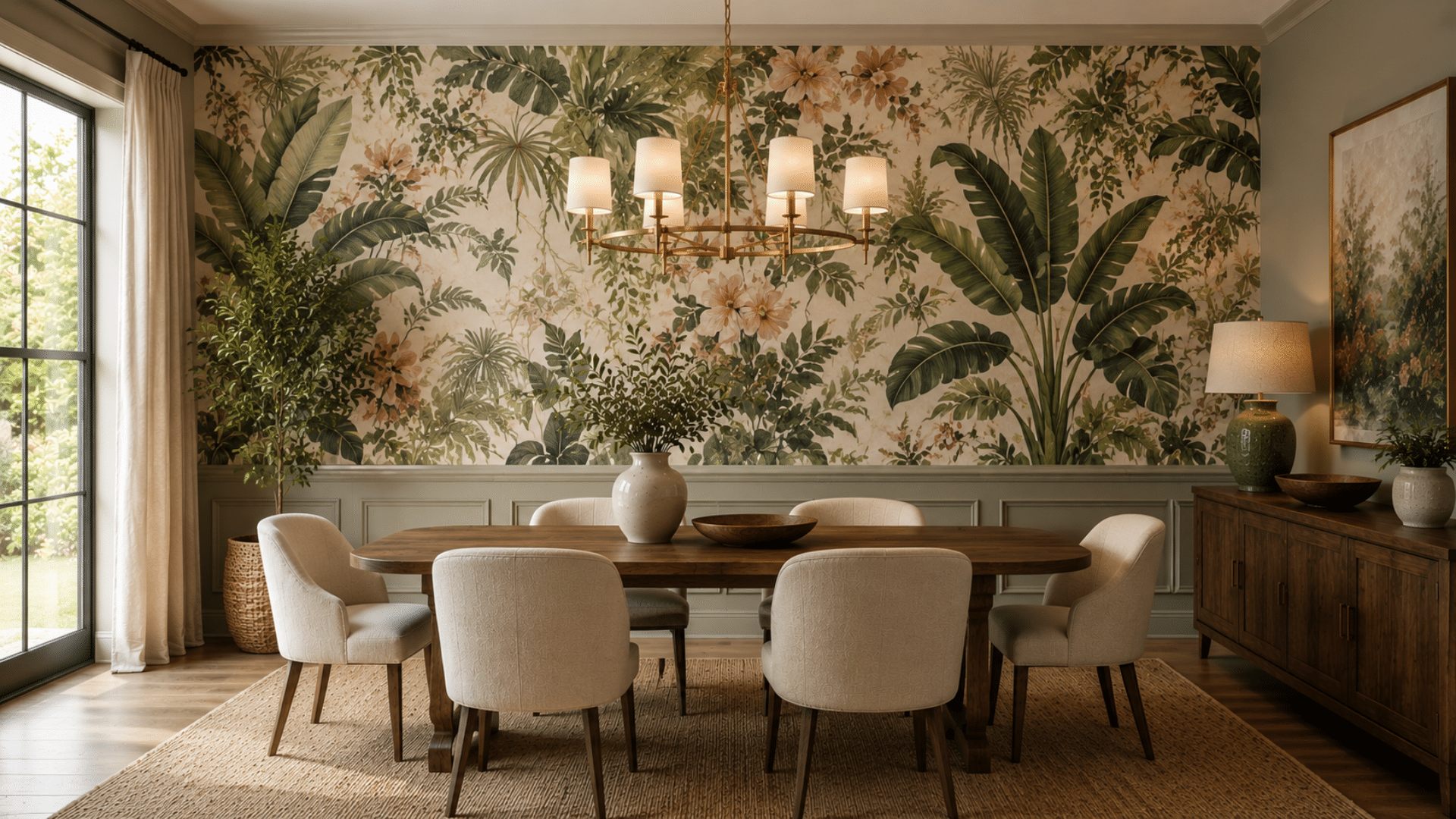
Botanical wallpaper adds color, pattern, and a natural feel that makes the dining room more welcoming.
Leafy prints, flowers, and vines create visual movement while bringing the outdoors inside. Large tropical patterns create a bold statement, while smaller floral designs offer a softer look.
Choose colors that coordinate with curtains, chairs, and artwork for a cohesive space.
12. Deep Green Painted Wall
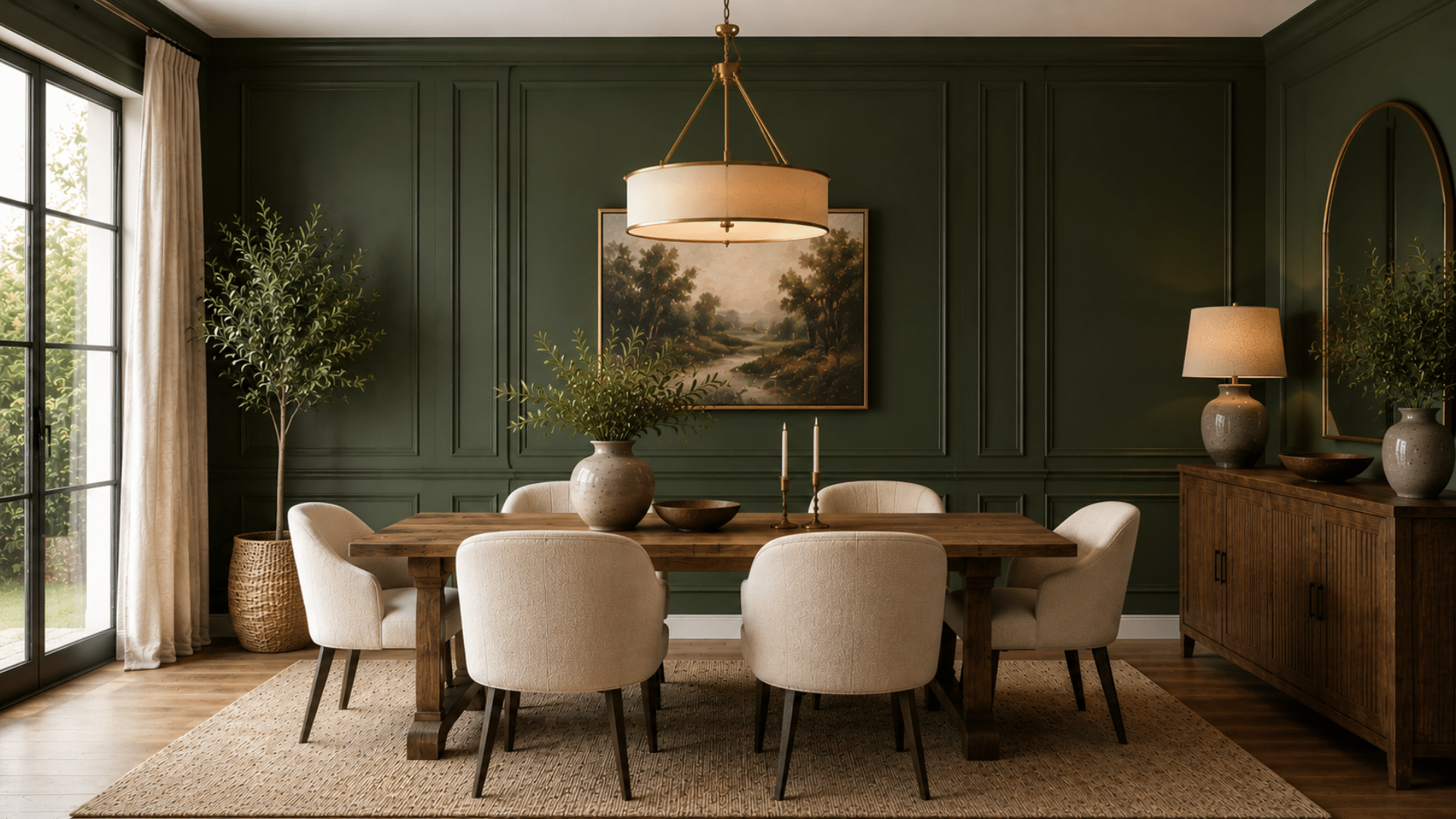
A deep green accent wall creates a relaxing dining room with warmth, depth, and timeless character. Rich shades help the space feel more intimate while pairing beautifully with many decorating styles.
Forest green, olive, sage, and emerald all work well with wood furniture, cream fabrics, brass accents, and warm lighting.
Test paint samples first because lighting can change the final color.
13. Peel-and-Stick Wallpaper
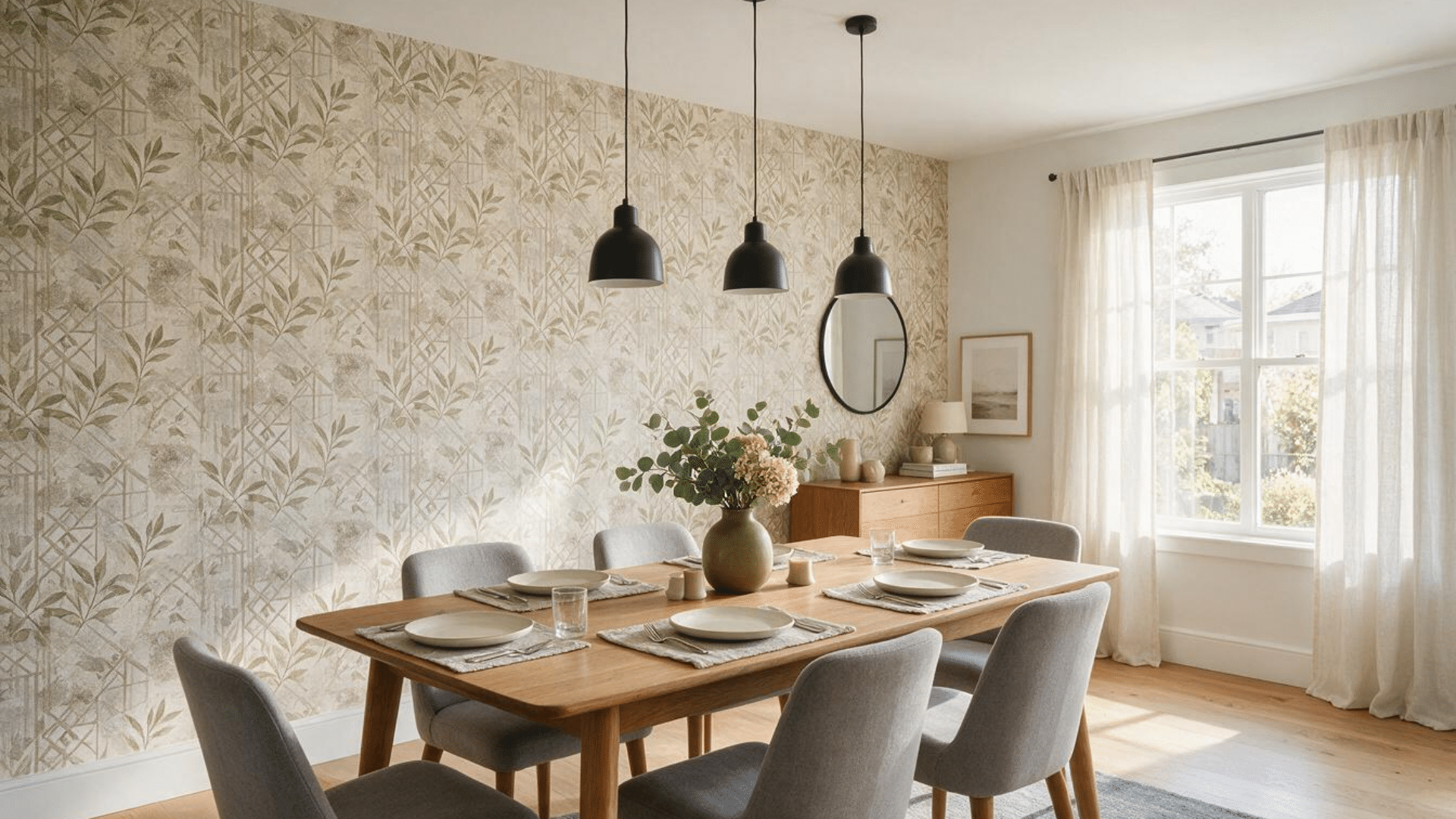
Peel-and-stick wallpaper offers an easy way to update a dining room without permanent changes.
It is ideal for renters, beginners, or homeowners who enjoy changing their decor regularly.
Available in floral, geometric, textured, and mural styles, and comparing a few peel-and-stick wallpaper brands first can help you find one that holds up over time.
Apply it to a clean, smooth wall and align each panel carefully for a neat finish.
14. Decorative Mirror Display
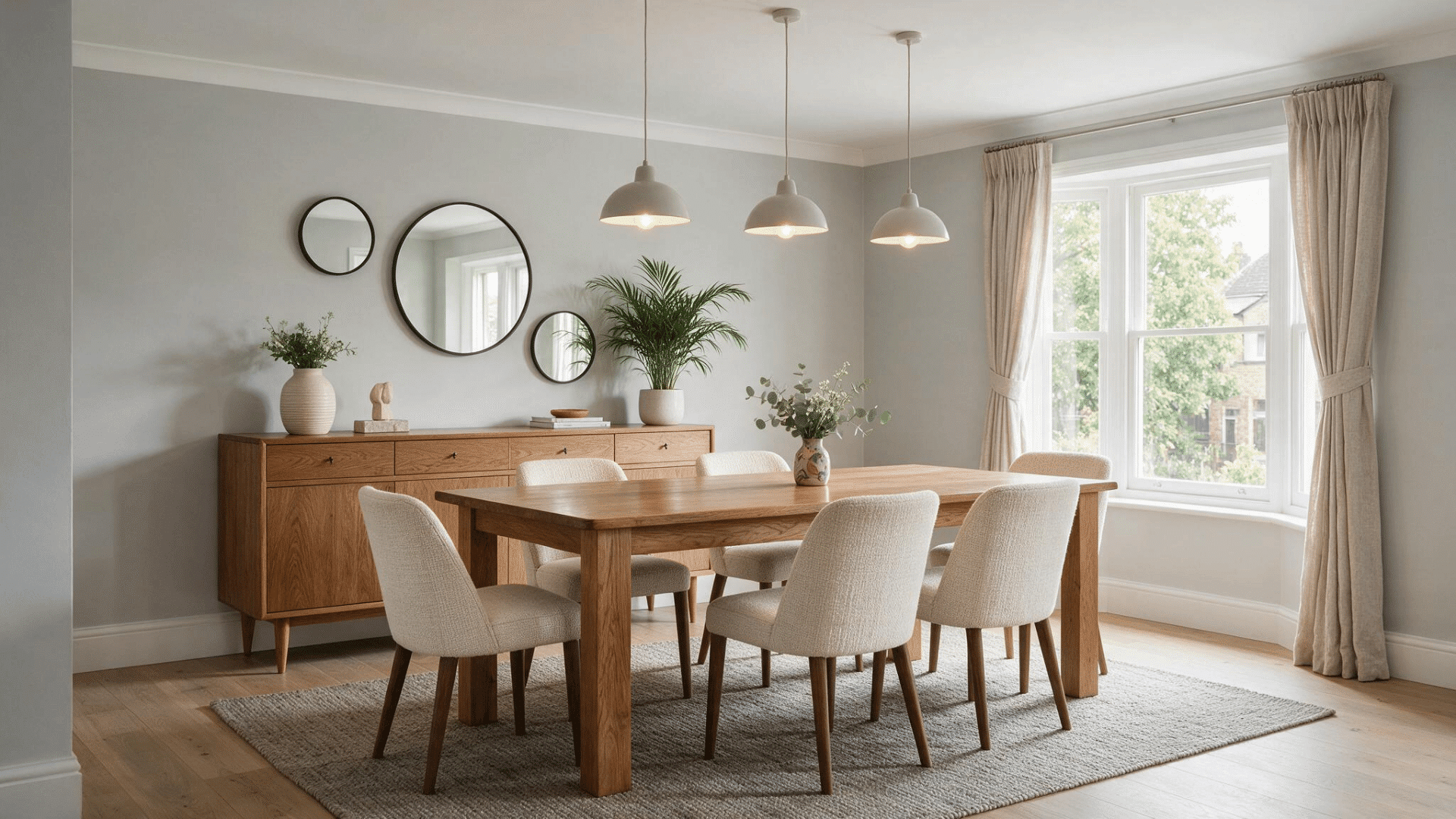
A decorative mirror display helps a small dining room appear brighter, larger, and more open by reflecting both light and surrounding decor.
It also creates an attractive wall feature without overwhelming the space. Choose one oversized mirror or arrange several smaller mirrors in a balanced layout.
Position them to reflect windows, pendant lights, or artwork instead of cluttered areas.
15. Oversized Artwork Feature Wall
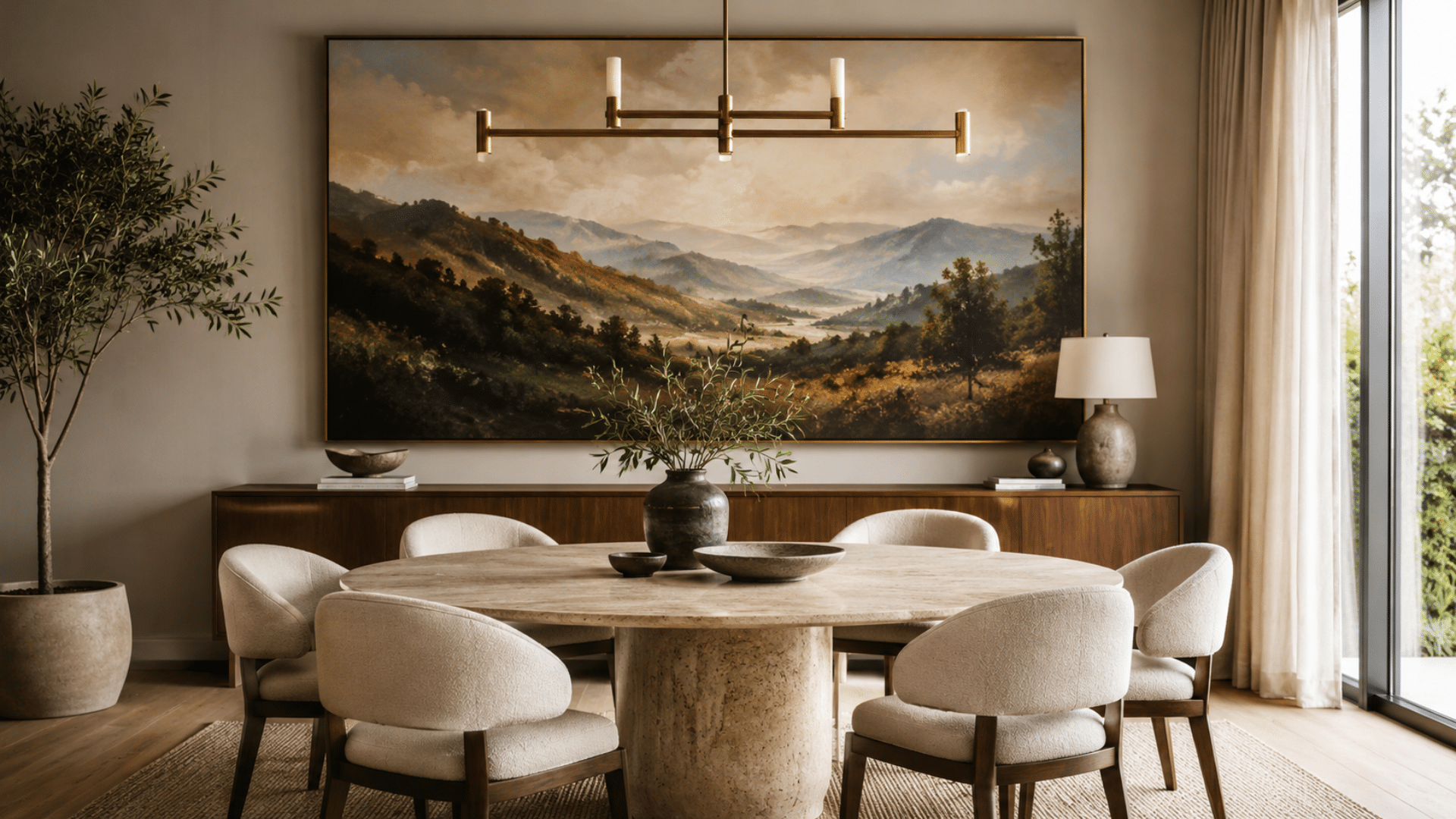
Oversized artwork creates an eye-catching dining room accent wall without paint, wallpaper, or major renovations.
One carefully selected piece can become the main focal point of the entire space. Choose artwork that is wide enough to balance the dining table or sideboard below.
Abstract pieces suit modern interiors, while landscapes and vintage prints complement traditional and classic homes.
16. Built-In Display Shelves
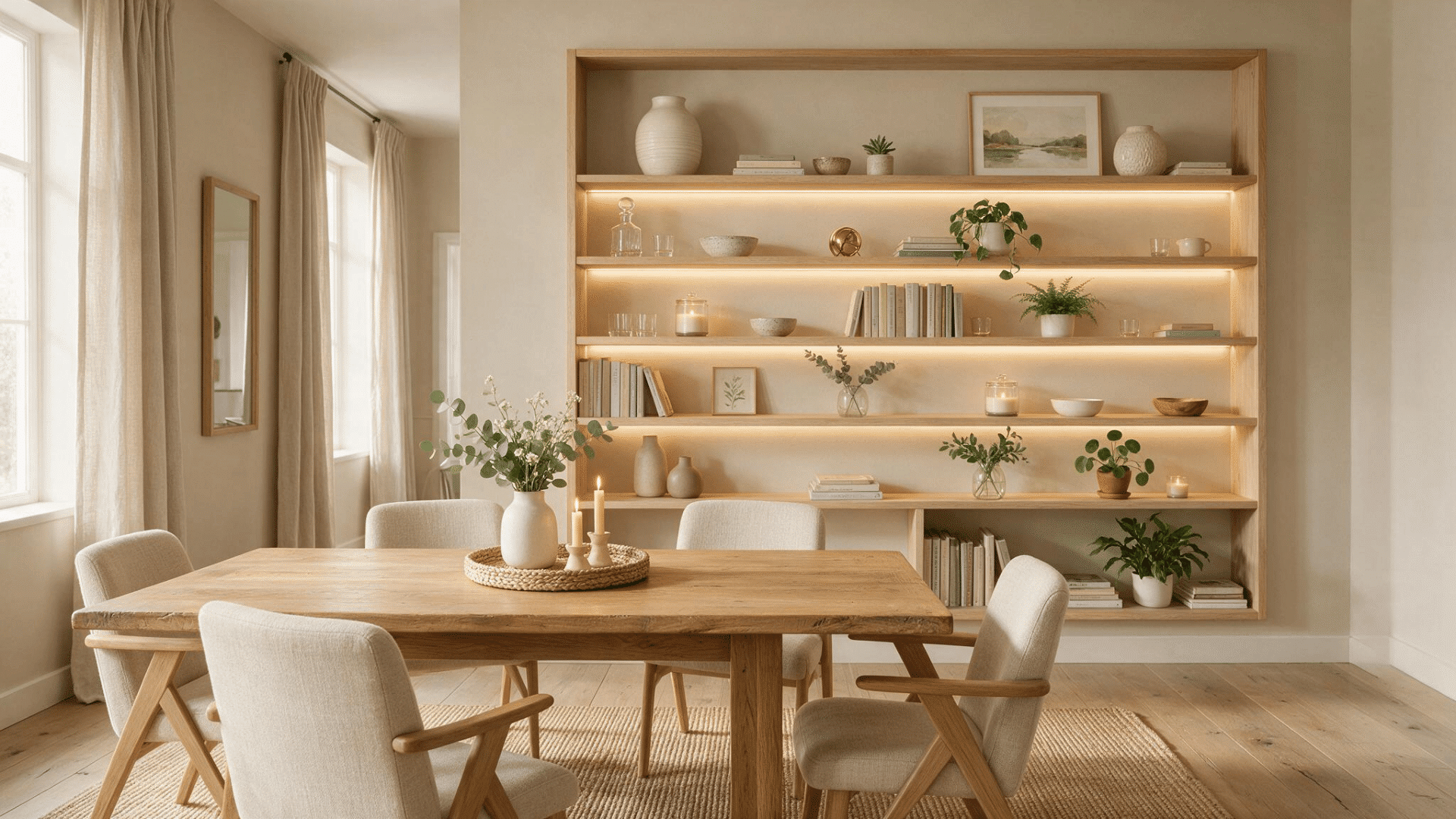
Built-in display shelves add storage and style while turning a plain dining room wall into a useful feature.
They can hold ceramics, glassware, framed photos, books, candles, or small plants without taking up floor space. Paint the shelves the same color as the wall for a seamless look or choose a contrasting shade for more definition.
Keep the arrangement balanced and avoid overcrowding each shelf.
17. Upholstered Wall Panels
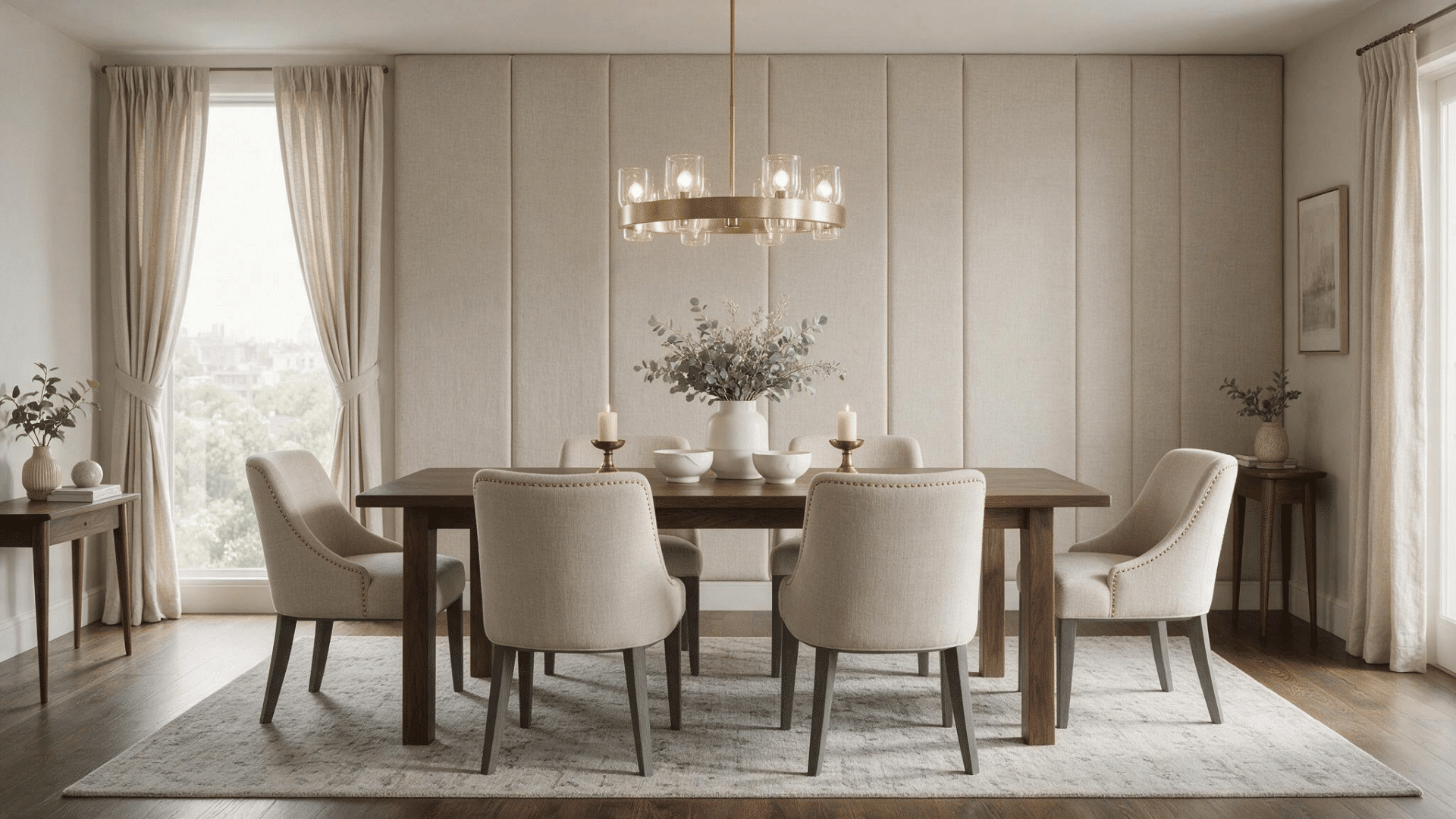
Upholstered wall panels add softness, texture, and comfort to a dining room while helping reduce echo in larger spaces.
Fabric-covered panels can make the room feel warmer and more inviting, especially in homes with hard flooring.
Choose linen, velvet, or textured fabric in neutral or muted colors. Install the panels behind the dining table and pair them with simple lighting and clean-lined furniture.
Materials Required for Dining Room Accent Walls
The materials you need will depend on the type of accent wall you plan to create. Some options require only basic supplies, while others may need adhesives, framing materials, specialty tools, or professional installation.
| Accent Wall Type | Main Materials Required | Additional Supplies | Skill Level |
|---|---|---|---|
| Painted Wall | Interior paint and primer | Rollers, brushes, painter’s tape, and drop cloths | Beginner |
| Stenciled Wall | Paint and wall stencil | Stencil brush, level, tape, and measuring tools | Beginner |
| Peel-and-Stick Wallpaper | Removable wallpaper panels | Smoothing tool, measuring tape, utility knife, and level | Beginner |
| Floating Shelves | Wood or metal shelves | Brackets, wall anchors, screws, drill, and level | Intermediate |
| Decorative Molding | Wood or MDF trim | Construction adhesive, nails, filler, paint, and level | Intermediate |
| Wood Panels | Slats, planks, or panel sheets | Adhesive, screws, spacers, saw, and finishing products | Intermediate |
| Brick Veneer | Thin brick tiles | Mortar, grout, spacers, trowel, and sealant | Advanced |
| Textured Plaster | Decorative plaster or joint compound | Trowel, sanding tools, primer, and protective sheets | Advanced |
| Natural Stone | Stone tiles or panels | Adhesive, grout, sealant, and cutting tools | Professional |
| Custom Woodwork | Timber, plywood, or MDF | Saw, drill, nails, adhesive, filler, stain, or paint | Advanced |
According to guidance published by the Occupational Safety and Health Administration (OSHA), workers should wear appropriate personal protective equipment (PPE) and follow safe hand and power tool practices before cutting wood, installing trim, or using adhesives.
Best Colors for Dining Room Accent Walls
The right accent wall color does more than add style; it helps set the mood and complements your dining room’s size, lighting, and furniture.
- Warm Neutrals: Terracotta, warm beige, taupe, and soft rust create a cozy atmosphere that pairs beautifully with wood furniture and warm lighting.
- Deep, Dramatic Shades: Navy, charcoal, forest green, and matte black add depth and sophistication. These colors work best in rooms with plenty of natural light or light-colored décor.
- Nature-Inspired Greens and Blues: Sage, olive, dusty blue, and eucalyptus green bring a calm, relaxed feel while blending easily with modern, farmhouse, and Scandinavian interiors.
- Light, Airy Tones: White, cream, greige, and light gray brighten smaller dining rooms and provide a timeless backdrop for artwork and decorative accents.
- Bold Statement Colors: Burgundy, teal, mustard, and cobalt blue create a striking focal point. Keep nearby furniture and accessories simple so the accent wall remains the highlight of the room
Budget-Friendly Dining Room Accent Wall Ideas
You do not need a large budget to refresh your dining room. Many accent wall ideas can make a noticeable difference using affordable materials, paint, or simple DIY upgrades.
| Accent Wall Idea | Approximate Budget (USD) | Best For |
|---|---|---|
| Painted Accent Wall | $30–$80 | Fast and affordable room refresh |
| Peel-and-Stick Wallpaper | $50–$180 | Renters and DIY projects |
| Gallery Wall with Frames | $60–$200 | Personalized dining room decor |
| Decorative Mirror Display | $80–$250 | Small dining rooms needing more light |
| DIY Wood Slat Wall | $120–$300 | Modern and Scandinavian interiors |
| White Shiplap Panels | $150–$400 | Farmhouse and coastal styles |
| Reclaimed Wood Feature Wall | $200–$500 | Rustic and industrial dining rooms |
Common Accent Wall Mistakes to Avoid
Avoid these common mistakes to create a balanced focal point that feels intentional and suits the space.
- Choosing the Wrong Wall: Select a wall that naturally draws attention, such as the area behind the dining table, sideboard, or fireplace. Avoid walls broken up by several doors or windows.
- Using Too Many Bold Patterns: Let one strong pattern lead the room. If the wall features dramatic wallpaper, molding, or a mural, keep nearby rugs, curtains, and artwork more restrained.
- Ignoring Lighting: Test paint, wallpaper, and panel samples in daylight and artificial light. Dark finishes can look elegant during the day but may feel heavy or dull at night.
- Forgetting Scale and Proportion: Match the size of patterns, molding, and artwork to the wall and furniture. Small details can disappear, while oversized designs may overwhelm compact rooms.
- Overdecorating the Accent Wall: Avoid covering a textured or patterned wall with too many shelves, mirrors, frames, or accessories. Leave enough open space for the design to remain visible.
Conclusion
A dining room accent wall can completely change the feel of the space without requiring a major renovation or a large budget.
The right color, texture, or material creates a focal point that reflects your style while making everyday meals and special gatherings feel more inviting.
I always find that even a simple update can make the room feel fresh and thoughtfully designed.
Use these dining room accent wall ideas as inspiration, mix them with your existing decor, and create a space that feels welcoming every time family and friends gather around the table.
Frequently Asked Questions
Can You Install an Accent Wall Over Damaged Drywall?
Minor holes and cracks should be repaired before installation. Uneven or moisture-damaged drywall may require professional repair to prevent poor adhesion, visible bumps, or future deterioration.
How Long Does It Take to Complete a Dining Room Accent Wall?
A painted wall may take one day, while molding, wallpaper, wood panels, or brick veneer can require several days, depending on preparation and installation complexity.
How Do You Clean a Dining Room Accent Wall?
Use a soft cloth, mild cleaner, or vacuum attachment based on the material. Always test cleaning products on a hidden area before treating the entire wall.