

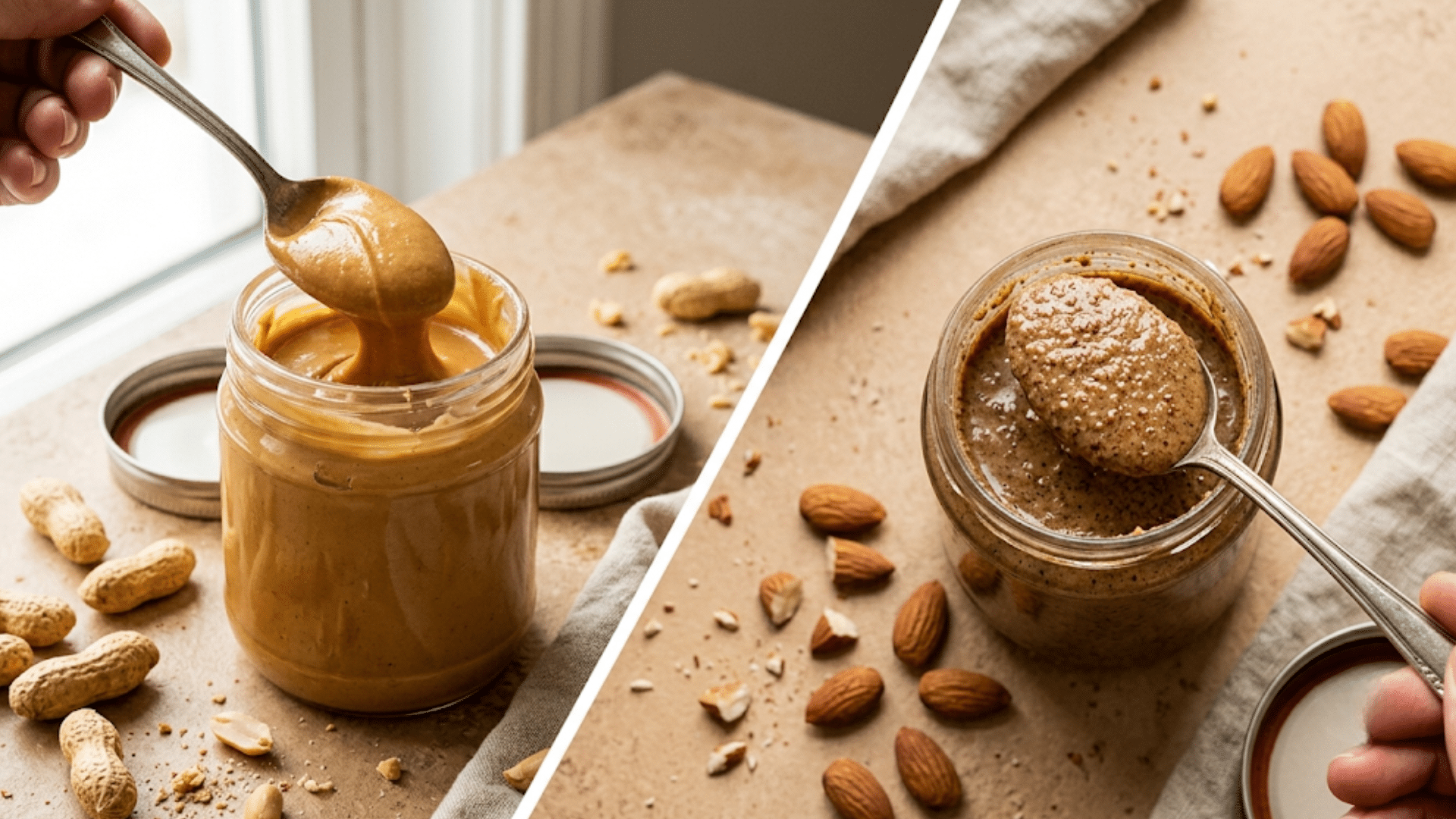
Standing in the grocery aisle, I often find myself comparing two jars that seem almost identical at first glance.
One promises extra nutrients, while the other is a familiar favorite that has been in many kitchens for years.
Choosing between them is not always as simple as picking the one I like best. Almond butter vs peanut butter is a comparison that goes beyond taste, touching on nutrition, cost, protein, healthy fats, and everyday use.
Taking a closer look at their nutritional differences and everyday benefits makes it easier to choose the one that best suits the needs.
What Is Almond Butter?
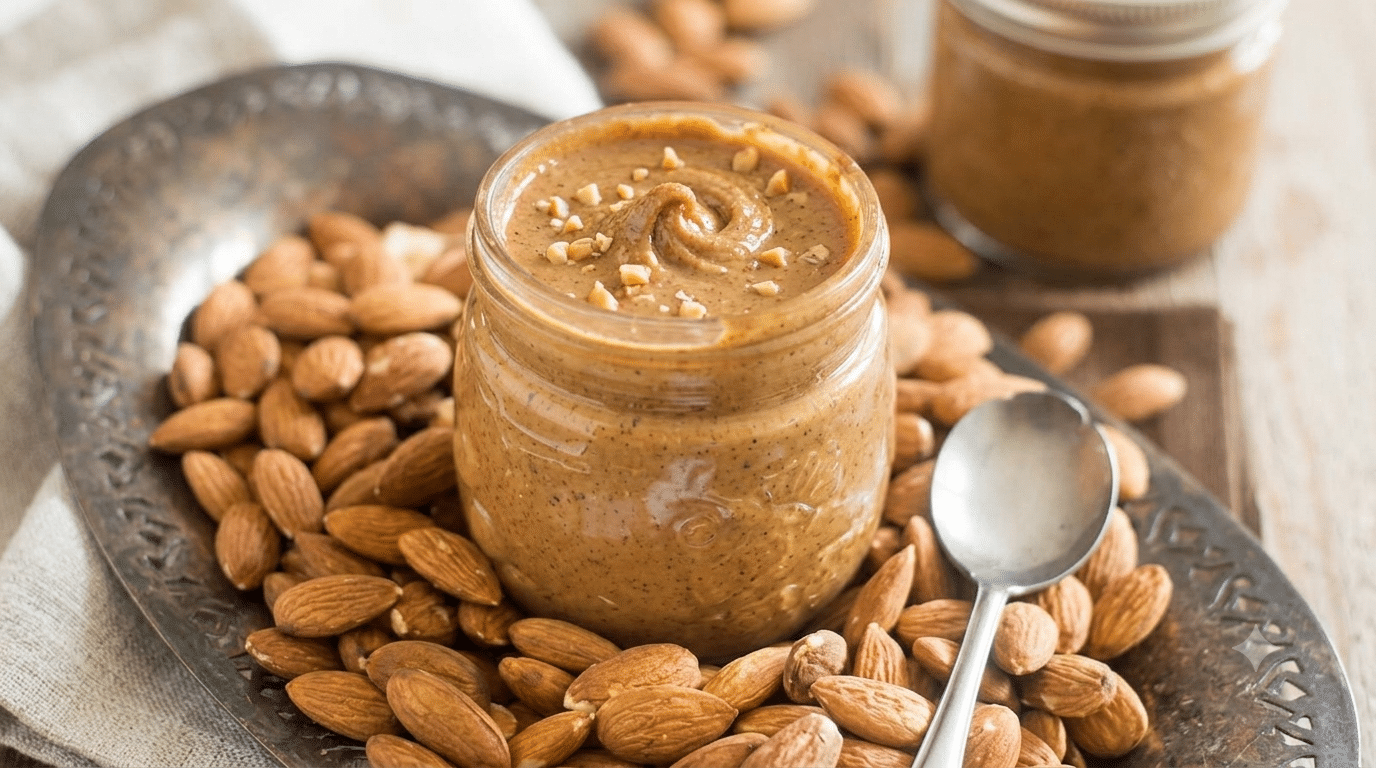
Almond butter is a spread made by grinding roasted or raw almonds into a smooth or crunchy paste.
Most natural almond butter contains only almonds, although some brands add salt. It is naturally rich in unsaturated fats, fiber, vitamin E, magnesium, calcium, and antioxidants.
Its mild, slightly sweet, nutty flavor makes it a popular choice for toast, smoothies, oatmeal, fruit, and baking.
Because almonds are tree nuts, almond butter is not suitable for people with tree nut allergies. Compared with peanut butter, it usually costs more but provides higher amounts of several vitamins and minerals.
What Is Peanut Butter?
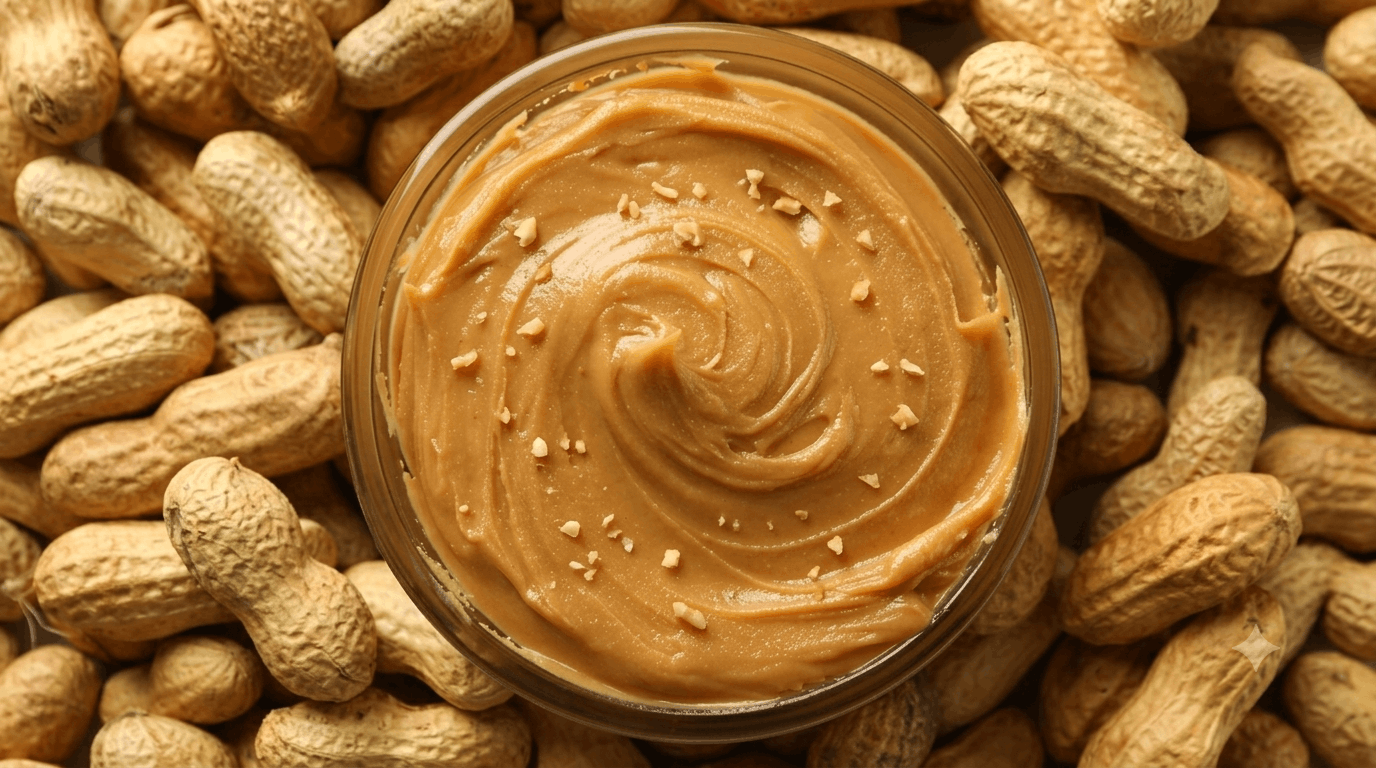
Peanut butter is a spread made by grinding roasted peanuts into a smooth or crunchy paste. Although peanuts are legumes rather than tree nuts, peanut butter has a nutritional profile similar to that of many nut butters.
Natural peanut butter usually contains only peanuts and sometimes salt, while regular varieties may include added sugar, oils, or stabilizers.
It is a good source of plant-based protein, healthy unsaturated fats, niacin, folate, and vitamin E.
Peanut butter has a rich, roasted flavor that pairs well with bread, fruit, smoothies, sauces, and baked goods. It is also widely available and is usually more affordable than almond butter.
Almond Butter vs Peanut Butter: Nutrition Comparison
Both almond butter and peanut butter are nutrient-dense spreads that provide healthy fats, plant-based protein, and important vitamins and minerals.
| Nutrient (2 Tbsp / 32 g) | Almond Butter | Peanut Butter |
|---|---|---|
| Calories | ~190 kcal | ~190 kcal |
| Protein | ~7 g | ~8 g |
| Total Fat | ~18 g | ~16 g |
| Saturated Fat | ~1.5 g | ~3 g |
| Carbohydrates | ~6 g | ~7 g |
| Fiber | ~3 g | ~2 g |
| Total Sugar (Natural) | ~1 g | ~2 g |
| Vitamin E | Excellent source | Good source |
| Magnesium | Higher | Lower |
| Calcium | Higher | Lower |
| Potassium | Higher | Lower |
| Niacin (Vitamin B3) | Moderate | Higher |
| Folate | Moderate | Higher |
| Iron | Slightly higher | Good source |
Is Almond Butter Healthier than Peanut Butter?
Almond butter is slightly healthier than peanut butter overall because it contains more vitamin E, fiber, magnesium, calcium, and healthy unsaturated fats.
However, peanut butter provides slightly more protein and is usually the more affordable choice, making both healthy options when you choose natural varieties.
The better choice depends on your nutrition goals rather than one spread being universally superior.
If you want to increase your intake of vitamins, minerals, and fiber, almond butter has a nutritional advantage. If your priority is adding a little more protein while keeping costs lower, peanut butter is an excellent option.
In either case, look for products made with only nuts and little or no added sugar or hydrogenated oils.
Eating either spread in recommended portions allows you to enjoy their health benefits as part of a balanced diet.
How Much Almond Butter or Peanut Butter Should You Eat?
Most adults can enjoy about 2 tablespoons (32 grams) of almond butter or peanut butter per serving.
This amount provides healthy fats, plant-based protein, and important nutrients without adding excessive calories to your diet.
The ideal portion depends on your daily calorie needs, activity level, and nutrition goals. If you’re trying to lose weight, measuring your serving instead of estimating can help prevent overeating, since nut butters are calorie-dense.
Pairing either spread with whole-grain toast, apple slices, bananas, celery, or oatmeal creates a more balanced snack by adding fiber and other nutrients.
Almond Butter vs Peanut Butter: Which Should You Choose?
The right choice depends on what matters most to you. Both spreads can be part of a healthy diet when you choose natural varieties and eat them in moderation.
| If Your Goal Is… | Better Choice | Why |
|---|---|---|
| Get more vitamins and minerals | Almond Butter | Higher in vitamin E, magnesium, calcium, and potassium. |
| Increase protein intake | Peanut Butter | Contains slightly more protein per serving. |
| Add more fiber | Almond Butter | Provides about 1 gram more fiber per serving. |
| Support heart health | Almond Butter | Slightly less saturated fat and more vitamin E. |
| Save money | Peanut Butter | Usually costs less and is widely available. |
| Stay full between meals | Either | Both contain healthy fats and protein that promote fullness. |
| Everyday family use | Peanut Butter | Affordable, versatile, and easy to find. |
| Boost overall nutrient intake | Almond Butter | Offers a broader range of essential nutrients. |
Note: The healthiest nut butter is not determined by the type of nut alone. Always read the ingredient list and choose products with simple ingredients, no added sugar or hydrogenated oils, and a serving size that fits your nutrition goals.
Can You Use Almond Butter and Peanut Butter Together?
You do not have to choose only one type of nut butter. Many people keep both in their kitchen and use each for different meals and nutrition goals.
Almond butter is a good choice when you want more vitamin E, magnesium, calcium, and fiber, while peanut butter works well when you want a slightly higher protein content at a lower cost.
Rotating between the two also adds variety to your diet and keeps meals interesting.
The most important factor is choosing natural products with simple ingredients and enjoying them in reasonable portions as part of a balanced eating pattern.
Almond Butter vs Peanut Butter: Price Comparison
Price is often one of the biggest deciding factors when choosing a nut butter. While almond butter usually costs more, peanut butter offers excellent nutrition at a lower price for everyday use.
| Factor | Almond Butter | Peanut Butter |
|---|---|---|
| Approx. Price (16 oz jar) | $7–$13 | $3–$6 |
| Cost per Serving (2 Tbsp) | About $0.45–$0.80 | About $0.20–$0.40 |
| Why It Costs More/Less | Almonds are more expensive to grow and process. | Peanuts are less expensive to produce, making peanut butter more affordable. |
| Availability | Common in most supermarkets, natural food stores, and online. | Widely available in nearly all grocery stores and online retailers. |
| Value for Money | Higher price but provides more vitamin E, magnesium, calcium, and fiber. | Lower price while still supplying protein, healthy fats, and key nutrients. |
| Best Choice If… | You prioritize nutrient density over cost. | You want an affordable, everyday pantry staple with solid nutrition. |
Common Mistakes to Avoid when Choosing Nut Butter
A healthy-looking label does not always mean the product is the healthiest choice. Avoiding these common mistakes can help you get the most nutrition from either almond butter or peanut butter.
- Choosing Sweetened Varieties: Some brands contain added sugar that increases calories without adding nutritional value.
- Ignoring the Ingredient List: Products with hydrogenated oils, artificial flavors, or unnecessary additives may be less nutritious than natural options.
- Eating Large Portions: Nut butters are nutrient-dense but also high in calories, so oversized servings can make it easier to exceed your daily calorie needs.
- Assuming One Is Always Healthier: Almond butter and peanut butter each have strengths. The better option depends on your dietary goals and personal needs.
- Buying Reduced-Fat Versions: Reduced-fat nut butters often replace healthy fats with added sugar or starch to improve texture and flavor.
- Not Stirring Natural Nut Butter: Oil separation is normal in natural products. Stirring it back in helps maintain the intended texture and nutrition.
This article is for informational purposes only and is not a substitute for personalized advice from a registered dietitian or doctor, especially if you have a nut allergy or a condition like diabetes or heart disease.
Conclusion
When comparingalmond butter vs peanut butter, neither spread is the perfect choice for everyone.
Almond butter offers more fiber, vitamin E, magnesium, and calcium, while peanut butter provides slightly more protein and is usually more affordable.
The healthier option depends on your nutrition goals, budget, taste, and dietary needs.
Choosing natural varieties with minimal added ingredients and sticking to the recommended serving size matters more than choosing one over the other.
Use this comparison to find the spread that best fits your lifestyle, and check nutrition labels before adding your next jar to the cart.
Frequently Asked Questions
Is Almond Butter Anti-Inflammatory?
Almond butter contains vitamin E and unsaturated fats that may support a healthy inflammatory response. Natural peanut butter also contains beneficial nutrients, so both can fit into a balanced diet.
Which Nut Butter Is Best for Cholesterol?
Both almond butter and peanut butter contain mostly unsaturated fats that support heart health. Almond butter has slightly more monounsaturated fat and vitamin E, giving it a small nutritional advantage.
Can Almond Butter Replace Peanut Butter in Recipes?
Yes. Almond butter can usually replace peanut butter on a 1:1 basis in most recipes, though it has a milder flavor and may slightly alter the final texture.
Should Natural Nut Butter Be Refrigerated?
Many natural nut butters stay fresh longer when refrigerated after opening, although storage instructions vary by brand. Always follow the label for the best quality and shelf life.