
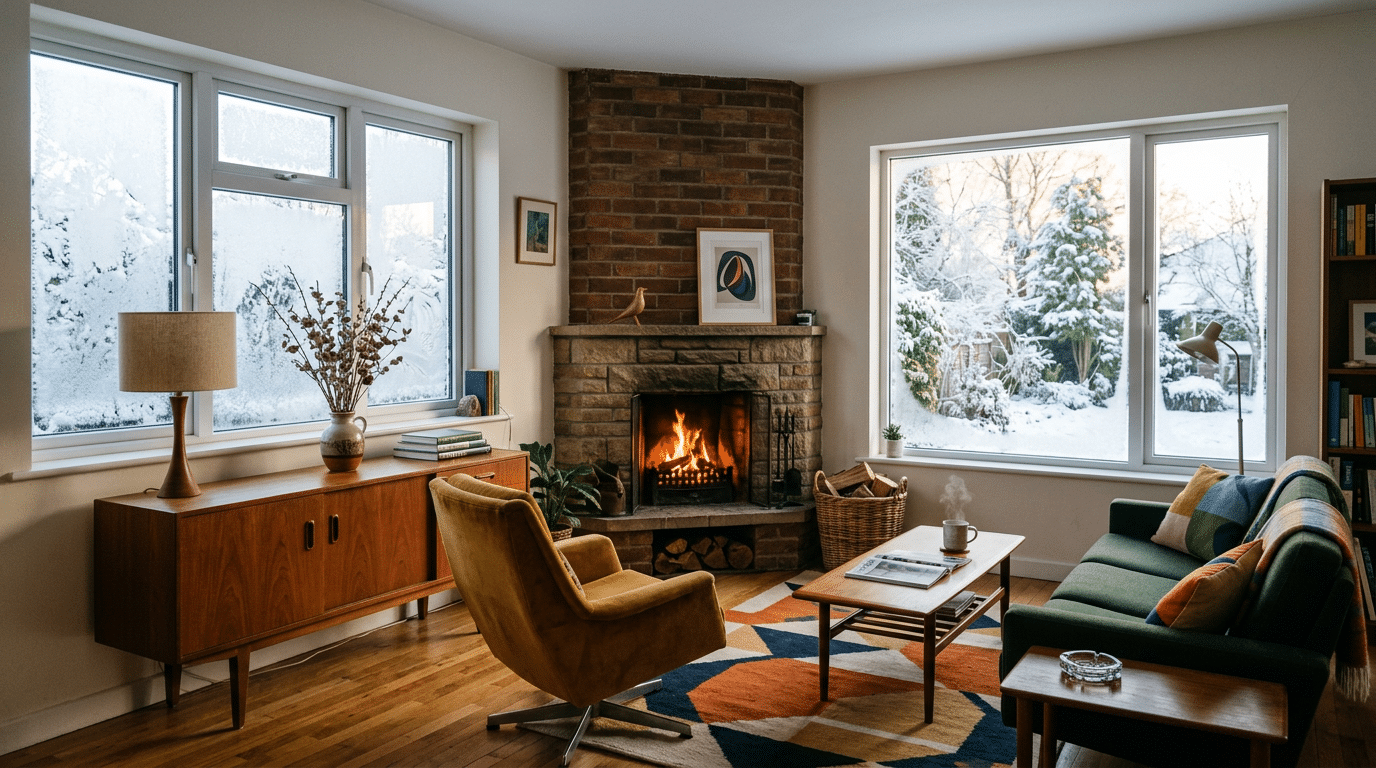
A corner fireplace can make a living room feel difficult to arrange, but it does not have to limit your furniture choices.
I’ve found that many homeowners struggle with deciding where the sofa, TV, and other furniture should go without making the room feel crowded or unbalanced.
The good news is that a few thoughtful layout changes can make a big difference.
The key is to choose a clear focal point and arrange the space around how you actually use the room every day.
In this guide, I’ll share practical furniture placement ideas, TV positioning tips, layout examples, and simple decorating suggestions that can help you create a living room that feels comfortable, functional, and inviting.
What Makes a Corner Fireplace Living Room Feel Awkward?
Corner fireplaces often change the way furniture fits inside a room. Unlike a fireplace centered on one wall, a corner design naturally pulls attention toward one side, leaving homeowners unsure where to place the sofa or television.
The angled position can also reduce usable wall space, making large sectionals or entertainment centers harder to fit.
In many cases, people push furniture against every wall, which leaves the middle of the room feeling disconnected.
The good news is that an awkward layout usually comes from furniture placement rather than the room itself.
Once you choose a primary focal point, maintain clear walking paths, and group seating together, the space becomes much easier to use and feels far more inviting.
How to Arrange an Awkward Living Room with a Corner Fireplace?
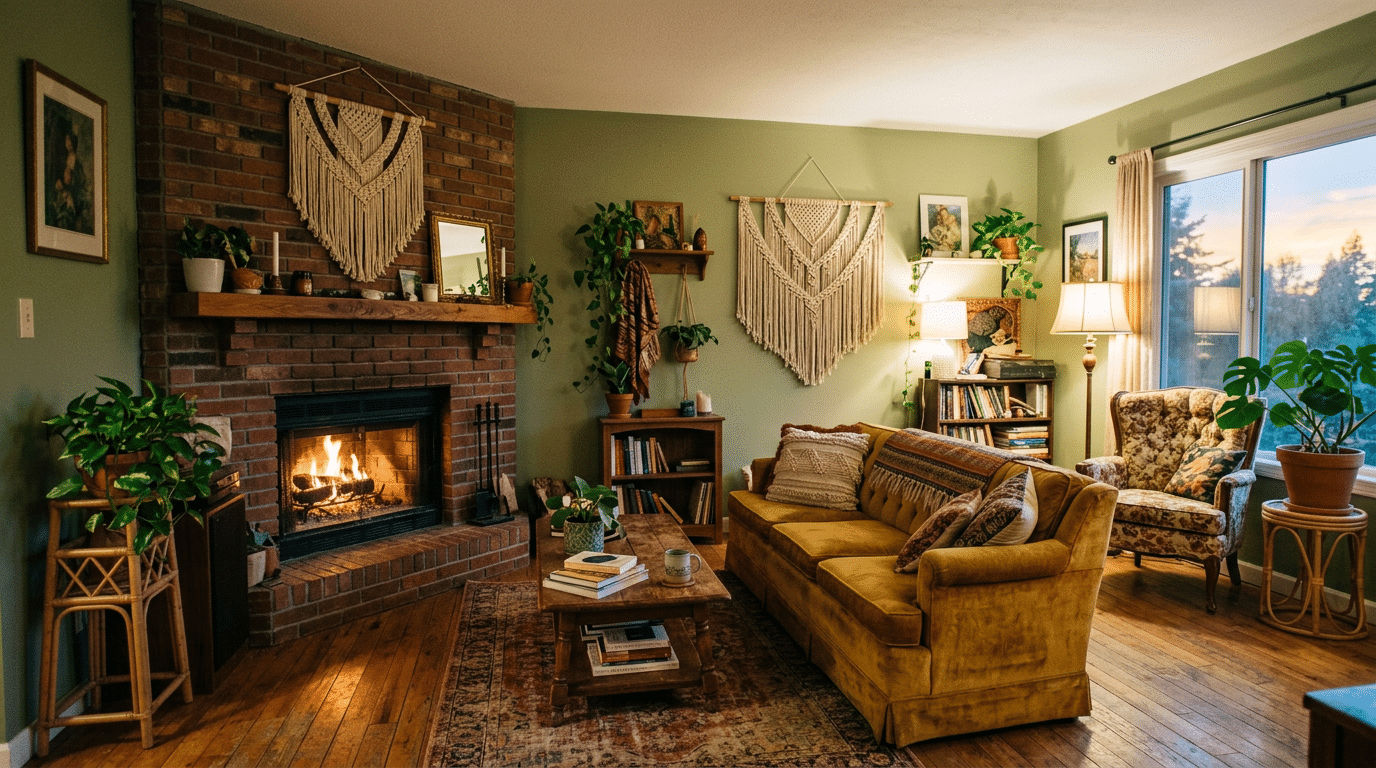
A well-planned furniture layout makes the room feel more comfortable and easier to use. Start with the largest furniture pieces, then build the rest of the seating area while keeping the fireplace, TV, and walking paths in mind.
1. Decide Whether the Fireplace or TV Is the Main Focal Point
The first decision is choosing what people should naturally look toward when they enter the room.
If your family watches television every day, arrange the seating so everyone has a comfortable view of the screen while keeping the fireplace visible.
If the fireplace is used often and adds character to the room, make it the main focus instead. Trying to give both equal attention often creates a layout that feels confusing and leaves no seat with the best view.
2. Position the Sofa Before Placing Other Furniture
The sofa usually takes up the most space, so place it before arranging anything else.
Set it where it supports your chosen focal point without blocking the fireplace or making the room difficult to walk through.
In many living rooms, floating the sofa a short distance away from the wall creates a more welcoming seating area.
Once the sofa is in place, it becomes much easier to position chairs, tables, and other furniture around it without overcrowding the room.
3. Float Furniture to Create a Better Conversation Area
Many people place every piece of furniture against the walls, hoping it will make the room feel larger.
A corner fireplace often leaves a large empty space in the middle while separating the seating area.
Floating the sofa or a pair of chairs closer together creates a more natural conversation space.
A console table behind the sofa can complete the arrangement and provide space for lamps, books, or decorative items without taking up extra room.
4. Balance the Layout with Accent Chairs
Accent chairs help fill the room without making it feel crowded. Place one or two chairs across from the sofa or at an angle beside the fireplace to create a balanced seating arrangement.
Swivel chairs are especially useful because they can easily face the fireplace during cooler months or turn toward the television when needed.
This flexible seating arrangement works well in rooms where two focal points need to share the space without competing.
5. Keep Walkways Open and Easy to Use
A good furniture layout should allow people to move comfortably through the room.
Leave enough space between furniture so family members and guests can walk from one area to another without squeezing past chairs or tables.
Avoid placing large furniture in front of doorways or directly across natural walking paths.
Keeping traffic areas open makes the room feel larger and helps the seating area stay comfortable, even when several people use the space at once.
6. Choose an Area Rug that Connects the Furniture
A properly sized rug helps bring the seating area together and keeps the room from feeling scattered.
Choose a rug that allows at least the front legs of the sofa and chairs to sit on its surface.
Small rugs often make furniture appear disconnected, especially in larger living rooms.
Center the rug under the seating arrangement rather than directly in front of the fireplace so the conversation area feels balanced from every angle.
7. Make Empty Corners Useful without Adding Clutter
After arranging the main furniture, one corner of the room may still look empty. Instead of adding another large chair or cabinet, choose one simple feature that fits the available space.
A tall plant, floor lamp, slim bookshelf, or narrow accent table can fill the area without making it feel crowded.
Keeping these additions light and simple helps balance the room while allowing the corner fireplace to remain an attractive feature.
8. Layer Lighting for a More Balanced Room
Lighting can make a corner fireplace feel like a natural part of the room instead of a dark corner.
Combine ceiling lighting with floor lamps and table lamps to spread light evenly across the space.
If one side of the room looks darker because of the fireplace, place a floor lamp nearby to brighten it.
Warm lighting also creates a comfortable atmosphere during the evening and helps the seating area feel connected from one side of the room to the other.
9. Handle a Sectional Sofa the Right Way
A sectional sofa can be a great fit for a living room with a corner fireplace when arranged thoughtfully. Place the longer side of the sectional along the wall opposite the fireplace so the seating naturally faces the corner.
This creates a comfortable conversation area while keeping walkways open and uncluttered.
Avoid positioning the shorter section too close to the fireplace, as it can block the view and make the layout feel cramped.
Choosing a low-profile sectional also helps the room feel more spacious and keeps the corner from looking overcrowded.
10. Adjust Furniture When Windows Sit Near the Fireplace
Many corner fireplaces are built beside a window, making it important to balance natural light with furniture placement.
If your sofa sits near the window, choose one with a low back to preserve the view outside and let more sunlight into the room. A single accent chair is another smart option because it takes up less visual space.
Finish the area with simple curtains or light window treatments instead of heavy drapes, which can make the corner feel darker and more enclosed.
11. Define Zones in an Open-Concept Layout
In an open-concept home, a corner fireplace can help anchor the living area without disrupting the flow of the space.
Position the sofa so it faces the fireplace, then use the back of the sofa to separate the living room from the kitchen or dining area.
Placing a console table behind the sofa further defines the space while providing room for lamps, books, or decorative accents.
This arrangement creates distinct zones while keeping the fireplace as the room’s natural focal point.
Living Room Layout Ideas for Different Room Shapes
The shape of your living room has a big impact on where to place furniture. A layout that works well in one room may feel crowded or unbalanced in another.
| Room Shape | Recommended Layout | Why It Works |
|---|---|---|
| Small Living Room | Place a loveseat or compact sofa facing the fireplace with one or two accent chairs nearby. Use a round coffee table to save space. | Keeps the room open while creating a comfortable seating area without overcrowding the floor. |
| Narrow Living Room | Position the sofa along the longest wall and angle chairs toward the corner fireplace. Keep walkways on one side of the seating area. | Improves movement through the room and prevents the layout from feeling like a hallway. |
| Square Living Room | Float the sofa in the center and place matching chairs on either side. Use a large area rug to define the seating space. | Creates a balanced conversation area while giving the corner fireplace enough visual importance. |
| Large Living Room | Create one main seating area around the fireplace and use another corner for reading, games, or extra seating. | Prevents the room from feeling empty while making better use of the available space. |
| L-Shaped Living Room | Arrange the main seating around the fireplace and use the second section as a home office, reading nook, or play area. | Divides the room into functional zones without making it feel cluttered. |
Where Should You Put the TV in a Living Room with a Corner Fireplace?
The best TV location depends on how you use the room. If the fireplace is the room’s main feature, choose a placement that keeps both elements balanced without making the space feel crowded.
- Above the Fireplace: This option keeps the fireplace and TV together, creating a single focal point while saving wall space. It works best when the mantel is low, and the TV is not too high.
- On the Wall Beside the Fireplace: Many homeowners find this the most comfortable arrangement because the TV stays closer to eye level.
- On a Corner TV Stand: A corner media stand is a practical choice for smaller living rooms with limited wall space. It uses an unused corner while keeping the center of the room open.
- On the Wall Opposite the Sofa: If your family watches TV every day, placing it directly across from the main seating area provides the most natural viewing angle.
- On a Swivel Wall Mount: A swivel mount lets you adjust the TV toward different seating positions whenever needed. This option works especially well in open-concept living rooms.
Furniture Spacing Rules that Make the Room Feel More Comfortable
Proper spacing helps your living room feel open, comfortable, and easy to move through. These measurements are commonly used by interior designers and can be adjusted slightly based on your room size and furniture.
| Area | Recommended Distance | Reason |
|---|---|---|
| Main walkways | 30–36 inches | Gives people enough room to walk comfortably without bumping into furniture. |
| Sofa to coffee table | 16–18 inches | Keeps the table within easy reach while providing enough legroom. |
| Sofa to TV | About 1.5–2.5 times the TV screen size | Provides a comfortable viewing distance for most television sizes. |
| Rug placement | The front legs of the sofa and chairs should rest on the rug | Visually connects the furniture and defines the seating area. |
| Fireplace clearance | At least 36 inches of open space | Helps maintain safe access while keeping the fireplace as a visible focal point. |
| Side tables | Within 2–3 inches of the sofa arm | Makes it easy to reach drinks, books, or lamps while seated. |
| Coffee table height | Equal to or 1–2 inches lower than the sofa seat | Creates a balanced look and makes the table comfortable to use. |
Mistakes that Make an Awkward Living Room Feel Even More Unbalanced
Even a well-sized living room can feel uncomfortable if the furniture is arranged without a clear plan. Avoiding these mistakes can help you create a layout that feels open, balanced, and practical for everyday use.
- Pushing Every Piece Against the Wall: Leaving all the furniture around the room’s edges often creates a large empty space in the center and makes conversations feel less natural.
- Trying to Give Equal Attention to the Fireplace and TV: When both become competing focal points, the room can feel confusing. Decide which feature should receive the most attention and arrange the seating around that choice.
- Choosing Furniture That Is Too Large: Oversized sectionals, coffee tables, or entertainment centers can overwhelm a room with a corner fireplace.
- Blocking Natural Walkways: Furniture should never force people to squeeze through narrow gaps or walk between the TV and seating area.
- Using a Rug That Is Too Small: A small rug makes each piece of furniture appear separate rather than creating a single connected seating area.
- Ignoring Empty Corners: Leaving one side of the room completely empty can make the layout feel unbalanced. A floor lamp, tall plant, or narrow bookshelf can help fill the space without adding clutter.
- Overdecorating Around the Fireplace: Too many decorative pieces on the mantel or nearby walls can make the fireplace feel heavy and crowded.
How to Choose the Right Furniture for a Corner Fireplace Living Room?
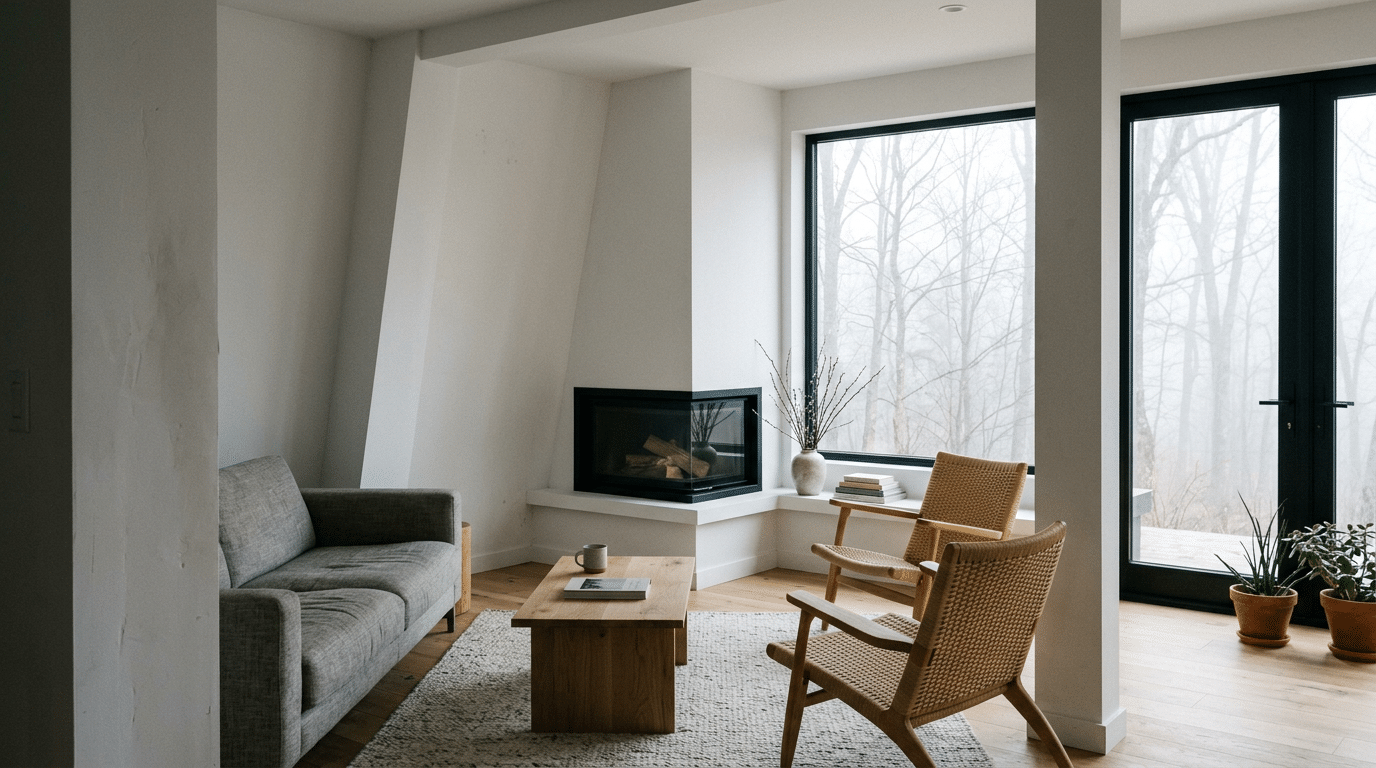
Finding the right furniture is just as important as arranging it correctly. Oversized pieces can make the room feel cramped, while furniture that is too small may leave the space looking unfinished.
Choose a sofa that fits the room without blocking the fireplace or major walkways. Instead of a bulky sectional, consider a standard sofa with one or two accent chairs if space is limited.
Round or oval coffee tables often work better than large rectangular ones because they improve movement around the seating area.
Furniture with exposed legs creates a lighter appearance by showing more floor space, making smaller living rooms feel more open.
Before buying new furniture, measure your room and leave enough clearance around the fireplace, doors, and windows to keep the layout comfortable and functional.
Simple Decorating Tips that Help Balance the Room
Small decorating updates can make an awkward living room feel more connected without changing the furniture layout. Focus on simple additions that improve balance and brighten the space.
- Use a Mirror to Reflect Light: Hang a mirror on a nearby wall to brighten the room and create the feeling of more space. Position it so it reflects natural light rather than the TV or clutter.
- Add a Tall Plant to an Empty Corner: A large indoor plant fills unused space while adding color and texture. It also softens the sharp angles created by a corner fireplace without making the room feel crowded.
- Keep Mantel Decor Simple: Decorate the mantel with a few carefully chosen pieces instead of filling every inch. A clean arrangement helps the fireplace remain an attractive focal point.
- Hang Curtains Higher Than the Windows: Install curtain rods closer to the ceiling rather than directly above the window frame.
- Choose Artwork That Fits the Wall: Select artwork that matches the size of the wall instead of using pieces that are too small or oversized.
- Avoid Overcrowding With Accessories: Leave some open surfaces instead of filling every table and shelf with decorations.
Conclusion
An awkward living room layout with a corner fireplace can become much easier to work with once every piece of furniture has a clear purpose.
The best layouts often come from testing a few arrangements.
Start with the main focal point, place your largest furniture first, and leave enough space for comfortable movement throughout the room.
Small updates, such as choosing the right rug, adjusting furniture spacing, or adding a few carefully placed decorative accents, can make the entire space feel more balanced.
Adapt these ideas to your space and needs to create a welcoming, practical living room you can enjoy for years.
Frequently Asked Questions
What Is the 2/3 Rule for Living Rooms?
The 2/3 rule suggests choosing a sofa that is about two-thirds the length of the wall or selecting a coffee table about two-thirds the length of the sofa for better visual balance.
Where Should You Avoid Placing a TV?
Avoid placing a TV where it receives direct glare from windows or above a very high fireplace, which can cause neck strain. It should also not block walkways or compete with multiple focal points.
What Are Common Living Room Layout Mistakes?
Common mistakes include pushing all furniture against the walls, blocking traffic flow, choosing oversized furniture, using a rug that’s too small, and creating competing focal points with the TV and fireplace.
What Are Some Creative Feature Wall Ideas for a Living Room with a TV?
Popular feature wall ideas include wood slat panels, stone or brick veneer, built-in shelving, textured wallpaper, painted accent walls, or a media wall with hidden storage to give the TV a more finished look.